 Unearth The Voyage
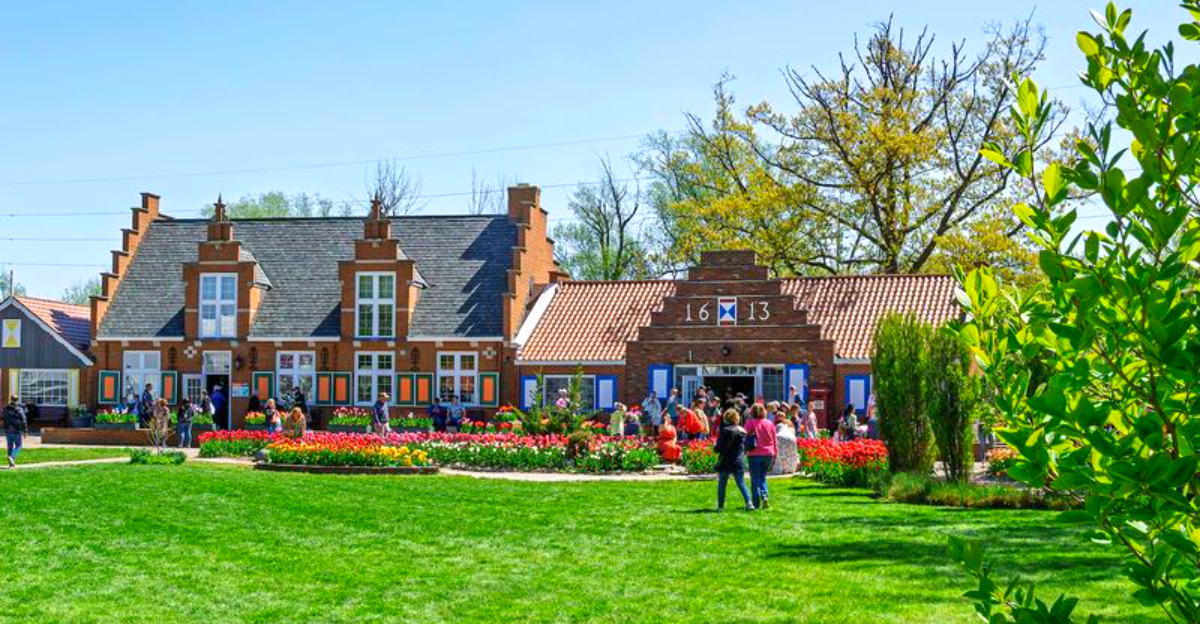
Somewhere along the eastern shore of Lake Macatawa, there is a town that decided to lean fully into its roots, and the result is one of the most charming, colorful, and genuinely surprising places I have ever visited in the United States. I am talking about a city where real windmill sails turn in the breeze, where millions of tulips line the streets every spring, and where wooden shoes are still carved by hand in small workshops.
The Dutch heritage here is not a costume or a gimmick. It is woven into the architecture, the festivals, the food, and the everyday pride of the people who live there.
I had heard about this place from a friend who described it as “Europe, but in Michigan,” and honestly, after spending a few days there, I could not argue. Pack your walking shoes and your camera, because this town delivers a lot more than pretty flowers.
Welcome to Holland, Michigan
The city of Holland, Michigan sits at 272 East 8th Street, Holland, MI 49423, right along the western shore of Lake Macatawa, just a few miles from where the lake meets Lake Michigan on the state’s western coast.
Holland was founded in 1847 by Dutch immigrants led by Reverend Albertus Van Raalte, who chose this wooded lakeshore land as a place where his congregation could build a new life.
That original sense of community pride never left. Today, Holland is home to around 33,000 people, and the Dutch influence shows up everywhere, from the street names to the gabled rooflines to the hand-painted ceramics in shop windows.
The city is part of Ottawa County and sits about 26 miles southwest of Grand Rapids, making it an easy day trip or a perfect weekend destination.
What surprised me most was how livable and walkable the downtown area felt. The streets are clean, the storefronts are well-kept, and there is a warmth here that goes beyond tourism.
Holland is not trying to be something it is not. It simply is what it has always been, a proudly Dutch-American city that wears its identity with quiet, steady confidence.
De Zwaan Windmill at Windmill Island Gardens
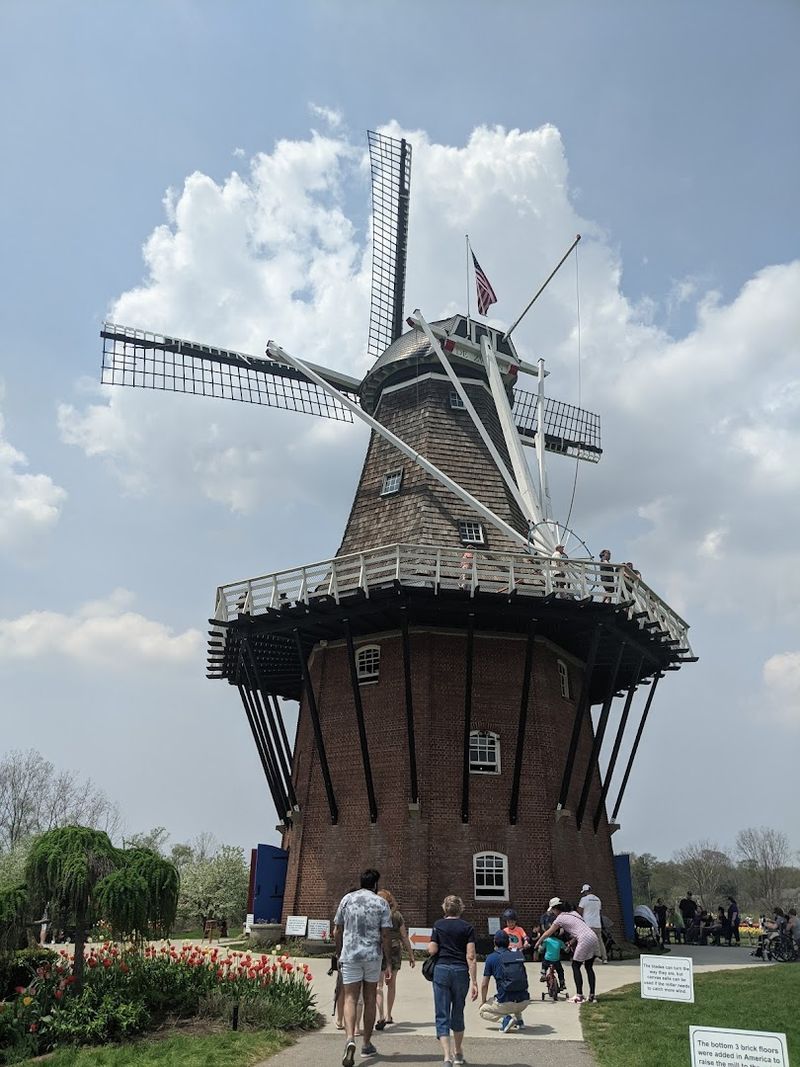
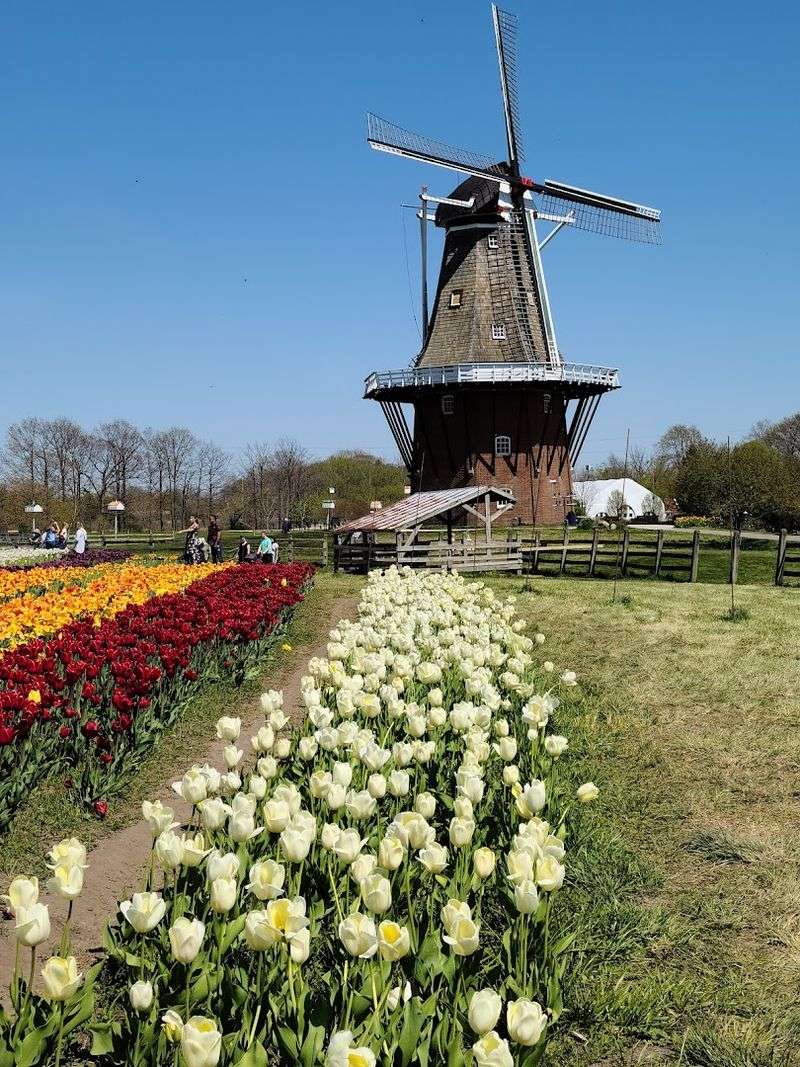
There is exactly one authentic, fully operational Dutch windmill in the entire United States, and it lives right here in Holland.
De Zwaan, which translates to “The Swan” in Dutch, was built in 1761 in the Netherlands and relocated to Holland, Michigan in 1964. The windmill stands 12 stories tall, with sails that stretch an impressive 80 feet across.
Windmill Island Gardens, the 36-acre park where De Zwaan stands, is the kind of place that makes you stop walking and just stare for a moment. Over 100,000 tulips bloom across the grounds each spring, creating a backdrop that looks almost too pretty to be real.
Visitors can tour the inside of the windmill, watch the traditional milling process in action, and even buy freshly ground flour to take home.
The park also features replicas of Dutch buildings, an antique Dutch carousel, and an Amsterdam street organ that plays old-fashioned tunes as you wander the grounds.
The address is 1 Lincoln Avenue, Holland, MI 49423. Admission is charged, and the park is typically open from late April through October, with extended hours during the Tulip Time Festival.
Tulip Time Festival
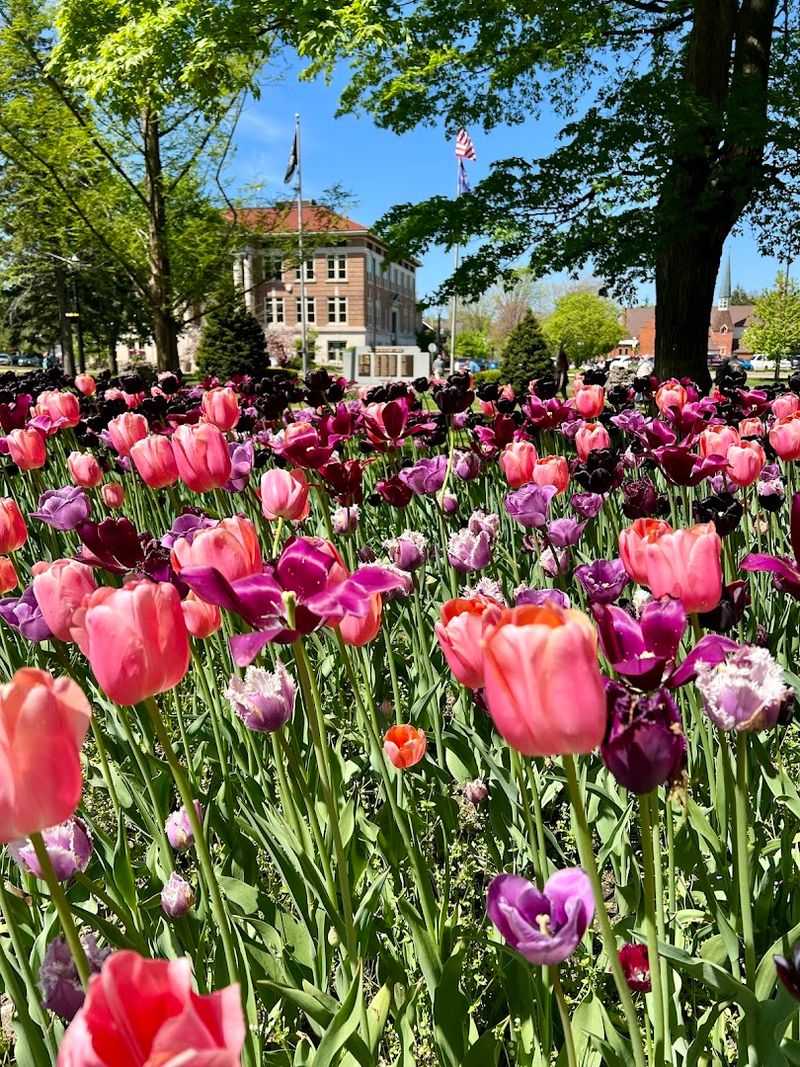
Every May, Holland transforms into one of the most colorful cities in America for ten full days, and the Tulip Time Festival is the reason.
The festival started in 1929 when a local schoolteacher named Lida Rogers suggested planting tulips throughout the city to celebrate Dutch heritage. What began as a modest local idea has grown into one of the largest tulip festivals in the world, drawing hundreds of thousands of visitors each year.
Parades roll through the downtown streets with performers dressed in traditional Dutch costumes, complete with wooden shoes that actually clatter on the pavement.
Dutch folk dance troupes perform throughout the city, and art shows, markets, and live music fill every corner of Holland during the event.
Millions of tulips bloom in parks, along sidewalks, and in front of homes and businesses, turning the entire city into a living garden.
The festival typically runs during the second week of May, though exact dates shift slightly each year to align with peak bloom time. Booking accommodations early is strongly recommended, as hotels fill up fast.
If you can only visit Holland once, making it during Tulip Time is the move that will leave the strongest impression.
Veldheer Tulip Gardens
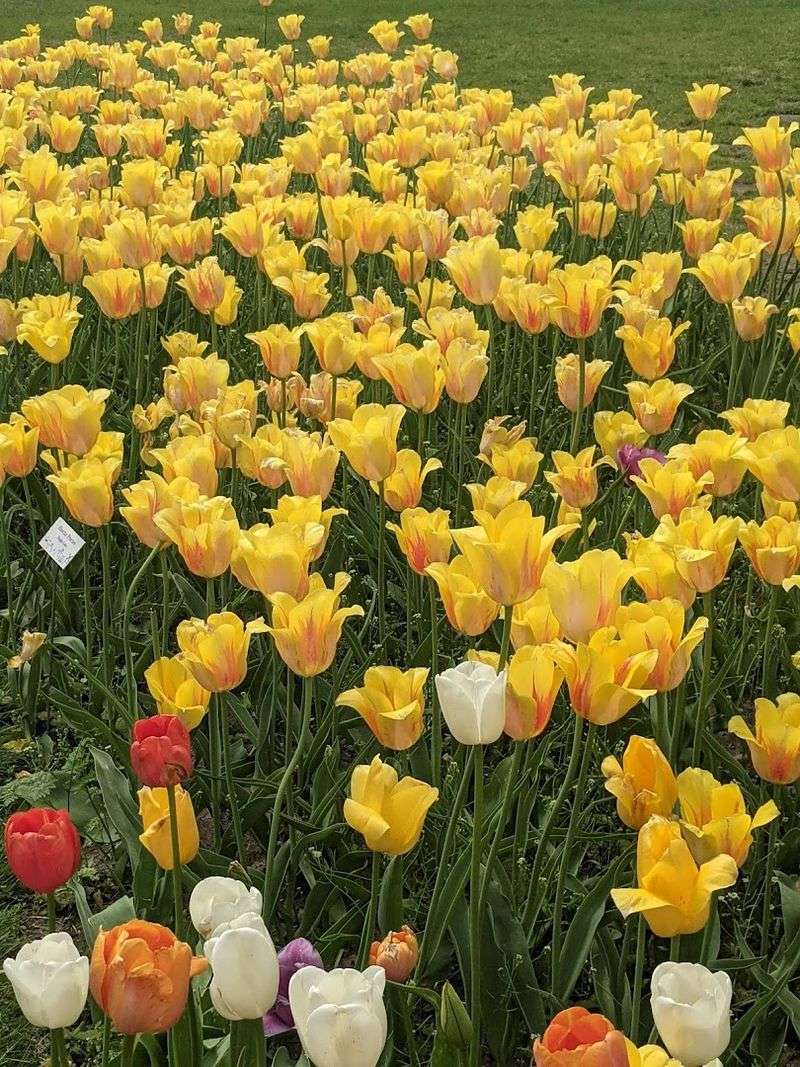
Four million tulips sounds like an exaggeration until you actually stand at the edge of Veldheer Tulip Gardens and watch the rows stretch out toward the horizon in every direction.
This family-owned farm has been growing tulips in Holland since 1950, and the scale of what they have built is genuinely hard to process until you see it in person.
The gardens feature dozens of tulip varieties in colors ranging from deep burgundy and bright orange to soft lavender and pure white. Spring visits, especially in early to mid-May, offer the most spectacular blooms.
Beyond the tulip fields, Veldheer also grows daffodils, hyacinths, and other Dutch spring flowers that add depth and variety to the experience.
The farm is located at 12755 Quincy Street, Holland, MI 49424, and admission is charged during peak bloom season. The staff are knowledgeable and genuinely enthusiastic about the flowers, which makes the visit feel personal rather than commercial.
Bulbs and seeds are available for purchase, so you can bring a little piece of Holland back to your own garden.
Nelis’ Dutch Village
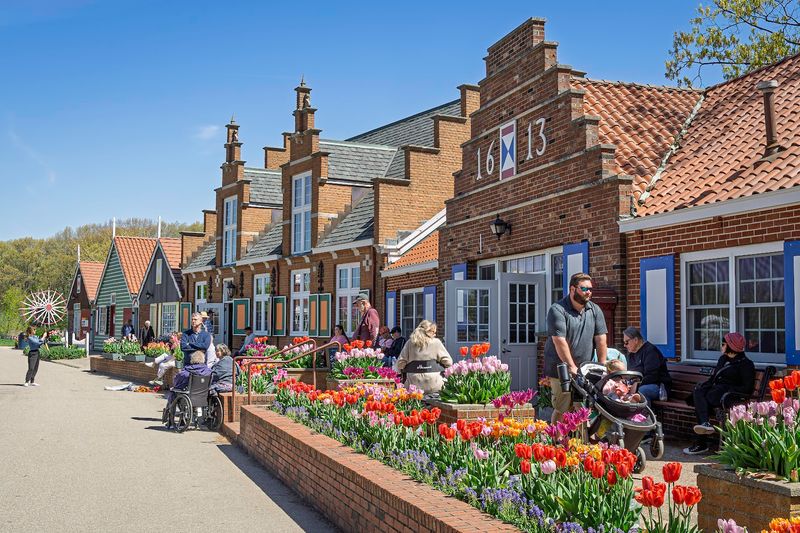
Part living history museum, part cultural theme park, Nelis’ Dutch Village is one of those places that works for every age group, which is a harder balance to strike than it sounds.
The attraction is a recreated 19th-century Dutch village, complete with authentic-looking architecture, canals, costumed staff, and demonstrations of traditional Dutch crafts and customs.
Visitors can watch artisans at work, try on traditional Dutch clothing for photos, and explore buildings that reflect what life looked like in the Netherlands more than a century ago.
The village also features rides and activities aimed at younger visitors, including a traditional Dutch carousel and a chance to try walking in wooden shoes.
Dutch foods are served on-site, giving visitors a taste of the culinary traditions that came over with the original settlers.
Nelis’ Dutch Village is located at 12350 James Street, Holland, MI 49424. It is open seasonally from late April through October, with the busiest period coinciding with the Tulip Time Festival.
The attention to detail throughout the village is impressive, and the staff seem genuinely invested in sharing the culture rather than just going through the motions.
It is the kind of attraction that surprises you by being better than you expected.
DeKlomp Wooden Shoe and Delft Factory
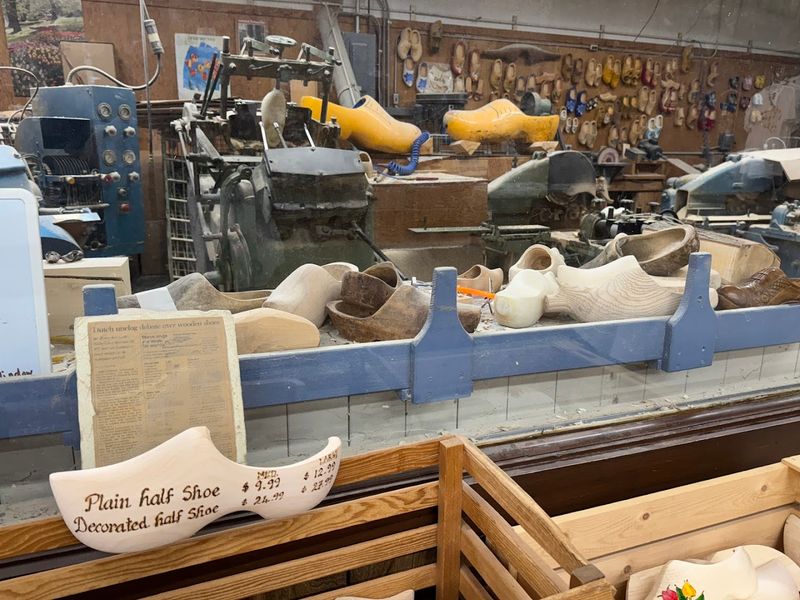
Watching a wooden shoe take shape from a raw block of wood is a lot more fascinating than it sounds, and DeKlomp Wooden Shoe and Delft Factory is one of the few places in North America where you can see it happen right in front of you.
The factory, located at 12755 Quincy Street, Holland, MI 49424, is attached to Veldheer Tulip Gardens and operates year-round.
Artisans here carve klompen, the traditional Dutch wooden shoes, using a combination of hand tools and a specialized carving machine that hollows out the interior. The process is quick, precise, and genuinely impressive to watch.
The factory also produces hand-painted Delftware, the iconic blue-and-white Dutch pottery that has been a symbol of Dutch craftsmanship since the 17th century.
Painters work at open stations where visitors can observe each brushstroke, and the finished pieces range from small decorative tiles to full-sized vases and plates.
Everything in the shop is available for purchase, and the quality is noticeably higher than the mass-produced Dutch souvenirs you find elsewhere.
Whether you buy something or just watch the artisans work, a stop here adds a layer of authenticity to any Holland visit that is hard to find anywhere else in the country.
Big Red Lighthouse and Holland State Park
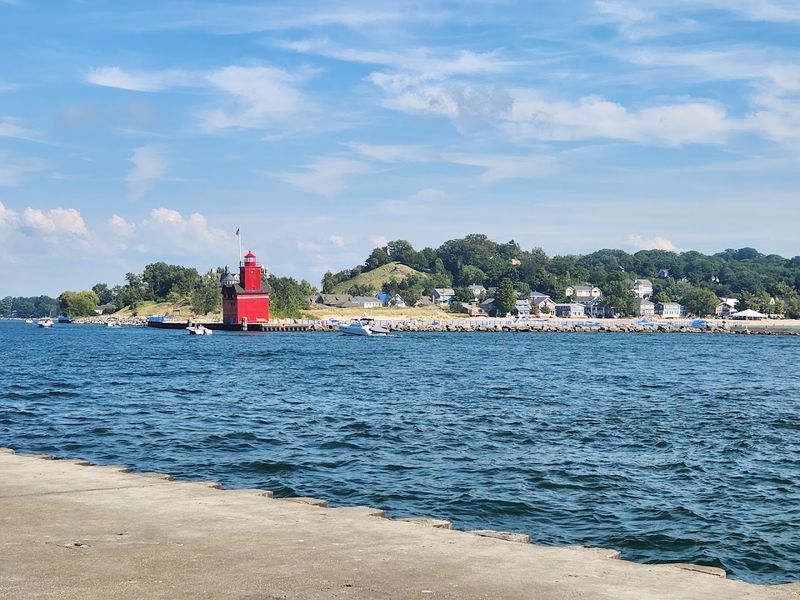
The Big Red Lighthouse is probably the most photographed landmark in western Michigan, and after seeing it in person, the obsession makes complete sense.
Officially known as the Holland Harbor South Pierhead Light, the lighthouse gets its nickname from the bold red paint that covers its entire exterior. It stands at the end of a long pier where Lake Macatawa meets Lake Michigan, and the view from that pier on a clear day is wide, open, and genuinely beautiful.
Holland State Park surrounds the area and offers one of the best public beaches on the eastern shore of Lake Michigan. The sand is soft, the water is clean, and the park is well-maintained year-round.
The park is located at 2215 Ottawa Beach Road, Holland, MI 49424, and requires a Michigan Recreation Passport for entry, which can be purchased at the gate or online.
Beyond swimming and sunbathing, the park is a known spot for watching migrating birds in the fall, and white-tailed deer are sometimes spotted in the wooded sections near the campground.
Sunsets here are the kind that make people stop mid-sentence and just watch. The lighthouse turns a deeper shade of red in that light, and the whole scene feels almost cinematic without any effort at all.
Holland’s Downtown and 8th Street
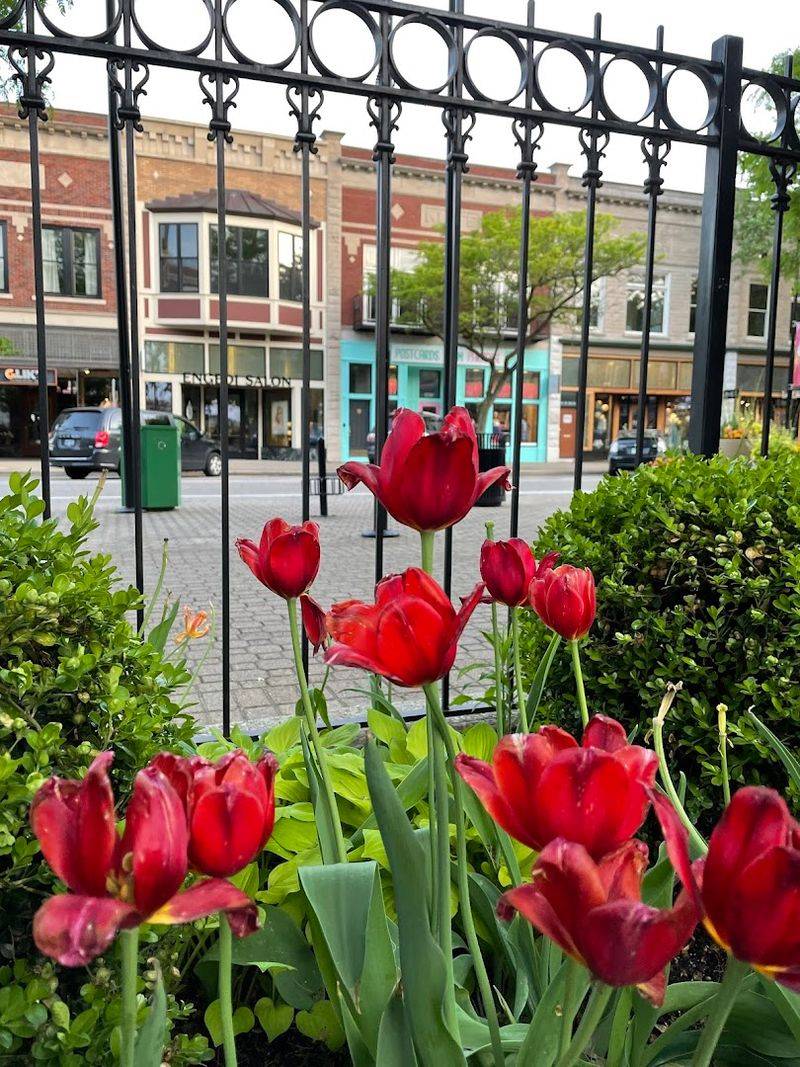
Downtown Holland has the rare quality of feeling genuinely local even when it is full of visitors, and 8th Street is the main artery that holds the whole experience together.
The street runs through the heart of the city and is lined with independent shops, bakeries, coffee houses, and restaurants that reflect both Dutch heritage and modern Midwestern creativity.
Dutch-themed storefronts sit next to contemporary boutiques, and the mix works surprisingly well. The architecture along 8th Street includes gabled facades and decorative brickwork that give the block a cohesive, old-world character without feeling like a staged set.
The Farmers Market, held on Wednesday mornings and Saturday mornings from May through October in Centennial Park, draws locals and visitors alike with fresh produce, baked goods, flowers, and handmade goods.
Several Dutch bakeries in the area sell traditional treats like stroopwafels, speculaas cookies, and poffertjes, the small, fluffy Dutch pancakes that are impossible to eat just one of.
The downtown area is also home to Hope College, a small liberal arts school with Dutch Reformed roots that has been part of Holland’s identity since 1866.
Dutch Heritage and the City’s Founding Story
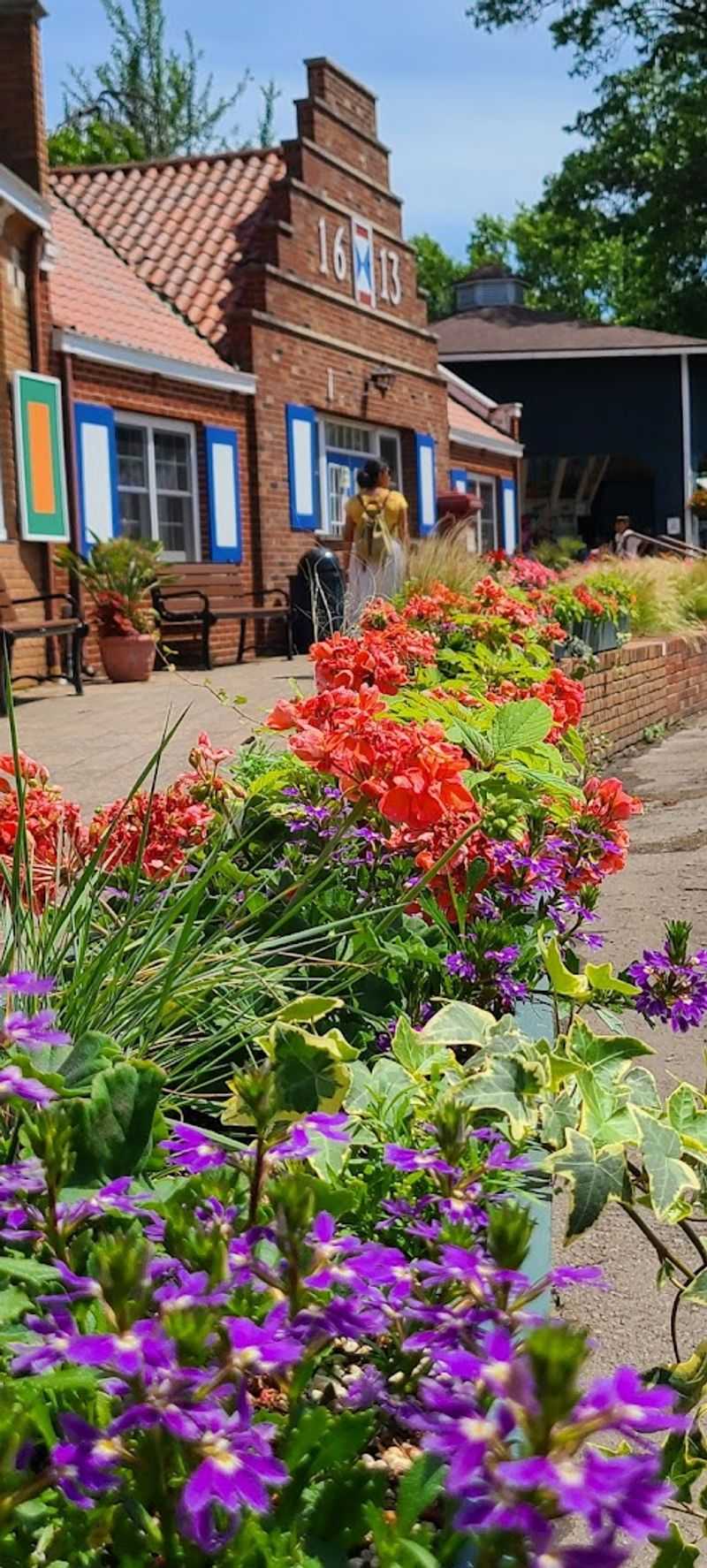
Not many American cities can trace their character so directly to a single founding moment, but Holland, Michigan is one of them.
In 1847, a group of Dutch immigrants led by Reverend Albertus C. Van Raalte arrived in western Michigan seeking religious freedom and a fresh start.
They chose a forested stretch of land along the Black River, near where it flows into Lake Macatawa, and began clearing trees in the middle of winter.
The conditions were brutal. The settlers faced harsh weather, illness, and the enormous physical challenge of building a town from nothing.
Despite those hardships, the community held together and grew steadily through the second half of the 19th century.
Van Raalte founded Hope College in 1866, which remains one of the most visible institutional legacies of the original Dutch community.
The Pillar Church, one of the oldest churches in Holland, still stands at 50 West 9th Street and was founded by Van Raalte himself. It is a quiet, powerful reminder of where the city came from.
Learning this history before walking around Holland changes how you see everything, from the windmill to the tulip fields to the surnames on local business signs.
The city did not become Dutch by accident. It stayed Dutch on purpose, and that intentionality is what gives Holland its distinctive, unshakeable identity.
Dutch Food Traditions in Holland
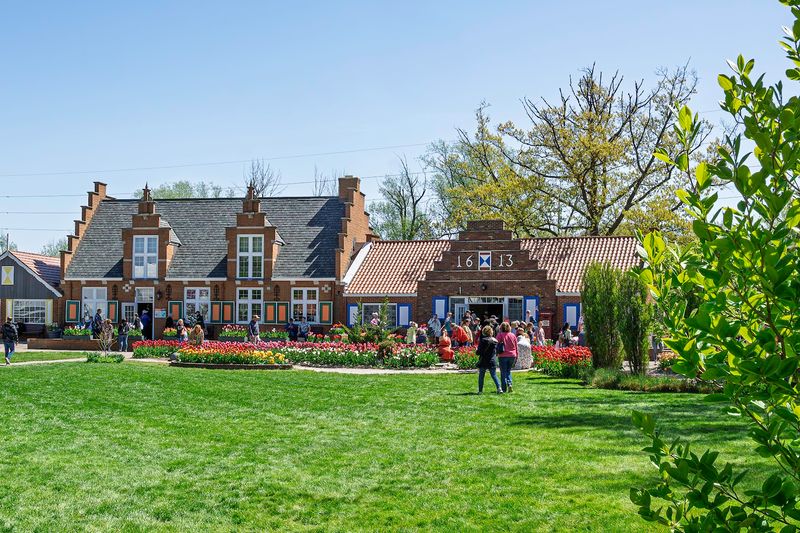
Food is one of the most direct ways to connect with a culture, and Holland delivers on that front in ways that go well beyond what you might expect from a small Midwestern city.
Dutch culinary traditions show up throughout Holland in bakeries, specialty shops, and restaurants that take their heritage seriously.
Stroopwafels, the thin waffle cookies sandwiched together with a caramel syrup filling, are available fresh at several local bakeries. Eating one warm, right off the iron, is an entirely different experience from the packaged versions sold in grocery stores.
Poffertjes, the small, pillowy Dutch pancakes typically served with powdered sugar and butter, appear on menus during the Tulip Time Festival and at Dutch-themed eateries around the city.
Speculaas, the spiced shortcrust cookies traditionally associated with Dutch baking, are another staple that shows up in local shops throughout the year.
Dutch licorice, known as drop, is a polarizing treat that real enthusiasts seek out at specialty import shops in Holland. It comes in sweet and salty varieties, and the salty kind tends to produce strong reactions from first-time tasters.
The culinary thread running through Holland is not about fine dining or trendy menus. It is about keeping old recipes alive in a new place, and the food here tastes all the better for that kind of care.



