 Unearth The Voyage
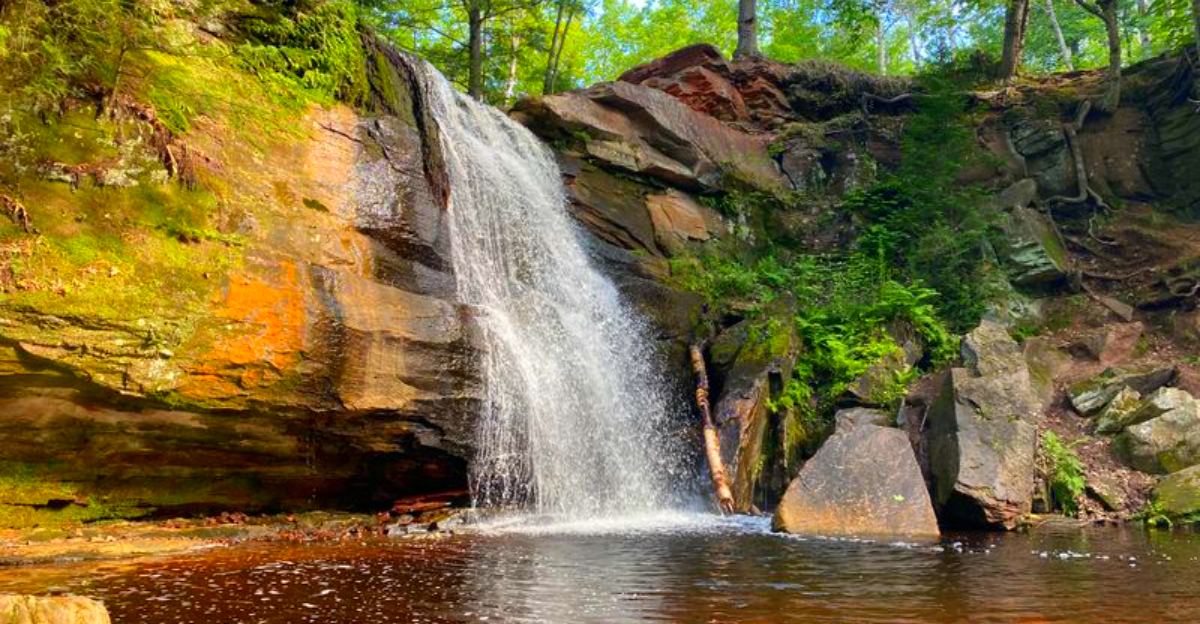
Hungarian Falls is a multi-tiered waterfall system located near Hubbell in Michigan’s Keweenaw Peninsula. Tucked along Dover Creek, the falls are known for their layered drops, reddish-brown rock formations, and relatively easy trail access compared to many remote Upper Peninsula sites.
The area features three main cascades, each with its own viewing point and terrain challenges. Popular with hikers, photographers, and local explorers, Hungarian Falls offers a rewarding stop for those willing to navigate the short but sometimes steep trail system.
If you’re planning a visit, this guide covers what to expect and how to prepare.
Finding the first sound: the approach from Golf Course Road
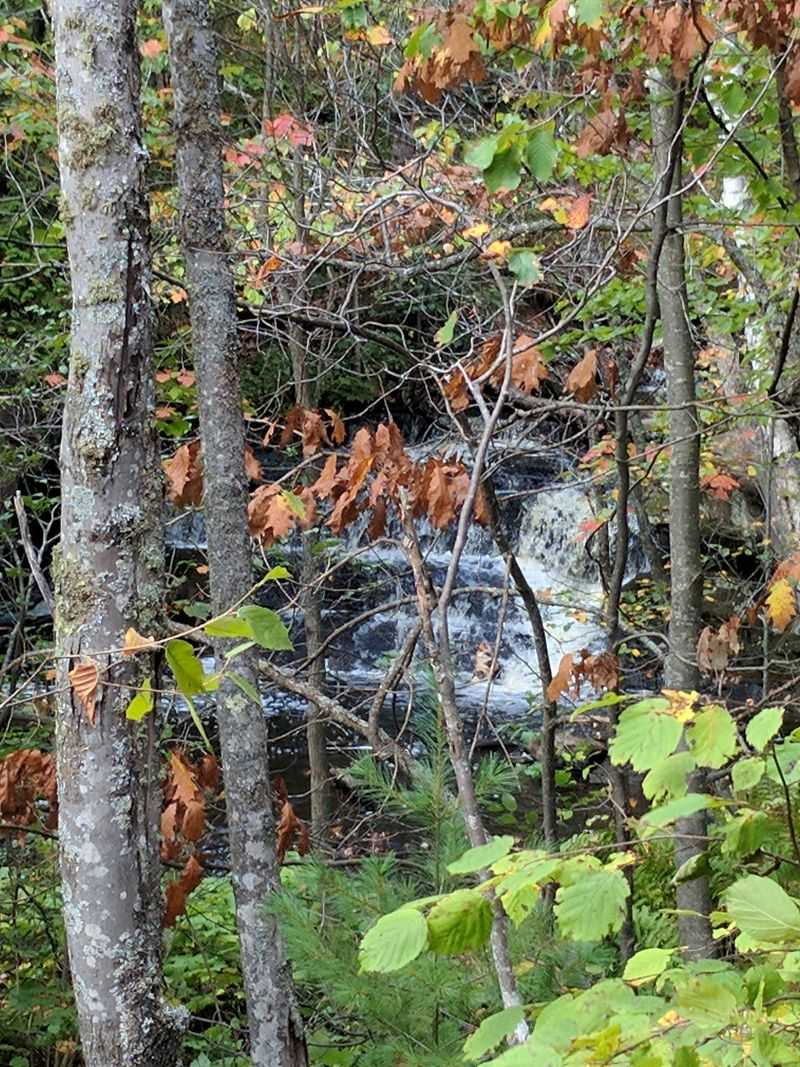
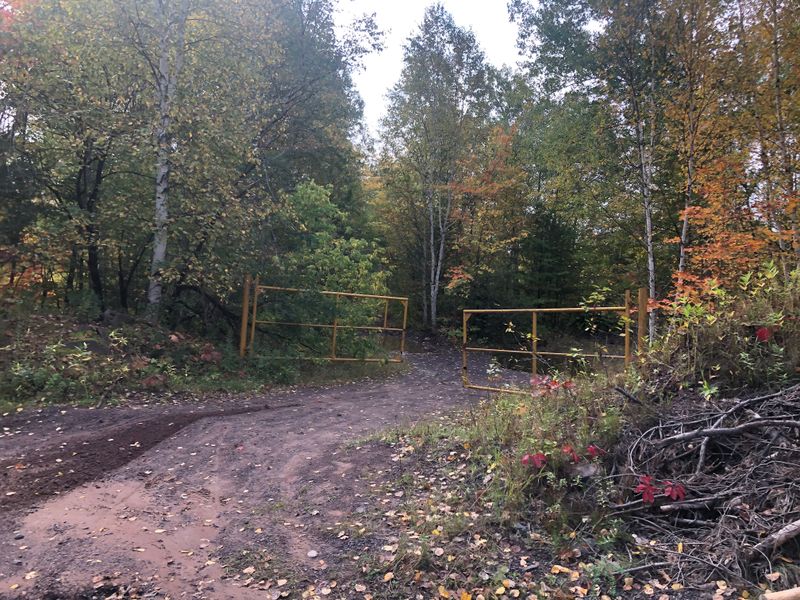
The approach starts at a yellow gate off Golf Course Road, where the gravel tilts just enough to make parking feel provisional. Boots scrape on broken rock, and the trail immediately splits into faint options that test your attention.
You will hear the falls before you solve the fork, a rounded hiss behind the trees like radio static from the gorge.
Look for compacted tread and boot prints curving left toward the big drop, or stay right for riffles and smaller ledges. The air cools ten degrees as the canopy closes, and mosquitoes clock your pace, especially in June.
Sun threads through trembling aspen, lighting mica in the path like confetti.
Past a low wooden bridge remnant, the ground kinks downward and your calves announce the grade. Rocks are damp even on dry days, polished by decades of shoes and spring melt.
A final turn laces you to the rim, where the Middle Falls suddenly occupies the frame, and the first cold spray hits your cheek.
Upper Falls: the quiet power behind the old dam
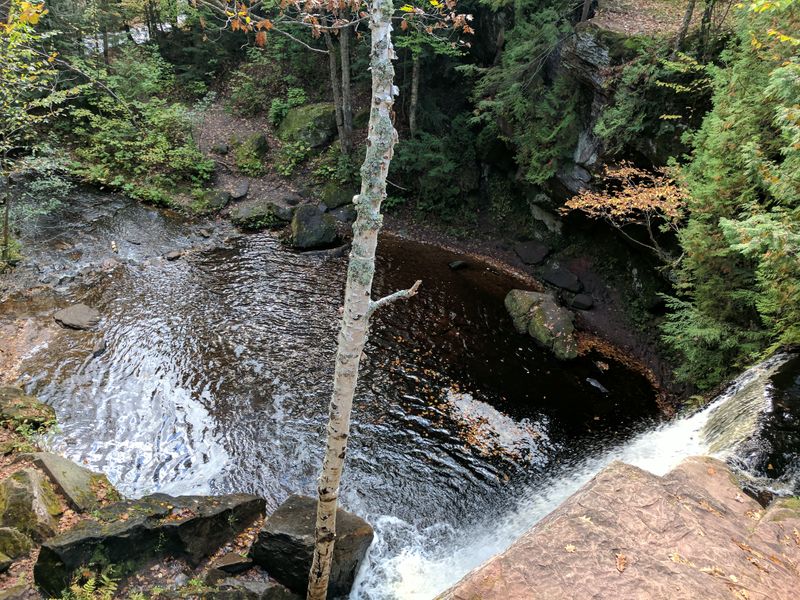
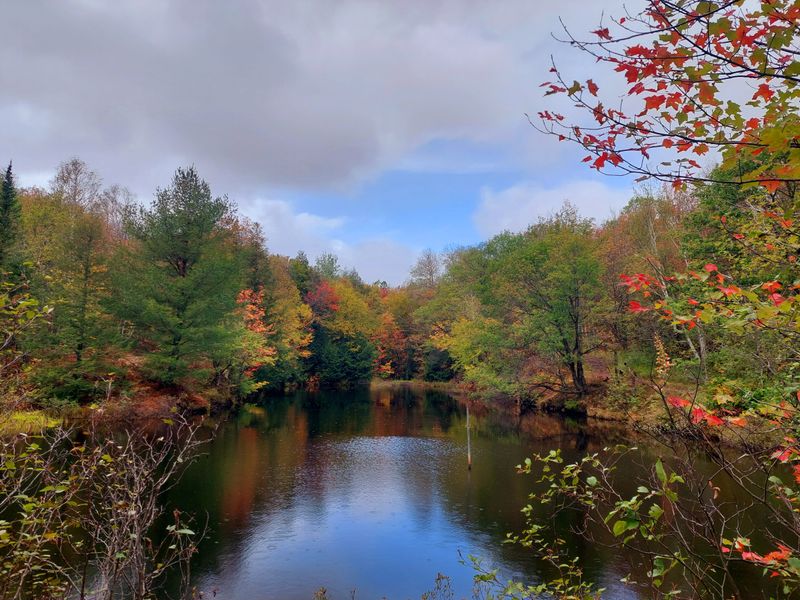
Above the noise, the Upper Falls gathers itself in a dark pond bordered by spruce, birch, and the ghost geometry of an old dam. The concrete wears lichen like epaulettes, and you can trace rust stains where hardware once held.
Kneel at the outflow and you can see water decide to become movement.
Dragonflies patrol the margin, blue needles stitching over floating pine pollen. A kingfisher ricochets off the far snag, then stillness returns, broken only by a spill that thickens after rain.
In late afternoon, the pond becomes a mirror that edits the sky into tidy rectangles.
Walk the bank carefully. Mud here swallows a heel without permission, and the edge hides slick clay beneath leaf litter.
The spillway is not dramatic from every angle, but the low thunder under your ribs reminds you that everything below depends on this steady pulse.
Middle Falls: where people linger and wade
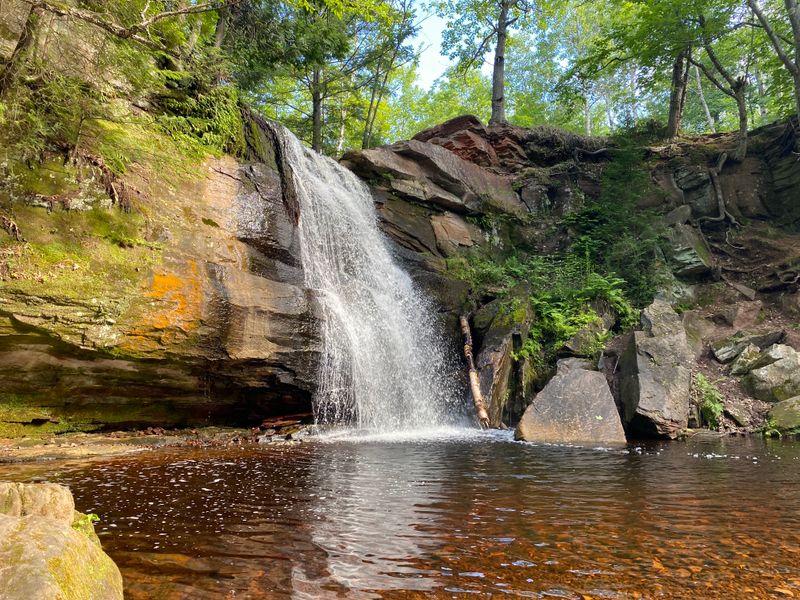
The Middle Falls spread like a tablecloth of white water over dark basalt, then gather into a wading basin no deeper than your calves. People pause here, even the goal oriented, because the sound loosens the clock.
Shoes come off and toes test polished stone that has the texture of wet glass.
On cool days, the spray writes goosebumps on your forearms. Kids count seconds under the curtain, surfacing with hair plastered and eyes shocked wide.
After heavy spring melt, the sheet thickens and the edge dissolves into an even roar that drowns small talk.
To the right, a bench of rock makes a picnic without the staging. To the left, a narrow scramble descends to an eddy where maple leaves spin like coins.
You could spend an hour watching light slide down the face, discovering new seams and bubbles every minute.
Lower Falls: the dramatic plunge into the gorge
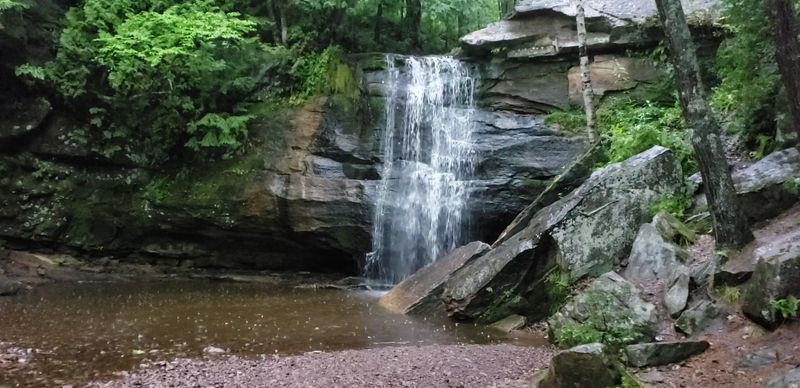
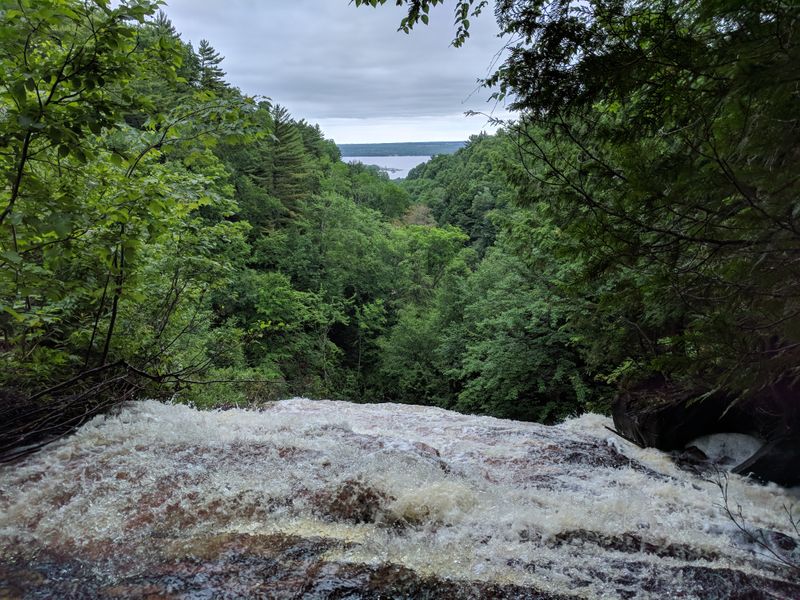
The Lower Falls arrive last and loudest, a singular drop that punches into a plunge pool ringed by ferns. Getting there is the tax.
The trail tilts without apology, stitched with roots and marbles of loose stone that roll under casual shoes.
At one switchback, the gorge opens and you can feel cold air climb, smelling like iron and wet cedar. Far below, water detonates against bedrock and rebounds as vapor.
People speak softer here, not out of reverence so much as calculation, measuring steps.
At low flow, you can edge toward the base and watch rainbows appear in the mist when the sun threads the canopy. In spring, do not flirt with the slick.
The rock receives mistakes without drama. Stand back, frame the vertical, and feel your throat vibrate with the sustained thunder.
Reading the rock: Keweenaw basalt and copper history underfoot
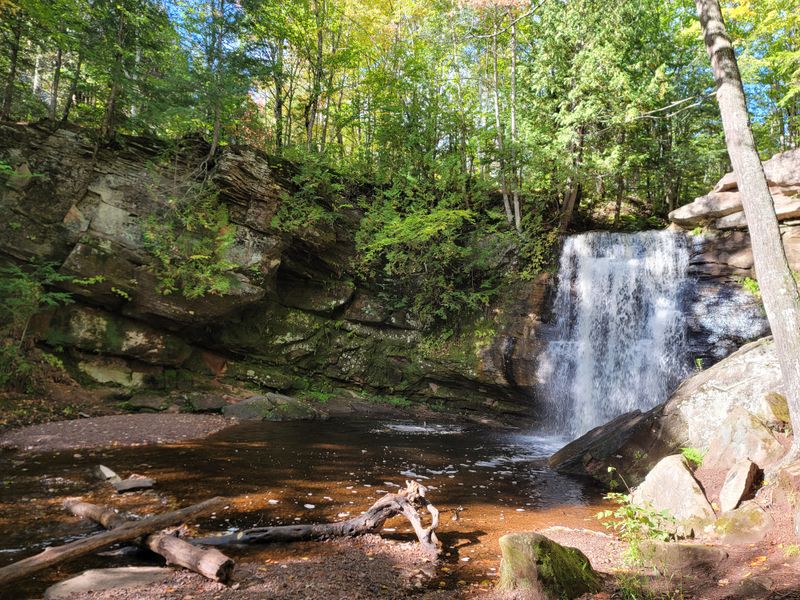
The steps you take across these shelves are Keweenaw basalt, ancient lava smoothed by ice and years of feet. Kneel and you will notice copper tinted stains bleeding from hairline seams, a postcard from the peninsula’s mining past.
Quartz threads interrupt the dark, like lightning frozen inside stone.
Glacial striations run parallel like cat scratches, guiding rain and your eyes toward the drop. Press your palm to the surface and it feels cooler than the air even at noon.
Lichen maps continents in green and gray, creeping over edges as if to reclaim geometry.
The Keweenaw’s copper rush peaked a century ago, but its story lingers in the valley. According to the Keweenaw National Historical Park, the region once produced more than 11 billion pounds of native copper.
That scale hums underneath this quiet place, where water keeps doing exactly what it did before the mines, carving, polishing, insisting on the long view.
Seasons in motion: when to go and what changes
Spring is the showrunner here. Snowmelt charges every tier and the Middle Falls becomes a single muscled sheet, loud enough to reorganize thoughts.
Trails are muddy, mosquitoes clock in early, and waterproof boots earn their keep.
Summer shifts the mood to linger and wade. Shallow shelves warm by late afternoon, and you can picnic on sun baked rock while water whispers around your ankles.
Bring repellent, plus shoes that grip wet stone instead of arguing with it.
Autumn throws color like confetti along the gorge. Maples torch red and gold, and the falls thread through leaves like white stitching.
Winter is the quiet twist: ice curtains hang like organ pipes, and snowshoe tracks weave between hemlock shadows. The Keweenaw routinely logs more than 200 inches of snow per season per NOAA normals, which makes the hush feel earned and the approach a true adventure.
Navigation and safety: unmarked paths, smart choices
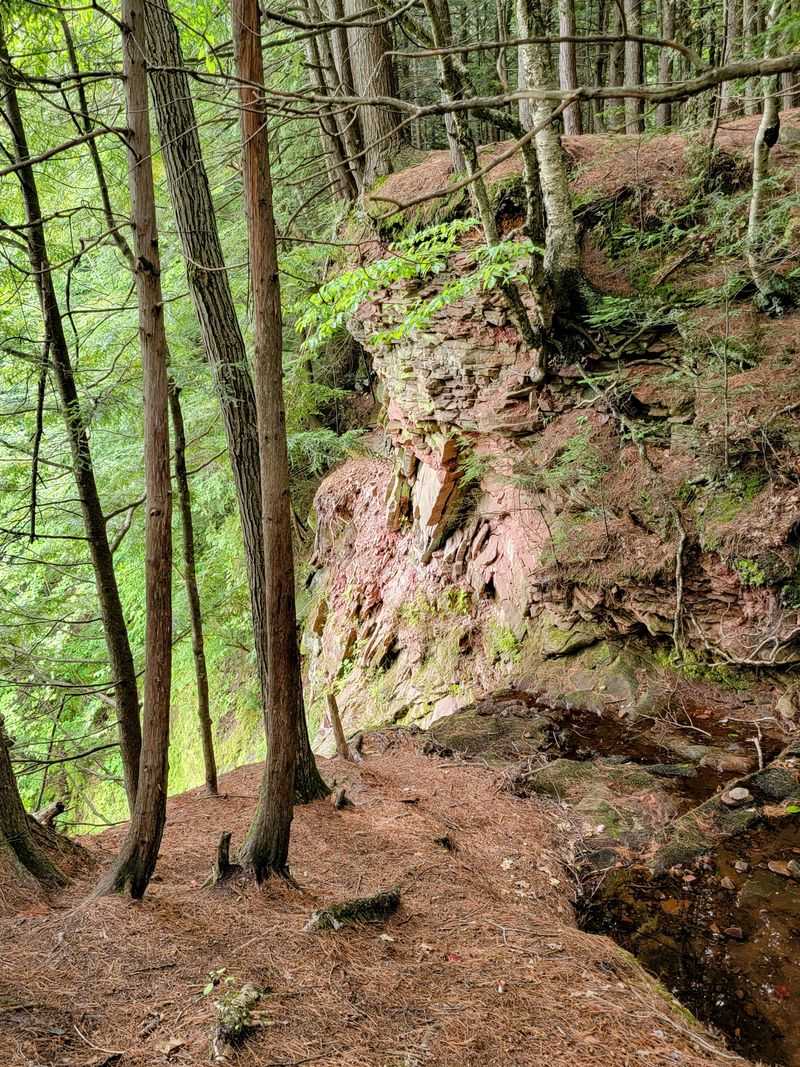
There is no grand sign telling you you are right. The entry looks like any forest road shoulder with a yellow gate and boot packed dirt beyond.
Save the coordinates before service drops and carry a downloaded map to keep forks honest.
Footing is the main variable. Rocks are slick year round, and the scrambles to the lower gorge deserve both hands free.
This is not stroller territory despite the first few friendly minutes.
Keep dogs leashed, both for their safety and for people edging near drops. After rain, the trail writes its own rules, and a trekking pole turns sketchy into doable.
Step where the dirt looks dull, not shiny, and do not be bashful about turning back if the grade stops feeling like a hike and starts feeling like a dare.
Small moments that make the day stick
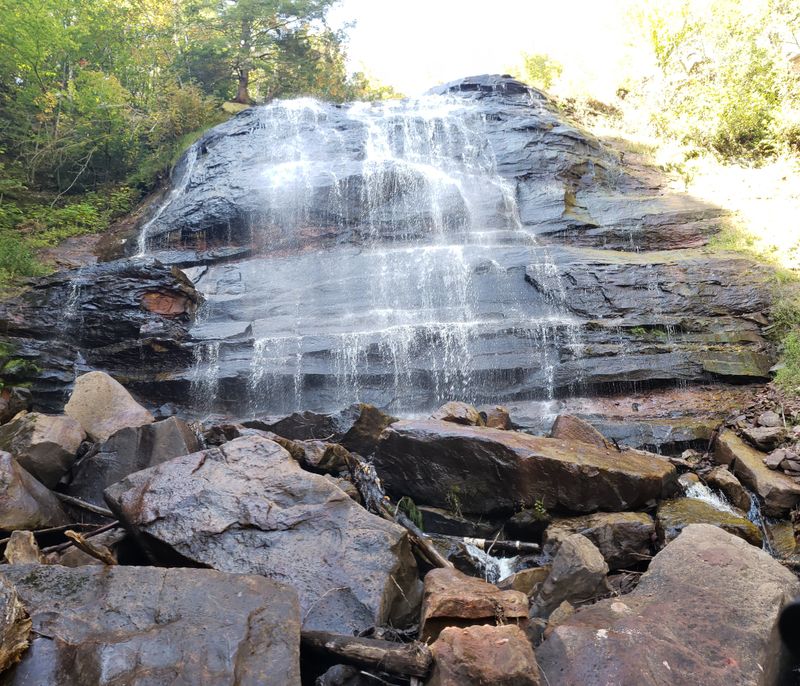
The memory that lasts is rarely the skyline. It is the way cold spray freckles your forearm while a wet maple leaf glues itself to your boot.
It is the thermos lid warming your hands as mist threads into your sleeves.
Stand still long enough and a kingfisher will announce itself like a thrown pebble, then work the pond as if on a schedule. Sun cracks the canopy for ten seconds and every droplet on the basalt turns into a coin.
You promise to remember that exact flicker and then it is gone.
On the walk out, a gust runs through the birch and the trunks chime softly, leaf against leaf. Someone coming in asks if they are close, and you answer with a grin because the sound will guide them.
Later, your socks smell like cedar and iron, and the car heater feels a decade too hot.
Practical playbook: timing, gear, and parking that actually works
Arrive early or late to snag road shoulder space near the yellow gate on Golf Course Road. Weekends pack in fast during snowmelt and peak color.
If winter calls, expect unplowed stretches and carry a shovel just in case.
Wear shoes that treat slick basalt as a partner, not a problem. Pack a small first aid kit, repellent, a flashlight even for daytime, and a sweater for the pond’s microclimate.
In winter, microspikes turn no into yes on the steeper bits.
Download an offline map and mark the Upper, Middle, and Lower tiers to structure your loop. Budget ninety minutes minimum and more if water is high or photos take over.
If you plan to wade, stash a small towel and dry socks so the ride home feels like victory rather than penance.
Why this place matters now
Hungarian Falls sits a few miles from Lake Superior but feels tucked away from the itinerary treadmill. It carries local weight, the kind that turns into Saturday rituals for students from Houghton and families from Hancock.
The trail stays free because people keep it that way, packing out what they pack in.
Interest in Michigan waterfalls has surged in recent years, with state tourism reporting millions of park visits rising post 2020 as travelers chased open air escapes. More feet mean more impact, and the difference here shows in small choices: where you step, how you pass, what you leave.
Stewardship is not a plaque. It is a habit.
Stand at the rim and you will understand the assignment. Water writes patience into stone every second, no hashtags required.
If you return in another season, you will notice what changed and what refused to, and that steady contrast is the point.



