 Unearth The Voyage
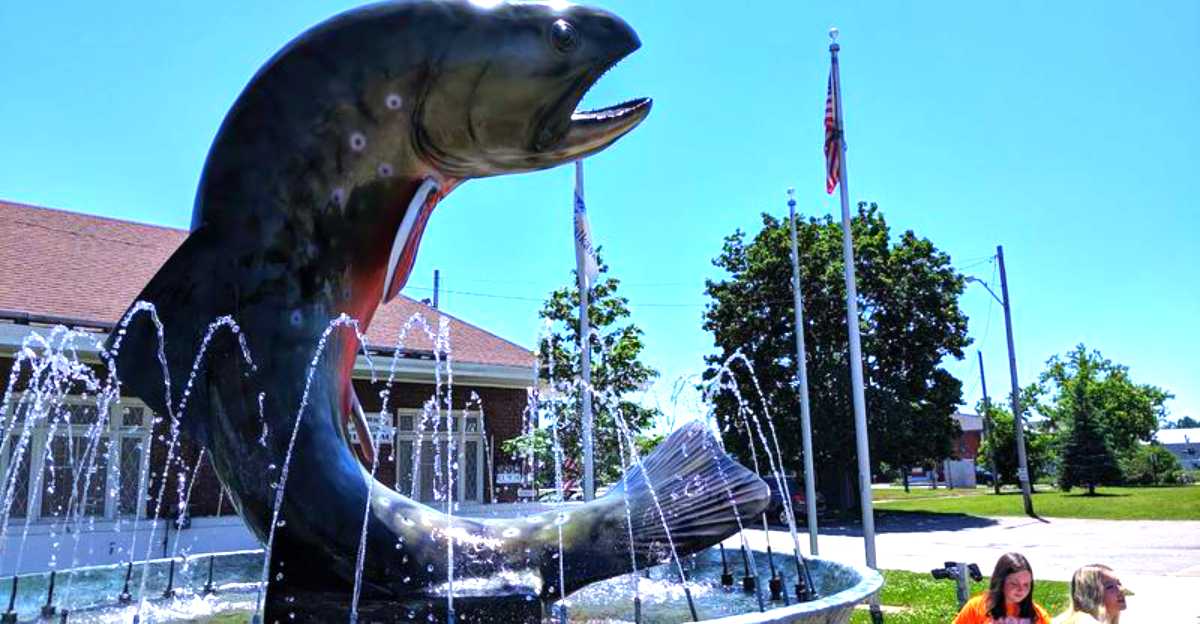
A giant trout in a small northern Michigan town sounds like the setup to a roadside joke, but this one carries real local pride. I came expecting a quick photo stop and found a place that quietly explains why Kalkaska takes trout season, tradition, and town identity so seriously.
There is a story behind the bright scales, the fountain, and the old depot nearby, and it says a lot about how Michigan celebrates the outdoors. Keep reading and I will show you what makes this fish-shaped landmark more than a fun stop along the road.
The first thing you need to know
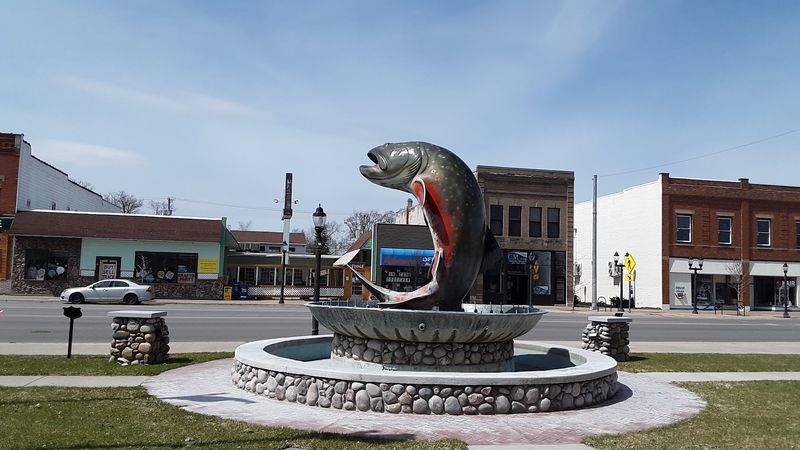
I found the National Trout Memorial at 339-373 S Cedar St, Kalkaska, MI 49646, right along US 131 in Kalkaska, Michigan, and it instantly delivered the kind of roadside charm that makes me pull over without debate. Across from downtown and set beside the Kalkaska Historical Museum, the monument is easy to spot, especially because a brook trout this large does not exactly believe in subtlety.
Its location matters almost as much as its size. The memorial sits where travelers heading north can catch it in a glance, but standing beside it feels different from passing it in a car because the fish, the fountain, and the old depot together tell a fuller story.
I liked that the stop felt simple and welcoming rather than overbuilt. There is parking nearby, room for photos, and just enough surrounding detail to make me linger longer than planned, which set up the rest of the visit nicely.
Why this fish matters so much
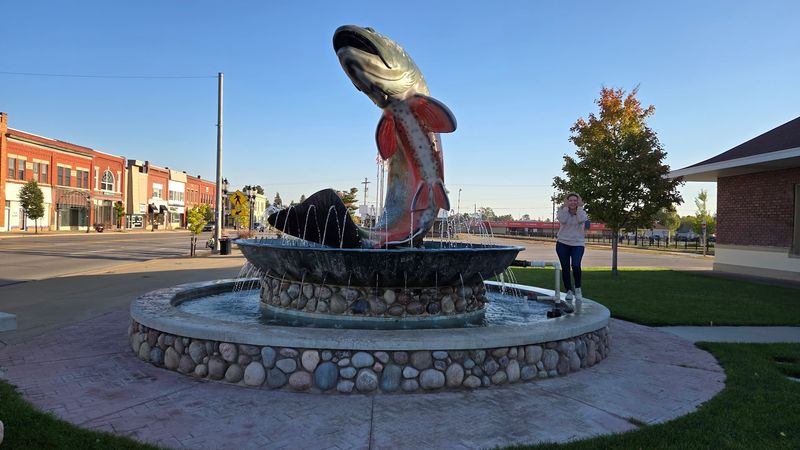
At first glance, it is easy to treat the memorial as a playful giant fish and move on, but the meaning runs deeper. The statue honors Michigan’s trout fishing heritage through a brook trout, the official state fish, and that choice gives the monument a clear identity instead of making it just another oversized roadside object.
I appreciated that the tribute feels local rather than generic. Kalkaska has long tied its image to trout waters, anglers, and spring excitement around fishing season, so this memorial reads like a public thank-you to the traditions that shaped the town’s character.
That is what stayed with me most. Even if you never cast a line in your life, you can still read the pride in the scale pattern, the careful setting, and the way the memorial announces that this community knows exactly what it wants to celebrate, which becomes even more interesting when you look at how old the landmark really is.
A 1966 landmark with staying power
The memorial has been part of Kalkaska since April 30, 1966, and I love that detail because it explains why the place feels woven into town memory instead of recently manufactured for quick attention. Roadside attractions come and go, but this one has had decades to settle into local identity and become part of the rhythm of trips north.
Age gives it personality. You can sense that generations have stopped here for snapshots, festival visits, and quick pauses on the way to lakes and rivers, and that kind of continuity makes the landmark feel more grounded than flashy.
I also think its staying power comes from restraint. The memorial is quirky, yes, but it is also sincere, and that balance keeps it from feeling gimmicky or tired.
It stands there like a town tradition that knows exactly what it is doing, and the materials around its base add another layer that many people probably miss at first glance.
The small details at the base
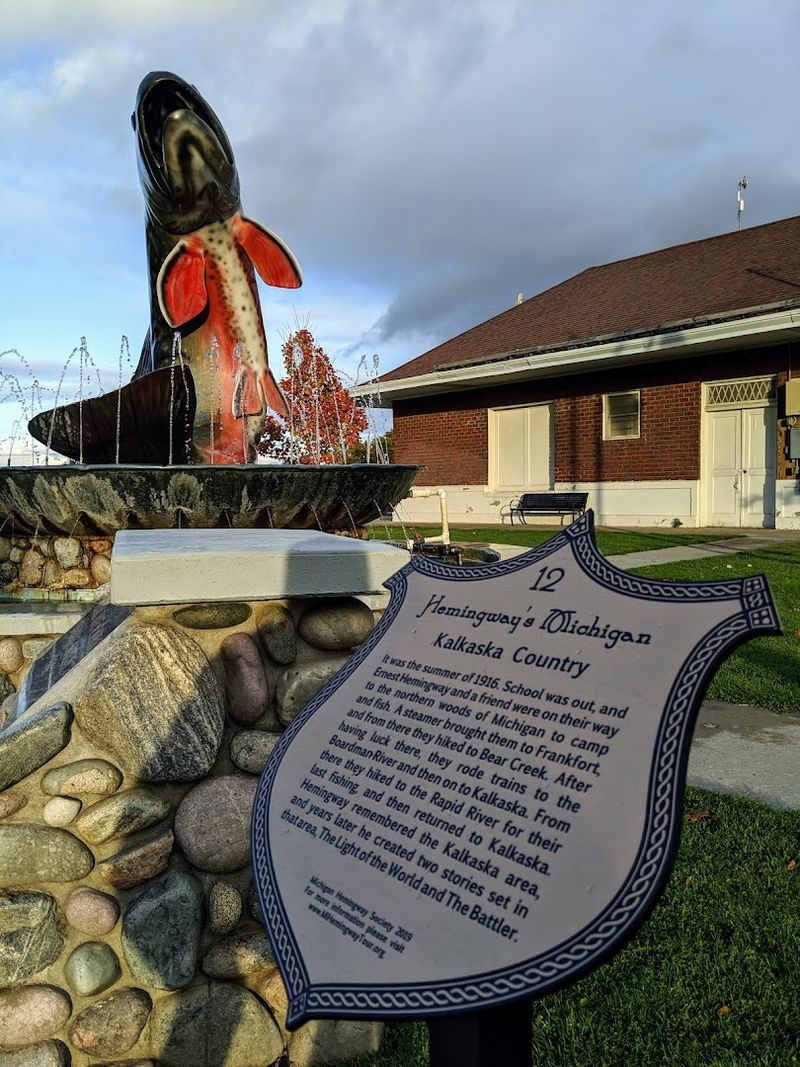
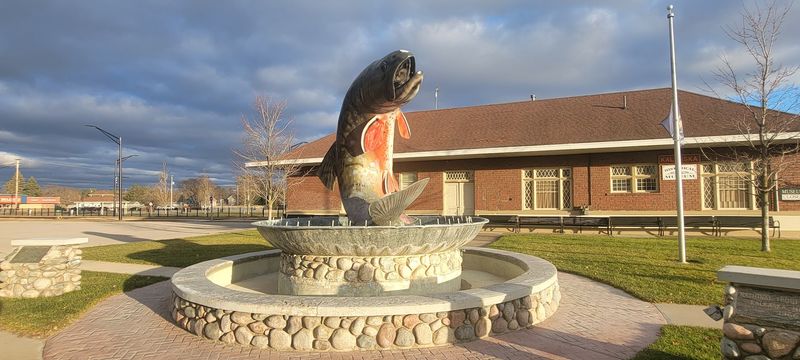
The fish gets the spotlight, but I found myself studying the base almost as much as the sculpture itself. Stones from nearby Torch Lake and Michigan Petoskey stones are incorporated into the setting, which quietly ties the monument to the state’s landscape in a way that feels thoughtful instead of decorative filler.
That choice matters because it keeps the memorial rooted in place. Rather than dropping a big statue onto an empty pad and calling it done, the designers gave it textures and materials that echo northern Michigan, so even the ground around the trout carries a little regional character.
I liked that the details reward a slower look. From a distance, you get the cheerful spectacle of a giant fish.
Up close, you start noticing craft, local references, and a stronger connection to Michigan’s outdoor identity. Those quieter elements make the memorial richer, and they also prepare you for the fountain, which changes the whole mood when warmer weather arrives.
When the fountain turns on
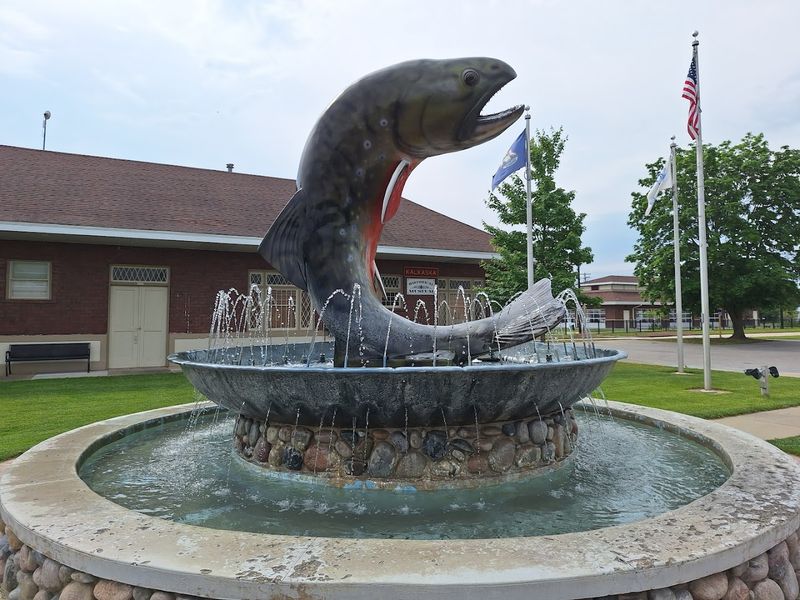
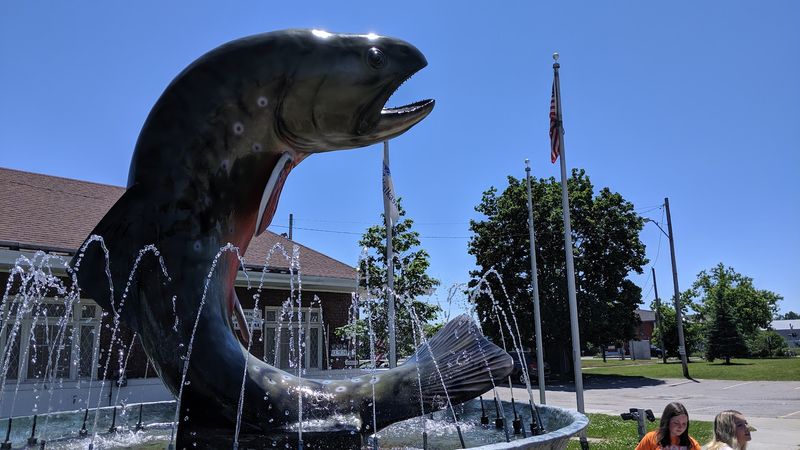
Warm weather gives the memorial an extra trick, and it is a good one. The statue sits within a fountain that sends up low jets of water around the fish, and that movement instantly makes the whole scene feel livelier, brighter, and more playful without turning it into a theme-park spectacle.
I was surprised by how much the water changes the experience. Sunlight catches the painted colors, the splashing adds motion to an otherwise still monument, and the entire landmark starts to feel less like a static photo stop and more like a small public stage set for summer.
There is also something genuinely refreshing about hearing water beside the road in a small town center. It softens the traffic, makes people pause longer, and gives your photos a little extra sparkle if the timing is right.
Come back after dark, and the memorial reveals another side of itself that feels even more theatrical in the gentlest possible way.
After sunset, the trout glows differently
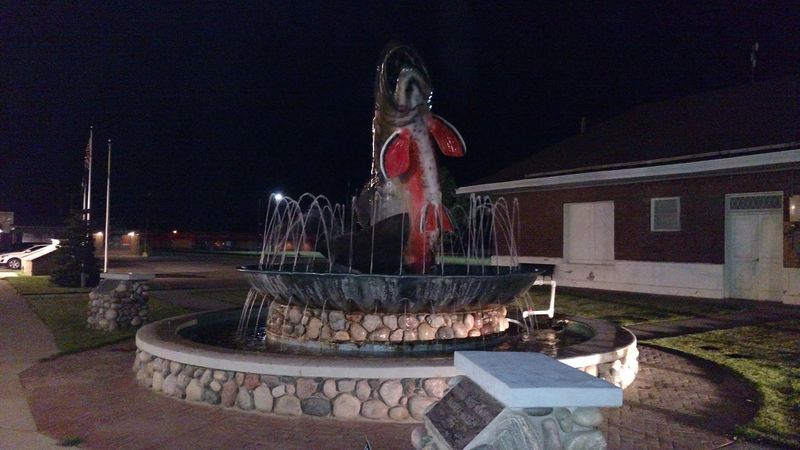
Night lighting can either rescue a landmark or make it look oddly dramatic, and here it works in the memorial’s favor. The illuminated trout and fountain create a cleaner, calmer scene after sunset, with the sculpture standing out against the dark in a way that feels charming rather than showy.
I like roadside attractions best when they can shift personality across the day, and this one does. In bright afternoon light, it is cheerful and almost mischievous.
At night, the fish becomes more iconic, as if the town turned the volume down so the shape, color, and water could do the talking.
That evening mood also fits Kalkaska nicely. Nothing about the display feels oversized for the town around it, and that sense of proportion is part of why the memorial succeeds.
It remains fun without becoming noisy. By then, I had started noticing how perfectly the old depot beside it completes the picture, and that pairing deserves its own look.
The depot next door improves the whole scene
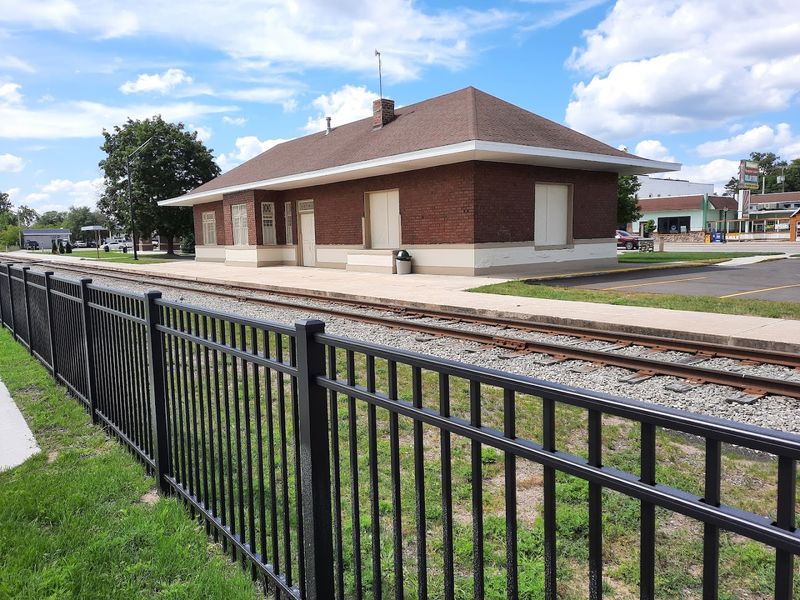
Beside the memorial sits the Kalkaska Historical Museum in a former railroad depot, and that pairing gives the stop more context than I expected. The fish alone would be memorable, but the depot adds a layer of town history that helps the site feel like a small cultural pocket rather than a single odd object by the road.
I always enjoy when one attraction quietly strengthens another. The depot’s historic character balances the bright whimsy of the trout, and together they tell a story about transportation, local development, and the traditions that made this community recognizable to people passing through northern Michigan.
The visual contrast works, too. You get colorful scales and splashing water in one glance, then the more grounded lines of an old rail building in the next.
That combination makes the stop feel complete, especially for anyone who likes places with both personality and context. It also helps explain why the memorial fits so naturally into festival season, which is where the town’s trout identity really comes alive.
Festival week gives the fish extra swagger
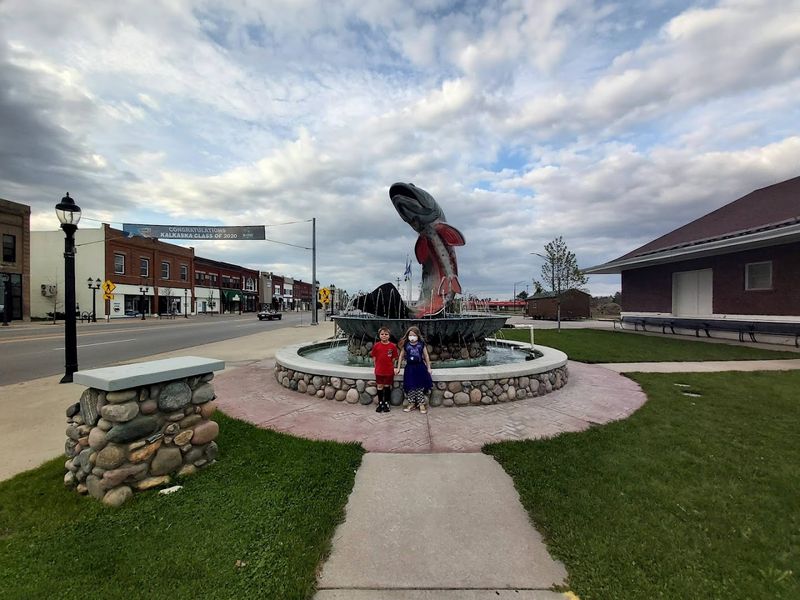
Kalkaska is known as the Trout Capital of Michigan, and the annual National Trout Festival gives that title plenty of public energy. Held in the last week of April around the opening of trout season, the festival turns the memorial from a fun landmark into a true symbol of what the town celebrates most proudly.
I can imagine no better backdrop for spring excitement than a monumental brook trout watching over the action. During festival time, the memorial feels less like a roadside curiosity and more like a centerpiece for a seasonal tradition built around community identity, outdoor culture, and a little bit of cheerful fish fever.
Even outside festival dates, you can sense that connection when you stand there. The memorial is not random public art.
It belongs to a town that has built stories, routines, and yearly anticipation around trout season. That link gives the sculpture more emotional weight than its playful appearance first suggests, and it also points toward the waters that inspired the whole thing.
The rivers behind the reputation
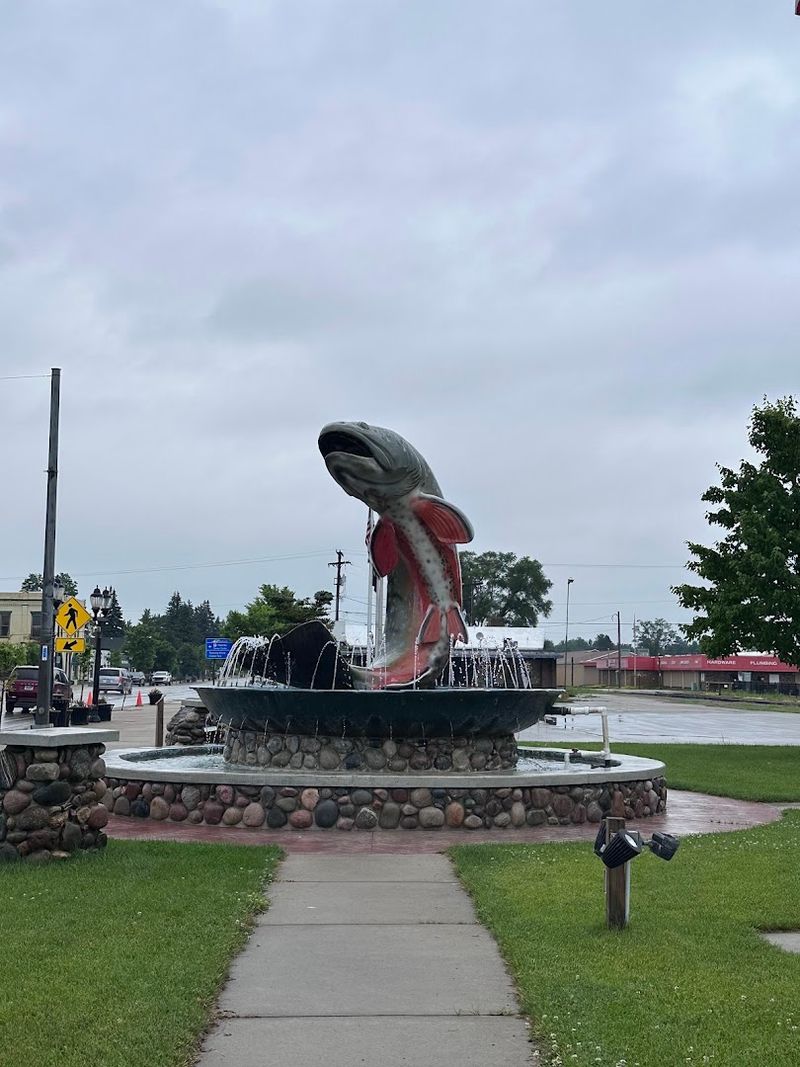
The memorial makes more sense once you remember that Kalkaska’s trout reputation was earned by real water nearby, not just clever branding. The Boardman, Rapid, and Manistee Rivers are part of the broader fishing story here, and the monument works almost like a signpost pointing toward the landscape that gave the town its identity.
I appreciate that the statue does not try to replace the outdoors experience. Instead, it introduces it.
For travelers like me, the trout becomes a visual cue that this part of Michigan cares deeply about streams, seasons, and the rituals tied to getting out on the water when spring rolls in.
You do not need to spend the day fishing to enjoy that context. Knowing those rivers are part of the local story makes the memorial feel less whimsical and more earned.
It celebrates something tangible, which is why even a quick roadside stop can leave a stronger impression than expected. And for pure photo potential, this fish absolutely knows how to work its best angle.
A photo stop that actually earns the stop
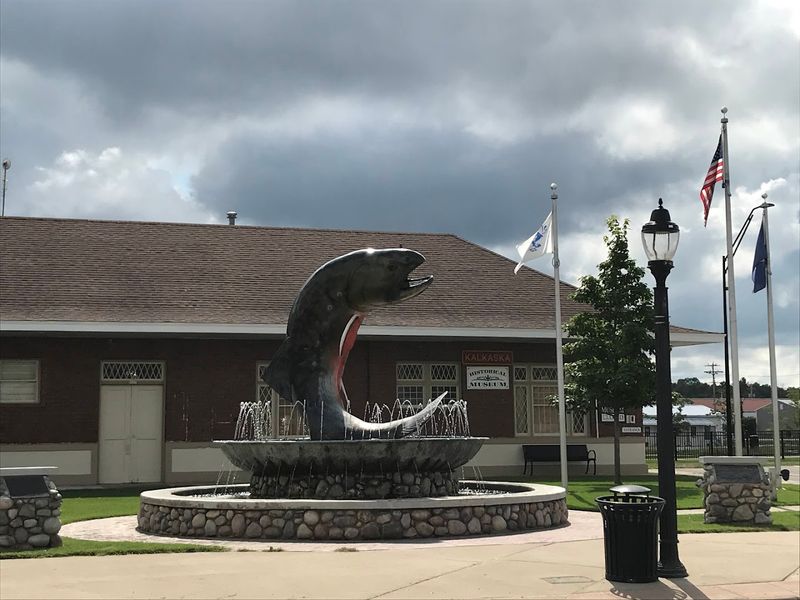
Some roadside attractions are amusing for about twelve seconds, then you are back in the car wondering why you parked. This one earns a longer pause because the trout is colorful, oversized, and genuinely well placed, with enough room around it to appreciate the shape, the fountain, and the museum backdrop in the same frame.
I found it especially photogenic in direct sunlight, when the painted colors stand out and the memorial looks almost newly polished. The scale helps, too.
Pictures become more entertaining when a giant brook trout towers over the scene with complete confidence and no interest in modesty.
What I liked most is that the stop never felt inconvenient. It is easy to access, simple to understand, and free to enjoy, which makes it ideal for road trips where you want something memorable without rearranging the whole day.
That convenience is part of its appeal, but the atmosphere around the memorial matters just as much, especially in a town this compact and friendly.
Small-town personality in plain view
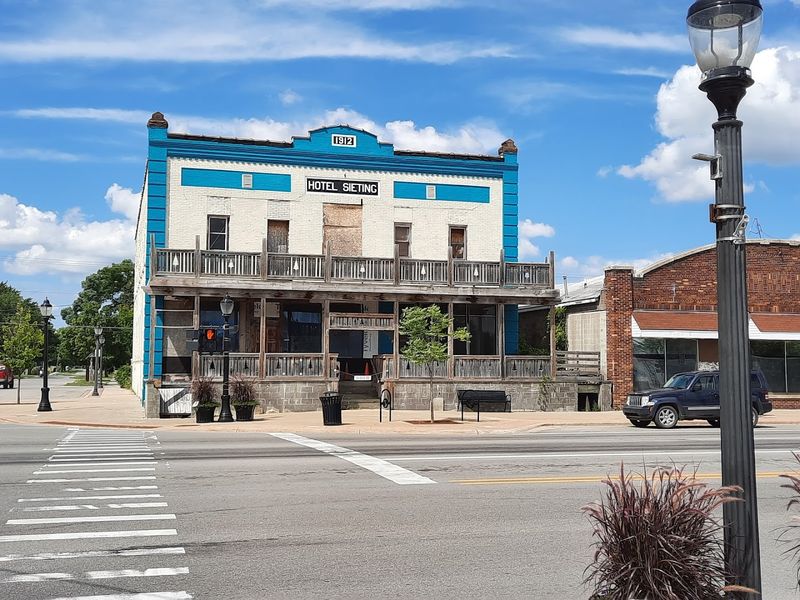
What stayed with me was not just the fish itself, but the way the memorial reflects Kalkaska’s personality in plain view. It is cheerful without being corny, proud without feeling self-important, and public in the best sense, offering a shared landmark that residents and travelers can both enjoy without needing a ticket or a long explanation.
I think that is why the place works so well. The town does not hide its affection for trout culture behind polished branding language or oversized promises.
It simply puts a giant brook trout near the road, cares for it, and lets that choice speak with a wink and a lot of local confidence.
For me, that honesty is refreshing. The memorial feels like an open handshake from Kalkaska, one that says this is who we are, and we are perfectly comfortable making it visible.
By the time I was ready to leave, the site had already turned from a novelty into something more satisfying, which is exactly where this story lands.
Why I would gladly stop again
I came for a quick look at a quirky landmark and left with a real appreciation for how well the National Trout Memorial sums up its town. It celebrates Michigan’s state fish, honors a long fishing tradition, brightens a main route north, and does all of that with enough charm to make the stop feel memorable instead of obligatory.
There is no complicated strategy required here. Show up, take your time, notice the fountain, glance at the depot, and let the place explain itself.
The memorial is playful, but it also has roots, which is a combination I never mind finding on a trip through the United States.
That is why I would happily pull over again the next time I pass through Kalkaska. Not every landmark needs to be grand to be meaningful.
Sometimes a giant trout, a splash of water, and a town that knows exactly what it is celebrating are more than enough to hook your attention and keep it.



