 Unearth The Voyage
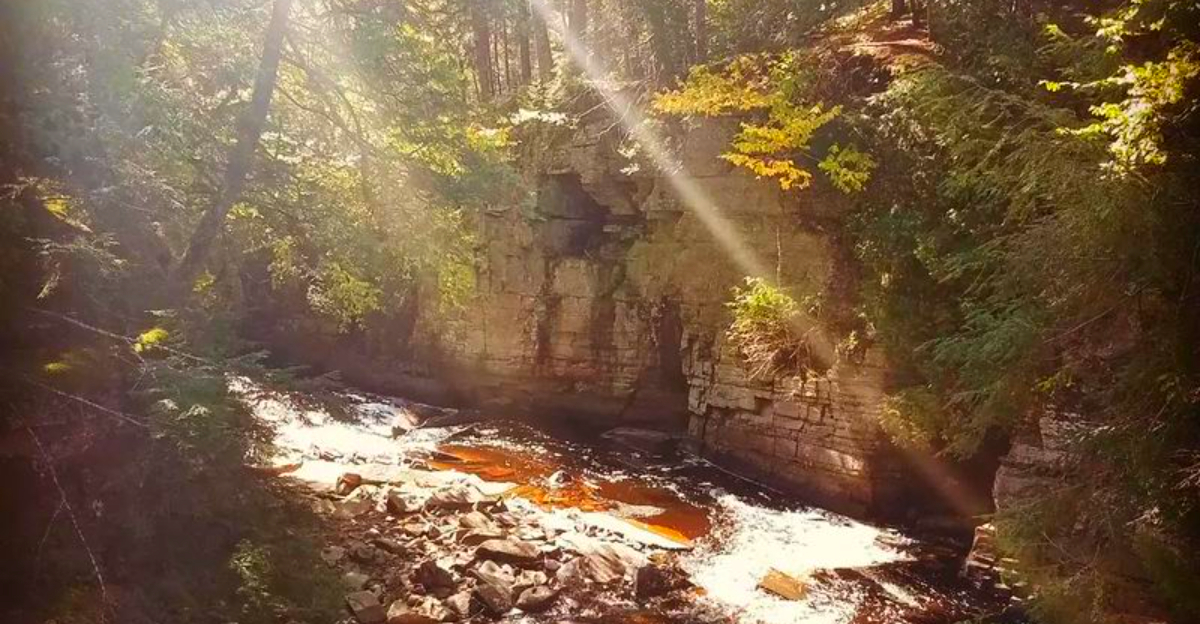
There’s a corner of the Upper Peninsula that sneaks up on you with a thunderous hush. A short trail dips through maple and hemlock, the air cool and mossy, then the river tightens its grip and everything starts to look carved with intent.
You hear a rush, see rock ledges squaring off like old rivals, and realize you’ve slipped into a canyon that most road trippers cruise past without a clue. Keep reading, because this place turns a quick stop into a full memory with almost no effort required.
Getting There and Exact Address
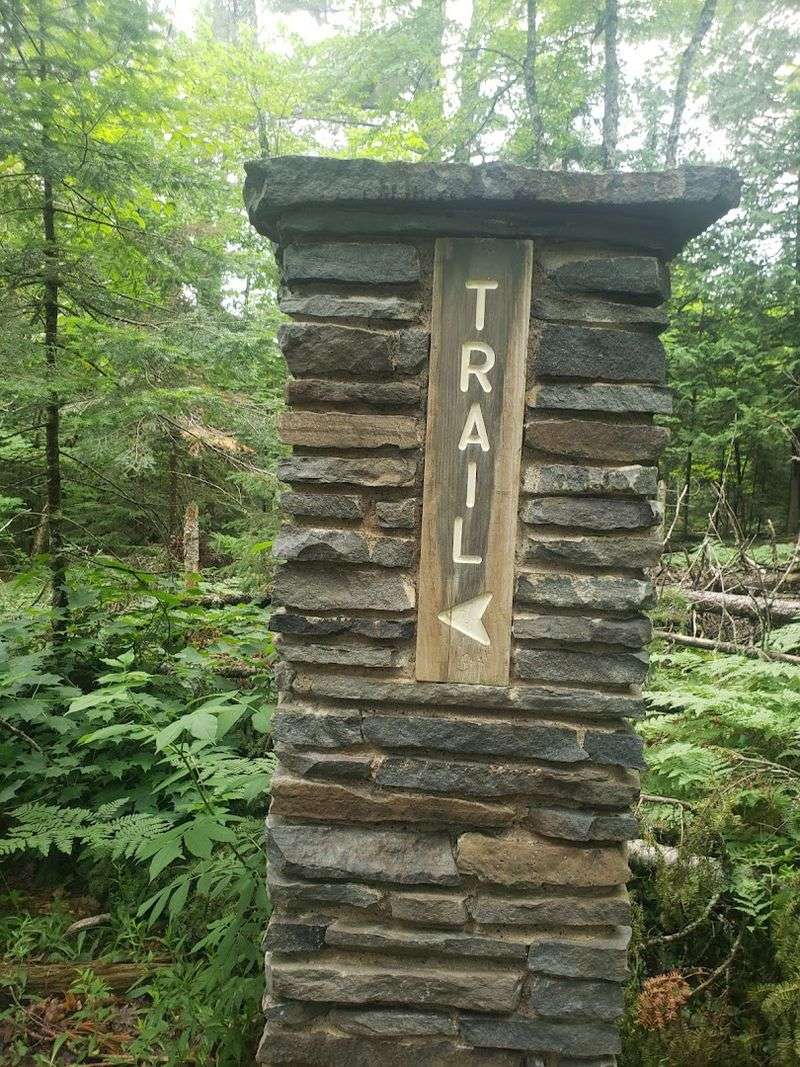
First things first, you’ll find Canyon Falls at L’Anse Township, MI 49946, about 15 miles south of L’Anse on US 41, marked by a roadside park with ample parking and a clear trailhead. The coordinates hover near 46.6235483, -88.4759679, which your phone will happily guide to the lot, bathrooms, picnic tables, and a big map that makes planning effortless.
I like to start with a quick scan of the kiosk, then slip onto the path as traffic hums away behind me.
The trail heads into hardwoods and hemlock, hugging the Sturgeon River as the noise of the highway fades and a steady rush replaces it. It’s roughly a mile round trip with side peeks to riffles and ledges that preview the main event.
One minute you’re in a rest area, the next you’re in a gorge that looks like it cracked open for your afternoon.
Getting there early matters if you prefer a quieter mood, since the park is popular with families and photographers. In summer, the lot fills by midday and the river becomes a playground of skipping stones.
I shoot for morning light, then circle back to the tables for a snack, already planning another lap.
Winter shifts the logistics, because the gate can be closed and parking shrinks along the plowed edge, so a short roadside walk leads to the trail. Snow muffles everything and the falls often freeze into blue sculptures.
The approach feels wilder, but the payoff doubles.
First Look at the Gorge
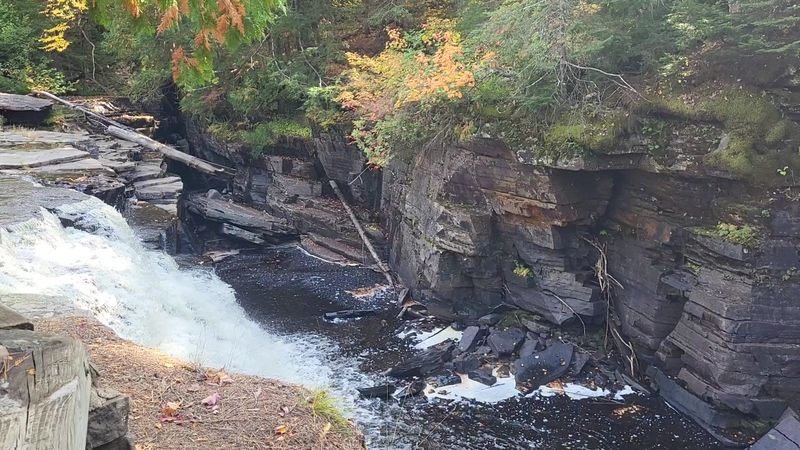
That first glimpse of the canyon snaps everything into focus as the Sturgeon River drops into a tight corridor with squared rock ledges. The stone feels geometric and deliberate, like a staircase for giants, while water threads the gaps with persistent energy.
Edges look crisp, surfaces hold shallow pools, and the sound bounces around like a drum.
Along the rim, flat shelves invite you to step closer, and I always move slowly, testing traction before leaning in for a view. The river has a dozen moods here, flicking from slick blackslides to white seams.
Looking upstream, the channel pinches, then suddenly releases into a plunge that breathes cool mist.
The canyon is not enormous by western standards, and that’s the charm, because details steal the show. Ferns take root in seams, lichens map the walls, and the ledges cast clean shadows that tell time on sunny days.
Even under cloud cover, the gorge holds shape like a well cut suit.
Bring curiosity and a steady stance, then let the canyon set the pace. You can follow the line of the river like reading a sentence that gets sharper with each clause.
I always realize I’ve slowed to half speed, which is exactly right.
The Main Waterfall
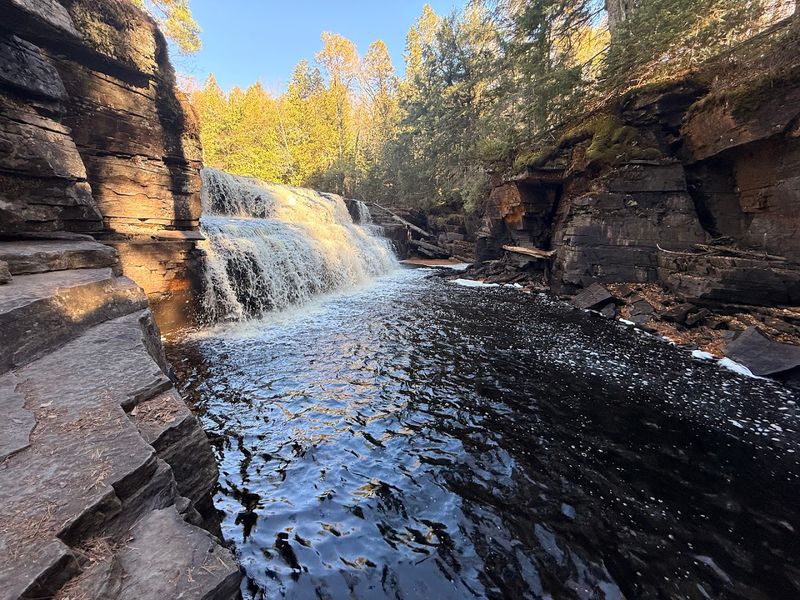
The main drop is the showstopper, a roughly 15 foot curtain that pounds into a dark, rounded pool with a voice you feel in your ribs. On good flow days, the lip holds steady and the plunge stacks into muscular pillows.
I ease to the fence first, then take the side path to different angles as the mist drifts and cools my face.
Photographers love the symmetry, because the square ledges frame the water like a neat mat around a print. Late afternoon adds a gentle slant of light and color, while cloudy skies deliver buttery exposure without glare.
I have watched people go quiet here, which tells you everything.
In lower water, character replaces sheer force and rock patterns speak up. Runnels appear on the approach, the plunge line tightens, and you can trace the movement like a finger on glass.
The pool stays moody either way, hanging onto its shadowed look.
Respect the edges, because the cliff lines are unforgiving and wet stone can surprise even on mild days. I keep my stance compact, take deliberate steps, and stay behind railings when they exist.
The waterfall rewards patience with subtle shifts that most folks miss.
Trail Details and Difficulty
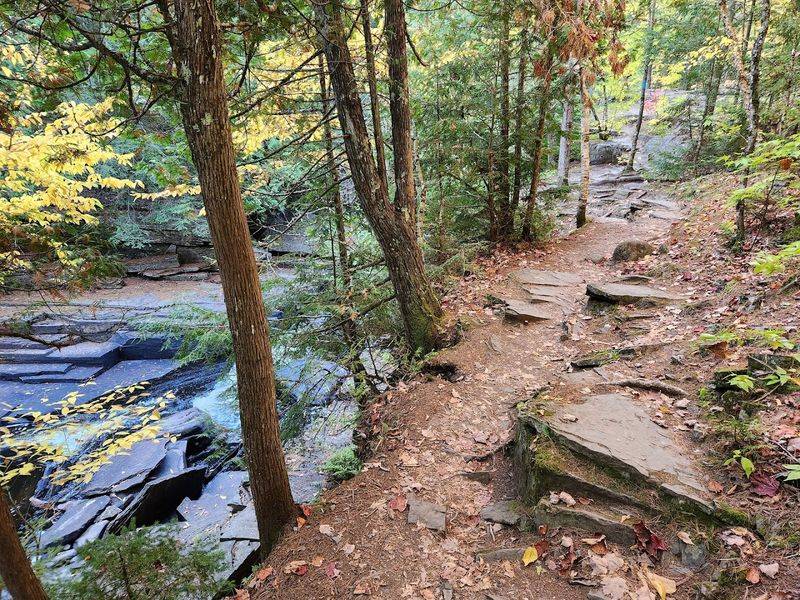
The path plays fair, offering an easy to moderate stroll that still feels like a real hike. Surfaces switch between compacted soil, gravel, and lengths of boardwalk that skim over the mucky spots.
Roots and rocks keep your eyes honest, but nothing feels technical if you take your time.
Distance clocks in around one mile round trip if you stick to the main overlook and falls. Detours tack on a few scenic minutes as you chase side riffles, which I always do because they read like warmups to the plunge.
Elevation barely registers, and the grade stays friendly enough for a broad range of walkers.
Sturdy shoes make the day smoother, since slick patches appear after rain and leaves hide edges in fall. I bring trekking poles only in winter or if I plan extra exploring along the rock shelves.
Otherwise a water bottle and a pocket for the phone are plenty.
This is not wheelchair accessible, though there is handicap parking in season near the lot. Families do well here with attentive footing and pauses for handholding near drop offs.
The trail never bullies, it just asks you to pay attention.
Seasons and Best Times
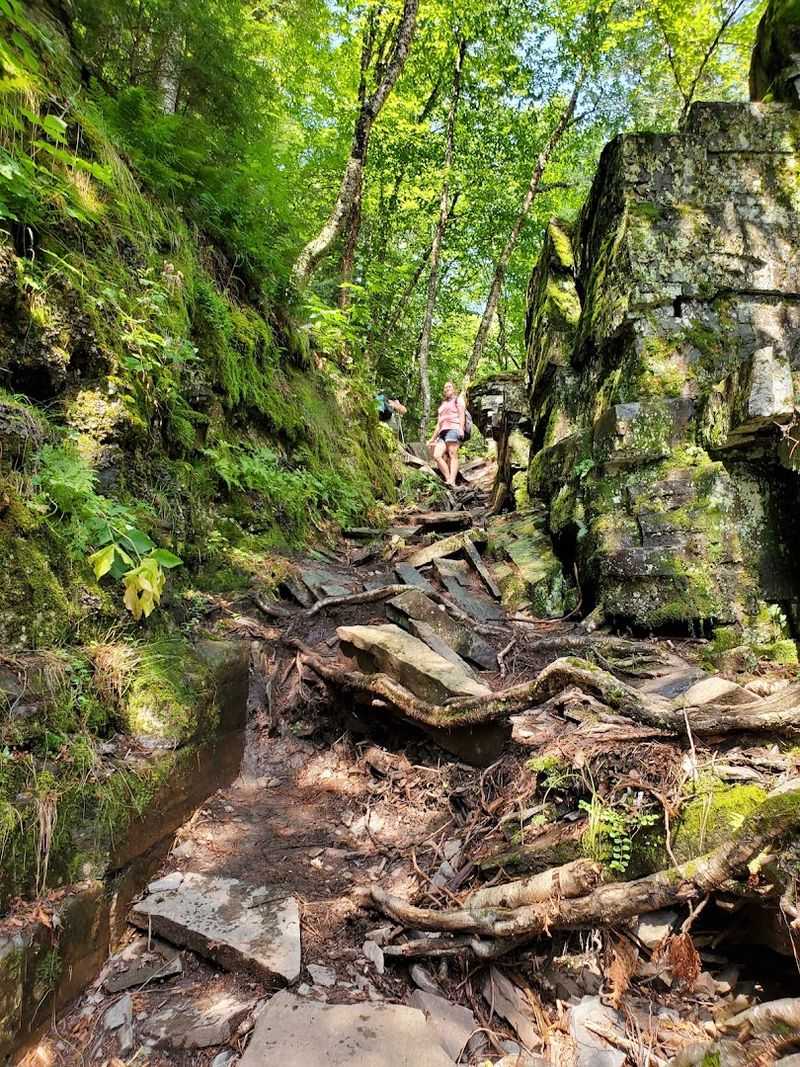
Timing adds personality, and this canyon wears four distinct outfits. Spring brings volume as snowmelt fattens the Sturgeon, turning the drop into a louder, wilder voice and sending mist higher into the trees.
Trails can be damp, but the payoff is that strong, lively water that photographs like a live wire.
Summer softens the scene under thick green, and the flat shelves become picnic studios with river white noise. Crowds grow between late morning and mid afternoon, so I slide in early or linger near dinner.
Long light helps with photography and the breeze tastes like pine and river stone.
Autumn steals the headlines because maples torch the rim with color that frames every ledge and pool. The falls remain steady, and every step becomes a poster as leaves pattern the water.
I always add time for standing still and listening for rustle.
Winter flips the script with frozen curtains, blue seams, and quiet that hangs like a blanket. Access shrinks, parking shifts to the plowed shoulder, and the boardwalks can glaze, so traction devices help.
The reward is a sculpture garden that feels private and serene.
Geology and Rock Shapes
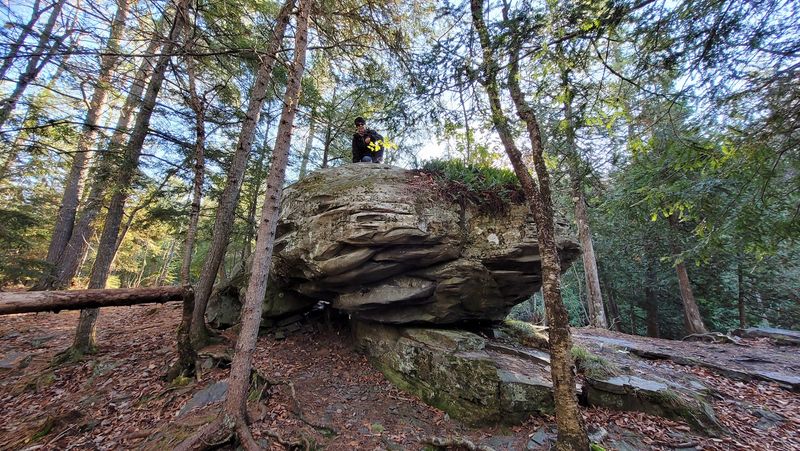
The rock here looks squared off, as if the canyon were drafted on graph paper, and that geometry sets the mood. Joints and fractures cleave into tidy angles that build ledges, steps, and boxy shelves along the Sturgeon.
Water uses those planes like ramps, skimming and dropping with precision.
Volcanic history echoes through the outcrops that crop up across the Upper Peninsula and into the Sturgeon River Gorge Wilderness. The gorge in that broader landscape plunges hundreds of feet deep and stretches impressively wide, though this stretch stays intimate and readable.
I trace seams with a fingertip and collect patterns instead of souvenirs.
Moss, lichen, and tiny ferns claim the cracks, painting soft greens over graphite stone. After rain, everything darkens and the geometry sharpens like a fresh pencil line.
On dry days, edges gray out and the rock feels chalkier and warm.
You don’t need a degree to feel the structure, just curiosity and a moment to notice the right angles hiding in plain view. A phone flashlight reveals mineral specks and crystals in shaded corners.
The canyon shows its blueprint if you slow down and look closely.
Photography Tips and Angles
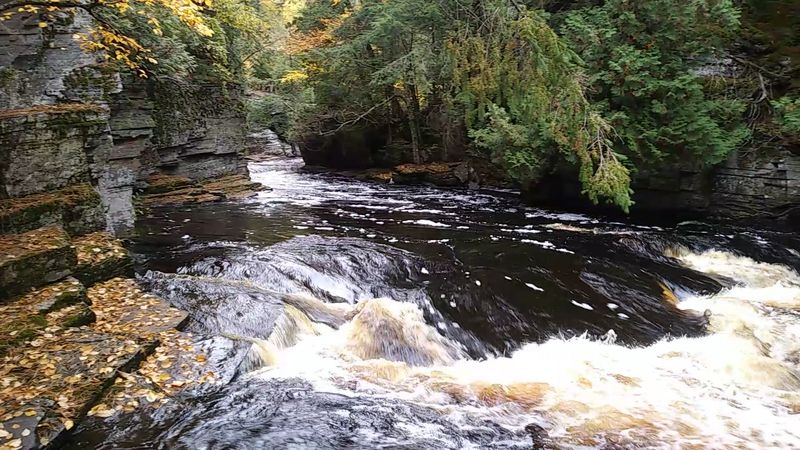
Cameras love this place because every bend delivers a clean composition. Leading lines form naturally from the squared ledges, pulling the eye to the plunge and back again along the river’s curve.
I frame wide to capture context, then switch tight to isolate textures, spray, and the dark pool.
Cloudy days are friendly, thanks to even light that avoids hotspot glare on wet rock. Golden hour warms the stone and lights the mist, which feels cinematic without extra effort.
A polarizer cuts glare on the pool and deepens the greens while keeping reflections manageable.
Tripods help with long exposures, but I keep legs clear of traffic and never step past barriers. Shutter speeds around half a second create soft ribbons, while faster settings hold texture and punch.
I take both, because the river’s personality shifts minute by minute.
Respect privacy when others are exploring near the water, and wait for gaps if you prefer clean frames. The best angle can be a step back, where the fence creates a tidy foreground line.
The canyon rewards patience more than any technical trick.
Trail Etiquette and Safety
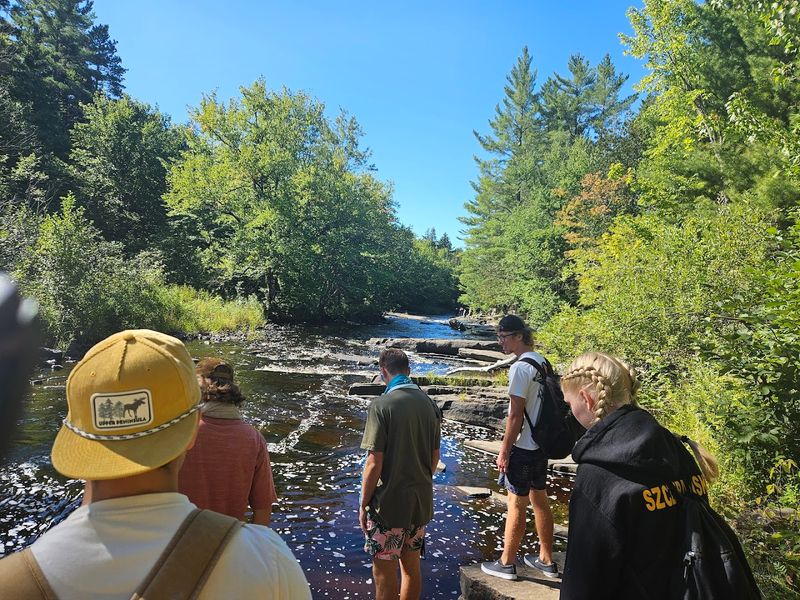
Common sense makes this visit smooth and keeps the mood relaxed. Stay on marked paths, keep behind railings at overlooks, and give the river the respect it demands.
Wet rock can flip from grippy to slick without warning, especially near the plunge and along shaded shelves.
Footing matters more than speed, so slow your steps where roots cross the trail or leaves hide edges. I carry a small first aid kit and a dry sack for electronics in case of spray.
Kids do great here with handholding near drop offs and clear rules about staying within set boundaries.
Weekends bring more people, which makes passing on narrow parts a polite dance. Yield with a smile, step to solid ground, and let cameras finish their moment before moving in.
The entire place feels better when everyone plays by the same simple script.
Winter calls for traction spikes and warm layers because shade chills quickly along the gorge. I pack a headlamp during short days so dusk never sneaks up at the car.
Safety is not complicated here, it’s just deliberate.
Hiking Beyond the Falls
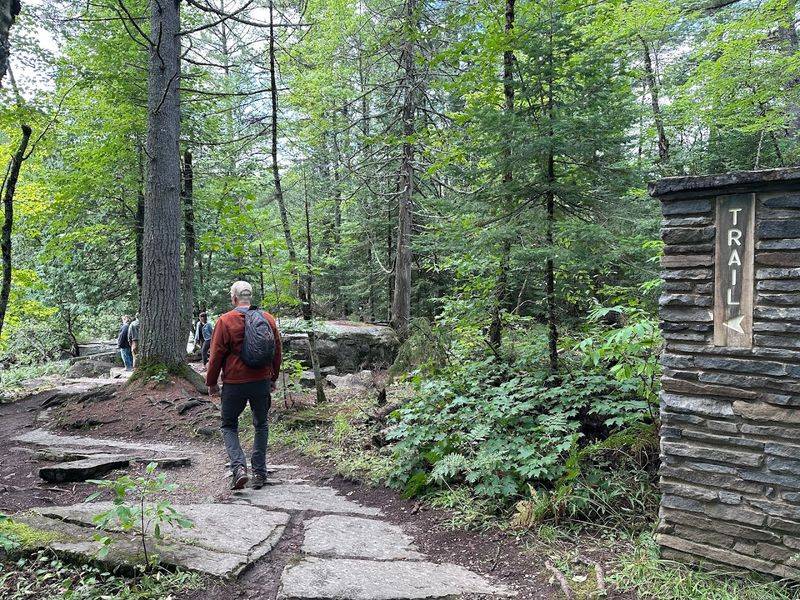
Curiosity pays if you keep going past the main viewpoint, because the river keeps telling stories. Smaller drops, long slides, and quiet pools piece together like chapters downstream.
I follow the tread and watch the gorge morph with new angles and textures.
Parts of this corridor intersect segments connected to the North Country Trail in the broader region, and that long distance spirit is easy to feel. The footbed grows rougher with roots and occasional step downs, so a little extra attention goes a long way.
I pack a snack, pick a turnaround time, and give the river another mile.
Solitude increases the farther you wander from the roadside park, which flips the vibe into meditative. Birdsong takes the lead while the waterfall fades into a low hush behind you.
The canyon still whispers, just with softer consonants.
Signal can fade under the canopy, so I drop a pin at the lot before heading out. A paper map never hurts, and daylight is the currency you should watch most closely.
The trail beyond the headline feels like a secret in plain sight.
Wildlife and Plant Life
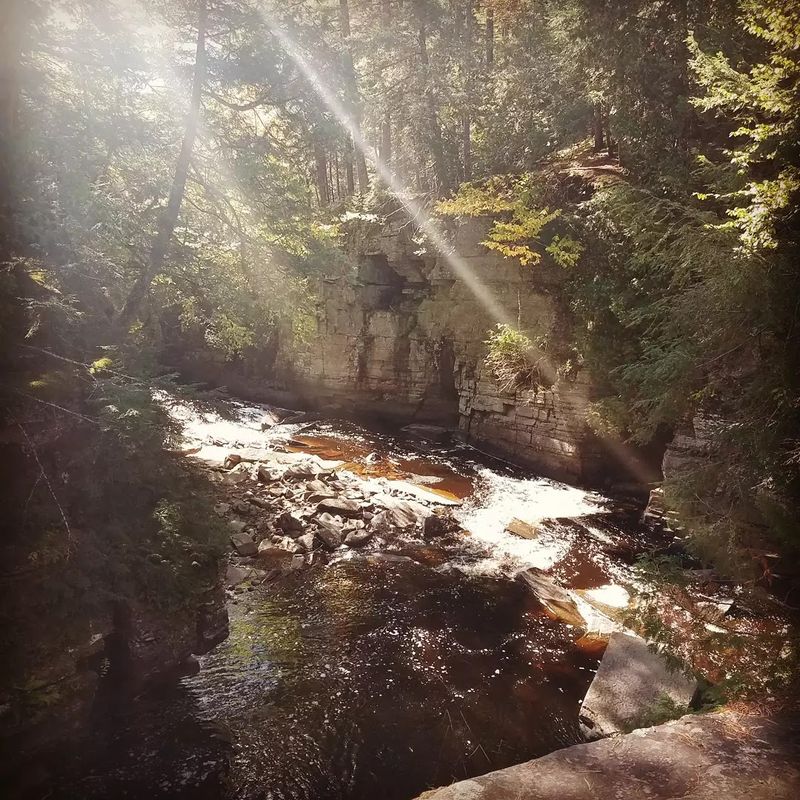
The forest dresses the canyon with a reliable mix of maple, birch, and hemlock that frames every bend. Understory ferns stitch green thread through boulders while moss rounds off sharp corners with velvet.
I notice tiny fungi stair-stepping up decaying logs like little pagodas.
Birdsong travels well in the gorge, and I keep an ear out for thrush flutes and chickadee chatter along the quieter stretches. Dragonflies patrol near the sunlit pools and keep the scene lively.
Squirrels stage hurried acrobatics above the trail, then vanish like rumors.
Insect levels spike in summer, so a head net or repellent saves your focus for the views. I wear light layers that breathe and seal at the cuffs when bugs begin their mission.
Cooler months calm the action and open the soundtrack to leaves and water.
This is not a wildlife safari, but patient eyes rack up small wins. Lichens trace weather maps on stone, and seedlings collect in ledge corners where soil gathers.
The ecosystem rewards stillness, the kind that lets details approach you without effort.



