 Unearth The Voyage
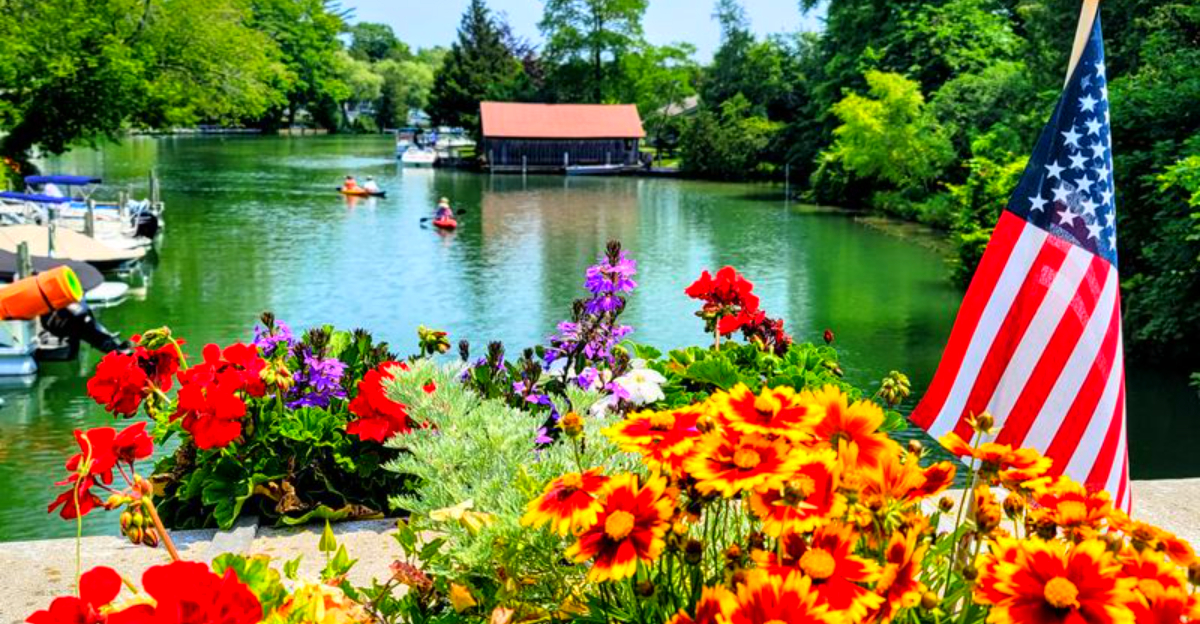
If a place can whisper, Leland does it with lake mist and cedar smoke. You think you know Michigan’s prettiest town until you find yourself on a plank dock in Fishtown watching whitefish scales glitter like confetti.
The surprise is not just how photogenic it is, but how the details refuse to stay on your screen once you leave. They stick to your sleeves like sand, asking you to come back for one more look, one more bite, one more walk along the river that never rushes you.
Fishtown at First Light
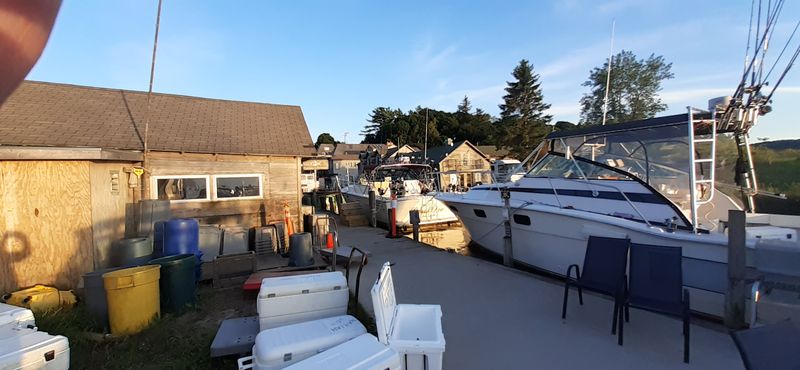
Step onto the boardwalk just after sunrise and the shanties seem to inhale with you. Wood creaks underfoot, swollen from last night’s lake breath.
Nets hang like sleepy curtains, their knotted twine rough under your fingers, and gulls bark names you do not know.
There is the smoker, exhaling a thin ribbon that smells like campfire and salt, even though this is freshwater. A woman in rubber boots slides a tray of fillets inside, her glove clicking the latch.
You catch a shard of scale on your sleeve, a tiny mirror that refuses to fall.
The river’s pull is patient, nudging boats into a slow grin as they pivot from dock to channel. A captain sips coffee from a dented thermos, eyes on the breakwall that cuts the horizon like a checklist.
You promise yourself five minutes here. It becomes an hour, then the day.
Where Lake Michigan Meets Your Shoes
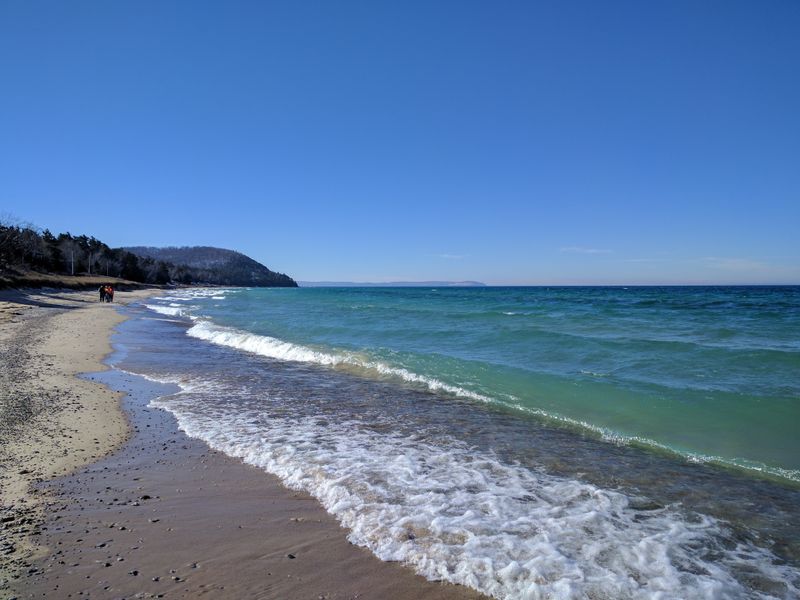
North Beach does not ask for ceremony. You step down from the street, past a tangle of dune grass, and the lake wastes no time with introductions.
It thumps your shins, bright and cold, sending a ribbon of ache up your bones.
Press your heels into the sand and feel the packed layer give, then hold. Pebbles flicker under the surface like a jar of marbles rolled slowly between palms.
A child nearby shouts with the first mouthful of wave, then laughs, then shouts again, a metronome for everything else.
Downshore, someone stoops to scan for beach glass, those softened shards with domesticated edges. You join them, eyes calibrating to the pale greens and blues.
The best piece hides by your own footprint, as if the lake tucked it there on purpose.
The Leland River’s Slow Conversation
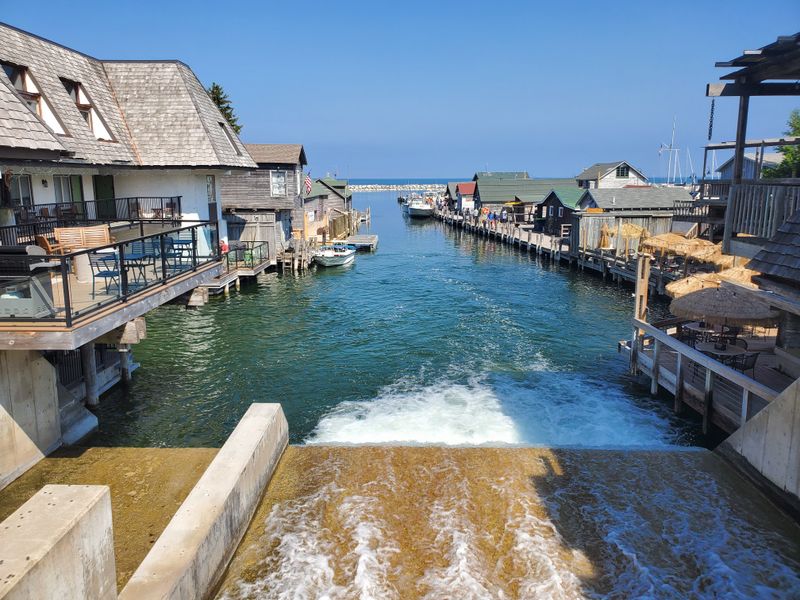
The river ties the big lake to the inland one like a stitched seam. Sit on the railing near the dam and listen to it gossip against the pilings, soft then sudden.
A dragonfly drags a blue spark across the surface, starting and stopping like a skipped record.
Kayaks nose into the current, bright plastic commas in a sentence the river keeps editing. Paddles dip.
The sound is butter spread on warm toast, smooth then caught by a crust of turbulence.
On the far bank a dog leans so far toward a floating stick you wince. He recovers, triumphant, tail tattooing the planks.
The water slides on, unbothered by theatrics, gathering the day’s crumbs and talk and hiss of line on reel, and offering them to the lake as if it always knew the ending.
Smoked Whitefish, Grease-Paper Truth
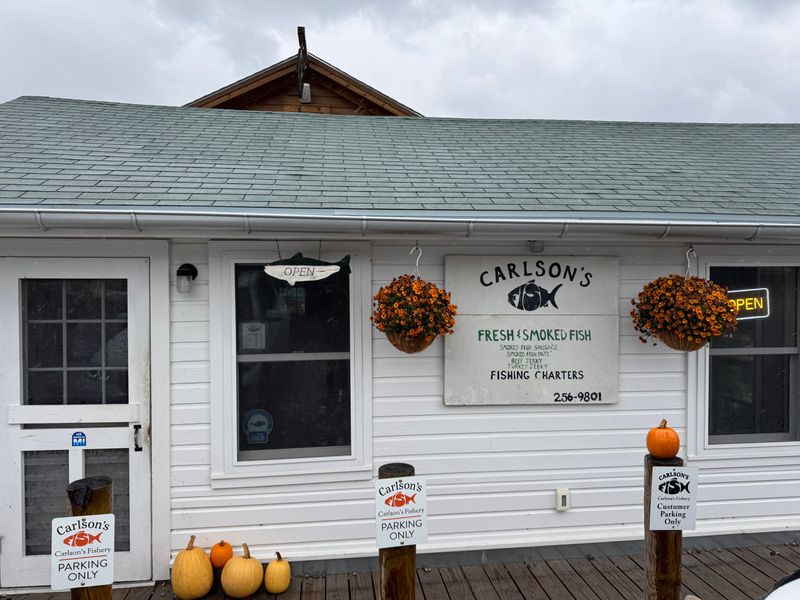
The paper is thin and gives immediately. You crack the skin, and it sounds like a shy applause.
Steam lifts off in a whisper, scented with alder, fat, and patient time.
Flakes come away like small confessions, rich but clean, a lake story without exaggeration. A squeeze of lemon brightens the edges.
You chase with a cracker, a pickle, whatever sits within reach, because none of it needs ceremony.
Behind you the smoker rumbles, door shut like a stubborn diary. The counter bears knife scars and salt freckles and a tally of seasons.
You think you will save some for later, then your hands keep moving, and later is suddenly a crumple of paper and a satisfied quiet.
Main Street, Pocket-Sized and Walkable
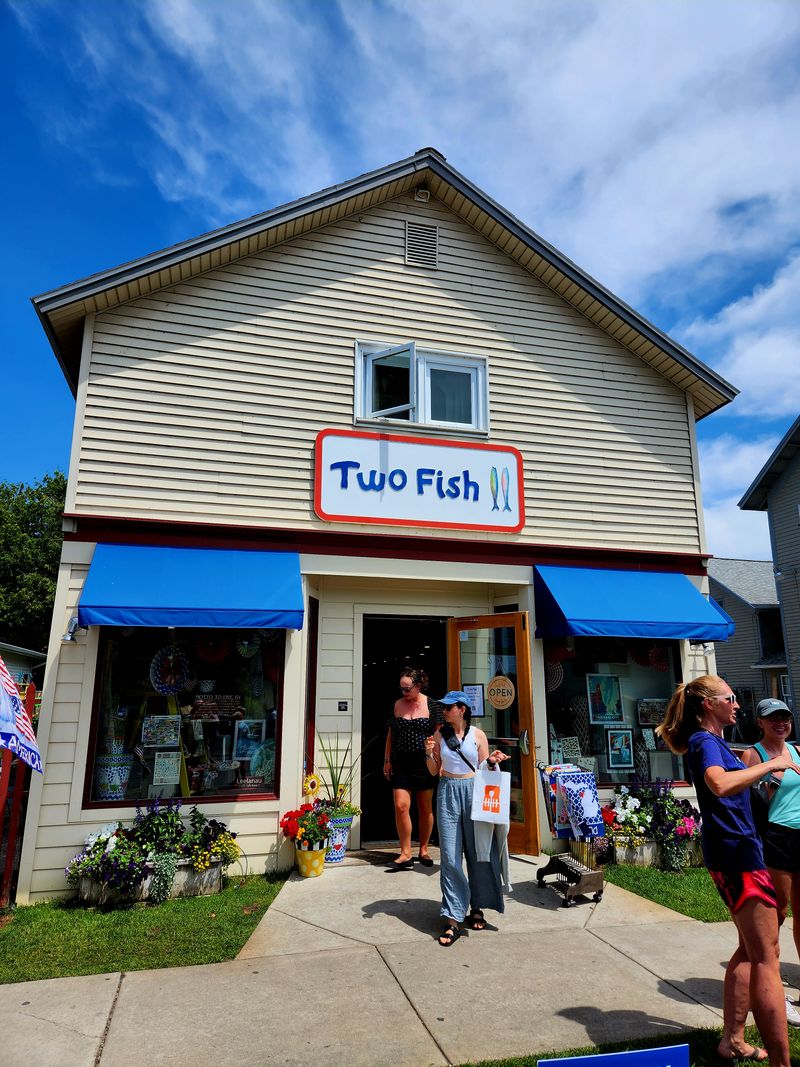
Main Street is the length of a song you almost know by heart. You walk it without strategy, crossing for a window box, stopping for the bell on a shop door that rings like a memory.
Coffees pass in paper cups that warm your palm.
In the bookstore, page edges riffle when the fan kicks on, and a staff pick card has a penciled note that reads trust the ending. Outside, bikes lean at comfortable angles, their chains wearing a polite grit.
A dog’s tag tings against a water bowl with each brisk sip.
By the corner, a porch flag lifts and falls with traffic that never rushes. You pocket a postcard you will never mail.
The street ends not with spectacle but with a glimpse of water, which feels like permission to keep going anyway.
History You Can Touch, Not Memorize
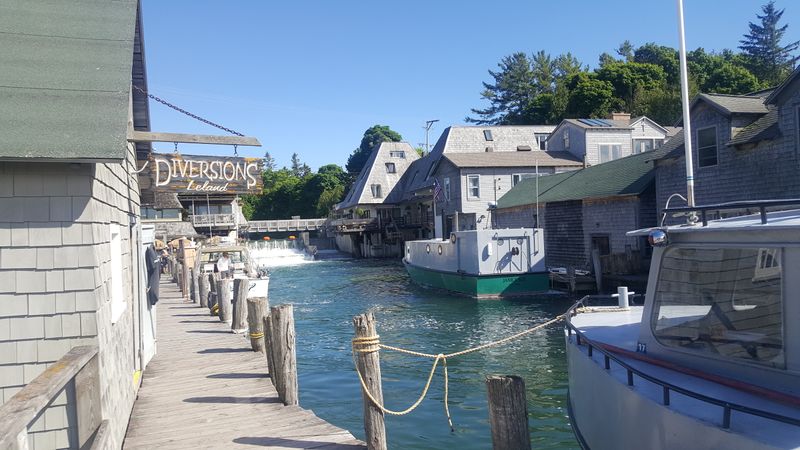
The plaques in Fishtown do not lecture. They lean at eye level, names and dates short enough to pocket.
You trace a finger over a black and white photo where the river is the same but the coats are heavier.
A reel the size of a truck tire sleeps in a corner, its spokes scabbed with rust. The beam above you shows ax marks, notched by hands that shrugged at weather.
In the glass, your face stacks with the men behind it for a second, then breaks away.
There is no velvet rope, no hush. Just a draft that smells like rope and rain and old pennies.
You step outside and the modern world resumes, but your palm still remembers the nicked feel of history that does not need your agreement to endure.
Evening Color That Refuses Filters
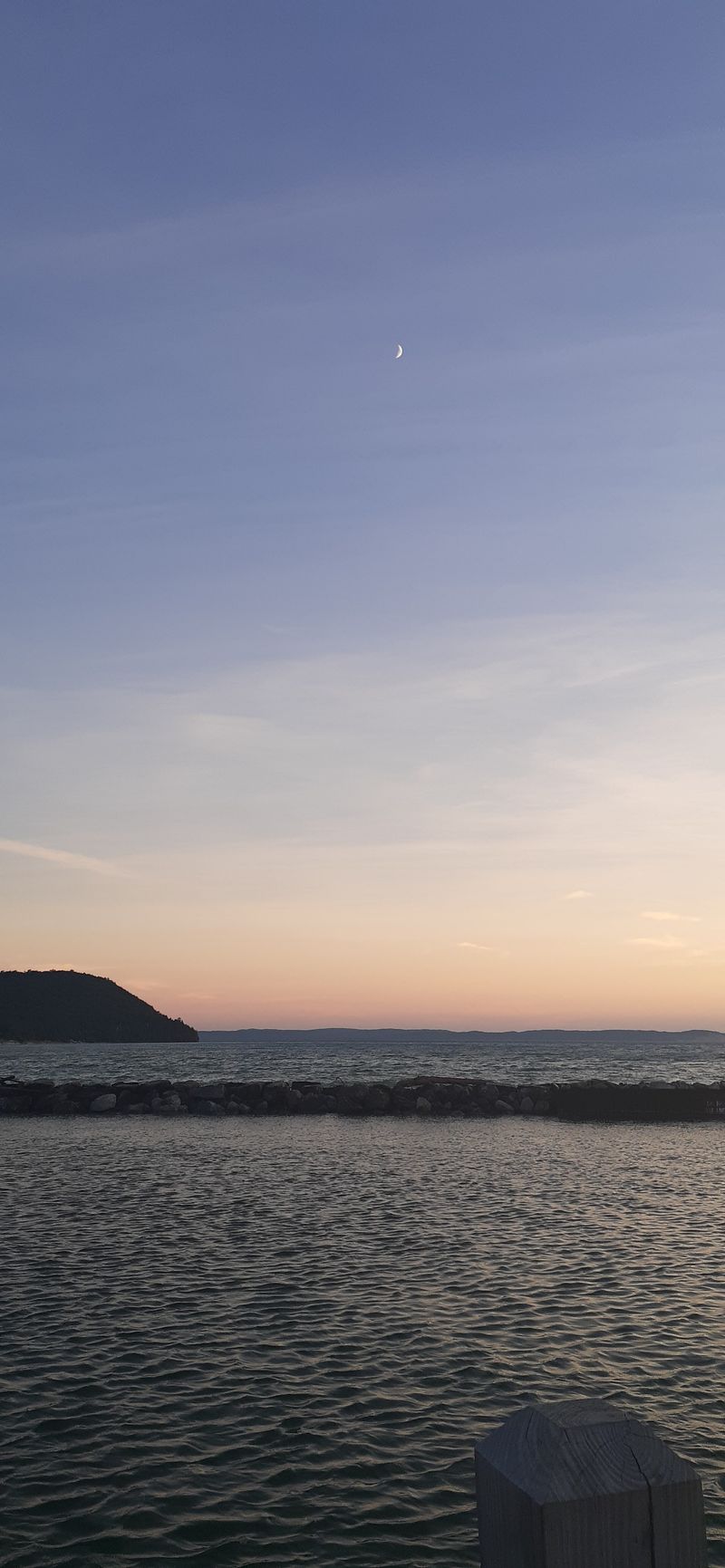
By evening the harbor is a soft circuit of footsteps pushing toward the breakwall. Someone carries a boxed pizza, the lid glimmering with grease moons.
Rod tips tap like metronomes against the stone.
The sky opens its paintbox slowly. Violet finds the undersides of clouds, orange pulls a thread through the lake, and the lighthouse becomes a clipped stamp.
Conversations settle into whispers, as if volume might disrupt the gradient.
You raise your phone and lower it again because the screen flattens what the air thickens. A boat hums home, polite wake lapping your shoes.
When the first star needles through, staying suddenly feels like the only plan that ever made sense.
Van’s Beach and the Long Horizon
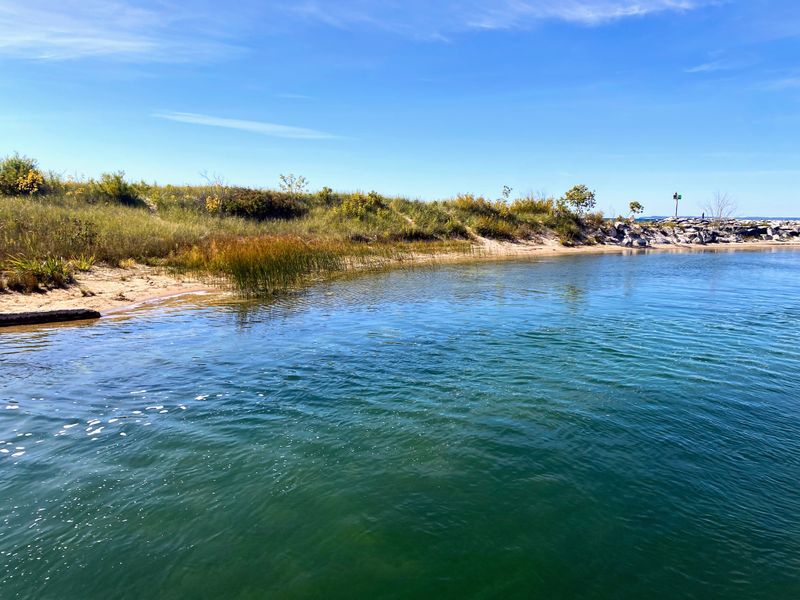
If North Beach feels immediate, Van’s Beach feels patient.
You follow a sandy path through scrubby grass and emerge onto a shoreline that stretches wide and unbothered. The Manitou Islands hover offshore, dark brushstrokes against an open sheet of blue.
The wind moves differently here. It does not dart between buildings or bounce off docks.
It runs clean across the lake and meets you full in the chest.
Flat stones skip if you throw them right. The sound – tap, tap, tap – travels farther than you expect.
Couples walk without talking much. A retiree with rolled jeans studies the waterline like it might revise itself if he looks long enough.
Sunset at Van’s does not hurry. The light thins, then deepens, then seems to gather itself for one final, impossible glow.
When the sun drops, the islands turn ink-dark, and the last color lingers in a narrow ribbon where lake meets sky.
You brush sand from your calves and realize you have not checked the time in hours.
The Manitou Islands, Always Watching
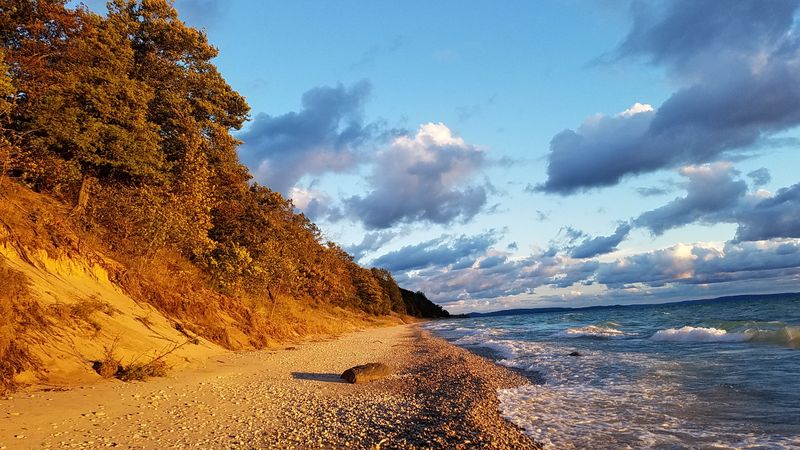
From nearly every open edge of Leland, the Manitou Islands are there.
They sit far enough out to feel mythic, close enough to anchor the horizon. North Manitou looks low and steady.
South Manitou rises with a lighthouse that flashes its quiet punctuation after dark.
Fishermen glance toward them the way farmers glance at clouds.
On clear days, you can see the difference in water tone between mainland and island shallows—a gradient so clean it feels illustrated.
Locals will tell you the islands change with mood. Morning makes them blue-gray and gentle.
Afternoon sun sharpens their outline. Storm light turns them theatrical.
You start to measure your own mood against their silhouette. They are not decoration.
They are orientation.
When you finally drive away from town and the islands slip from view, you feel slightly untethered.
Coffee Steam and Bakery Doors
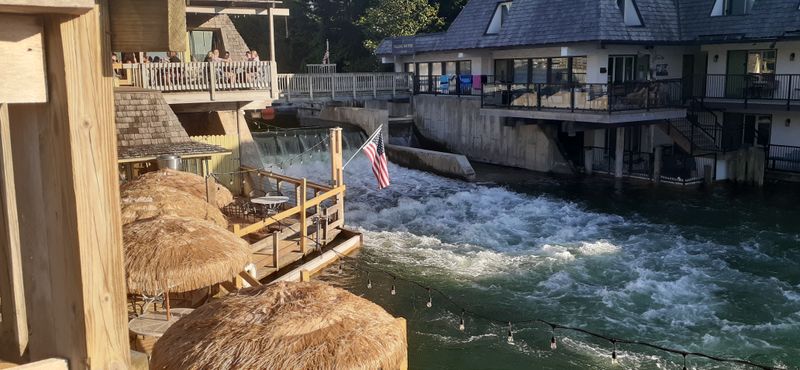
Small towns announce themselves in smells as much as sights.
In Leland, morning carries coffee steam and sugar crust.
A bakery door swings open and releases butter into the street. Someone ahead of you orders a cherry turnover, and the word cherry feels local, not generic.
You cradle a paper bag that warms your palm and step back into lake air, where sweet meets salt in a combination that should not work but does.
At a café window, mugs clink softly. Conversations are unperformed.
No one rushes you from a table.
You stir cream into dark coffee and watch the swirl echo the river’s lazy bend a block away. Even the napkins feel purposeful, folded with care instead of tugged from a metal dispenser.
You think you will take your pastry to go. You sit down instead.
The Art That Stays Subtle
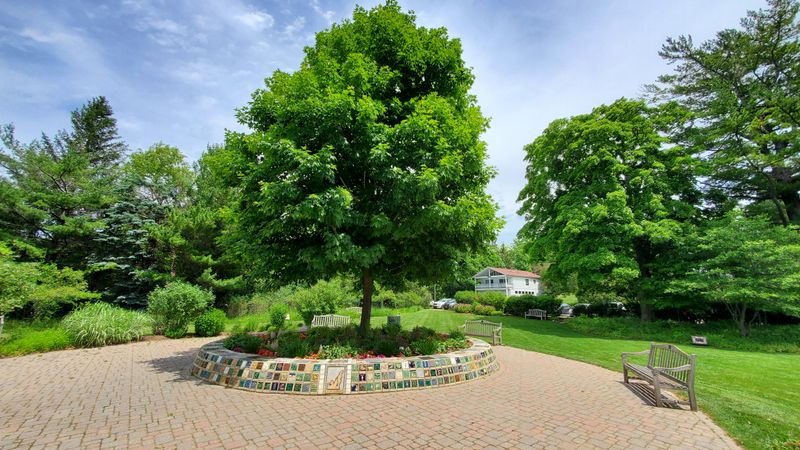
Leland does not shout about creativity. It tucks it into corners.
A gallery door opens to white walls and lake light angled just right. Paintings of the harbor hang beside abstract washes of blue that feel like distilled shoreline.
Ceramic bowls sit on a table, their glaze echoing the exact green you saw at North Beach that morning.
The artist might be the person behind the counter. Or the one sweeping sand from the threshold.
You run a thumb along the rim of a mug and feel the slight wobble that proves it was made by hands, not machines.
Nothing here feels mass-produced. Even the souvenirs lean personal: a print signed in pencil, a hand-bound journal, a photograph captured in February when the docks wore ice.
You leave with something small, telling yourself it is practical. It is not practical.
It is proof you were here.
Why Leland Surprises You
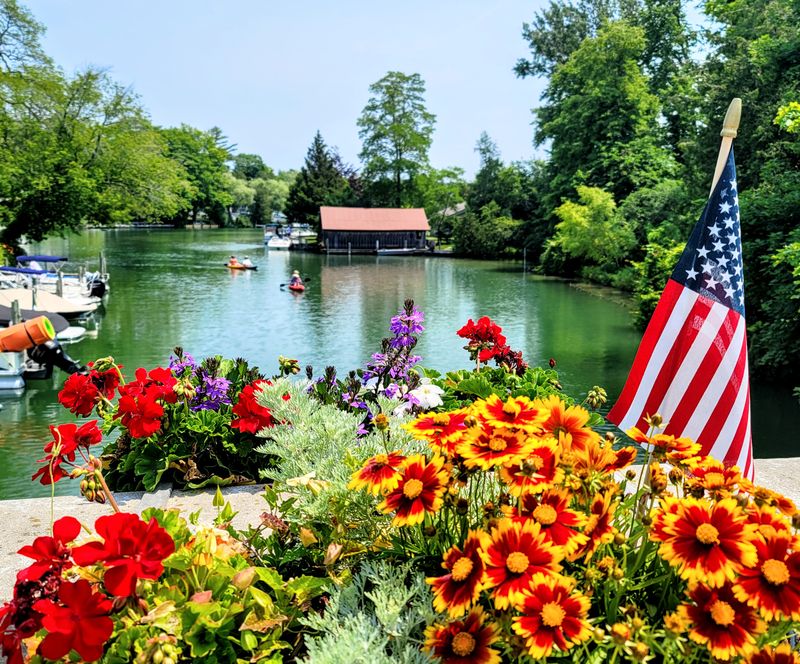
There are bigger towns along Lake Michigan. Louder ones.
Places with more restaurants, more signs, more reasons to stay busy.
Leland surprises because it does not compete.
It does not overwhelm with spectacle. It layers itself slowly – dock wood underfoot, river murmur at your back, smoked whitefish on wax paper, island silhouettes holding the horizon steady.
It asks you to notice. And once you do, the noticing becomes addictive.
The most beautiful small town in Michigan might surprise you because it does not announce the title. It just lives inside it.
You arrive expecting a quick stop, a handful of photos, maybe a sandwich.
You leave with cedar in your hair, a postcard in your pocket, and the quiet suspicion that the town is still there, whispering through lake mist, waiting for you to listen again.



