 Unearth The Voyage
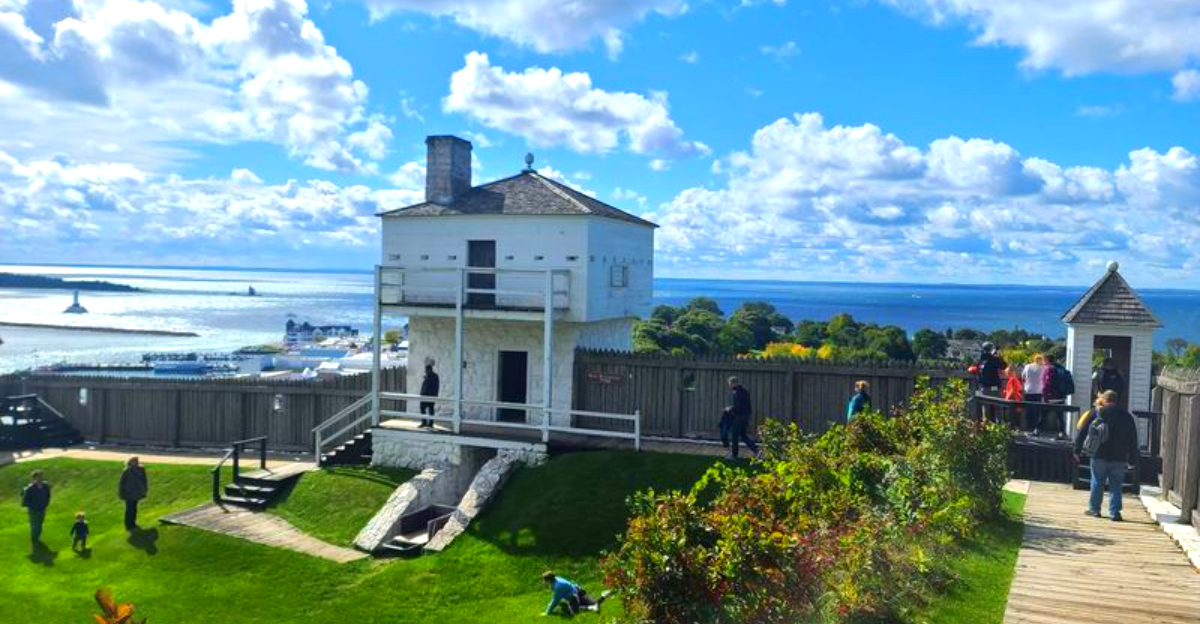
There is a place in Michigan where you can stand inside a real 19th-century fort, watch a cannon blast echo across the water, and look out over one of the most stunning views the Great Lakes region has to offer. No cars, no traffic, just history, fresh lake air, and the kind of quiet that makes you feel like you have genuinely stepped back in time.
The fort has been standing since 1780, and it shows no signs of letting its stories go untold. By the time you finish reading, you will know exactly why this place keeps pulling visitors back year after year, and why it deserves a top spot on your travel list.
Getting to Fort Mackinac: Location, Address, and How to Arrive
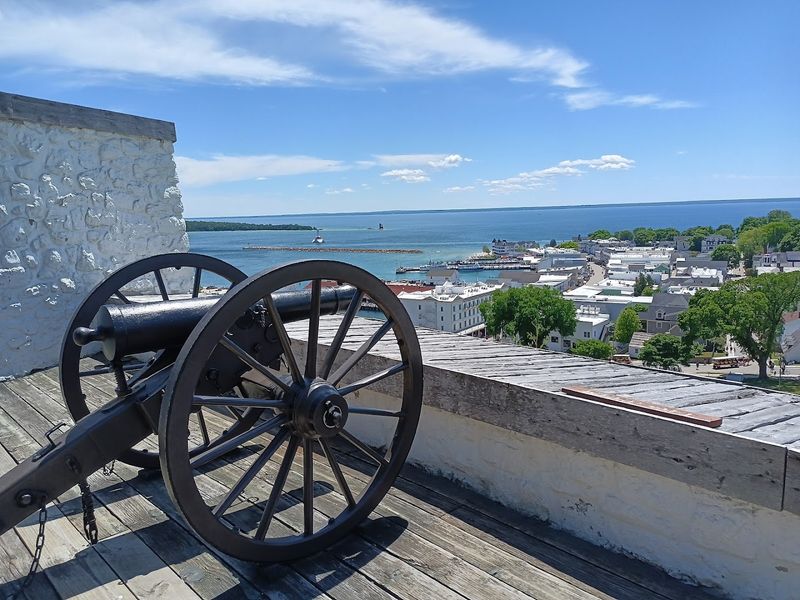
Fort Mackinac sits at 7127 Huron Road on Mackinac Island, Michigan 49757, perched high on a limestone bluff above the town and the Straits of Mackinac. Getting there is part of the fun, because no cars are allowed on the island at all.
Most visitors arrive by ferry from either Mackinaw City or St. Ignace, with the ride taking roughly 15 to 20 minutes across the sparkling blue water. Once you land, you have several options for getting around: rent a bicycle, hop on a horse-drawn carriage, or simply walk.
The fort sits uphill from the main street, and the path is steep enough that comfortable shoes are a real must. The ticket booth is at the base of the hill, so you pay before you climb.
That climb, though, pays off the moment you see the view waiting at the top.
A Fort That Has Been Standing Since 1780
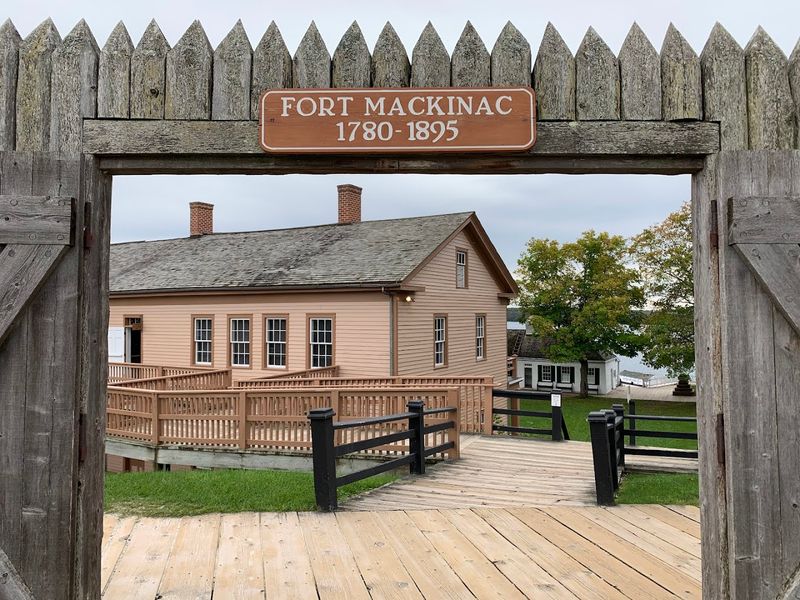
Fort Mackinac was established in 1780 by the British during the American Revolutionary War, making it one of the oldest surviving military structures in the entire Great Lakes region. The British chose this bluff specifically because it gave them a commanding view of the Straits of Mackinac below.
After the war, the fort changed hands between British and American forces more than once, including a dramatic British recapture during the War of 1812. The Americans eventually gained permanent control, and the fort served as an active military post until 1895.
What makes the fort remarkable today is how much of the original structure survives. Fourteen historic buildings still stand within the fort’s walls, each one telling a piece of a much larger story about frontier military life, territorial politics, and the people who actually lived here for over a century.
The Views From the Top Are Genuinely Hard to Believe

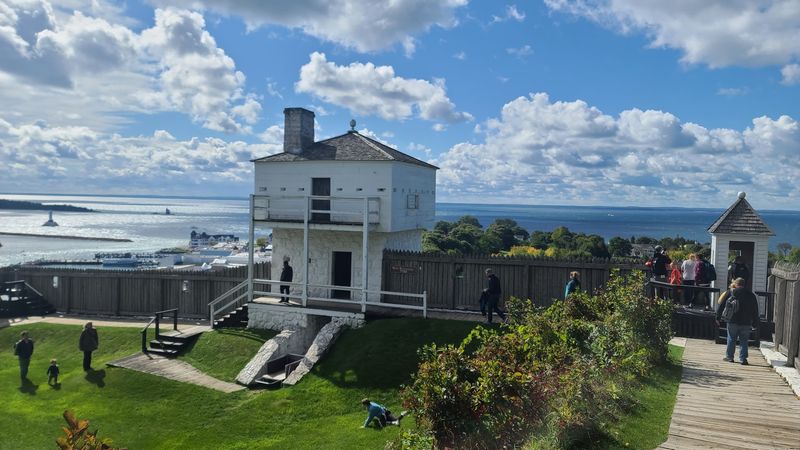
Nothing quite prepares you for the moment you reach the Upper Gun Platform and look out over the Straits of Mackinac. The water stretches in every direction, deep blue and glittering, with sailboats and ferries cutting across the surface far below.
The town of Mackinac Island fans out beneath you, its Victorian-era buildings looking almost like a miniature scene from this height. On a clear day, you can see the famous Mackinac Bridge arching across the water in the distance, connecting Michigan’s Upper and Lower Peninsulas.
This is exactly the kind of view that makes people stop mid-sentence and just stare. Several visitors have described it as unlike anything else they have seen anywhere in Michigan, and after standing up there myself, I completely understand why.
The view alone justifies the ticket price, even before you have seen a single exhibit inside.
Cannon and Rifle Demonstrations That Rattle Your Chest
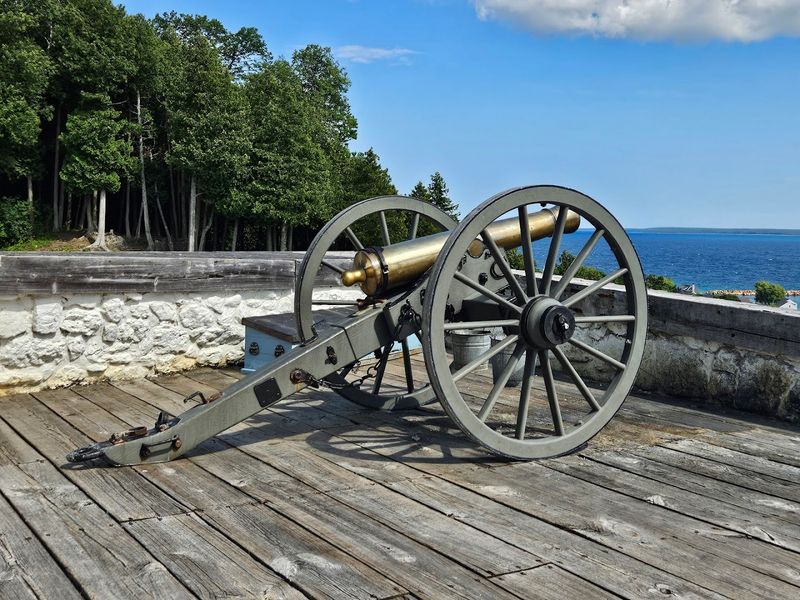
The live firing demonstrations at Fort Mackinac are easily the most talked-about part of any visit. Cannon demonstrations happen daily at 11:00 a.m., 1:00 p.m., and 3:00 p.m. up on the Upper Gun Platform, where costumed interpreters explain the fort’s artillery history before sending a thunderous boom rolling out over the water.
Rifle firing demonstrations take place multiple times throughout the day, at 10:00 a.m., 12:00 p.m., 2:00 p.m., 3:30 p.m., and 4:30 p.m. on the parade ground. The sound is genuinely loud, so if you are sensitive to noise or wear hearing aids, standing a bit farther back is a smart move.
The interpreters do a great job of building up context before each demonstration, so you leave knowing not just what you heard, but why it mattered in the history of this fort and the soldiers who defended it.
Costumed Guides Who Actually Know Their Stuff
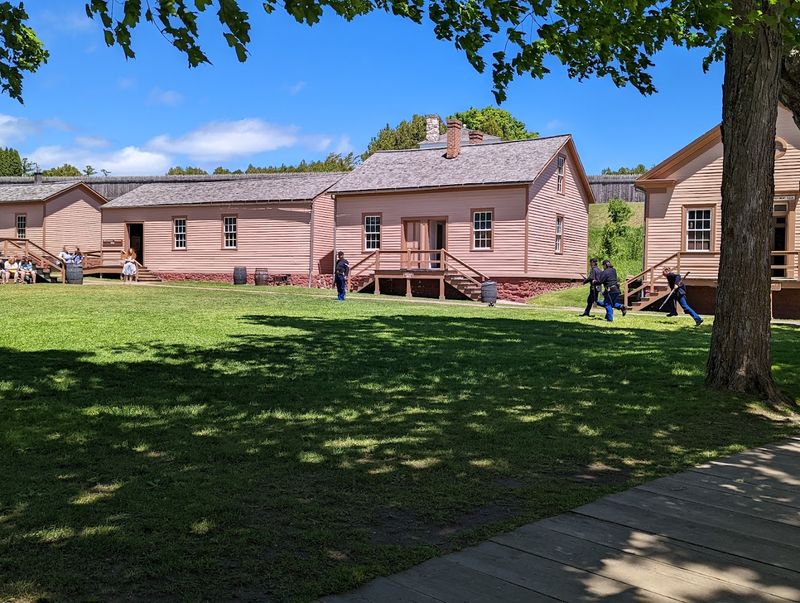
One of the things that sets Fort Mackinac apart from a lot of historic sites is the quality of the people bringing it to life. The costumed guides and reenactors are dressed in period-accurate 19th-century U.S.
Army uniforms, and they are genuinely knowledgeable, not just reading from a script.
Ask them a question and they will answer it with the kind of detail that makes you realize they have actually studied this history deeply. The fort also uses scouts as part of its living history program, which adds a fun and unexpected layer to the experience for younger visitors.
The staff are consistently friendly and approachable, and they seem to take real pride in what they do here. That enthusiasm is contagious, and it turns what could feel like a dry museum visit into something much more alive and engaging than most people expect.
Inside the Historic Buildings: What You Will Actually See
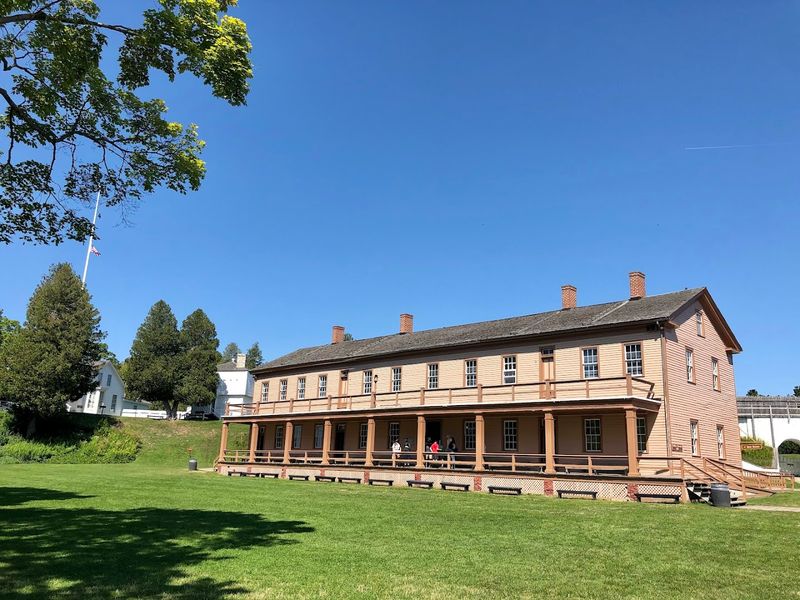
Fourteen original buildings survive inside Fort Mackinac’s walls, and each one has been carefully restored and filled with exhibits that tell specific stories about life at the fort. The soldiers’ barracks, currently being restored to its 1880s appearance, is one of the most anticipated spaces, with the theater on the second floor now open for the 2025 season.
Other buildings showcase the daily routines of military life, from the officers’ quarters to the post hospital. The medical exhibit is particularly fascinating, offering a detailed look at 19th-century medical practices that were used right here on this island.
Throughout the fort, you will find informational videos, interactive exhibits, and detailed placards that connect each space to real events and real people. The whole experience rewards visitors who slow down and actually read things, rather than rushing through to catch the next demonstration.
The Tea Room: A Meal With the Best View on the Island
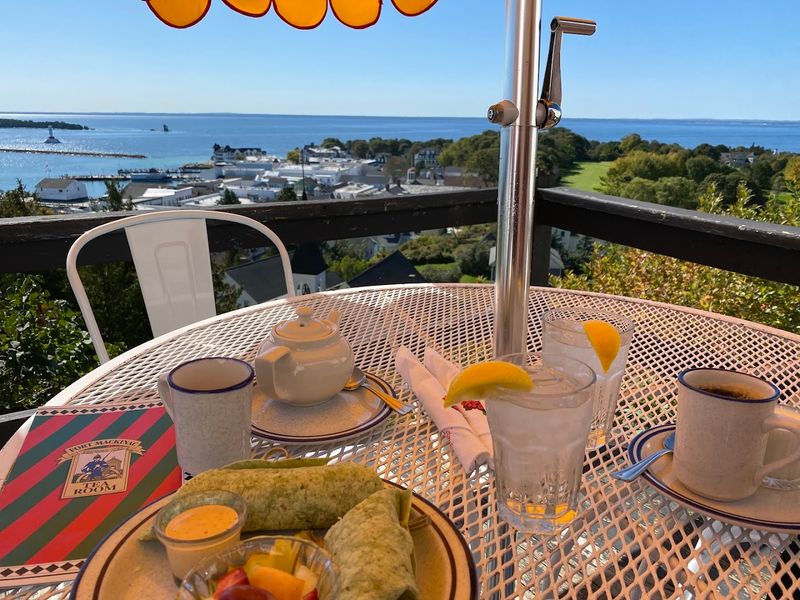
Most people do not expect to find a genuinely good cafe inside a 19th-century fort, but the Tea Room at Fort Mackinac is one of the most pleasant surprises of the whole visit. The veranda seating overlooks the harbor far below, and on a clear afternoon, there is truly no better lunch spot on the island.
The menu leans into fresh, classic options. The chicken salad sandwich with cherries is a standout, and the staff are happy to accommodate small requests, like splitting a dish onto separate plates for two people sharing a meal.
The combination of good food, friendly service, and that sweeping harbor view makes the Tea Room worth planning around, not just stopping at on impulse. Many visitors say it turned what was already a great morning into a truly memorable afternoon.
Reserve a little extra time for it.
Ticket Prices, Packages, and How to Get the Best Value

Admission to Fort Mackinac runs around $17 per person for adults, with that ticket also granting access to several historic buildings in the town below. Families and frequent visitors can get significantly better value by purchasing the 7-day Michigan State Historic Parks pass, which covers both Fort Mackinac and Fort Mackinac’s partner sites across the island.
Carriage tour packages are another popular option, bundling fort admission with a horse-drawn carriage ride and access to other island attractions like the butterfly house and the art museum. These packages are widely considered to be a smart way to see multiple highlights without scrambling to buy separate tickets all day.
Buying tickets online in advance is strongly recommended during peak summer season, when lines at the ticket booth can slow down your morning. The fort’s official website at mackinacparks.com has current pricing and package details for every season.
Accessibility, Physical Demands, and What to Expect on Arrival
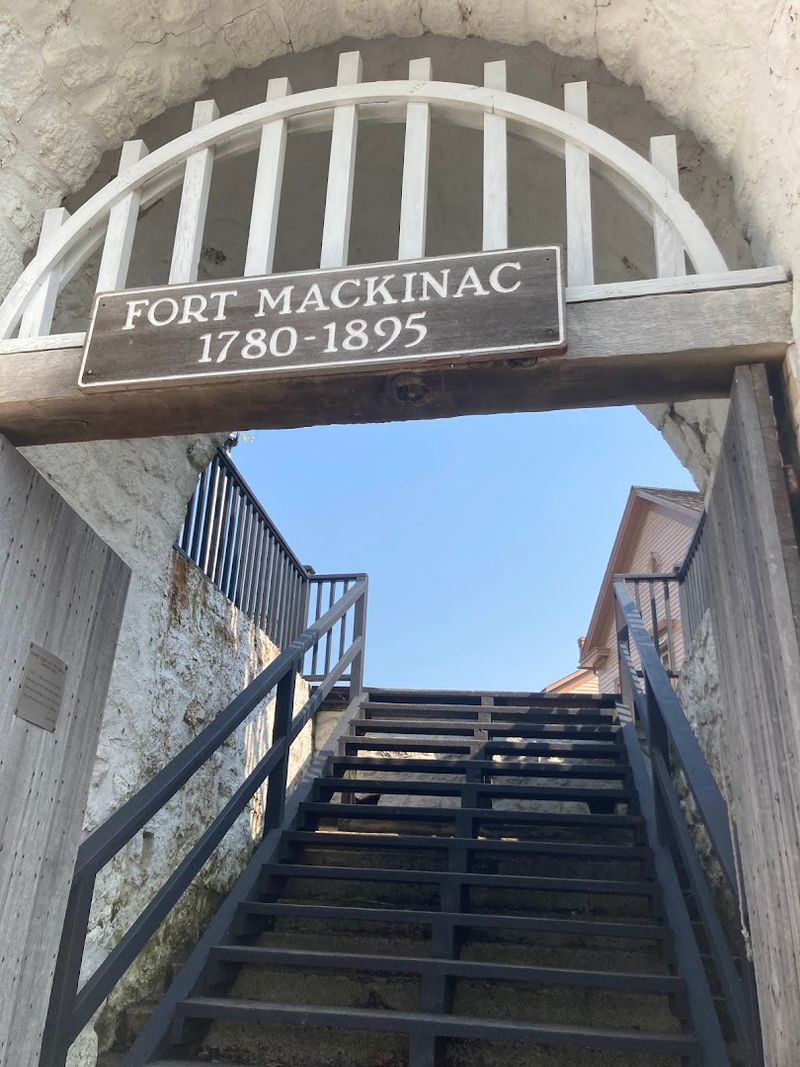
The path from town up to Fort Mackinac is genuinely steep, and the fort itself has about 30 steps in various areas, so comfortable, supportive footwear is a real necessity rather than just a suggestion. The climb takes most visitors about 10 to 15 minutes at a leisurely pace.
Fort Mackinac has made efforts to improve accessibility where possible, adding an elevator and ramps to certain buildings, but the overall terrain means it is not fully wheelchair-friendly throughout. Anyone with significant mobility challenges should check with the park in advance to plan the most accessible route.
Once inside the fort walls, the grounds are more level and easy to navigate. The ticket booth sits at the base of the hill, so you pay before you begin the climb.
The reward waiting at the top, in terms of both history and views, makes every step of that hill completely worth the effort.
The Best Time of Year to Visit Fort Mackinac
Fort Mackinac and Mackinac Island are seasonal destinations, with the island largely shutting down during the winter months. The fort typically opens in spring and runs through late fall, so checking the official schedule before planning a trip is essential to avoid an empty dock.
Summer is the busiest period, with ferries running frequently and the fort packed with families and school groups. The demonstrations and programs are at their fullest during peak season, which runs roughly from late June through August.
September is a genuinely excellent time to visit if you prefer a calmer experience. The crowds thin out noticeably, the weather is still comfortable, and the fall colors beginning to appear around the island add a whole new layer of beauty to the views from the fort’s walls.
A September morning up on that bluff, with the lake glittering below, is a hard thing to top.
Getting Around the Island: No Cars Allowed
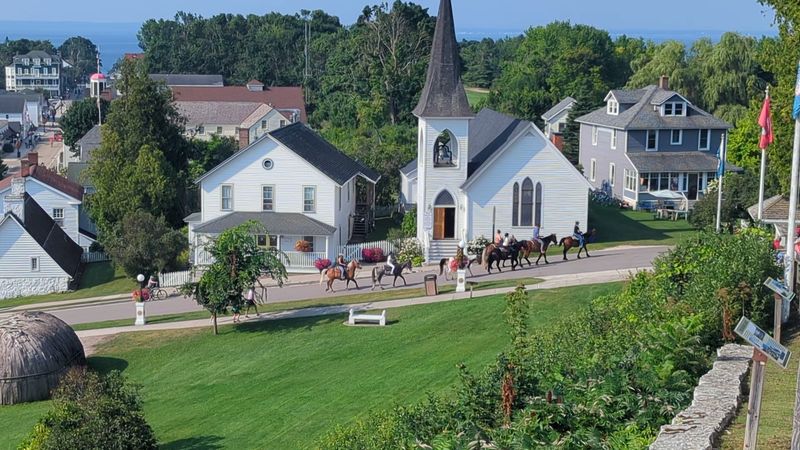
One of the most charming and genuinely unusual things about Mackinac Island is that motor vehicles have been banned here since 1898. The entire island runs on horse-drawn carriages, bicycles, and foot traffic, which gives the place a pace and atmosphere that feels completely different from anywhere else in the Midwest.
Bicycle rentals are plentiful near the ferry docks, and riding the perimeter road around the island is a popular activity that takes anywhere from 30 minutes to over an hour depending on how many stops you make. Horse-drawn taxis and carriage tours are available for those who prefer a more relaxed ride.
The absence of cars does more than reduce noise. It changes the entire social atmosphere of the island, making conversations with strangers feel more natural and the whole visit feel more connected to the slower rhythms of the 19th century the fort itself celebrates.
Why Fort Mackinac Keeps Earning Its Reputation as One of America’s Best-Preserved Forts
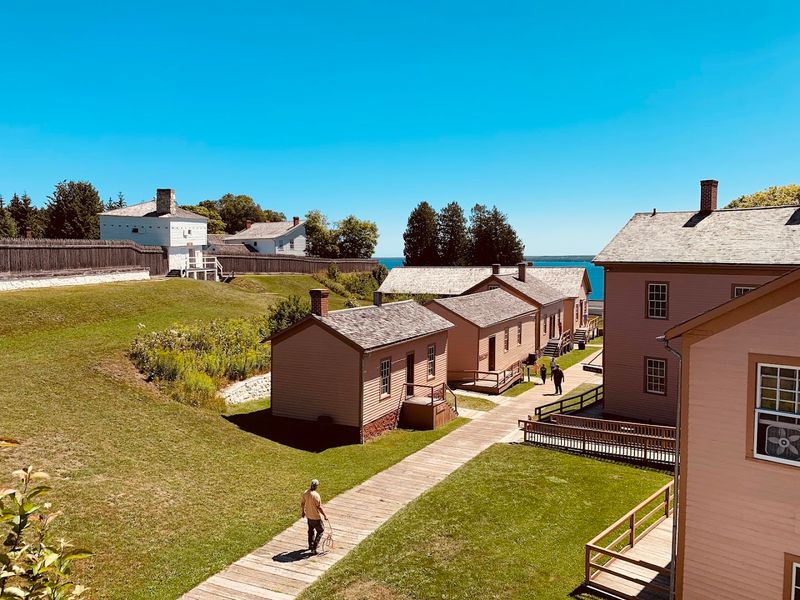
Fort Mackinac refers to itself as America’s best-preserved fort, and after spending time inside it, that claim feels entirely earned. The combination of original architecture, well-maintained grounds, quality exhibits, and live programming creates an experience that goes well beyond what most historic sites manage to deliver.
The fort covers military history, domestic life, medical practices, and the broader story of the Great Lakes region all in one place. Visitors who are deeply into history will find plenty to satisfy them, and visitors who are just along for the scenery will still leave having learned something real.
The phone number for the fort is plus one 906-847-3328, and the official website is mackinacparks.com, where you can find current hours, ticket options, and event schedules. Whether you have an hour or an entire afternoon, Fort Mackinac is the kind of place that makes you want to come back with more time next visit.



