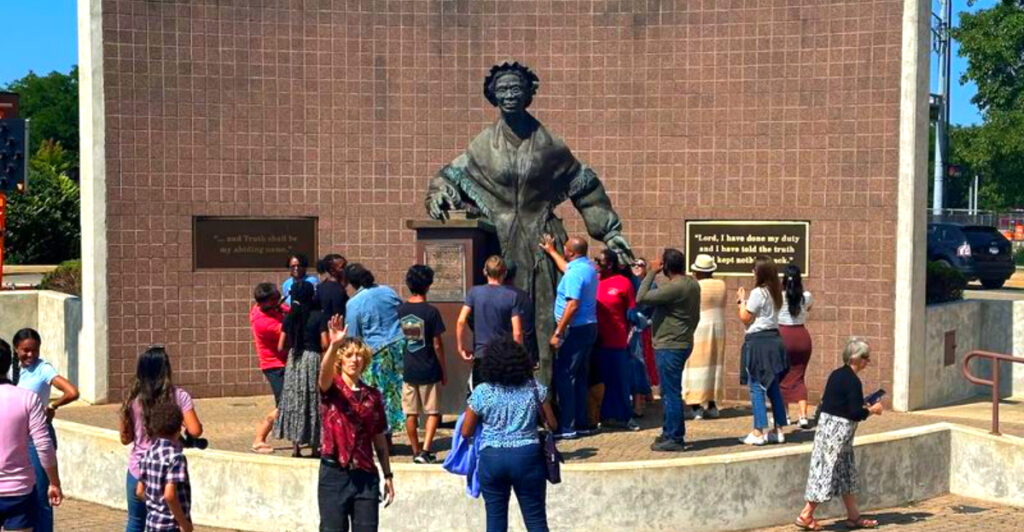
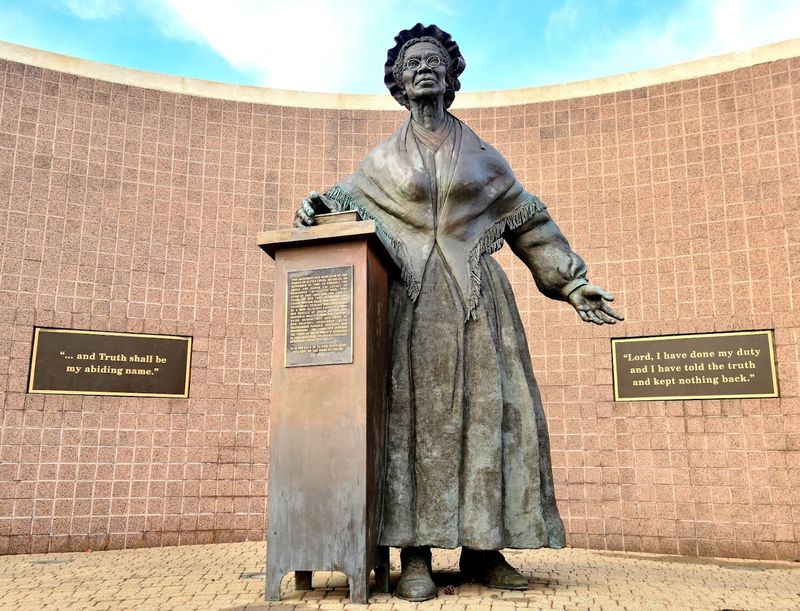
The Sojourner Truth Monument in Battle Creek, Michigan honors one of the most influential abolitionists and women’s rights advocates in American history. It marks the place where she chose to live later in life and recognizes her lasting impact on the community.
Truth escaped slavery, became a powerful public speaker, and won a groundbreaking legal case to recover her son. The monument captures that legacy while also reflecting the local effort to properly recognize her contributions.
What makes it worth visiting is the story behind it. This is not just a statue, but a landmark tied directly to a life that helped shape national conversations on freedom and equality.
Where the Monument Stands: Address, Location, and Setting
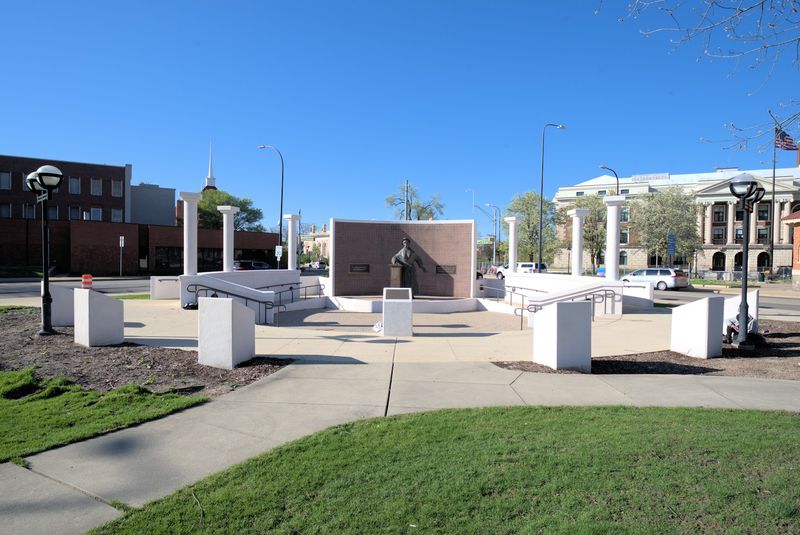
Monument Park in Battle Creek, Michigan, is the kind of place that earns a second look from passing drivers and a long pause from anyone who stops to visit. The Sojourner Truth Monument sits at 2-14 E Michigan Ave, Battle Creek, MI 49014, right at the corner of North Division Street and East Michigan Avenue in the heart of downtown.
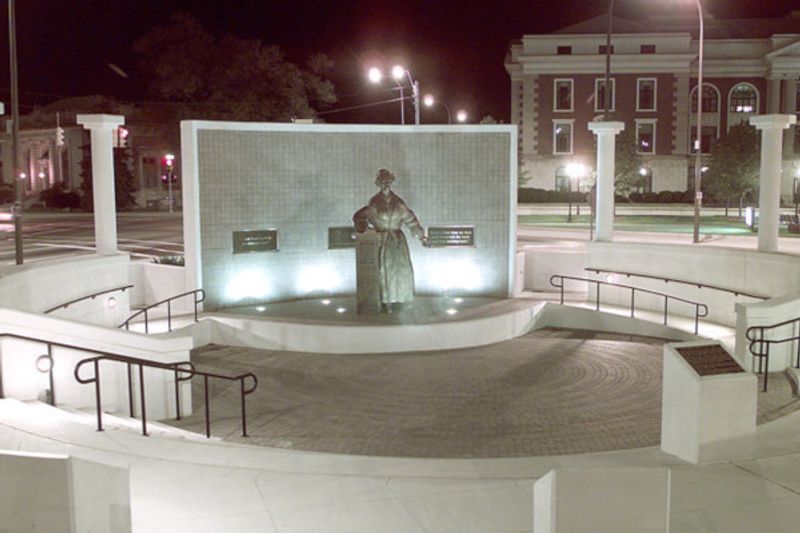
The park is open 24 hours a day, every day of the week, so there is no wrong time to visit. Some visitors prefer the quiet of a weekday afternoon, while others say the monument carries a particular kind of dignity when lit up after dark.
Parking is available nearby, though it may require a short walk. The surrounding area includes other historical markers, making this corner of Battle Creek a small but meaningful hub of local history worth exploring on foot.
The Woman Behind the Bronze: Who Was Sojourner Truth
Born Isabella Baumfree around 1797 in Ulster County, New York, Sojourner Truth entered the world as an enslaved person, a child of enslaved parents with no legal rights and no guaranteed future. New York did not officially end slavery until 1827, meaning she spent the first three decades of her life in bondage.
At around age nine, she was sold at auction alongside a flock of sheep for approximately one hundred dollars. That moment marked the beginning of years of harsh treatment, but it never broke her spirit or silenced her voice.
She eventually escaped to freedom in 1826 with her infant daughter, and from that point forward she dedicated herself to the causes of abolition and women’s rights. Truth later won a legal case to recover her son Peter, who had been illegally sold into slavery, becoming the first African American woman to win a case against a white man in a U.S. court.
The Speech That Changed Everything: Ain’t I a Woman
In 1851, at the Ohio Women’s Convention in Akron, Ohio, Sojourner Truth stood up and delivered a speech that nobody in that room would ever forget. She had no written text, no prepared remarks, and no formal education, yet the words she spoke that day cut straight to the heart of two of the biggest injustices of her time: racial inequality and the denial of women’s rights.
The speech, later titled “Ain’t I a Woman?”, challenged the idea that women were too fragile or too inferior to deserve equal treatment. Truth used her own life as evidence, pointing to the physical labor she had performed and the hardships she had survived as proof that womanhood came in many forms.
That speech remains one of the most quoted in American history, and its message still resonates today. The monument in Battle Creek pays quiet tribute to the voice that produced those words, giving visitors a place to reflect on their lasting weight.
Battle Creek Became Her Home: The Final Chapter of Her Life
In 1857, Sojourner Truth made a deliberate choice that would define the last chapter of her remarkable life: she moved to Battle Creek, Michigan. She would call this city home for the remaining 26 years of her life, and her presence left a permanent mark on the community.
Battle Creek at the time had a significant community of abolitionists and reform-minded residents, which made it a natural fit for Truth’s continued advocacy work. She remained active in civil rights and women’s equality efforts well into her later years, never slowing down despite her age.
Truth passed away in Battle Creek in November 1883 and was laid to rest at Oak Hill Cemetery, where her grave can still be visited today. The cemetery is located not far from the monument, and many visitors choose to pay their respects at both sites during the same trip, treating it as a meaningful two-stop journey through her legacy.
A Sculptor’s Vision: The Artist Behind the 12-Foot Bronze
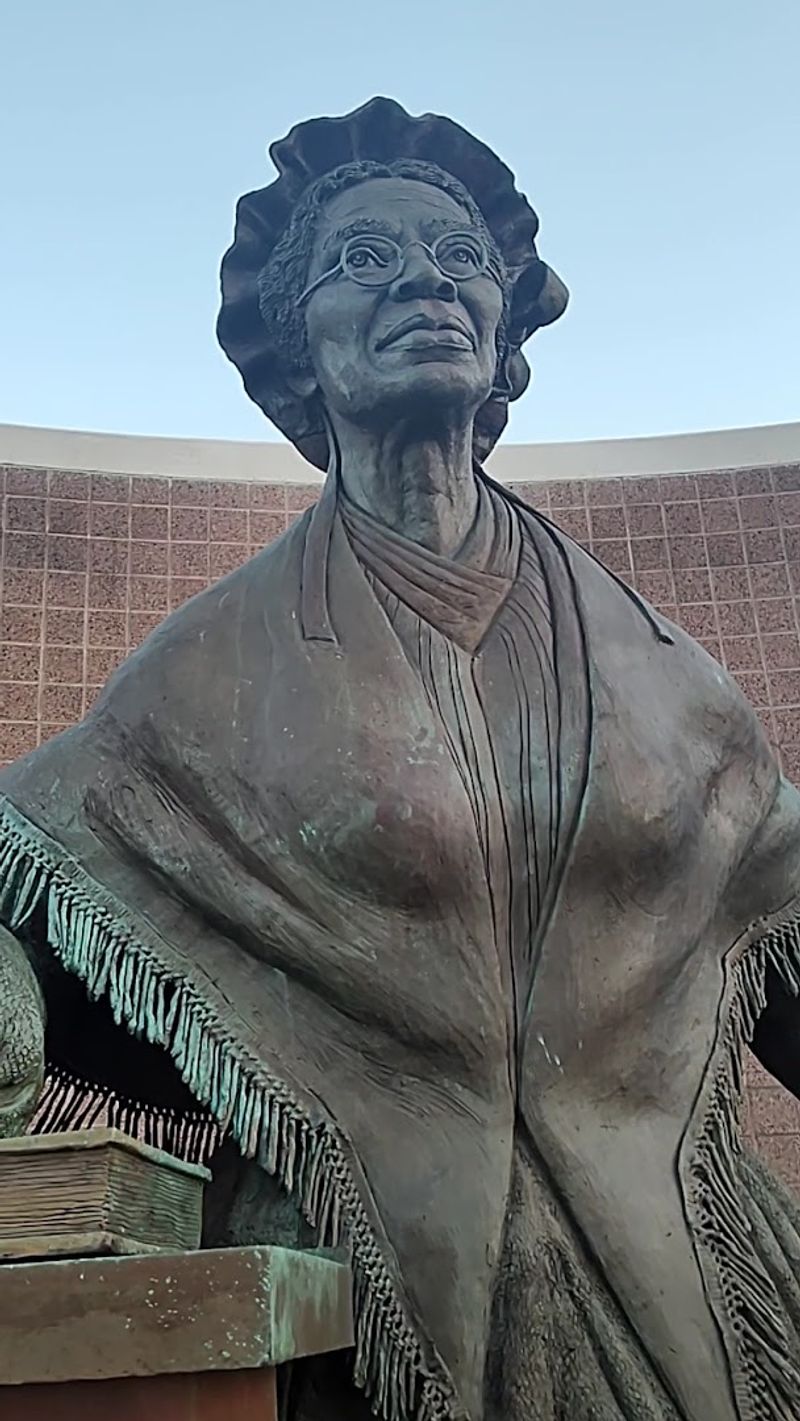
Not every monument gets the artist it deserves, but this one did. The Sojourner Truth Monument was created by Tina Allen, an internationally acclaimed sculptor known for her powerful and emotionally resonant work honoring African American historical figures.
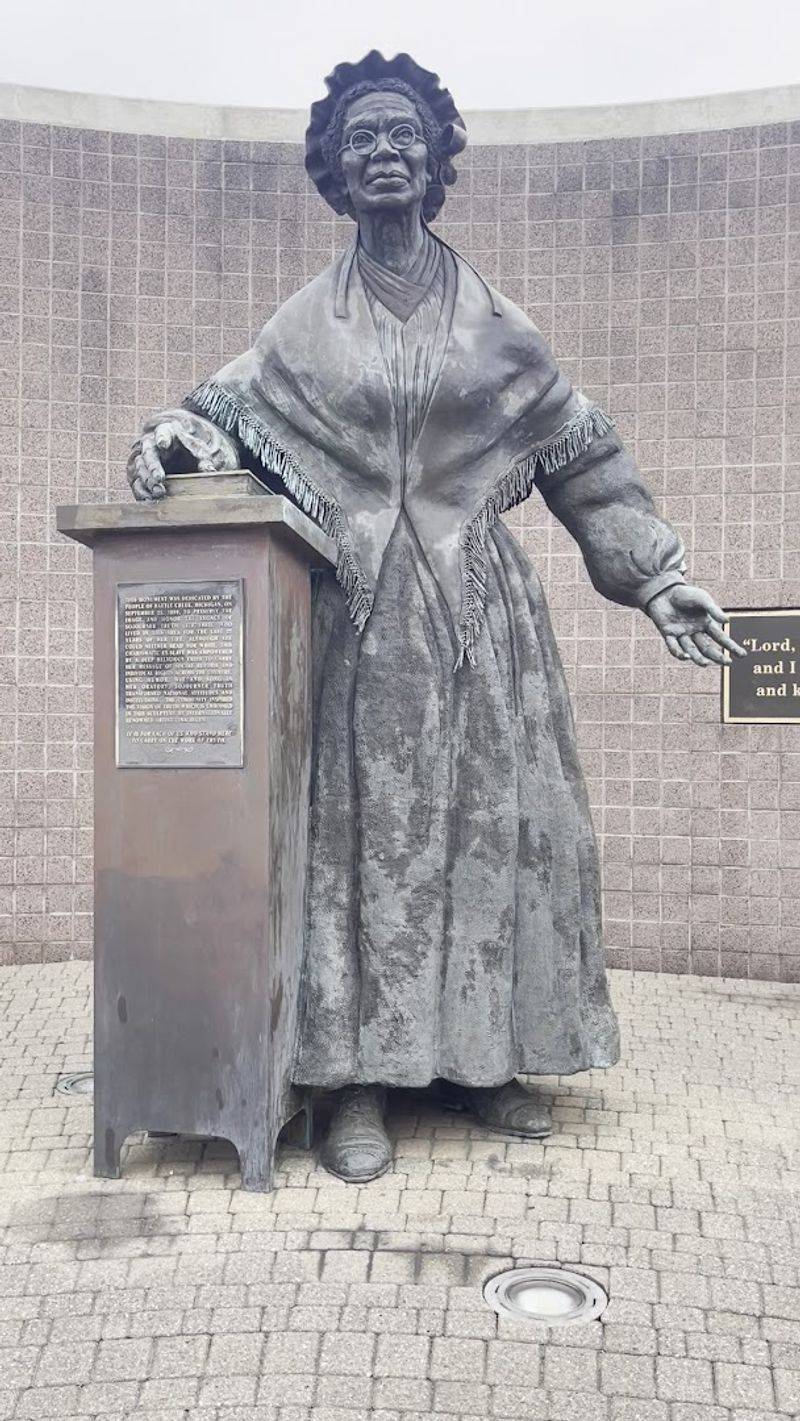
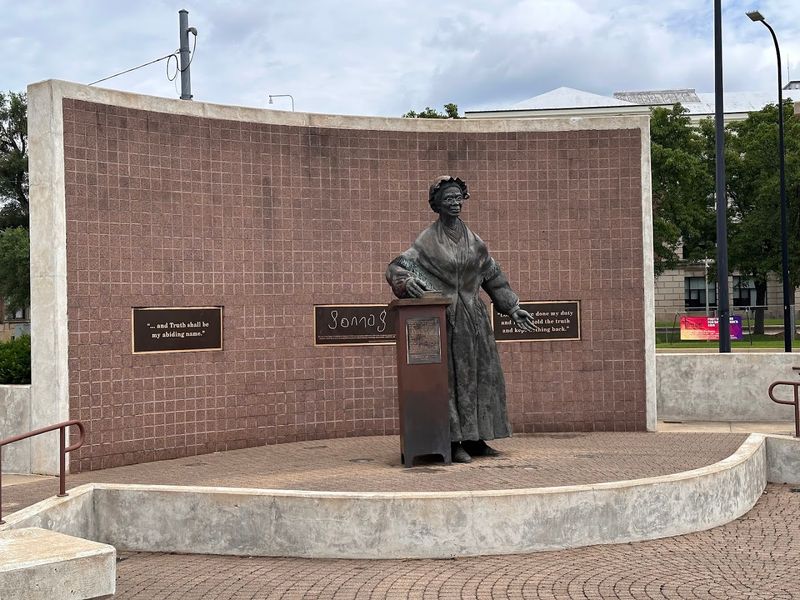
Allen brought a deep personal investment to this project, crafting a 12-foot bronze figure that captures Truth in a commanding stance, arms positioned with purpose, expression firm and focused. The scale of the sculpture is intentional; at 12 feet tall, the figure commands attention and communicates authority in a way that a smaller piece simply could not.
Allen’s approach to the work reflected her belief that public art should do more than decorate a space. It should spark conversation, invite reflection, and honor its subject with full dignity.
Standing at the base of this sculpture and looking up, it is easy to feel the weight of that intention. The artistry alone makes the trip worthwhile, even before you read a single word of the surrounding plaques.
The Year 1999 and Why the Timing Mattered
The monument was dedicated in 1999, and the timing was not a coincidence. That year marked the estimated bicentennial of Sojourner Truth’s birth, making the dedication a celebration of 200 years since the arrival of one of America’s most consequential voices.
Choosing that milestone year gave the dedication ceremony an added layer of meaning. It connected the present community to a woman born two centuries earlier, drawing a direct line between her struggles and the ongoing work of social progress.
The event drew attention to Battle Creek’s unique place in Truth’s story, reminding residents and visitors alike that this was not just a city with a famous monument but the actual city where she chose to live, work, and ultimately rest. The 1999 dedication transformed a piece of public art into a living marker of history, one that grows more significant with each passing year as new generations discover who she was and what she stood for.
Monument Park: The Space That Surrounds the Sculpture
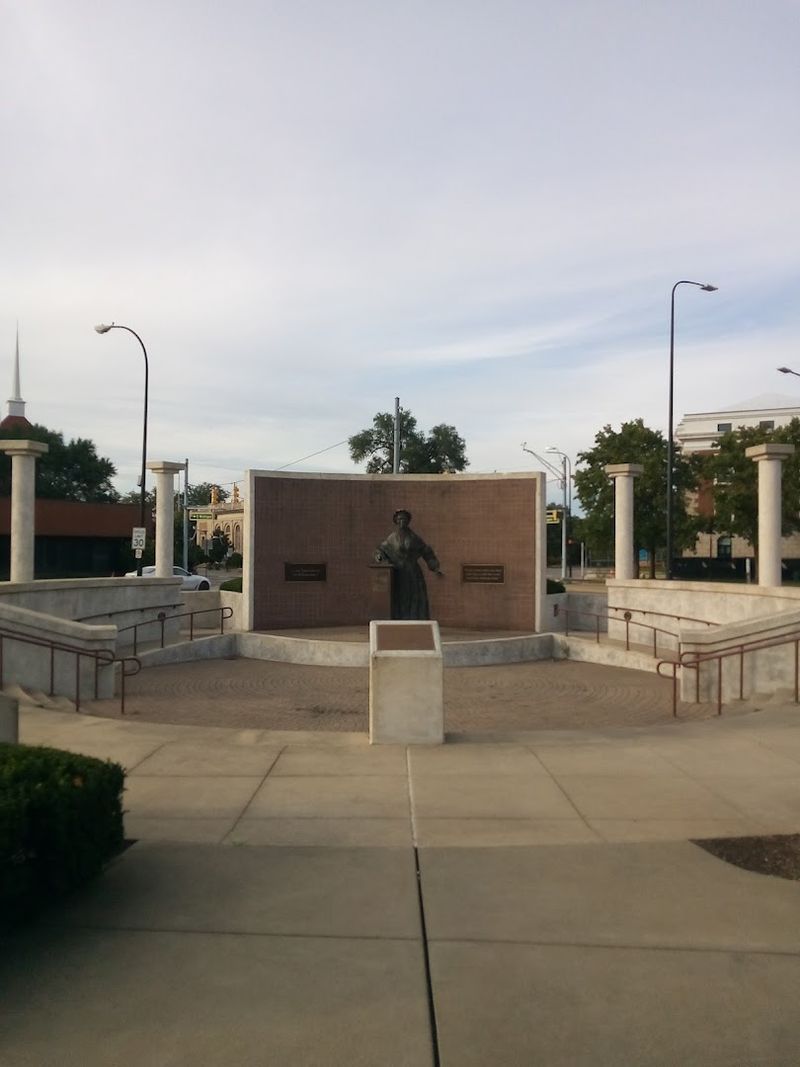
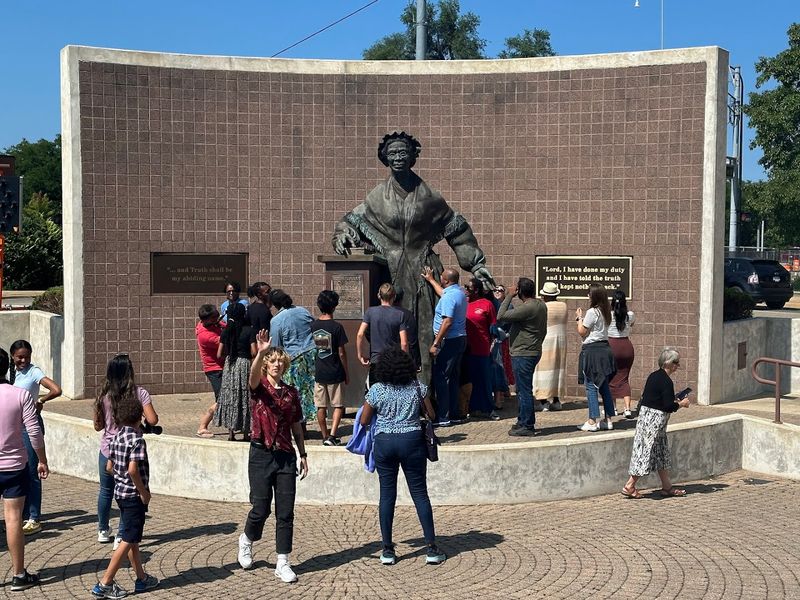
The sculpture does not stand alone. Monument Park, the site where the Sojourner Truth Monument is located, also features other historical markers and plaques that give visitors additional context about Battle Creek’s layered history.
The park functions as a public gathering space, and over the years it has hosted community meetings, rallies, and demonstrations, uses that would likely have pleased Truth herself given her lifelong commitment to public advocacy and civic engagement.
The space is open and accessible, with enough room to walk around the sculpture and read the surrounding informational plaques at a comfortable pace. Some visitors spend only a few minutes, while others linger much longer, drawn into the details of Truth’s story as they read through the historical text on display.
Nearby, a separate Underground Railroad sculpture adds another dimension to the experience, making this corner of downtown Battle Creek a concentrated and genuinely moving stop for anyone interested in American civil rights history.
The Underground Railroad Connection Just Steps Away
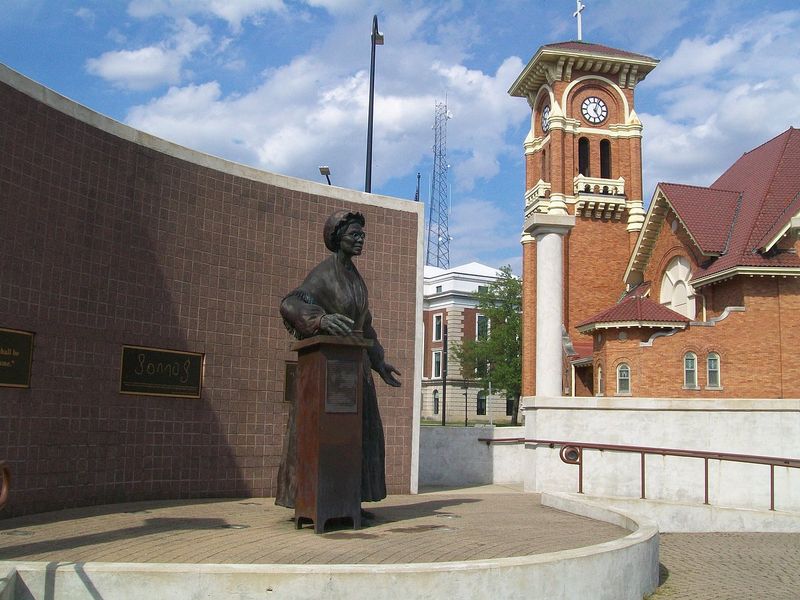
A short distance from the Sojourner Truth Monument, another piece of public art tells a connected story. The Underground Railroad sculpture in downtown Battle Creek serves as a companion piece to the Truth monument, and together the two works create a powerful corridor of civil rights history in the middle of the city.
Battle Creek had deep ties to the Underground Railroad, the network of secret routes and safe houses that helped enslaved people escape to freedom in the northern states and Canada. The city’s reform-minded community made it a welcoming stop along that route.
Visiting both sculptures in a single trip gives you a much fuller picture of what this part of Michigan meant to the broader freedom movement of the 19th century. It is one thing to read about the Underground Railroad in a textbook and quite another to stand next to a sculpture that honors the real people who risked everything to make it work.
The two sites together are genuinely hard to forget.
What the Plaques Say: Reading the Story Up Close
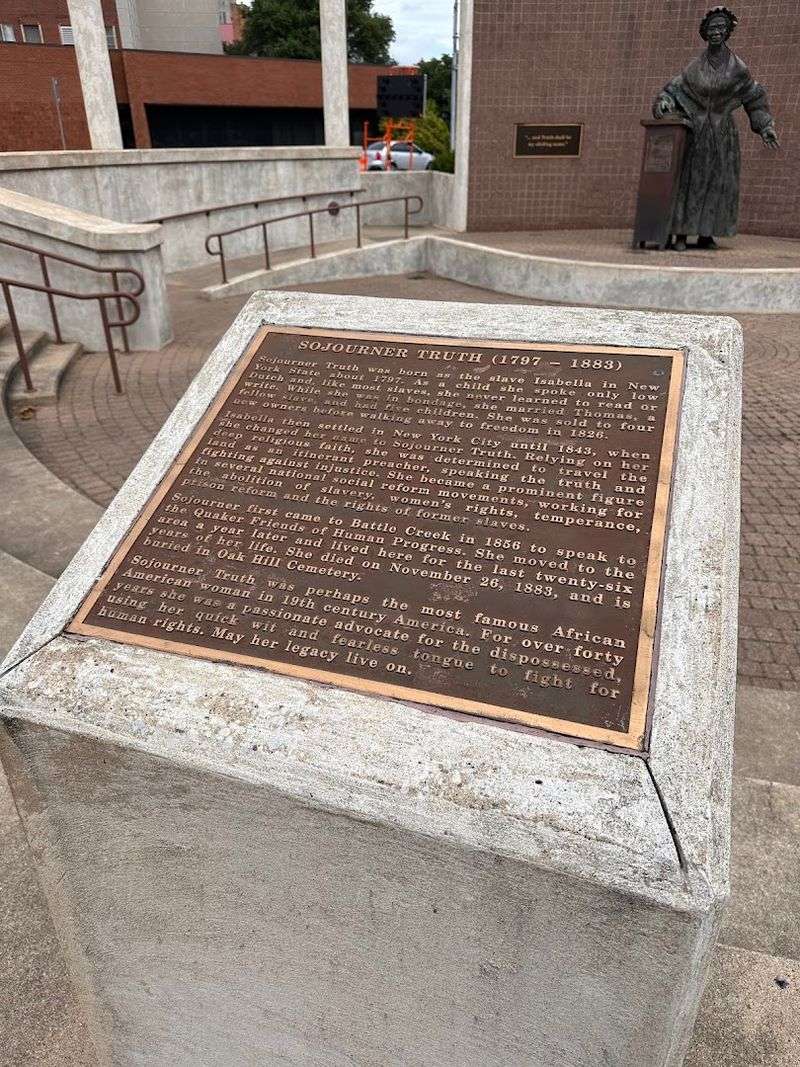
The sculpture itself is striking, but the plaques surrounding it deserve just as much attention. The informational panels at the monument share key details about Truth’s life, from her birth in slavery in New York to her escape, her activism, her legal victories, and her years in Battle Creek.
Reading through the plaques is a surprisingly absorbing experience. The text is written clearly enough that visitors of all ages can follow the story, and the details are specific enough to feel genuinely informative rather than vague or surface-level.
Several visitors have noted that they arrived knowing very little about Sojourner Truth and left feeling as though they had just read a compelling biography in condensed form. The combination of the visual impact of the sculpture and the written history on the plaques creates a layered experience that works on multiple levels at once.
The information is completely free to access, making this one of the most educational no-cost stops in all of Battle Creek.
Visiting at Night: A Different Kind of Powerful
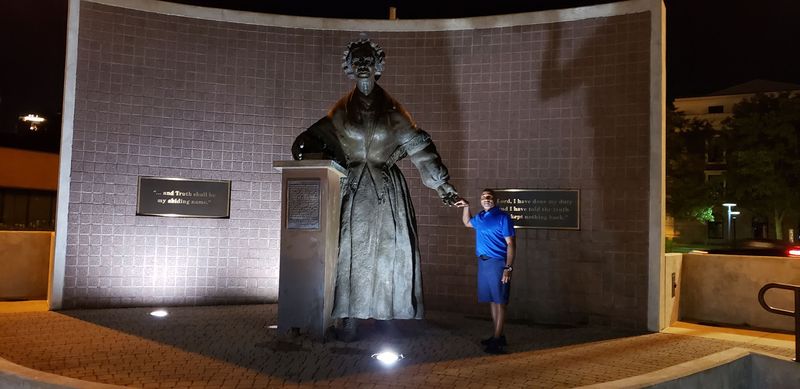
The monument looks impressive in daylight, but something shifts when you see it after dark. The sculpture is lit up at night, and the lighting transforms the 12-foot bronze figure into something that feels almost cinematic, the details of Allen’s craftsmanship catching the light in ways that are harder to notice during the day.
Because the park is open 24 hours a day, there is nothing stopping a late-evening visit, and some people specifically plan their trip around seeing the monument after sunset. The quieter atmosphere at night gives the experience a more personal, contemplative quality.
The surrounding area is worth a scan before committing to a nighttime visit, as conditions in and around the park can vary. That said, many visitors have described the nighttime view as genuinely worth the effort.
If you visit during the day, consider swinging back after dark to see a completely different side of the same monument. The contrast between the two experiences is more dramatic than you might expect.
Oak Hill Cemetery: Paying Respects at Her Final Resting Place
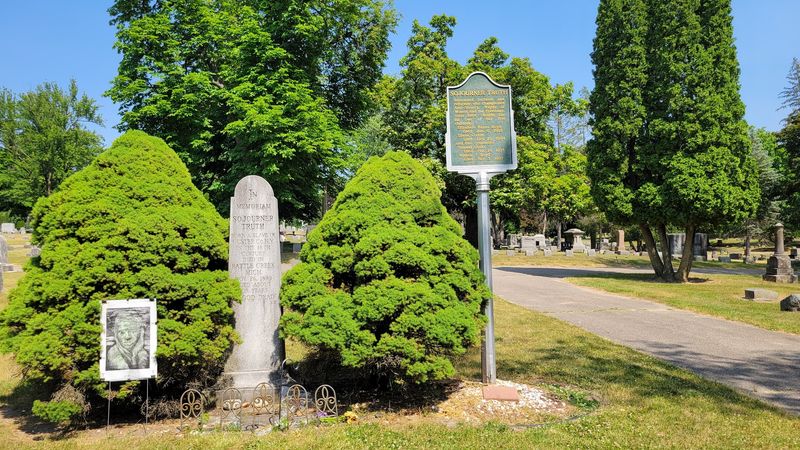
No visit to the Sojourner Truth Monument feels fully complete without a stop at Oak Hill Cemetery, where Truth was laid to rest in 1883. The cemetery is located in Battle Creek and is easily accessible for anyone who wants to extend their visit beyond the monument itself.
Truth’s grave sits in a section of the cemetery near the plot of C.W. Post, the cereal magnate whose name is closely associated with Battle Creek’s other claim to fame.
The proximity of these two graves is a small but striking reminder of how many remarkable people this one Michigan city has housed over the years.
The grave is well-maintained and clearly marked, and visitors regularly leave flowers, notes, and small tokens of respect. Standing there, knowing that the woman whose bronze likeness commands a busy downtown intersection is buried just a few miles away, brings the whole story into sharp and meaningful focus.
Why This Monument Still Matters Today
A 12-foot bronze sculpture is only as powerful as the story it carries, and this one carries a story that has not lost a single ounce of its relevance. Sojourner Truth spent her life challenging systems that told certain people they did not deserve dignity, equality, or a voice, and those challenges did not disappear when she did.
The monument serves as a gathering point for community events, a classroom without walls for visiting students, and a quiet place of reflection for anyone who needs a reminder that meaningful change is possible even when the odds are overwhelming.
Rated 4.6 stars by visitors and drawing people from across the country and beyond, the monument has become one of Battle Creek’s most visited and most talked-about landmarks. It earns that reputation not through spectacle but through substance.
Sojourner Truth once said that truth is powerful and it prevails. Standing at this monument, surrounded by her story, that statement feels less like a quote and more like a living fact.
Share this story