 Unearth The Voyage
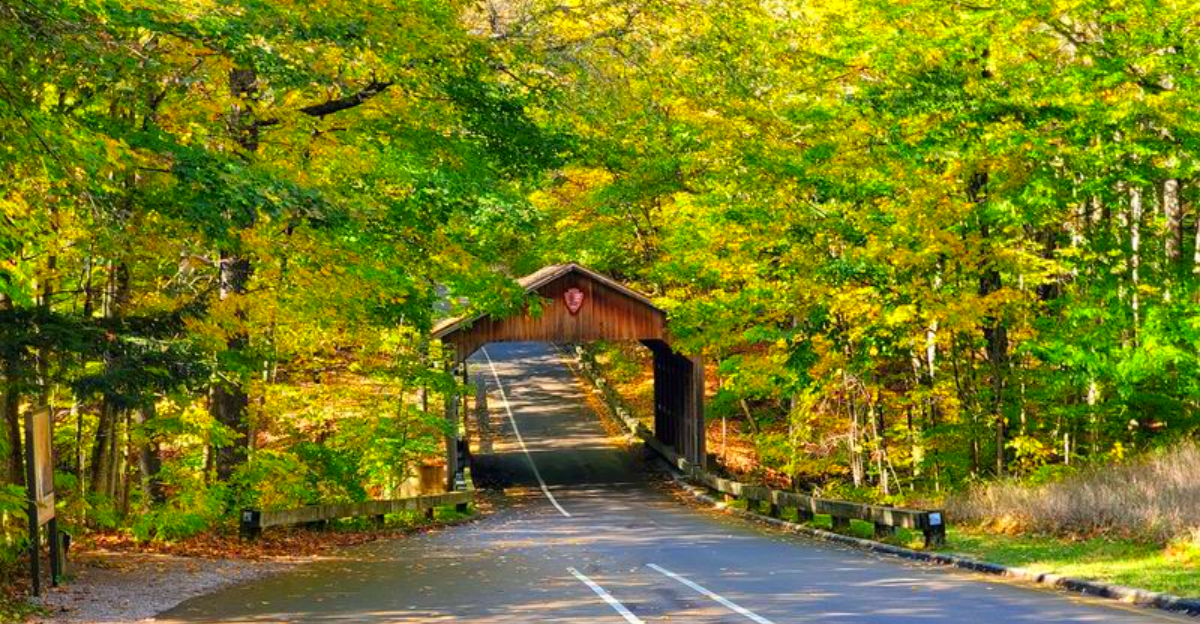
The road rises quickly, and then the trees fall away. Just outside Empire, a 7.4-mile loop threads through dense forest before spilling out onto open dunes and sudden, sweeping views of Lake Michigan.
One overlook sits 450 feet above the water, high enough to make the horizon blur into something ocean-like. It’s a short drive, but it doesn’t move quickly – every turn gives you a reason to stop.
Where the Drive Begins: Finding Pierce Stocking Scenic Drive
The entrance to Pierce Stocking Scenic Drive sits within Sleeping Bear Dunes National Lakeshore, near Empire, Michigan, in the northwest Lower Peninsula. The address most visitors use is 9922 Front Street, Empire, MI 49630, which serves as the park visitor center where you can grab a map and pay your entrance fee before heading to the loop.
The drive itself begins just a short distance from the visitor center, and the moment you turn onto that winding road, the trees close in around you like a curtain going up before a show. The route is one-way, so there is no confusion about which direction to go.
A standard National Park pass covers your entry here, and the America the Beautiful annual pass is absolutely worth picking up if you plan to visit multiple parks. Arriving early on summer mornings helps you beat the crowds and snag the best parking spots at the most popular overlooks.
The Man Behind the Drive: Pierce Stocking’s Vision
Not every scenic road has a person’s name attached to it for a good reason, but this one absolutely does. Pierce Stocking was a Michigan lumberman and nature lover who spent years of his own time and money building this road through the dunes and forests so that everyday people could experience the landscape he loved so deeply.
He completed the drive in 1967, and it quickly became one of the most celebrated routes in the state. Stocking had no formal engineering training, yet he managed to create a road that flows so naturally through the terrain it feels like it was always meant to be there.
Sadly, he passed away just a few years after the drive opened, but the National Park Service took over management and preserved his creation within the national lakeshore. His legacy lives on every time a visitor stands at an overlook and catches their breath at the view he worked so hard to share.
Forest Canopy and the First Miles of the Loop
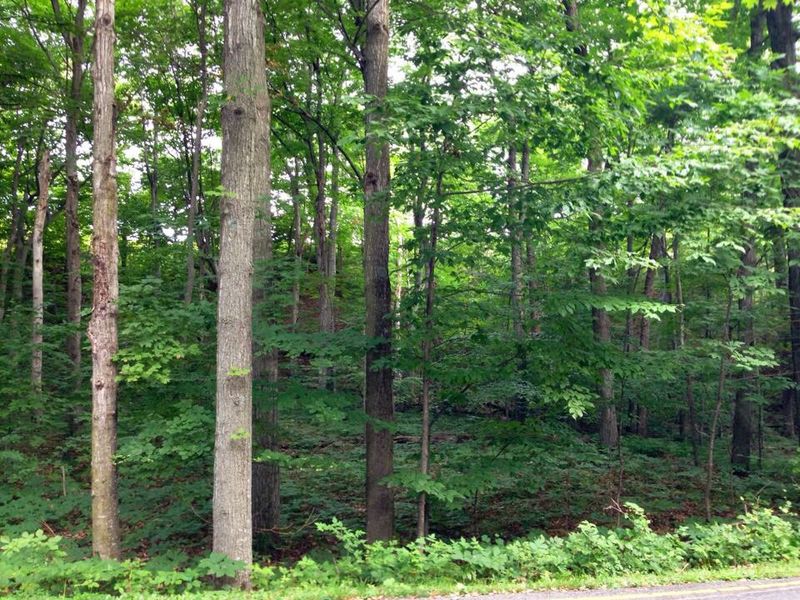
The first stretch of the drive eases you into the experience with a tunnel of trees that feels almost magical on a sunny morning. Maple and beech trees arch over the road, and the light filters through in shifting patterns that change every few seconds as you roll forward slowly.
This section is quieter than the overlook stops, and it gives you a chance to settle into the pace of the drive before the big views arrive. Birds call from the branches overhead, and if you are lucky, you might spot a white-tailed deer stepping through the undergrowth just off the road.
The forest here has recovered beautifully from the logging era that defined this region in the 1800s, and the trees feel mature and full of character. Keeping your windows down and your speed low makes this part of the drive feel less like a road trip and more like a slow walk through a living, breathing landscape.
The Dune Overlook: Your First Taste of Open Sky
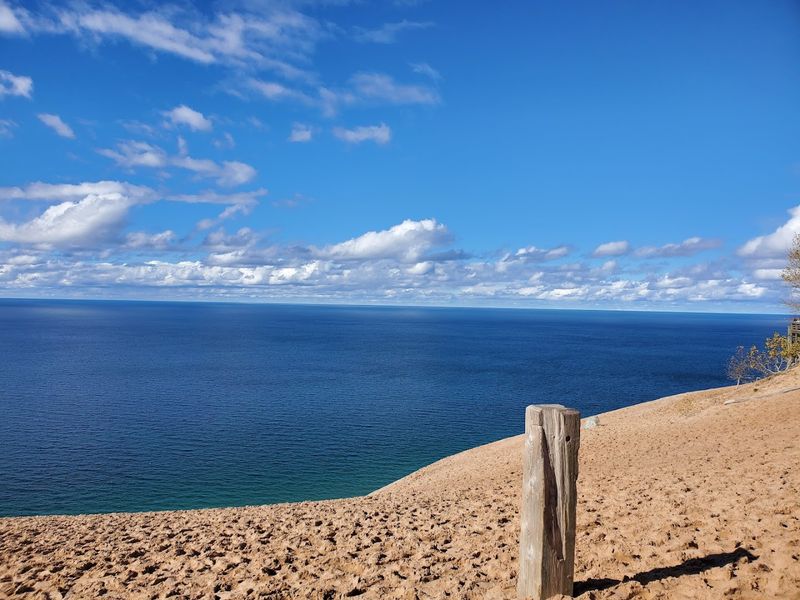
After the forested opening miles, the Dune Overlook arrives like a sudden exhale. The trees pull back, the sky opens up, and you find yourself staring across a landscape of rolling sand hills that look like they belong somewhere in the Sahara rather than the Midwest.
The dunes here are part of the Sleeping Bear Dune complex, which formed over thousands of years as glaciers retreated and left behind enormous deposits of sand. Wind and time shaped them into the dramatic ridges and valleys you see today, and the scale of the whole thing is genuinely hard to process at first glance.
A short walk from the parking area gets you to the best viewpoint, and the combination of sand, scrubby vegetation, and open sky creates a scene that photographs beautifully no matter the time of day. The light in the late afternoon turns the sand a warm gold that makes every shot look like it was edited by a professional photographer.
North Bar Overlook and the Inland Lake Surprise
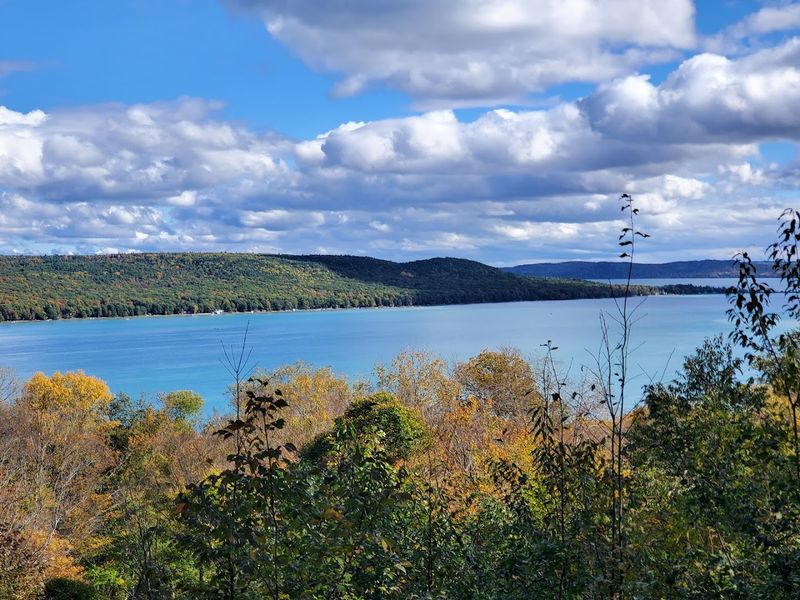
One of the quieter but genuinely surprising stops on the loop is the North Bar Overlook, where you get a view that layers multiple bodies of water into a single frame. North Bar Lake sits in the foreground, a small and brilliantly clear inland lake tucked between the dunes, with Lake Michigan visible in the distance beyond it.
The color contrast between the shallow inland lake and the deeper blue of Lake Michigan is something you really cannot predict until you see it for yourself. North Bar Lake tends to be warmer and calmer than the big lake, which makes it a popular swimming spot for families with younger kids.
A trail leads down from the overlook to the lakeshore, and on hot summer days the beach fills up with visitors who want to swim in water that feels almost tropical compared to what you might expect in Michigan. The walk back up is a workout, but the view from the top makes every step worth the effort.
The Crown Jewel: Lake Michigan Overlook at 450 Feet
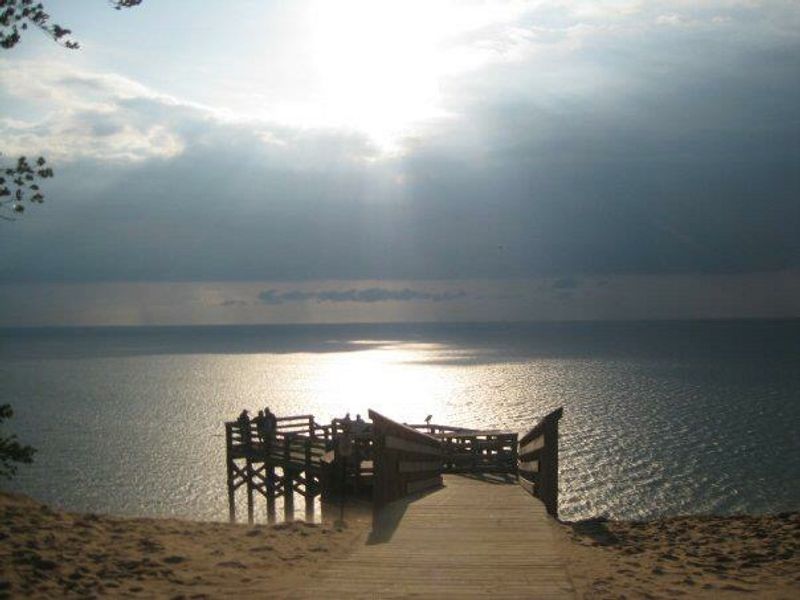
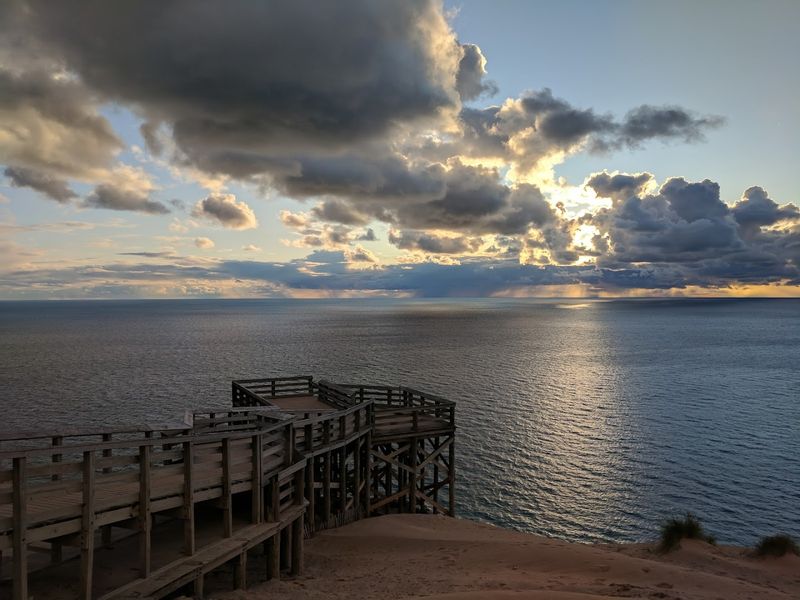
There is one stop on this drive that people talk about for years after visiting, and it is the Lake Michigan Overlook. At 450 feet above the water, the view from this point is so expansive and dramatic that it genuinely stops conversations mid-sentence.
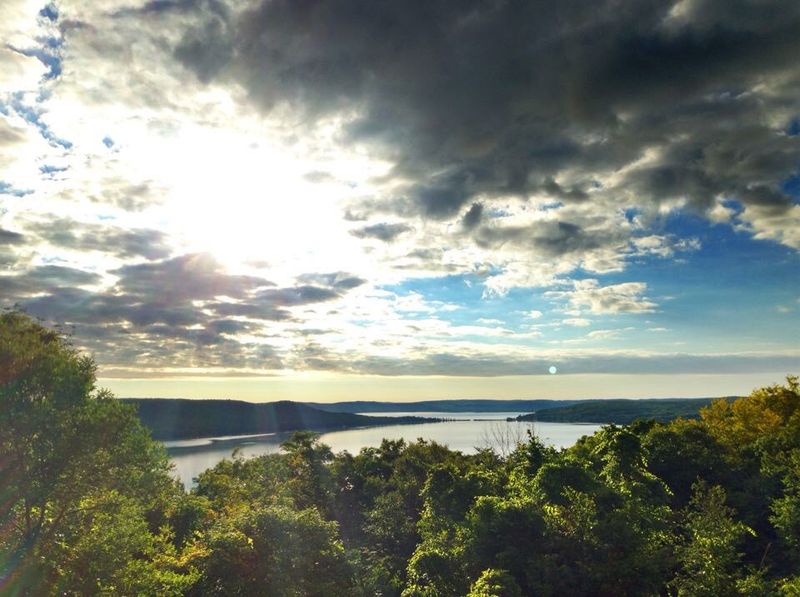
On a clear day, you can see Empire Bluffs to the south and the long arc of Platte Bay curving away into the distance. The water below shifts through shades of teal, blue, and deep navy depending on the depth, and the shoreline looks like a thin white ribbon separating the forest from the lake.
Getting to the overlook involves a short paved trail through a maple-beech forest, but the final approach crosses loose sand that makes the last few steps feel like a small adventure. Most visitors spend much longer here than they planned, simply because leaving feels like giving something up.
The next stop on the loop holds a different kind of reward entirely.
The Sleeping Bear Legend and Why This Place Has a Story
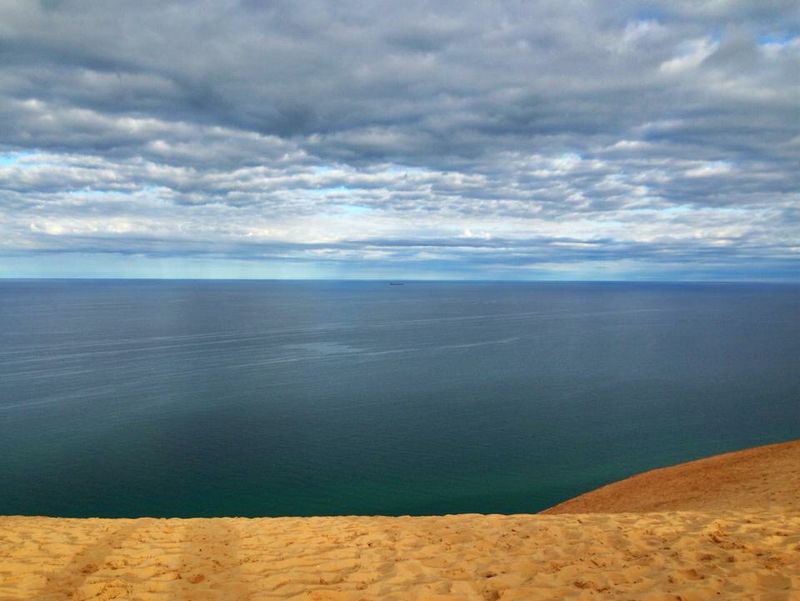
The name Sleeping Bear Dunes does not come from a geology textbook. It comes from an Ojibwe legend that has been passed down for generations, and it gives this entire landscape a layer of meaning that makes the views feel even more powerful once you know it.
According to the legend, a mother bear and her two cubs swam across Lake Michigan to escape a fire in Wisconsin. The cubs fell behind and were swallowed by the lake, and the mother bear reached the shore and waited on a high bluff for her cubs to appear.
The Great Spirit Manitou took pity on her and raised the cubs from the water as two islands, now known as North and South Manitou Islands, which you can see from the Lake Michigan Overlook on a clear day. The mother bear became the great dune you see rising from the shoreline.
Knowing this story changes how you look at the landscape, turning a beautiful view into something that feels ancient and alive.
Wildlife Watching Along the Route
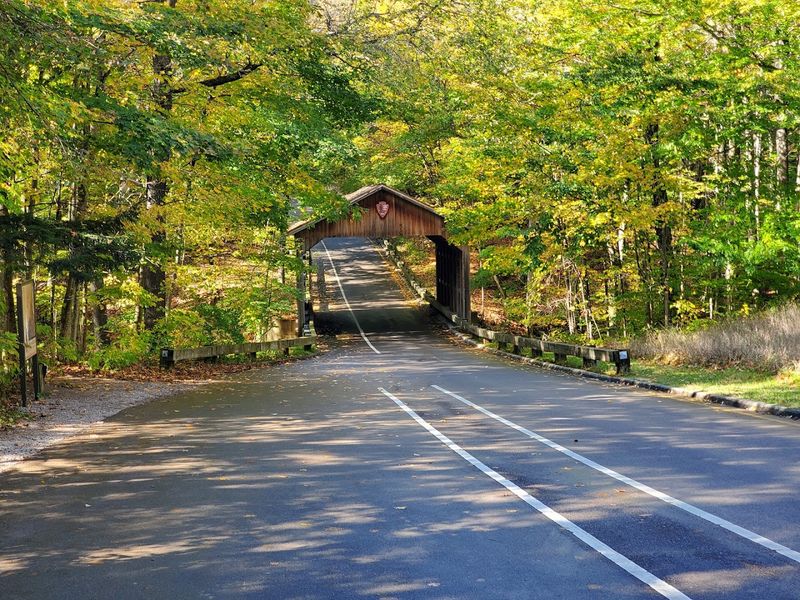
The drive is not just about big water views. The forests and dune edges along the route support a surprisingly rich variety of wildlife, and slow, patient driving often turns the loop into an impromptu nature tour.
White-tailed deer are the most commonly spotted animals, especially in the early morning and evening hours when they move through the tree line near the road. Red foxes occasionally appear at the edges of open areas, and wild turkeys sometimes cross the pavement with the confident stride of animals that know exactly who owns this place.
Birdwatchers have a particularly good time here, with species including bald eagles, ospreys, and a wide range of migratory songbirds passing through during spring and fall. Bringing a pair of binoculars turns the drive into a completely different kind of experience, and the overlooks double as excellent spots for scanning the treetops and the lake surface for birds of prey riding the thermal currents above the dunes.
The Covered Bridge Stop: A Quiet Moment on the Loop
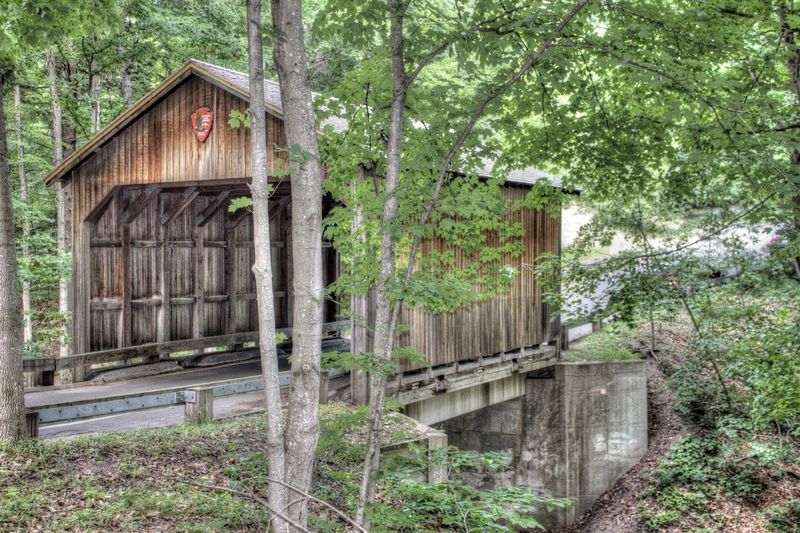
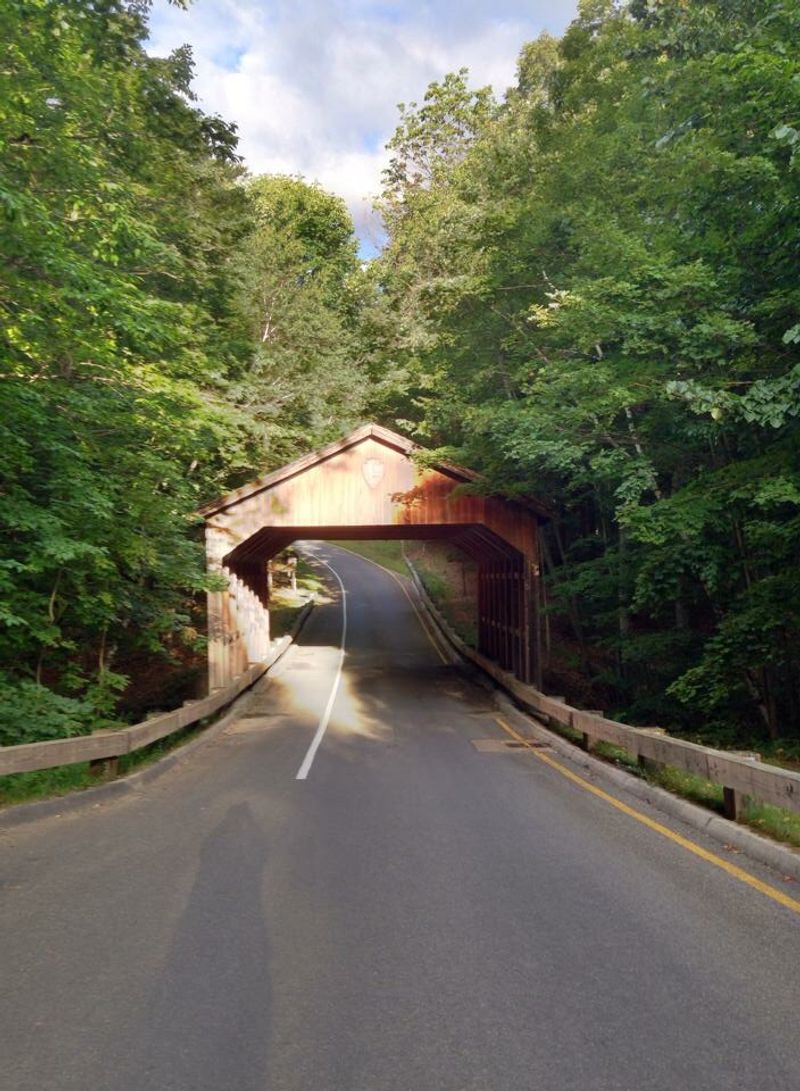
Tucked into one of the quieter sections of the loop, the Covered Bridge is a small but charming stop that offers a change of pace from the wide-open dune and lake views. The bridge spans a small stream and sits beneath a thick canopy of trees that keeps the area cool even on warm summer days.
It is the kind of spot that feels like a postcard from a simpler time, and many visitors pull over just to stretch their legs and enjoy the sound of water moving underneath the wooden planks. The area around the bridge is calm and shaded, making it a natural place to take a break if you have been moving quickly through the loop.
Children especially enjoy this stop because the stream and the bridge give them something tangible to interact with rather than just admire from a distance. The contrast between this intimate, forested moment and the sweeping overlooks nearby is part of what makes the drive feel like it covers an entire world in just a few miles.
Best Times to Visit and Seasonal Changes
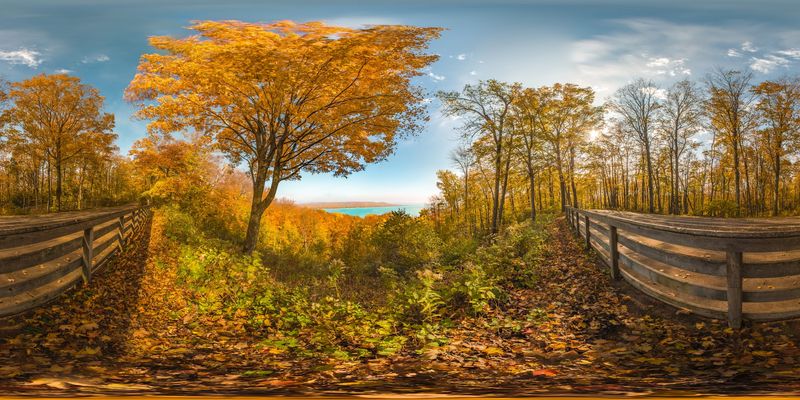
The drive is open to vehicles from mid-April through November, with hours running from 9:00 a.m. until 30 minutes after sunset each day. Summer is the busiest season, and July and August bring large crowds, especially on weekends and holidays when parking at the major overlooks fills up fast.
Fall is arguably the most spectacular time to make the trip. The maple and beech forests along the route turn brilliant shades of red, orange, and yellow, and the contrast between the colorful leaves, white sand, and deep blue lake creates a combination of colors that feels almost too good to be real.
Spring visits offer a quieter, more contemplative experience, with wildflowers blooming in the forest understory and fewer cars on the road. In winter, the drive transforms into a cross-country ski trail, which means the landscape becomes accessible in a completely different way for those willing to bundle up.
Each season brings its own distinct personality to the same seven-mile loop.
Hiking Beyond the Overlooks: Trails That Reward the Curious
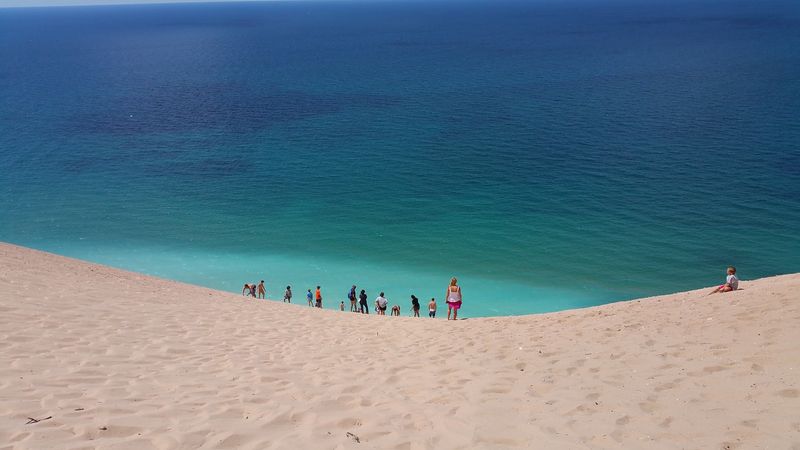
The drive itself is wonderful, but the real magic often happens when you park the car and head out on foot. Several trailheads connect to the scenic drive loop, and they open up parts of the park that you simply cannot experience from a vehicle window.
The Dune Climb trail is one of the most famous in the entire park, offering a steep but rewarding climb up a massive open dune face with Lake Michigan visible from the top. It is harder than it looks from the bottom, but the view from the summit makes the burning legs feel completely justified.
For something more shaded and less strenuous, the Cottonwood Trail winds through a mix of forest and dune terrain with interpretive signs explaining how the landscape was formed. Longer options like the Sleeping Bear Point Trail take you deep into the backcountry dune environment, where the silence is remarkable and the sense of isolation from the modern world feels refreshingly complete.
Practical Tips for Making the Most of Your Visit
A few practical details can make a big difference between a good visit and a great one. The entrance fee for Sleeping Bear Dunes National Lakeshore is separate from the scenic drive itself, and the America the Beautiful annual pass covers it completely, which makes it a smart investment if you visit national parks more than once a year.
Bringing water is essential, especially in summer, because the combination of sun, sand, and walking can wear you down faster than expected. Sunscreen and a hat are equally important at the open overlooks, where there is no shade and the reflection off the sand intensifies the heat.
Comfortable shoes with closed toes handle the sandy trails far better than sandals, and a light jacket is worth packing even in summer because the wind off Lake Michigan at the high overlooks can turn surprisingly cool in the afternoon. Arriving before 10:00 a.m. on summer weekends is the single best way to enjoy the drive without fighting for parking or personal space at the views.



