 Unearth The Voyage
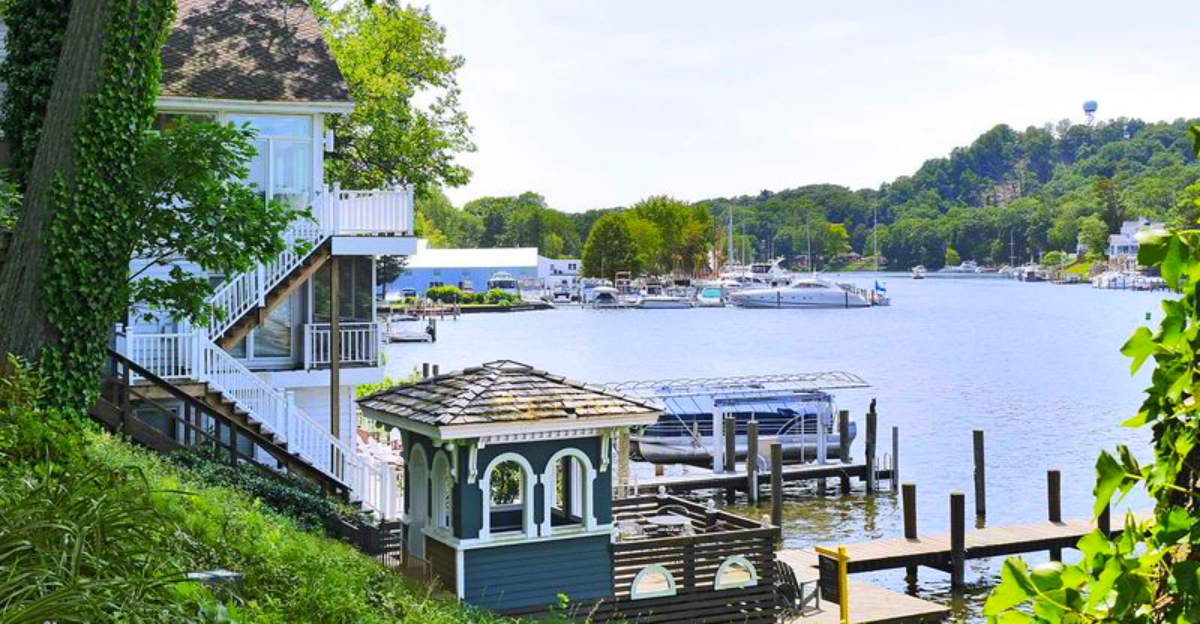
If you think Michigan’s most walkable small town sits near Detroit, you are not alone. But follow the boardwalk in Saugatuck and you realize something else entirely happens here on foot.
Streets knit together beaches, galleries, bakeries, and marinas so tightly that a car feels like a costume you forgot to take off. Keep going a few blocks more, and the town keeps revealing itself in short, satisfying steps.
Downtown Grid You Can Actually Feel Underfoot
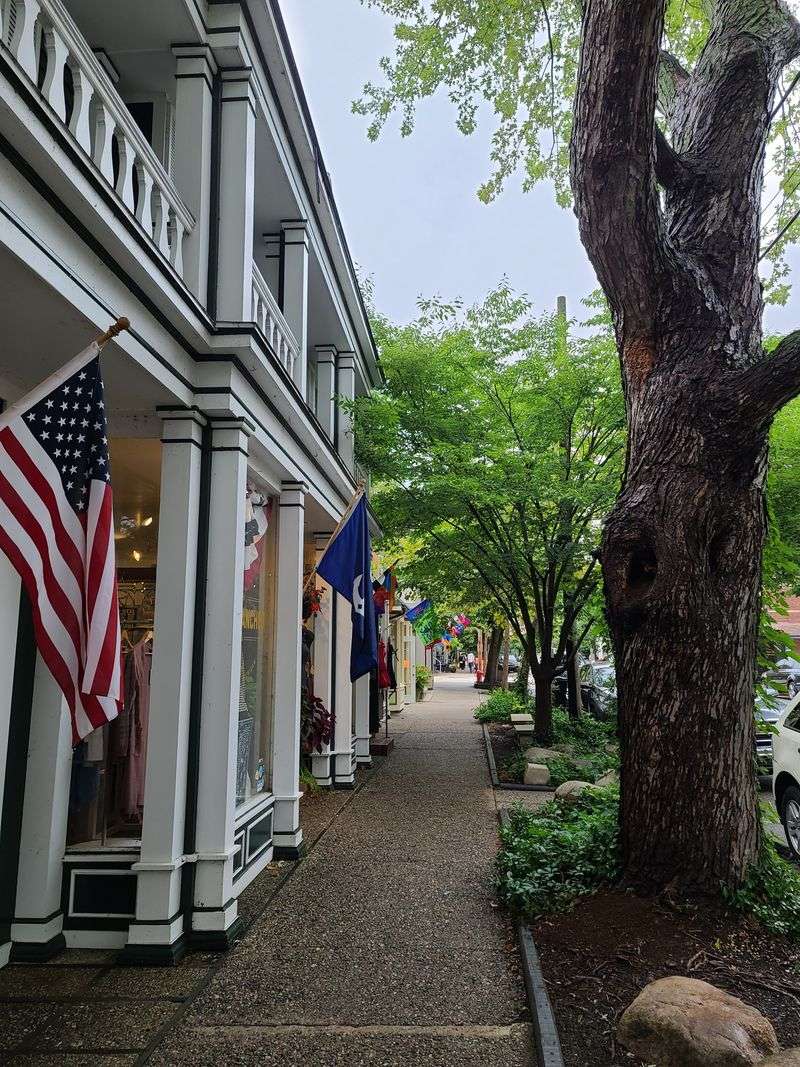
Start on Butler Street and let your pace set the itinerary. Corner to corner, you pass low brick facades, striped awnings, and shop names hand-painted in lettering that looks steady and human.
The sidewalks are tight enough to hear two conversations at once, and short blocks keep delivering crosswalks like little green lights for curiosity.
Underfoot, the pavement shifts from smooth concrete to well-worn brick bands, a quiet metronome for your steps. You catch the warm sugar smell from a fudge shop, then the sharp lift of espresso from Uncommon Coffee Roasters.
Bikes whisper by, bells soft, as the river’s breeze moves down the street and turns menus on clipboard hooks.
What makes it walkable is not just distance but density that feels intentional. Window displays sit at eye level, so you do not speed up.
A gallery owner waves you inside even if you keep moving, and that casual permission reduces friction. You forget about parking because everywhere you want is one song’s stroll away.
That realization lands mid-block, and you keep walking just to see how far the feeling holds.
Boardwalk To Dockside: The River Route
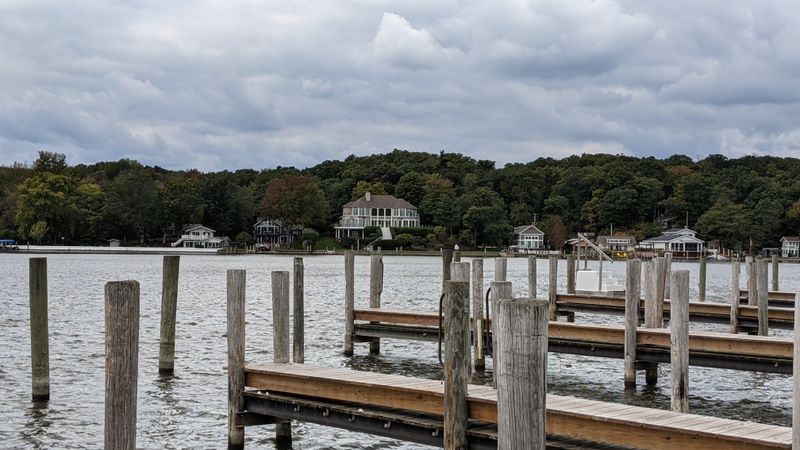
The boardwalk along the Kalamazoo River is the town’s moving front porch. Shoes thump wood planks with a gentle drumbeat, and you smell tar, pine, and lake-washed rope at the same time.
Boat masts tick against halyards like a pocket watch marking out small-town time, unhurried but precise.
From Water Street to the marinas, every fifty steps offers a bench or an overlook. Conversations drift from deck tables where whitefish sandwiches land with lemon halves that glisten.
Kids race ahead to the next cleat, counting slips, while a heron stands motionless like it owns the ordinance on stillness.
In walkability terms, edges matter, and this edge invites you to linger without blocking anyone’s path. Wayfinding signs are low and direct, so you read them in stride.
The sun sets down the channel like a runway, and that perspective nudges you forward another block. You do not need attractions when movement is the point.
The river does the quiet selling, and the planks make sure your feet keep listening to yes.
Mount Baldhead Stairs: A Vertical Detour Worth The Breath
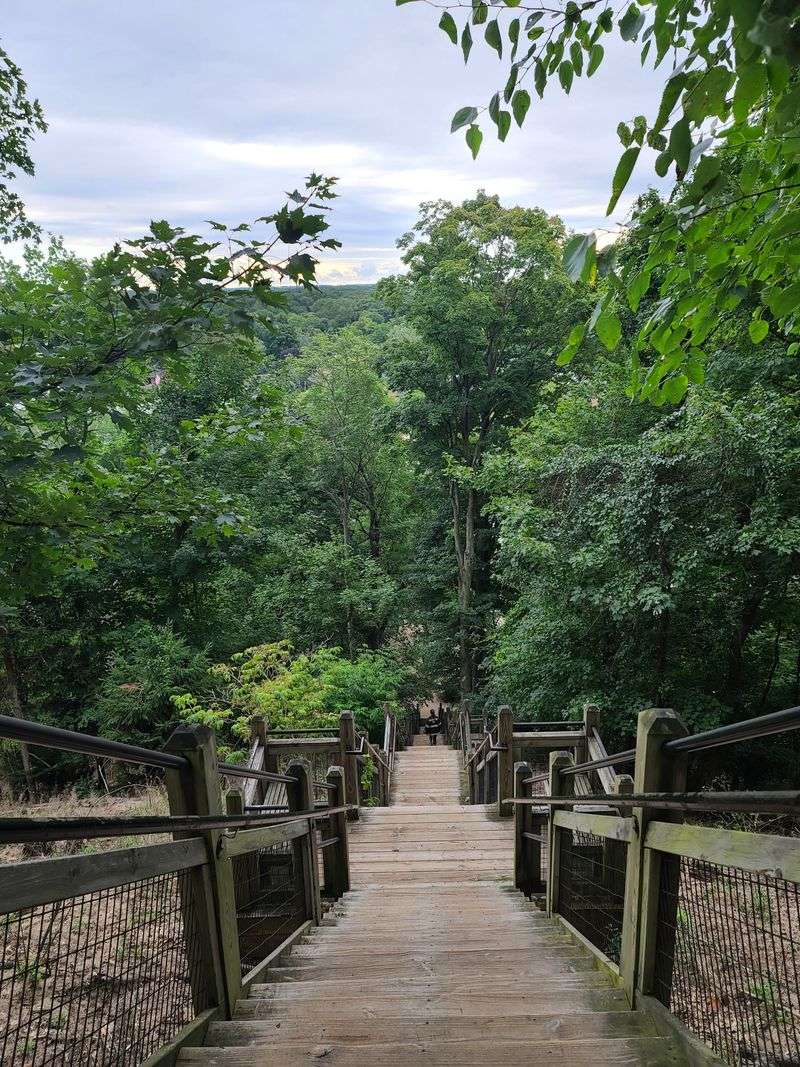
The Mount Baldhead staircase rises like a wooden spine through dune forest, each step a short decision. It looks daunting from the bottom, but the rhythm sets quickly: step, rail, breath, birdcall.
You smell hot pine and sand warming in shade, a dry sweetness that makes the climb feel older than your plans.
Halfway up, a cut in the trees gives you blue sky shaped like a lake you have not seen yet. Shoes scrape resin-streaked treads, and your calves negotiate terms with your curiosity.
People pass in both directions, trading a few words that sound like a handshake between effort and reward.
At the top, the radar dome sits like a punctuation mark, round and certain. Turn west and Lake Michigan arrives as a sheet of hammered silver, wind-creased and wide.
Walkability does not end when the ground tilts; it just becomes vertical choreography. You go back down lighter, steps tipped with gravity’s small applause, and the town reappears below in tidy segments you can now picture in one glance.
Oval Beach Without The Car Keys
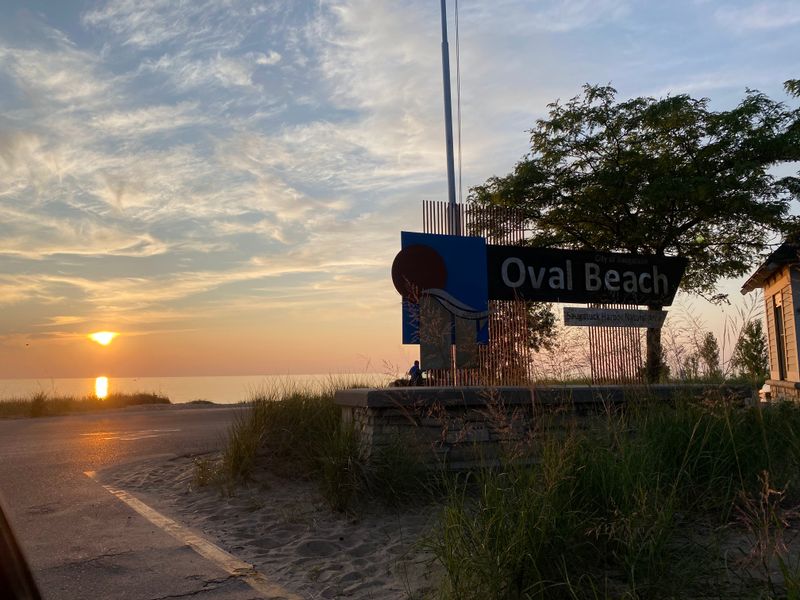
From downtown, Oval Beach is a reachable promise, not a negotiation with parking. You can cross by chain ferry when it runs, then follow a simple thread of road and path cut through dunes that breathe like sleeping animals.
Sand gathers at the edges, whispering over asphalt in little skitters that sound like distant rain.
The last stretch is a boardwalk that flexes slightly under weight. Sunscreen and lake wind meet in the air, a bright, clean scent that feels like summer’s on switch.
The waterline keeps rolling a soft note, foam hissing back through pebbles you can hear if you pause.
Walkability to a real beach changes how long you stay, because leaving is only a fifteen-minute reverse. You take only what you can carry and end up needing less anyway.
Towels over shoulders, shoes stuffed with sand, you stroll back with the sun on one side like a steady companion. No keys, no clock, just steps marking the distance between town and horizon.
Morning Circuit: Coffee, News, And River Light
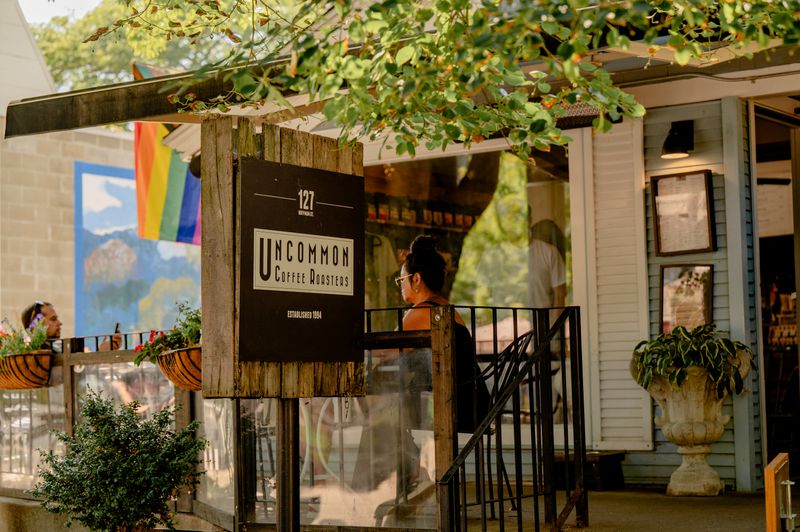
Mornings start by following the smell. Uncommon Coffee Roasters hums before nine, machines sighing, grinders grumbling, and the barista calling names that echo down Butler.
You feel the door’s pull, cool then warm, and the first sip brings nut and smoke that sit politely on your tongue.
Carry the cup outside and the town unfolds at walking speed. Headlines rustle, dogs wrap leashes around ankles, someone points toward the river as if light itself is a landmark.
You do not have to plan here; you drift with intention and let the next block suggest itself.
On mobile days, this is how you travel smart: short legs, clear payoffs. The distance from caffeine to gallery to bakery is a practical metric, and Saugatuck nails it.
By the time the second cup is an option, your map is muscle memory. The river throws mirrors onto shop windows, and you chase those glints like breadcrumbs back into the day.
Gallery Row: Windows That Slow Your Feet
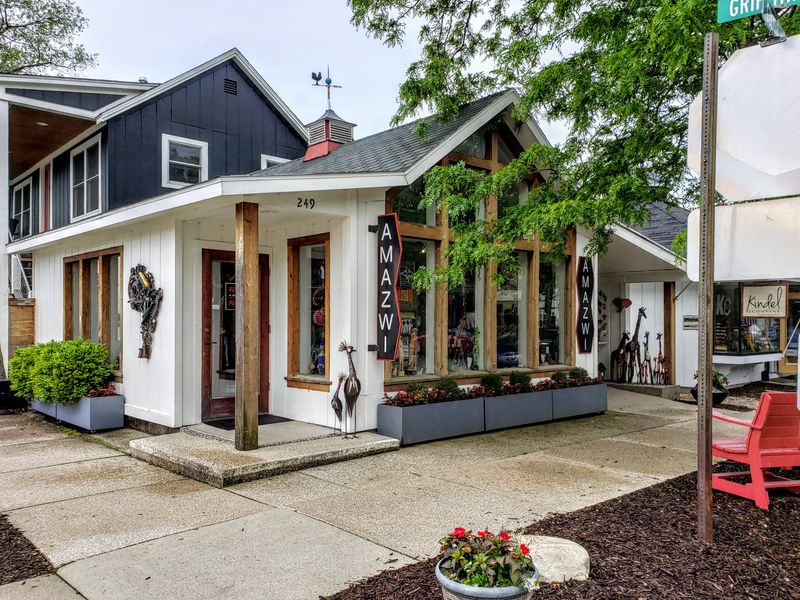
Galleries line the core like small museums without the hush. Big panes hold watercolors, woodcuts, and ceramics in staged daylight that flatters edges and grain.
You catch your reflection standing among lake scenes and abstract swirls, a reminder that walking is part seeing and part being seen.
Inside, floors creak and frames sit close enough to invite comparison. A curator mentions an opening on Friday, and suddenly your week has shape.
The talk is practical: edition sizes, shipping ranges, whether a piece survives steam from a kitchen.
This is walkability measured in attention spans. Each door stands ten strides from the next invitation, so you never build inertia.
Even if you buy nothing, you collect colors and ideas like pocket change, small and satisfying. By the block’s end, your pace has reset to gallery tempo, slower but alert, and the sidewalk feels like a ribbon pulling you gently forward to the next bright square.
Chain Ferry: The Slowest Shortcut
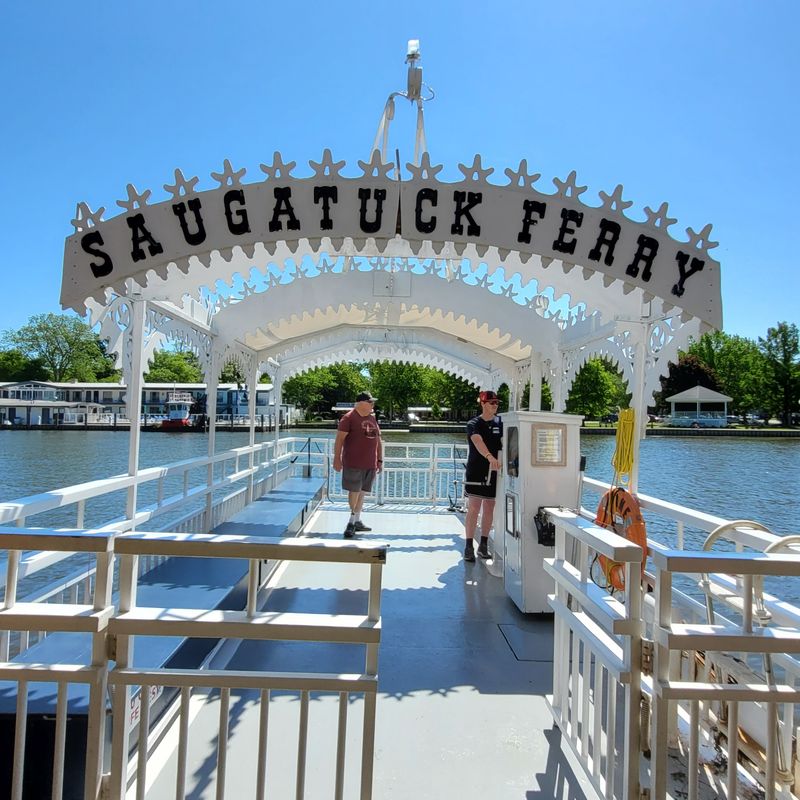
The hand-cranked chain ferry looks like a relic until you step aboard and feel how neatly it edits the map. The operator turns the wheel with an easy rhythm, chain rattling beneath water like a hidden zipper.
It is not fast, but it is certain, and certainty is a kind of luxury in motion.
On deck, people switch from talking to watching, as if the river requested a quieter tone. You notice varnish on the rails, the scuff of deck paint, the small echo of hull against current.
Shorelines draw closer, and so do errands you postponed because driving felt heavier than the task.
Walkability sometimes means options that refuse to rush you. The ferry grants a micro-pause between downtown and dunes, a reset button made of river and muscle.
In Saugatuck, it feels less like transportation and more like a ritual that locals and first-timers share without needing instructions. When the ramp kisses the dock, feet resume their vote.
You step off with a lighter stride and a shorter route to the day’s next little win.
Lunch Triangle: Deli, Deck, And Dockside Fries
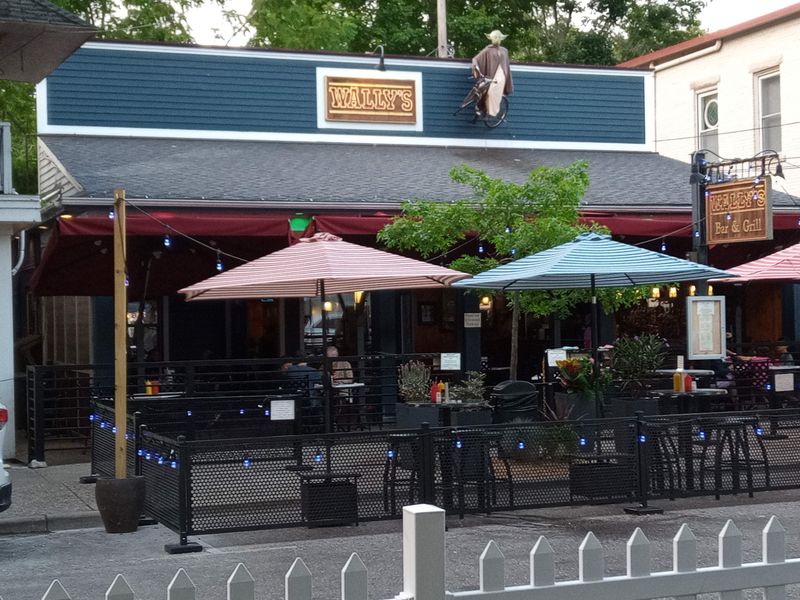
Midday forms a triangle you can trace without checking your phone. A deli on one corner stacks turkey, dill pickles, and bread that snaps, then yields.
Across the street, a deck throws shade and lake air onto tables where iced tea sweats into tight rings.
Down by the dock, fries arrive in paper boats with a vinegar mist that catches in your throat just enough to make you smile. Gulls posture like critics but keep a respectful distance from people who know better.
The sound is tin trays, fork clinks, and one boat horn that says the afternoon is leaving without hurry.
What makes this pattern work is proximity you can redraw on a whim. If the line grows at one spot, the other two are measurable in crosswalks, not minutes.
You eat better because choice costs less energy. By the last bite, you are already standing, napkin balled, walking toward the next taste still warming your hands.
Twilight Loop: From Dunes To Dessert
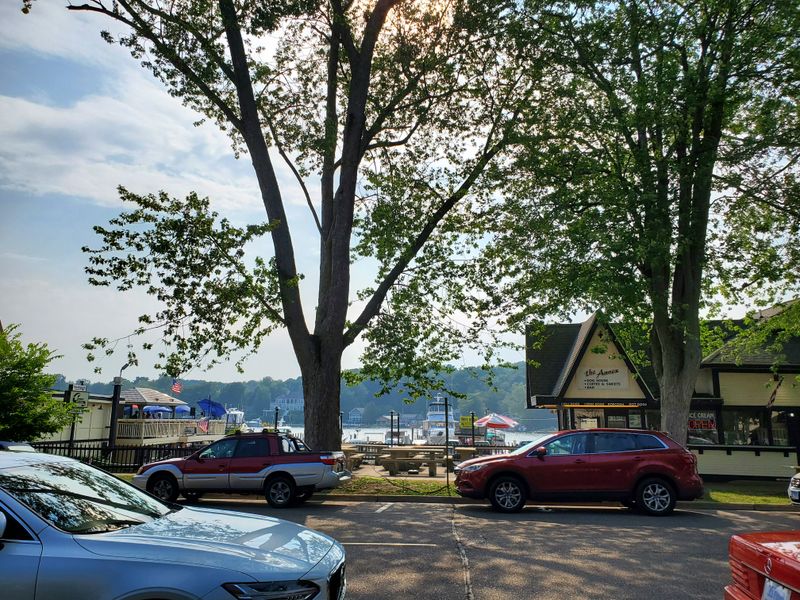
As light tilts, the town recalibrates to softness. You trace a short loop that touches dune grass, then slides back into streets lit by window lamps and string lights.
Sand clings to your ankles like a souvenir you did not buy.
Ice cream works better when you earn it in steps, and you taste it with a little wind still on your lips. Conversations move from boats to books, from swim temps to which bakery opens first tomorrow.
The night smells like vanilla and cedar mulch, lifted by the river’s cool exhale.
Walkability at dusk is about safety and invitation. Crosswalks stay bright, drivers inch respectfully, and sidewalks keep offering reasons not to call it.
You promise yourself one more block, then another. By the time you look up, dessert is gone, and the loop has closed with the quiet satisfaction of shoes returning to the same scuff on the same stoop.
Practical Map: Stays, Steps, And Timing That Works
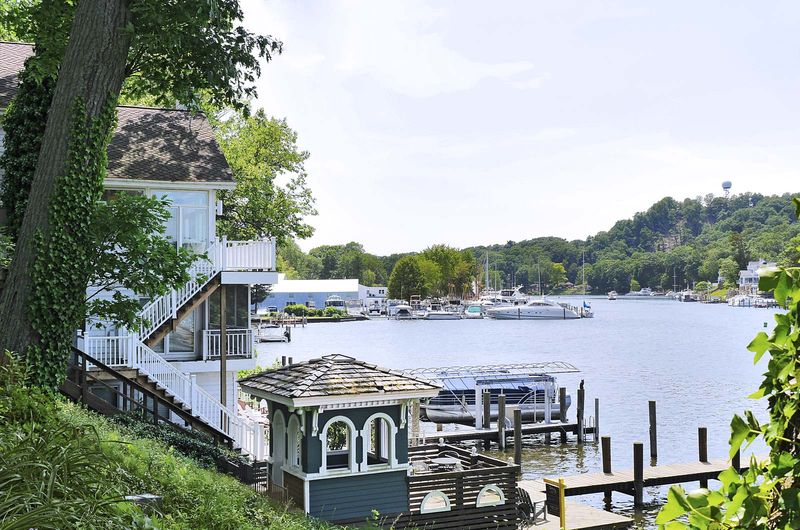
Book a stay within three blocks of Butler and Water to keep everything under a ten-minute walk. Inns here wear their age well, with narrow corridors and front porches that make lingering a default.
You hear screen doors click like punctuation marks at the end of neighborly sentences.
Plan mornings for galleries and coffee, afternoons for boardwalks and beach, evenings for decks and dessert. Summer weekends swell, so shoulder seasons give you the same routes with more elbow room.
According to the 2020 census, Saugatuck’s city population sits under 1,000, which partly explains why foot traffic feels friendly, not chaotic.
Pack shoes that ignore sand and a light layer for lake mood swings. If you track steps, you will hit five digits before dinner without trying.
For context, Michigan’s walkability conversation often points to Hamtramck for urban scores, but Saugatuck proves a different metric: short, satisfying links between water, art, and appetite. It is not a contest.
It is a demonstration you can feel, block by block, with the map folding neatly back into your pocket.



