 Unearth The Voyage
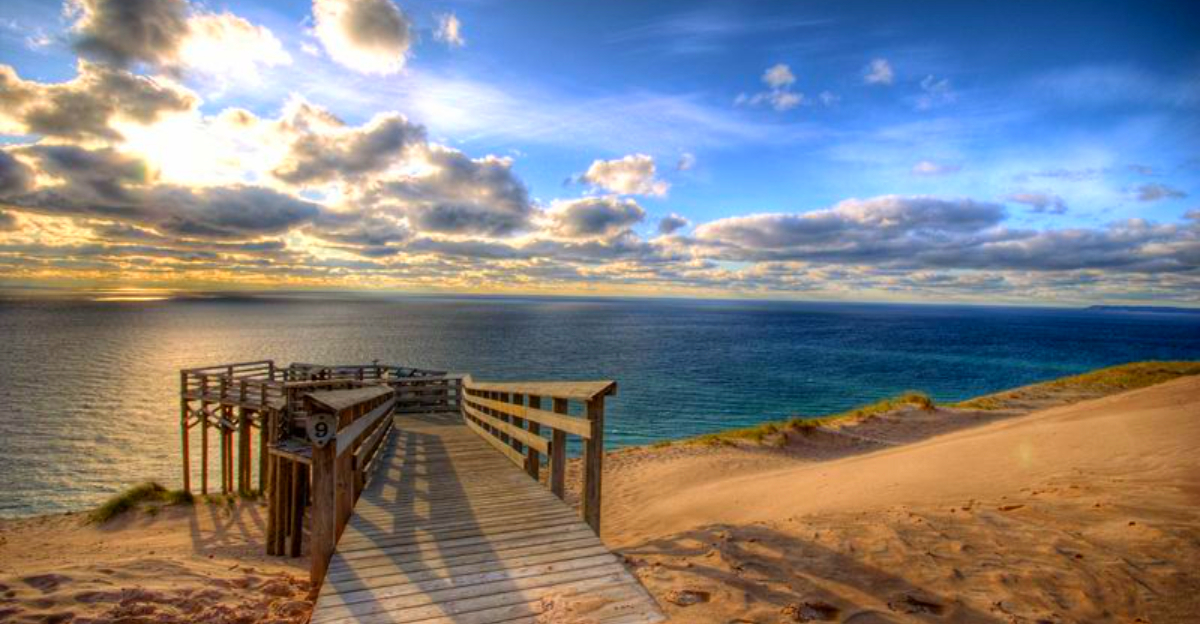
Stand at the lip of a 450-foot dune and the water below looks like it belongs in the tropics. Then a breeze brings the scent of cedar and dune grass, and you remember you are firmly in the Midwest.
Sleeping Bear Dunes does not ask for your attention, it steals it with impossible color and raw height. Keep reading and you will learn where to step, when to arrive, and how to see the blue the way locals do.
The First Look From Pierce Stocking Scenic Drive
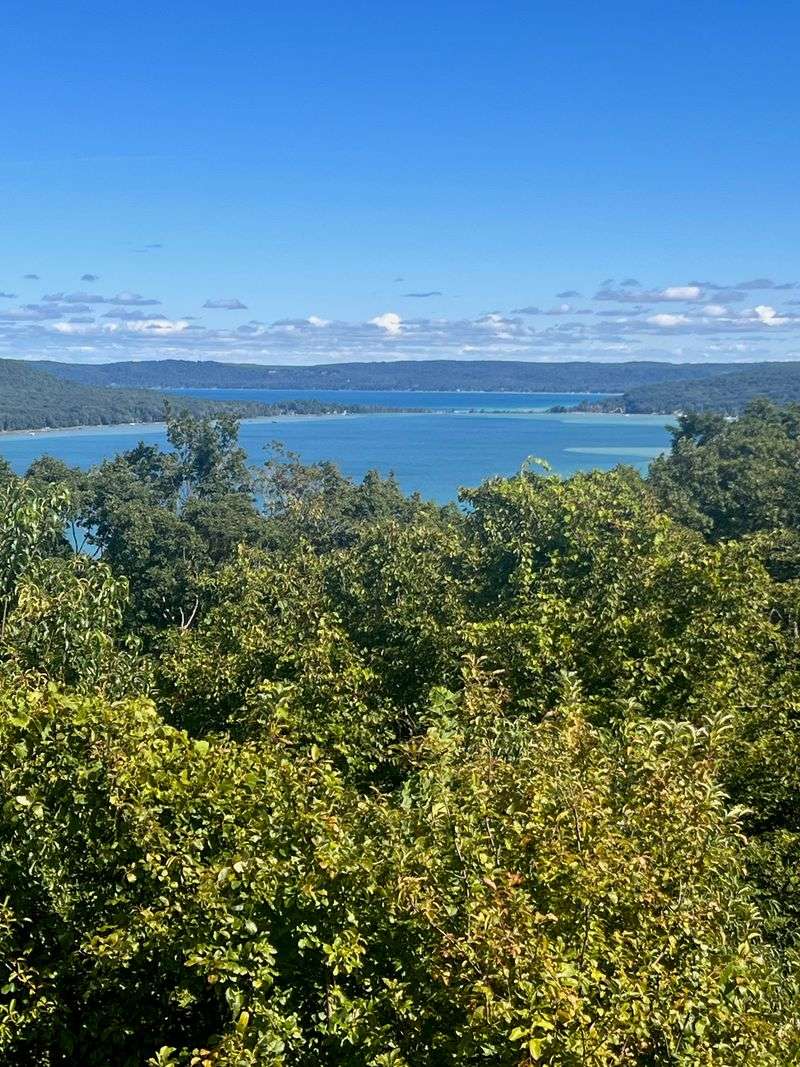
Roll down the windows on Pierce Stocking Scenic Drive and the air shifts, smelling like warm pine and cool water. At Overlook 9, the dunes fall away so steeply it rattles your stomach, and the lake below looks like layered glass.
The water color graduates from pale mint to deep cobalt, each band cut clean by depth and marl, and gulls ride the updrafts like kites.
Listen for the small things. Sand tick-tick-ticks against the guardrail, and dune grass rasps like paper when the wind turns.
A ranger’s sign warns about the dangerous climb back up, and you feel it in your calves just looking down the slope, a beige river frozen mid-pour.
Photographers crowd the rail at sunset, but midday is when the turquoise punches hardest. Bring polarized sunglasses to peel glare off the surface and watch the ripples sketch tight chevrons toward shore.
If you are timing, drive the loop clockwise just before lunch, then double back near dusk; the color show writes a new script every hour.
Standing On The Dune Edge Above Lake Michigan
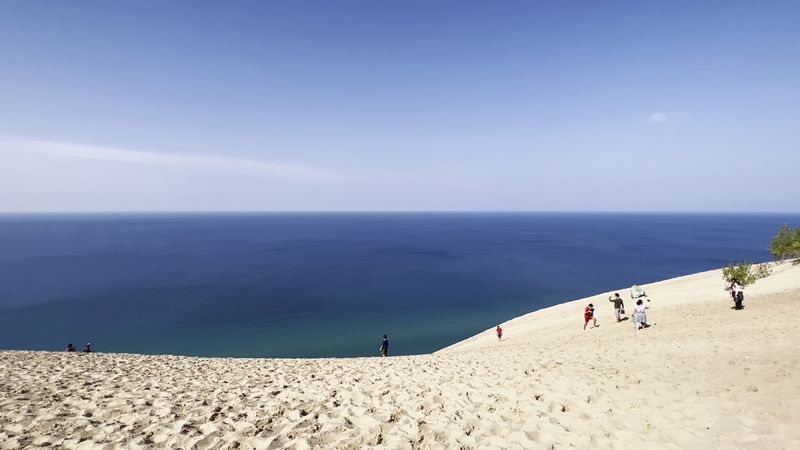
Walk to the edge and the slope seems to pull your weight forward, like the lake has its own gravity. Sand grains slide under your shoes, squeaking softly, and your toes find cooler layers just beneath the sunburned crust.
The Manitou Islands hover on the horizon, two dark commas in a page of blue.
Below, waves slap the shore with a hollow thud that reaches you half a beat late. People who scrabble down look like flicking insects, tiny and determined, then stop, hands on hips, already calculating the punishing return.
Rangers carry radios and calm voices; they have seen this play out every hot day in July.
The color tricks your mind into thinking tropical. But lift your nose and you catch balsam, cedar, and a faint mineral tang rising from the bluff.
On quiet mornings you hear a Crow Wing engine far out, then nothing but wind riffling the dune’s face. If your legs itch to move, save them for a safer descent along the Empire Bluff Trail; this drop is more theater than invitation.
Empire Beach Mornings That Feel Unreal
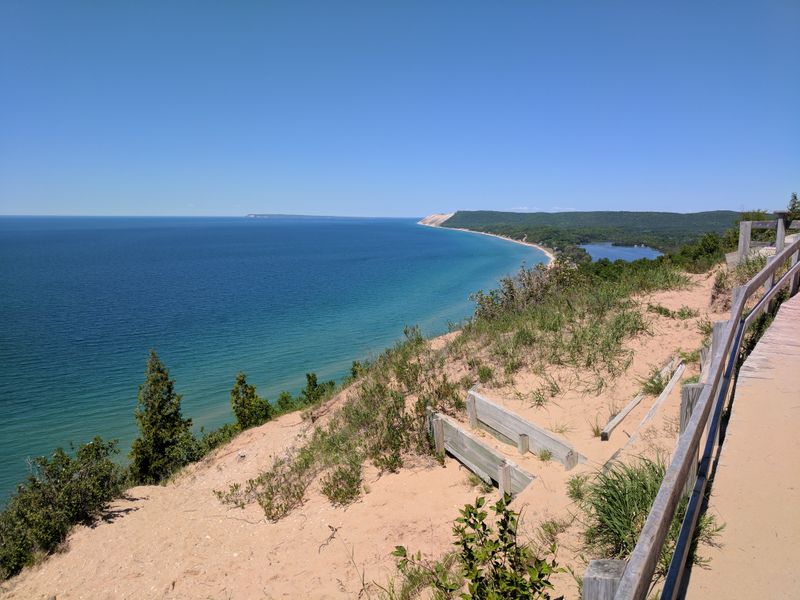
Get to Empire Beach before the coffee shops open and the lake behaves like a mirror. The pier creaks, a slow old-barn sound, and swallows zip low enough to comb the surface.
You can see pebbles beneath shin-deep water, each one edged in light like they were polished overnight.
Locals show up with travel mugs and dogs that plant sand on everything. The water is cold enough to reset your mood in four steps, but the clarity keeps pulling you deeper anyway.
Children test their bravery with gasps, then squeals, then full dunking laughs that bounce off the steel village water tower.
On still days the turquoise pushes right up to the shoreline, no cloud cover to mute it. Waders shuffle slowly to avoid kicking silt, and minnows spool away in tight silver braids.
By nine, the parking lot forgives no hesitation, so slip in early, watch the color bloom by the minute, and leave with sun-warmed shoulders before the wind stacks waves.
The Dune Climb: Sand, Sweat, And Sky
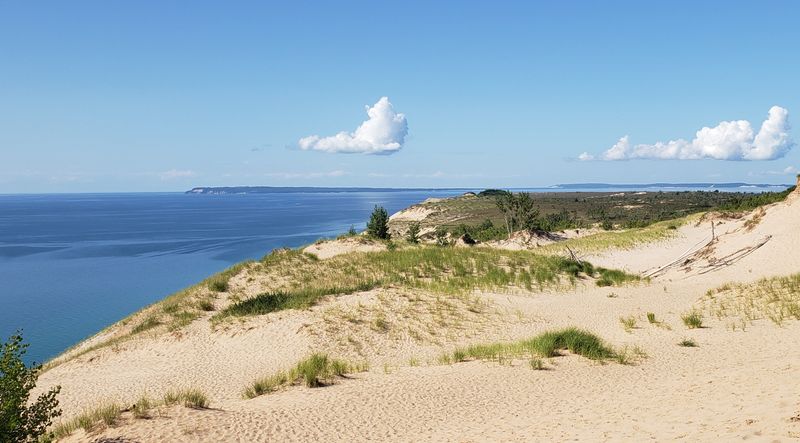
The Dune Climb looks playful from the parking lot, like a beach hill you could jog in flip-flops. Ten minutes in, your calves burn and your heartbeat syncs with the wind’s push, every step sliding back half a shoe.
Sweat evaporates so fast it feels like disappearing, and the ridge above keeps pretending to be the top.
Turn around and the lake flashes through a gap, a turquoise stripe beyond inland trees. Kids whoop past with plastic sleds, skimming down like summertime toboggans, then flop spread-eagle, starfish in a sea of sand.
The grains here are sugar-fine but dry, and the sun writes tight ripples that look machine-made.
Bring water, a brimmed hat, and patience for the false summits. If you decide to continue the two-to-three hour trek to Lake Michigan, know the sand will tax your ankles and reward you with solitude.
On breezy afternoons a parachute of sand lifts and hisses, and you feel both tiny and exactly where you are supposed to be, right between sky and buried glacier.
Empire Bluff Trail: The Safer High View
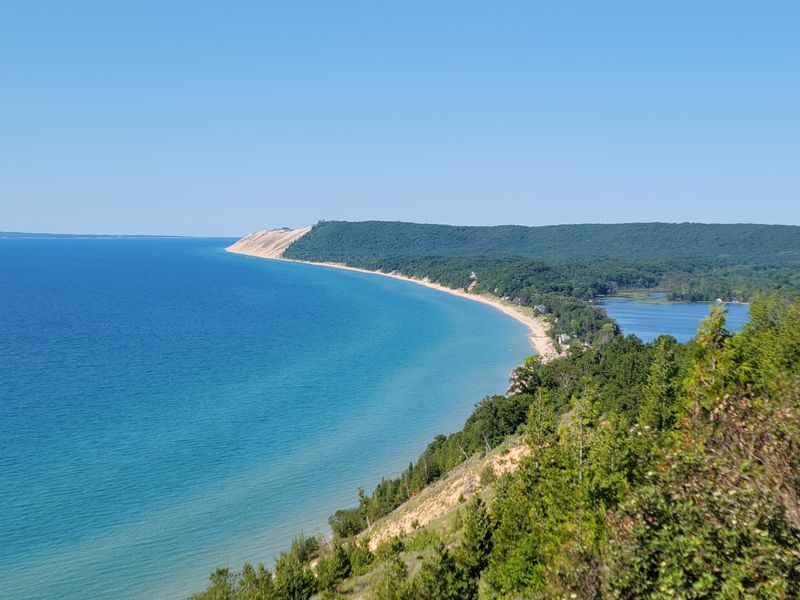
Empire Bluff Trail wastes no time delivering payoff. A mile out-and-back, rolling through beech and maple, it spills you onto a boardwalk balcony that frames all the blues at once.
The fence rails are worn smooth by elbows, and you will add yours, leaning into the view like a conversation you do not want to end.
The Manitou Passage shows its lanes if freighters happen by, slow as planets. In May, trillium freckles the forest floor; in October, sugar maples throw copper light at the lake, turning the turquoise into stained glass.
The wind is brisk but kinder than the open bluffs, flavored by leaf litter and sap.
Footing is firm, roots just enough to watch your step. Sunrise paints the water milk-glass pale; late day puts shadow ribs on every dune.
If heights make you cautious, this is your summit: high, safe, and generous. Pack a lightweight layer, slip your phone to airplane mode, and let the horizon stretch your breathing wider than you remembered possible.
North Bar Lake’s Warm, Clear Shortcut
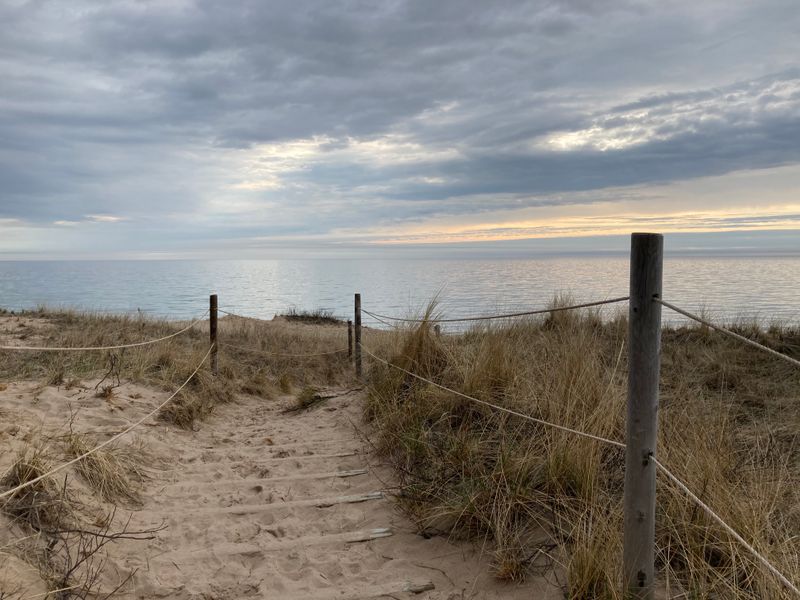
North Bar Lake feels like a trick the park plays for families. The inland basin warms fast, a shallow bowl of clear tea-green water separated from Lake Michigan by a single dune ridge.
On hot days a cut opens to the big lake, and a lazy channel forms, moving like a river the color of lime candy.
Stand with toes in warm sand and hear two soundtracks at once: children splashing on the quiet side, waves thumping the outer beach. The bottom is packed and forgiving, perfect for floaties and hesitant swimmers.
Small perch flash like coins, and dragonflies stitch the air with thin blue thread.
Arrive mid-morning for parking, and carry everything in one trip; the path is short but sandy. If wind stacks waves on the main beach, tuck here and still get that improbable Caribbean shade without the chill.
Bring a small net for kids, reef-safe sunscreen, and snacks you can eat with one hand. When the channel runs, ride it twice, then sit back and watch the color hold steady while the world rushes elsewhere.
History In The Wind: Glen Haven To The Lifesaving Station
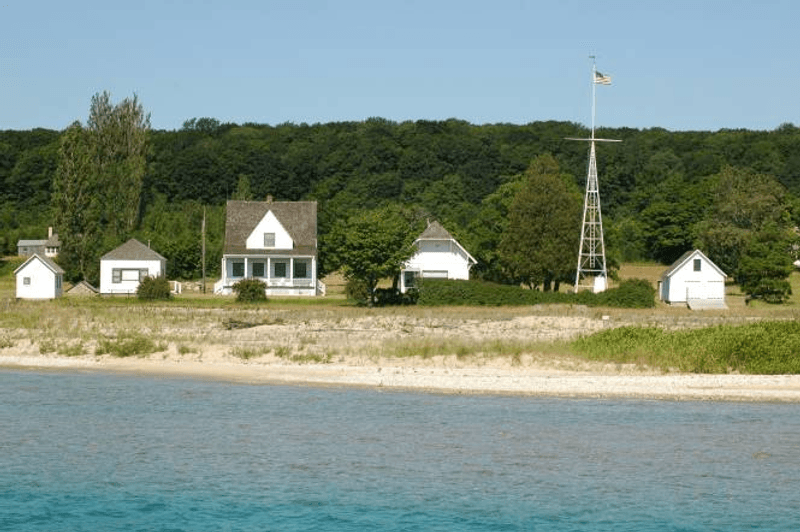
Color draws you in here, but the stories keep you longer. Walk the crushed stone of Glen Haven, past the red-doored cannery and the blacksmith’s forge that still breathes coal smoke on demonstration days.
The U.S. Life-Saving Service Station sits square to the lake, white clapboard steady against a horizon that once decided fates.
Inside, a surfboat waits under rafters darkened by time. A keeper’s voice comes alive in placards and photos, men rehearsing beach apparatus drills that hauled sailors ashore by breeches buoy.
Step outside and the wind feels different, flavored by iron and old rope you half imagine still drying on the rail.
Context reframes the pretty water. The Manitou Passage carried timber, grain, and iron ore; storms took their share.
According to the National Park Service, visitation surged past a million annually in recent years, proof the dunes still signal. Read a line, then look back at the turquoise, and you will see both beauty and the blunt edge it hides.
Good Harbor Bay: The Wide-Open Blue
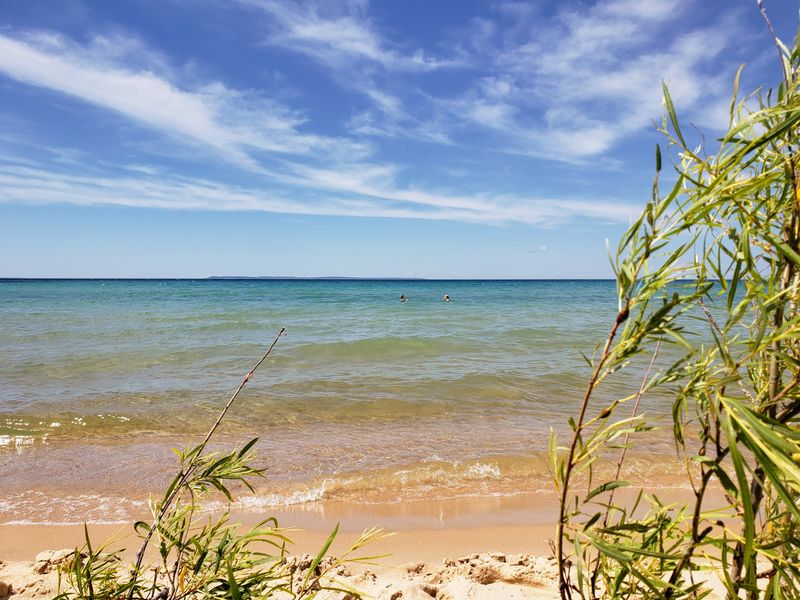
Drive north toward Good Harbor Bay and the shoreline opens into something broad and luminous. The first thing you notice is space.
The second is color.
On calm afternoons, the water stretches in horizontal bands of jade, aquamarine, and deep navy, each stripe sharp as if painted with a ruler. The sand here is pale and fine, squeaking under bare feet, warm enough by noon to make you hop.
The bay faces west, which means sunset does not sneak in quietly. It stages a full performance.
The Manitou Islands darken into silhouettes while the sky bruises peach and lavender, and the water mirrors everything back twice as bright.
Walk north toward the quieter stretch and the dunes soften into low hills tufted with grass. You hear wind first, then waves folding into shore in clean, even sets.
There is room here to breathe without bumping elbows. Spread a towel, dig your heels into the sand, and let the horizon flatten your thoughts.
If you want that Caribbean illusion without the climb, this is your spot: long shoreline, open sky, and water so clear you can track your shadow across the bottom.
Platte River Point: Two Waters, One Color Story
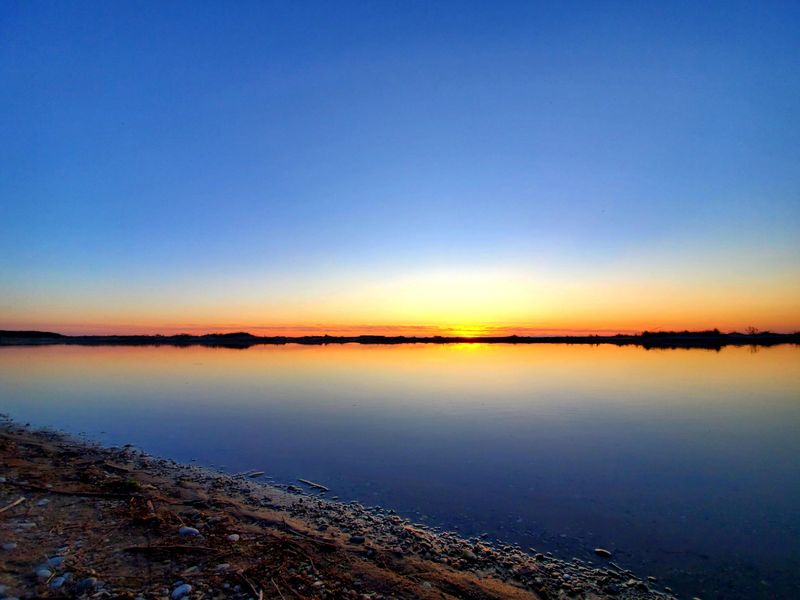
At Platte River Point, the river empties into Lake Michigan in a slow, cinematic spill. The contrast is subtle but mesmerizing.
The river runs darker and tea-stained from tannins upstream. The lake arrives in sheets of blue-green glass.
Where they meet, the colors braid together like silk ribbons.
Float the river on an inner tube in late summer and you drift beneath leaning cedars and kingfishers that click overhead. The current carries you toward that bright horizon, and suddenly you are stepping out into Caribbean-shaded water again.
Kids build sand castles on the riverbank while surfers test the lake side when wind picks up. It feels like two vacations braided into one.
Stay until late afternoon and the sun drops behind the dunes, turning the river amber and the lake molten silver.
Bring water shoes for the rocky patches, and if you rent tubes upstream, plan your shuttle before you start drifting. The beauty here feels effortless, but the logistics work best when you think ahead.
When The Wind Turns The Water Electric
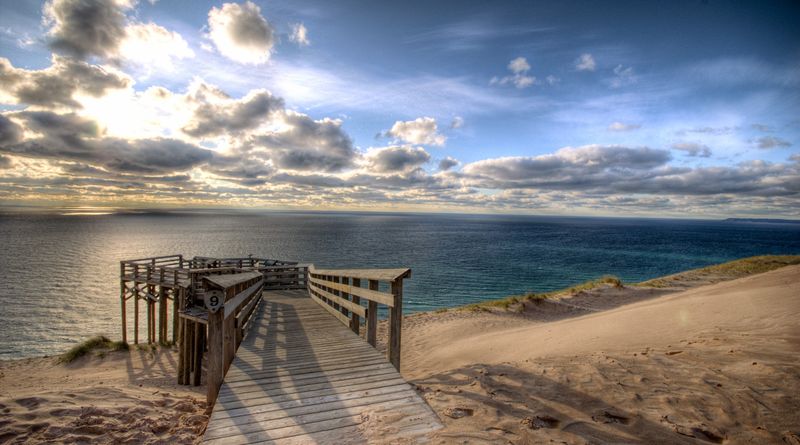
Locals watch the wind forecast the way others check stock prices. A south or southwest wind can turn Lake Michigan into an illuminated pane of turquoise so bright it looks backlit.
On those days, the lake does not just look tropical. It glows.
Waves stack into tight, glassy ridges. The troughs flash emerald before folding into white lace along shore.
From high bluffs, the color feels almost artificial, like someone slid a saturation bar too far right.
The science is simple: sunlight, sand bottom, depth, and angle. But standing there, feeling the gust tug your shirt and sting your cheeks, the explanation feels smaller than the experience.
Even in October, when the air bites and maples burn orange inland, the water can hold onto that improbable blue.
If you want the brightest color, aim for mid-afternoon after a clear morning. Clouds mute the effect; wind sharpens it.



