 Unearth The Voyage
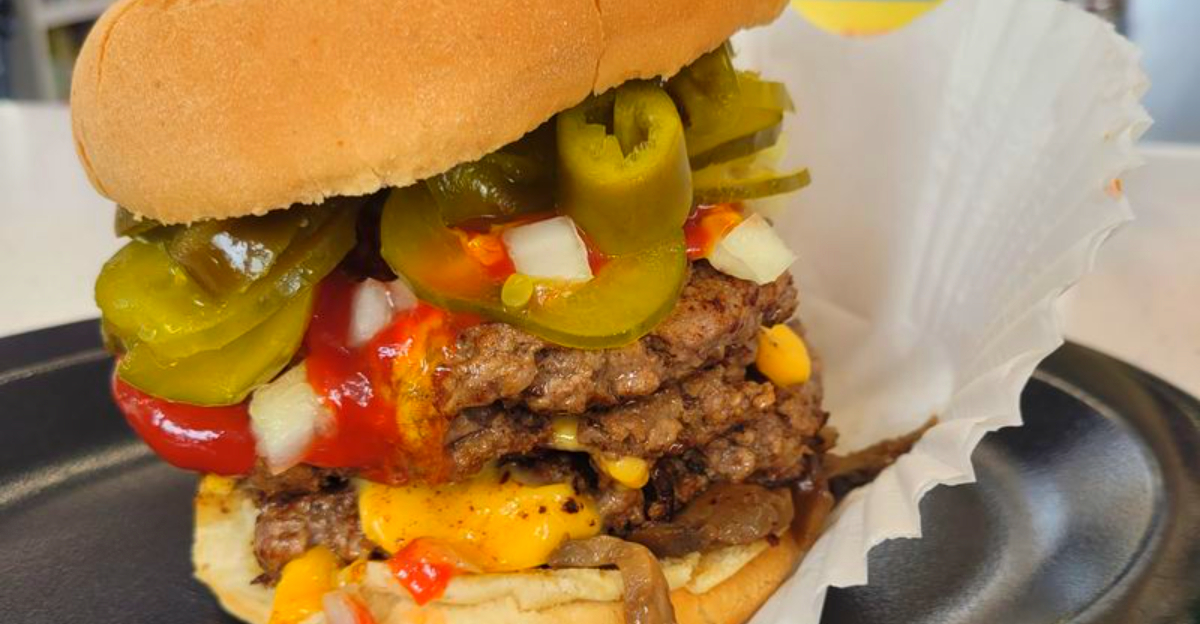
Clyde’s Drive-In in St. Ignace, Michigan sits just off US-2 in Michigan’s Upper Peninsula, only minutes from the Mackinac Bridge. The low-profile, red-trimmed building has operated as a seasonal drive-in for decades and has become a required stop for many travelers heading north or returning south.
Locals recommend it without hesitation. Visitors plan detours around it.
The Big C burger anchors the menu, and summer lines often stretch into the parking lot. If you think you’ve covered Michigan’s essential burger stops, this small Upper Peninsula town continues to challenge that list.
First sight of the grill, last doubt you had
Clyde’s Drive-In is located just off US-2 in St. Ignace, a key gateway city connecting travelers to the Mackinac Bridge and the Upper Peninsula. Its placement along this heavily traveled corridor makes it one of the most strategically positioned independent burger stands in northern Michigan.
For decades, drivers heading to or from Mackinac Island, Sault Ste. Marie, or deeper into the U.P. have used Clyde’s as a reliable stop.
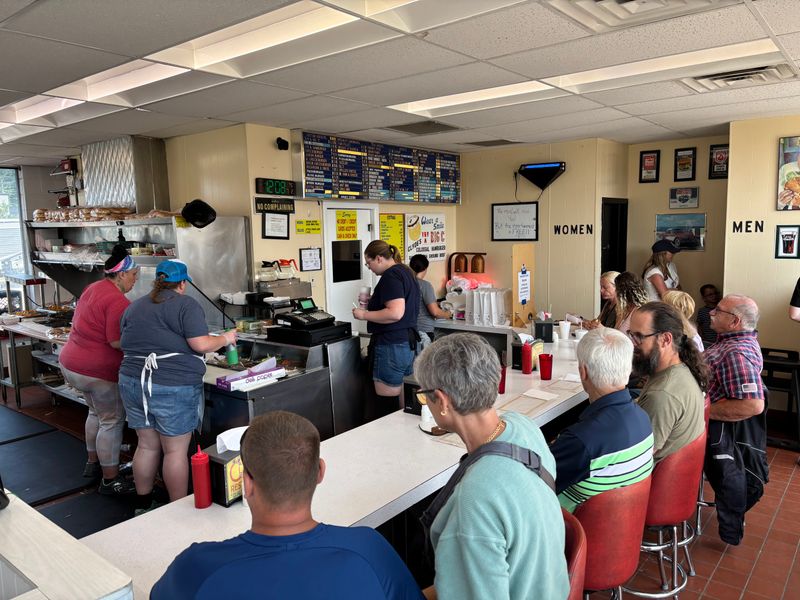
The building itself reflects a traditional mid-century drive-in layout, with a walk-up ordering window, visible flat-top grill, and a parking lot designed to accommodate carhop service. From the counter area, guests can observe patties cooking in steady rotation, reinforcing the restaurant’s focus on high-volume consistency during peak travel months.
Because Clyde’s operates seasonally, each open period carries concentrated demand. Staff are trained to manage surges tied to ferry schedules and bridge traffic, which often arrive in waves.
The first impression isn’t built around flash or reinvention. It’s built around clarity: a visible grill, a direct ordering system, and a menu centered on burgers prepared the same way year after year.
That consistency eliminates hesitation – customers know exactly why they stopped.
Old-school service that still moves fast
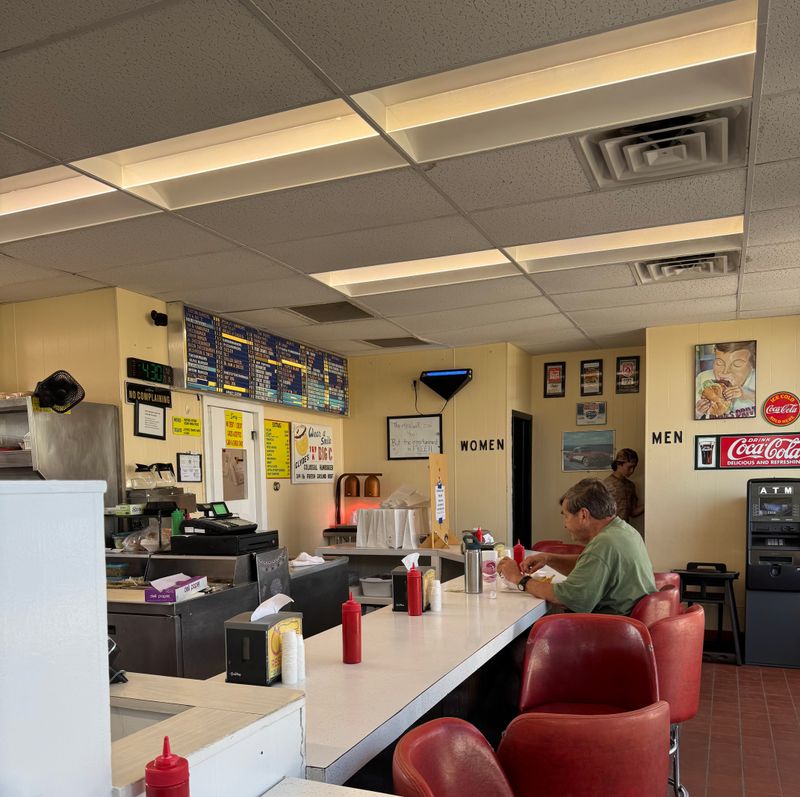
Clyde’s maintains a traditional drive-in model that includes both limited indoor seating and carhop service. Many guests choose to eat in their vehicles, where window trays hook directly onto car doors in classic drive-in style.
Despite the retro format, the system runs efficiently. Orders are taken quickly, names are repeated clearly, and trays are delivered in steady succession.
During peak summer months, staff manage long lines without visible confusion.
Because Clyde’s operates seasonally – typically opening in spring and closing in early fall – the returning staff and customers develop a familiar rhythm. Regular visitors often recognize employees year after year.
The cash-only policy reinforces the restaurant’s old-school identity, and while there is an on-site ATM, many locals arrive prepared. That small detail subtly slows the pace in a way that aligns with the drive-in atmosphere.
It’s nostalgic in format, but modern in execution speed.
The Big C and why size suddenly matters
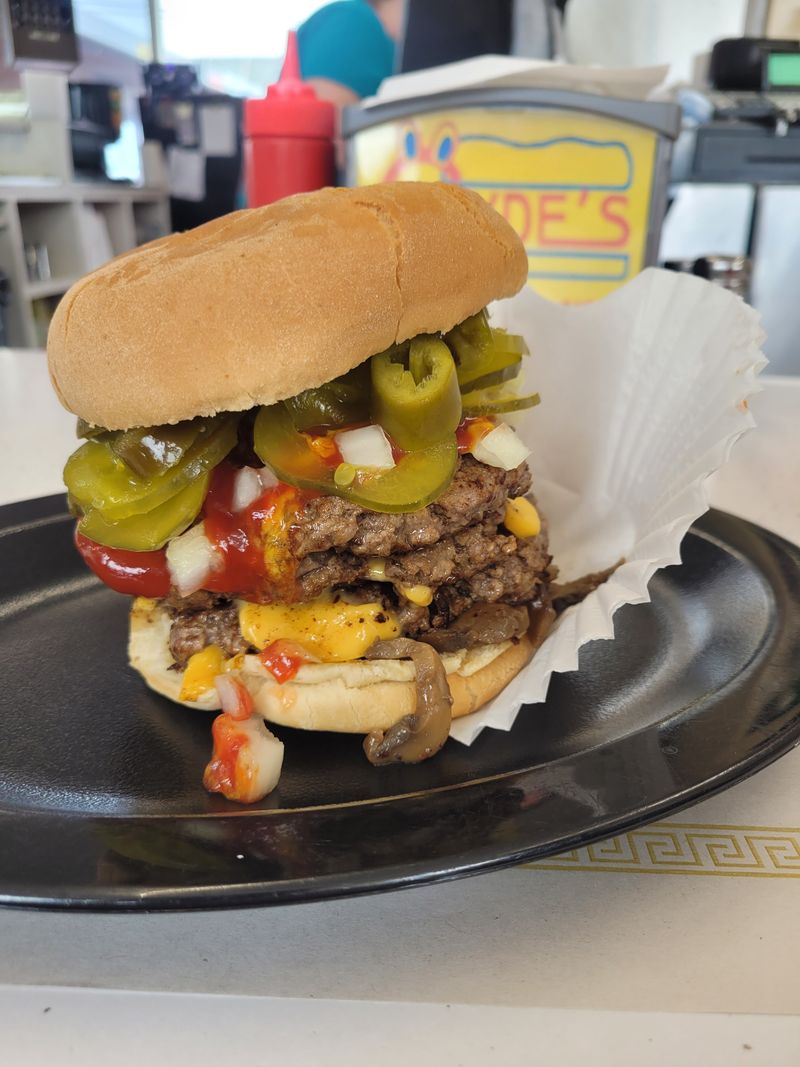
The Big C is Clyde’s signature burger and the item most associated with its statewide reputation. Weighing in at three-quarters of a pound, it is intentionally substantial without crossing into novelty territory.
The burger is built around a thick beef patty cooked on the flat-top, topped with melted cheese and served on a bun designed to support the weight. Standard toppings include lettuce, pickles, onions, and condiments, though customization is available.
Its size is part of the appeal. Travelers arriving after long drives often choose the Big C as a definitive meal rather than a quick snack.
It’s filling without relying on excess gimmicks.
Food writers and regional roundups frequently cite the Big C when ranking Michigan burgers, particularly in Upper Peninsula coverage. It represents Clyde’s straightforward approach: generous portions, consistent preparation, and no unnecessary embellishment.
For many customers, ordering the Big C feels like participating in a local tradition.
Meet The Beast Burger you will talk about later
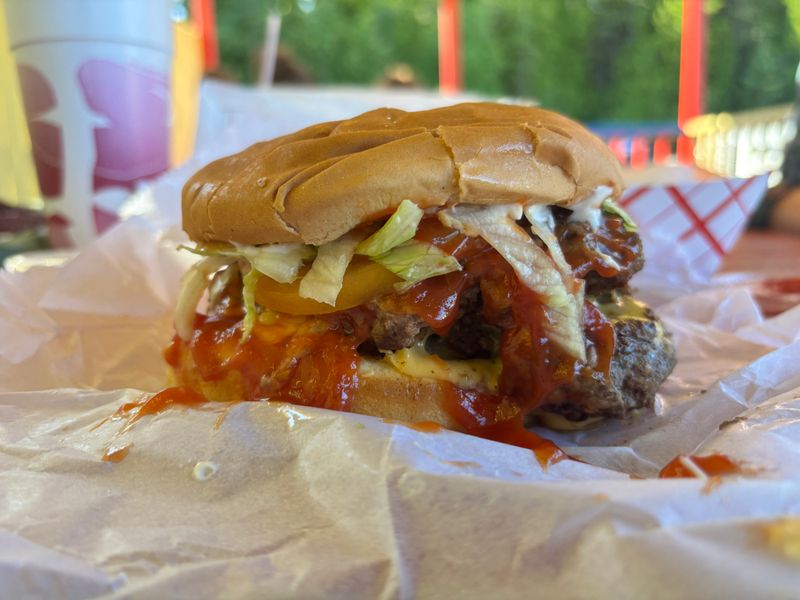
In recent years, Clyde’s expanded its menu with the Beast Burger, a specialty item built from a blend of Wagyu, elk, bison, and wild boar. This addition signals that the kitchen is willing to experiment while maintaining its classic foundation.
The blended patty offers a different profile than the standard beef burger, attracting both returning customers and first-time visitors looking for something distinct. It’s not positioned as a daily default but rather as a deliberate upgrade option.
The Beast Burger reflects a broader trend in Michigan toward game and specialty meats, while still fitting within the drive-in structure. It’s served with traditional toppings and remains accessible rather than overly refined.
By adding the Beast to the menu, Clyde’s demonstrates that even a long-standing drive-in can evolve without losing identity. It balances heritage with adaptation – something many historic establishments struggle to achieve.
Fries, rings, and the small crisp that seals the deal
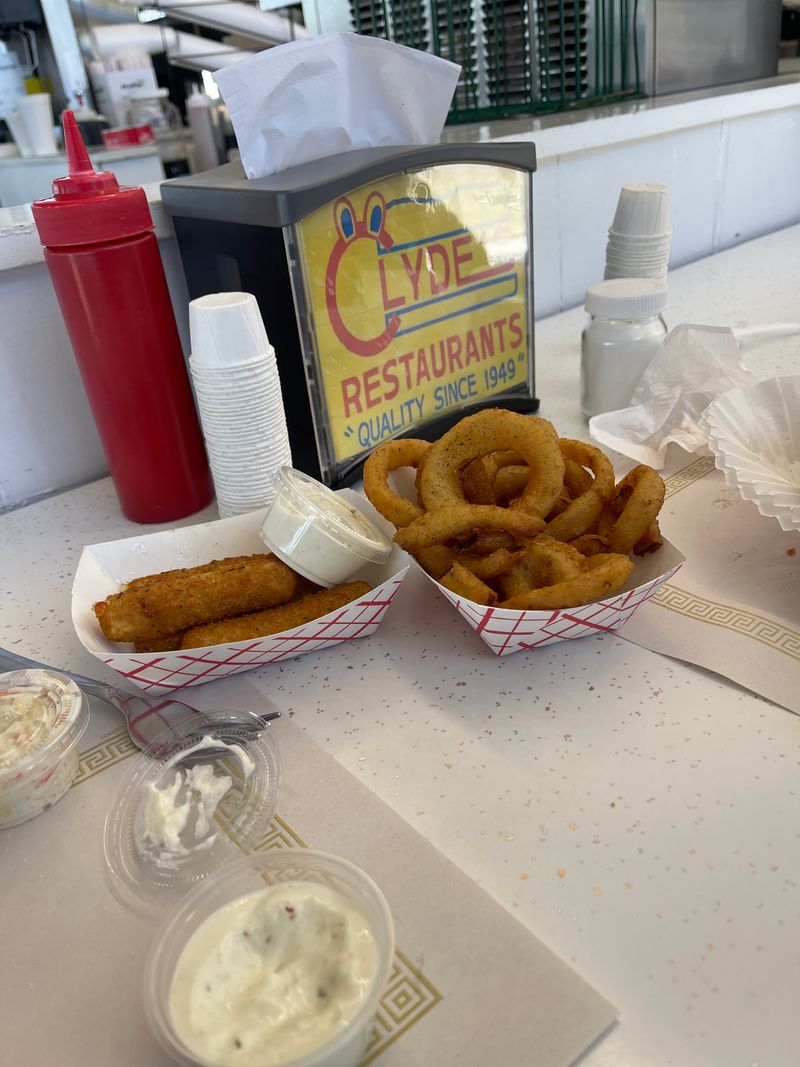
At Clyde’s Drive-In, sides are not treated as filler or automatic add-ons. Fries and onion rings are ordered in high volume and move through the kitchen with the same priority as burgers.
During peak summer hours, baskets of sides are prepared in steady rotation to keep pace with grill output.
The fries are thin-cut and portioned generously, making them easy to split between passengers in a car or across a picnic-style setup. Because many customers arrive in groups after ferry rides or long highway stretches, shared sides are common.
The menu keeps options straightforward rather than experimental, reinforcing Clyde’s identity as a classic drive-in rather than a specialty concept.
Onion rings are another standout, frequently mentioned in reviews alongside the burgers themselves. Their popularity suggests they are not an afterthought but a reliable part of the meal structure.
Together, the fries and rings round out the tray in a way that feels complete. For regulars, skipping the sides would feel like skipping part of the tradition.
Shakes, malts, and the hum of the spindle
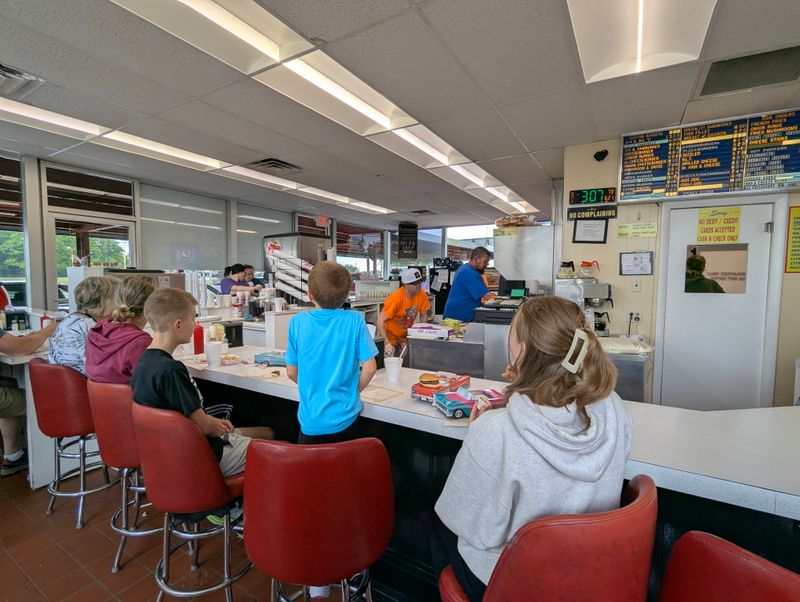
The shake and malt offerings at Clyde’s are rooted in traditional drive-in expectations. Core flavors — chocolate, vanilla, and strawberry – remain the foundation of the program, with malt available as a customization rather than a separate specialty category.
Prepared behind the counter in stainless mixing cups, the shakes are built to accompany a full burger meal. They are substantial enough to function as both beverage and dessert, which makes them particularly appealing to travelers looking for a single-stop meal before getting back on the road.
For many returning customers, the burger-and-malt combination is considered the standard order rather than an indulgence. Families often associate their first shake of the season with Clyde’s reopening in spring, reinforcing its connection to Michigan’s warmer months.
Unlike modern milkshake concepts that emphasize excess toppings or novelty combinations, Clyde’s keeps the structure simple. That restraint contributes to its longevity.
The shakes are reliable, consistent, and integrated into the broader rhythm of the drive-in experience.
Cash only and why that changes your pace
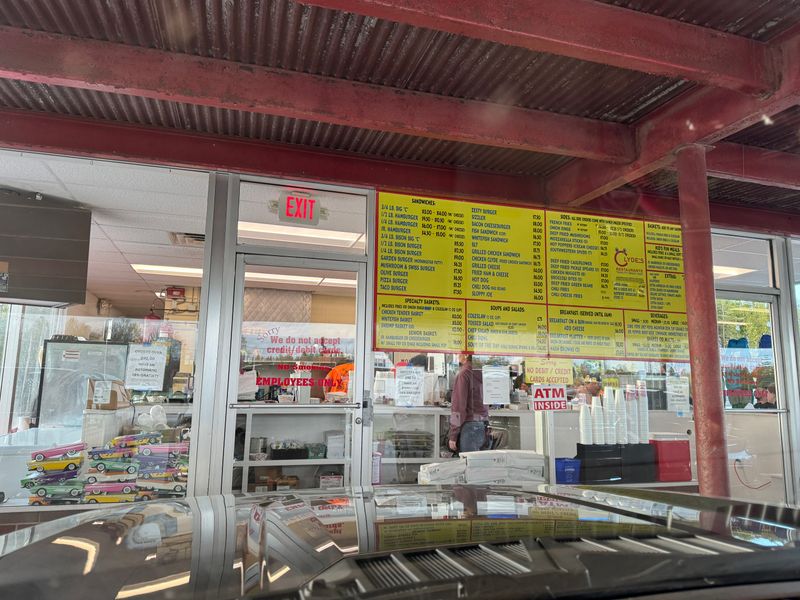
Clyde’s operates as a cash-only establishment, a policy that stands out in a dining landscape dominated by contactless payments and mobile apps. While an ATM is available on-site, most experienced visitors arrive with cash in hand, understanding that it’s part of how the restaurant functions.
This system simplifies transactions at the register and keeps the ordering process direct. There are no card readers to troubleshoot or digital screens to manage.
Payments are handled quickly, allowing the staff to maintain steady movement during high-volume hours.
The cash-only structure also reinforces Clyde’s traditional identity. It aligns with the drive-in format, the seasonal schedule, and the long-standing operational model that has carried the business for decades.
For first-time visitors, the policy may feel unexpected. For regulars, it’s part of the established rhythm.
The consistency of this approach – even as surrounding businesses modernize – reinforces the sense that Clyde’s operates according to its own blueprint.
Timing the rush like a local
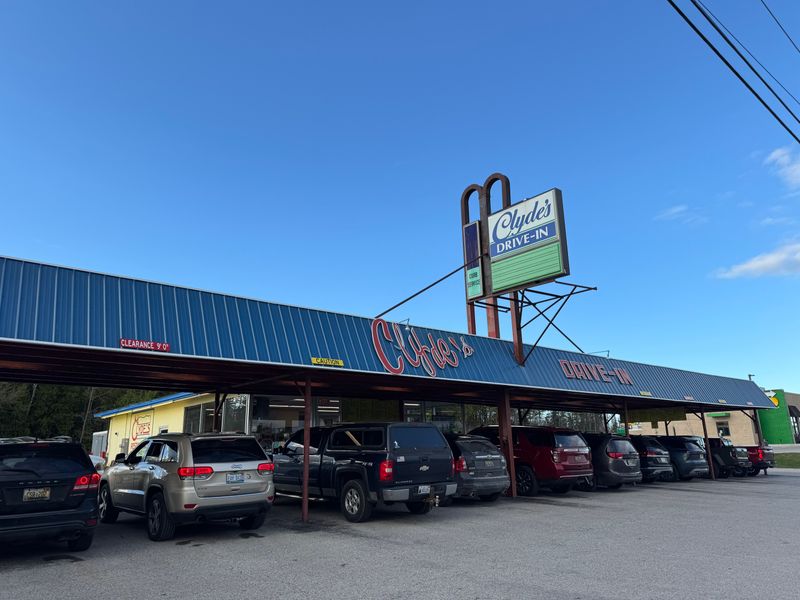
Understanding Clyde’s busiest hours can significantly shape the experience. Peak traffic typically coincides with Mackinac Island ferry schedules, holiday weekends, and mid-summer tourism surges.
Late afternoons and early evenings in July and August often produce the longest lines.
Locals recommend arriving shortly after opening for the most efficient service. Mid-afternoon, particularly between ferry return waves, can also provide shorter wait times.
Weekdays outside of major travel windows are generally more manageable than Saturdays.
During high-volume periods, staff may provide estimated wait times to set expectations. Even when lines extend into the parking lot, customers often commit rather than leave, suggesting the wait is widely viewed as worthwhile.
Because Clyde’s operates seasonally, demand is concentrated into a limited calendar window. That compressed timeline intensifies traffic but also adds urgency.
Planning ahead – especially during peak tourist months – can make the difference between a brief stop and a longer delay.
That view just around the corner
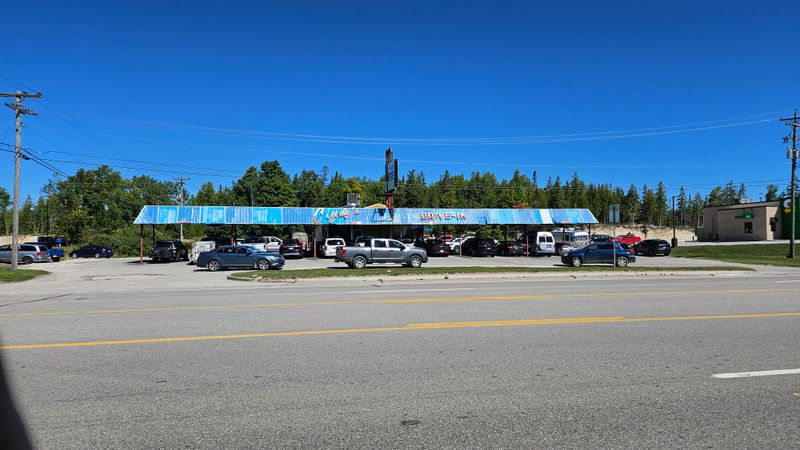
Clyde’s sits in St. Ignace, just minutes from the Mackinac Bridge – one of Michigan’s most recognizable landmarks. Its position along US-2 places it directly on a major travel corridor connecting Michigan’s Lower and Upper Peninsulas.
This location plays a crucial role in the restaurant’s sustained relevance. For drivers heading north into the Upper Peninsula or returning south after vacation, Clyde’s becomes a natural stopping point.
The drive-in is close enough to the bridge to feel tied to the crossing experience without being swallowed by heavy commercial development.
Nearby attractions include ferry terminals for Mackinac Island, small-town retail shops, and lakeside access points. That combination makes Clyde’s easy to integrate into broader travel plans.
For many families, stopping at Clyde’s has become part of the tradition of crossing the bridge. It serves as either a celebratory first meal upon arrival or a final stop before heading home – reinforcing its role as more than just a roadside burger stand.
Why this small-town burger really might be the best
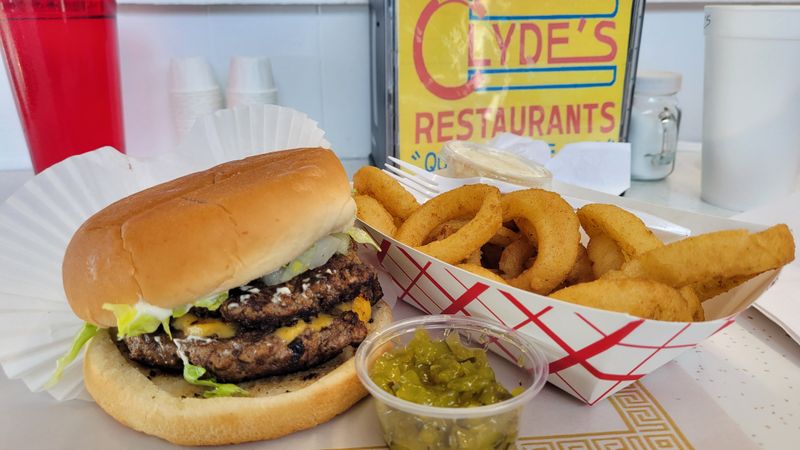
Michigan’s burger landscape is competitive, spanning Detroit institutions, college-town staples, and modern gastropub interpretations. Yet Clyde’s Drive-In consistently appears in regional rankings and Upper Peninsula travel features.
Its claim to “best” status rests on several measurable factors: longevity, sustained seasonal demand, portion size, and consistency. The Big C remains its flagship item, drawing repeat visitors year after year.
The addition of the Beast Burger demonstrates an ability to evolve without abandoning the core menu.
Unlike trend-driven restaurants that rely on limited-time offerings or social media momentum, Clyde’s success is rooted in repetition and reliability. It operates within a narrow seasonal window, maintains a streamlined menu, and serves a product that aligns with its identity.
For many customers, the evaluation goes beyond taste alone. The burger becomes part of a larger ritual tied to travel, bridge crossings, and summer traditions.
That layered connection – combining quality, history, and location – is what gives Clyde’s a credible argument in the statewide debate.
In a state filled with strong contenders, Clyde’s doesn’t rely on hype. It relies on history, consistency, and the fact that people keep coming back.



