 Unearth The Voyage
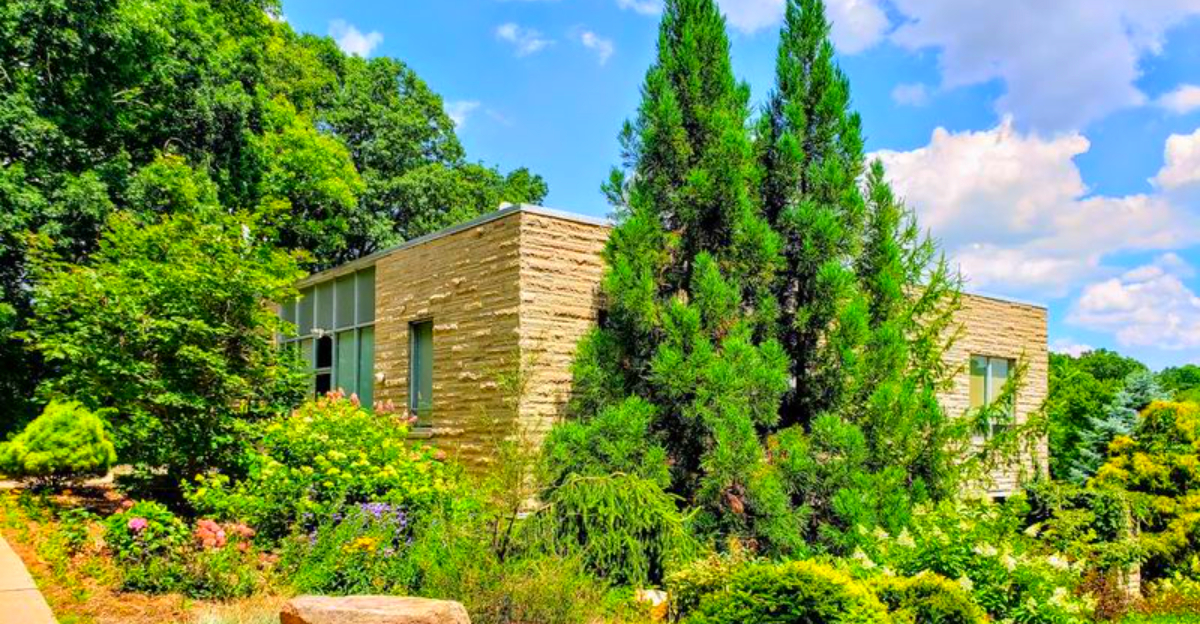
Somewhere in the rolling countryside of southern Michigan, there is a 686-acre botanical world that most people drive right past without ever knowing it exists. I almost did the same thing.
A friend mentioned it casually, the way people mention places they assume everyone already knows about, and I found myself turning off the highway onto Monroe Road with zero expectations and a half-eaten granola bar. What I found was a property so layered, so carefully tended, and so quietly spectacular that I stayed for five hours and still felt like I had only scratched the surface.
There are canopy bridges, rare conifer collections, bonsai courtyards, tropical conservatories, and twelve miles of hiking trails winding through forests that feel genuinely wild. The whole place is operated by Michigan State University, which means the plant science behind it is serious, but the experience itself never feels like a lecture.
It feels like a reward.
Where to Find This Botanical Treasure
The full address is 6214 Monroe Road, also known as Highway M-50, in Tipton, Michigan 49287. Tipton sits in Lenawee County in the southern part of the Lower Peninsula, roughly halfway between Ann Arbor and Jackson, making it surprisingly reachable from several major cities in the region.
Michigan State University has operated the property since 1945, and that institutional backing shows in every detail, from the well-marked entry gate to the printed trail maps handed to you at the booth. The staff are knowledgeable and genuinely warm, the kind of people who actually enjoy answering questions about rare dwarf conifers.
The garden is open Tuesday through Sunday from 9 AM to 5 PM and is closed on Mondays. You can reach them at 517-431-2060 or visit their official site at ipf.msu.edu/hidden-lake-gardens.
Plan your route ahead of time because cell service in that stretch of rural Lenawee County can be patchy at best.
A Property With Real History Behind It
The story of Hidden Lake Gardens did not begin with Michigan State University. The land was originally developed by Harry Fee, a businessman from Adrian, Michigan, who began assembling and landscaping the property in the 1920s.
He spent years shaping the terrain, planting trees, and creating the scenic drives that visitors still enjoy today.
Fee donated the property to Michigan State University in 1945, and since then the university has expanded the collections and opened the gardens to the public as a living laboratory and recreational destination. That dual identity, part research station, part public park, is what gives the place its unusual character.
The landscape carries the weight of nearly a century of intentional planting, which means the trees are genuinely mature, the gardens are deeply established, and the whole property has a settled, timeless quality that newer botanical attractions simply cannot manufacture. History here is not posted on a plaque; you feel it in the canopy above your head.
The Scale of the Place Will Surprise You
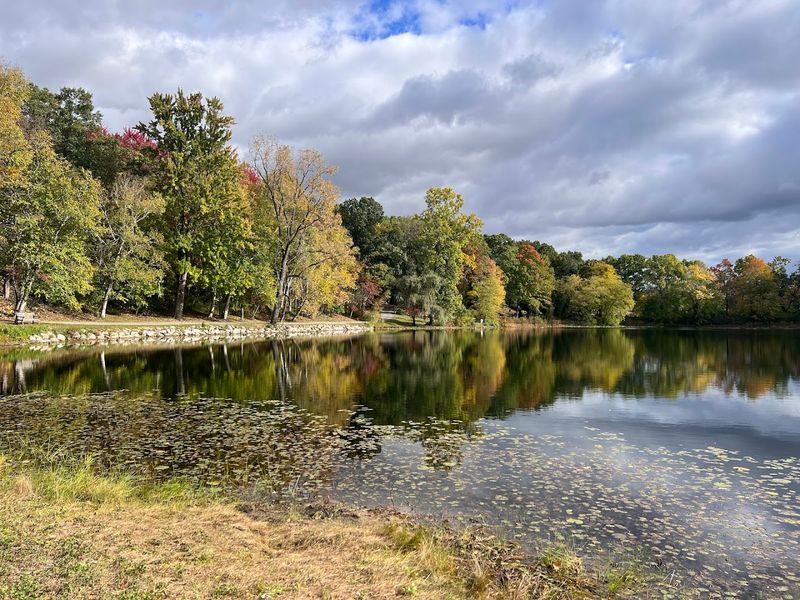
Seven hundred and fifty-five acres sounds like a number until you actually start walking the property and realize you have been moving for two hours and covered maybe a third of what is available. The garden includes over six miles of paved scenic drives and twelve miles of hiking trails, which means you could visit on four separate days and still find new corners to explore.
The terrain shifts constantly. One stretch of trail runs through open meadow with long views across rolling fields, and then the path dips into dense hardwood forest where the light changes completely and the temperature drops by a noticeable margin.
Wetland areas appear between the upland sections, adding yet another layer of ecological variety.
Most visitors, myself included, underestimate how much time they will spend here. The practical advice is simple: bring water, wear real walking shoes, pack a lunch, and treat the visit as a half-day or full-day commitment rather than a quick stop.
The Reach for the Sky Canopy Walk
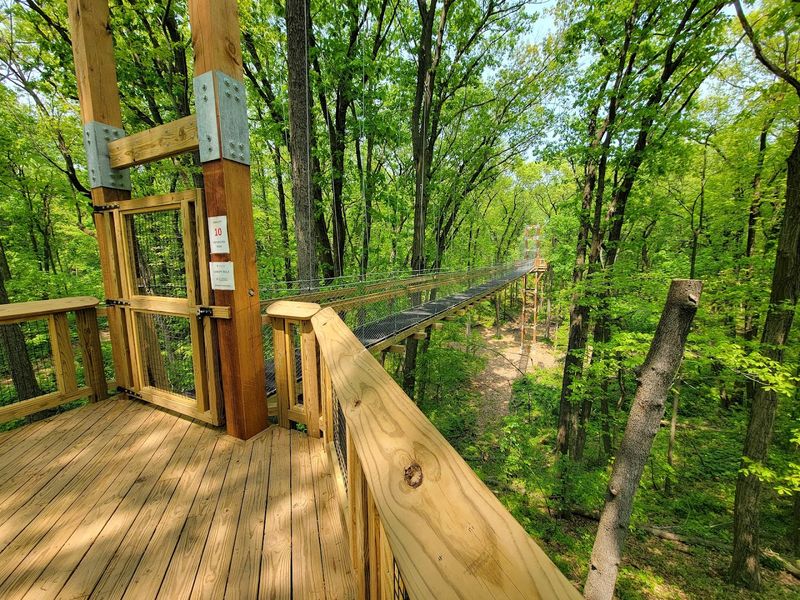
The Reach for the Sky Canopy Walk opened in 2023 and immediately became the most talked-about feature on the property. The elevated walkway rises 65 feet above the forest floor and stretches approximately 700 feet through the tree canopy, giving visitors a perspective of the woodland that is genuinely unlike anything you can get from a ground-level trail.
The walk up to the bridge is longer than most people expect, with a section of gravel path and a moderately steep climb, but benches appear at regular intervals for anyone who needs a breather. Informative signs along the approach path make the journey feel purposeful rather than just a warm-up exercise.
Once on the bridge, the views through the canopy are worth every step of the climb. The structure accommodates up to ten people at a time, which keeps the experience from feeling crowded.
There is a rest platform roughly halfway across for anyone who prefers a moment to pause before completing the crossing.
Inside the Three-Climate Conservatory
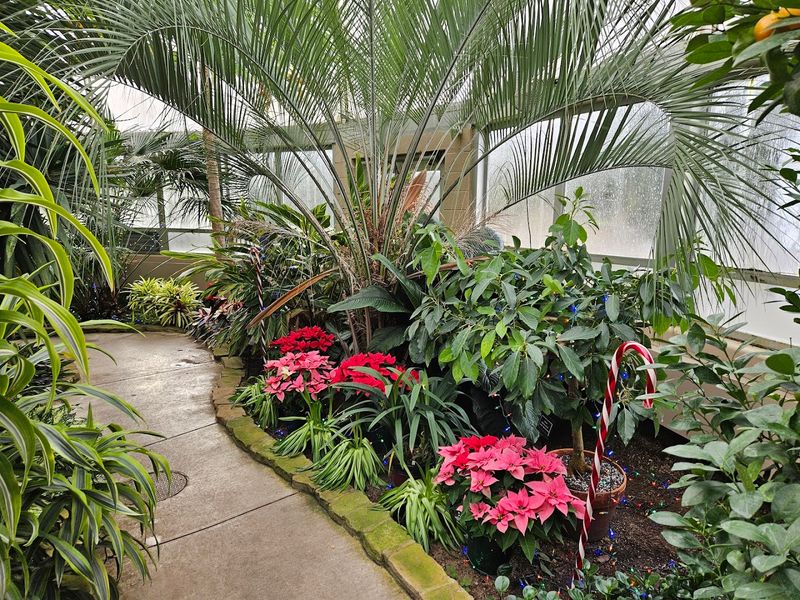
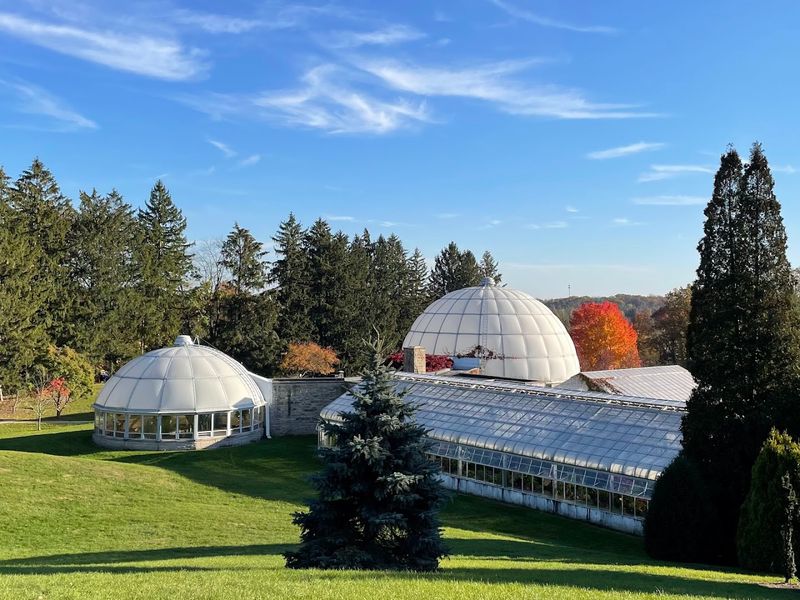
The conservatory at Hidden Lake Gardens houses three distinct climate zones under one roof: tropical, arid, and temperate. Each section feels like a completely different world, and the contrast between them is part of what makes the building so engaging to explore.
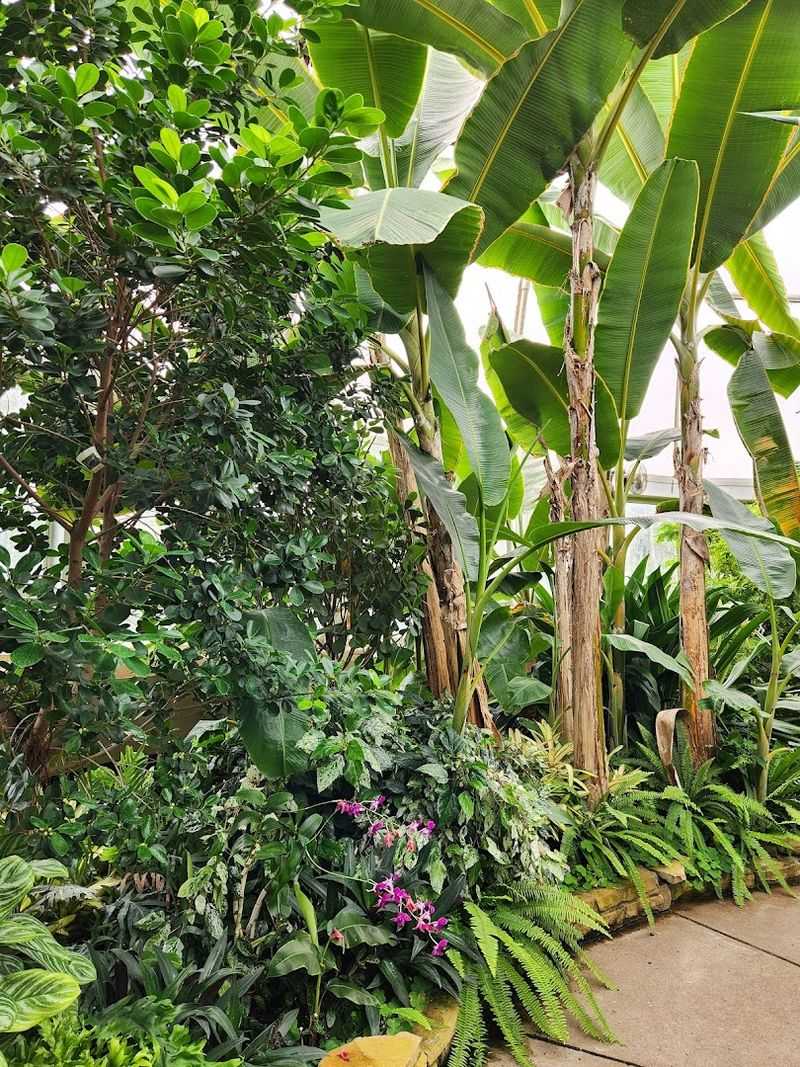
The arid dome features giant cacti that look like they belong in the Sonoran Desert rather than southern Michigan, while the tropical section fills the air with humidity and the dense green of broad-leafed plants. The temperate zone sits somewhere between the two in terms of feel, with plants that are familiar but presented in a way that makes you notice details you might otherwise overlook.
The conservatory is a good place to head if the weather outside turns cold or rainy, and it works just as well as a destination in its own right on a clear day. The plant collections inside are maintained to a standard that reflects the university-level horticultural expertise running the whole operation.
The Bonsai Courtyard Is Worth the Trip Alone
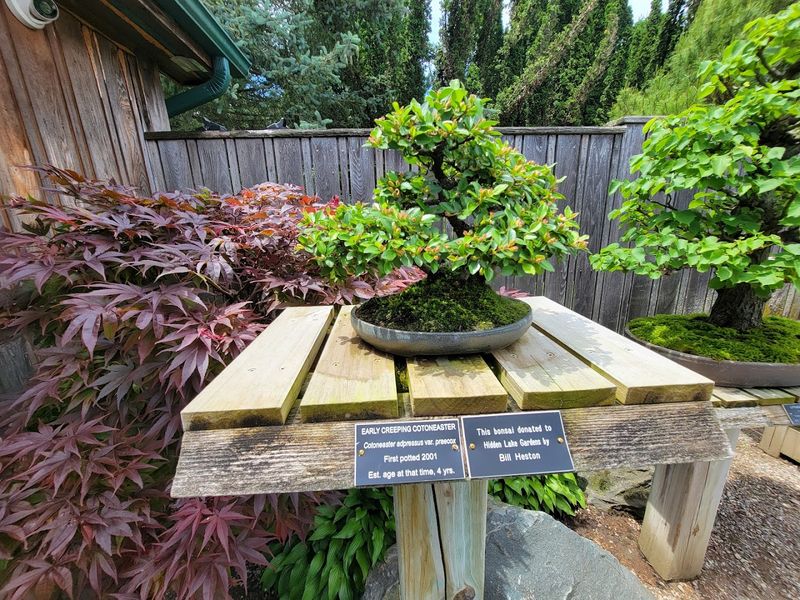
Bonsai as an art form rewards patience, and the Bonsai Courtyard at Hidden Lake Gardens reflects that same quality. The collection features carefully shaped miniature trees that represent years, sometimes decades, of deliberate cultivation, and standing next to them gives you a quiet appreciation for how much intention goes into each branch.
The courtyard is typically located near the conservatory building, so it pairs naturally with a visit to the indoor plant collections. Seasonal timing matters here: the bonsai are generally displayed outdoors during the warmer months and brought inside or stored during winter, so spring through fall is the best window to see the full collection.
What makes this collection stand out is the variety. Different species, different training styles, and different ages create a display that feels curated rather than repetitive.
For anyone who has ever tried to grow a bonsai at home and found it humbling, seeing these specimens up close is equal parts inspiring and deeply impressive.
Rare Conifers That Stop You Mid-Stride
The Harper Rare and Dwarf Conifer Collection is one of those sections of the garden that catches you completely off guard. Most people have a basic mental image of what a conifer looks like, and then they walk through this collection and discover that the category includes hundreds of forms they have never encountered before.
Dwarf conifers come in shapes that seem almost architectural, some spreading low to the ground like a green carpet, others growing in tight spiraling columns, and still others forming rounded mounds that look sculpted rather than grown. The variety is genuinely startling, and the labeling throughout the collection helps identify what you are looking at, though getting close enough to read some of the tags requires a little maneuvering.
This section sits right behind the conservatory, making it easy to combine with an indoor visit. On a sunny afternoon, the light through the different needle textures and colors creates a display that a photograph can capture but not quite do justice to.
Hosta Hillside and the Bubbling Stream
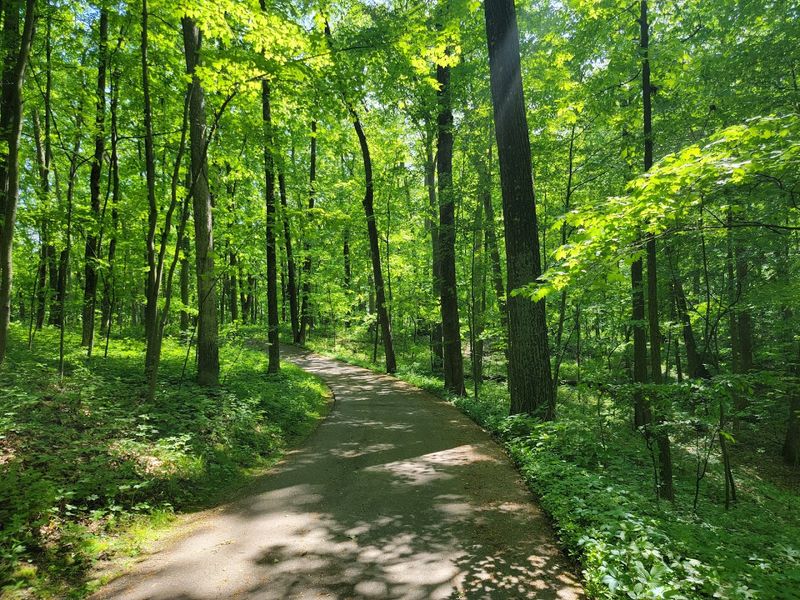
The Hosta Hillside is one of those spots in the garden that earns its reputation through sheer lushness. A hillside blanketed in hosta plants of varying sizes and shades of green creates a textured landscape that is especially striking in early to midsummer when the foliage is at its fullest.
Running through the base of the hillside is a small bubbling stream that adds both sound and movement to the scene. The combination of the water sounds, the dense plantings, and the dappled shade from surrounding trees makes this corner of the garden feel particularly calm, the kind of spot where people tend to slow down and linger longer than they planned.
Hostas thrive in shade, which means this section of the garden stays cooler than the open areas, a genuine benefit on a warm summer day. The stream path alongside the plantings is accessible and easy to walk, making it a comfortable stop for visitors of all ages and mobility levels.
Hiking Trails Through Forest, Field, and Wetland
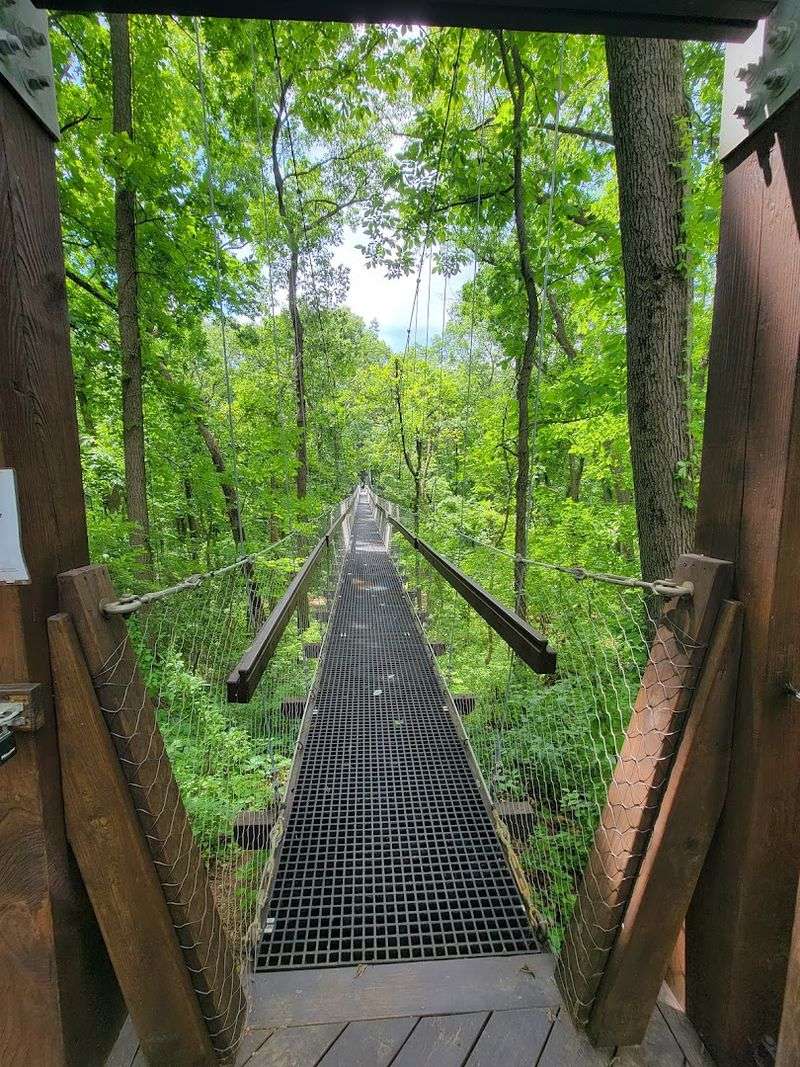
Twelve miles of hiking trails cover a remarkable range of terrain for a single property. One hour you are moving through a sun-dappled hardwood forest with a thick understory of ferns and wildflowers, and the next you are crossing an open meadow with long views toward the horizon and wind moving through the tall grass.
The wetland sections of the trail system add another dimension entirely. Boardwalk segments carry you over marshy ground where you can watch for frogs, turtles, and the kind of bird activity that only happens near standing water.
These sections feel genuinely wild despite being part of a managed garden property.
Trail difficulty ranges from easy, flat loops accessible to visitors using wheelchairs or pushing strollers, to more rugged paths with elevation changes that will get your heart rate up. The practical essentials for any trail visit here are sturdy shoes with real soles, a full water bottle, and bug spray during the warmer months.
The Scenic Drive That Covers the Whole Property
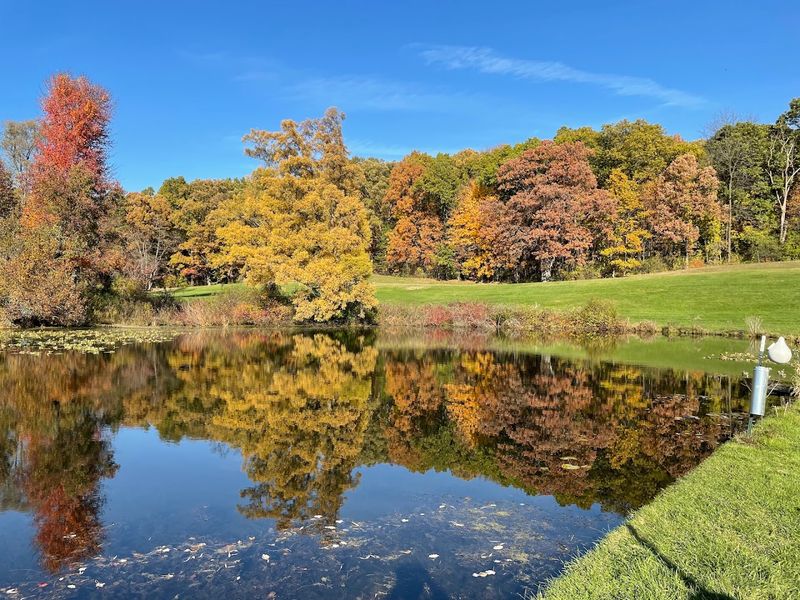
Not everyone who visits Hidden Lake Gardens is up for twelve miles of hiking, and the property accounts for that completely. Over six miles of paved scenic drives wind through the grounds, connecting the major points of interest and allowing visitors to experience the landscape from a car at their own pace.
The drives pass through the conifer collections, along the edges of the lake, through open meadow sections, and near the conservatory and main garden areas. Scenic overlooks and picnic areas appear along the route at intervals, giving drivers natural places to stop, get out, and take in a particular view before moving on.
This format makes the garden genuinely accessible for visitors with limited mobility, older adults, or families with very young children who cannot manage long walks. A day pass purchased at the gate allows you to leave and return, so combining a morning drive with a lunch break off-site and an afternoon hike is a completely reasonable way to structure your visit.
The Best Seasons to Visit and What Each Offers
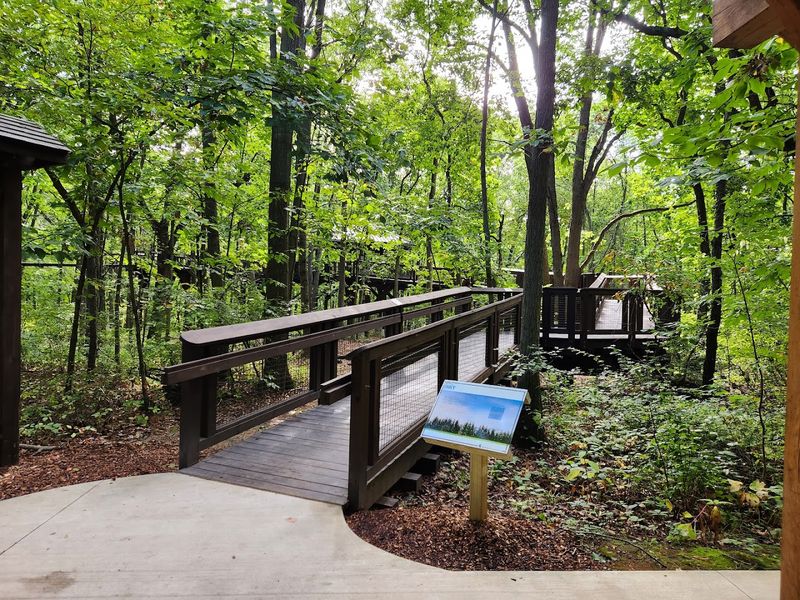
Hidden Lake Gardens is open year-round, and each season delivers a genuinely different experience. Spring brings the first flush of color as flowering trees and early perennials come to life, and the conservatory bonsai collection typically returns to its outdoor courtyard around this time.
Summer turns the property into a full canopy of deep green, with the Hosta Hillside at its most impressive and the hiking trails shaded enough to remain comfortable even on warm days. Fall is when the property arguably peaks visually, with the mature hardwood forest delivering an autumn color display that draws visitors from well outside the region.
Winter keeps the garden open for those who enjoy a quieter, more contemplative visit. The structure of the conifer collections becomes especially apparent without leaf cover, and the bare forest has its own spare beauty.
Admission runs $10 for adults, $8 for seniors and military, and $5 for students, with children under four entering free regardless of season.
Practical Tips Before You Go
A few practical details can make the difference between a good visit and a great one. Food is not sold on the property, or at least not reliably so outside of special event days, which means bringing a packed lunch and plenty of water is genuinely important rather than just a suggestion.
The picnic areas are well-placed and pleasant, so eating on-site is a real option.
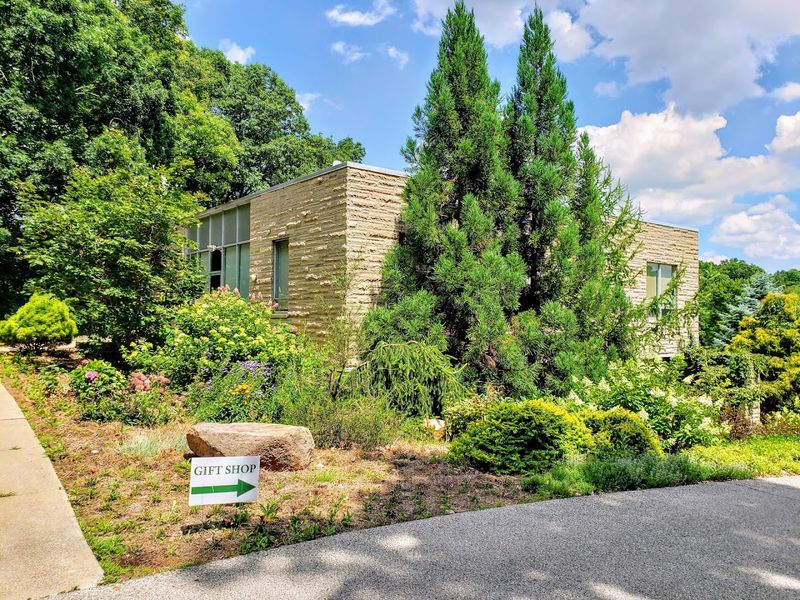
Leashed dogs are welcome throughout most of the property, with the exception of garden beds, ponds, the lake, the canopy walk, and indoor buildings. Restroom facilities are available in multiple locations, including near the gift shop, which also has a water filling station.
Parking is straightforward and free, and the entry fee covers a full day pass that lets you leave and return. Nature center members affiliated with the Association of Nature Center Administrators may qualify for free entry, so it is worth checking your membership status before you arrive.
The phone number for questions is 517-431-2060.



