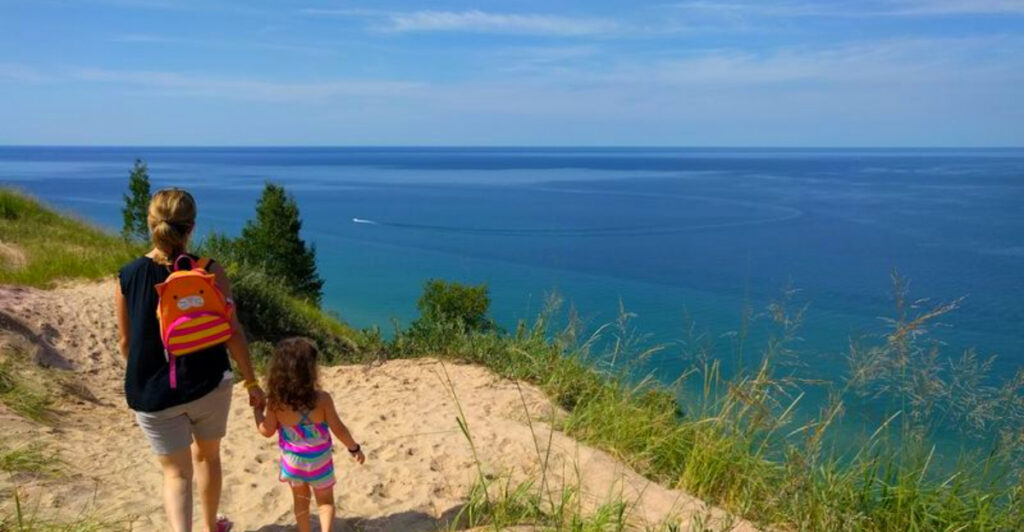
Just off M-22 in Arcadia, Michigan, this preserve draws visitors with a 4.8-star rating and views that rival more famous coastal destinations. Many people drive past without realizing one of the area’s most impressive dune landscapes is right off Gilbert Road.
The appeal is in the range of trails. There are wheelchair-accessible boardwalks as well as steep dune climbs that challenge even regular hikers.
Every route leads to wide lake views and elevated vantage points that make this stop worth planning around.
Finding the Preserve: Address, Location, and Getting There
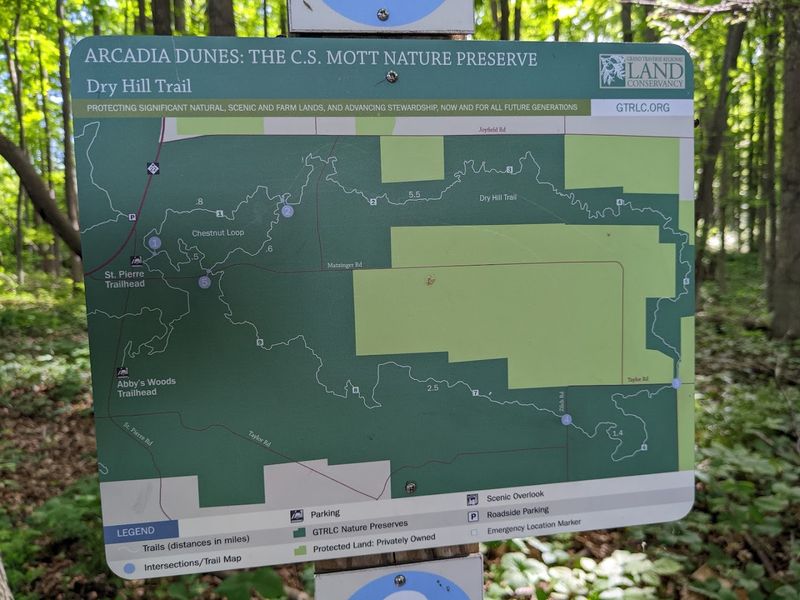
The entrance to Arcadia Dunes: The C.S. Mott Nature Preserve sneaks up on you fast.
The address is Gilbert Road, Arcadia, MI 49613, and the preserve sits in Manistee County along Michigan’s northwestern Lower Peninsula, just a short drive from the small town of Arcadia on the M-22 scenic highway.
More than one visitor has warned that you need to slow down on approach because the entrance is genuinely easy to miss. The parking lot is small, but multiple trailheads exist at different points along the road, so overflow is manageable even on busy summer weekends.
The preserve is managed by the Grand Traverse Regional Land Conservancy, and you can reach them at (231) 929-7911 or visit gtrlc.org for trail maps and updates. Hours run daily from 7 AM to 8 PM.
No admission fee is required, which makes this one of the most accessible outdoor escapes on the entire Lake Michigan shoreline.
A Preserve With a Purpose: The Conservation Story Behind the Dunes
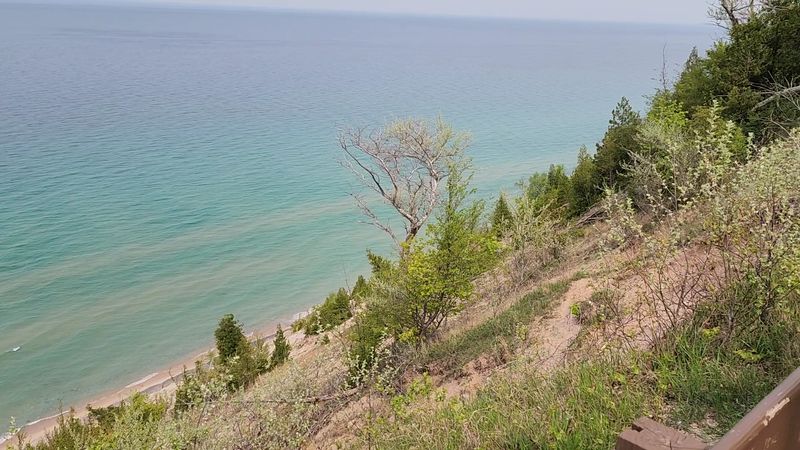
Before the Grand Traverse Regional Land Conservancy stepped in, this land faced real pressure from development. The preserve now protects over 3,700 acres of coastal dunes, hardwood forests, wetlands, and meadows along one of the most ecologically sensitive stretches of the Lake Michigan shoreline.
The C.S. Mott Foundation provided major funding to help secure the land, which is why the preserve carries that name today.
The goal was never just to create a pretty hiking spot but to protect a rare ecosystem where plants, birds, and wildlife depend on the specific conditions created by ancient dune geology.
The trails were designed with that mission in mind. Boardwalks, compacted gravel paths, and carefully placed signage keep foot traffic from damaging fragile dune vegetation.
You will notice signs throughout reminding visitors to stay on marked trails, and the reason is simple: one wrong shortcut across a dune face can undo decades of natural recovery. Respecting those boundaries is part of the visit.
The Old Baldy Trail: Half a Mile That Earns Its Reputation
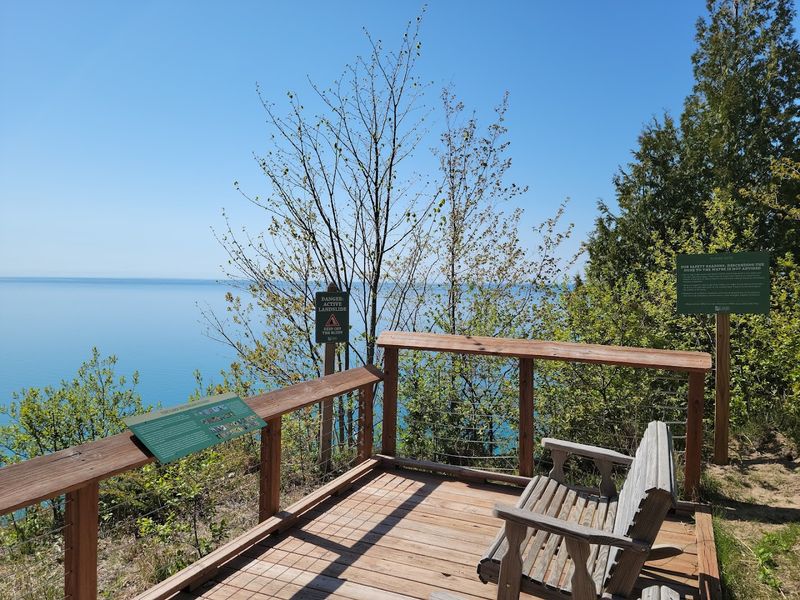
Old Baldy is the trail that most first-time visitors come specifically to walk, and it delivers. The path runs roughly half a mile from the Baldy trailhead parking area to a scenic overlook platform perched on a bluff above Lake Michigan, and the whole route is fully accessible for wheelchairs, walkers, and strollers.
The surface is smooth and well-graded, with multiple rest benches placed along the way so nobody has to push through without a break. Bird sounds fill the tree canopy overhead, and the transition from shaded forest to open sky happens gradually, which makes the final reveal of the lake feel genuinely earned.
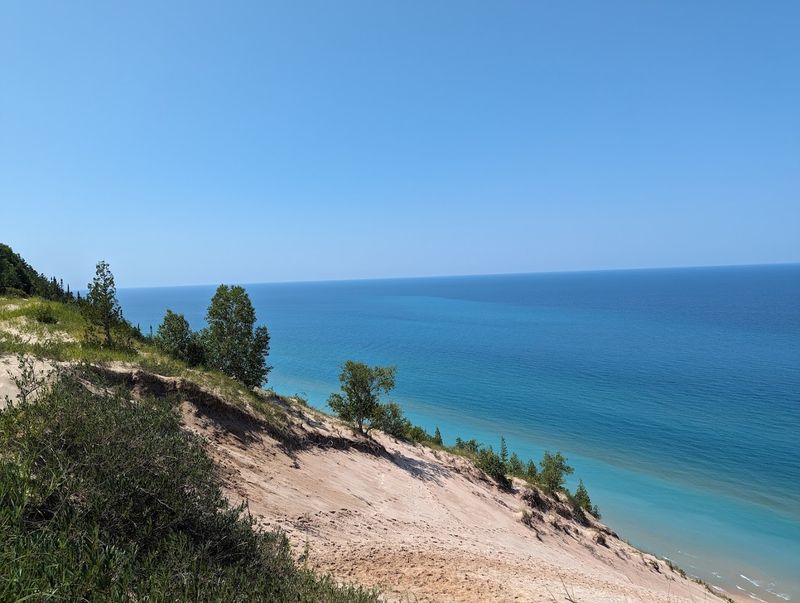
At the overlook itself, two platforms give visitors different vantage points, and on a clear day the blue of the water stretches so far that the horizon line looks almost painted on. Wildflowers appear along the trail edges in late spring, adding color to an already striking walk.
This half-mile punches well above its weight class.
The Baldy Dune Itself: When the Sand Gets Serious
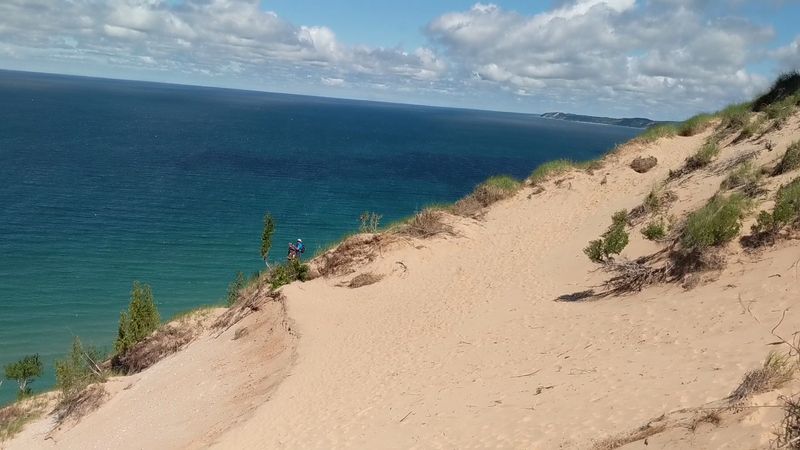
Past the accessible overlook, the trail transitions from boardwalk to bare sand, and that is where the real adventure begins. The dune itself rises over 300 feet above the lake, making it one of the tallest lakeside dunes in Michigan, and the climb is as demanding as it looks from the bottom.
A staircase helps with the initial ascent, but after that it is pure sandy effort. Every step up the exposed dune face requires actual leg strength, and the loose sand means you earn every foot of elevation the hard way.
The reward at the top is panoramic and unobstructed, with Lake Michigan spreading out in every direction below you.
Going down toward the beach is tempting, but the climb back up has humbled many confident hikers. One reviewer noted watching a middle-aged couple take a full thirty minutes to make it back to the top.
Bring water, bring something with electrolytes, and be honest with yourself about your fitness level before you commit to the descent.
Miles of Woodland Trails on the Other Side of the Road
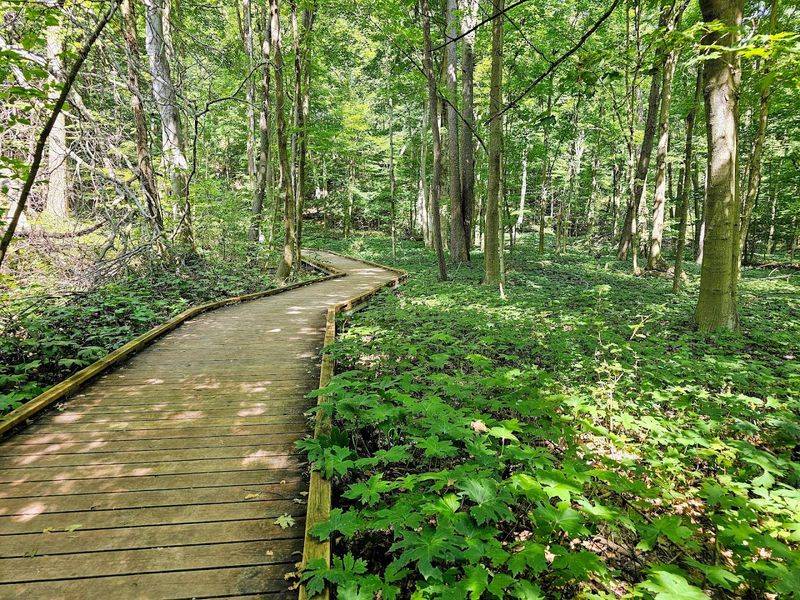
Many visitors focus entirely on the dune side of the preserve and never realize that an entirely different trail network waits across the road. The woodland trails wind through forests, open meadows, and quiet wetland edges, offering a completely different pace and atmosphere from the sandy dune experience.
These paths are popular with mountain bikers, trail runners, and hikers who want more distance without the intensity of dune climbing. The terrain is relatively flat through much of the forest network, which makes it a good choice for a longer outing without the physical demands of the sandy sections.
The St. Pierre trailhead provides access to this side of the preserve and is worth bookmarking separately from the Baldy trailhead. Over two days of exploring, it is entirely possible to cover more than 18 miles across both sides of the preserve without repeating the same ground.
If you only budget time for one trailhead, you are genuinely leaving half the experience behind.
Trillium Season: Why Late April and Early May Change Everything
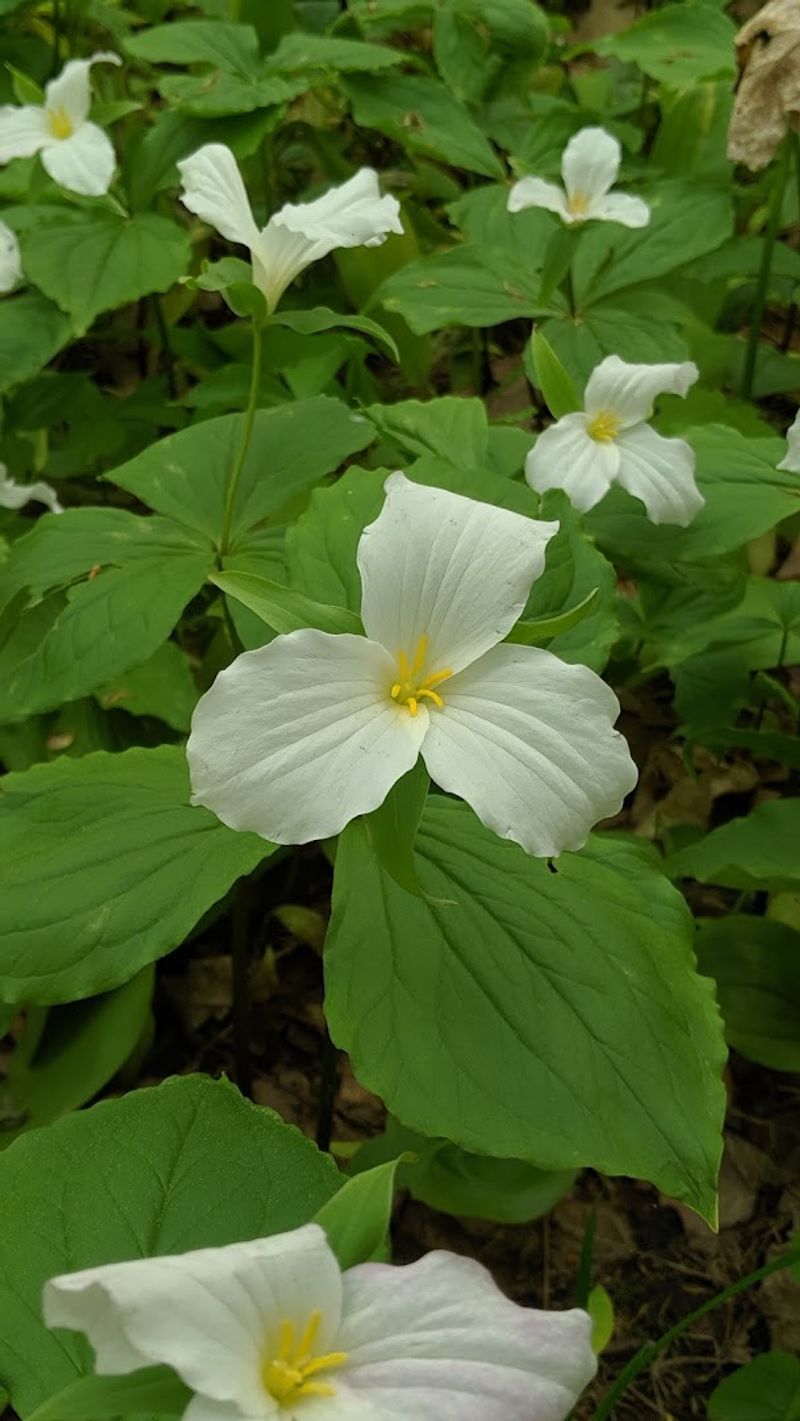
Most people think of summer as the obvious time to visit a Lake Michigan dune preserve, but the hikers who show up in late April and early May discover something the summer crowd completely misses. The forest floor transforms into a sea of white trillium blooms, covering the ground beneath the hardwood canopy in a display that feels almost unreal.
Trillium is a native wildflower that thrives in undisturbed forest ecosystems, and the fact that it appears so abundantly here says a lot about the quality of the habitat the conservancy has protected. The blooms typically peak around late April into the first days of May, though exact timing shifts with each year’s temperatures.
The Pete’s Woods trailhead and the Old Baldy woodland sections both offer strong trillium viewing, but the forest near the Baldy area reportedly produces some of the most concentrated displays. Visiting during this window means fewer crowds, cooler temperatures, and a forest experience that genuinely rivals anything the summer months offer.
Sunset Views That Justify the Drive All on Their Own
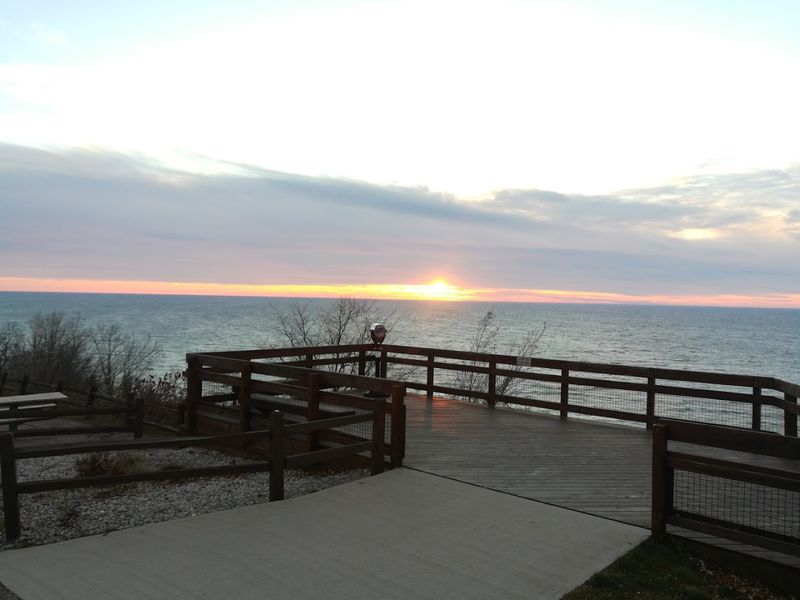
The orientation of the bluff at Arcadia Dunes faces almost directly west over Lake Michigan, which means the sunset views from the overlook are the kind that make people stop mid-sentence. The sun drops straight toward the water, and on evenings with good cloud cover, the sky turns shades of orange and pink that reflect off the lake surface below.
Several visitors have made the specific trip in the evening just to watch the sunset, and the general consensus is that it does not disappoint. The trail to the overlook is short enough that arriving an hour before sunset gives you plenty of time to reach the platform without rushing.
One practical note worth taking seriously: bring a flashlight or use your phone’s torch for the return walk if you plan to stay for the full sunset. The trail is well-maintained, but the forest section becomes genuinely dark once the light fades, and the path back to the parking area is not lit.
Plan ahead and the reward is absolutely worth it.
Trail Signage, Safety, and the Poison Ivy Warning You Should Not Ignore
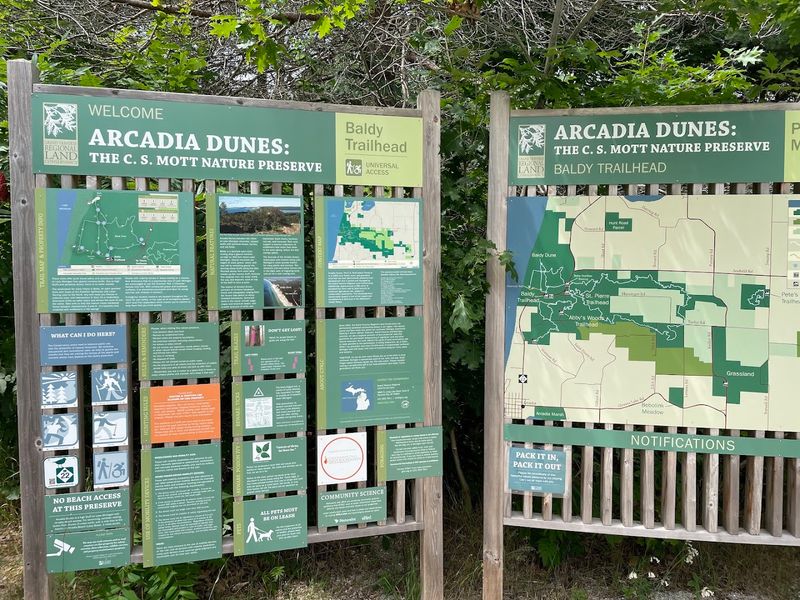
Good trail signage is one of those things you only appreciate when it is absent, and Arcadia Dunes gets it right. Direction markers appear at key intersections throughout the preserve, which matters more than you might expect when you are deep in a forest loop and the trails start to look similar in every direction.
The signage also includes clear warnings to stay on marked paths, and those warnings are not just about protecting the dunes. Poison ivy grows in sections of the preserve, particularly along trail edges and in areas where the vegetation is dense.
Wearing long pants and staying on the path is genuinely practical advice here, not just cautionary boilerplate.
The preserve also has a porta-potty at the trailhead, which hikers with kids or anyone on a longer outing will appreciate more than they expect to. Small details like that reflect the care the conservancy puts into maintaining the visitor experience.
The trails feel cared for rather than simply left to exist, and that makes a real difference underfoot.
Dogs, Families, and the Crowd That Actually Shows Up Here
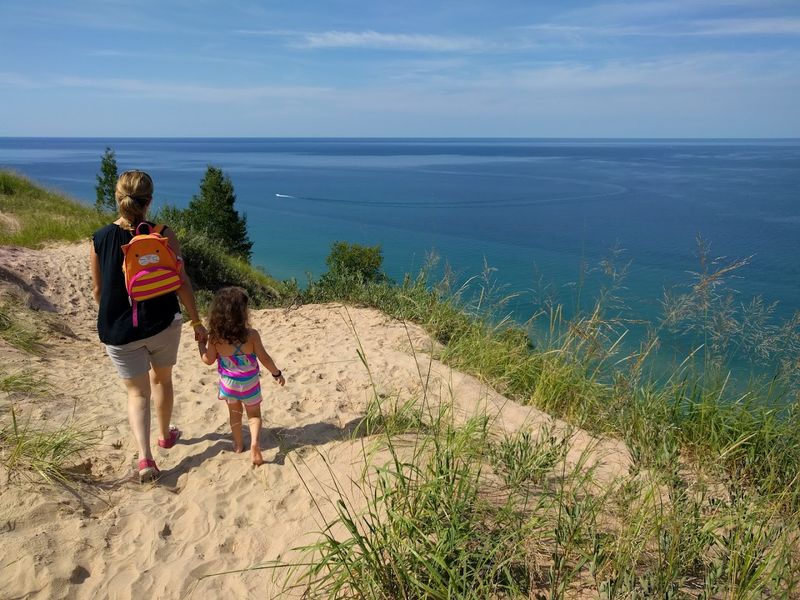
Arcadia Dunes is one of those rare outdoor spaces that genuinely works for a wide range of visitors without feeling watered down for any of them. Dogs are welcome on the trails, and the mix of easy accessible paths and more challenging dune terrain means families with different fitness levels can split up and still have a great time.
The parking lot is small, which sets natural limits on how crowded the preserve gets even on summer Saturdays. Multiple trailheads spread visitors across the property rather than funneling everyone into one bottleneck, so the trails feel quieter than the rating and reputation might suggest.
Kids tend to love the dune sections specifically because sand is inherently fun and the views from the top feel like a genuine accomplishment. The nearby town of Arcadia has a small ice cream shop that makes for a natural post-hike reward, turning the whole outing into an easy half-day adventure that covers both nature and dessert in one trip.
The Fog, the Wind, and the Weather That Makes This Place Unpredictable
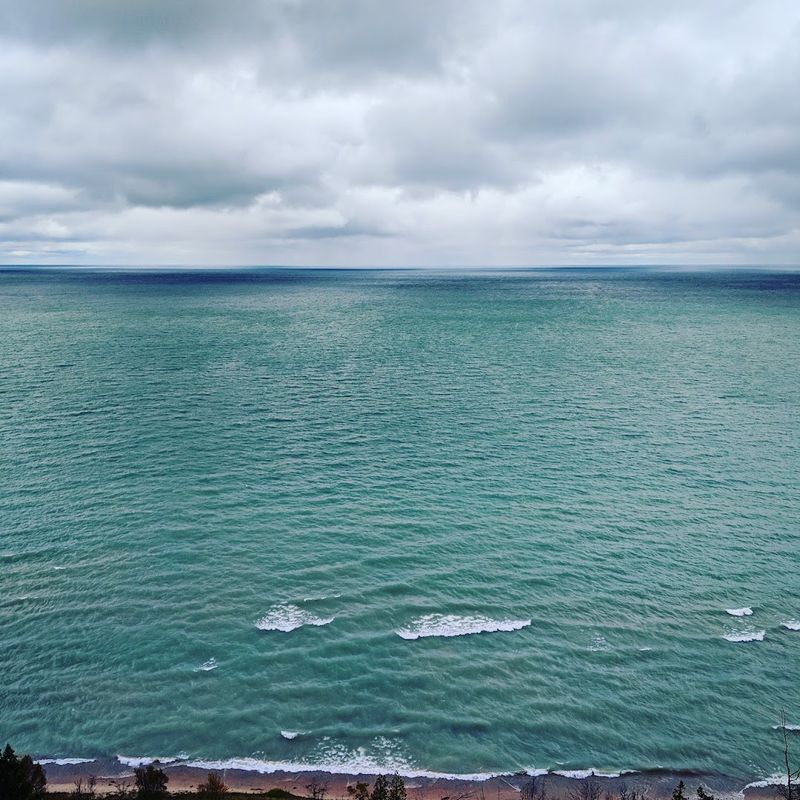
One of the more unexpected pleasures of visiting the Arcadia Dunes overlook is catching it in moody weather. The bluff sits high enough above the lake that fog rolling in off the water creates a visual effect that feels almost cinematic, with mist drifting across the shoreline and wrapping around the base of the dunes below.
Early morning visits tend to produce the best atmospheric conditions, especially in late summer when temperature differences between the water and the air create low-lying fog banks. Photographers in particular tend to arrive at or just after 7 AM when the preserve opens, chasing that combination of golden light and lake mist.
The bluff is also notably windy, which provides welcome relief on hot summer days but can catch you off guard in spring or fall when temperatures drop faster than expected. Layering is smart advice regardless of the season.
The wind at the top of Old Baldy has a way of reminding you exactly how high above the lake you actually are.
Photography at the Preserve: What to Shoot and When to Show Up
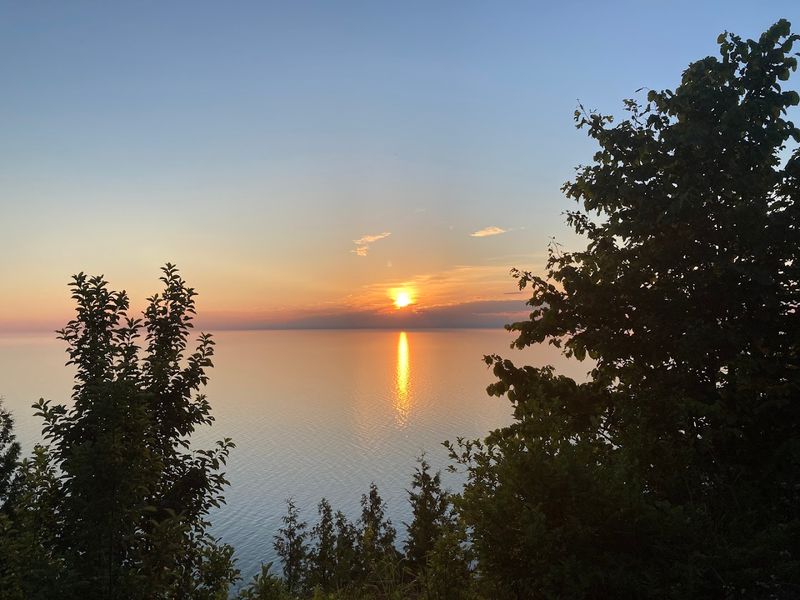
The overlook platform at Arcadia Dunes functions as one of the better landscape photography spots on the entire M-22 corridor, and the variety of subjects available across the preserve makes it worth more than a single visit. The lake views from the bluff offer wide-angle opportunities that change dramatically depending on light, cloud cover, and season.
Golden hour in the morning produces soft directional light across the dune faces, while evening shoots benefit from the western exposure that puts the sun directly over the water. Wildflower season in late April adds macro photography possibilities that most visitors never associate with a dune preserve.
The forest trails on the St. Pierre side offer canopy shots, filtered light through hardwood trees, and the occasional wildlife encounter. Squirrels, quail, and various songbirds appear regularly along the trails, and patient visitors with a telephoto lens have good odds of capturing something worth keeping.
The preserve’s quiet atmosphere means fewer people walking through your frame, which is its own kind of luxury at a highly rated outdoor destination.
Why This Preserve Keeps Earning Five Stars and What to Expect on Your Visit
The combination of accessible infrastructure, genuinely dramatic scenery, well-maintained trails, and free admission creates an experience that over-delivers on almost every expectation a first-time visitor might bring.
The preserve works best when you give it more time than you think you need. The half-mile overlook walk takes maybe 20 minutes, but the full dune experience, the woodland trails, and a proper sunset visit each deserve their own dedicated trip or a full-day commitment split across both sides of the road.
Arriving early on summer weekends secures parking and gives you the trails in their quietest state. Bringing water, snacks, and sun protection covers the basics, and comfortable shoes with some grip handle both the compacted gravel and the loose sand sections without issue.
The lake view from the top of Old Baldy is the kind of thing that stays with you long after you have driven back home.
Share this story