 Unearth The Voyage
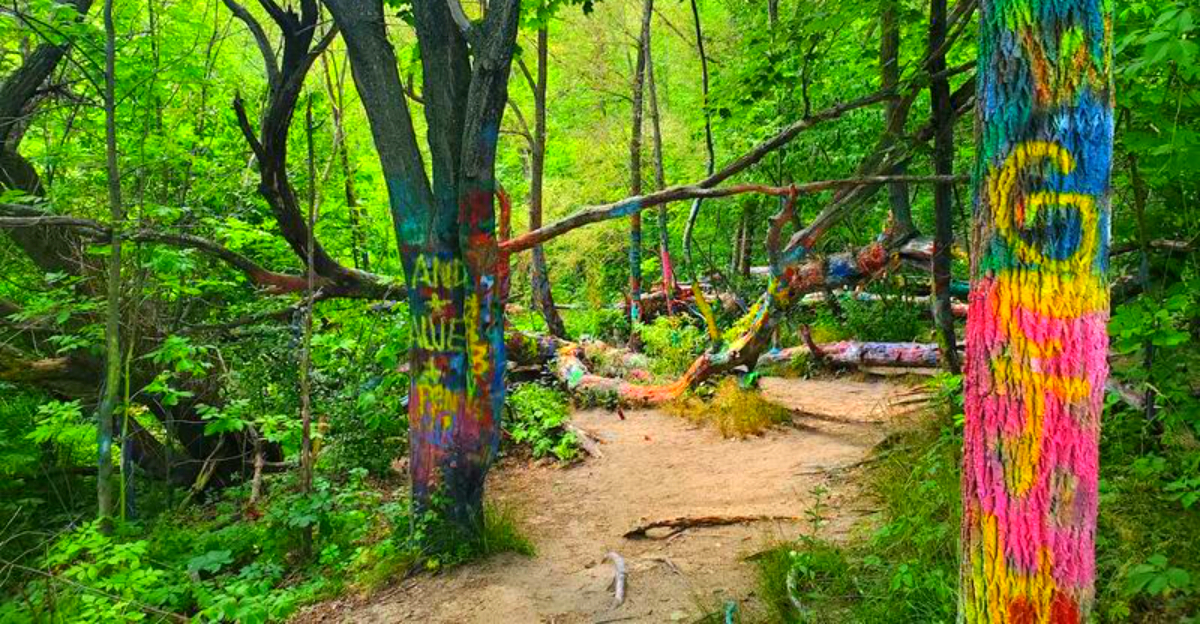
Somewhere in the woods behind one of Michigan’s most storied historic sites, a fallen giant has become one of the most unexpected canvases you will ever stumble across. Every inch of it is layered in spray paint, bold colors stacked on top of older colors, creating something that feels more like a living art installation than a nature trail discovery.
The tree has been drawing curious visitors, local artists, and adventurous families for years, and it keeps changing every single time someone new walks out to see it. I made the short hike out on a crisp Michigan morning, and I can tell you that nothing quite prepares you for the moment it comes into view around the bend.
The surrounding woods are quiet, the trail is easy, and then suddenly the color just hits you. This is one of those spots that makes you stop, look around, and think, how did I not know about this sooner.
Finding the Trailhead: Where to Start Your Visit
Before you can experience the Hippie Tree, you have to actually find the starting point, which is easier than you might think once you know where to look.
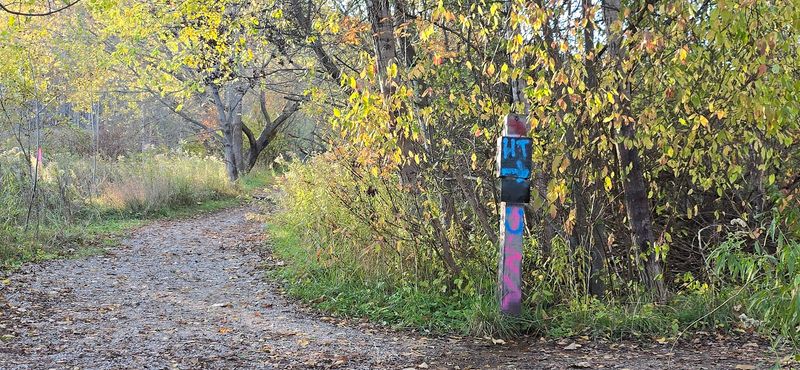
Park in the lot next to the Greenspire School at 1026 Red Drive, Traverse City, MI 49684. This is the most commonly used access point, and from here the trail is well-marked with posts spray-painted with the letters “HT” to keep you on course.
The total hike is roughly half a mile round trip, which makes it one of the most accessible little adventures in the area. Families with young kids, casual walkers, and even people with dogs have no trouble navigating the path.
One helpful tip: at the halfway point, the trail splits. Stay to the right at that fork, because the left path will send you in the wrong direction.
The painted markers along the way make it feel like the trail itself is part of the art.
The History Behind the Woods: Village at Grand Traverse Commons
The land surrounding the Hippie Tree carries a deep and layered past that adds a whole extra dimension to any visit.
The woods sit behind what was once the Traverse City State Hospital, a massive Victorian-era psychiatric facility that operated for well over a century. Today that property has been redeveloped into the Village at Grand Traverse Commons, a mixed-use community featuring shops, residences, and event spaces inside those same dramatic old brick buildings.
The hospital grounds were once entirely self-sufficient, with their own farm, bakery, and staff quarters spread across hundreds of acres. When the institution eventually closed, the surrounding forest was left largely untouched, which is how this quiet trail corridor came to exist at all.
Knowing that history before you walk the trail gives the whole experience a richer feeling. The trees around you have been standing through decades of that story, and the Hippie Tree itself became a new chapter written by the community that came after.
The Tree Itself: What You Actually See When You Arrive
Nothing about the approach prepares you for the visual moment when the Hippie Tree actually appears through the tree line.
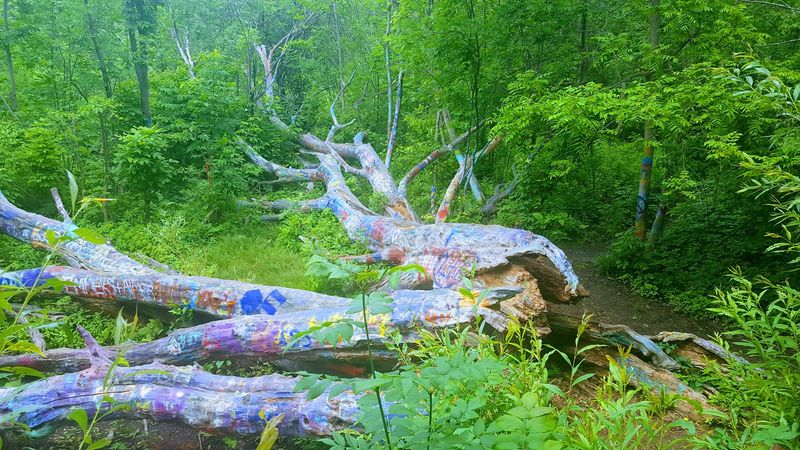
The main subject is a massive fallen tree, split into two large halves, with every surface blanketed in layers upon layers of spray paint. Colors overlap and bleed into each other, with newer artwork covering older work in a cycle that has been going on for years.
There are words, faces, abstract shapes, and swirling patterns, all stacked together into something that feels chaotic and cohesive at the same time.
Because the tree has been slowly decaying over time, its silhouette has changed. What was once an enormous intact trunk is now a more fragmented structure, but the color and creativity remain just as striking.
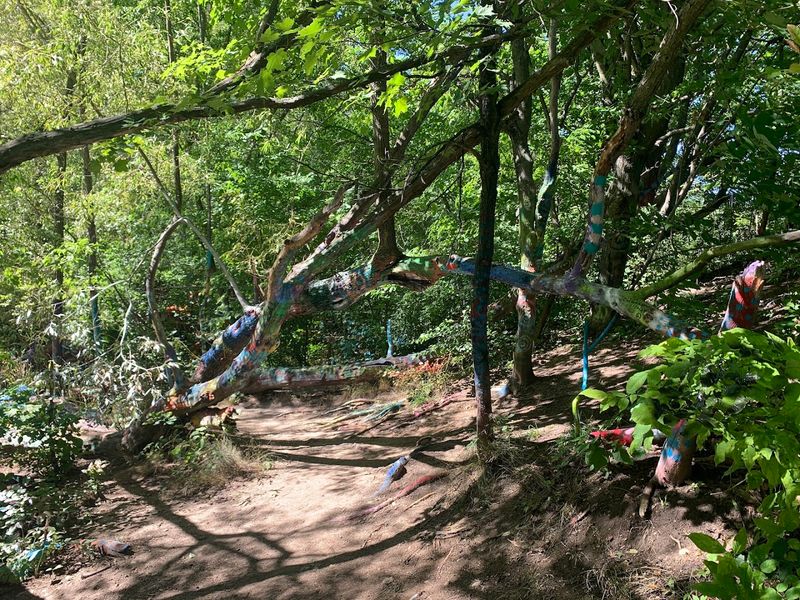
Surrounding branches and nearby surfaces have also collected paint over the years, creating a whole zone of color rather than just a single focal point.
The effect is genuinely surprising, especially in a quiet forest setting where you least expect it.
The Local Legends: Folklore and Mystery Around the Site
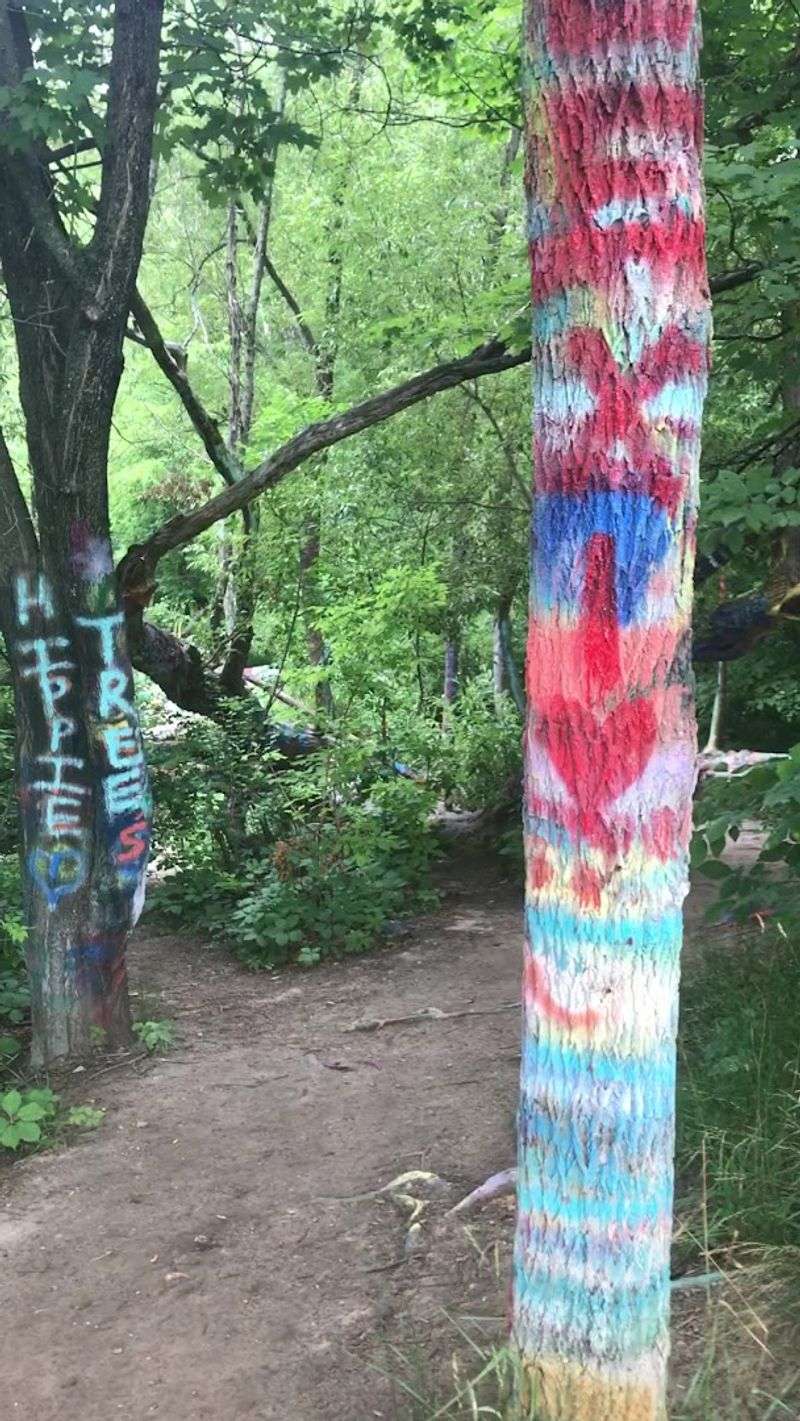
Part of what makes the Hippie Tree such a conversation starter is the folklore that has grown up around it over the years.
Some local stories suggest the site is connected to the old state hospital in supernatural ways, with rumors about the area being haunted or serving as some kind of portal to another dimension. Those stories are almost certainly more creative than accurate, but they add a layer of intrigue that keeps people talking and keeps curiosity high.
Atlas Obscura, the popular website dedicated to unusual and offbeat places, listed the Hippie Tree specifically because of this blend of art, nature, and local legend. That listing introduced the spot to a much wider audience beyond just Traverse City residents.
One review even joked that the site was “definitely not a portal to hell as advertised, but really lovely,” which captures the spirit of the place perfectly. The legends are part of the fun, not something to take too seriously on a bright afternoon hike with the family.
Bringing Your Own Paint: The Participatory Art Experience
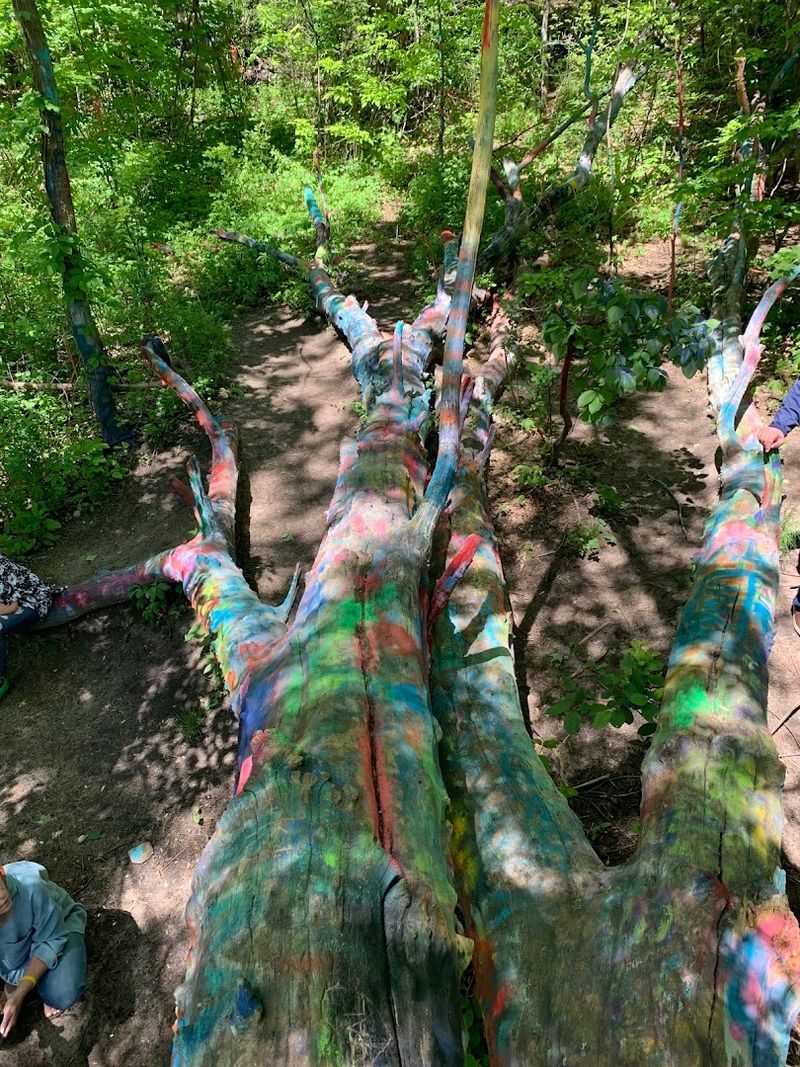
One of the things that sets the Hippie Tree apart from most nature destinations is that visitors are genuinely invited to contribute to it.
Bringing a can or two of spray paint and adding your own mark to the tree is a widely accepted and encouraged part of the experience. People leave names, dates, small drawings, and abstract bursts of color, all of which eventually get layered over by the next visitor’s contribution.
It is a living artwork in the truest sense, never finished and never the same twice.
That said, there is an important etiquette note worth mentioning: paint only the fallen tree and the already-painted surfaces nearby. Some visitors have unfortunately left paint on living trees in the area, which damages the actual forest and takes away from the natural setting that makes the spot special in the first place.
Wearing old clothes is a smart move, and closed-toe shoes with good grip will serve you better than anything you mind getting dirty on a muddy day.
Trail Conditions and What to Wear Before You Go
The hike to the Hippie Tree is short and manageable, but a little preparation goes a long way toward making the trip comfortable.
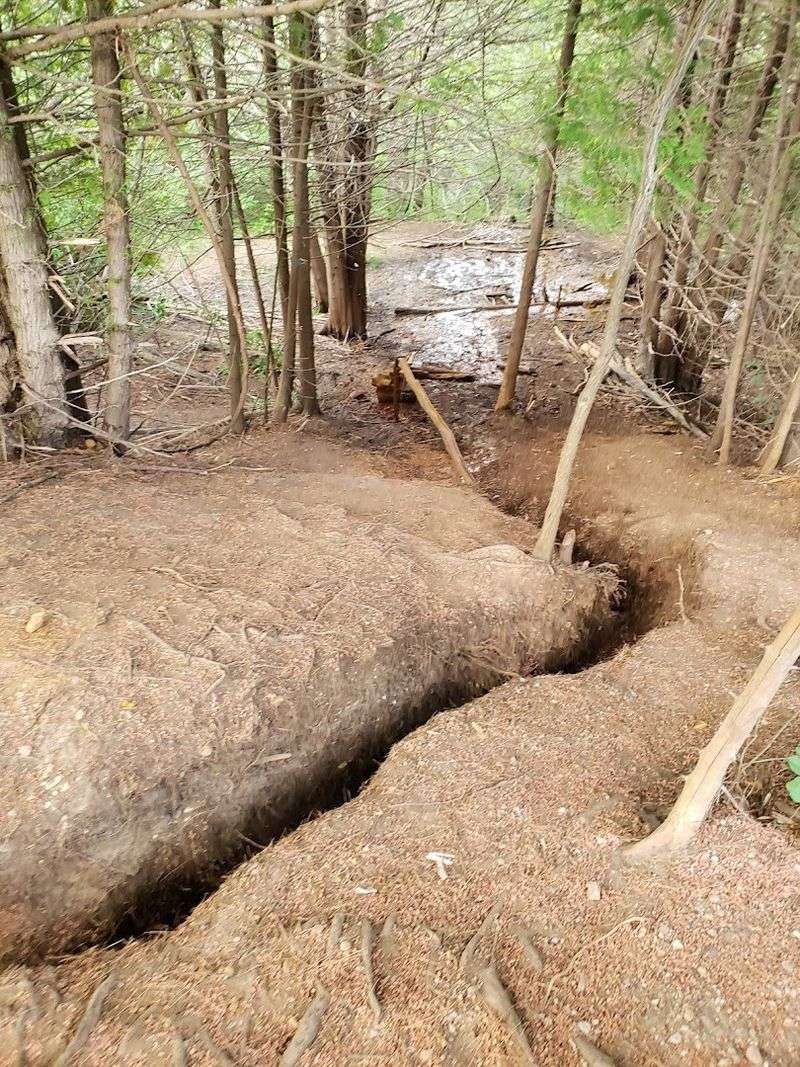
The trail runs through a wooded area that can get genuinely muddy, especially after rain or during the wetter spring months. A small water channel runs through part of the path, which adds a nice natural element but also means the ground nearby stays soft and damp for longer than you might expect.
Sturdy shoes or hiking boots are strongly recommended over sandals or anything you care about keeping clean. The terrain is not challenging in terms of elevation, but the mud can catch you off guard if you are wearing the wrong footwear.
The trail markers, those spray-painted posts labeled “HT,” do a solid job of keeping you on the right path. Just remember to bear right at the fork in the middle of the trail, which is easy to miss if you are chatting and not paying close attention to the surroundings around you.
Photography at the Hippie Tree: Tips for Getting Great Shots
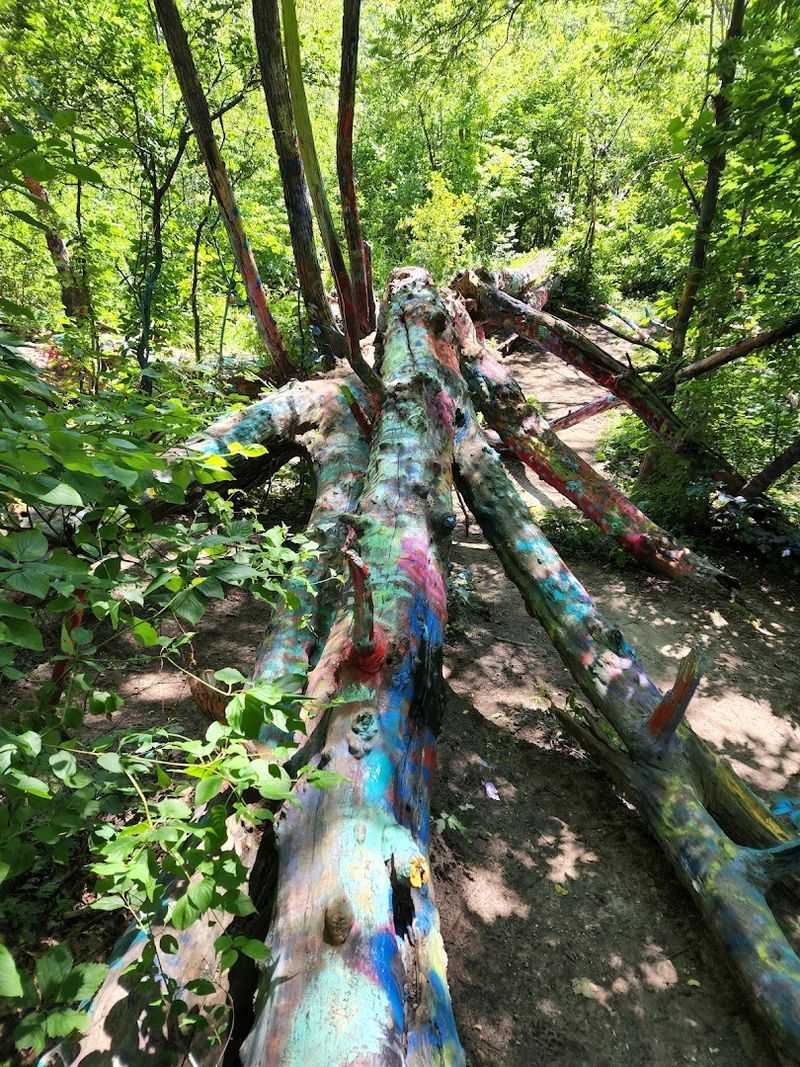
For anyone who enjoys photography, the Hippie Tree is genuinely one of the more rewarding subjects you will find on a casual hike in northern Michigan.
The layered colors and textures create strong visual contrast against the natural browns and greens of the surrounding forest. Close-up shots of individual paint layers reveal an almost geological quality, with each stratum of color telling its own small story about a previous visitor’s moment of creativity.
Wide shots work beautifully when you step back far enough to capture the full scale of the fallen trunk against the tree canopy above. Early morning light filters through the leaves in a way that adds warmth to the already vivid colors, making that time of day particularly rewarding for photographers.
The site has drawn drone photographers, DSLR enthusiasts, and casual smartphone snappers alike, all drawn by the same basic appeal: a riot of color in an unexpected natural setting. Every angle offers something different, and no two visits ever produce exactly the same set of images.
Visiting With Kids and Families: A Surprisingly Great Outing
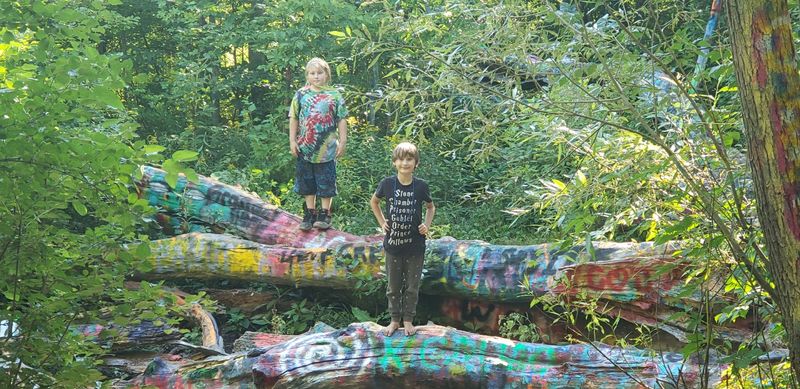
On the surface, a graffiti-covered fallen tree in the woods might not sound like the most obvious family activity, but the Hippie Tree turns out to be a fantastic outing for kids of almost any age.
The trail is short enough that even toddlers can handle it without too much fuss, and the payoff at the end is the kind of thing that genuinely delights young kids. Bright colors, a big fallen tree to look at, and the novelty of seeing art appear in the middle of the woods all combine to make a lasting impression on little ones.
Families with children as young as two and four have made the hike and reported that the kids were completely engaged the whole way through. Bringing a small can of paint so the kids can add their own mark to the tree turns the visit into an interactive memory rather than just a passive observation.
The whole round trip takes under an hour, which keeps the energy level high and the complaints about tired legs to a minimum.
The Broader Trail Network: More to Explore Nearby
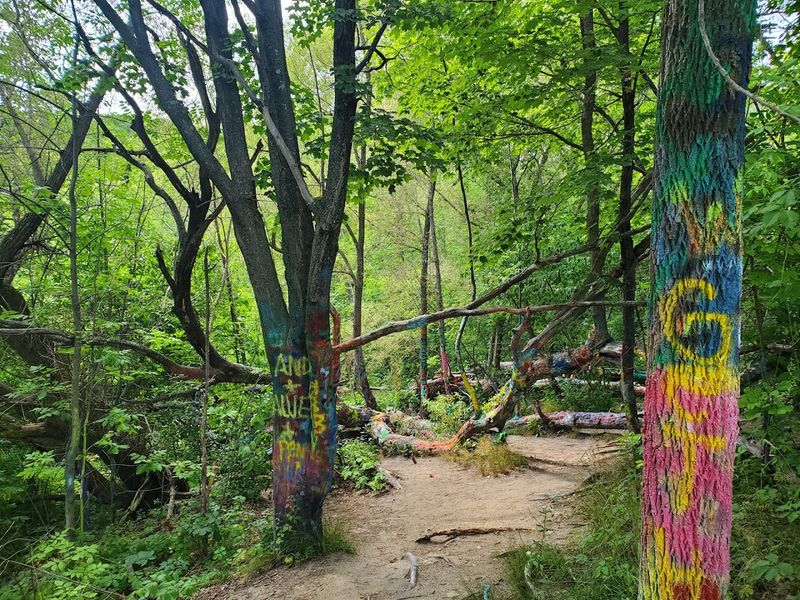
The Hippie Tree trail does not exist in isolation, and the surrounding area has a lot more to offer if you are in the mood to keep exploring after you have taken in the main attraction.
The trail system around the Village at Grand Traverse Commons includes paths of varying difficulty, with some gentle and flat stretches and others that climb into hillier terrain with more of a workout involved. A painted water tower in the area has also become a secondary draw for graffiti and street art enthusiasts who want to see more of the region’s creative outdoor culture.
One popular alternative approach to the Hippie Tree involves parking at the Botanic Garden at Historic Barns Park and hiking over from that direction, which lets you combine the art walk with a visit to the garden and the beautiful old barn structures nearby.
The broader trail network rewards those who take their time and wander a little beyond the most direct route to the tree and back.
When to Visit and What to Expect Year-Round
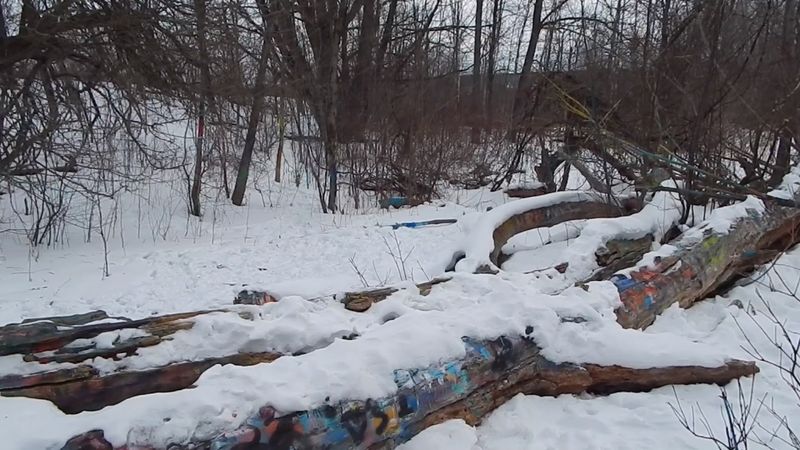
The Hippie Tree is accessible in every season, and each time of year brings its own character to the experience.
Spring visits come with the freshest greenery and the most dramatic mud, so waterproof boots are especially important between March and May. Summer is the busiest season, when the trail sees the most foot traffic and the forest canopy is at its fullest, creating a shaded and pleasant walk even on warmer days.
Fall is arguably the most visually striking time to visit, when the surrounding trees shift into golds and reds that complement the spray-painted colors of the trunk in an almost unbelievable way. Winter visits are quieter and more solitary, with the snow providing a stark white backdrop that makes the painted surfaces pop in a completely different way than any other season.
The site has no posted hours and no admission fee, which means you can show up at any point during daylight and enjoy it entirely on your own terms, at whatever pace feels right.



