 Unearth The Voyage
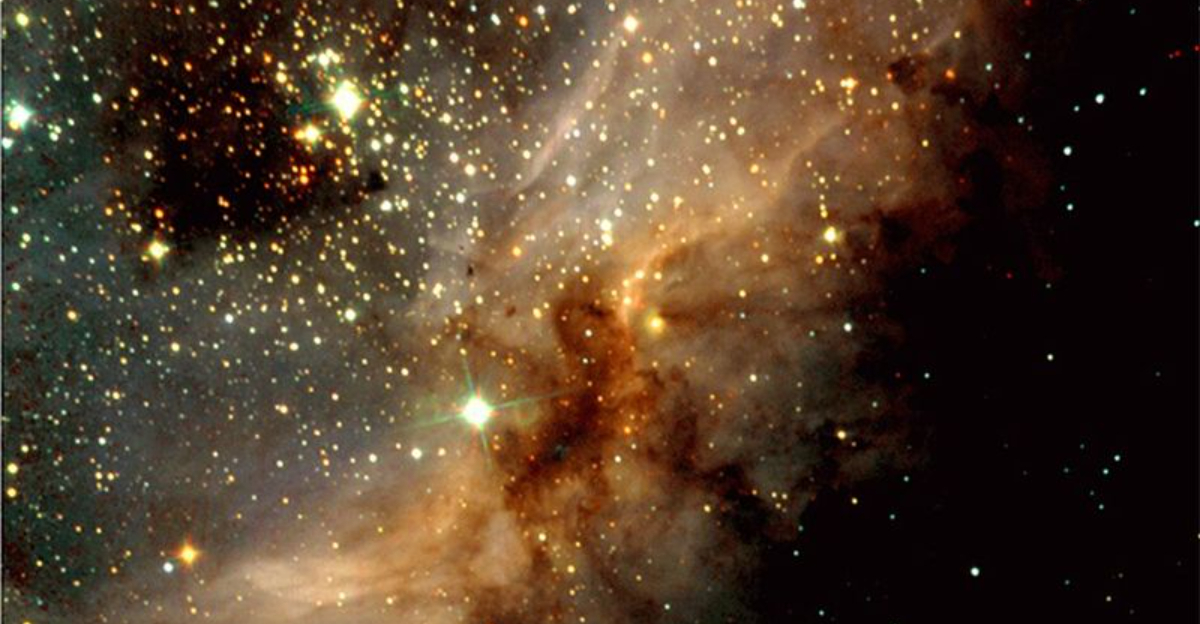
Astronomers have spotted an unexpected chemical heavyweight drifting through deep space – and it may offer new clues about how life gets started. Detected near the center of the Milky Way, the molecule is the largest sulfur-bearing organic compound ever found beyond Earth, filling a critical gap in the chain between simple interstellar gases and the complex chemistry required for life.
Its discovery suggests that the building blocks of biology may assemble far earlier – and far farther from planets – than scientists once believed. For researchers tracing life’s cosmic origins, this find could mark a turning point.
Researchers have pinpointed 2,5-cyclohexadien-1-thione drifting through interstellar space, a 13-atom molecule that resets expectations. You are looking at the largest sulfur-containing organic molecule ever detected beyond Earth, outclassing prior finds that topped out at nine atoms.
Its ringed backbone, featuring sulfur, carbon, and hydrogen, makes it a stand-out in the cosmic inventory.
The scale matters because size hints at chemistry’s reach before planets form. Until now, sulfur molecules found in space were simple, often only three to five atoms, leaving a gap between interstellar chemistry and meteorite complexity.
This discovery pushes those boundaries and invites fresh searches.
Quoted by the team, lead author Mitsunori Araki called it a milestone, and the data back that up. You can imagine the shock when spectral lines lined up perfectly.
With this match, astronomers add a crucial benchmark to the catalog of prebiotic candidates.
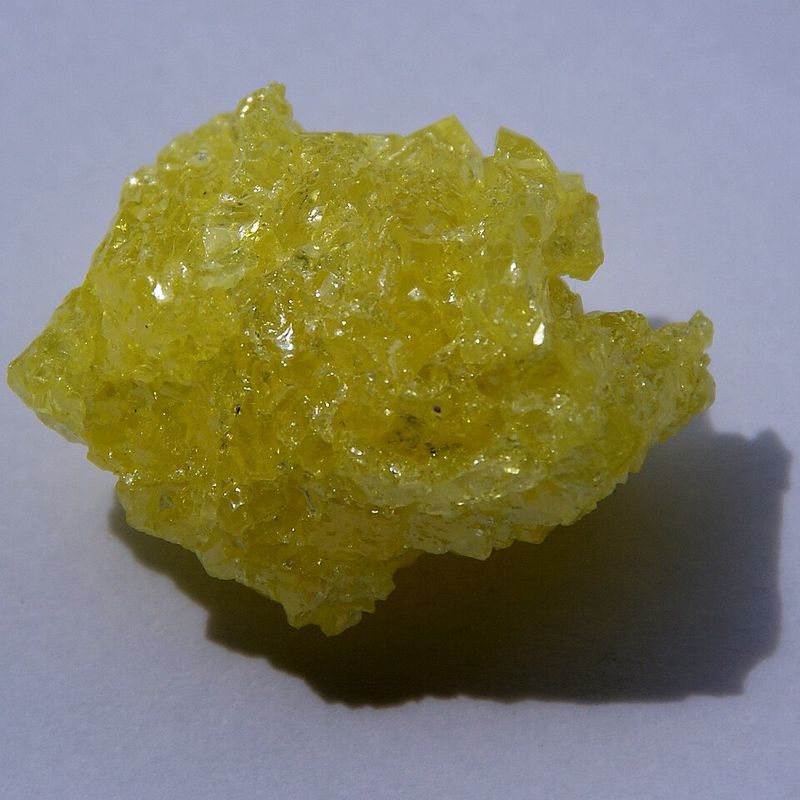
Sulfur is a workhorse in biology that you benefit from constantly, even if you rarely think about it. It sits inside amino acids like cysteine and methionine, shapes protein folding through disulfide bonds, and enables enzymes to catalyze life-sustaining reactions.
Without sulfur chemistry, metabolism falters and cells lose their elegant control.
That makes sulfur in space a big deal. For decades, astronomers saw less sulfur than expected, despite its cosmic abundance, creating a nagging mismatch.
On Earth, sulfur courses through ecosystems and biochemistry, yet telescopes struggled to catch its complex forms among the stars.
The new detection restores balance to that story. It shows that intricate sulfur molecules can assemble in space, offering plausible starting materials for life’s machinery.
When you hear scientists talk about elemental essentials, sulfur earns its place, not as a bit player, but as a foundational enabler.
For years, astronomers puzzled over sulfur’s apparent absence. You would expect plenty in space, yet telescopes kept returning thin results, suggesting something was hiding the element.
The leading suspicion was that sulfur tucked itself into icy coatings on dust grains, masked from radio surveys.
Evidence from meteorites and comets hinted that sulfur was not truly gone. Those samples brimmed with sulfur-rich chemistry, implying hidden reservoirs in the interstellar medium.
The disconnect nagged at researchers who suspected instrumentation and conditions, not scarcity, were to blame.
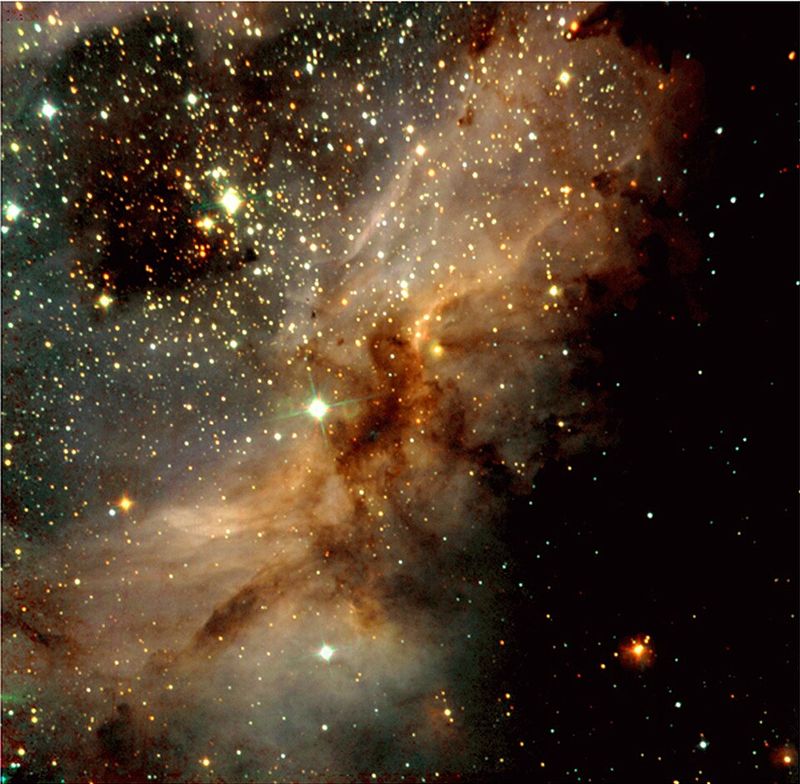
This new molecule helps close the gap. By revealing a larger sulfur-bearing structure floating freely, it supports the idea that sulfur’s chemistry thrives out of sight.
You can think of it as a curtain finally lifting. The finding does not end the mystery, but it moves the plot decisively toward resolution.
The new detection fills a gap that you can feel intuitively. Simple molecules are easy to make in space, while life’s building blocks feel distant and complex.
Finding a mid-sized sulfur compound suggests a continuum from gas-phase reactions to prebiotic ingredients found in comets and meteorites.
That bridge matters for origin-of-life models. It shows that ringed organics with functional groups can form before planets exist, making delivery by later impacts far more plausible.
Instead of a jump, chemistry steps forward in manageable increments.
For you, the takeaway is comforting and bold. Cosmic chemistry does not need a planet to practice.
It rehearses in cold clouds, refining pieces that biology can later recruit. This discovery strengthens the idea that life’s toolkit could be assembled early, transported widely, and awakened under the right planetary conditions.
The molecule turned up in G+0.693-0.027, a massive molecular cloud about 27,000 light-years away near the Milky Way’s center. You can picture a cold, dense reservoir where gas and dust gather, shielded from harsh radiation enough for chemistry to take hold.
These are the nurseries where stars and future planets begin.
Such clouds are natural laboratories. Molecules form on grain surfaces and in gas, then cycle through heating and shocks that remix ingredients.
The same material can one day be locked inside worlds, moons, and comets, preserving a chemical record.
Finding a complex sulfur-bearing molecule there hints at a bustling molecular marketplace. It suggests the galactic center hosts not only extreme dynamics but also rich prebiotic chemistry.
When you look toward that crowded heart of the galaxy, you are seeing both chaos and potential, blended into the raw stock of future systems.
Before astronomers could find the molecule, chemists had to make it. In the lab, researchers generated it using an electrical discharge through thiophenol, then captured a precise rotational spectrum.
You can think of that as a barcode that radio telescopes can scan for in the sky.
Armed with this fingerprint, the team combed archival observations from the IRAM 30-meter and the Yebes Observatory. Line by line, the spectrum matched, ruling out confusing blends and chance overlaps.
The agreement was strong enough to convince skeptics.
That workflow shows how modern astrochemistry wins. Synthesize, measure, then search the heavens with a tuned ear.
If you have ever matched a song by a few notes, you know the thrill when everything clicks. In this case, it was not music, but the quiet hum of a molecule broadcasting across light-years.
If life’s seeds rode in on comets and meteorites, you want to know whether complex molecules can form far from any star. This discovery says yes.
A sizable sulfur-bearing organic exists in a cold cloud, independent of planetary environments, aligning with delivery scenarios.
Meteorites already contain intricate sulfur chemistry. By placing similar complexity in interstellar clouds, the find strengthens the chain from cloud to comet to early Earth.
You can imagine icy bodies scooping up these molecules, preserving them for a wild ride inward.
For origin stories, that continuity matters more than any single molecule. It means space is a factory, not a warehouse.
The factory runs before planets assemble, stocking raw materials that impacts later distribute. That is a tidy, testable narrative connecting telescopes, lab spectra, and the rocks that land in scientists’ hands.
Independent researchers praised the hunt as clever and disciplined. You can see why: build the fingerprint, scour the sky, then test every possible impostor until the evidence stands alone.
It feels like detective work because it is, with spectra serving as clues.
Experts highlighted the careful strategy that turned a hard-to-spot molecule into a clear signal. The story resonates because sulfur had been elusive, and good mysteries reward patient sleuthing.
When an outside scientist calls it a detective story, they are saluting the method as much as the result.
The acclaim also reflects broader progress. Radio telescopes now have the sensitivity to pull whispers from noisy backgrounds.
Those whispers, when decoded, reshape how you think about what space can build. Case by case, the file on interstellar chemistry grows thicker and more convincing.
Finding complex organics near the galactic center nudges your expectations upward. If such molecules are common, then many star systems could inherit them as they form.
That does not prove life elsewhere, but it lowers the chemical barrier.
Astrobiologists care because ingredient lists matter. When you start with more capable chemistry, you do not need miracles to take the next steps.
Planets and moons with the right conditions could coax these compounds into richer networks.
For you, the message is cautious optimism. The universe may be priming the pump in many places, not just here.
With every new detection, the case grows that biology’s precursors are widespread, waiting for a hospitable niche. That makes the search for life both more grounded and more urgent.
Sulfur plays by versatile rules that you can exploit in a lab and that nature exploits in cells. It adopts multiple oxidation states, forms strong yet reversible bonds, and stabilizes reactive intermediates.
Those traits enable enzyme catalysis and energy flow in ways carbon, oxygen, and nitrogen alone cannot match.
In space, that flexibility becomes an engine for diversity. Thiofunctional groups can tweak reaction pathways, while sulfur’s polarizability broadens what sticks to dust grains.
The result is a larger menu of structures, some with potential prebiotic relevance.
Understanding this chemistry helps you prioritize targets for telescopes and experiments. If sulfur-bearing molecules open routes to complexity, then mapping them is not optional.
It is strategic. This discovery gives scientists a sharper compass, pointing toward reactions that could kick-start biochemistry under cold, sparse conditions.
Half a century ago, many doubted molecules could survive the brutal vacuum and radiation of space. You might have agreed then.
Today, detections span alcohols, sugars, and now sizable sulfur-bearing rings, overturning that old intuition.
The shift came from better instruments and smarter strategies. Laboratory spectra anchored identifications, while larger, quieter dishes pulled faint lines from the noise.
With each win, the bar for skepticism rose, pushing theories to adapt.
This new molecule extends the arc. It tells you that complexity is not a rare accident but a reachable outcome.
As catalogs expand, the narrative changes from can molecules exist to how far can they go. That is a profound pivot in how scientists frame the chemistry of the cosmos.
Now the race is on to find more and bigger sulfur-bearing organics, and you can expect rapid follow-ups. Teams will target new clouds, refine models, and extend laboratory spectra to related structures.
Each candidate adds a rung on the ladder to biochemistry.
Some researchers are eyeing amino acids beyond our solar system. That leap requires exquisite sensitivity and bulletproof identifications, but the path is clearer with each success.
You should expect collaborations that link radio astronomy, ice chemistry, and sample-return missions.
In practical terms, the strategy is simple. Calibrate in the lab, search in the sky, and validate with multiple telescopes.
Keep doing that, and the inventory of interstellar molecules will swell. With it, our picture of life’s chemical origins will sharpen from sketch to blueprint.



