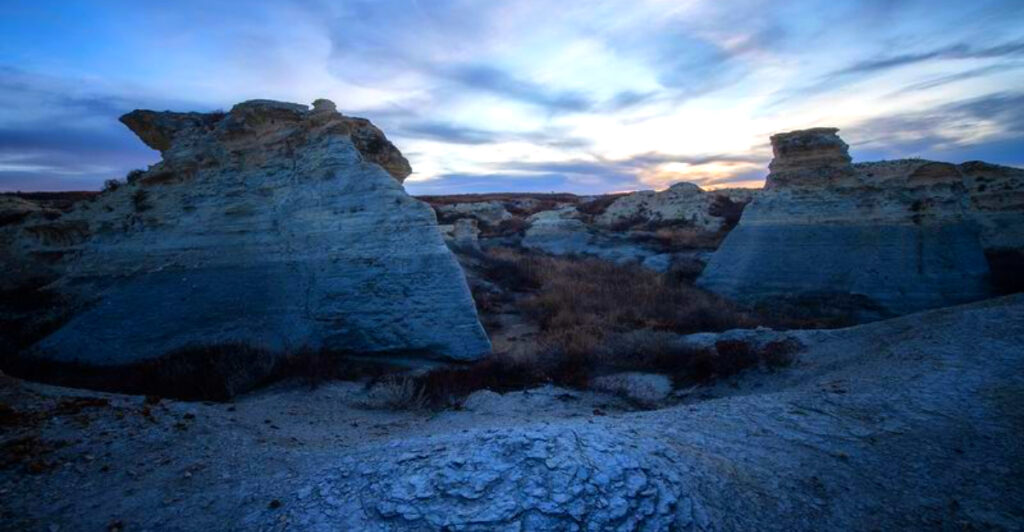
Monument Rocks challenges almost everything people think they know about Kansas. Rising unexpectedly from the plains of Logan County, these towering chalk formations are among the state’s most remarkable natural landmarks and one of the most surprising landscapes in the Midwest.
Formed from sediments left behind by an ancient inland sea more than 80 million years ago, the site offers a glimpse into a prehistoric past that few visitors expect to find in Kansas. The dramatic rock spires, arches, and cliffs attract photographers, history enthusiasts, and road-trippers looking to see a side of the state that rarely appears in postcards.
It’s a destination that changes perceptions quickly and leaves a lasting impression long after the drive home.
Where Exactly You Will Find This Hidden Landscape
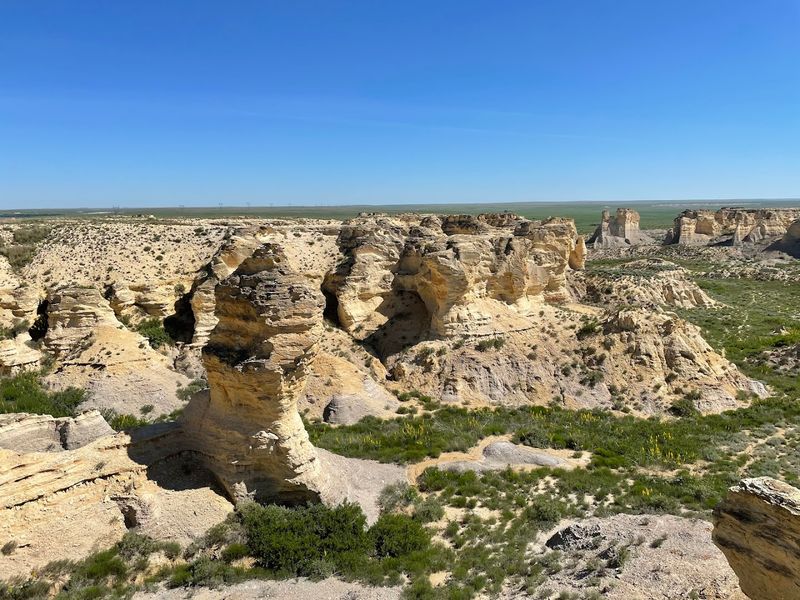
The address is County Road 400 and Gold Road, Oakley, KS 67748, tucked into Logan County in the wide-open stretch of western Kansas between Oakley and Scott City.
Getting there requires driving several miles on unpaved dirt roads, and after heavy rain, those roads can become genuinely difficult to navigate, so checking the weather before you go is a smart move.
There are no gas stations or convenience stores nearby, so fill up your tank and pack everything you need before leaving town.
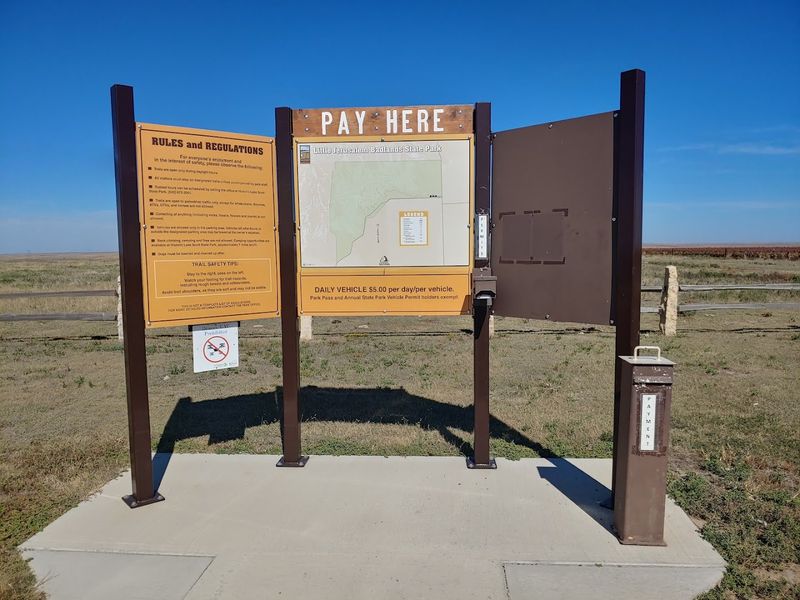
The park is open daily from 7 AM to 9 PM, year-round, and a daily vehicle permit costs just five dollars, cash only at the self-pay station, though an annual Kansas State Park pass can be purchased online.
There is no camping on-site, making this strictly a day-use park, but the surrounding area offers lodging options in Oakley and Scott City for those planning an overnight stay.
The Ancient Ocean That Built These Formations
Around 85 million years ago, a vast shallow sea called the Western Interior Seaway covered much of central North America, stretching from the Gulf of Mexico all the way to the Arctic.
Tiny marine creatures lived and perished in that ocean by the billions, and their remains slowly compressed into thick layers of chalk at the bottom of the seaway.
When tectonic forces similar to those that built the Rocky Mountains pushed the seafloor upward, those chalk layers were lifted above the surface of the plains.
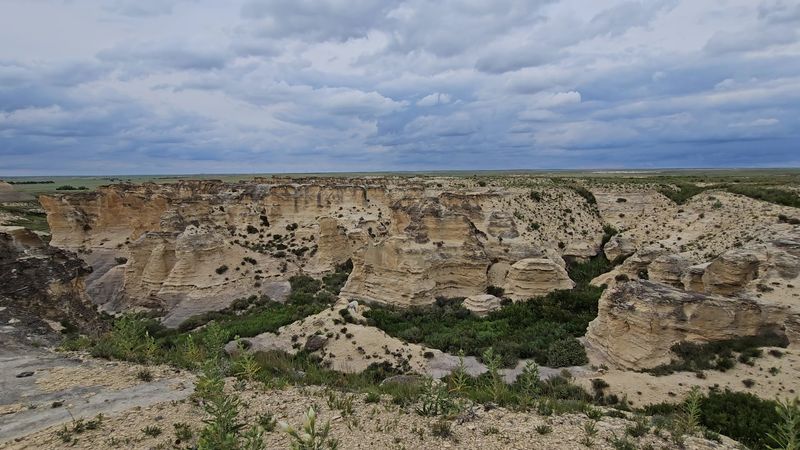
Wind and rain then went to work over millions of years, carving the soft chalk into the dramatic spires, ridges, and canyon walls that now define this landscape.
The Niobrara Chalk formation visible here is the largest exposed example of its kind in all of Kansas, and the mile-long stretch of formations includes spires that climb more than 100 feet into the air.
Why People Keep Calling It the Grand Canyon of Kansas
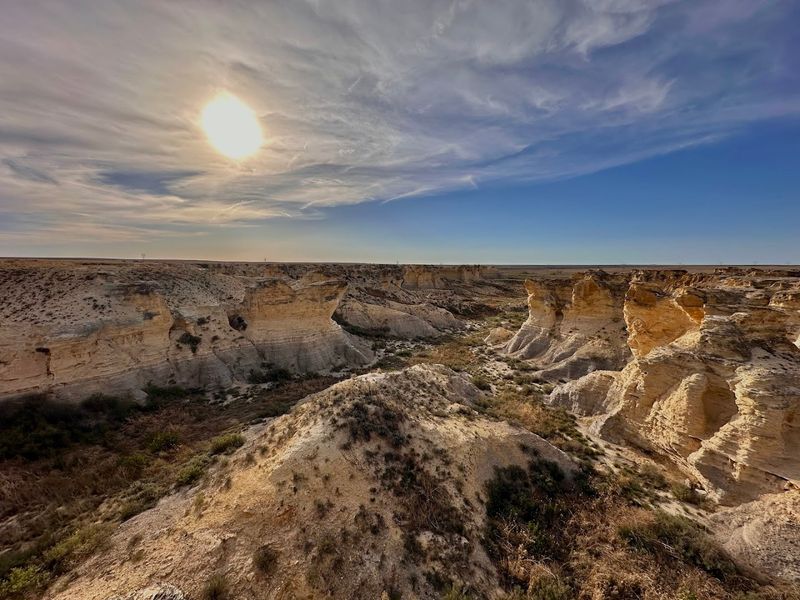
The comparison to the American Southwest is not just casual conversation. The terrain here genuinely mimics the rugged, arid character of places like the Badlands of South Dakota or the canyon country of New Mexico.
White and cream-colored chalk walls rise sharply from the surrounding grassland, creating a visual contrast that feels almost impossible for the Great Plains.
The nickname “Grand Canyon of Kansas” gets thrown around a lot, and while the scale is obviously different, the raw drama of the landscape earns that comparison more than you might expect.
Historically, early settlers called this area “Castle City” because the eroded chalk formations looked like the ruins of ancient stone fortresses rising from the prairie.
The name “Little Jerusalem” came later, inspired by the way the formations glow golden and white at sunrise and sunset, reportedly resembling the silhouette of the ancient walled city of Jerusalem seen from a distance.
The Two Trails and What Each One Actually Delivers
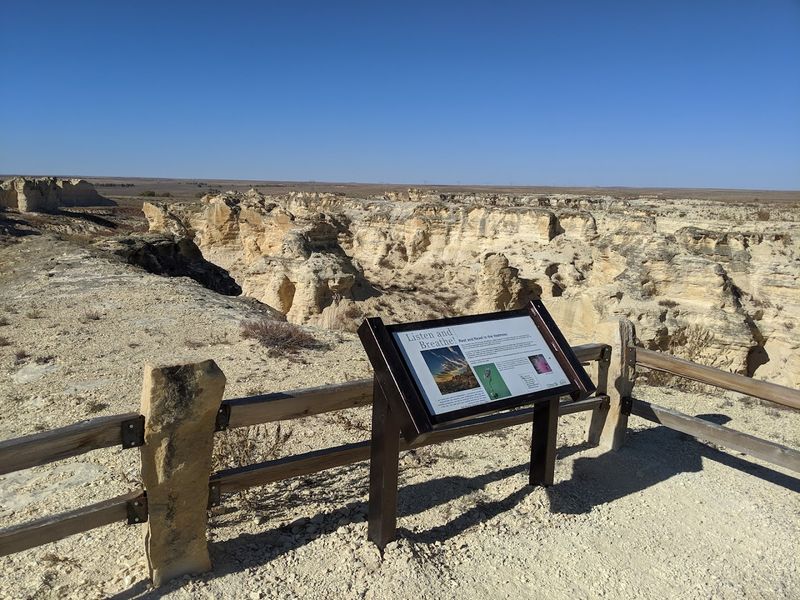
Two official hiking trails are available at the park, and they offer genuinely different experiences depending on how much time and energy you have.
The Overlook Trail is just 0.25 miles long and leads to a single viewpoint above the formations. It is short, easy, and accessible for almost anyone, including young children and visitors with limited mobility.
The Life on the Rocks Trail covers about 1.5 miles and winds to two separate overlook points, giving you a much broader sense of the badlands terrain and the surrounding Smoky Valley Ranch grasslands.
Both trails are gravel-surfaced and not particularly steep, so even beginner hikers handle them without trouble. The longer trail takes roughly one to two hours at a relaxed pace.
One important note: visitors must stay on marked trails at all times. The chalk formations are fragile, and straying off-path can cause irreversible damage.
Fines are posted and enforced, so respect the boundaries.
What the Wildlife Situation Looks Like Out Here

The landscape at this park does not just look like the American Southwest. It also attracts wildlife that you would typically associate with arid western regions.
Rock wrens and Say’s phoebes are regularly spotted darting between the chalk outcroppings, two bird species that feel completely out of place in the typical Kansas countryside.
Ferruginous hawks patrol the skies above the badlands, and cliff swallows nest in the chalk walls during warmer months, filling the air with quick, swooping movements.
Hikers on the longer trail have reported spotting tarantulas crossing the path, which sounds alarming but is actually a sign of a healthy, functioning ecosystem out here.
Native amphibians and reptiles also call this habitat home, and the park is recognized as a critical refuge for species that depend on the chalk bluffs prairie environment.
Binoculars are worth packing, especially if you visit early in the morning when bird activity peaks along the formation ridgelines.
A Plant Found Almost Nowhere Else on Earth
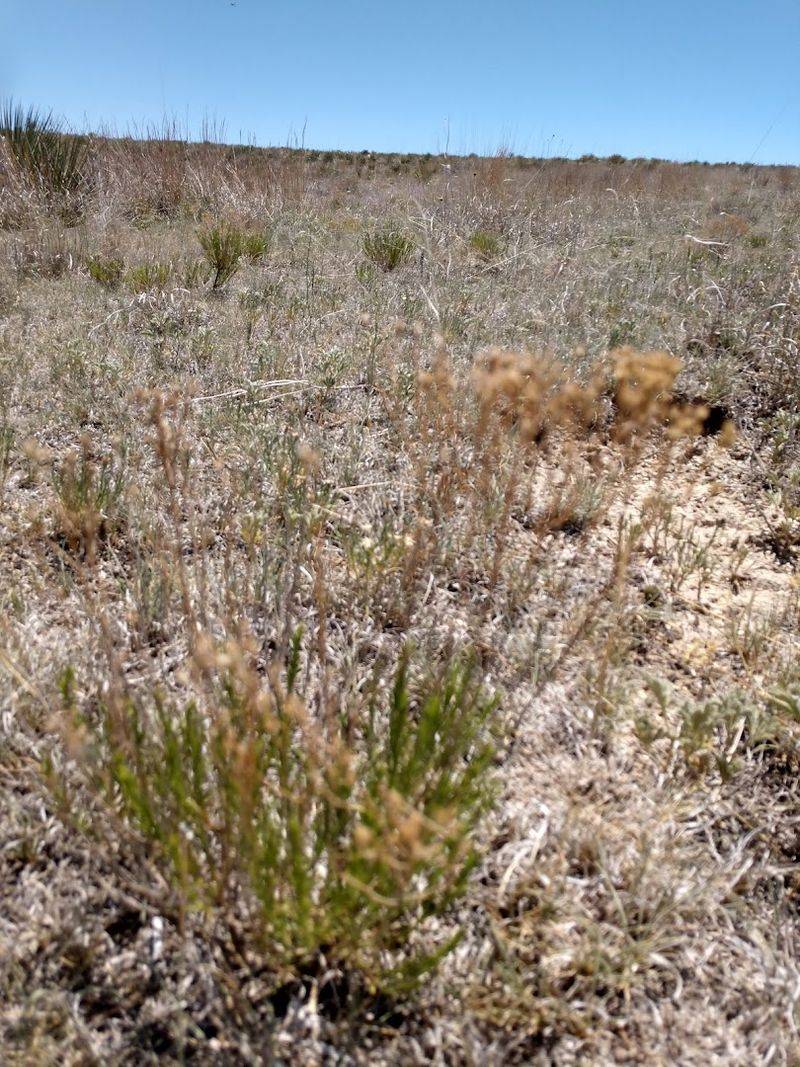
Most people visit for the dramatic scenery, but the plant life here is quietly remarkable in its own right. The park protects the largest known population of Great Plains wild buckwheat, a plant that grows almost exclusively on the chalk bluffs prairie of western Kansas.
That single fact makes Little Jerusalem Badlands State Park a site of genuine ecological significance, not just a scenic overlook.
Spring brings a burst of small desert-adapted flowers across the rocky terrain, and the prickly pear cactus patches are easy to spot along both trails.
Chalk lilies also bloom here, though they tend to open in the afternoon, so timing your visit later in the day gives you the best chance of catching them.
The combination of chalk soil, limited moisture, and intense sun creates conditions that most plants cannot survive, which is exactly why the species that do thrive here are so specialized and worth protecting.
Fossils From the Ancient Sea Still Hiding in the Chalk
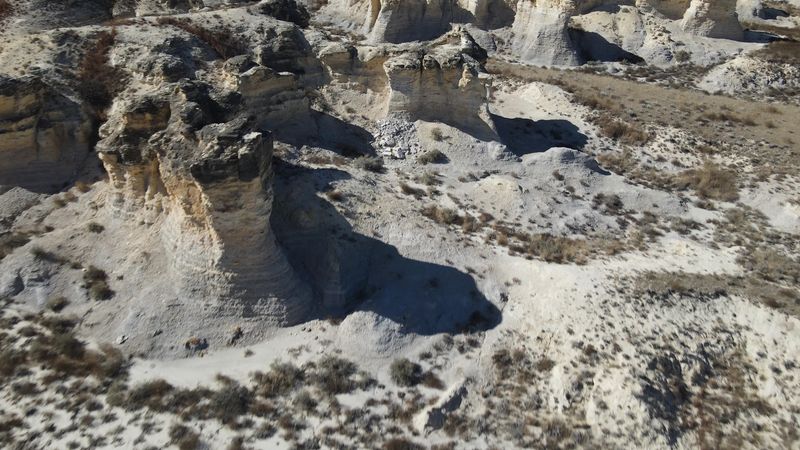
The same chalk that makes these formations so visually striking also preserves an extraordinary fossil record from the Cretaceous Period.
Paleontologists have found fossils of ancient swimming reptiles and flying reptiles in the Niobrara Chalk of this region, creatures that lived in and above the Western Interior Seaway roughly 85 million years ago.
Giant clams and oysters have also been recovered from chalk deposits in the area, a reminder that this dramatic landscape was once the muddy floor of a warm, shallow ocean.
The broader Niobrara Chalk formation across western Kansas has produced some of the most significant fossil discoveries in North American history, including early specimens of creatures that reshaped our understanding of prehistoric life.
Visitors are not permitted to collect fossils within the park boundaries, but knowing that the chalk beneath your feet holds that kind of history adds a completely different dimension to the hike.
The Best Time of Day and Year to Make the Trip
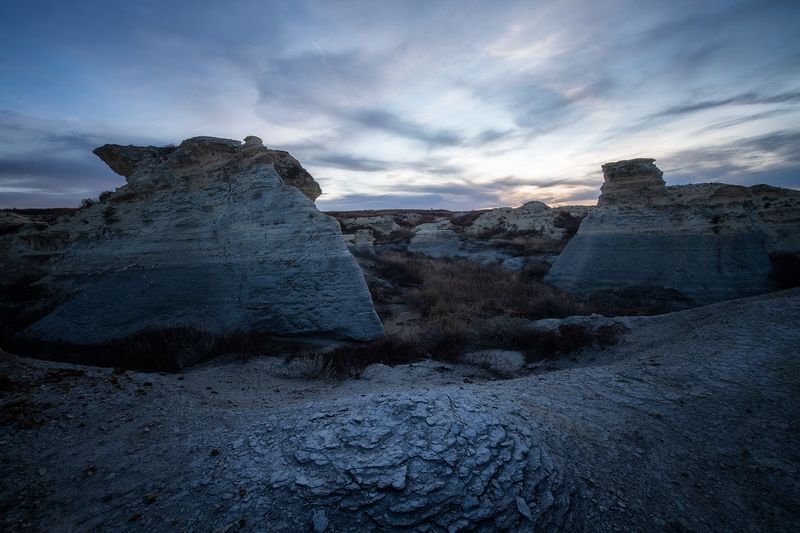
Timing matters more at this park than at most places, and getting it right can be the difference between a good visit and an absolutely unforgettable one.
Sunrise and sunset are the magic hours here. The chalk formations shift from white to gold to deep amber as the light changes angle, and the shadows that form across the canyon walls create a completely different visual experience than midday.
Spring is widely considered the best season, particularly May, when desert wildflowers bloom across the rocky terrain and temperatures are comfortable enough for a long hike without suffering.
Summer visits are possible but demanding. There is essentially no shade along either trail, and the sun on open chalk reflects significant heat.
Bringing a hat, sunscreen, and more water than you think you need is not optional.
Winter visits are quieter and cooler, though the park restrooms may be closed due to freezing conditions. The stark white chalk against a grey winter sky has its own kind of stark beauty.
How the Park Came to Exist and Who Keeps It Running
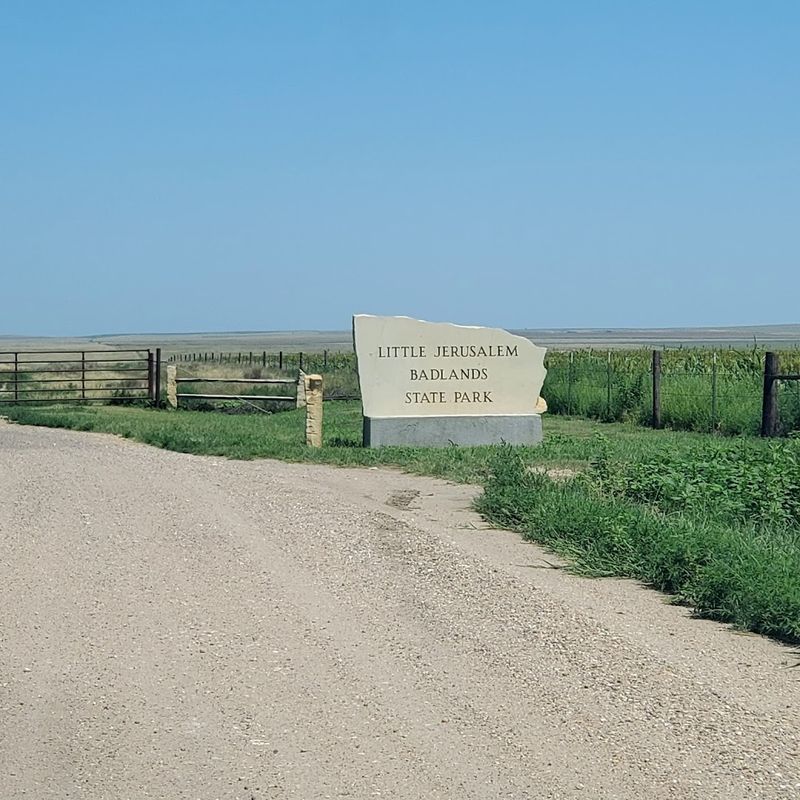
The story of how this park came to be is worth knowing before you visit, because it reflects an unusual partnership that made public access possible.
The Kansas Legislature established Little Jerusalem Badlands State Park in 2018, and it opened to the public in 2019, making it one of the newest state parks in Kansas.
The 332-acre park, which includes 220 acres of badlands terrain, is owned by The Nature Conservancy and sits adjacent to the 17,290-acre Smoky Valley Ranch, also owned by The Nature Conservancy.
The Kansas Department of Wildlife and Parks partners with The Nature Conservancy to manage visitor access, maintain the trails, and oversee the overall operation of the park.
That collaboration between a private conservation organization and a state agency is what keeps this fragile landscape both protected and accessible to the public.
What the Guided Tours Offer That the Trails Cannot
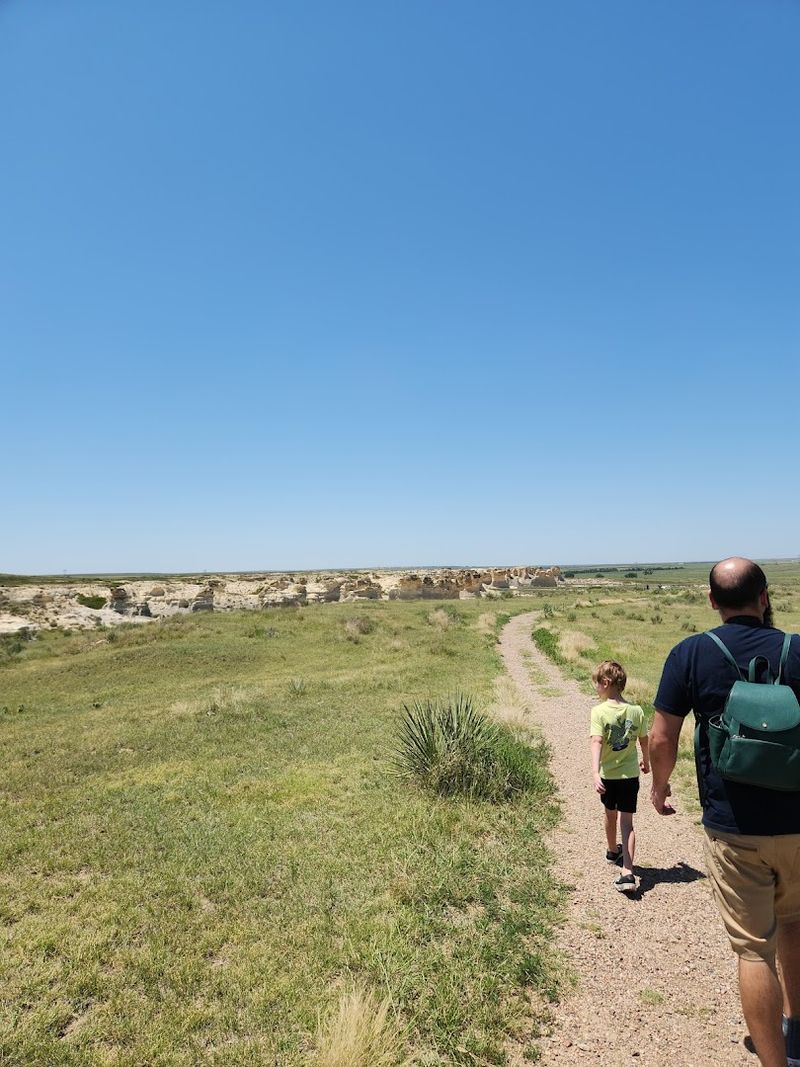
The two official trails keep visitors on the rim above the formations, which frustrates some people who want to get closer to the chalk spires and canyon walls.
That is exactly where the guided tours come in. The Kansas Department of Wildlife and Parks occasionally offers organized excursions that take small groups down into the badlands proper, among the formations themselves.
These tours require advance reservations and are not available every day, so checking the KDWP website before your trip is essential if off-trail exploration is your goal.
Getting down among the chalk walls is a completely different experience from viewing them from above. The scale becomes real in a way that overlook photos simply cannot capture.
The park staff is knowledgeable about both the geology and the ecology of the site, and a guided visit tends to send people home with a much deeper appreciation for what makes this landscape scientifically significant.
Spots fill up, so booking early is a genuinely good idea.
Nearby Chalk Landmarks Worth Adding to Your Route
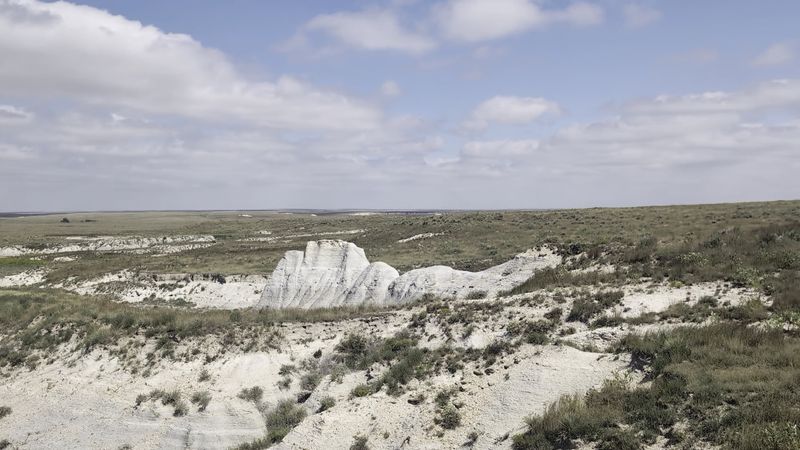
One of the smartest things you can do is treat Little Jerusalem as part of a broader chalk formation tour through western Kansas, because the region has more than one remarkable site.
Monument Rocks, also known as the Chalk Pyramids, sits roughly 15 miles from the park and is free to visit. These isolated chalk pillars rising from the flat plains have a completely different character from the canyon-like terrain at Little Jerusalem.
Castle Rock is another Niobrara Chalk landmark in the region, offering yet another variation on the same geological story told across the western Kansas landscape.
All three sites are part of the same ancient chalk formation, but each one has been shaped differently by erosion over millions of years, giving each a distinct personality.
Planning a day that includes Monument Rocks and Little Jerusalem Badlands together gives you a fuller picture of what makes this corner of Kansas so geologically unusual, and the drive between them across open prairie is scenic in its own quiet way.
Practical Tips That Will Make Your Visit Much Smoother
A few practical realities about this park are worth knowing before you load up the car and head out into western Kansas.
The self-pay station at the parking area accepts cash only, and the machine has a reputation for being confusing. Bringing exact change or small bills saves frustration at the start of your visit.
Water is non-negotiable. There are no vending machines, no concession stands, and no shade along either trail.
Pack more than you expect to need, especially between May and September.
Sunscreen and a hat are equally important. The open chalk terrain reflects sunlight from multiple angles, and the exposure is intense even on days that feel mild.
Dogs are welcome on both trails as long as they are leashed, making this a solid option for hikers who bring their pets along on road trips.
The dirt roads leading to the park can become impassable after heavy rain, so checking local weather conditions before making the drive from Oakley or Scott City is always worth the extra minute.
Share this story