There is a place tucked into the hills of southern Oregon where time stopped somewhere around 1913, and the buildings never got the memo to fall down. A forgotten mining town sits quietly off Interstate 5, free to visit, surprisingly well-preserved, and almost completely unknown to most road-trippers speeding past.
I stumbled across it on a solo drive, pulled over on a whim, and ended up spending nearly two hours wandering through one of the most atmospheric historic sites I have ever visited. This is not a theme park or a reconstructed village.
It is the real thing, and it is waiting for you just a short detour off the highway in Wolf Creek, Oregon.
Where Exactly You Will Find This Hidden Oregon Treasure
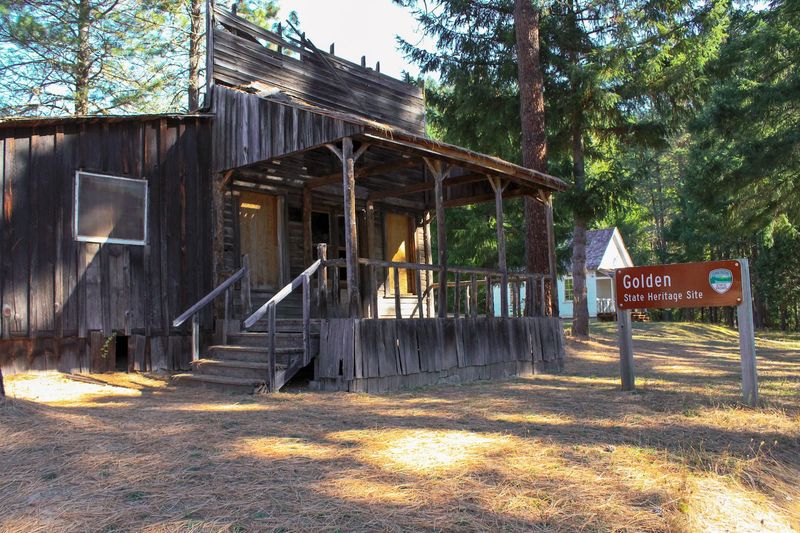
The address is straightforward enough: Golden State Heritage Site, Wolf Creek, OR 97497. But finding it for the first time still feels like uncovering a secret, because almost nobody seems to talk about this place the way it deserves.
The site sits just a few miles off Interstate 5 near the small community of Wolf Creek in Josephine County, Oregon. You take a quick exit, follow a winding two-lane road through thick forest, and suddenly a cluster of nineteenth-century wooden buildings appears on your left like a scene from an old western photograph.
There is no grand entrance sign, no ticket booth, and no long driveway lined with gift shops. The whole thing just materializes out of the trees, quiet and unhurried.
Parking is on the right side of the road, and the signs are easy to miss, so slow down before you think you need to. The nearest services, including gas and food, are back in Wolf Creek a few miles up the road.
You can also reach the park by calling 1-800-551-6949 or visiting oregonstateparks.org for updated visitor information.
The Story of Golden, Oregon: A Town That Thrived and Then Vanished
Few ghost towns have a backstory as surprisingly wholesome as this one. The mining town of Golden, Oregon was active from roughly 1850 to 1913, built up around gold placer mining along the creek that runs through the valley below the current heritage site.
What made Golden unusual among mining settlements of its era was its notably moral character. The town had two churches and zero saloons.
The closest place to find adult refreshments was reportedly at Graves Creek, several miles away, which tells you something about the community’s values.
At its peak, Golden had a general store, a schoolhouse, residences, and those two churches, forming a compact but functional pioneer community. When the gold ran out and the economy shifted, residents simply left, and the buildings stayed behind like a time capsule nobody locked.
The site was later used in the 1950s as a film location, with some structures restored specifically as a set for the television show Bonanza and several western movies, which adds a quietly fascinating layer to its already rich history. That Hollywood chapter helped preserve what might otherwise have crumbled away entirely.
What the Buildings Actually Look Like Up Close
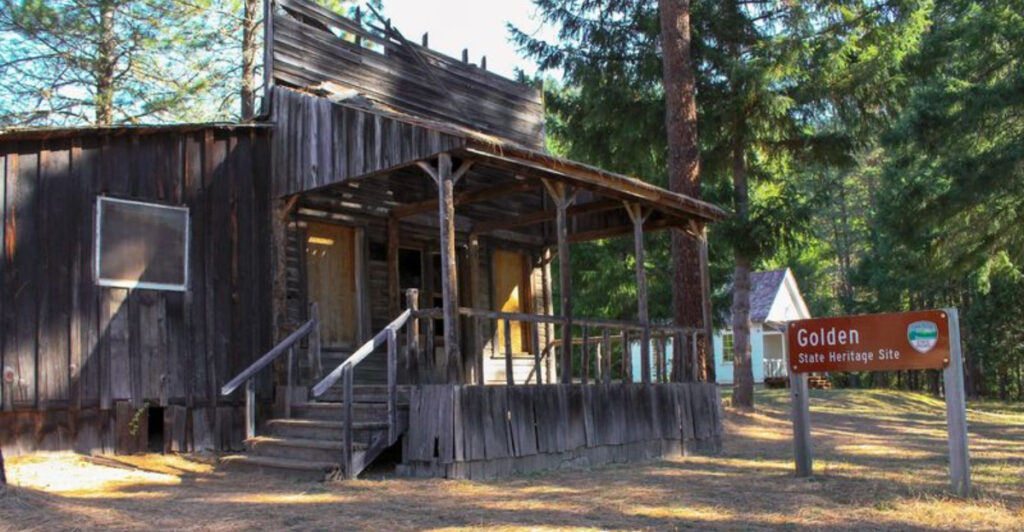
The first thing that hits you when you approach Golden State Heritage Site on foot is how genuinely old everything looks. This is not the polished, sanitized kind of old you get at a living history museum.
The wood is grey and textured, the paint is thin in places, and the structures carry the weight of more than a century in a very visible way.
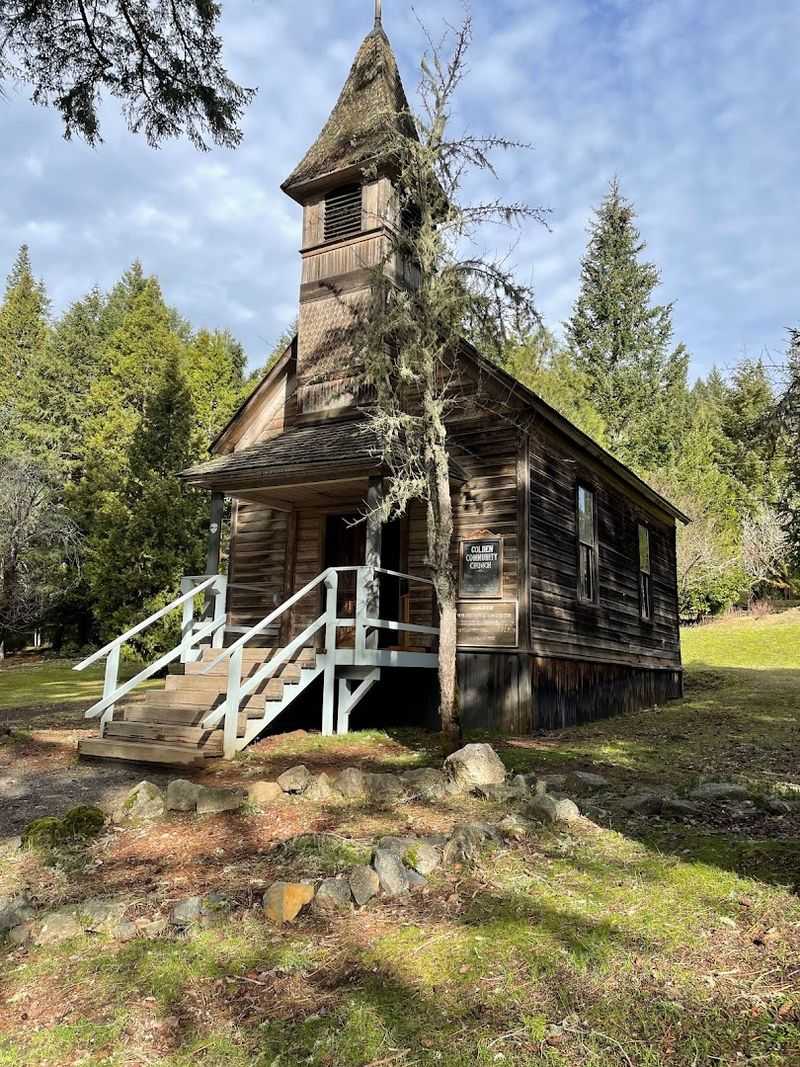
The church is the crown jewel of the site. It stands tall and narrow, with a simple steeple and original wooden siding that has weathered beautifully without collapsing.
You can go inside during staffed hours, and the interior is sparse but moving in its simplicity.
The schoolhouse is equally impressive, a small rectangular building that feels like it could have held a class of twelve-year-olds just last week if you squint hard enough. Both the church and the schoolhouse are accessible to visitors when hosts are present, generally between 8 AM and 8 PM.
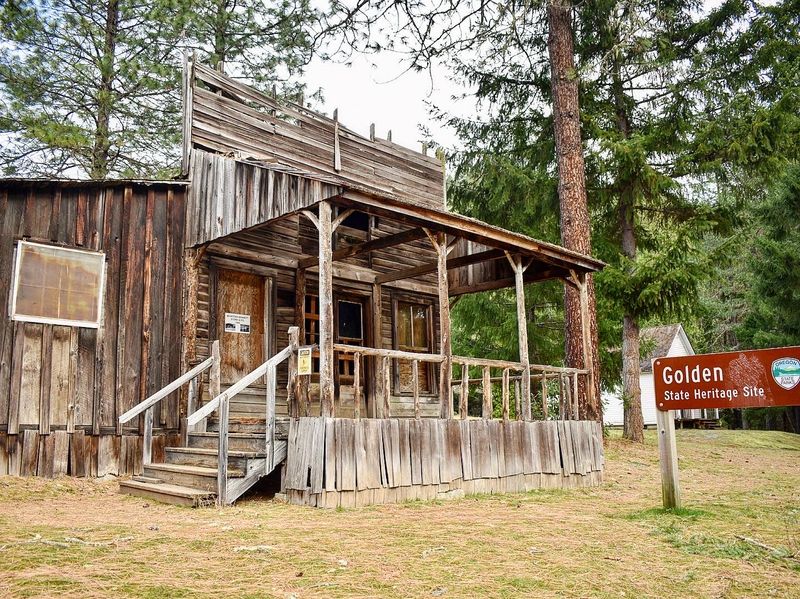
Other structures on the property, including the old general store, can be viewed from the outside and peered into through windows. The Ruble House is currently collapsed but there are plans to restore it, so future visits may reveal even more of the original town.
The Atmosphere That Makes This Place Feel Unlike Any Other Stop on I-5
Some places have a quality that is hard to name but immediately felt the moment you arrive. Golden State Heritage Site has that quality in abundance, and it is not something the park service manufactured or installed.
The silence here is the first thing you notice. After the constant noise of the interstate, the hush of this small valley feels almost physical.
Birds call from the surrounding trees, the creek murmurs somewhere below, and the old buildings seem to absorb sound rather than reflect it.
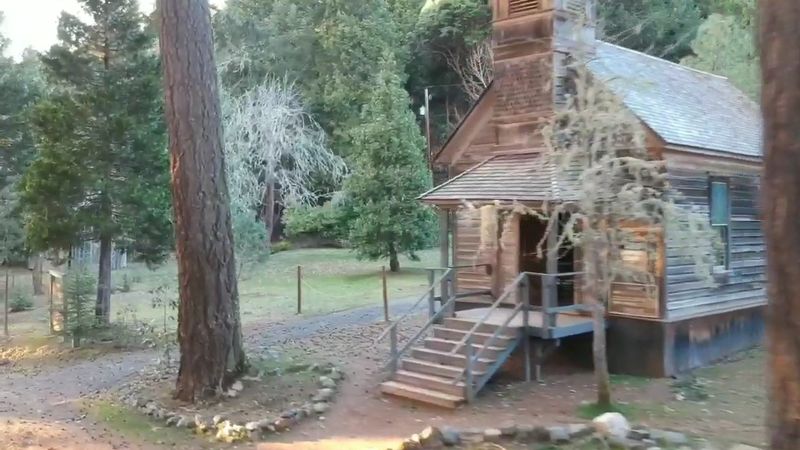
The setting inside a narrow, forested valley amplifies everything. Tall Douglas firs crowd the hillsides on both sides of the road, and the light filters through them in a way that makes even a midday visit feel atmospheric and slightly cinematic.
Several visitors have noted an unusual energy at certain spots on the property, particularly near the general store deck, describing a sudden lightheadedness or a strong sense of presence. Whether you put stock in that kind of thing or not, there is no denying that the place has an uncommon weight to it that stays with you long after you drive away.
It is the kind of quiet that asks you to pay attention.
Ghost Adventures Came Here, and That Is Not Even the Most Interesting Part
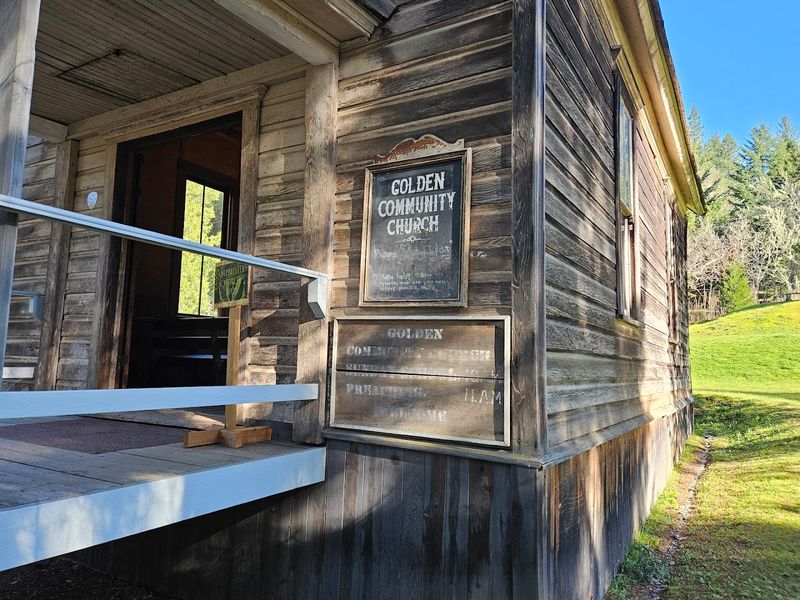
The television show Ghost Adventures, known for investigating supposedly haunted locations across the United States, filmed an episode at Golden State Heritage Site, which introduced a whole new wave of visitors to this otherwise overlooked spot in southern Oregon.
That episode brought curious travelers from all over, and some of them, drawn in by the paranormal angle, ended up falling in love with the place purely on its historical merits. The buildings, the setting, and the remarkable preservation all speak for themselves without needing any supernatural endorsement.
That said, the site does have an undeniable atmosphere that makes the Ghost Adventures connection feel less random than it might sound. Being there alone, especially in the early morning or late afternoon, produces a very particular kind of alertness that is hard to explain in ordinary terms.
The general store deck in particular seems to be a spot where visitors frequently report feeling something unusual, a sudden shift in the air, a sense of being watched, or an unexpected emotional response. Whether you are a believer or a skeptic, the experience of standing in a space that has been abandoned for over a century tends to stir something genuine in most people.
History has a way of making itself felt.
The Mining Creek Trail and the Nature Sanctuary Below
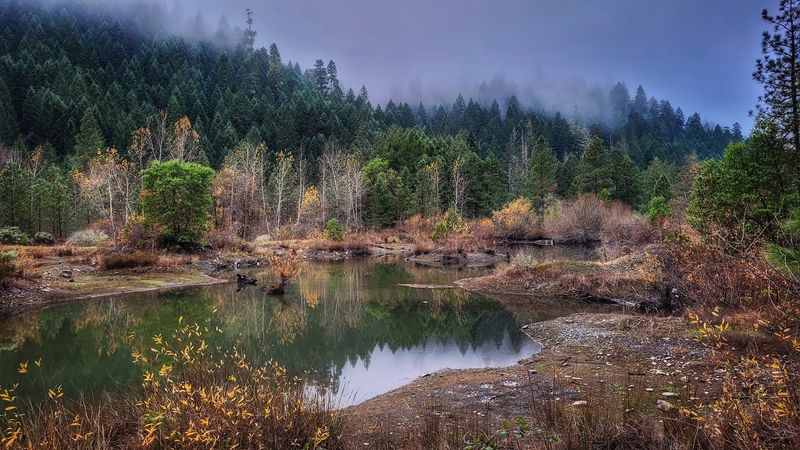
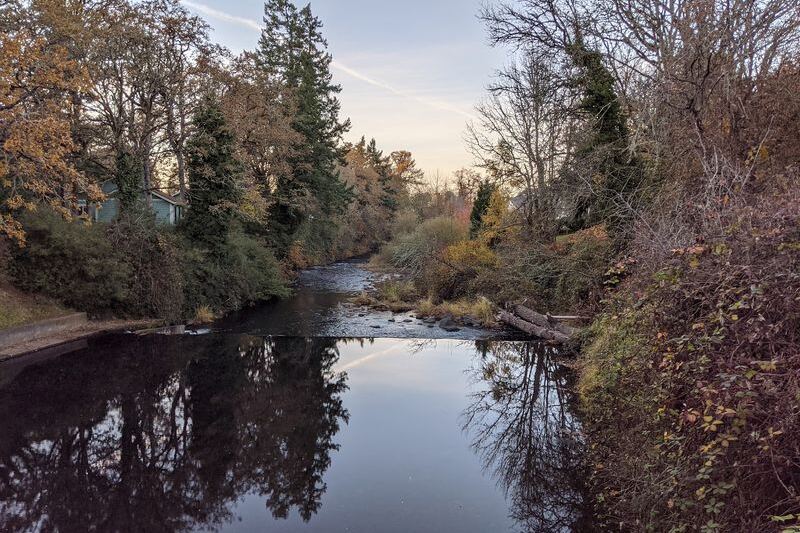
The history above the road is compelling, but what lies across the street and down the hill adds a completely different dimension to a visit at Golden State Heritage Site. A trail from the parking area leads down to the creek where gold was once actively mined, and the walk is short, easy, and genuinely scenic.
The creek itself has been undergoing impressive restoration work in recent years, with efforts focused on reversing the environmental impact of decades of placer mining. The results are already visible, with cleaner water, recovering vegetation, and a surprising amount of wildlife returning to the area.
Geese have been spotted along the banks, and eucalyptus trees lend the area an unexpectedly lush, almost tropical feel in contrast to the dry Oregon hillsides above. Turtles have also been seen sunbathing near the water on warm days, which is the kind of bonus detail that turns a history stop into a full nature experience.
The trail is easy enough for most ages and fitness levels, and the combination of the historic village above and the rewarding natural walk below makes the site feel like two destinations in one. Pack a lunch, bring the kids, and plan on staying longer than you originally intended.
The creek has a way of slowing time down pleasantly.
Practical Tips for Your Visit: What to Know Before You Go
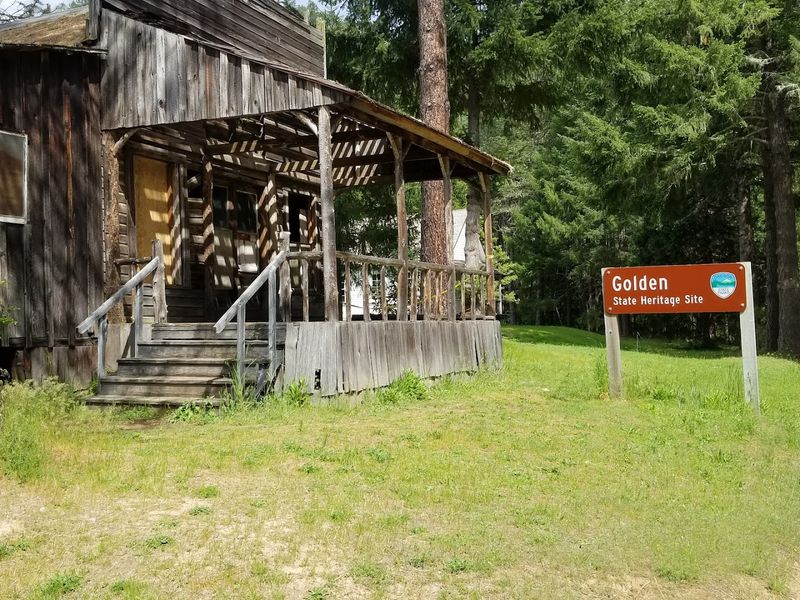
A few logistical details can make the difference between a smooth visit and a frustrating one at Golden State Heritage Site, so it pays to know them in advance before making the short detour off the highway.
Parking is on the right side of the road as you approach the site. The signs indicating this are small and easy to miss, and parking on the town side of the road will earn you a firm reminder from the on-site park keeper, who is reportedly a friendly person but understandably protective of the property.
There are no restrooms inside the main site, though a portable toilet is available across the road from the schoolhouse. There is also no water on-site, no trash cans, and no food vendors, so bring what you need and take your trash with you when you leave.
Pets are welcome but must remain on a leash at all times and are not permitted inside any of the buildings. Smoking is not allowed anywhere on the property.
The site hosts keep a red binder filled with detailed history about the town, and they are happy to share it with curious visitors. Any night visits or special activities need to be arranged in advance through the ranger station at Wolf Creek.
The site is free to enter, which makes all of this even more worthwhile.
The Three Graves and the Quiet Mystery They Carry
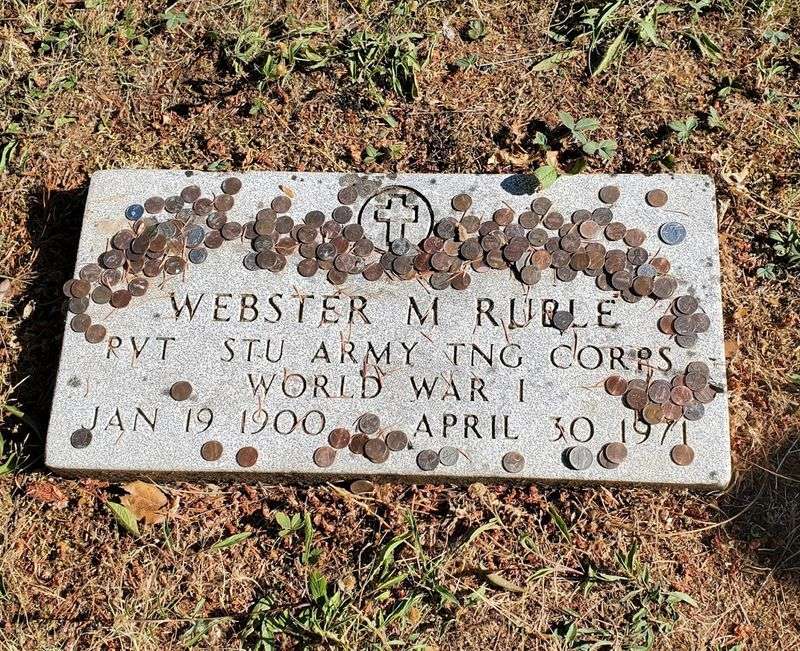
One of the more quietly compelling features of Golden State Heritage Site is a small set of three graves located on the property. They are not elaborate or ornate, but they carry a weight that stops most visitors in their tracks once they notice them.
The markers identify one of the buried individuals as a gold miner, while the others are identified as veterans. What makes this trio of graves particularly intriguing is that their surnames do not appear to match the main family names associated with the town’s history, leaving their exact connection to Golden somewhat unclear.
That ambiguity is part of what makes them interesting. Who were these people specifically?
What brought them to this remote valley in southern Oregon? Why were they buried here rather than elsewhere?
The site currently offers limited information about the graves, and at least one visitor has noted that more historical context would be welcome.
For now, the graves stand as a quiet reminder that real people lived, worked, and spent their final days in this place. The gold rush era was not just a colorful chapter in American mythology.
It was lived by individuals whose stories are only partially preserved, and these three markers represent that incompleteness in a strangely moving way.
How This Place Compares to Other Ghost Towns in the Pacific Northwest
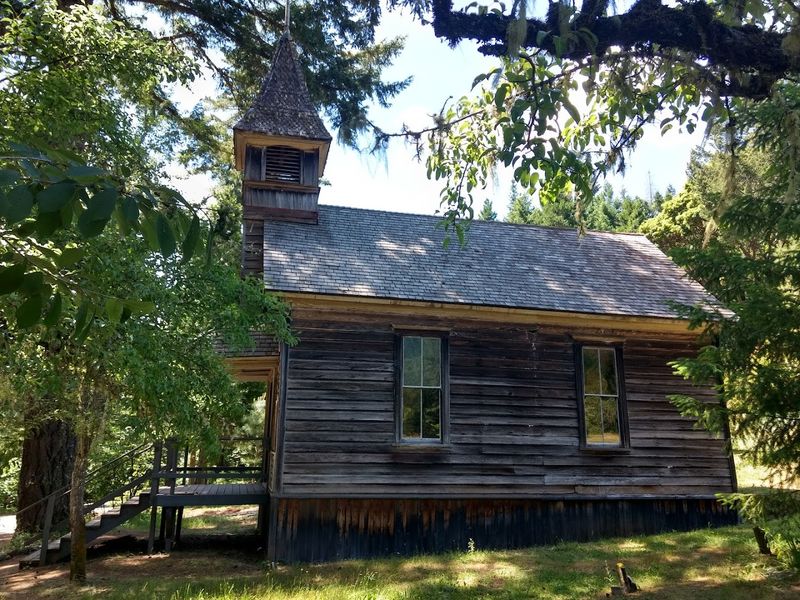
The Pacific Northwest has its share of historic remnants and abandoned settlements, but few of them offer the combination of accessibility, preservation quality, and free admission that Golden State Heritage Site delivers so effortlessly.
Most comparable ghost town sites either require a significant off-road drive, charge entry fees, or have been so heavily restored that they feel more like reconstructions than original structures. Golden manages to avoid all three of those pitfalls simultaneously, which is rarer than it sounds.
The buildings here are genuinely original, or carefully maintained rather than rebuilt from scratch, and the setting has not been commercialized in any visible way. There are no souvenir stands, no guided tour packages, and no crowds jostling for selfie positions.
The whole experience feels refreshingly unmediated.
Visitors who have toured ghost towns across multiple western states consistently rate Golden among the best they have encountered, and it is not hard to see why once you are standing in front of that church. For anyone driving the I-5 corridor through Oregon, this is the kind of stop that reframes the entire road trip.
It is not a detour. It is the destination, and the highway is just the way to get there.
The Film History Hidden Inside These Old Walls
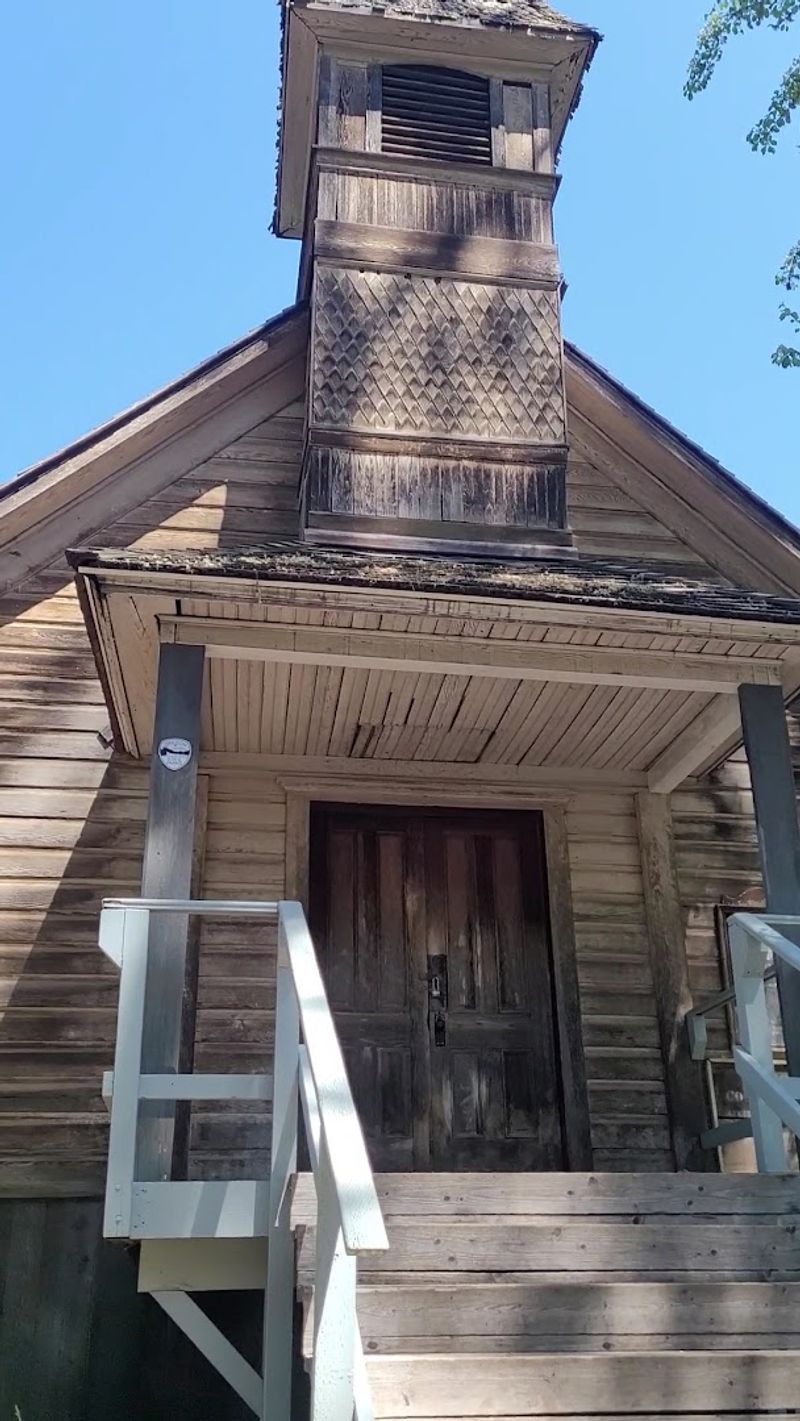
Not many ghost towns can claim a connection to Hollywood, but Golden, Oregon has a genuinely interesting one. In the 1950s, some of the town’s structures were restored and used as a film set for the classic television western Bonanza, one of the most popular shows of its era.
Several western movies were also filmed here during that same period, which means that some of the buildings visitors walk past today were once dressed with period props and populated by film crews and actors. That restoration work, done for cinematic purposes, ironically helped preserve structures that might not have survived otherwise.
The overlap between genuine history and television mythology gives Golden an extra layer of cultural interest that most heritage sites simply do not have. You are not just looking at pioneer-era architecture.
You are looking at buildings that appeared on American television screens decades ago, watched by families across the country including, presumably, some in Oklahoma.
That connection to popular culture gives younger visitors an unexpected entry point into the history of the place. When you can say that a building was once on a famous TV show, it tends to make the past feel a little more tangible and a lot less distant.
The camera loved this valley, and honestly, it is not hard to understand why.
Wildlife, Wildflowers, and the Natural Beauty Surrounding the Site
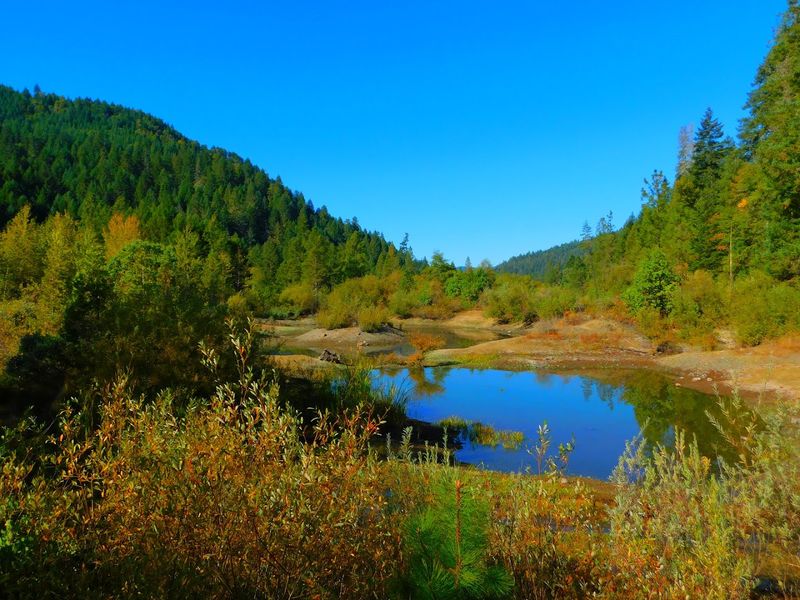
The natural setting around Golden State Heritage Site is not just a backdrop. It is an active part of the experience, especially if you take the time to cross the road and follow the trail down toward the creek.
The restored wetland area below the historic buildings hosts a surprisingly diverse collection of wildlife for such a compact space. Geese are a common sight along the water, and turtles have been spotted basking on rocks and logs during warmer months.
The creek itself is clear and active, with the sound of moving water carrying up the hillside to the village above.
Eucalyptus trees grow along the creek banks, which is an unexpected botanical detail in this part of Oregon. Their distinctive scent and silvery leaves give the lower trail a slightly exotic quality that contrasts pleasantly with the dry, coniferous hillsides above.
In spring, the surrounding meadows and forest edges fill with wildflowers, and the whole valley takes on a color and softness that makes it feel worlds away from the interstate just a few miles back. Visitors have reported seeing black bears in the area on at least one occasion, so stay aware of your surroundings on the trail.
Nature here is not performing for anyone. It is just doing its thing, and that is refreshing.
Why This Place Deserves Far More Attention Than It Gets
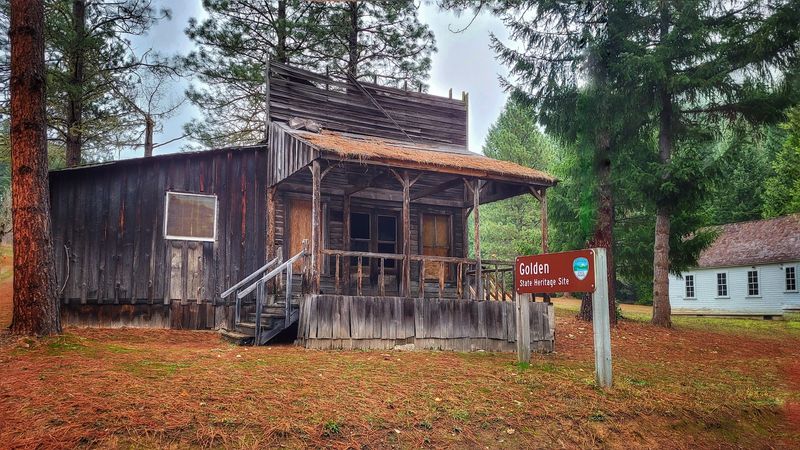
There is a particular kind of satisfaction that comes from discovering a place before the crowds find it, and Golden State Heritage Site sits firmly in that category right now. With a rating of 4.7 stars across more than 200 reviews, it is clearly beloved by those who know about it.
The problem is that not nearly enough people do.
The site is free to visit, just minutes off the interstate, genuinely historic, beautifully preserved, and surrounded by natural beauty. It ticks every box that a worthwhile road trip stop should tick, and yet most drivers pass the exit without a second thought.
Part of that obscurity may be due to its modest profile. There is no major marketing campaign behind Golden, no celebrity endorsement beyond the Ghost Adventures connection, and no flashy infrastructure designed to pull people in from the highway.
It survives on word of mouth, volunteer caretakers, and the quiet dedication of Oregon State Parks.
Travelers who love history, nature, or simply the feeling of standing somewhere that most people have overlooked will find something genuinely meaningful here. From Oklahoma to the Oregon coast, road-trippers across the country are always searching for that unexpected stop that makes the whole journey worth it.
Golden State Heritage Site is exactly that stop, and it has been quietly waiting for you all along.
Share this story