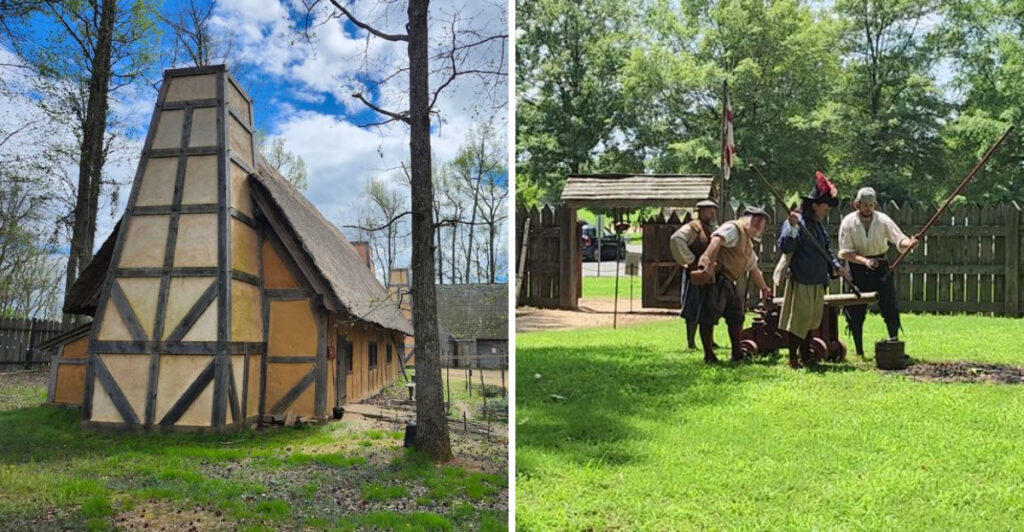
Most people can name Jamestown as Virginia’s first English settlement, but far fewer know that a second settlement followed just four years later, and that you can actually walk through a faithful reconstruction of it today. That place is Henricus Historical Park, a living-history site in Chester, Virginia, where costumed interpreters breathe real life into the early 1600s.
The park sits along the James River, surrounded by trails and scenic views that make the whole visit feel like traveling back in time, not just reading about it. Whether you are a history lover, a curious traveler, or a parent looking for something genuinely educational, this place will surprise you in the best possible way.
Keep reading to discover what makes Henricus one of the most underrated historical experiences on the East Coast.
The Forgotten City That History Almost Erased
Back in 1611, Sir Thomas Dale led a group of English settlers upriver from Jamestown and established a fortified settlement called the Citie of Henricus, intended to become Virginia’s new capital.
That ambition was bold for its time. The settlement was designed with a church, a hospital, and even plans for a college, making it arguably the most ambitious colonial project in early America.
A devastating raid in 1622 effectively ended Henricus as a functioning settlement, and the site faded from public memory for centuries. Today, Henricus Historical Park at 251 Henricus Park Rd, Chester, VA 23836, stands as a carefully reconstructed tribute to that lost city.
Walking through the wooden palisade gates, you get a real sense of how much was at stake for those early settlers, and how close this place came to shaping American history in a very different way.
Where Exactly You Will Find This Place
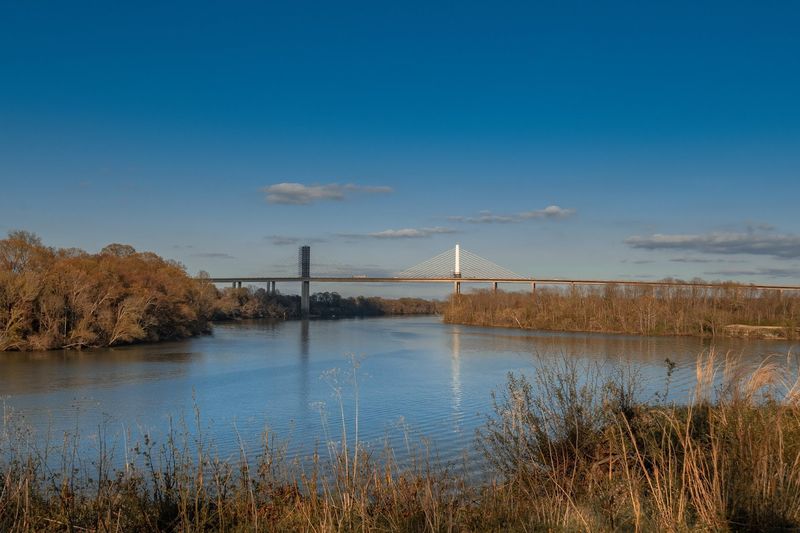
The park is officially addressed at 251 Henricus Park Rd, Chester, Virginia 23836, tucked into a stretch of Chesterfield County that surprises first-time visitors.
Getting there involves driving past some industrial facilities and power infrastructure, which can make you question your GPS for a moment. But the moment the road opens up to the park entrance, the contrast is striking, and the setting along the James River feels completely removed from the surrounding landscape.
Chester sits just south of Richmond, making Henricus an easy day trip from the city or a worthwhile stop if you are traveling along I-95. The drive from downtown Richmond takes roughly 30 minutes, and free parking is available on site.
That unexpected approach through industrial terrain actually adds a small sense of adventure to the visit, as if you are uncovering something that was never meant to be easy to find.
A Living Museum That Actually Feels Alive
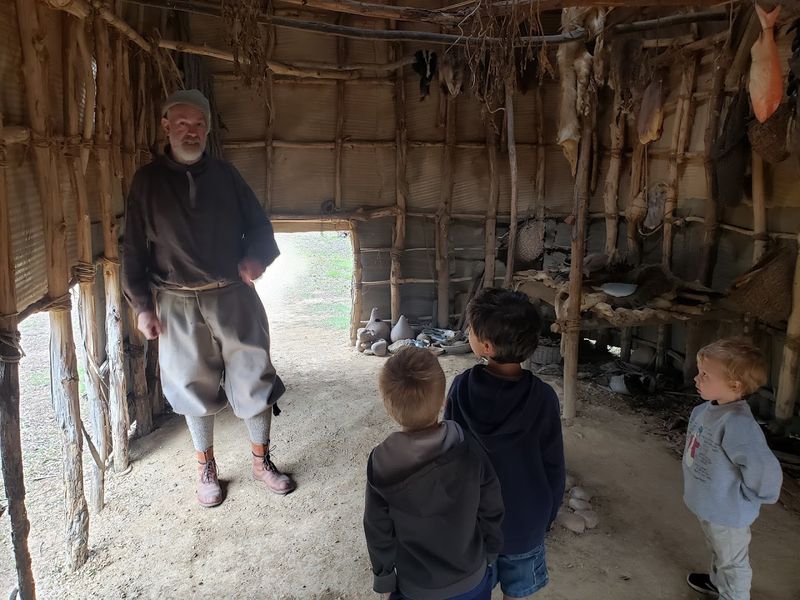
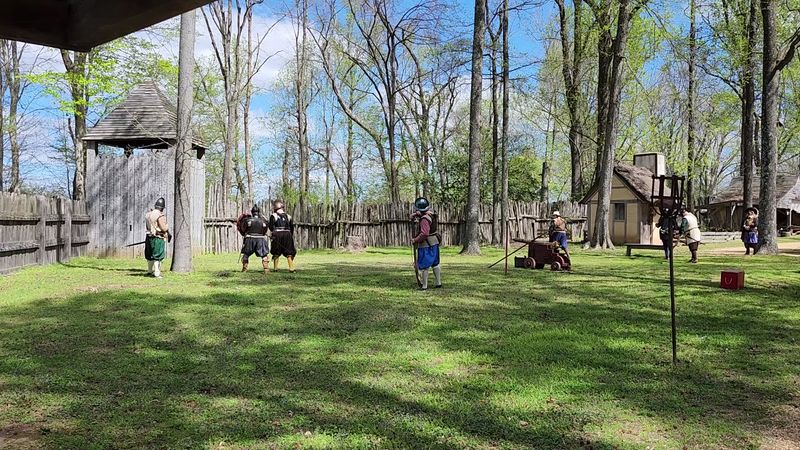
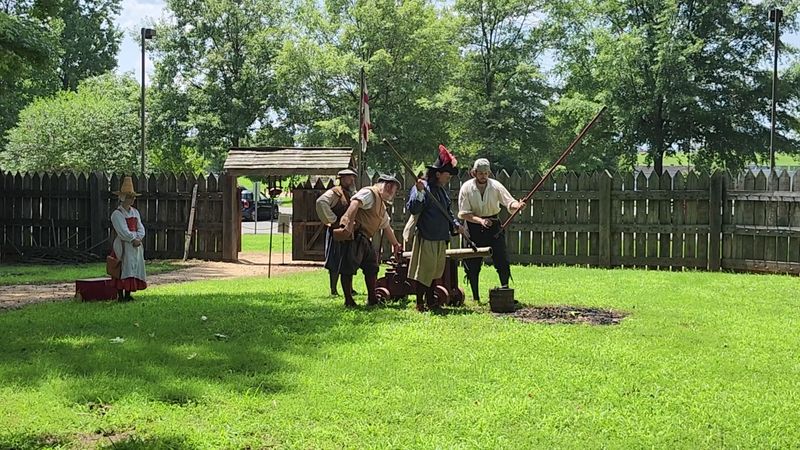
Most history museums ask you to read placards and peer through glass. Henricus takes the opposite approach, placing costumed interpreters directly in the reconstructed spaces where they demonstrate, explain, and engage with visitors in real time.
During my visit, I spent a solid chunk of time talking with an interpreter inside the reconstructed parsonage, who explained early colonial religious practices with a level of detail I had never encountered in any textbook. The conversation felt completely natural, not scripted.
Each interpreter occupies a specific role, whether it is a blacksmith, a farmer discussing livestock, or a figure representing early medical practices. The depth of knowledge each person brings is genuinely impressive.
What sets this place apart from bigger, more polished sites is the personal attention you receive. On a quieter weekday, you can spend 20 minutes with a single interpreter and walk away knowing far more than you expected.
The Reconstructed Buildings Worth Exploring
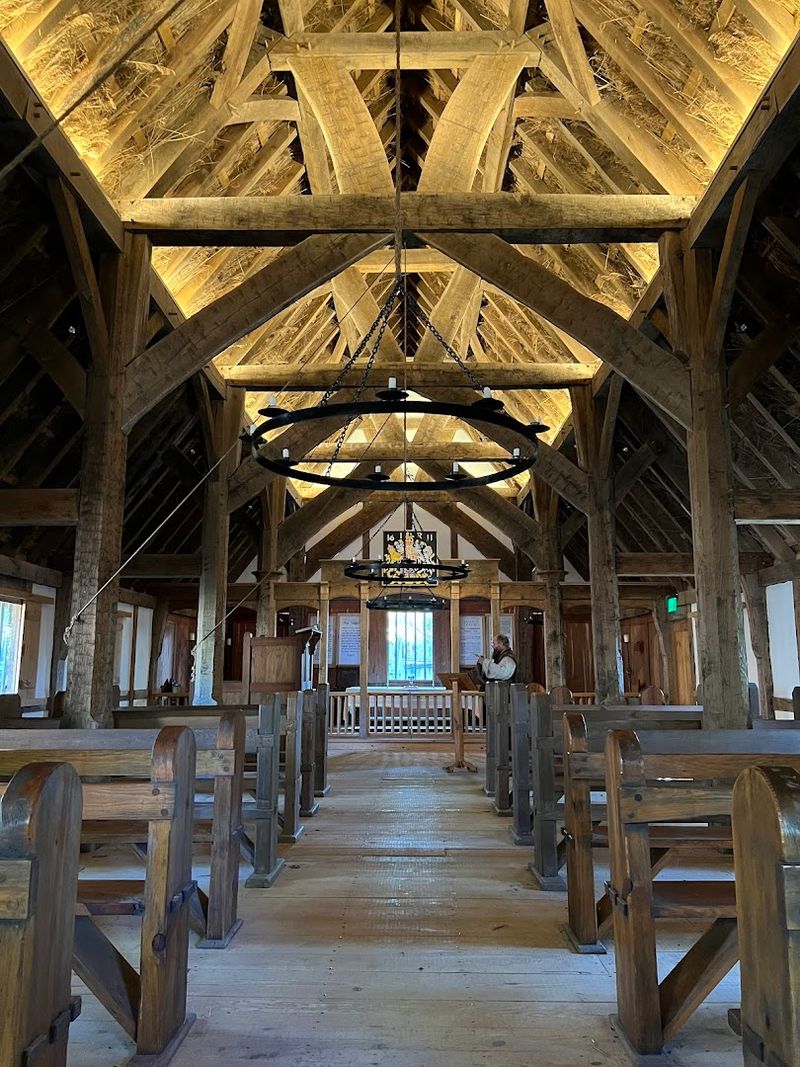
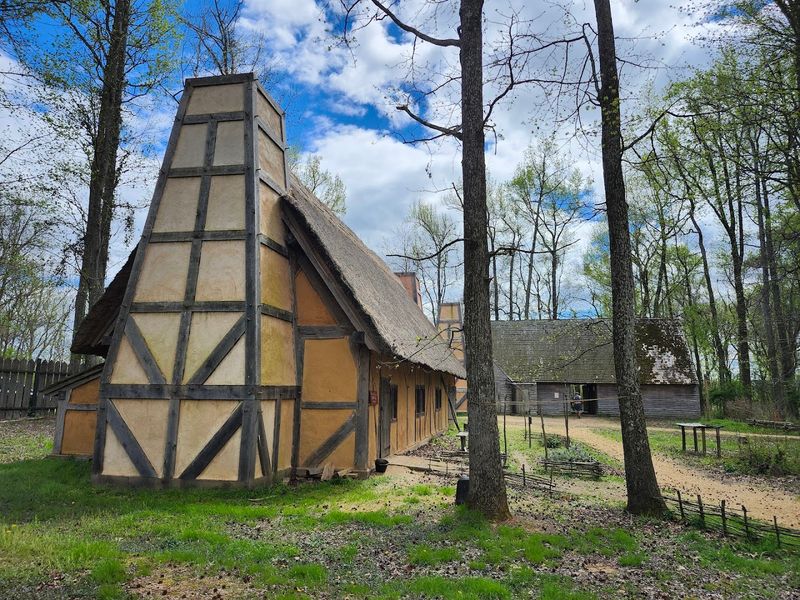
The reconstructed church at Henricus is one of those spaces that genuinely stops you in your tracks. Simple wooden pews, rough timber walls, and a quiet interior create an atmosphere that feels both austere and oddly moving.
Beyond the church, the parsonage and the hospital are the other standout structures. The hospital is particularly fascinating because it represents one of the first attempts at organized medical care in colonial America, a fact that most visitors do not know before they arrive.
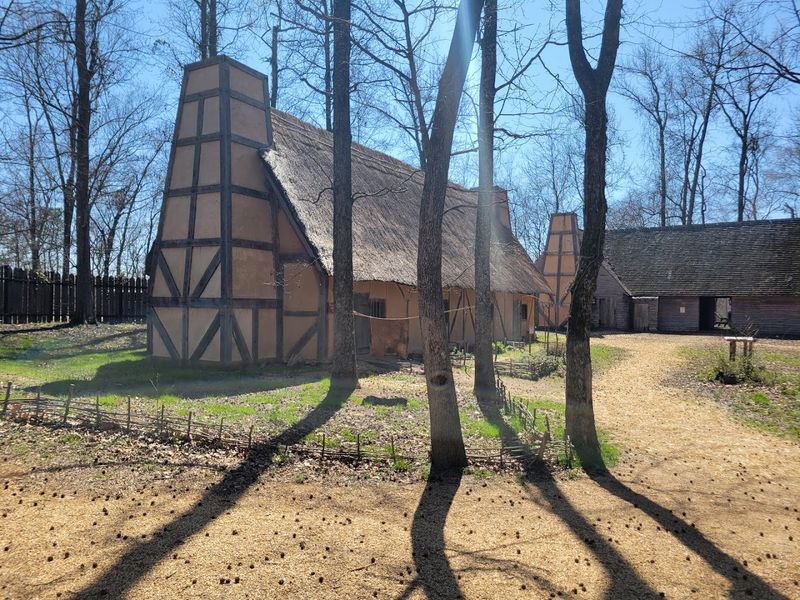
Each building has been constructed using period-appropriate techniques and materials, giving them a texture and authenticity that modern replicas often lack. You can touch the walls, examine the furnishings, and ask the interpreters about every detail.
The attention to historical accuracy across all the structures makes it easy to form a mental picture of what daily life actually looked like for the settlers who called this place home in the early 1600s.
The Real Story of Pocahontas You Probably Never Heard
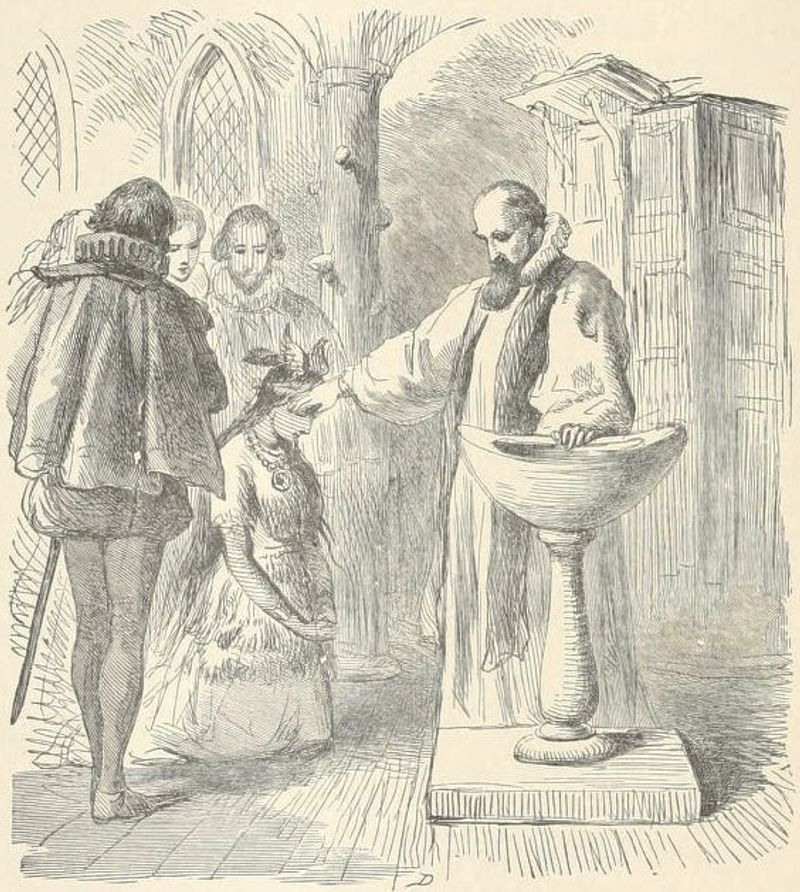
Most people know the Disney version of Pocahontas, and a few know the more historically grounded account tied to Jamestown. What fewer people realize is that Henricus plays a significant role in her actual story.
Pocahontas was held at Henricus in 1613, and it was here that she converted to Christianity and took the name Rebecca. She also met John Rolfe during her time connected to the settlement, eventually marrying him in 1614.
The interpreters at the park discuss this chapter of her life with nuance and care, acknowledging the complex circumstances surrounding her captivity while also giving context to the cultural exchanges that took place during that period.
Hearing this part of the story told on the actual land where it happened, rather than in a classroom or a film, changes the way you process it entirely. History feels less abstract and far more human when you are standing in the right place.
Animals, Farming, and a Surprisingly Friendly Cat
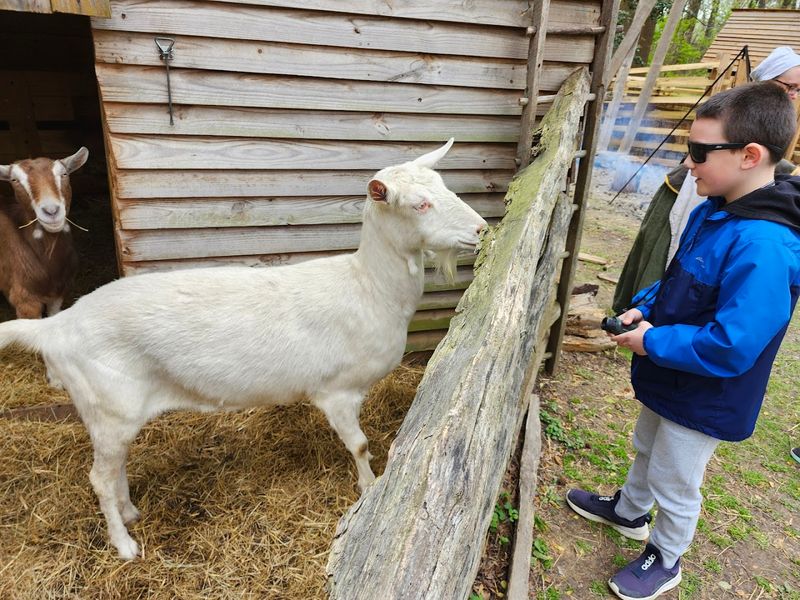
One of the more unexpected delights of a visit to Henricus is the livestock. The park maintains hogs, goats, and chickens as part of its commitment to authentic colonial farming representation, and they are surprisingly entertaining to observe.
An interpreter dedicated to agriculture and animal husbandry walks visitors through how early settlers managed their livestock, what crops they grew, and how the land along the James River shaped their farming choices. It is the kind of practical history that rarely makes it into standard curriculum.
There is also, apparently, a cat that roams the grounds freely and has become something of an unofficial park mascot. I can confirm this is true, because the cat found me near the farm area and seemed entirely unbothered by the 17th-century ambiance.
This combination of historical accuracy and genuine farm life gives the park a warmth and approachability that makes it especially enjoyable for families with younger children who need something tangible to connect with.
Trails Along the James River Worth Every Step

The park is not just about buildings and interpreters. The surrounding landscape along the James River and Dutch Gap offers hiking trails that reward visitors with genuinely beautiful views of the water and wetlands.
There is a small pull-off along the road leading into the park where a dock extends out into a marsh, giving you a quiet moment with the river before you even reach the main entrance. That spot alone is worth a few minutes of your time.
The trails range from easy walks to more active routes, making the park a solid option for visitors who want to combine outdoor recreation with historical exploration in the same afternoon.
Visiting in spring or summer gives you the full benefit of the greenery and river views, though the trails remain accessible year-round. The natural setting genuinely complements the historical experience, reminding you that the land itself has witnessed everything the interpreters describe.
When to Visit and What to Know Before You Go
The park is open Thursday through Sunday from 10 AM to 4 PM, and it is closed Monday through Wednesday, so planning ahead is essential to avoid making the drive for nothing.
Arriving earlier in the day gives you the most time with interpreters and lets you explore the trails without feeling rushed. On busy weekend days, the grounds can get lively with school groups and families, but the park is large enough that it rarely feels overcrowded.
One practical note: the entire experience is outdoors, so dressing for the weather matters more here than at a traditional indoor museum. Warmer months are more comfortable for extended visits, while winter days can feel quite cold when you are spending two to four hours outside.
There are picnic tables on the grounds, so bringing your own food is a smart move since there is no on-site food service. Free parking makes the logistics simple once you arrive.
Special Events That Make Return Visits Worthwhile
For many families in the Richmond area, Henricus is not just a one-time visit. The park hosts seasonal events throughout the year that give returning visitors a fresh reason to come back, and those events have built a loyal local following over many years.
Christmas Around the Centuries is one of the most popular, bringing together costumed actors representing different historical eras who discuss how the holiday was observed in their respective time periods. The event has a cozy, theatrical quality that feels genuinely festive without being overly commercial.
Other events have included outdoor gatherings that pair local food vendors with the park’s historical setting, creating an atmosphere where the past and the present overlap in an enjoyable and accessible way.
Checking the park’s website at henricus.org before your visit is the best way to see what events are scheduled, since the calendar changes seasonally and special programming can significantly enhance the experience beyond the standard tour.
Why This Place Deserves More Attention Than It Gets
Jamestown gets the school trips, Colonial Williamsburg gets the tourist buses, and Henricus gets the people who are genuinely curious enough to seek it out. That distinction is not a criticism of the park; it is actually part of what makes it special.
Because it draws a smaller crowd, the experience is more personal. You are not shuffled through in a group of 50.
You have actual conversations with interpreters who clearly love what they do and know their subject with remarkable depth.
The ticket price is modest compared to larger historical attractions in Virginia, and the combination of history, outdoor trails, and genuine interactivity makes it a strong value for the time you invest.
Virginia has no shortage of colonial history sites, but Henricus occupies a specific chapter of that story that most people have never fully encountered. Visiting it feels less like a tourist activity and more like finally reading a page that was somehow skipped in every history class you ever attended.
Share this story