 Unearth The Voyage
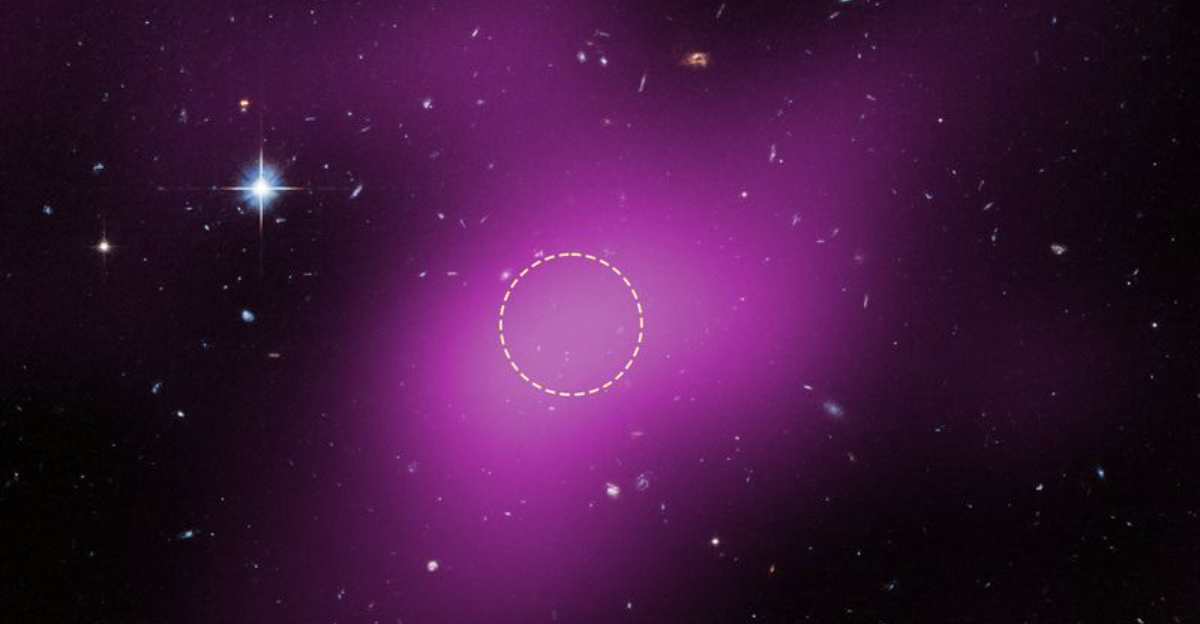
You know that electric jolt when space serves up something nobody expected. That is the vibe around Cloud 9, a strange object Hubble just spotted that dodges every neat cosmic label. It looks compact, dense, and oddly alone, as if it slipped the usual rules of where gas and dust belong. Stick around, because this discovery could tweak how you think the universe organizes itself.
Cloud 9 turned up where nobody expected it, tucked in the background of observations aimed at distant galaxies. It looks like a compact cloud of gas and dust, intensely dense yet floating alone without a nearby star system to claim it. You can almost feel the rules bending, because most clouds like this live inside galaxies or near star birth zones.
Hubble’s sharp vision caught its texture and shape in crisp detail, revealing edges, clumps, and gradients that hint at complicated internal physics. The light it reflects and absorbs suggests unusual chemistry, maybe altered by ancient collisions or radiation. Instead of a tidy label, astronomers now have questions that cut across disciplines and models.
Scientists emphasize the nickname is temporary, a shorthand while they gather spectra and compare notes with infrared and radio data. Yet the discovery already showcases Hubble’s staying power after decades on the job. If Cloud 9 represents a new class of structure, you are watching a fresh chapter open on how matter arranges itself between galaxies.
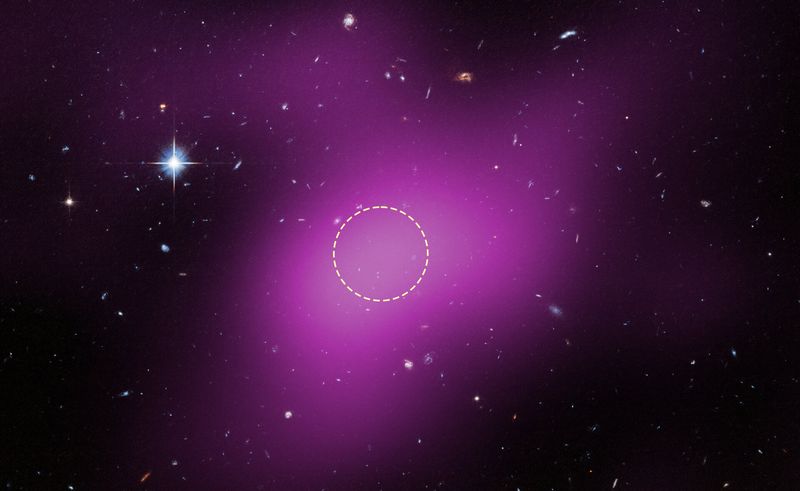
Cloud 9 does not behave like a typical nebula, and it refuses the script of a galaxy fragment. It is denser than familiar diffuse clouds, yet it lacks the gravitational fingerprints expected if stars were forming. That tension is exactly why astronomers are buzzing, because it pushes on the edges of current categories.
Some suspect remnant debris from a long past interaction that stripped material into the void. Others consider a transient formation, a temporary knot created by rare flows, shocks, or turbulence in intergalactic space. Hubble’s light measurements show reflection and absorption patterns that do not match standard templates.
The unusual signature hints at distinct chemistry or grain properties, possibly enriched by ancient supernova ejecta. Rather than force a fit, researchers are holding their fire and planning follow ups across infrared and radio bands. If surveys turn up more siblings, Cloud 9 could be the first flag of a hidden population.
Hubble earned this find by doing what it does best: cutting through Earth’s atmosphere to capture clean, stable images. Without atmospheric distortion, tiny brightness shifts stand out, and faint structures no longer smear into noise. That precision revealed Cloud 9 hiding among background galaxies and starlight.
Multiwavelength imaging let scientists compare how the object behaves in different bands, teasing out composition clues. Subtle changes in color and surface brightness popped, hinting at density variations and particle sizes. From there, it became obvious this was not just another dusty smudge.
Yes, newer telescopes like Webb add infrared superpowers, but Hubble rules in visible and ultraviolet for crisp morphology. Together they make a stronger team, cross checking measurements and filling gaps. Serendipity played a role, too, as astronomers chasing one target stumbled right into something stranger.
If Cloud 9 is truly new, you are looking at a shift in how matter might organize beyond galaxies. It suggests the universe hosts denser, more complex islands in the dark than standard models typically spotlight. That possibility touches galaxy evolution, intergalactic flows, and the quiet work of small scale physics.
Understanding its origin could illuminate stripping events, turbulence, or even interactions shaped by unseen dark matter. With each dataset, models can be tuned to match chemistry, density, and motion more faithfully. Sometimes a single outlier breaks the bottleneck that has stalled a field.
Astronomers are clear about the next step: verify, compare, and search wide for more examples. If Cloud 9 is rare, it remains a valuable laboratory. If it is common, then a hidden population may reshape the map of what floats between galaxies.



