 Unearth The Voyage
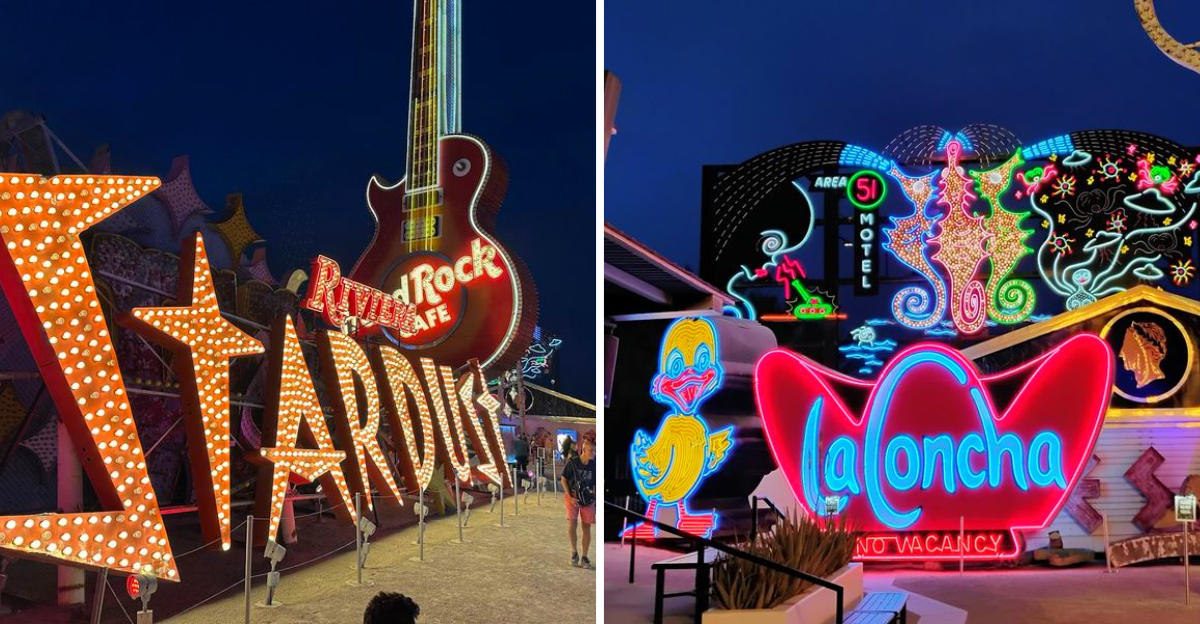
There is a place in Las Vegas where the flashy signs of a bygone era stand tall under the open Nevada sky, telling stories that no casino floor ever could. Old neon horses, glowing showgirls, and faded motel marquees line a gravel path that feels more like a time capsule than a typical museum visit.
The collection spans decades of Las Vegas history, from the gritty 1930s to the glittering excess of the late 20th century. If you have ever wondered what happened to all those iconic signs after the wrecking ball came through, this is exactly where they ended up, and the answer is far more fascinating than you might expect.
Where It All Began: Address, Location, and Story
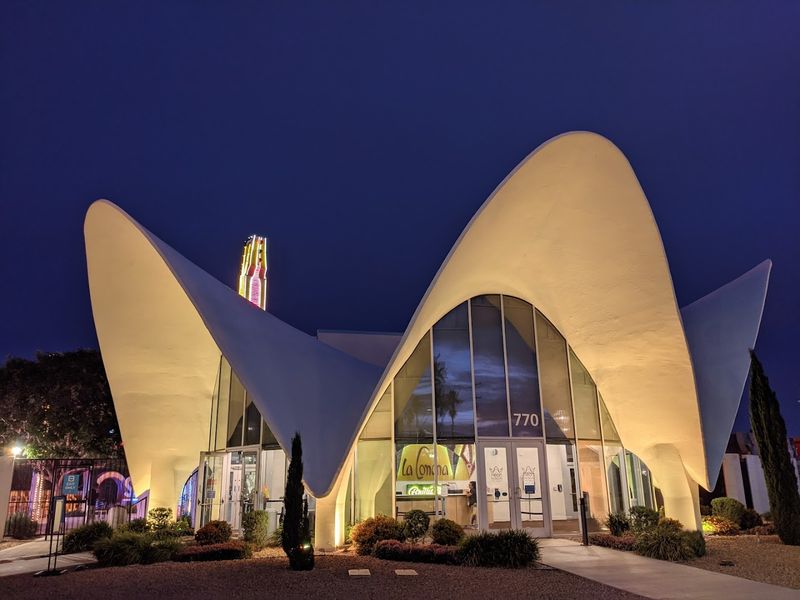
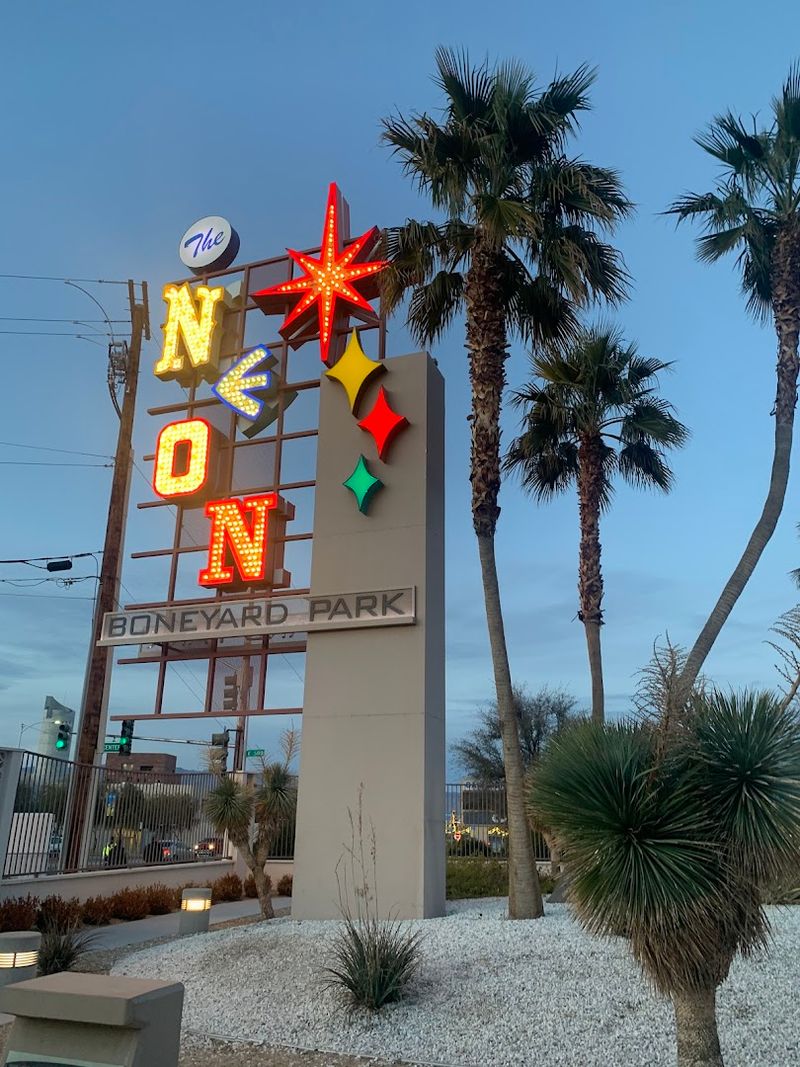
Right at 770 Las Vegas Blvd N, Las Vegas, NV 89101, The Neon Museum sits about a mile north of the famous Fremont Street, tucked along a stretch of Las Vegas Boulevard that feels a world away from the tourist bustle.
The museum was founded in 1996 as a nonprofit organization with a mission to collect, preserve, and exhibit iconic Las Vegas signs. The first sign donated to the collection was the iconic Hacienda Horse and Rider, and that single donation sparked what would grow into one of the most unusual outdoor collections in the entire American Southwest.
The idea was straightforward but powerful: instead of letting these massive, hand-crafted signs rust away in junkyards, preserve them as genuine cultural artifacts. Nevada has always had a flair for the dramatic, and this museum proves that the state’s creativity did not stop at the casino doors.
Unlike some museums that feel tucked away and forgotten, this one carries real civic pride. It sits in a city that reinvents itself constantly, yet somehow found the wisdom to look backward and say these pieces of history are worth saving for generations to come.
The Neon Boneyard: An Outdoor Gallery Like No Other
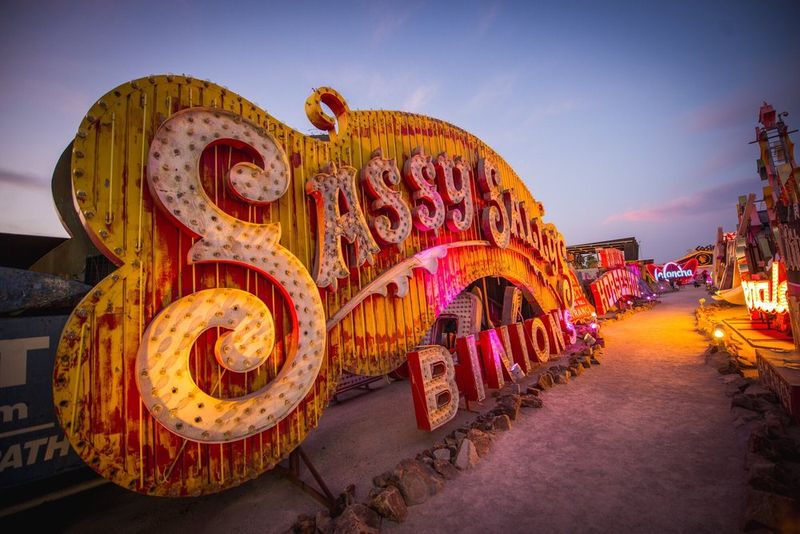
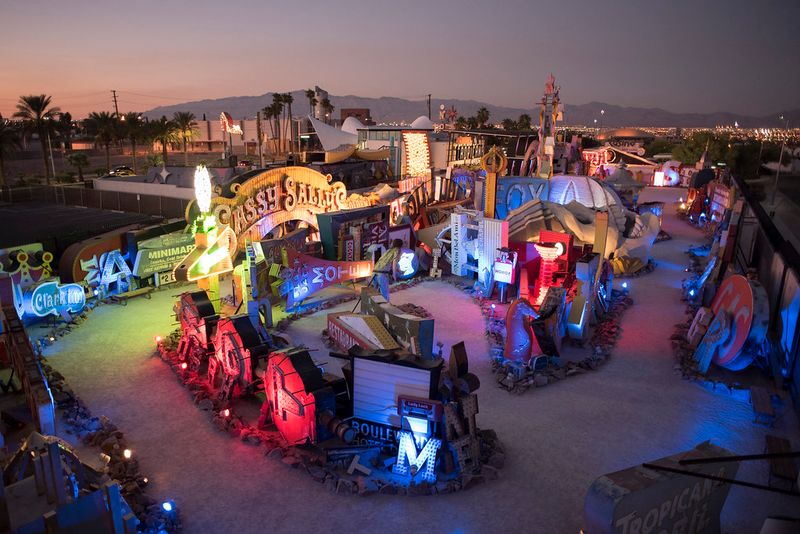
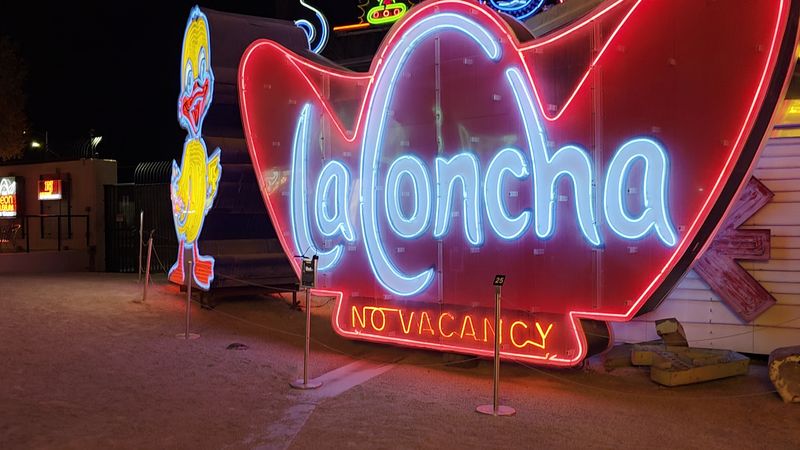
The heart of The Neon Museum Las Vegas is the Neon Boneyard, an outdoor space where more than 200 unrestored and partially restored signs rest in carefully arranged clusters across a gravel and dirt path.
The term “boneyard” might sound a little gloomy, but the reality is anything but. Faded pinks, dusty teals, and sun-bleached reds create a color palette that feels almost painterly against the wide Nevada sky.
Each sign is a physical artifact of a restaurant, motel, or casino that once defined the Las Vegas experience for thousands of visitors.
The path winds through the collection at a comfortable pace, and most visitors spend between 60 and 90 minutes exploring. Informational plaques accompany each sign, and a free audio guide available on your smartphone adds an extra layer of context that the plaques alone cannot fully provide.
The ground is made of pea gravel and packed dirt, so comfortable shoes are a smart choice. After a rare desert rain, the path can get muddy, but on a typical dry Nevada evening, the walk feels easy, unhurried, and genuinely memorable in a way that few tourist experiences manage to pull off.
The La Concha Lobby: A Mid-Century Marvel as the Welcome Center
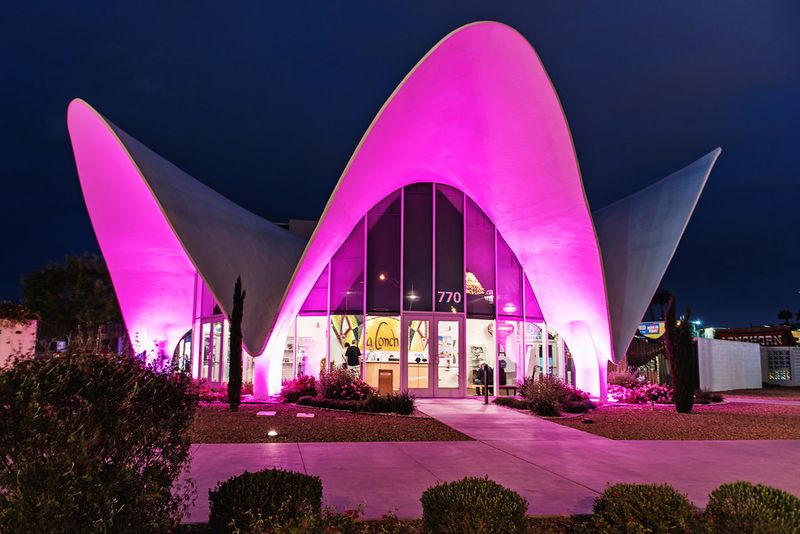
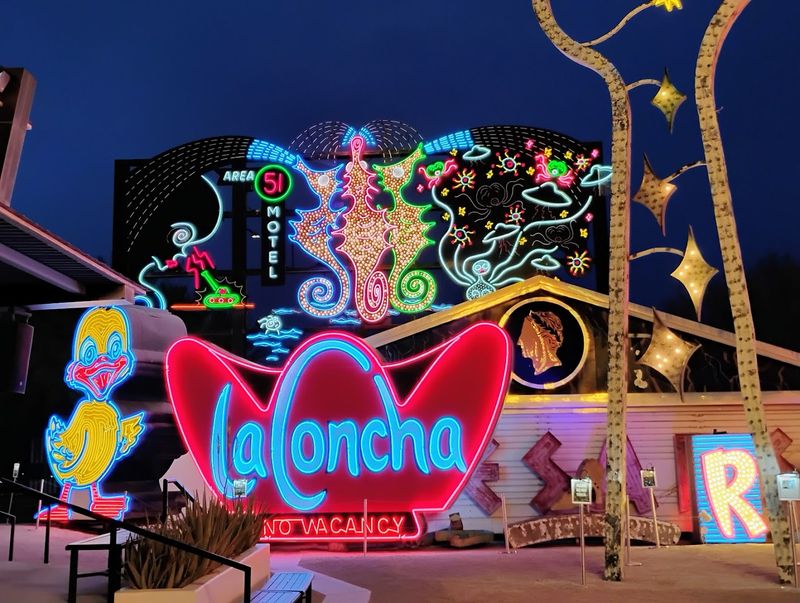
Before you even set foot in the Boneyard, the visitor center itself stops you in your tracks. The building is the original lobby of the La Concha Motel, a stunning example of Mid-Century Modern architecture designed by Paul Revere Williams and built in 1961.
The shell-shaped concrete structure was originally located further down the Strip, but when the motel was slated for demolition, preservationists worked to relocate the lobby to its current home at The Neon Museum Las Vegas in 2001. That decision alone speaks volumes about the museum’s commitment to saving pieces of the city’s architectural soul.
Inside, the curved walls and sweeping lines feel like something out of a classic science fiction film, in the best possible way. Staff members stationed here are genuinely enthusiastic about sharing its history, and more than one visitor has walked in expecting a simple ticket booth and walked out with a full appreciation for what Mid-Century design really meant.
The building is listed on the National Register of Historic Places, which makes it a landmark within a landmark. It is the kind of detail that turns a simple museum visit into something layered and surprisingly rich.
Guided Tours: The Best Way to Unlock Every Sign’s Secret
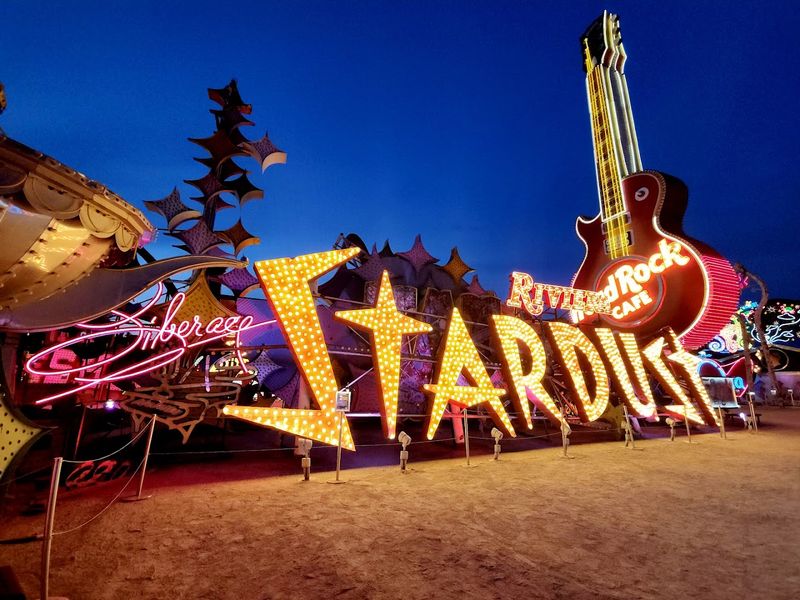
Self-guided exploration is perfectly valid here, but the guided tours offered at The Neon Museum Las Vegas take the experience to a completely different level. Knowledgeable guides bring each sign to life with stories about the casinos, restaurants, and personalities behind them, details that no plaque could ever fully capture.
Tour guides like Karla and Bob have become something of local legends among repeat visitors. Their enthusiasm for Las Vegas history is contagious, and they consistently share facts and anecdotes that leave guests with a dozen new things to look for as they explore the rest of the city afterward.
Tours are timed, which keeps the crowds manageable and gives each group room to breathe and actually look at the signs without jostling for space. Tipping your guide is strongly encouraged, and based on the quality of storytelling on offer, it feels like the least you can do.
Tickets can be purchased in advance online, and senior discounts are available. The museum’s website at neonmuseum.org lists current pricing and tour schedules, and booking ahead is especially wise on weekends or during busy holiday stretches when demand runs high.
Best Time to Visit: Golden Hour and the Magic of Twilight
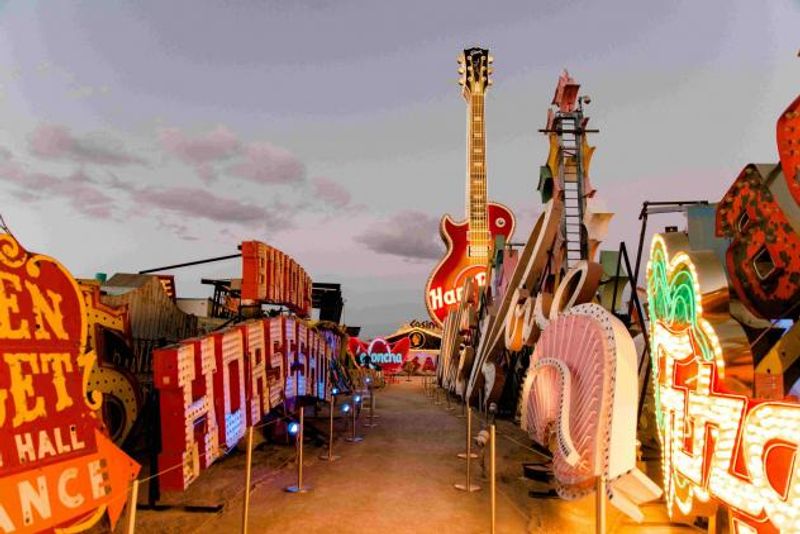
Timing your visit to The Neon Museum Las Vegas makes an enormous difference in what you actually experience. Arriving around sunset, roughly 30 minutes before the sky fully darkens, gives you the best of both worlds.
During the golden hour, natural light catches every curve and crack in the aging signs, highlighting details that pure darkness would hide. The faded pinks and teals that photographers rave about only truly pop when the sun is low and warm.
Then, as the sky deepens into navy blue and the restored signs flicker on, the whole atmosphere shifts into something electric and almost theatrical.
Daytime visits are cheaper and still worth the trip for photography enthusiasts who love shooting in natural light. Night visits show off the restored, functioning signs in full glowing glory, which is a completely different kind of spectacle.
The museum is open daily from 3 PM to 11 PM, giving visitors plenty of flexibility to choose their preferred lighting conditions.
Weeknights tend to be quieter, and visiting on New Year’s Day or other off-peak times can mean having wide stretches of the Boneyard almost entirely to yourself, which feels like a rare luxury in a city as crowded as Las Vegas.
Famous Signs and Their Fascinating Histories
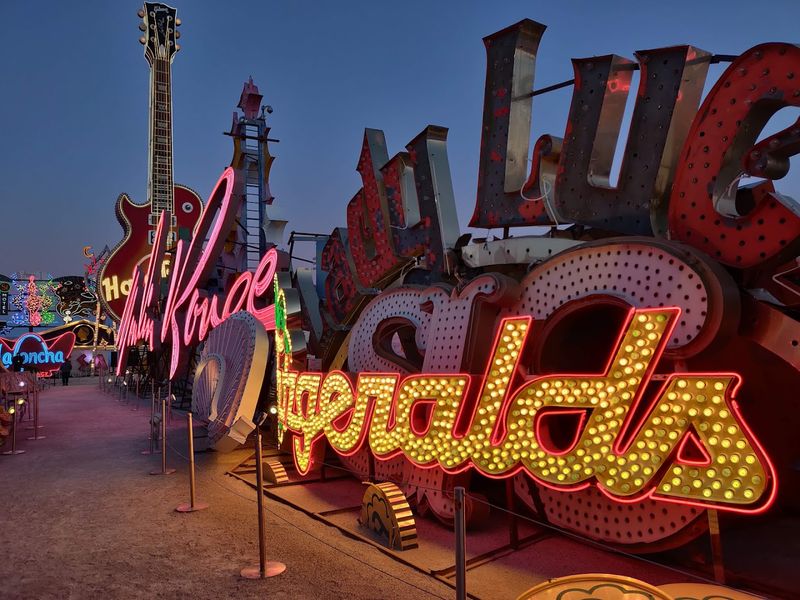
Every sign in the collection has a story, but a few stand out as genuinely historic touchstones. The sign from the Moulin Rouge is one of the most talked-about pieces in the entire Boneyard, and for good reason.
The Moulin Rouge was the first racially integrated casino on the Las Vegas Strip, opening in 1955. Its sign is not just a piece of neon craftsmanship; it is a reminder that Las Vegas history includes chapters of real social significance that go far beyond entertainment and spectacle.
Standing next to it feels different from standing next to a motel sign.
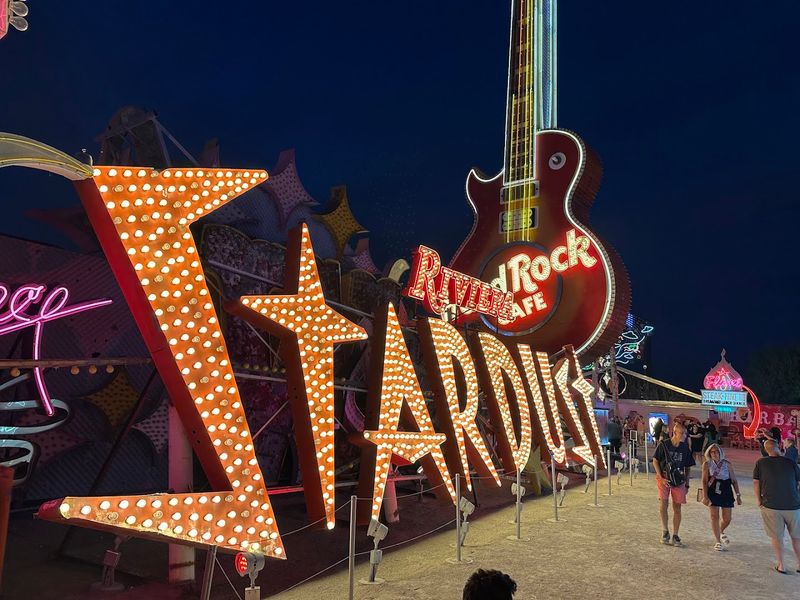
The Hard Rock Cafe guitar is another crowd favorite, especially for visitors who remember seeing it towering over the Strip before the venue closed. Spotting a sign you personally remember from a past visit to Las Vegas is a surprisingly emotional experience that catches many people off guard.
There is also the giant skull of the pharaoh from the original Treasure Island, which gives the collection an unexpectedly whimsical corner. Each piece was hand-crafted by skilled artisans, and the level of detail visible up close is something that photographs simply cannot do justice to.
Practical Tips for Getting There and Getting Around
Getting to The Neon Museum Las Vegas requires a little planning, and the approach you take can genuinely affect how your evening starts. The museum is about a mile north of Fremont Street, which sounds walkable, but the route passes through some stretches that feel isolated, especially after dark.
Most visitors recommend arriving by rideshare, taxi, or personal vehicle rather than on foot. The museum has a small on-site parking lot that fills quickly, but a larger open lot nearby handles the overflow without much hassle.
The convention center parking next door is another option that several visitors have flagged as easier and less stressful than the main lot.
For those who do choose to walk from Fremont Street, going in a group is the sensible approach. The walk passes alongside a highway on-ramp and through a few quiet blocks that feel more comfortable with company.
Solo walkers, particularly near nightfall, are better served by a quick rideshare.
The museum’s phone number is 702-387-6366 if you need to call ahead with questions. The staff are consistently described as friendly and helpful, so do not hesitate to reach out before your visit if anything is unclear about directions or access.
The Free Audio Guide: Your Personal Storyteller Through the Boneyard
One of the most underrated features of a visit to The Neon Museum Las Vegas is the free audio guide available to all visitors at no extra charge. Accessible through your smartphone, it provides narration for many of the signs throughout the Boneyard and is offered in English as well as several other languages.
Bringing your own earbuds makes the experience significantly more immersive. With the audio playing directly in your ears, it becomes easy to tune out background chatter and fully absorb the stories behind each sign.
The narration covers the cultural and historical context of the casinos, motels, and restaurants that once displayed these pieces, adding a richness that the physical plaques alone cannot match.
That said, the plaques themselves contain slightly more detail than the audio in some cases, so reading them carefully alongside the narration gives the most complete picture. The combination of visual information, audio storytelling, and the physical presence of the signs creates a layered experience that rewards visitors who take their time.
The audio guide is especially valuable for first-time visitors who arrive without a guided tour booking, turning what might otherwise feel like a simple walk through a junkyard into something genuinely educational and entertaining from start to finish.
Family-Friendly Fun Amid Decades of Las Vegas History
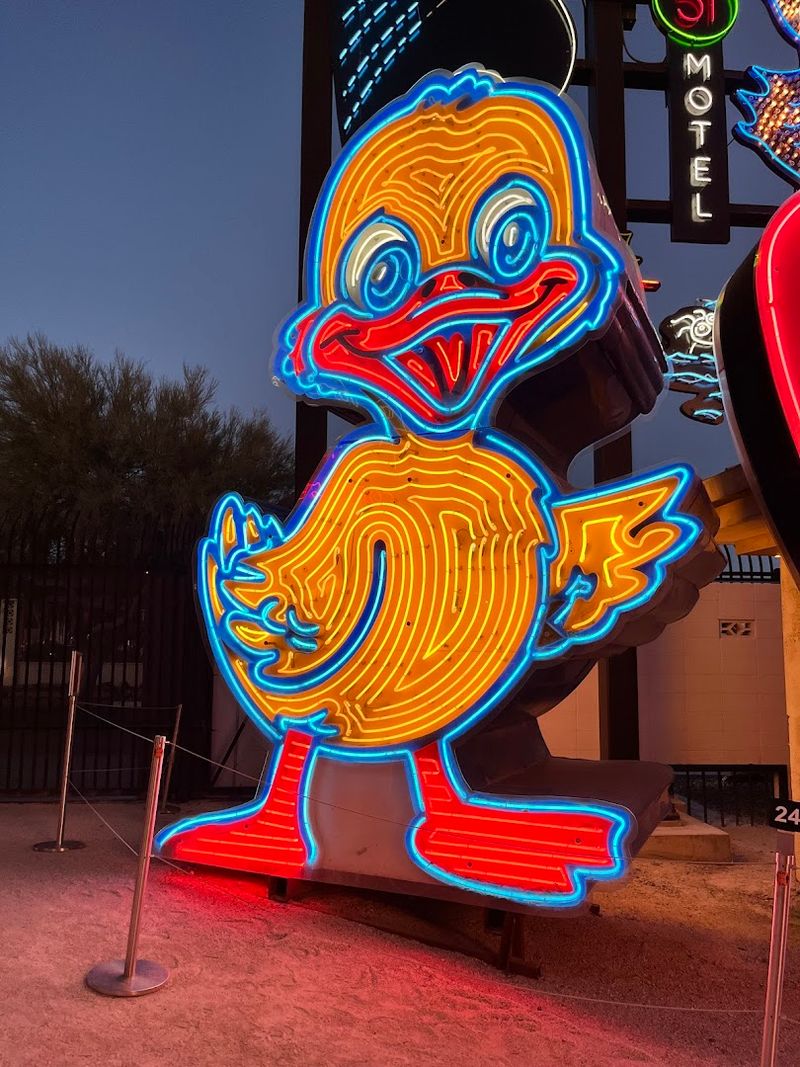
The Neon Museum Las Vegas works surprisingly well as a family outing, and the signs themselves do a lot of the heavy lifting when it comes to keeping younger visitors engaged. The sheer scale of some of the pieces, towering letters and massive figures that once hung over busy streets, grabs attention in a way that traditional museum exhibits rarely do.
Kids respond to the colors, the lights, and the slightly surreal quality of seeing giant signs just sitting in an open field. Parents get the historical context through the plaques and audio guide, while children get a visual spectacle that feels more like an adventure than a school trip.
The museum is also a natural conversation starter between generations. More than one visitor has described bringing a parent or child and using the signs as a vehicle for sharing personal memories of Las Vegas from different eras.
That kind of cross-generational connection is hard to manufacture and genuinely special when it happens organically.
Plan for about 90 minutes with kids in tow, and consider booking a guided tour to keep the group focused and moving at a comfortable pace. The gift shop near the exit is small but well-stocked, and children tend to linger there happily on the way out.
Weddings and Special Events Under the Neon Glow
Not every museum doubles as a wedding venue, but The Neon Museum Las Vegas has carved out a genuinely spectacular niche in that space. The outdoor area across from the main Boneyard, where many of the older signs are displayed, provides a backdrop that no conventional venue can replicate.
The Lady Luck sign in particular has become a beloved backdrop for ceremonies, its retro lettering and warm glow adding a distinctly Las Vegas flavor to the occasion. Ceremonies held in the late afternoon transition naturally into evening, with the signs gradually illuminating as the sky darkens, creating a built-in light show that costs nothing extra.
The museum offers several event packages for both daytime and evening occasions, and the coordination team has earned strong praise for keeping things running smoothly and on schedule. Photographers consistently note that the variety of sign backdrops gives them almost unlimited creative options within a relatively compact space.
Photo shoots, elopements, and larger family ceremonies have all found a home here. The combination of historic artifacts, open sky, and that unmistakable neon glow creates an atmosphere that feels celebratory without being over-the-top, which is a genuinely difficult balance to strike in a city as theatrical as Las Vegas.
The Broader Context: Las Vegas History Beyond the Strip
A visit to The Neon Museum Las Vegas does more than show you pretty lights. It reframes your understanding of the entire city, revealing a history that stretches far beyond the glossy surface of the modern Strip.
The signs in the collection represent Las Vegas from the 1930s through to the present day, charting the city’s transformation from a small desert railroad town into a global entertainment capital. Each era brought its own design sensibility, and the progression from hand-painted lettering to elaborate neon sculptures to the backlit LED boards of the modern age is visible and tangible as you walk through the Boneyard.
Several visitors have noted that pairing a trip here with a visit to the nearby Mob Museum creates a remarkably complete picture of Las Vegas history. The Mob Museum covers the political and social undercurrents, while The Neon Museum provides the visual and commercial layer that sat on top of all of it.
Together, they tell a story that neither could tell alone.
For anyone curious about how cities develop their identities and then sometimes lose them to progress, this collection offers a surprisingly moving answer. Nevada has always been a state of reinvention, and these signs are proof that some things are worth holding onto even as everything else changes.
Closing Thoughts: Why This Place Stays With You
There are plenty of things to do in Las Vegas, but very few of them leave you thinking about the city differently on your way home. The Neon Museum Las Vegas manages that rare trick with what seems like effortless grace.
The combination of open-air setting, hand-crafted artifacts, and genuinely passionate staff creates an experience that feels personal rather than packaged. You leave knowing something real about the city, not just the version of it that the casinos want you to see.
That honesty is refreshing in a place built almost entirely on illusion.
The museum is rated 4.4 stars across more than 13,000 reviews on Google, which is a remarkable achievement for a nonprofit organization operating in one of the most competitive tourist markets in the world. That rating reflects something genuine about the quality and consistency of the experience on offer.
From the La Concha lobby to the Moulin Rouge sign to the faded glow of a hundred forgotten motels, every piece in the collection earns its place. Much like the spirit of Oklahoma that drives people to preserve their cultural roots and heritage, this museum stands as proof that some things are worth fighting to keep, and that history told through neon light can be just as powerful as history told through words.



