Franconia Notch State Park packs many of New Hampshire’s most famous natural attractions into one unforgettable destination. Visitors can walk through the towering granite walls of Flume Gorge, ride Cannon Mountain’s aerial tramway, hike the legendary Franconia Ridge, relax beside Echo Lake, and explore glacial features that have been shaping the landscape for thousands of years.
Stretching through the heart of the White Mountains, the park combines dramatic scenery with options for every type of visitor, from short family walks to challenging mountain hikes. Scenic overlooks, waterfalls, peaceful lakes, old-growth forest, and an eight-mile recreational trail make it easy to spend an entire day or even a full weekend exploring one of New England’s most celebrated outdoor destinations.
Here’s why Franconia Notch State Park continues to rank among New Hampshire’s must-visit destinations for hikers, road trippers, photographers, and anyone who loves spectacular mountain scenery.
The Lay of the Land: What Makes This Notch So Remarkable
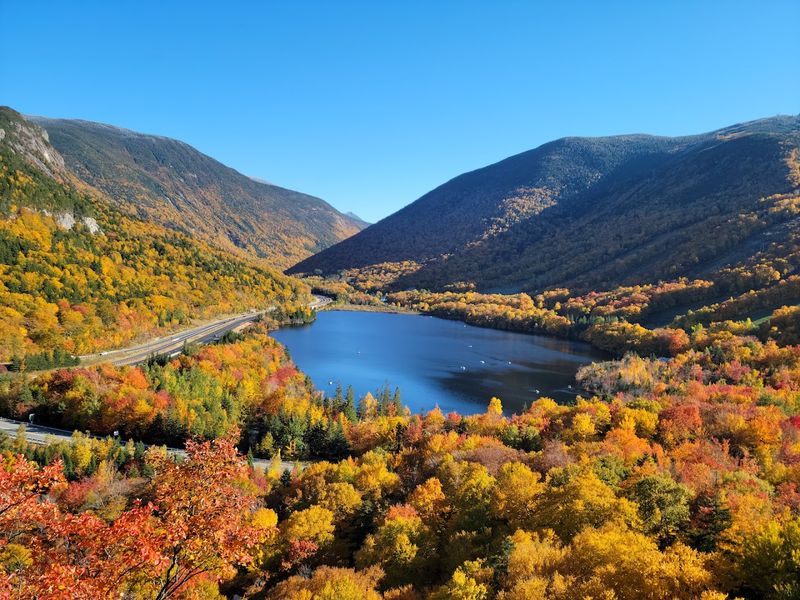
Carved by massive glaciers over tens of thousands of years, Franconia Notch is a textbook example of a U-shaped glacial valley, and standing at its floor, you can actually feel the scale of what ancient ice accomplished here.
The park sits at Flume Gorge, Daniel Webster Highway, Lincoln, NH 03251, threading through the White Mountain National Forest between two powerful mountain ranges: the Kinsman Range to the west and the Franconia Range to the east. That geography creates a natural corridor where weather, wildlife, and geology all collide in spectacular fashion.
The dominant rock throughout the park is Conway Granite, a coarse-grained pink granite of Jurassic age that gives the cliffs and canyon walls their distinctive warm color. At roughly eight miles long, the park is compact enough to explore in a weekend yet rich enough to reward a week of attention. Every turn in the road reveals something worth stopping for.
Cannon Mountain: The Giant You Can Ride to the Top
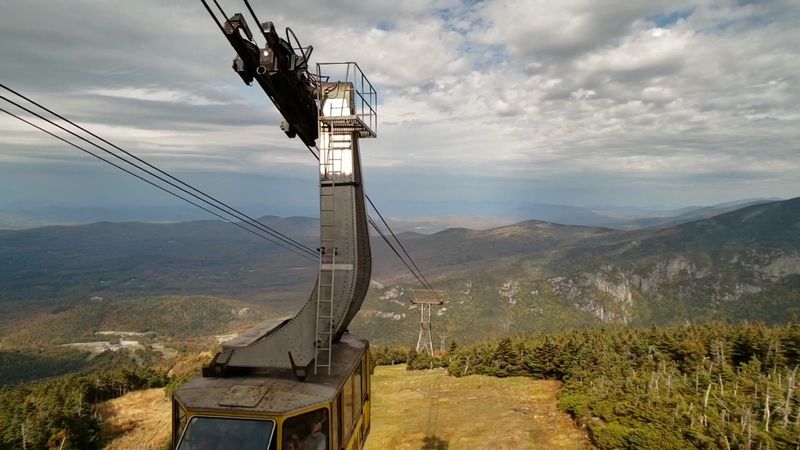
At 4,080 feet, Cannon Mountain is the tallest and most commanding peak inside the park, and the fact that you can ride a tramway to its summit without lacing up a single hiking boot makes it one of the most accessible high-elevation experiences in all of New England.
The Cannon Mountain Aerial Tramway has been ferrying sightseers skyward for decades, and the commentary from the operators on the way up adds genuine context to what you are seeing below. On a clear day, the summit views stretch across layers of mountain ridges in every direction, a sight that feels hard to fully describe once you are standing in it.
The park is also home to a state-owned ski area that draws winter crowds to the same slopes. Note that as of late 2025, the tramway is undergoing a full replacement, so check current operating status before planning your visit around it. The mountain itself, however, is always worth the trip.
Franconia Ridge and Mount Lafayette: Where the Appalachian Trail Gets Serious
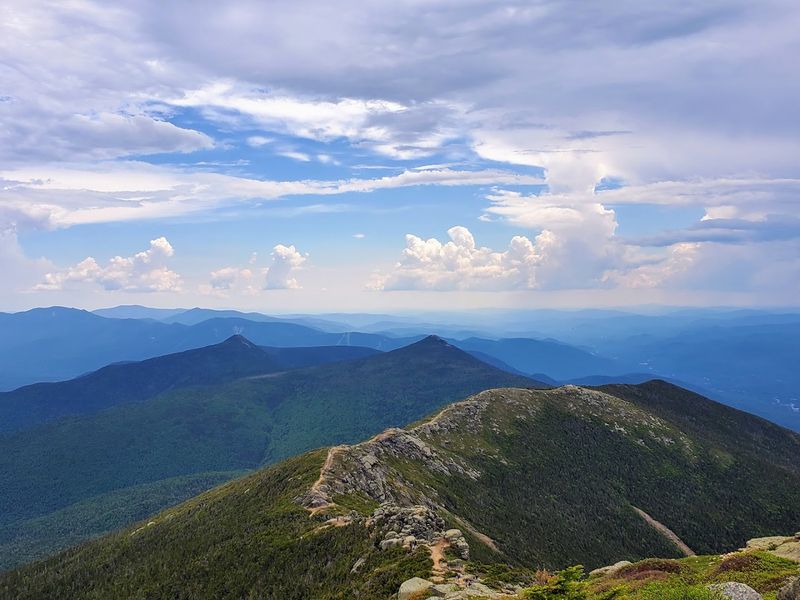
Mount Lafayette tops out at 5,249 feet, making it the highest summit on the Franconia Ridge and one of the most rewarding destinations for serious hikers in the northeastern United States. The Franconia Ridge Loop connects Little Haystack Mountain, Mount Lincoln, and Mount Lafayette along an exposed ridgeline that is part of the Appalachian Trail.
The full loop typically takes experienced hikers around eight hours, and the weather on the ridge can shift dramatically from conditions in the valley below. Clouds move fast up there, and temperatures drop significantly, so packing layers even on a warm summer day is not optional, it is essential.
The views on a clear day from the ridge are the kind that stop conversations mid-sentence. You look out over the Pemigewasset Wilderness to the east and the rolling peaks of the Kinsman Range to the west, with nothing but open sky above you. Completing this loop earns every bit of the satisfaction hikers carry back down to the trailhead.
Cannon Cliffs: The Tallest and Most Respected Cliffs in New England
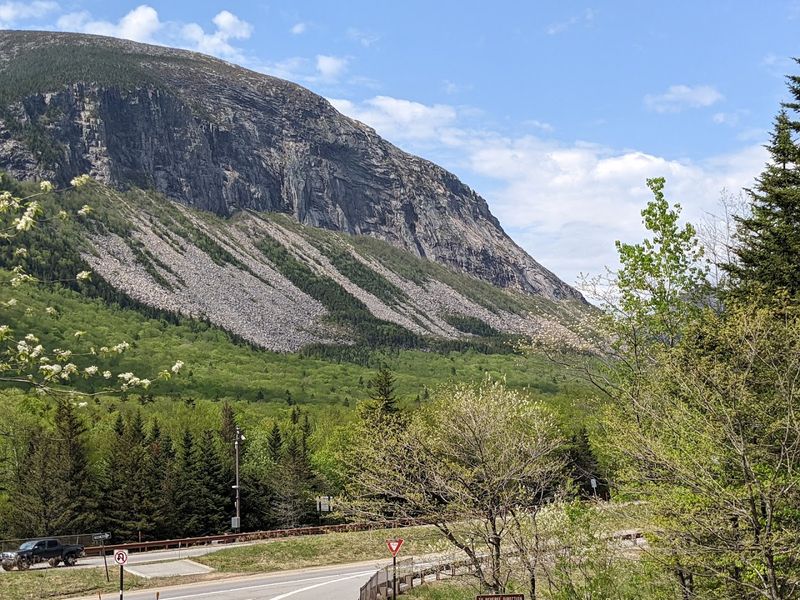
Rock climbers from across the country make pilgrimages to Cannon Cliffs specifically because of their reputation as the tallest and most serious cliffs in New England. The east-facing wall rises dramatically above the valley floor, offering routes that range from challenging to genuinely demanding, with rockfall being a real and ongoing concern that keeps every climber alert.
These cliffs were also the original home of the Old Man of the Mountain, the famous rock profile that appeared on New Hampshire license plates and quarters for generations before the formation collapsed in 2003. A memorial plaza now honors the Old Man’s legacy near Profile Lake, where the reflection of the formation once appeared in the water below.
Even for visitors who have no intention of climbing, standing at the base of Cannon Cliffs and tilting your head back to take in the full height of the wall is its own kind of experience. The cliffs have a raw, ancient energy that no photograph quite captures honestly.
Flume Gorge: 800 Feet of Granite Walls and Rushing Water
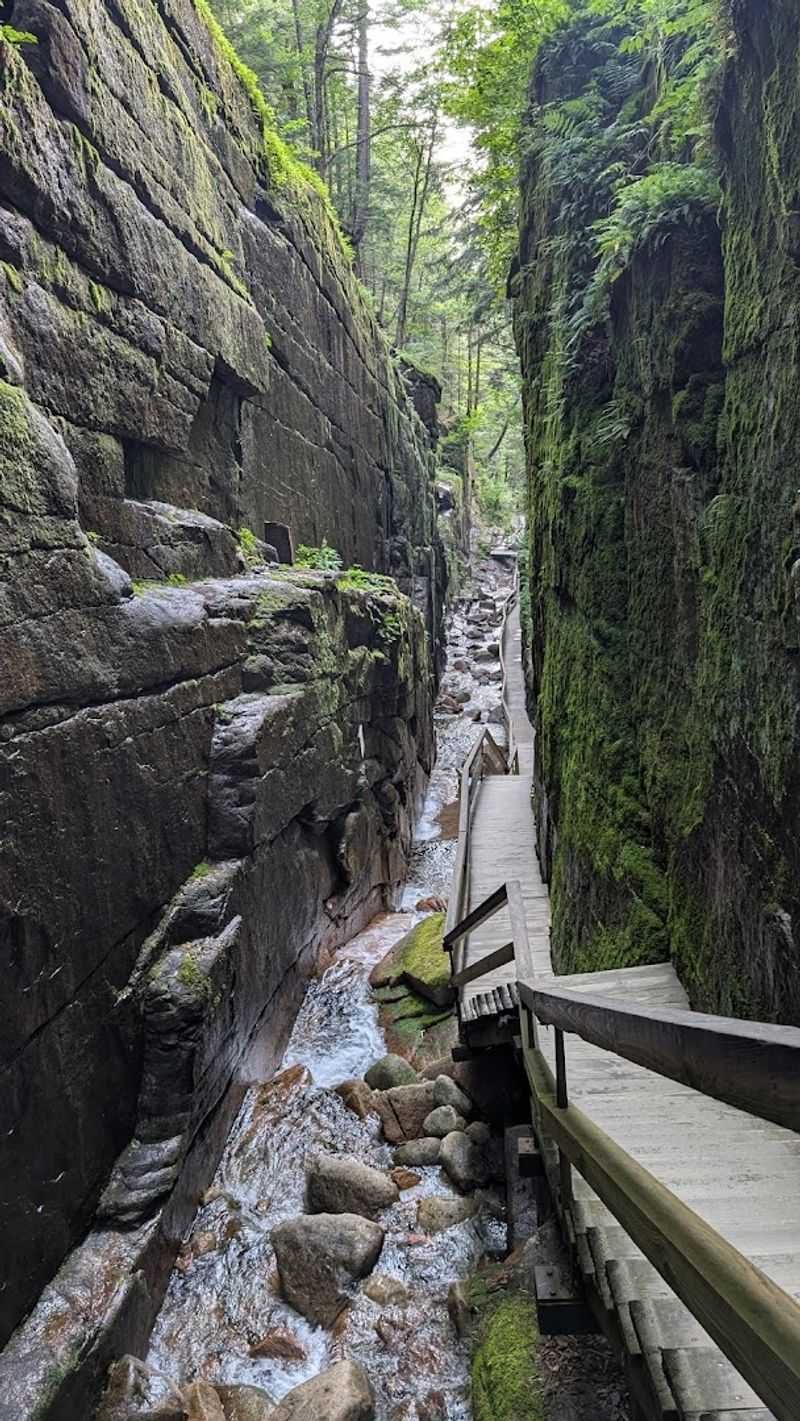
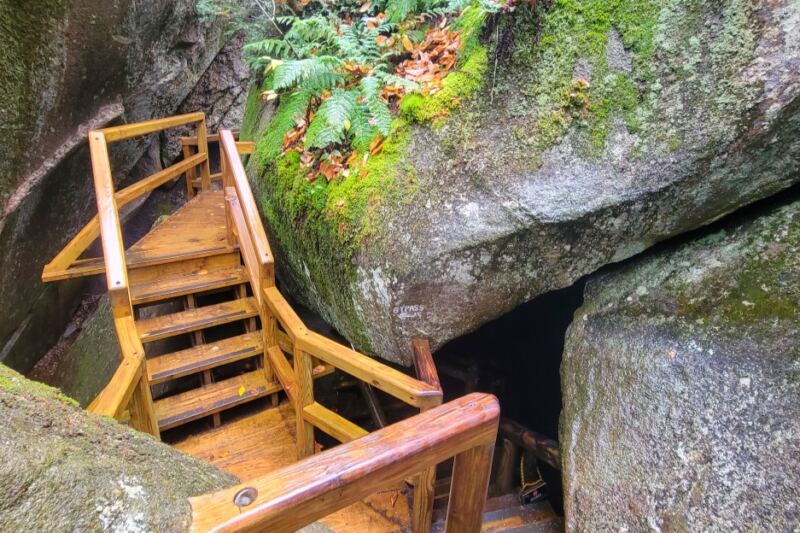
Few natural features in the northeastern United States pack as much drama into such a small space as Flume Gorge. The gorge stretches 800 feet in length, with Conway Granite walls rising 70 to 90 feet on either side, yet the walls are only 12 to 20 feet apart at the base, creating a narrow, cathedral-like passage that feels unlike anything else in the region.
The gorge was formed when molten basalt intruded into the granite, and erosion gradually wore away the softer material, leaving the dramatic channel visitors walk through today on a well-maintained boardwalk. Cold water rushes along the floor, and the air inside stays noticeably cooler than the surrounding forest, which makes it a surprisingly refreshing stop on a hot summer afternoon.
The full Flume Gorge loop trail covers about two miles and includes covered bridges, waterfalls, and forested paths beyond the gorge itself. The visitor center at the entrance is clean, well-organized, and a genuinely helpful starting point for anyone new to the park.
The Basin: A Glacial Pothole That Has Been Spinning for 25,000 Years
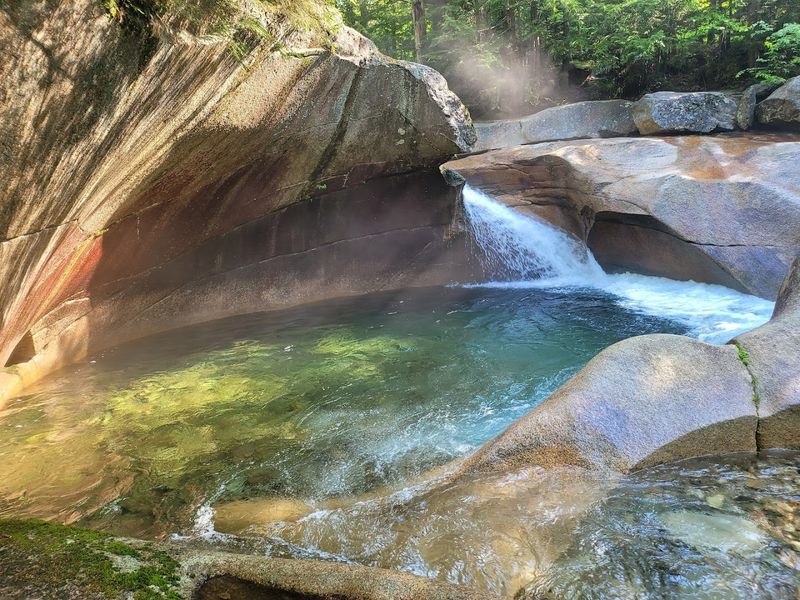
Some geological features require a long explanation to appreciate. The Basin is not one of them. One look at this 30-foot-wide, 15-foot-deep circular pothole carved into the bedrock of the Pemigewasset River, and the story tells itself instantly.
Melting glaciers released enormous volumes of water and sediment roughly 25,000 years ago, and the swirling action of that water and rock gradually drilled this perfect bowl into the granite riverbed. The result is one of the most photogenic natural features in New Hampshire, with smooth curved walls and clear water that shifts color depending on the light.
A short, paved path leads from the parking area to the Basin overlook, making it one of the most accessible highlights in the entire park. Families with young children and visitors with limited mobility can reach it without difficulty. The Pemigewasset River flows around and through the Basin in a way that genuinely earns the word mesmerizing, especially after a rain when the current runs strong and loud.
Echo Lake and Profile Lake: Two Very Different Kinds of Waterfront
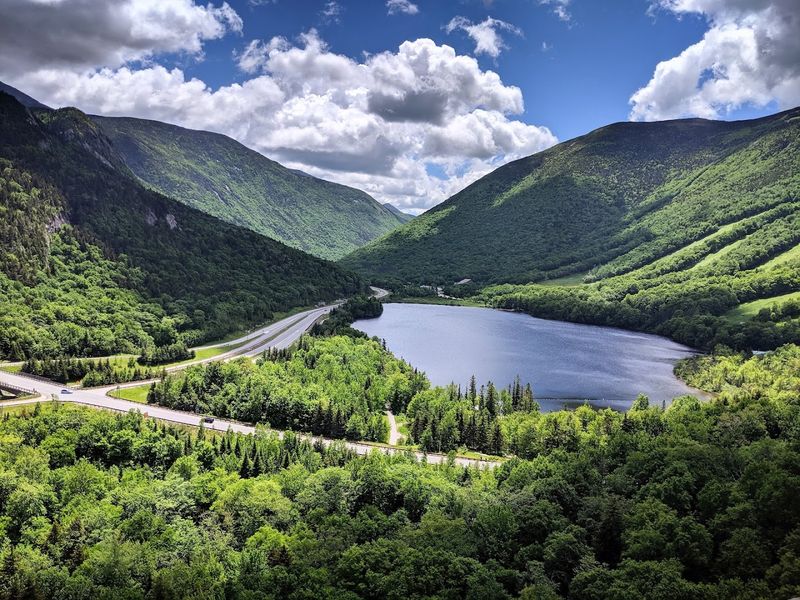
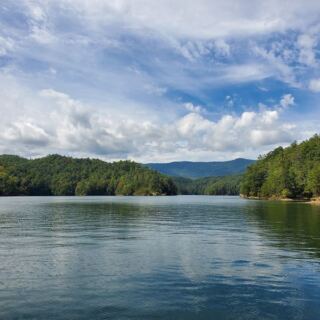
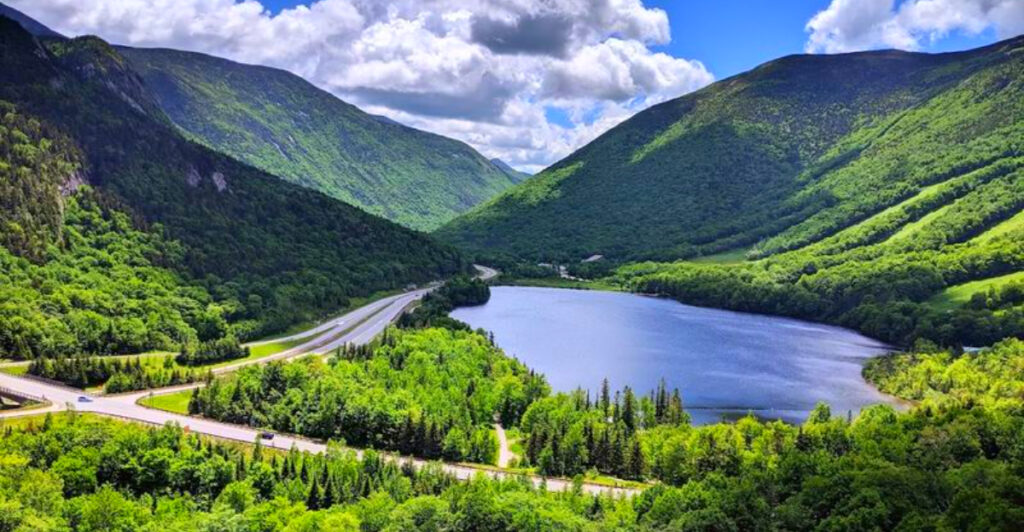
Echo Lake sits at the base of Cannon Mountain and offers one of the most scenic swimming spots in New Hampshire, with views of Mount Lafayette and Cannon Mountain framing the water on either side. The lake has a sandy beach, and visitors can rent canoes and kayaks during the summer season, making it a genuinely relaxing destination after a long hike.
Profile Lake, a short drive south, has a completely different personality. Quieter and smaller, it sits directly below Cannon Cliffs and was once famous as the spot where the reflection of the Old Man of the Mountain appeared in the water. Fishing is popular here, and the calm surface makes for excellent photography, especially in early morning light.
Both lakes benefit from their mountain settings in ways that flatland lakes simply cannot replicate. The surrounding peaks create a natural amphitheater effect, and on still mornings, the reflections on either lake are sharp enough to make you question which way is up. Kayaking on Echo Lake at sunset is a memory worth planning your whole trip around.
Lonesome Lake: The Rewarding Hike With a View Worth Every Step
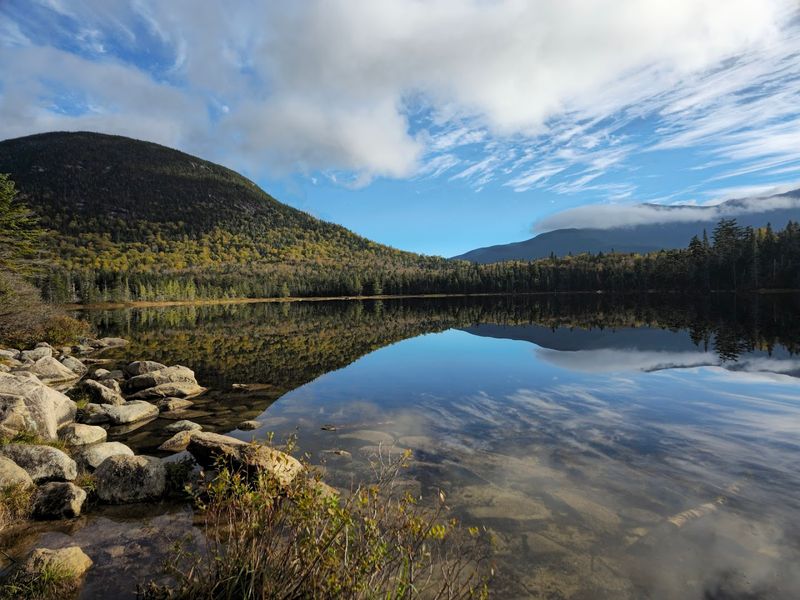
The trail to Lonesome Lake is one of those hikes that builds anticipation with every uphill step and then pays off completely the moment the trees open up and the lake comes into view. The route climbs roughly 1,000 feet over about 1.6 miles from the Lafayette Place Campground trailhead, passing through a beautiful northern hardwood and boreal forest along the way.
At the top, Lonesome Lake sits in a natural bowl with the Franconia Ridge rising sharply behind it, giving hikers a front-row view of the peaks they may have already climbed or are still planning to tackle. The Appalachian Mountain Club maintains a hut nearby, and the area around the lake is peaceful in a way that feels genuinely earned after the climb.
Early morning visits reward patience with exceptional light on the water and a real chance of seeing wildlife before the trail gets busy. The Basin Cascade Trail connects nearby, giving hikers the option to extend the day with additional waterfalls and forest scenery on the way back down.
Eagle Cliffs and Artists Bluff: The Views That Require Less Effort
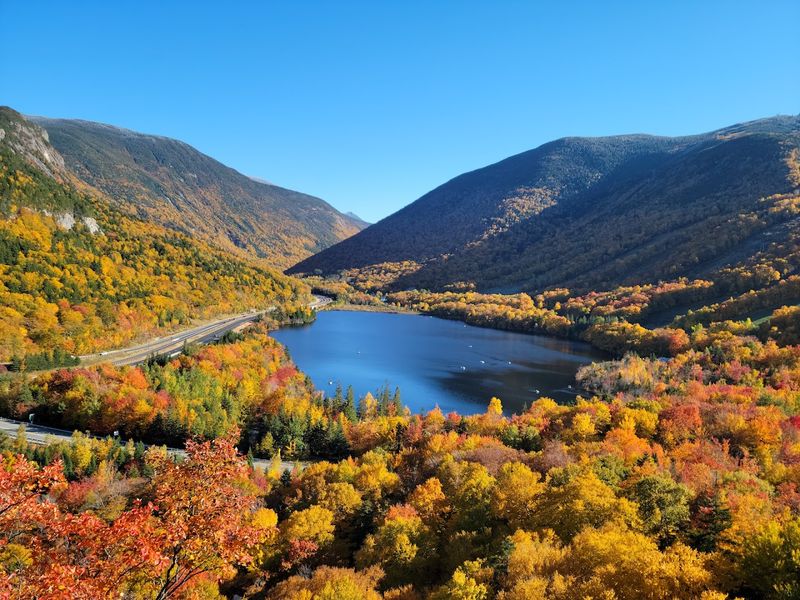
Not every spectacular view in this park requires an eight-hour commitment and a full pack of gear. Artists Bluff sits above Echo Lake and offers a sweeping panorama of Cannon Mountain, the notch, and the surrounding ridgelines via a trail that most reasonably fit visitors can complete in under two hours.
The short offshoot to Bald Mountain Peak connects to the same loop and adds another angle on the same stunning scenery, making the combined route one of the best value hikes in the park in terms of effort versus reward. Eagle Cliffs, visible on the east side of the notch opposite Cannon Mountain, are named for the eagles that occasionally roost there, and spotting one from the Artists Bluff viewpoint is the kind of bonus that makes a good hike feel extraordinary.
The fall foliage season transforms this particular viewpoint into something almost otherworldly, with the full width of the notch filled with orange, red, and gold. Visitors who time their trip for mid-October consistently describe the Artists Bluff view as one of the finest autumn scenes in New England.
The Recreational Trail: Eight Miles of Car-Free Scenery
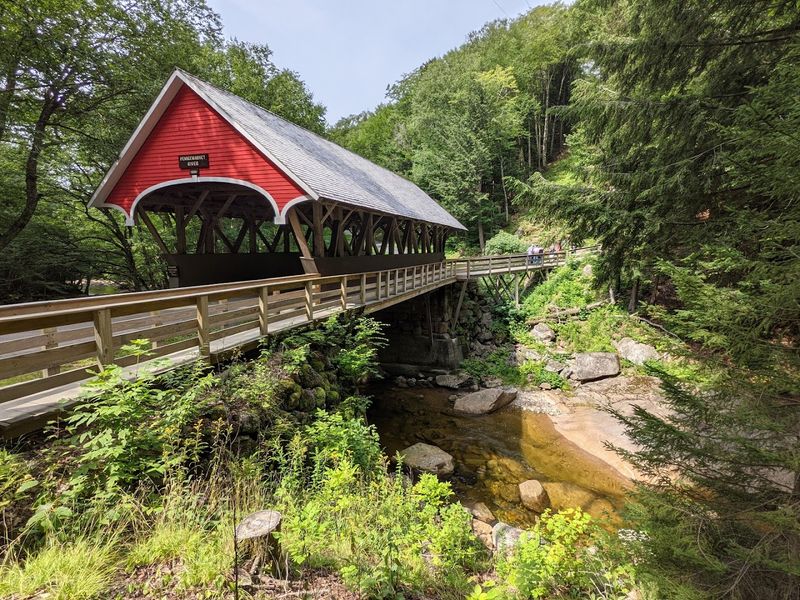
The Franconia Notch Recreational Trail runs the full eight-mile length of the park on a paved, car-free path that connects most of the major attractions without requiring visitors to get back in their vehicles between stops. Cyclists, inline skaters, joggers, and walkers all share the trail, and the route passes Profile Lake, Echo Lake, the Basin, and the Flume Gorge visitor center along the way.
Renting a bike and riding the full length of the trail is one of the best ways to experience the park at a relaxed pace while still covering a lot of ground. The relatively flat terrain along the valley floor makes it manageable for most fitness levels, though a few gentle grades appear near the northern end.
The trail also provides some of the best unobstructed views of Cannon Cliffs and the surrounding ridgelines because the open corridor of the notch frames the mountains on both sides simultaneously. On a clear autumn afternoon, riding this path with the peak colors blazing on either side is about as close to a perfect outdoor experience as this part of New England offers.
Old-Growth Forest and Wildlife: The Quiet Surprises Between the Big Attractions
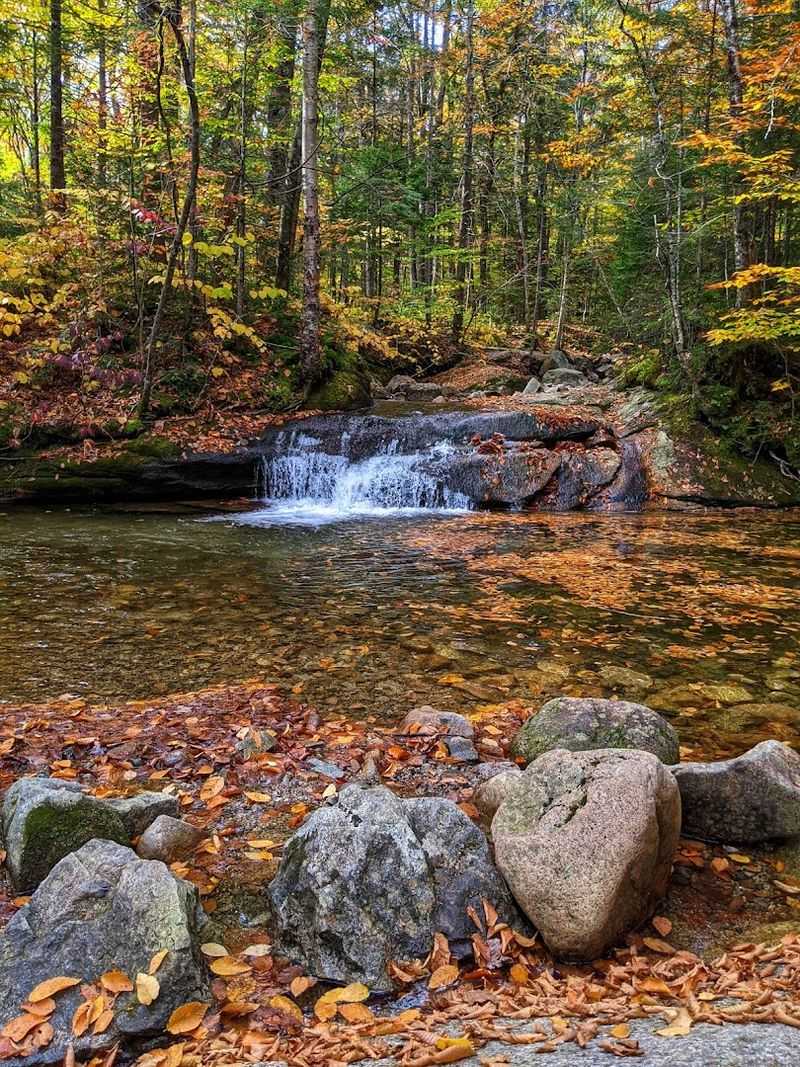
Between the famous gorges and mountain summits, Franconia Notch preserves something quieter and equally remarkable: remnants of old-growth forest with trees exceeding 250 years of age. These sections of forest have a different character than younger woodlands, with thick, moss-covered trunks, layered canopies, and a stillness that feels genuinely ancient.
Wildlife moves through the park regularly, and patient visitors have reasonable chances of spotting white-tailed deer, moose near wetland areas, and various bird species including the eagles that give Eagle Cliffs their name. The park also contains glacial erratics, boulders deposited far from their original locations by retreating glaciers, including the formations known as Boise Rock and The Cannon.
One practical note worth taking seriously: ticks are present throughout the park, particularly in brushy and forested areas. Checking yourself and any pets thoroughly before returning to your vehicle is a habit worth building before your first trail step, not after. The wildlife and forest rewards are absolutely worth the attention, just go in prepared.
Share this story