 Unearth The Voyage
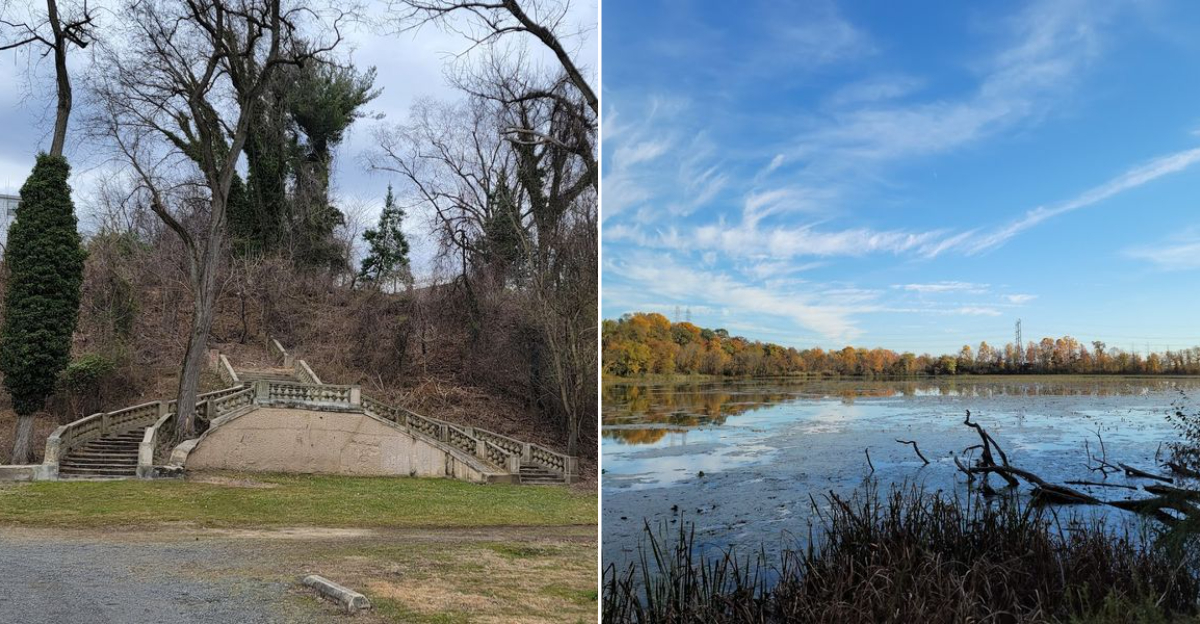
Tucked away in Hamilton Township, New Jersey, there is a park that does not look like much from the road, but once you step onto its trails, you start noticing things that do not quite belong. A set of white stone stairs rising out of nowhere.
A crumbling structure swallowed by vines. The ghost of what used to be a lively amusement park, now quietly reclaimed by wetlands and wildlife.
This park sits along the Delaware and Raritan Canal, and it carries more history per square foot than most parks three times its size. What makes it special is not just the ruins or the trails, it is the way the whole place feels like a puzzle waiting to be solved, one overgrown path at a time.
This article covers everything worth knowing before you go.
Where Exactly This Park Lives
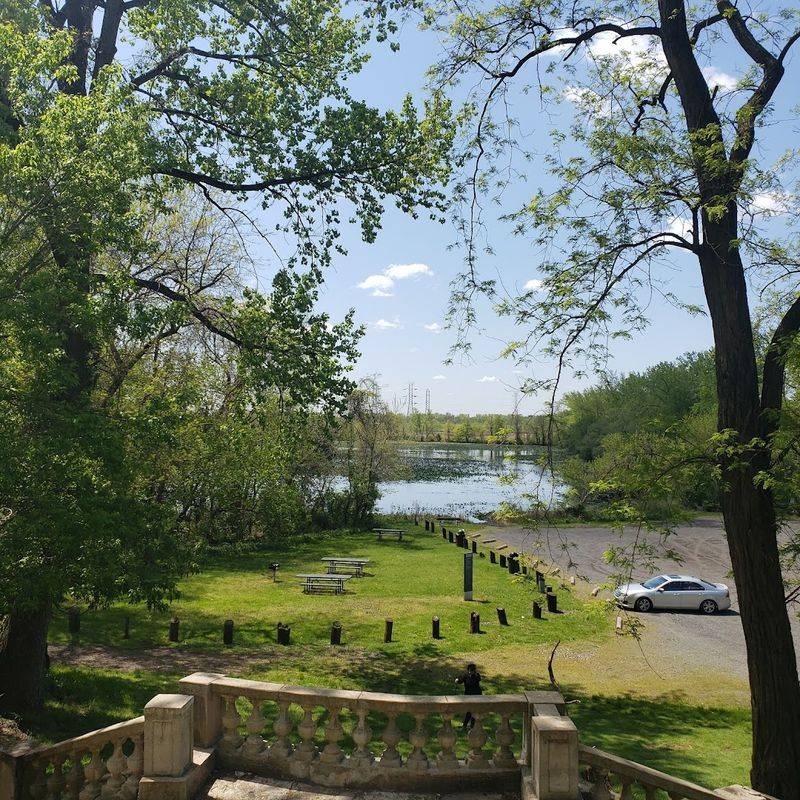
John A. Roebling Memorial Park is located in Hamilton Township, NJ 08610, managed by the Mercer County Park Commission.
The park sits along the Delaware and Raritan Canal feeder, placing it right at the edge of a freshwater marsh system that stretches toward the Delaware River.
Getting there is straightforward, and once you arrive, a small parking area gives you access to the main trail network without much fuss.
The park is open every day of the week from 6 AM to 9 PM, which means early morning walks and late evening strolls are both on the table.
Hamilton Township PD keeps a regular presence in the area, so the park maintains a calm, secure atmosphere that families and solo hikers both appreciate.
Its official page through Mercer County lists current updates, trail maps, and facility details for anyone planning ahead at mercercounty.org.
The Amusement Park That Time Forgot
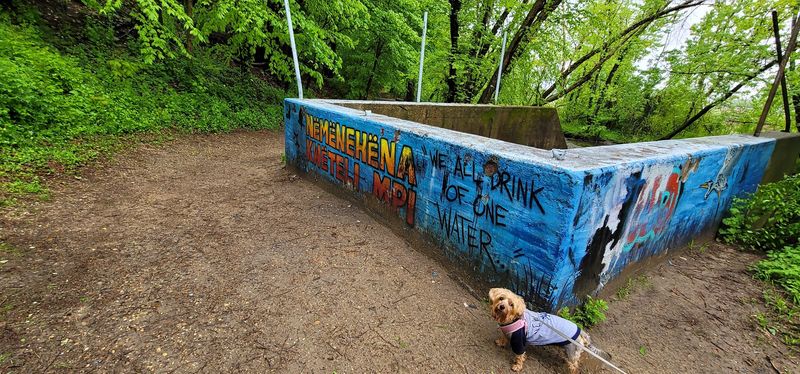
Before it became a peaceful nature preserve, this land had a very different personality.
In the early 20th century, the area that is now Roebling Memorial Park was home to White City, an amusement park that drew crowds from across the region.
White City operated along the canal and offered rides, entertainment, and outdoor recreation to residents of the growing industrial towns nearby.
When the park eventually closed, the structures did not disappear overnight. They stayed, slowly absorbed by the surrounding landscape over the following decades.
Today, those remnants are part of what makes the trail system so unusual. Concrete staircases lead to nothing.
Foundations sit half-buried under moss and soil.
The contrast between the cheerful history and the current quiet of the marsh gives the whole place an atmosphere that is hard to put into words but very easy to feel on a solo walk.
The Famous White City Stairs
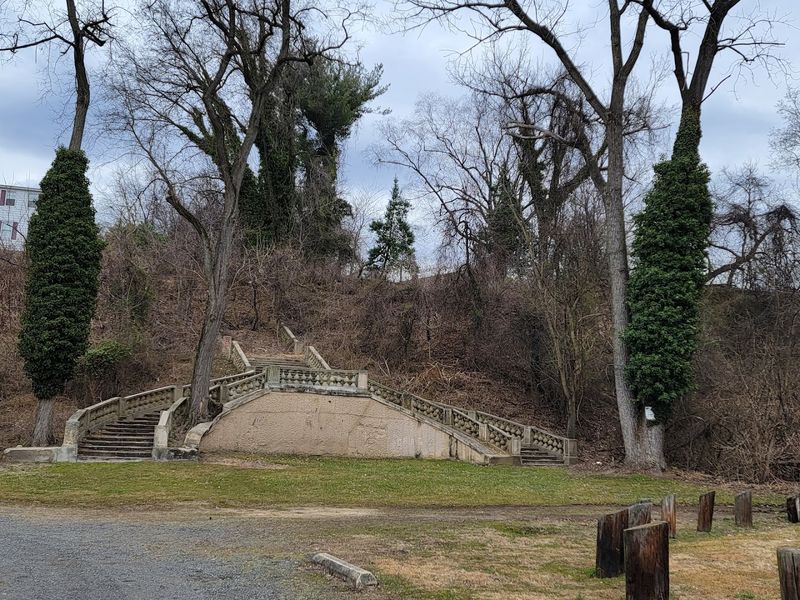
Nothing stops hikers mid-trail quite like a grand staircase that leads absolutely nowhere.
The White City stairs are one of the most talked-about features inside the park. They are a wide set of concrete steps that once served as an entrance or promenade for the old amusement park, and they now stand completely surrounded by trees and underbrush.
There is no building attached, no platform above, and no sign explaining what they were for. Just the stairs, holding their ground against decades of weather and root growth.
For photography enthusiasts, this is one of the most compelling spots in all of Mercer County. The stairs photograph well in any season, but fall foliage and early spring green both create particularly striking backdrops.
Finding them requires a bit of trail exploration, which is part of the fun. They do not appear immediately, and the moment of discovery feels genuinely rewarding after a good stretch of walking.
A Trail Network That Keeps Surprising You
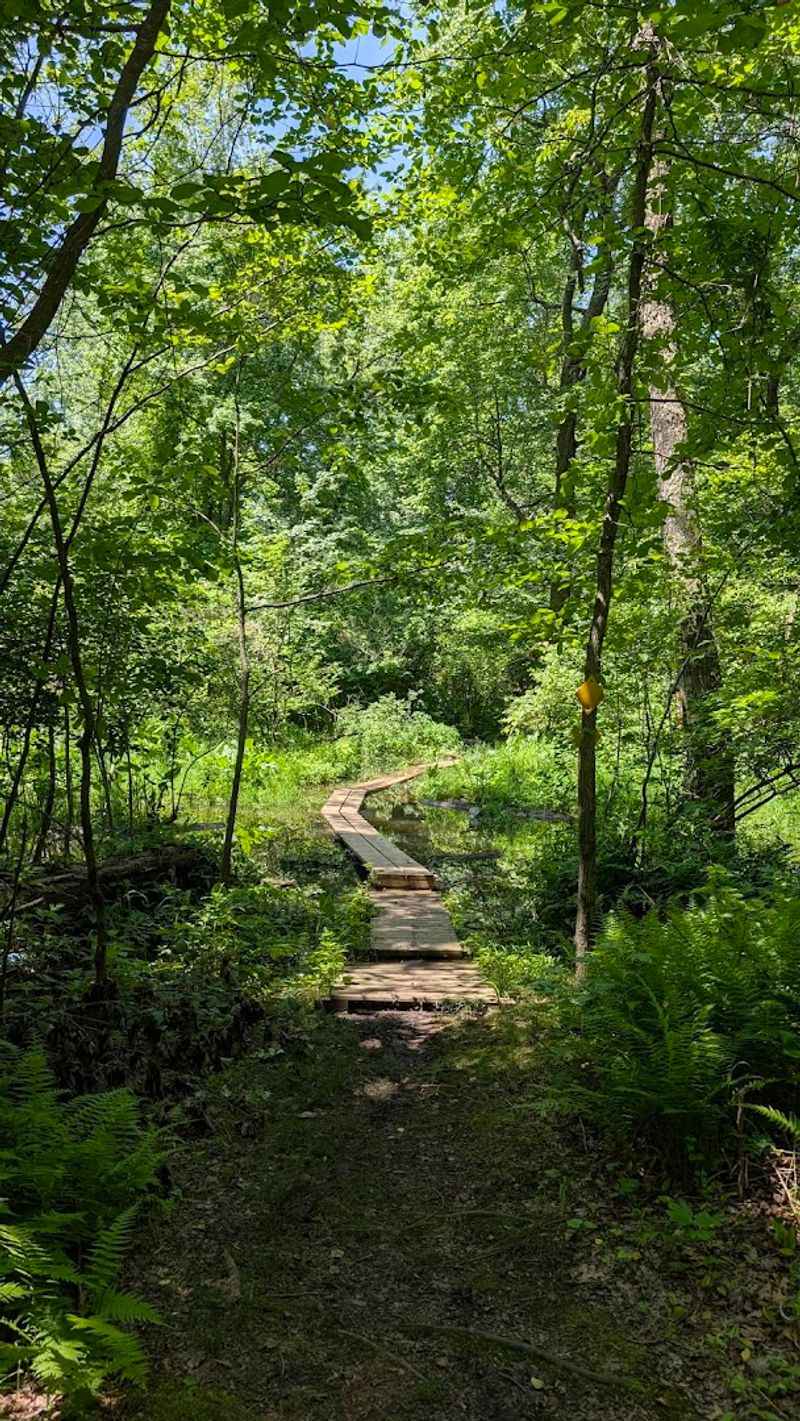
The trail system at Roebling Memorial Park is one of its strongest features, and it rewards explorers who take the time to branch off the main path.
Most of the trails are flat, which makes them accessible for families with younger children and for anyone who prefers a relaxed pace over a strenuous climb.
The network winds through a mix of wooded areas, open marsh edges, and canal-side stretches, offering a variety of natural backdrops without requiring a long drive between them.
Along the way, hikers encounter makeshift bridges, unusual clearings, and those remnants of the old White City park that appear without warning.
The full trail loop takes a solid chunk of the day to complete if you explore all the offshoots, but shorter routes are easy to plan for a one or two hour outing.
Comfortable shoes with good grip are the smart choice, especially after rain when some sections get soft.
Wildlife That Shares the Path With You

The freshwater marsh environment at Roebling Memorial Park supports a wide variety of wildlife, and spotting animals is a regular part of any visit.
Bird watchers have a particularly good time here. The wetland draws herons, egrets, red-winged blackbirds, and a rotating cast of migratory species depending on the season.
Turtles are common along the canal edges, and frogs are easy to spot in the warmer months near the vernal ponds that form after heavy rain.
Snakes also live in the park, so keeping an eye on the trail edges is a smart habit. None of the species commonly found here are aggressive, but giving them space is always the right call.
The diversity of species reflects the health of the wetland ecosystem, which Mercer County has been actively working to protect by removing invasive plant species from the marsh zones.
Bring binoculars if bird watching is on the agenda.
Kayaking the Canal Alongside the Park

The Delaware and Raritan Canal that borders the park is not just a scenic backdrop. It is an active paddling destination that draws kayakers throughout the warmer months.
The calm, flat water of the canal makes it suitable for beginners and experienced paddlers alike. There are no rapids or technical sections to worry about, just steady, quiet water moving through one of New Jersey’s most historic waterways.
Roebling Memorial Park itself is noted as a convenient stop for kayakers who want to take a break, stretch, and explore the trails before getting back on the water.
The combination of paddling and hiking in one outing is a popular approach for those who want to make a full day of it.
Launching points and access areas are worth researching in advance through the Mercer County Park Commission website, as conditions and access can vary by season.
Early morning paddles offer the most wildlife activity along the water.
The Watson House and Its Quiet History
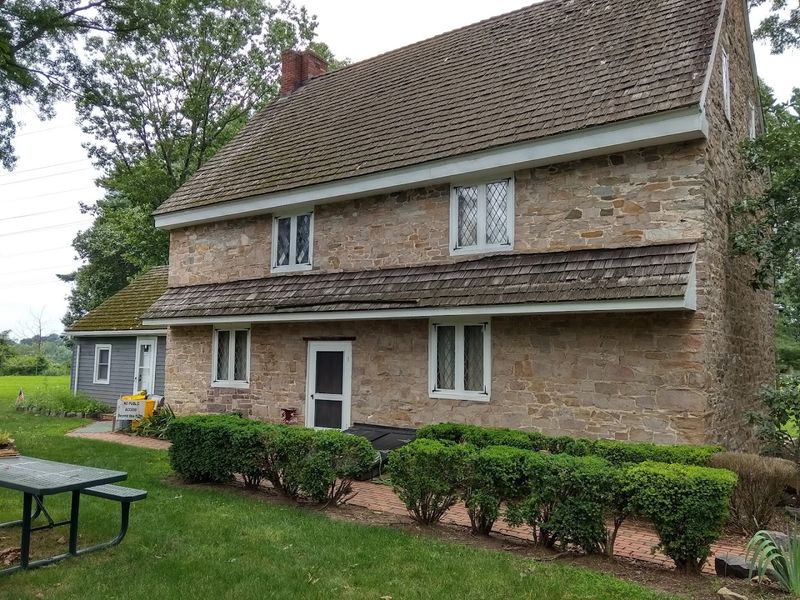
The Watson House is one of the more grounded historical anchors inside the park, offering a tangible connection to the area’s past beyond the amusement park ruins.
The structure sits within the park grounds and has been a point of interest for history-minded visitors who want something more concrete than crumbling foundations to explore.
Families have found the open lawn area near the Watson House to be a comfortable spot for kids to run around while adults take in the surroundings at a slower pace.
The building itself reflects the kind of modest, working-class architectural character common to this part of central New Jersey during the 19th and early 20th centuries.
John A. Roebling, the park’s namesake, was the engineer behind the Brooklyn Bridge, and his legacy as an industrial pioneer is woven into the broader history of this stretch of the Delaware River valley.
The park honors that legacy in both name and preservation effort.
Wetlands Worth Paying Attention To
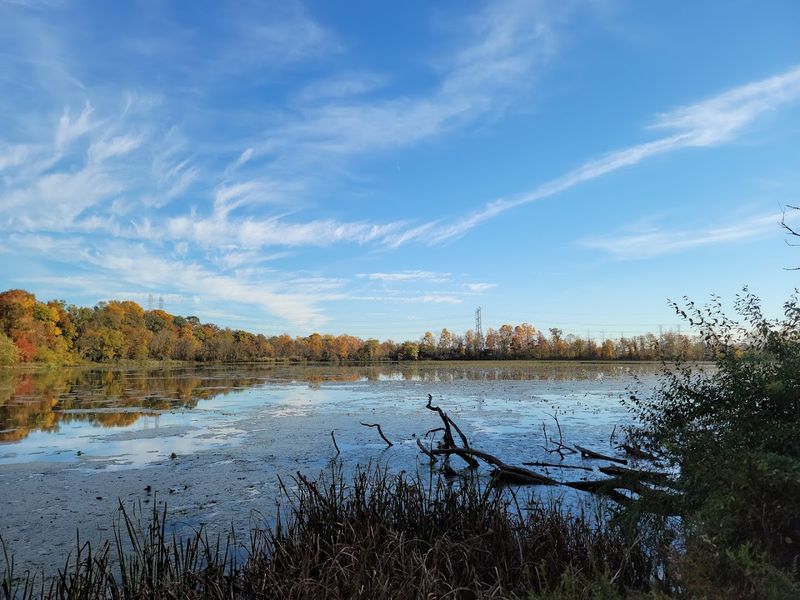
The wetland system at Roebling Memorial Park is not just a backdrop. It is the ecological engine that makes the entire park function as a wildlife habitat.
Freshwater marshes like this one filter water, reduce flooding, and provide breeding ground for dozens of species that would otherwise have nowhere to go in an increasingly developed part of central New Jersey.
Vernal ponds form seasonally throughout the park after rain events, creating temporary habitats that support amphibians and invertebrates during key parts of their life cycles.
Mercer County has been actively managing the wetland by targeting invasive plant species, including a stand of bamboo that a neighboring property introduced along the park’s border.
Native plantings have been added in certain areas to restore the original ecological balance of the marsh.
For anyone who pays attention to plants, the variety of native wetland species visible along the trail edges makes for a genuinely interesting walk regardless of the season.
Best Times to Visit and What to Expect

Roebling Memorial Park holds up well across all four seasons, but each time of year brings a different character to the trails.
Spring is the most active season for wildlife, especially birds, as migratory species pass through and resident animals become more visible after winter.
Fall turns the tree canopy along the trails into a vivid display of color, and the lower humidity makes longer walks considerably more comfortable than summer outings.
Summer visits are perfectly fine but come with higher temperatures and more insects near the marsh, so long sleeves and insect repellent are practical additions to the pack.
Winter strips the vegetation back and actually reveals more of the old structures, making it a surprisingly good season for exploring the amusement park ruins with a clearer line of sight through the bare trees.
The park opens at 6 AM every day, making early arrivals the best strategy for avoiding crowds on weekends and holidays.
What to Bring and How to Prepare
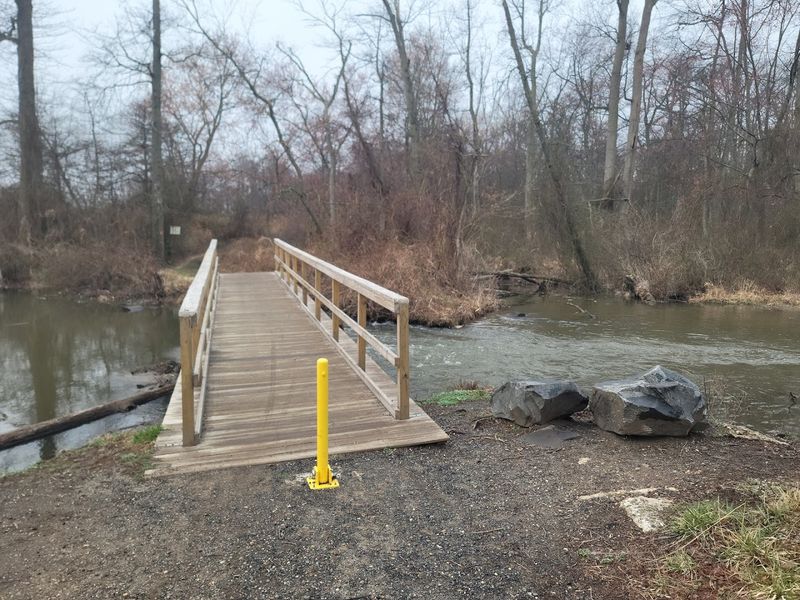
A visit to Roebling Memorial Park does not require technical gear, but a few practical items make the experience considerably better.
Sturdy, closed-toe shoes are the baseline. The trails are mostly flat, but the ground near the marsh can be soft and uneven, especially after recent rain.
A water bottle is essential, particularly for summer visits when the humidity along the marsh trail can be higher than expected.
Insect repellent is worth packing from late spring through early fall. The wetland environment supports a healthy mosquito population, and the trails run close to standing water in several spots.
Binoculars are worth bringing for bird watchers, and a camera of any kind is a smart addition given the number of unusual and photogenic features along the trail.
Dogs are welcome in the park, but leash rules apply. Bringing bags for cleanup is part of being a considerate trail user, and the park’s condition reflects how well most people follow that standard.
A Park That Earns Its Reputation Quietly
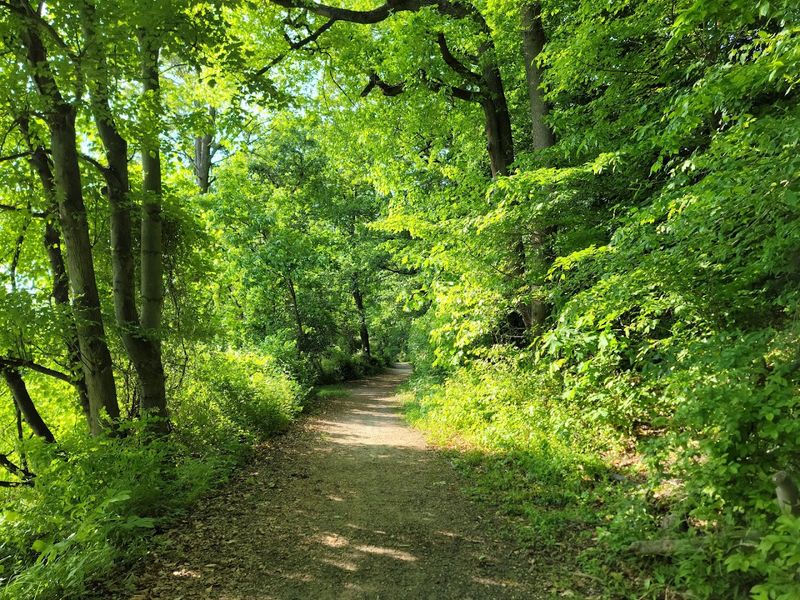
Not every great park announces itself loudly, and Roebling Memorial Park is proof that the quieter ones often leave the strongest impression. What keeps people coming back is the layered quality of the place.
There is always something new to notice, whether it is a bird species not seen before, a section of trail not yet walked, or a structural remnant from the old White City that somehow went unnoticed on previous visits.
The park is well-maintained, actively improved by the county, and regularly monitored by local law enforcement, which keeps the atmosphere comfortable for all types of visitors.
For anyone in the Hamilton Township area who has not yet made the trip, the combination of history, wildlife, and trail variety makes this one of the more rewarding outdoor spaces in the region.



