 Unearth The Voyage
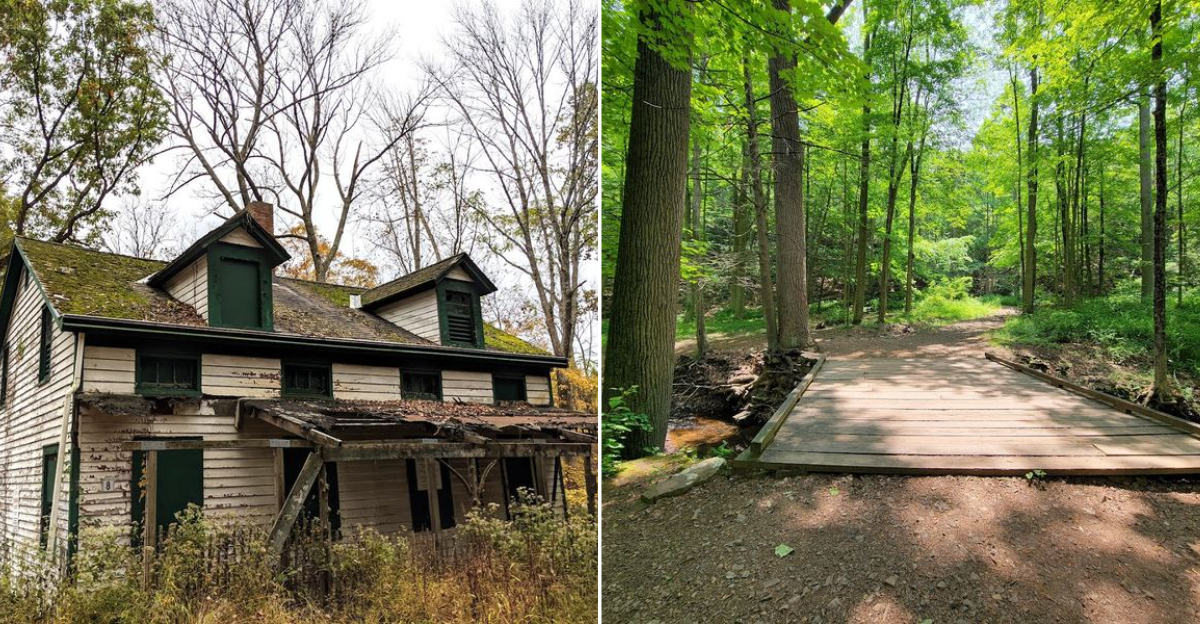
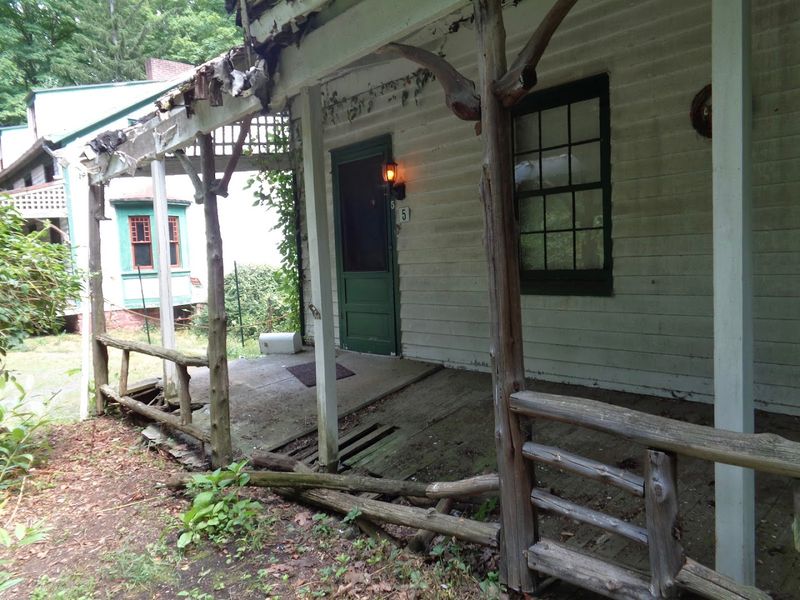
There is a trail in Union County, New Jersey, that takes you past the ruins of a 19th-century village that was built, thrived briefly, and then was quietly left behind. Old houses still stand along the path, their porches sagging and their windows dark, while historical signs explain who once lived there and why they left.
The whole place has a quiet, almost frozen quality that makes you feel like you have wandered into a chapter of history that nobody bothered to finish. Berkeley Heights is not exactly a place people associate with ghost stories or forgotten communities, yet this trail delivers both.
Whether you are a history buff, a casual hiker, or just someone looking for something genuinely different to do on a weekend, this destination earns every bit of its reputation as one of the most unusual and memorable spots in the entire state.
Where Exactly This Place Is and How to Find It
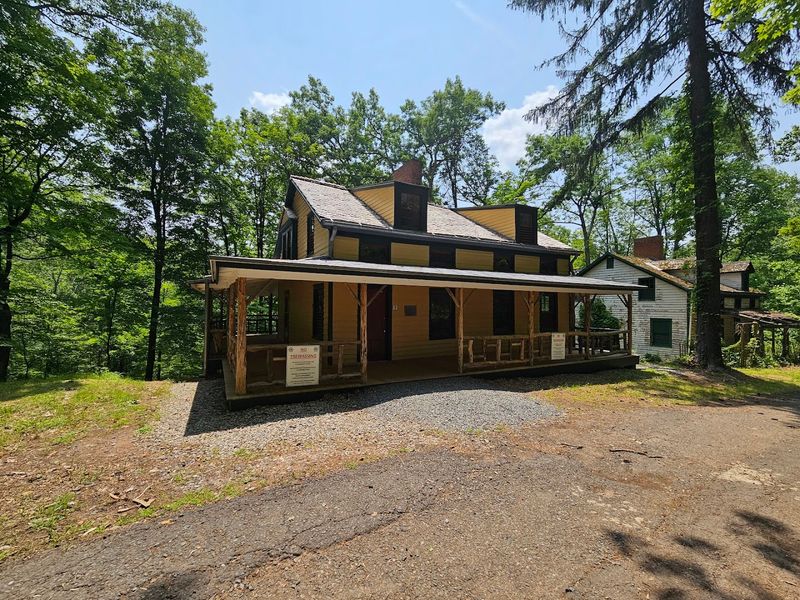
The Deserted Village sits inside Watchung Reservation, a Union County park located at 9 Cataract Hollow Rd, Berkeley Heights, NJ 07922. The address is easy to plug into any GPS, and the parking lot is right off the road, free to use, and clearly marked with a trail map near the entrance.
Getting there is straightforward. The site is close to major highways, so you are not fighting through winding back roads for an hour just to get to the trailhead.
On weekends the lot fills up earlier than you might expect, so arriving before 10 AM is a smart move if you want a good spot.
The park operates daily from 7 AM to 7 PM, which gives you a solid window to explore at your own pace. Clean public restrooms are available near the main building, which is a genuine bonus for anyone planning a longer visit.
The Story Behind the Village of Feltville
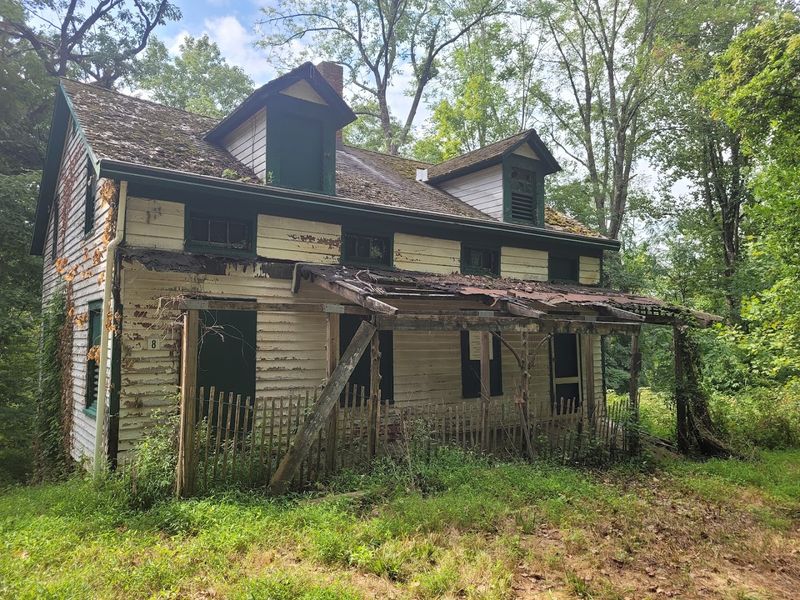
The village you are walking through was not always abandoned. It was built in 1845 by a businessman named David Felt, who constructed an entire self-contained community to house the workers at his paper mill.
The settlement included worker cottages, a store, a church, and Felt’s own residence, all clustered together in a hollow of the Watchung Mountains.
Felt ran the village like a company town, which was common for the era. Workers lived in his houses, shopped at his store, and attended his church.
When Felt retired in 1860, the whole operation shut down and the community scattered almost overnight.
The village had a second life in the 1880s when it was converted into a summer resort called Glenside Park, but that chapter also ended, and the buildings were left to the elements. That layered history, mill town to resort to ruin, is a big part of what makes this place so compelling to visit.
What the Village Actually Looks Like Today
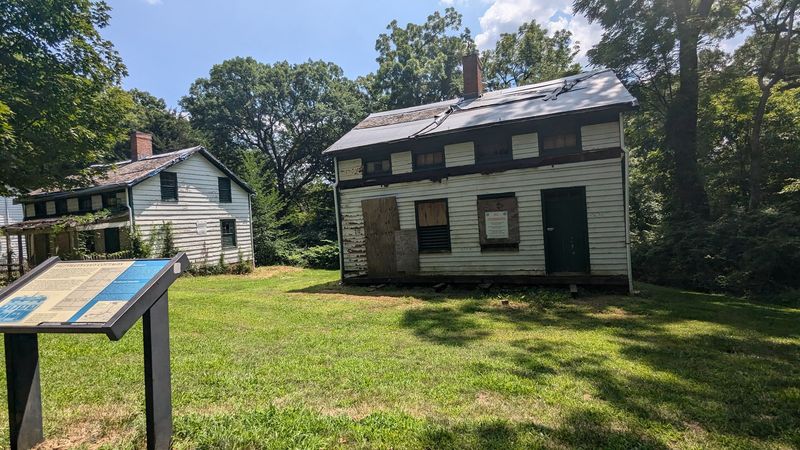
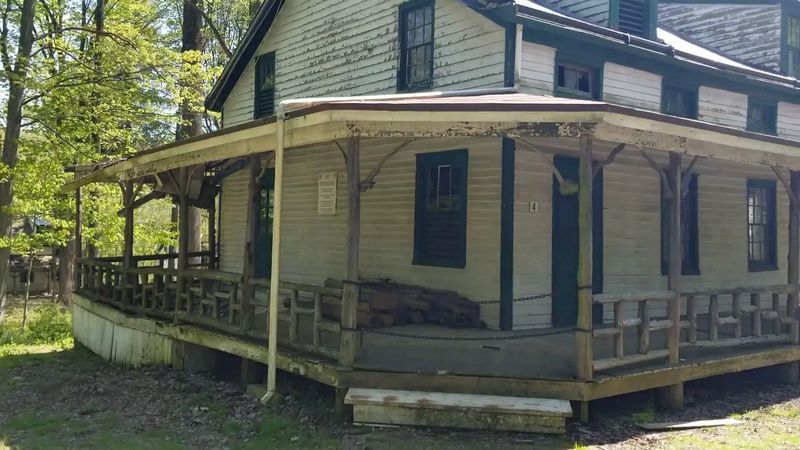
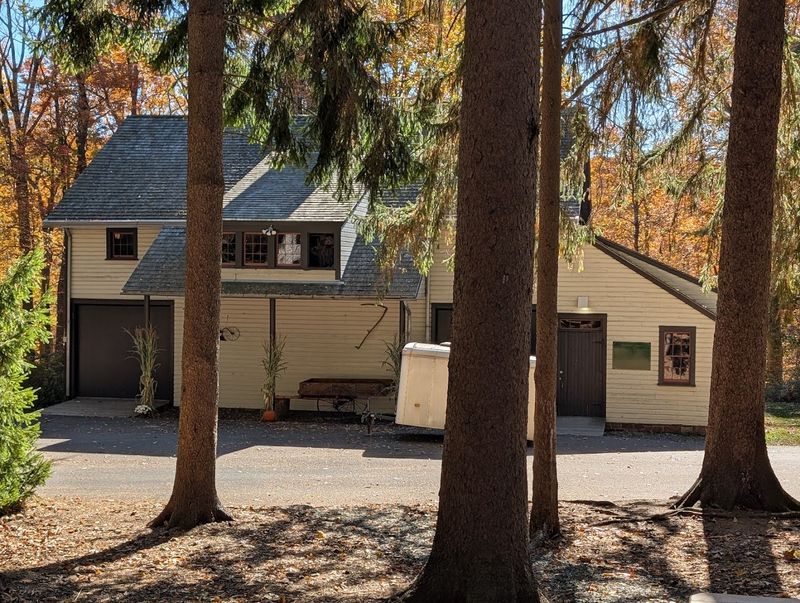
The buildings that survive are genuinely old. Several worker cottages still stand along the main paved path, their wooden frames weathered gray, their porches tilting at gentle angles.
Every structure is posted with a no-trespassing sign, but you can walk right up to the porches of some of them and peer through the gaps in the boards.
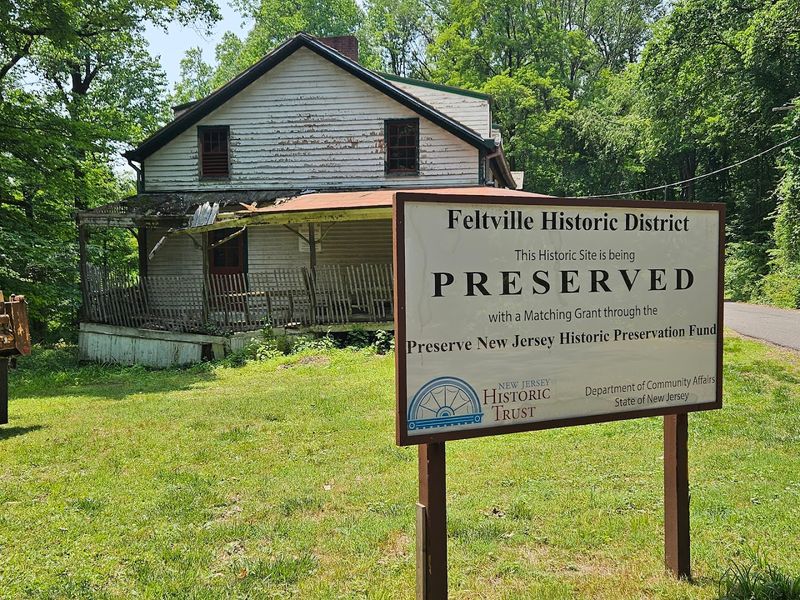
Each building has a historical marker out front that explains its original purpose and who lived or worked there. Those signs do a lot of the storytelling work, turning what could feel like a random cluster of old shacks into a readable, organized piece of history.
Funds for preservation work are actively being raised, and renovation efforts on some of the structures are already underway. The buildings are run down but not collapsed, which means the village still reads as a village rather than just a field of rubble, and that distinction matters a lot for the overall experience.
The Audio Tour That Brings Feltville to Life
One of the best tools available for a visit here is the audio tour, which you can access before or during your walk. The tour covers the history of Feltville with enough detail to fill in the gaps that the roadside signs leave open, and it gives clear directions so you do not accidentally miss key spots along the route.
The audio content is well-produced and genuinely informative, covering David Felt’s motivations for building the village, what daily life looked like for workers, and how the property changed hands over the decades. It adds real depth to what you are looking at.
One practical note: the cemetery is easy to miss on your first pass. The audio tour helps with this, and the general advice from people who have visited is to make a right at the tall tree stump when you reach that junction.
Keep that tip in your back pocket before you head out on the trail.
The Old Cemetery and the Hike Up to It
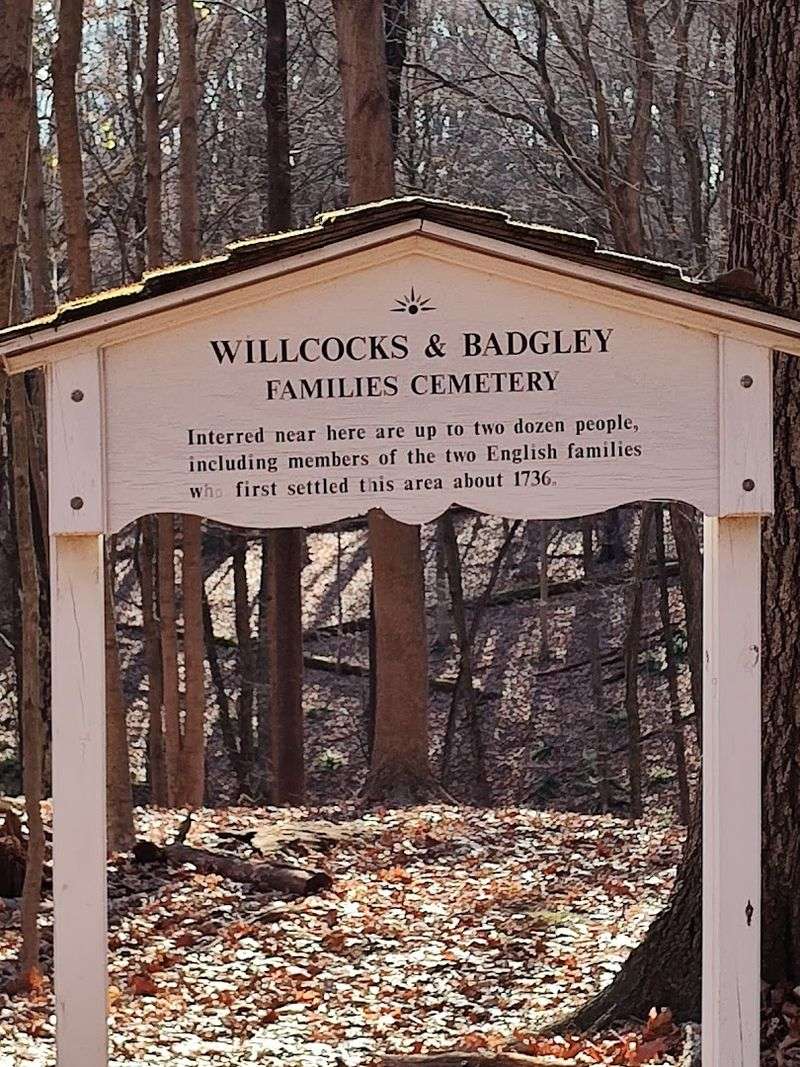
The cemetery is one of the most talked-about features of the entire property, and reaching it requires a bit more effort than the flat paved path through the village. The trail up to the burial ground is a genuine hike, with steep, stepped terrain that will get your heart rate up in a hurry.
At the top, you find a small collection of old gravestones tucked into the woods, quiet and largely undisturbed. The surrounding trees are dense, and the whole setting has a quality that is hard to describe without leaning on obvious clichés, so just know that it feels very removed from the suburban world just a few miles away.
The hike up is described by frequent visitors as challenging but manageable for most people in reasonable shape. Wear actual hiking shoes rather than sneakers, bring water, and give yourself enough time so the climb does not feel rushed.
The view from the top is worth the effort.
The Trails Beyond the Village Core
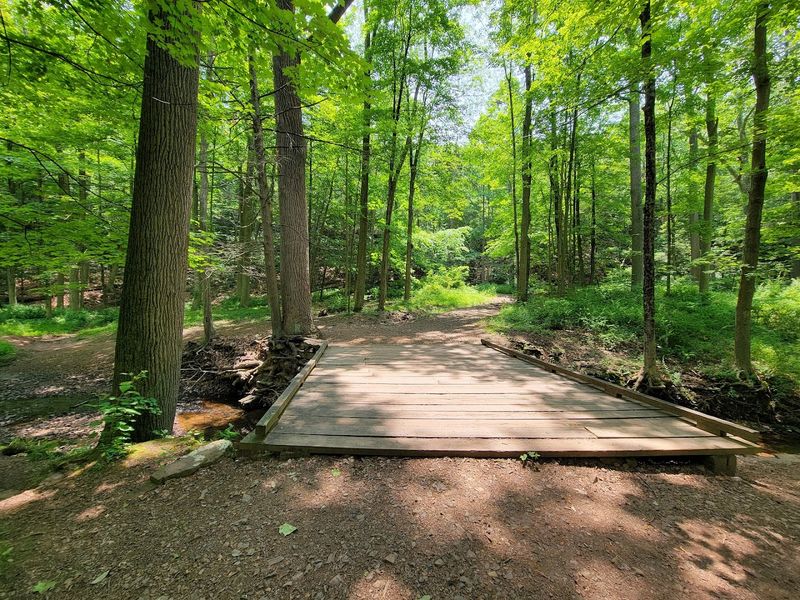
The village itself sits on a paved path that takes roughly an hour to walk if you stop to read all the signs. That said, Watchung Reservation surrounds the village with miles of additional trails that go far beyond the historic core, ranging from easy flat walks to rocky, uneven climbs that will test your legs.
Trail blazes are clearly marked, and the system is well-maintained, so navigation is not a problem even for first-time visitors. Some trails run alongside a stream at the bottom of the hollow, which adds a pleasant natural element to what is otherwise a history-focused outing.
Seasoned hikers who have covered the full trail network report logging five or more miles without running out of new ground to cover. The park is large enough that you could visit multiple times and still find sections you have not yet explored.
Bring a trail map from the parking lot kiosk before you head out.
Dog-Friendly and Family-Ready Details
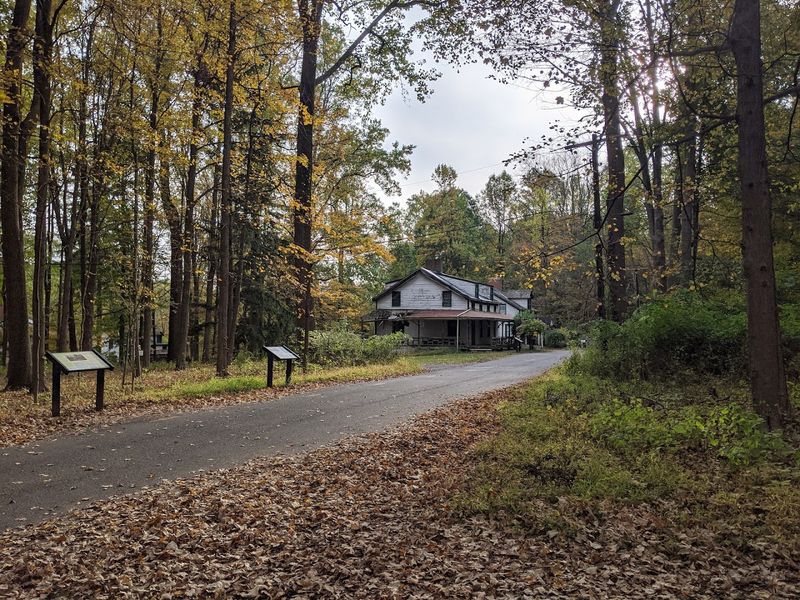
Bringing the dog is absolutely fine here. The trails are dog-friendly as long as your pet stays on a leash, and the wide paved path through the village core is easy enough for smaller dogs and younger kids to handle without any trouble.
The terrain in the village itself is flat and well-maintained.
Kids tend to respond well to the old buildings, especially when you use the historical signs to explain what they are looking at. The mystery of why people left and what happened to the community makes for good conversation on the trail, and it holds attention better than a typical nature walk.
For families who want to keep things manageable, the paved village loop is the right call. It is short enough that younger children will not burn out before you finish, and the historical markers give everyone something to focus on.
Pack snacks, because there are no food vendors anywhere on the property.
Masker’s Barn and the End of the Paved Path
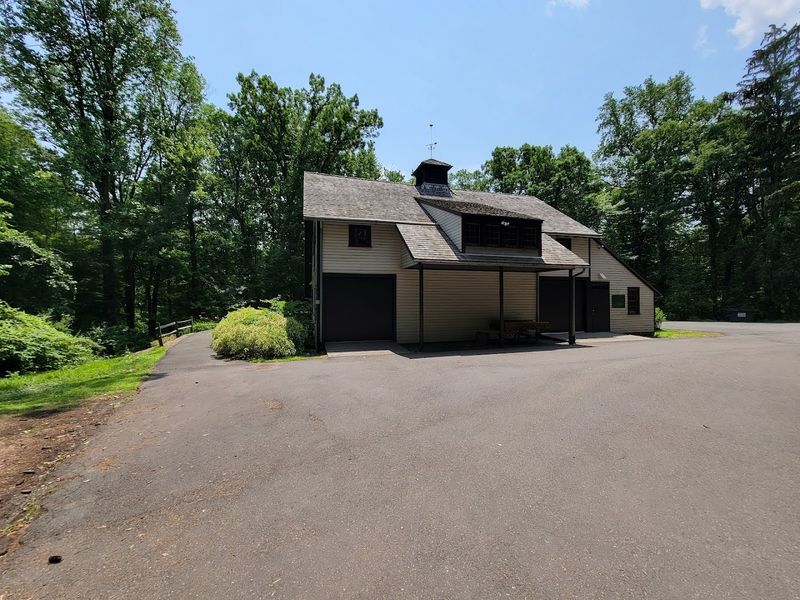
At the far end of the paved path through the village, you reach Masker’s Barn, a large historic structure that the county has preserved and made available for private events like weddings and gatherings. It is a striking building given its age and setting, and it marks a natural turning point on the main trail.
The barn is not open for general public access on a typical visit, but walking past it gives you a good sense of the scale of the original property and the ambition behind what David Felt built here in the 1840s. A structure this size was not built casually.
There are picnic-style areas near the barn where you can sit and eat before heading back. The surrounding landscape at this end of the trail is open enough that it feels different from the denser, more enclosed sections closer to the village cottages.
It is a good spot to pause before the uphill walk back to the parking lot.
The Creepy Reputation and the Local Lore
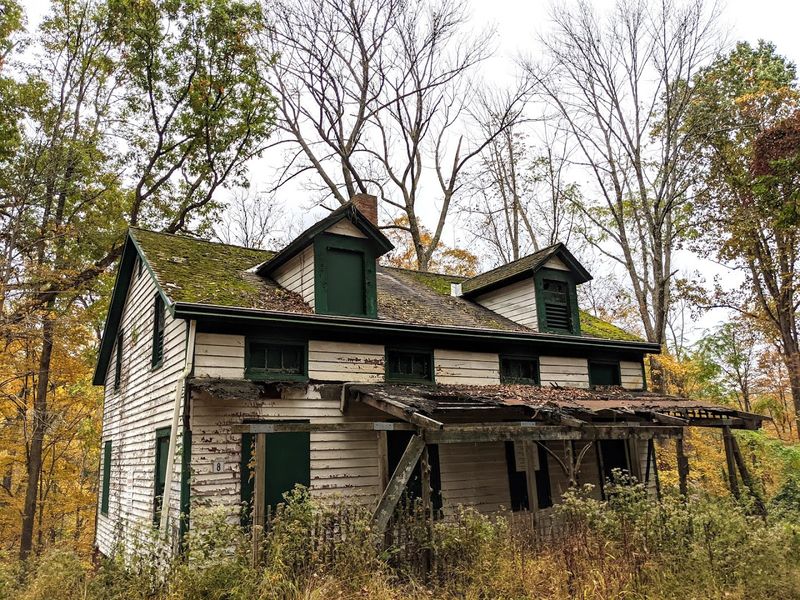
The Deserted Village has built up a reputation over the years as one of the creepier destinations in New Jersey, and that reputation is not entirely without basis. The combination of abandoned 19th-century buildings, a hilltop cemetery, and dense forest creates a setting that lends itself naturally to local legends and ghost stories.
Weird New Jersey, the long-running publication dedicated to the state’s strange and unexplained corners, has covered this location, and that coverage has added a layer of mythology to the place that keeps a certain type of visitor very interested. Researching the lore before your visit is worth doing if that angle appeals to you.
None of the spooky reputation should put off more grounded visitors. The trails are well-maintained, the signage is clear, and the overall atmosphere during daylight hours is more peaceful than frightening.
The history alone is strange enough to be interesting without needing any embellishment from ghost stories.
Best Times to Visit and What to Expect Seasonally
The park is open every day of the week from 7 AM to 7 PM, which makes scheduling a visit fairly flexible. That said, weekends draw noticeably larger crowds, and the parking lot has been known to fill up by mid-morning on busy Sundays.
Going early, especially on weekends, is the most reliable way to get a parking spot without stress.
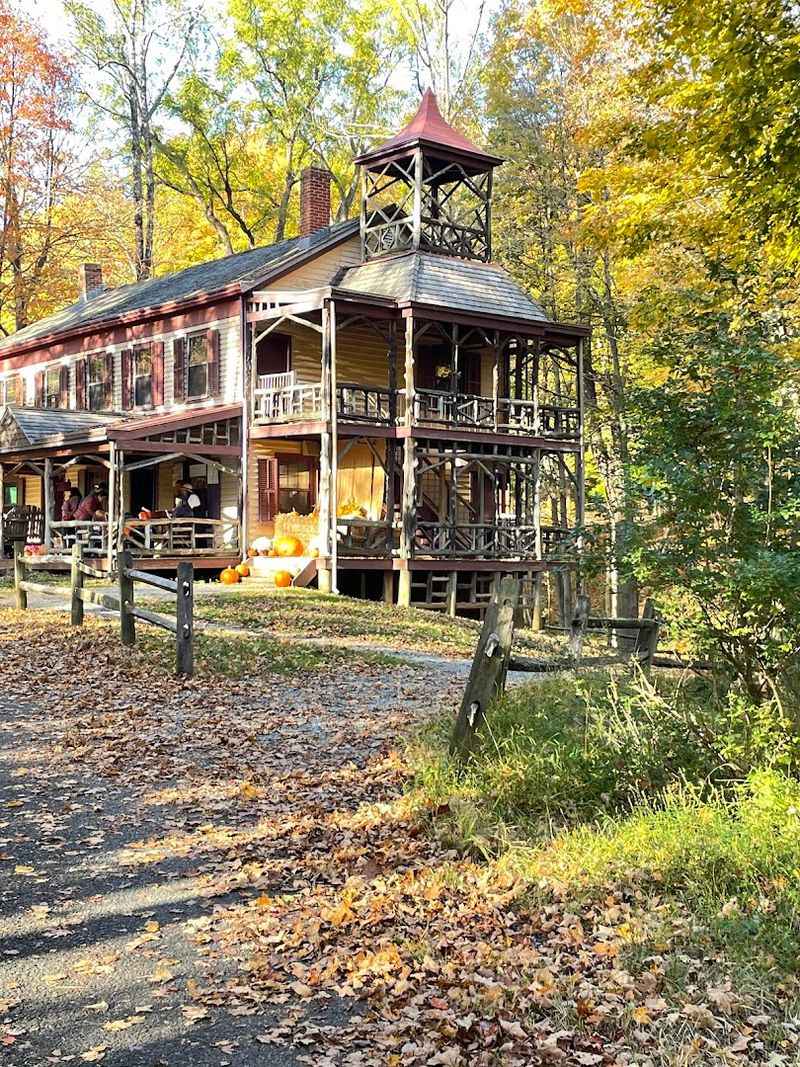
Fall is a particularly good time to visit because the tree cover throughout the reservation turns and the colors along the trail are genuinely striking. The cooler temperatures also make the longer hikes up to the cemetery and through the back trails much more comfortable.
Summer visits are workable because the dense tree canopy keeps the trails cooler than open-air parks. Spring brings muddy conditions on the unpaved trails, so boot choice matters more in March and April.
Winter visits are possible but check conditions before heading out, as the steep sections near the cemetery can get slippery.
What to Bring and How to Prepare
The paved section of the trail through the village does not require much preparation beyond comfortable walking shoes. The moment you step onto the unpaved trails, though, the terrain gets rocky and uneven quickly, and proper hiking footwear makes a real difference in both comfort and safety on those sections.
Water is essential, especially in warmer months. There are no vendors or fountains along the trail, so whatever you bring in is what you have got.
Bug spray is worth packing from late spring through early fall, as the wooded hollow can get buggy.
A printed or downloaded trail map is a smart addition to your kit. The parking lot kiosk has maps available, but having one on your phone before you arrive means you can plan your route in advance.
The geocache located somewhere on the property is a bonus discovery for anyone who enjoys that hobby. Good preparation turns a solid visit into a great one.
Accessibility and Practical Visitor Information
The main path through the village is paved, which makes it accessible for visitors who need a flat, even surface. Strollers and wheelchairs can navigate the village loop without major obstacles, though the unpaved trails branching off into the reservation are a different story entirely.
Public restrooms are available near the main building at the trailhead, and they are generally reported to be clean and well-maintained. That kind of basic infrastructure makes a meaningful difference on a longer visit, especially for families with young children.
Parking is free, which is a detail worth mentioning because free parking at a well-maintained county park with this much to offer is not something to take for granted. The site is managed by the Union County Department of Parks and Recreation, and more information is available at ucnj.org/parks-recreation/deserted-village.
Having that resource bookmarked before your trip gives you access to current hours, event listings, and any updates on trail conditions.
Why This Place Deserves a Spot on Your New Jersey List
There are plenty of parks in New Jersey, but very few of them combine legitimate history, unusual atmosphere, well-maintained trails, free admission, and a story strange enough to stick with you after you leave. The Deserted Village checks all of those boxes without asking much in return.
The rating of 4.5 stars across nearly 900 reviews is not an accident. The place delivers something genuinely different from a standard park visit, and the combination of historical depth and natural setting gives it broad appeal across age groups and interest levels.
Hikers, history fans, and curious day-trippers all find something worth their time here.
Berkeley Heights is not a place most out-of-state visitors put on their New Jersey itinerary, but this trail is a strong argument for changing that habit. A forgotten mill town from the 1840s, still standing in the middle of a county park, is exactly the kind of discovery that makes a weekend trip memorable long after you have driven back home.



