 Unearth The Voyage
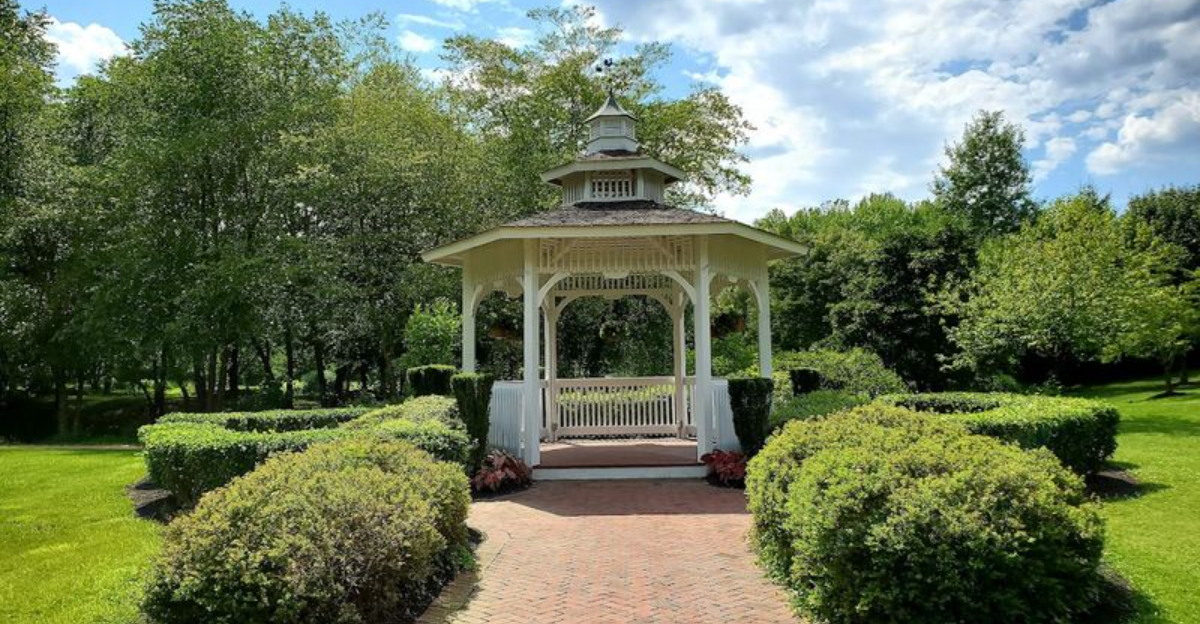
There is a spot in central New Jersey where a historic mansion sits surrounded by carefully tended gardens, koi ponds, wooden bridges, and gazebos that make every corner look like it belongs on a greeting card. Hamilton Square is not exactly a place people outside Mercer County talk about on travel blogs, but locals have known about this hidden treasure for years.
The gardens here were built by a world-traveling businessman over a century ago, and his collection of plants from China, Japan, and England still thrives today. This article walks you through everything worth knowing about this remarkable public park, from its fascinating backstory and its annual festival to practical tips that will help you get the most out of your visit.
Keep reading, because this one is genuinely worth your time.
Where You Will Find This Garden
Tucked between Edinburgh Road and Nottingham Way in Hamilton Square, New Jersey, Sayen House and Gardens sits at 155 Hughes Dr, Hamilton Square, NJ 08690. The park is part of Hamilton Township in Mercer County, making it surprisingly easy to reach from Trenton, Princeton, and surrounding towns.
The parking lot off Hughes Drive offers plenty of spaces on most days, and the lot even includes electric vehicle charging stations, which is a thoughtful touch for modern visitors. On days when multiple events are scheduled at once, parking can get tight, but that is the exception rather than the rule.
The park is open every day of the week from 8 AM to 8 PM, and admission is completely free. No tickets, no reservations, no fees.
For a public space this well-maintained and this photogenic, free entry feels almost too good to be true, yet here we are.
The Man Behind the Garden
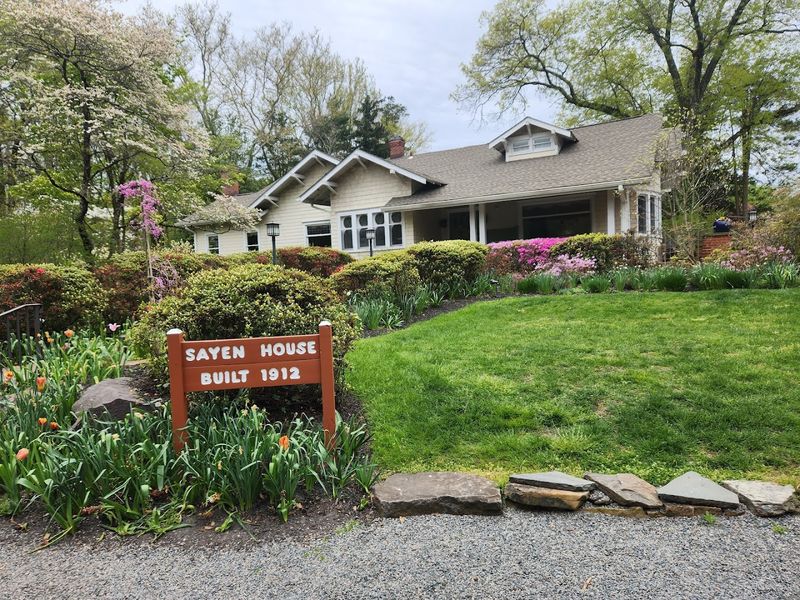
Frederick Sayen built this property in 1912, and his story is one of the more compelling origin stories attached to any public park in New Jersey. Born in 1885 and living until 1981, Sayen was a local businessman and rubber manufacturer who also happened to be a devoted gardener and amateur horticulturist with a genuine passion for plants from around the world.
He purchased a 30-acre parcel of land, constructed a bungalow-style home on it, and spent years filling the surrounding grounds with plant species he collected during his travels to China, Japan, and England. Many of those original specimens are still growing on the property today, more than a century later.
That kind of botanical legacy is rare. Most private gardens from that era were either sold off, developed, or simply lost to time.
The fact that Sayen’s collection survived and is now open to the public makes this place genuinely special in New Jersey’s history.
The Layout of the Grounds
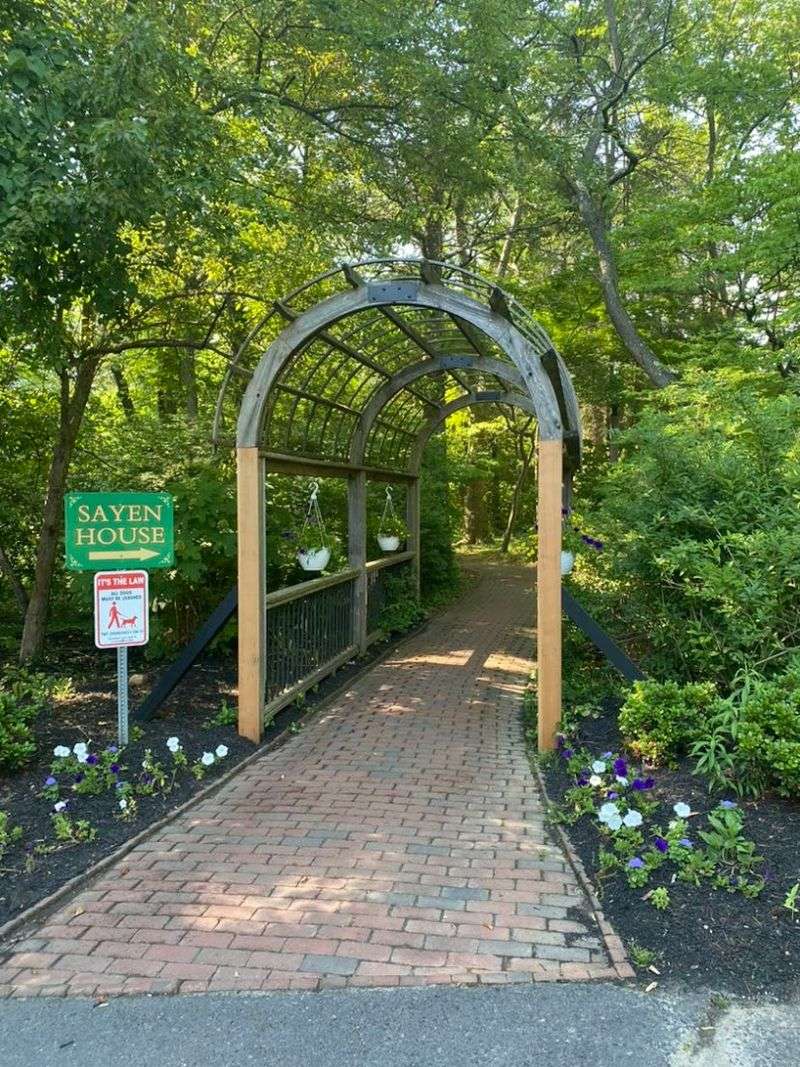
The park covers a substantial area and manages to pack a lot of variety into its grounds without ever feeling crowded or overwhelming. Winding gravel paths lead visitors through open meadow areas, wooded sections, and garden beds filled with flowering plants and ornamental shrubs.
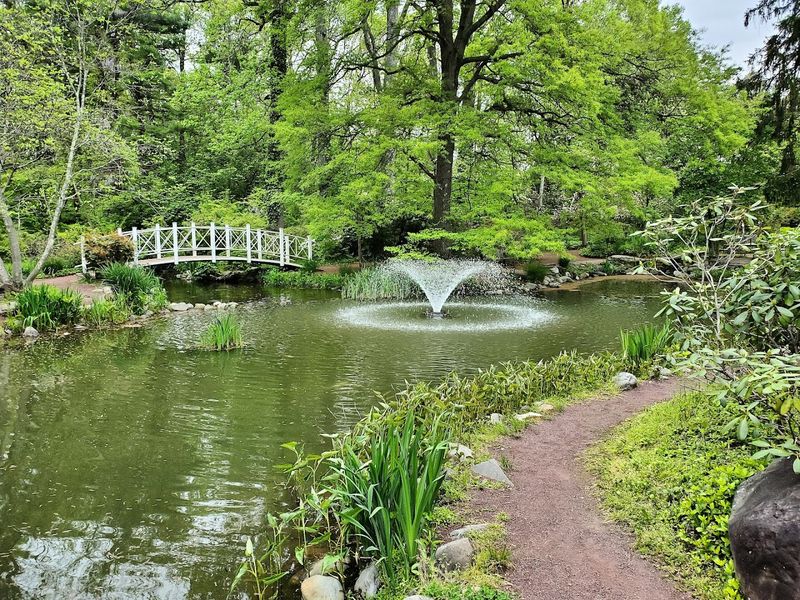
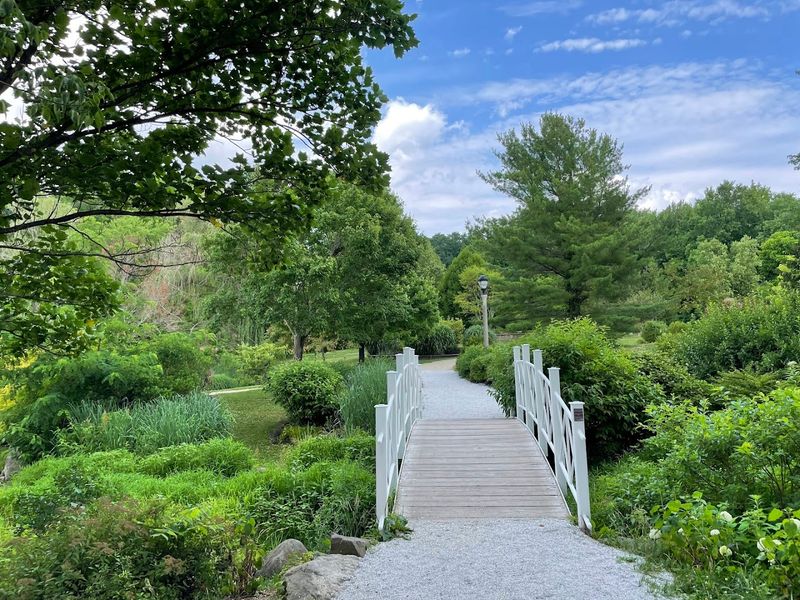
Along the way, you will come across small ponds stocked with koi and goldfish, curved wooden bridges that arc over the water, multiple gazebos tucked into quiet corners, and fountains that add movement to the landscape. Benches are placed throughout the grounds, so there is always somewhere to sit and take things in without having to rush.
The paths are wheelchair accessible and easy to navigate for visitors of all ages and mobility levels. Restrooms are available on site and are kept clean, which is one of those practical details that makes a real difference when you are spending a couple of hours outdoors.
Every section of the garden offers its own distinct character.
Spring Is When the Garden Truly Performs
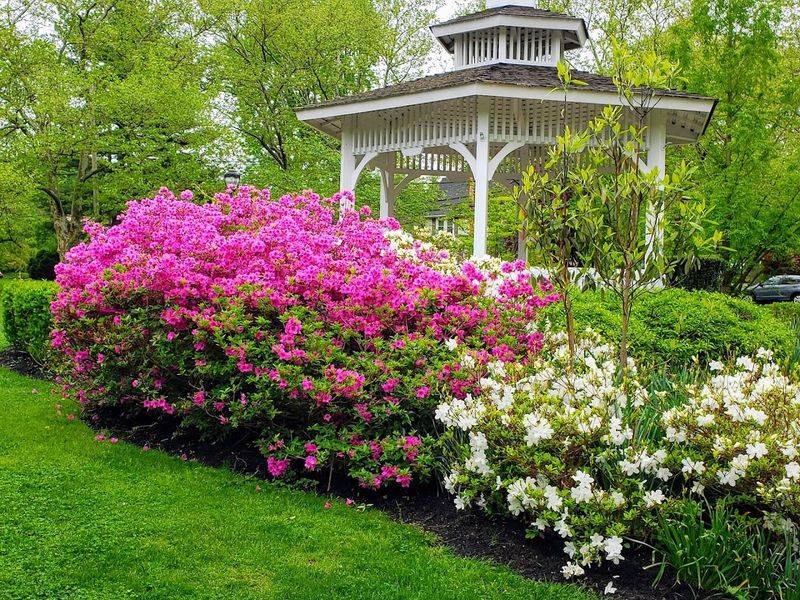
Spring is the season that puts Sayen Gardens on the map for a lot of first-time visitors. The azalea collection here is extensive, and when those plants bloom in late April and early May, the entire garden turns into a wall-to-wall display of pink, purple, red, and white flowers that photographers absolutely love.
Beyond azaleas, the property features cherry trees, flowering magnolias, and a wide variety of spring bulbs that come up in waves throughout the season. The overall effect is one of constant change, where the garden looks noticeably different from one week to the next during peak spring.
Even visitors who are not particularly interested in plants tend to be caught off guard by how much color the garden produces during this time of year. Warm spring afternoons draw steady crowds, but the grounds are large enough that the space never feels uncomfortably packed.
Arriving on a weekday morning gives you the most room to roam.
The Annual Azalea Festival
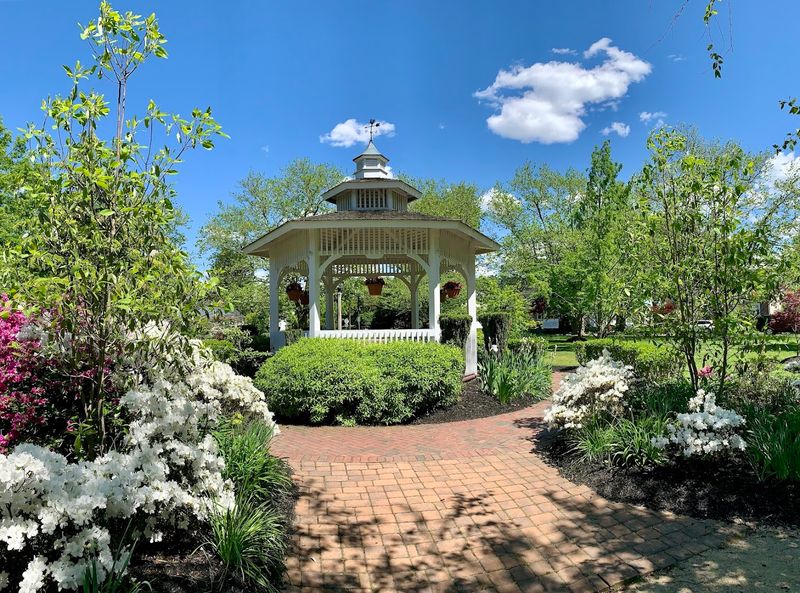
Once a year, usually on Mother’s Day weekend, Sayen Gardens hosts its Azalea Festival, and it draws a noticeably larger crowd than a typical weekend visit. The festival turns the garden into a community event with live music, food vendors, health and skincare booths, local artists selling paintings, and candle makers displaying their work.
The timing is intentional, since the azaleas are typically at or near peak bloom during the first or second week of May, giving the festival a natural backdrop that no decorator could replicate. Families arrive early, photographers set up along the paths, and the whole atmosphere shifts from quiet park to lively outdoor celebration.
If you have never attended, it is worth planning your calendar around. The combination of free admission, live entertainment, local vendors, and a garden in full bloom makes for an afternoon that covers a lot of ground in the best possible way.
Check the Hamilton Township website for the exact date each year.
Fall and Winter Have Their Own Appeal
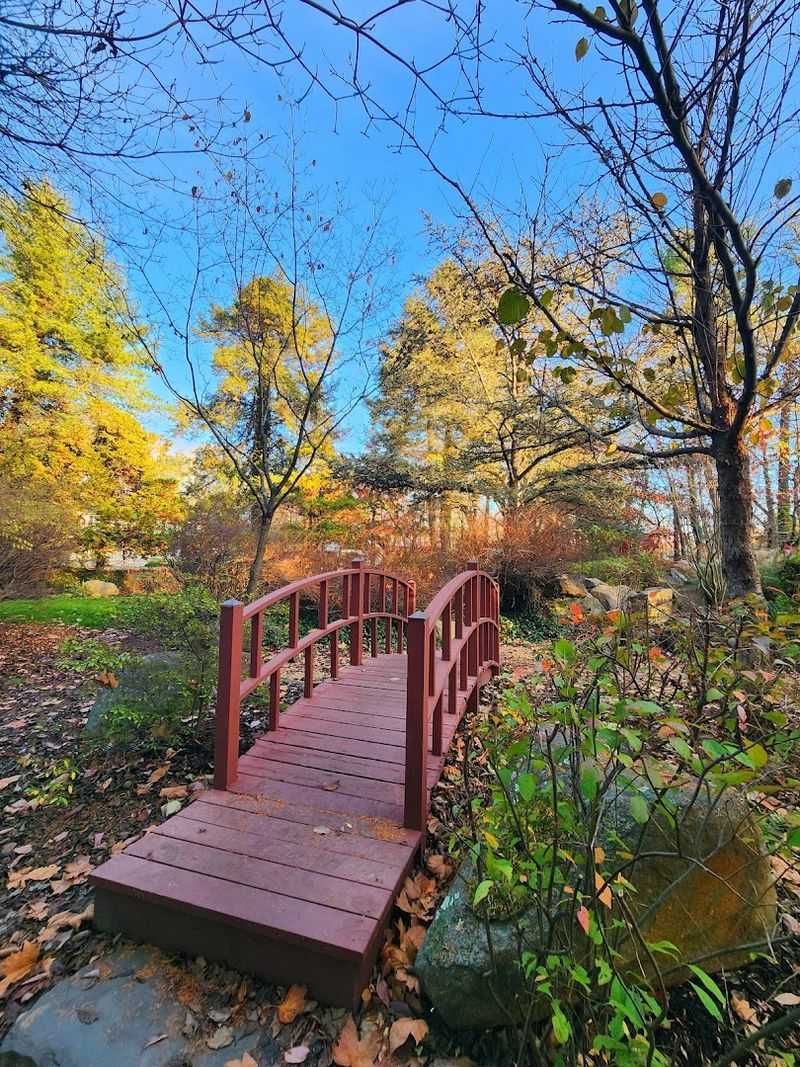
A lot of people assume that Sayen Gardens is only worth visiting in spring, but the park holds up well across every season. Fall brings a different kind of color to the grounds, with changing leaves along the wooded paths and a quieter, more contemplative mood that regular visitors tend to appreciate just as much as the spring crowds do.
Winter is perhaps the most surprising season. Some of the hardy plants in the garden show green growth even through snow, and the bare structure of the trees and shrubs reveals the garden’s underlying design in a way that leafy seasons tend to hide.
The koi ponds take on a glassy stillness in cold weather that makes them look almost like mirrors.
Foot traffic drops significantly in the colder months, which means you often have long stretches of the path entirely to yourself. For anyone who finds crowded parks draining, a winter morning at Sayen Gardens is a genuinely refreshing way to spend an hour or two outside.
The Koi Ponds and Water Features
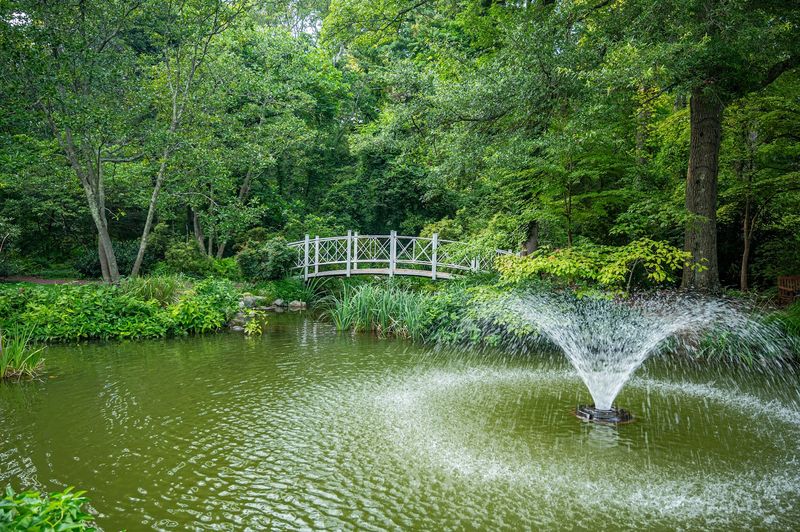
Water is one of the recurring themes throughout Sayen Gardens, and the koi ponds are among the most popular spots on the property. The ponds are stocked with goldfish and koi in various colors, and watching them move through the water is one of those low-key activities that turns out to be surprisingly hard to walk away from.
Children are particularly drawn to the ponds, and it is easy to spend fifteen or twenty minutes at the water’s edge without even noticing the time passing. The wooden bridges that cross over or alongside the ponds add a classic garden aesthetic that works beautifully in photographs.
Fountains appear at several points throughout the grounds as well, adding movement and visual interest to areas that might otherwise feel static. The combination of still pond water and active fountain spray gives the garden a layered quality that rewards visitors who slow down and pay attention to the smaller details rather than rushing through the main path.
A Dream Location for Photography
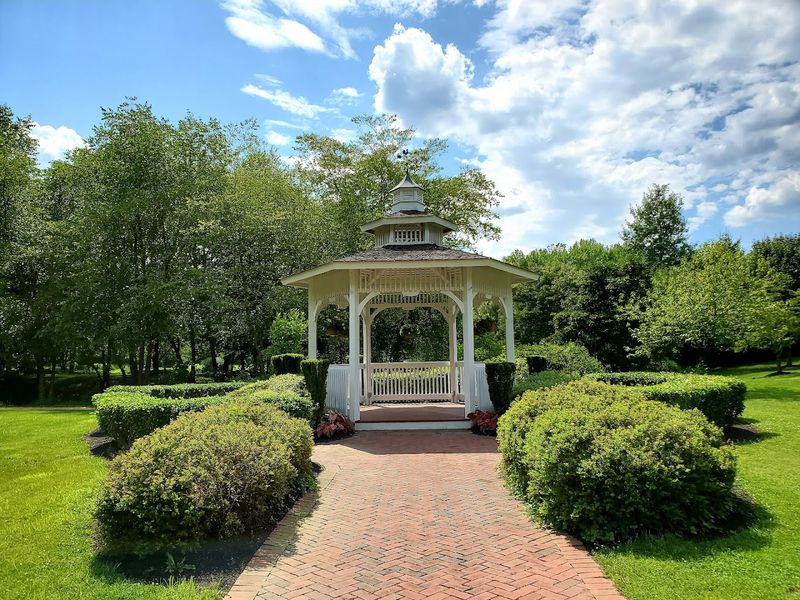
Sayen Gardens has developed a strong reputation as one of the top outdoor photography locations in New Jersey, and it earns that reputation honestly. The property offers an unusually wide range of backdrops within a relatively small area, including bridges, gazebos, ponds, wooded paths, open meadows, and the historic house itself.
Wedding photographers in particular favor the location for its white gazebo, which provides a clean and classic ceremony backdrop that works in almost any lighting condition. Engagement sessions, family portraits, newborn announcements, and professional headshots all happen here regularly throughout the year.
The golden hour light that filters through the mature tree canopy in the late afternoon creates conditions that photographers specifically plan their sessions around. If you are visiting as a casual visitor rather than a photography client, you will likely cross paths with at least one photo session during your walk.
The garden is large enough that multiple shoots can happen simultaneously without getting in each other’s way.
Tips for Getting the Most Out of Your Visit
A few practical notes will help you get more out of your time at Sayen Gardens. The park opens at 8 AM every day, and arriving early on weekends gives you the best chance of having the paths to yourself before the afternoon crowds arrive.
Weekday mornings are the quietest option overall.
The gravel paths are easy to walk and wheelchair accessible, but wearing comfortable shoes is still a good idea since the grounds cover a fair amount of distance if you explore every corner. Dogs are welcome, and you will see plenty of them on leashes during any given visit.
Restrooms are located toward the right side of the property and are well maintained. The park closes at 8 PM daily, so plan to wrap up your visit before dusk.
There is no cost to enter, no registration required, and no need to plan far ahead. Just show up, walk at your own pace, and let the garden do the rest.



