 Unearth The Voyage
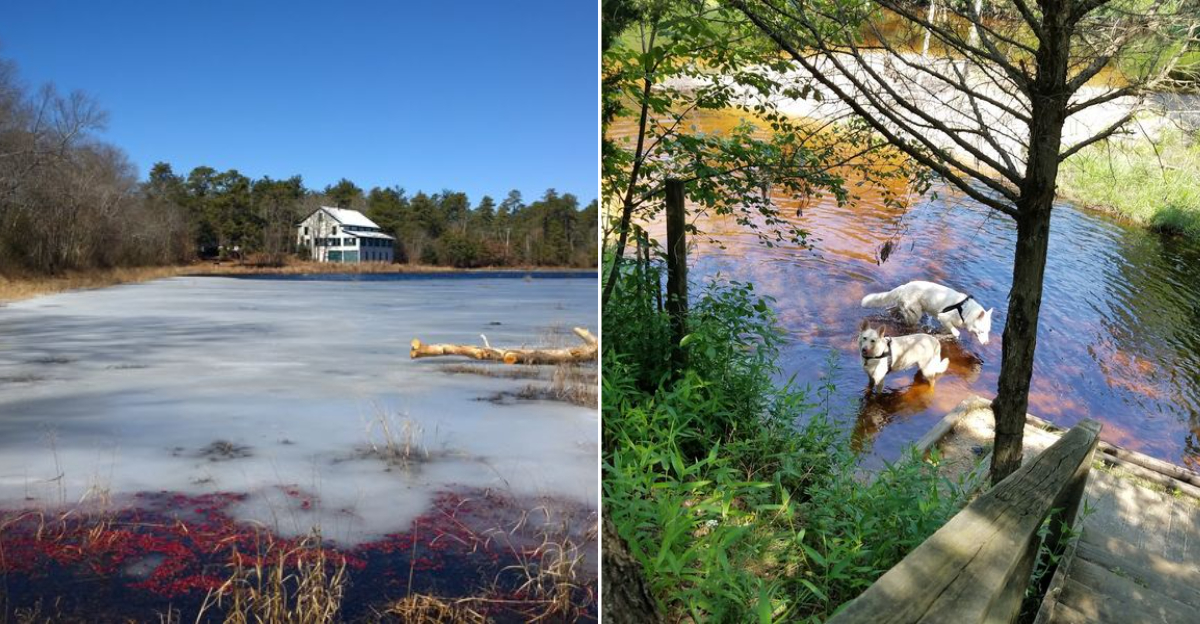
Most people blow right past Ocean County on their way to the Jersey Shore, never suspecting that one of New Jersey’s most underrated state parks is sitting quietly just off the Garden State Parkway. This place has cranberry bogs, a preserved 19th-century village, cedar forests, wildlife-packed trails, and a name that stops everyone cold the first time they hear it.
It holds a 4.7-star rating across more than a thousand reviews, yet it never feels crowded the way beach towns do in summer. By the time you finish reading, you will want to clear your weekend schedule and head straight to Ocean County.
Where Exactly This Park Sits
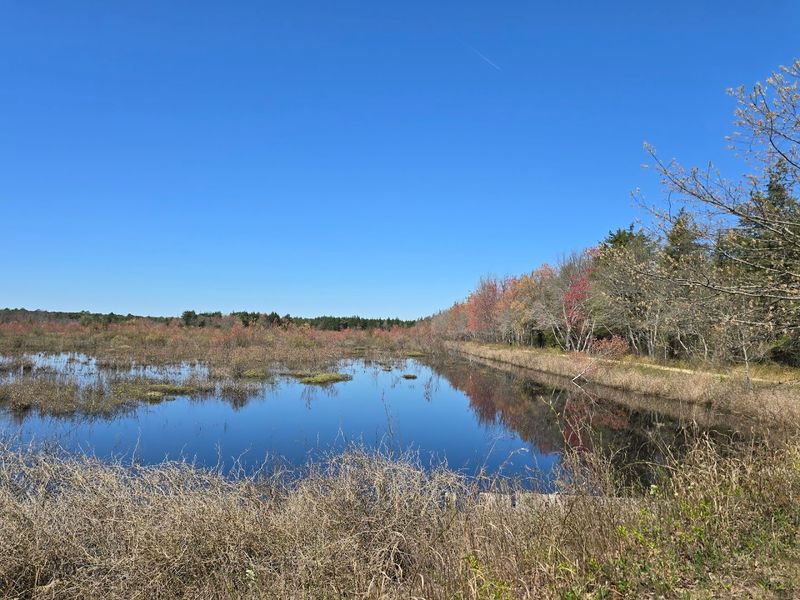
Double Trouble State Park sits at 581 Pinewald Keswick Rd, Bayville, NJ 08721, right in the heart of Ocean County in the New Jersey Pine Barrens region. The park is conveniently accessible from Exit 77 southbound on the Garden State Parkway, making it an easy stop whether you are a local or passing through.
The park opens at 8 AM every day of the week and closes at 6 PM, so early risers get the best of the trails before the afternoon crowds arrive. There is no admission fee to enter, which makes it one of the better free outdoor options in the entire state.
Parking is available near the historic village area, and brochures about the trails and history are kept outside the visitor center even when the building itself is closed. A quick check of the park’s official website before visiting is always a smart move.
The Story Behind That Unforgettable Name
The name Double Trouble has been attached to this land for well over a century, and the most widely accepted explanation traces back to a story about beavers repeatedly breaking through a dam on Cedar Creek, causing flooding that prompted locals to say, “Here comes double trouble.”
Whether or not that exact story is the origin, the name stuck, and today it is one of the most recognizable park names in New Jersey simply because nobody forgets it after hearing it once. It gives the place a personality before you even set foot on a trail.
The park covers roughly 8,000 acres, and the name now represents far more than a local legend. It stands for a rare combination of preserved industrial history, wild Pine Barrens landscape, and accessible outdoor recreation that few other state parks in New Jersey can match.
The name earns its reputation every single visit.
The 19th-Century Village Frozen in Time
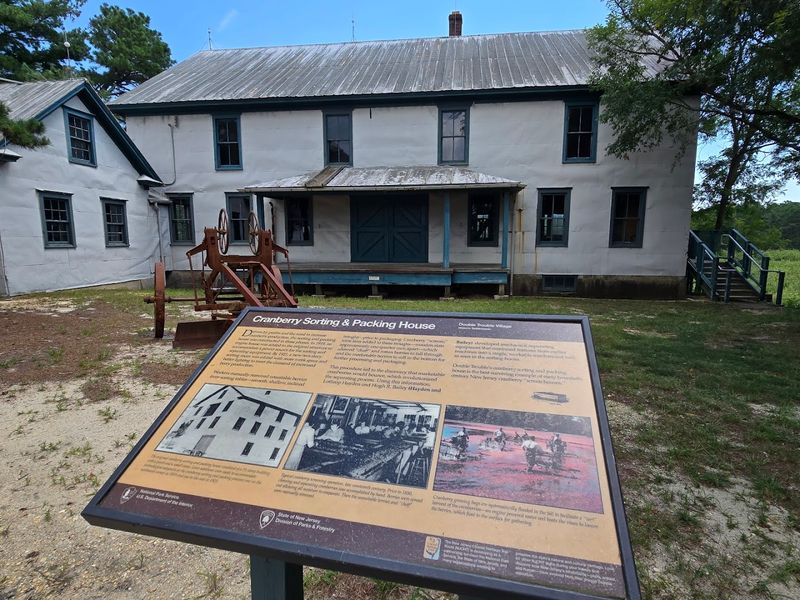
One of the most striking parts of the park is the historic village, a collection of original buildings from a working cranberry and lumber operation that dates back to the 1800s. The cranberry sorting and packing house, the sawmill, workers’ cottages, and a one-room schoolhouse are all still standing on the property.
The buildings are not open for interior tours during most visits, but the exteriors alone are worth the walk. Informational brochures available outside the visitor center explain what each structure was used for and how the operation functioned during its peak years.
The village layout gives a clear picture of what a self-contained company town looked like in the Pine Barrens during the 19th century. Workers lived, worked, and went to school all within walking distance of the bogs.
Seeing the whole setup together in one place makes the history feel concrete rather than abstract.
Trails for Every Kind of Walker
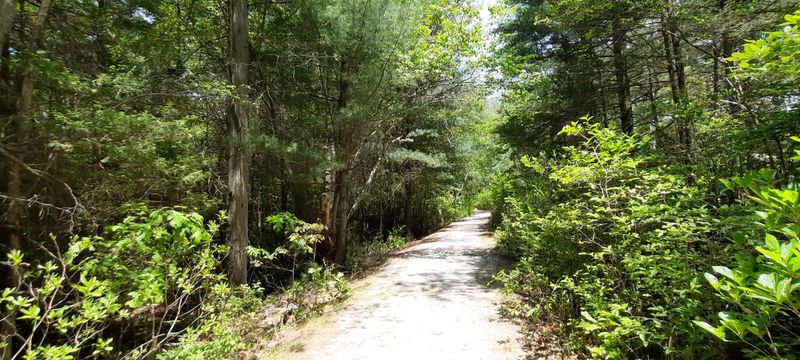
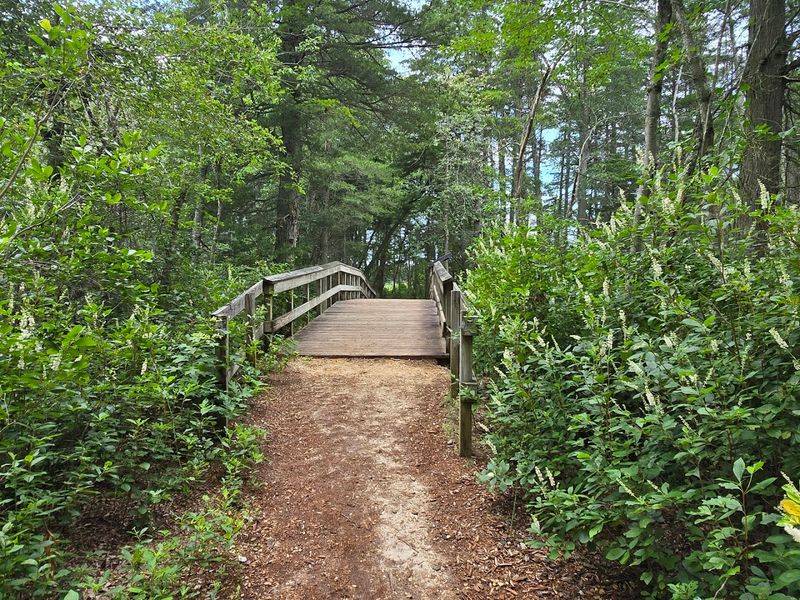
The trail system at Double Trouble covers a solid range of options, and the best part is that none of the trails involve significant elevation gain. The Pine Barrens terrain is flat, which makes this park genuinely accessible for kids, older adults, and anyone who wants a relaxing walk rather than a workout.
Most of the trails are under two miles, and the paths wind through cedar forests, past the cranberry bogs, along Cedar Creek, and through sections of the pine forest that Hurricane Sandy heavily affected. That recovery area is now a reclamation zone and adds an interesting layer to the landscape.
Trail markers are generally clear, though a few visitors have noted that the map can be a little confusing at first. Downloading a trail map before arriving or grabbing a brochure from outside the visitor center solves that problem quickly.
The yellow trail can flood in early spring, so checking conditions beforehand is worth the effort.
Cedar Creek and Water Activities
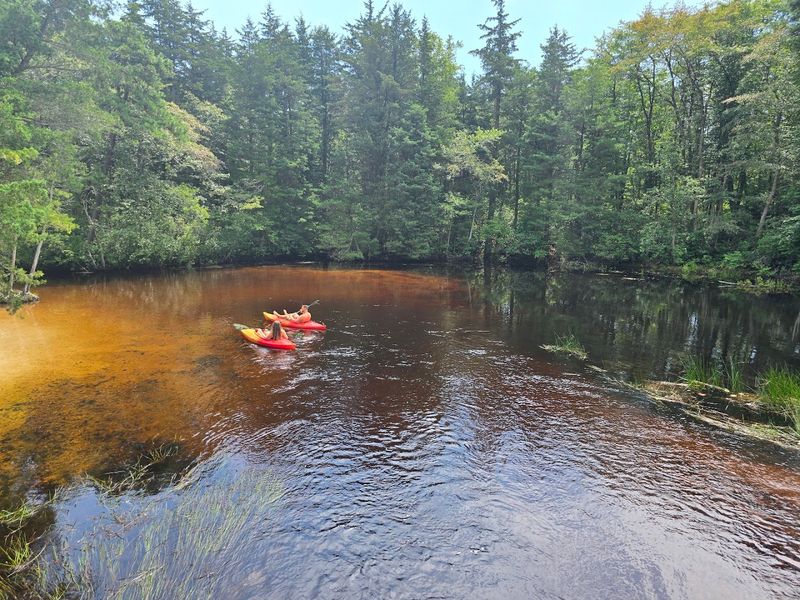
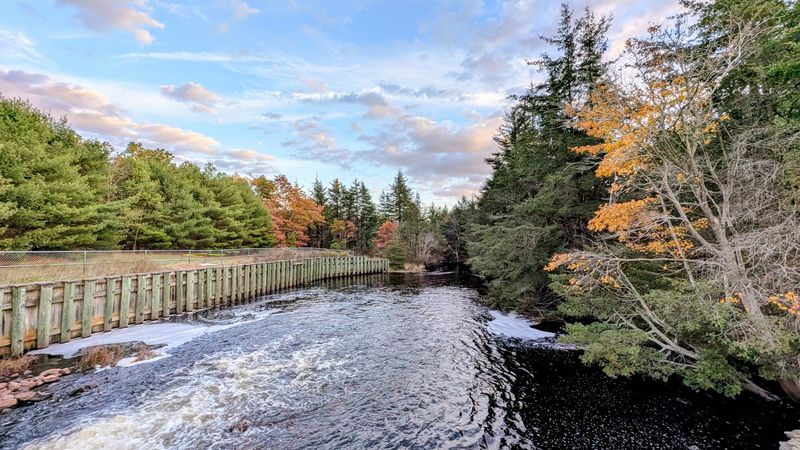
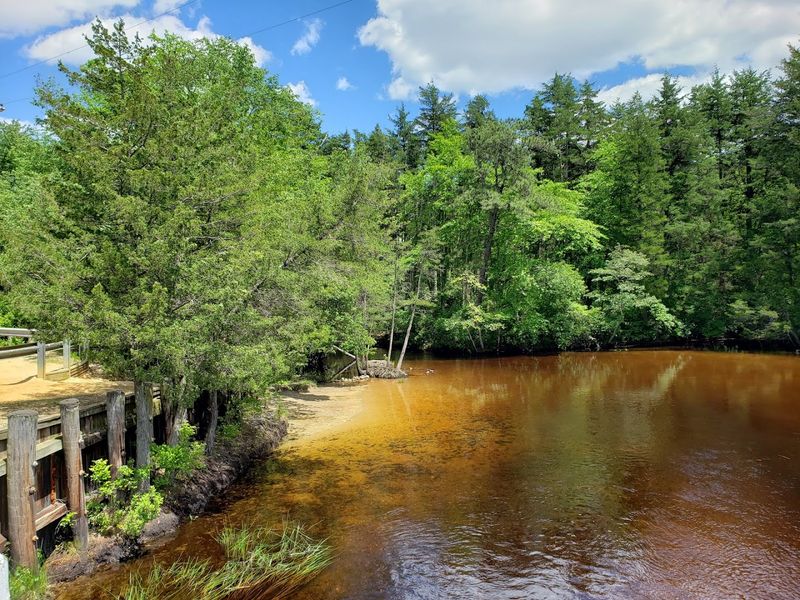
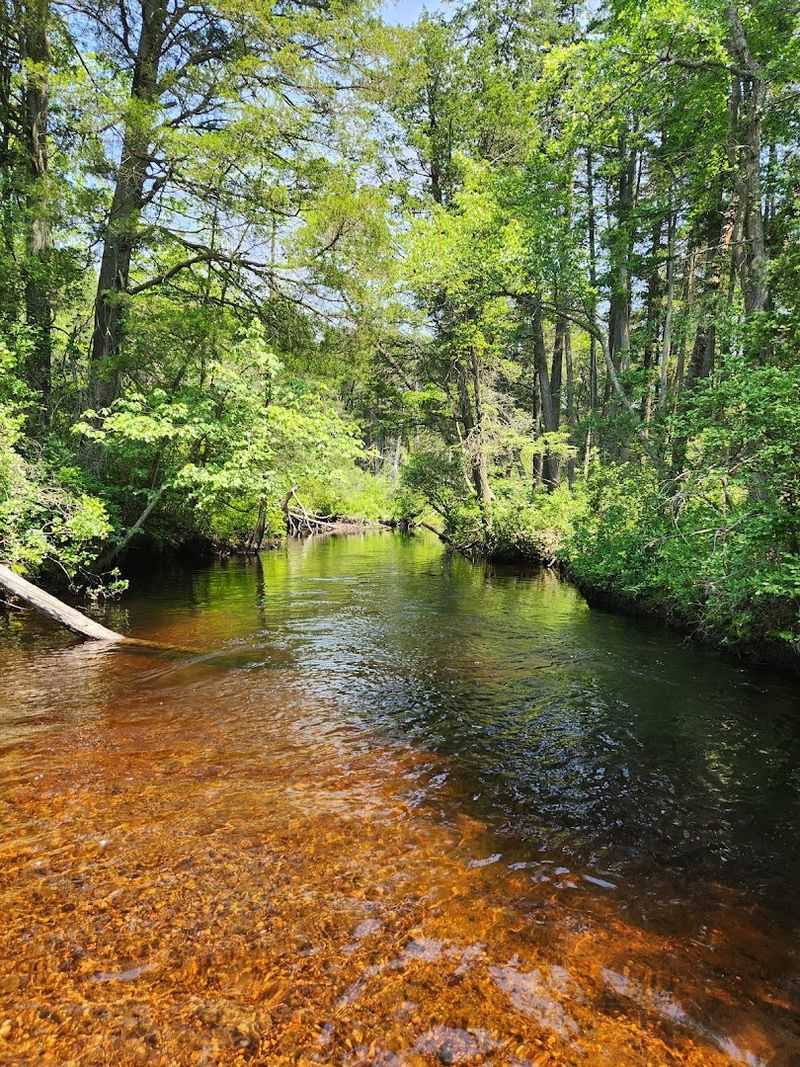
Cedar Creek runs through the park and is one of its most photographed features. The water carries a natural tea color from the tannins in the surrounding cedar trees, which is completely normal for Pine Barrens waterways and gives the creek a distinctive look that surprises first-time visitors.
Kayaking and canoeing are both possible along Cedar Creek, and the calm, flat water makes it a good option for paddlers of most skill levels. Some visitors bring their own kayaks, while others plan their trip around the creek as a central activity rather than just a backdrop.
The Cedar Creek crossings on the trails are consistently mentioned as some of the most photogenic spots in the entire park. Even without a kayak, walking along the creek bank and watching the water move through the cedar forest is a worthwhile way to spend part of the morning.
The creek alone justifies the visit for many regulars.
Photography Opportunities Around Every Corner
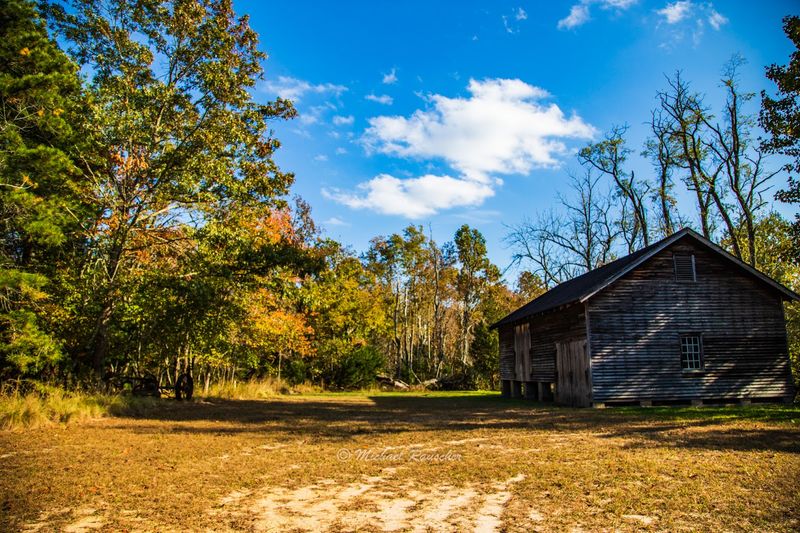
Double Trouble State Park has quietly built a reputation among photographers, and it is easy to understand why once you start walking the trails. The combination of historic wooden structures, flat bog reflections, cedar forest light, and abundant wildlife gives photographers a variety of subjects within a single two-hour visit.
The old cranberry packing house and sawmill are popular subjects because the weathered wood and surrounding vegetation make for compelling compositions. The bog areas offer wide, open frames with wildlife in the foreground, while the cedar forest trails create layered, shaded shots that look completely different depending on the time of day.
Early morning visits tend to produce the best light and the calmest water on the bogs, which helps with reflections. Fall is widely considered the peak season for photography here because the cranberry red and autumn foliage combine in ways that are hard to replicate at other Pine Barrens parks.
A camera bag and sturdy shoes cover everything you need.
Dog-Friendly From Start to Finish
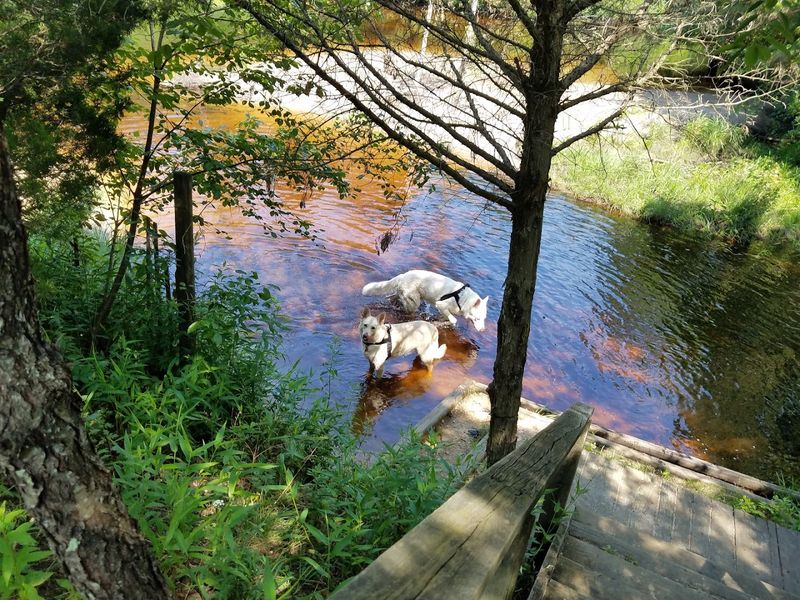
Dogs are welcome on the trails at Double Trouble, and the flat terrain makes it a comfortable outing for dogs of all ages and sizes. The wide, well-maintained paths give plenty of room for dogs to walk alongside their owners without feeling cramped, and the shaded cedar and pine sections keep things cooler on warmer days.
The park does ask that owners clean up after their pets, and most visitors are good about following that rule. The trails near the bogs offer enough wildlife activity to keep curious dogs engaged, though keeping them on a leash is important for protecting the turtles and other animals that live in the area.
Water access near Cedar Creek means dogs can cool off during longer walks, which is a practical bonus in the summer months. For anyone who has been looking for a state park that genuinely works well for both the human and the four-legged members of the family, this one checks every box.
Best Times of Year to Make the Trip
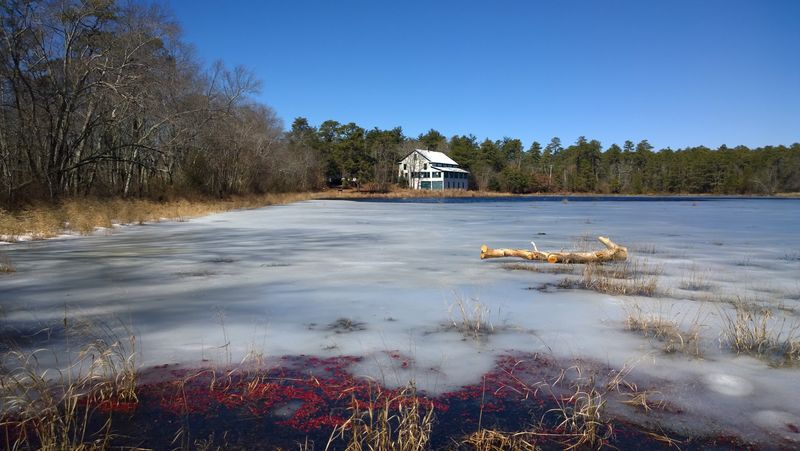
Fall is the season that gets the most attention at Double Trouble, and for good reason. The cranberry harvest happens in autumn, the foliage across the Pine Barrens turns, and the combination of red bogs and golden trees creates a landscape that feels completely different from the summer version of the park.
Summer visits work well too, especially for anyone planning to kayak Cedar Creek or walk the shaded forest trails. The tree canopy keeps the temperature manageable even on hot days, and the wildlife activity around the bogs is at its peak from late spring through early fall.
Winter visits have their own appeal. The park stays open year-round, and a fresh snowfall transforms the historic village and bog areas into a quiet, almost entirely different place.
Several regulars specifically mention winter as their favorite time to visit because the trails are empty and the landscape takes on a completely different character.
What to Pack Before You Head Out
Double Trouble is a bring-your-own-supplies kind of park. There are no food vendors, no concession stands, and no public restrooms on-site, so planning ahead makes a real difference in how comfortable the visit turns out to be.
A backpack with water, snacks, and a downloaded trail map covers the basics for most visits. Comfortable walking shoes with some grip are better than sandals because parts of the trail can be soft or muddy, especially near the bogs and creek crossings after rain.
Bug spray is a smart addition from late spring through early fall.
For anyone planning to kayak, launching from the Cedar Creek access point requires bringing your own equipment since there is no rental operation at the park. Binoculars are worth tossing in the bag for the wildlife around the bogs, particularly if birdwatching is on the agenda.
A fully charged phone with a downloaded map app rounds out the kit nicely.
Family Visits and Kid-Friendly Features
Families with kids tend to have a genuinely good time at Double Trouble because the park does not demand a high level of fitness or prior outdoor experience. The trails are flat, the distances are manageable, and the historic village gives children something concrete to look at and ask questions about.
The wildlife around the bogs is a natural draw for younger visitors. Spotting turtles on logs, watching frogs near the water’s edge, and keeping an eye out for birds keeps kids engaged without needing any organized programming or guided tours.
The history angle works well for school-age children who are learning about New Jersey’s past. The cranberry industry, the company town structure, and the preserved buildings offer a hands-on way to connect classroom topics to a real place.
Parents have noted that the park holds attention better than expected for kids who are not usually excited about hiking. That is a strong endorsement from the people who know best.
Why This Park Keeps Pulling People Back
Double Trouble keeps pulling people back because it offers a combination that is genuinely hard to find in one place: accessible trails, legitimate history, active wildlife, water access, and zero admission cost.
Regulars who have been visiting since the 1970s and 1980s still come back and find something new to appreciate. The park changes with the seasons in ways that reward repeat visits, and the flat terrain means it stays accessible as people get older rather than becoming something they age out of.
The park also rewards the kind of slow, unhurried visit that most outdoor destinations do not encourage. Sitting on a bench near the bogs, watching turtles, and doing absolutely nothing productive for an hour is a completely valid way to spend time here.
Not every great destination needs to be an adventure, and Double Trouble proves that point every single day it is open.



