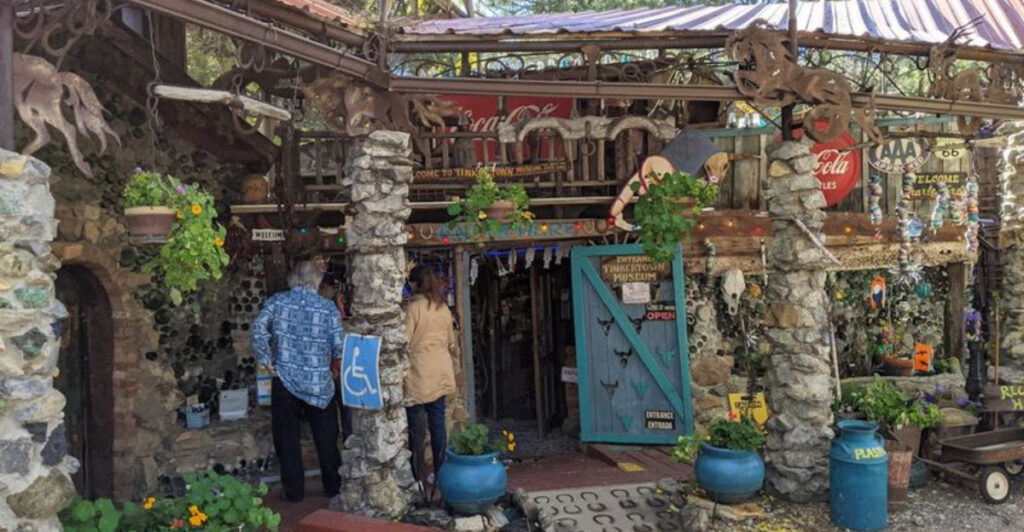
Tucked into the foothills of the Sandia Mountains along the Turquoise Trail, there is a museum in New Mexico that stops people in their tracks every single time. The walls are not made of brick or concrete but of more than 50,000 glass bottles, each one mortared into place by a single artist over the course of three decades.
That artist was Ross Ward, and what he built at this museum is one of the most original handmade environments in the entire country. From miniature Old West towns with moving figures to a full-sized vintage boat parked inside the building, the place defies easy description.
This is not a typical museum with velvet ropes and hushed halls. It is loud with personality, packed with detail, and completely unforgettable.
Keep reading to find out exactly what makes this quirky New Mexico landmark worth every mile of the drive.
50,000 Bottles and the Walls That Hold Them
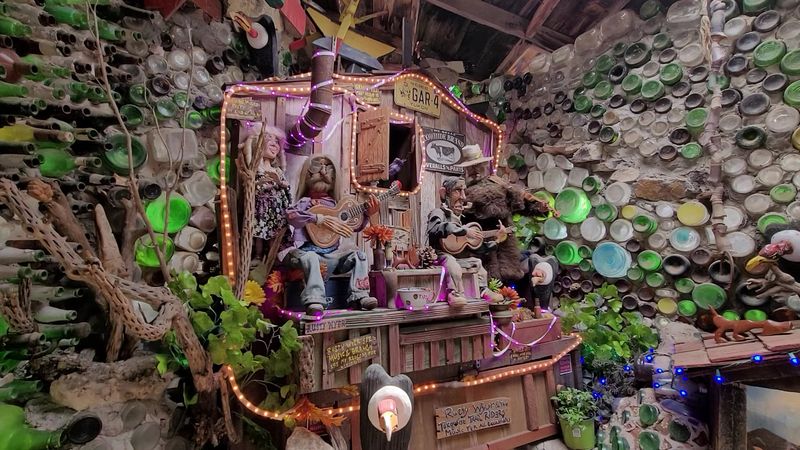
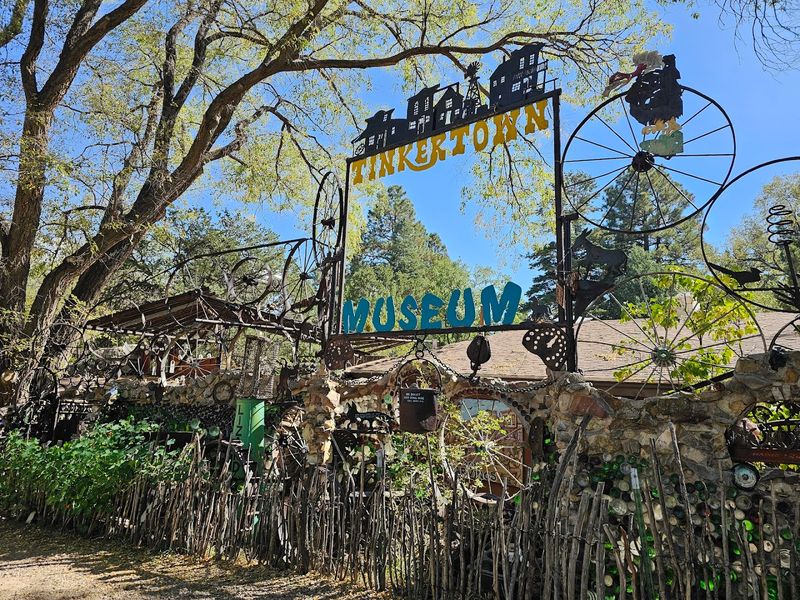
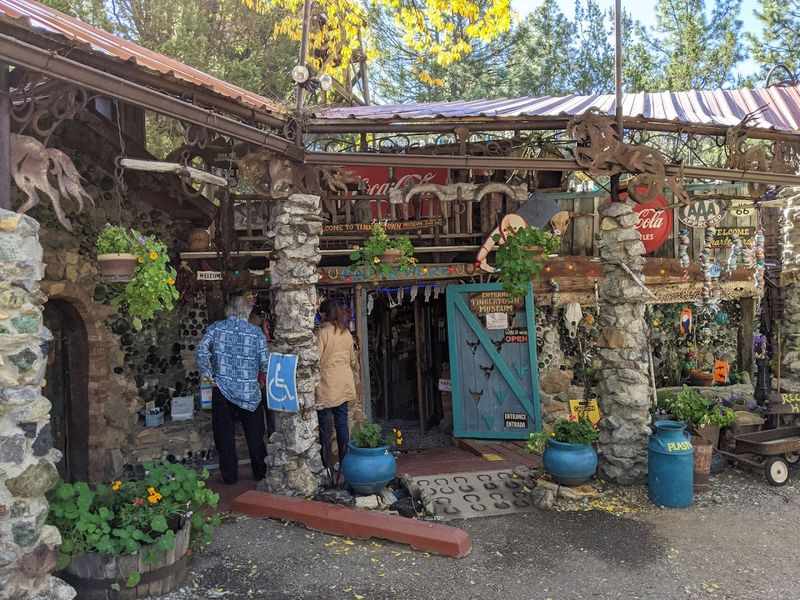
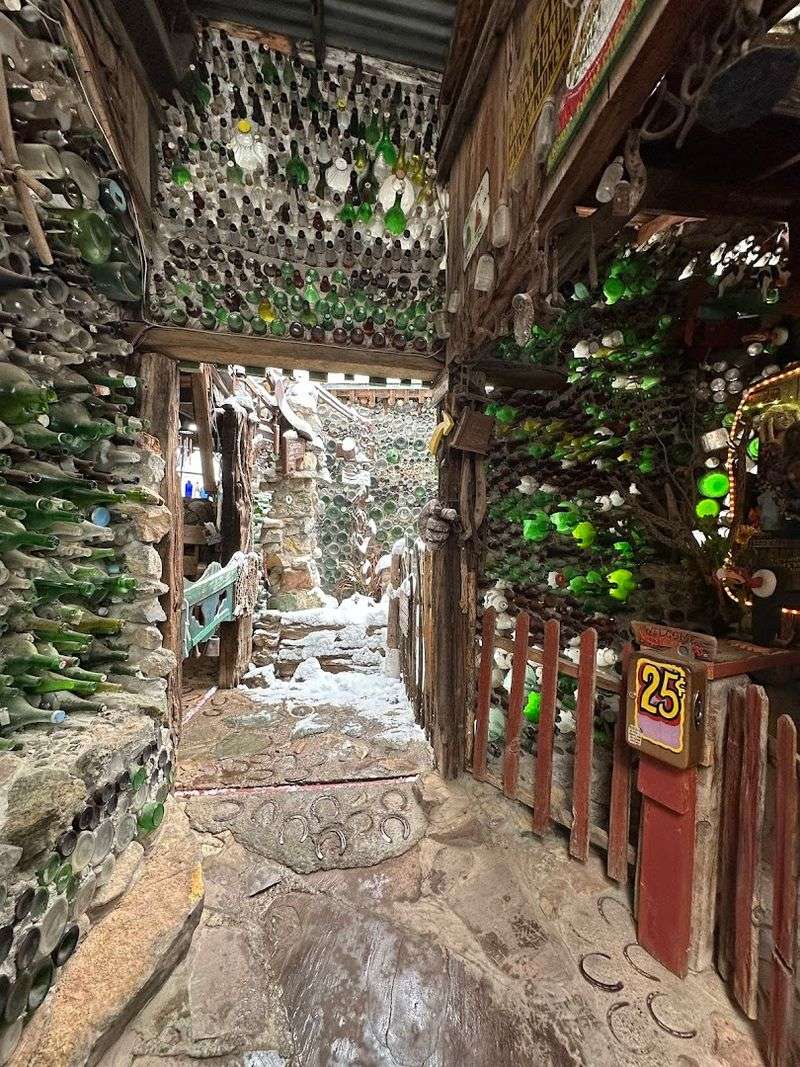
The most immediately striking thing about the physical structure of Tinkertown Museum is the walls themselves. Ross Ward used more than 50,000 glass bottles to construct much of the building, pressing them into mortar in tight, colorful rows that create a patchwork of glass and light across the exterior and some interior walls.
The bottles came from everywhere: collected over years, donated by neighbors, and sourced from wherever Ward could find them. The result is a building that looks unlike anything else in New Mexico, or really anywhere else in the United States.
Each bottle is a small decision, a specific choice about placement and color and angle. Multiplied by 50,000, those decisions add up to something that functions as both architecture and art at the same time.
The walls are sturdy and weathered now, part of the landscape of Sandia Park, and they signal immediately that whatever is inside this building will be worth seeing.
The Miniature Old West Town That Moves
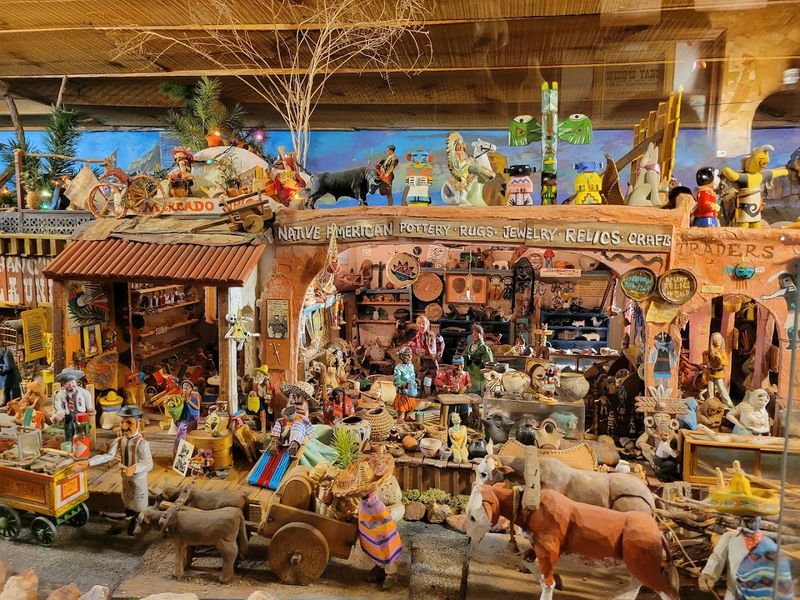
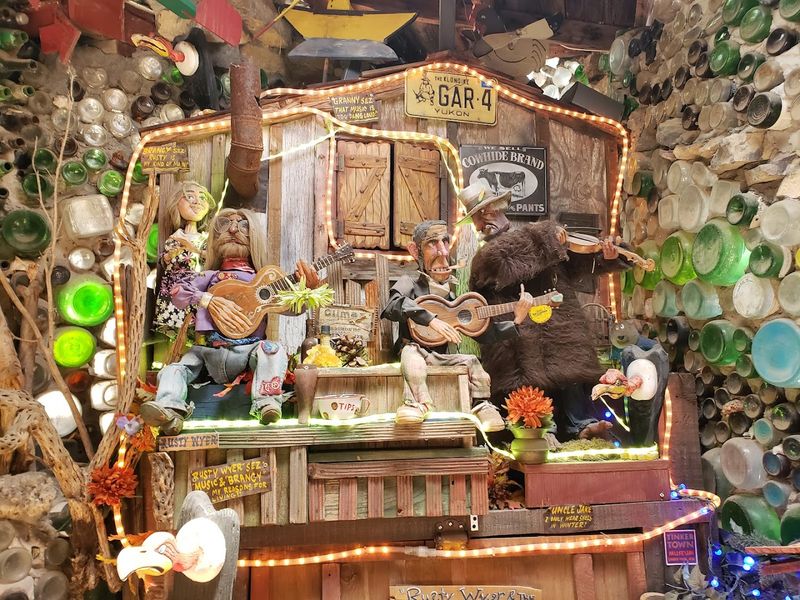
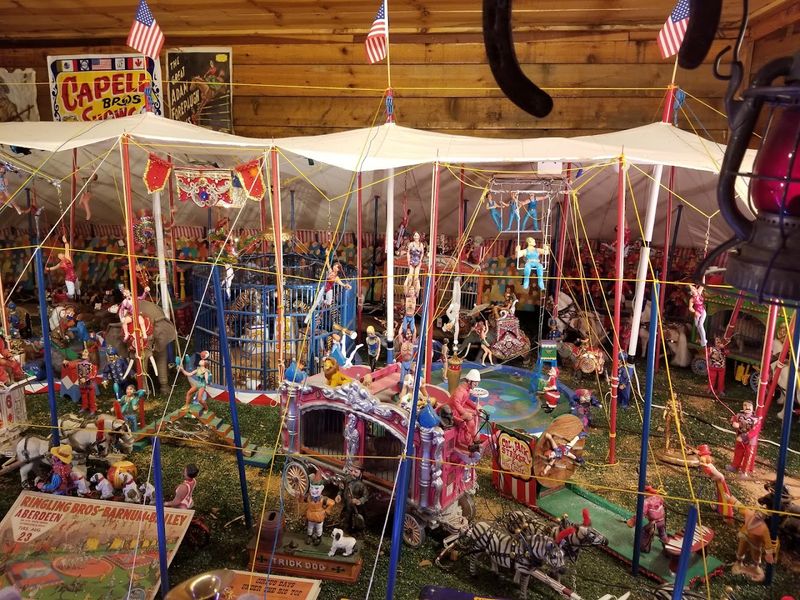
The centerpiece of the museum experience is a sprawling miniature Old West town that Ross Ward carved almost entirely by hand. The figures are wooden, hand-painted, and astonishingly detailed, populating a tiny frontier world complete with a saloon, a general store, a blacksmith, and dozens of characters going about their miniature lives.
What sets this display apart from a standard diorama is that much of it actually moves. Quarter-activated mechanisms bring the figures to life, turning heads, moving arms, and animating scenes that would otherwise just sit still behind glass.
As of 2026, most of these mechanisms still function, which is a testament to how carefully they were built and how well the museum maintains them.
Visitors who rush through miss most of what makes this display worth stopping for. The story cards, the tiny details painted onto storefronts, and the layered scenes within scenes reward anyone willing to slow down and look carefully at what Ward spent decades putting together.
A Vintage Boat With a Wild Story
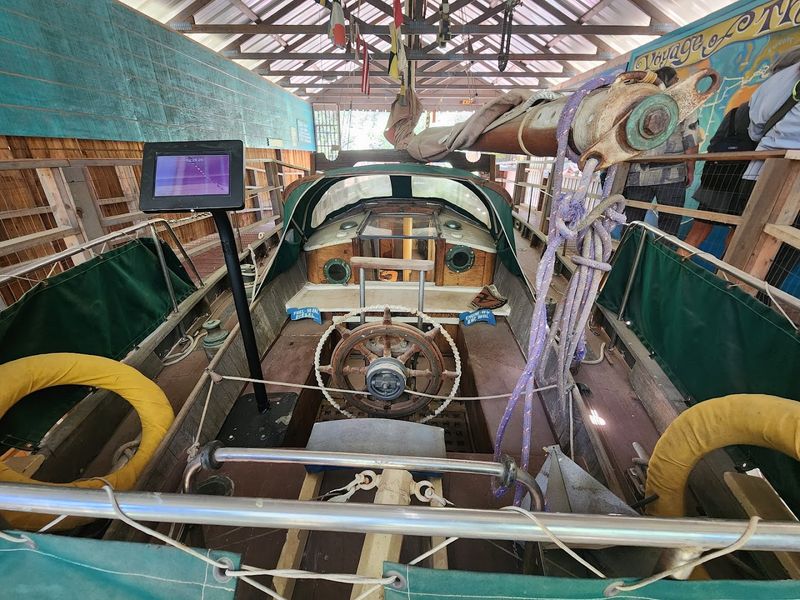
Parked inside the museum, taking up a significant chunk of floor space, is a full-sized boat called the Theodora R. It is not a model or a replica.
It is an actual vessel with its own history, and Ross Ward acquired it and made it part of the Tinkertown collection because that is exactly the kind of thing Ross Ward did.
The boat comes with a story documented in a book called “Ten Years Behind the Mast,” which is available in the museum gift shop for anyone who wants the full account of where this vessel has been and how it ended up in the mountains of New Mexico.
The Theodora R is one of those details that makes Tinkertown feel more like a curated world than a conventional museum. It does not fit neatly into any category, which is precisely the point.
The boat is a conversation starter, a curiosity, and a reminder that the person who built this place operated on his own terms entirely.
Quarters Are Currency Here
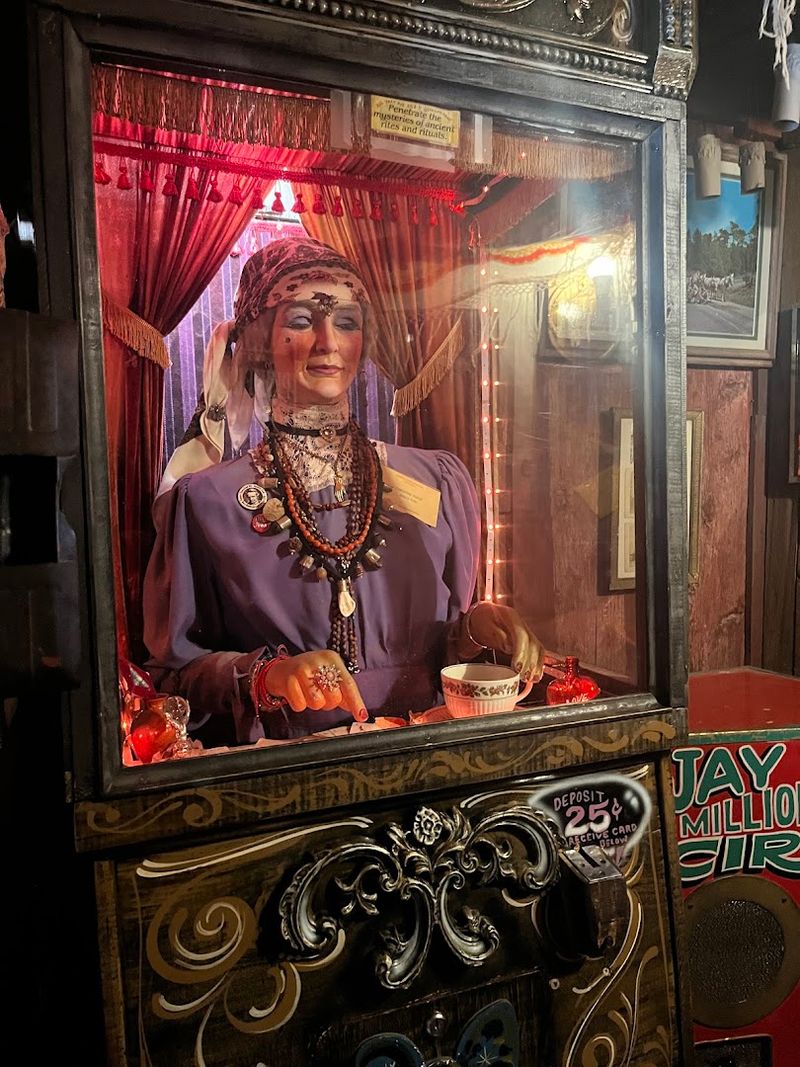
One of the most consistently mentioned tips from anyone who has visited Tinkertown is simple: bring quarters. Lots of them.
A significant number of the interactive displays throughout the museum are activated by dropping a quarter into a slot, which triggers mechanical movements, lights, or sounds that bring the exhibits to life.
Some of these coin-operated displays are original carnival machines that Ward collected over his years traveling with fairs. Others were built by Ward himself, using the same mechanical ingenuity that runs through everything he created.
Either way, they work, and activating them is one of the most satisfying parts of a visit.
There is also a wishing well on the property that takes coins, and a penny smashing machine for collectors who enjoy that particular hobby. The museum does sell quarters at the entrance for guests who arrive unprepared, so the experience is not ruined by an empty pocket, but having a roll ready before arrival makes the whole thing more spontaneous and fun.
The Outdoor Area and the Jeep That Became a Lincoln
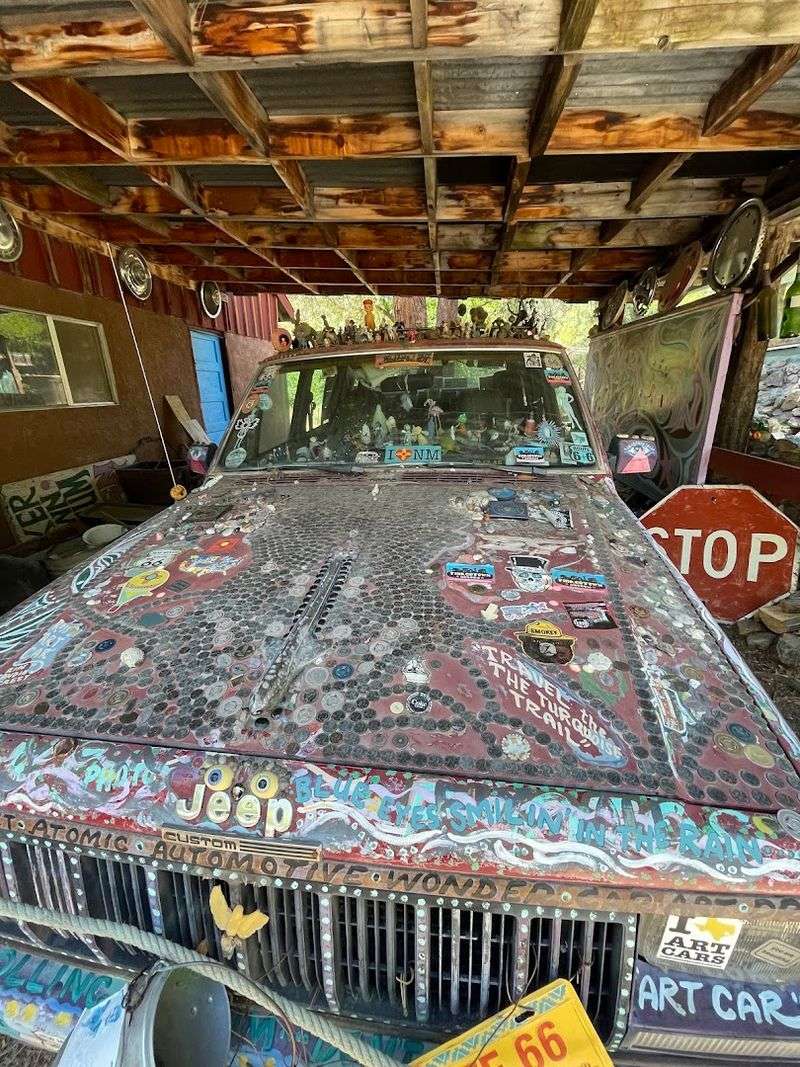
The experience at Tinkertown does not end when you step back outside. There is an outdoor area adjacent to the main museum building that holds additional displays, including a covered wagon and a rotating collection of antique items and outdoor art installations.
One of the most talked-about outdoor features is a Jeep that has been converted to look like a Lincoln Continental. It is exactly as bizarre as it sounds, and it is exactly the kind of detail that makes Tinkertown what it is.
Ward had a gift for turning ordinary objects into something that demanded a second look.
The outdoor space gives the whole visit a little extra room to breathe, especially on days when the main building feels crowded. It also connects the museum to its mountain setting in a way that the interior cannot quite replicate.
The Sandia foothills are visible beyond the fence line, and the combination of handmade folk art and natural landscape makes for a genuinely memorable afternoon.
How Long Should You Plan to Stay
Most people who visit Tinkertown without doing any research end up staying much longer than they planned. The standard estimate is one to two hours, but that assumes a reasonably thorough look at the displays.
People who read the wall text, activate the coin machines, explore the outdoor area, and browse the gift shop often find that closer to two hours is more realistic.
The museum is not enormous in terms of square footage, but the density of what is on display means there is always more to notice. Ward filled every surface, every shelf, and every corner with something worth pausing over, and first-time visitors consistently report that photos do not capture how much is actually there.
Children tend to move through quickly if left to their own pace, so building in time to slow them down at the interactive displays pays off. The quarter-activated machines are a reliable way to hold attention and make the visit feel more like participation than observation.
Plan for two hours and count any extra time as a bonus.
Accessibility and Practical Details to Know Before You Go
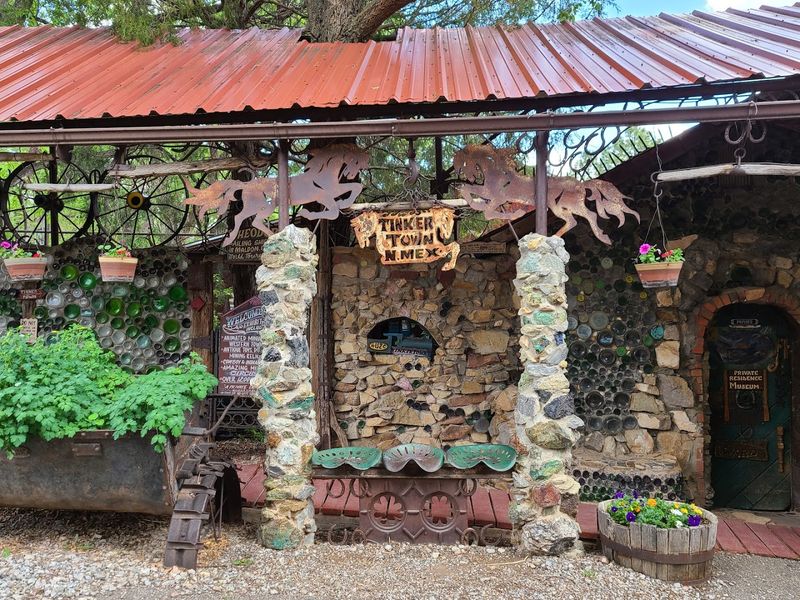
A few practical notes can make the difference between a smooth visit and a frustrating one. The parking lot at Tinkertown is gravel, relatively small, and can get tight on busy weekend days.
Arriving closer to the 10 AM opening time gives the best chance of a comfortable spot without the midday crunch.
The flooring inside the museum is uneven in places, which is worth knowing for anyone with mobility concerns. Wheelchairs may have difficulty accessing certain sections of the building, and the same applies to crutches or canes in some areas, though much of the museum is still navigable.
Wearing sturdy, flat-soled shoes is genuinely useful advice, especially after rain when the gravel lot can develop some unexpected terrain.
There is an outhouse in the parking lot for restroom needs. Admission is priced affordably enough that it rarely becomes a barrier for families, and the overall cost of a visit, including quarters for the machines, remains well within reach for most budgets.
The Turquoise Trail Connection

Tinkertown Museum sits directly along the Turquoise Trail, the National Scenic Byway that connects Albuquerque to Santa Fe through a stretch of high desert and mountain terrain that most interstate travelers never see. The trail passes through small towns like Madrid and Cerrillos, each with its own character and history.
Adding Tinkertown to a Turquoise Trail itinerary is one of the easiest ways to turn a scenic drive into a full day of discovery. The museum is roughly 30 minutes east of Albuquerque, making it an accessible detour that does not require significant backtracking for anyone already heading north toward Santa Fe.
The drive to Sandia Crest itself is nearby and worth combining with a museum visit, offering views across the Rio Grande valley that stretch for miles on clear days. The whole corridor rewards slow travel, and Tinkertown fits that rhythm perfectly.
It is the kind of stop that becomes the story you tell people when you get home.
Three Generations Keep Coming Back
One of the most telling signs of a truly durable attraction is when the same families return across multiple generations. Tinkertown has been doing exactly that since Ross Ward first opened it to the public.
People who visited as children in the 1980s and 1990s now bring their own kids, and some have started bringing grandchildren.
The appeal holds across age groups in a way that few places manage. Younger children are drawn to the moving figures and the coin machines.
Older kids and teenagers find the density of detail and the sheer oddness of the place genuinely engaging rather than boring. Adults tend to spend the most time reading the wall text and absorbing the backstory of what Ward created.
That multi-generational pull is not accidental. Ward built Tinkertown as a place for everyone, and the staff who have maintained it since his passing have honored that intention carefully.
The museum feels like it belongs to its community, and the community clearly feels the same way in return.
What the Walls Say When You Read Them
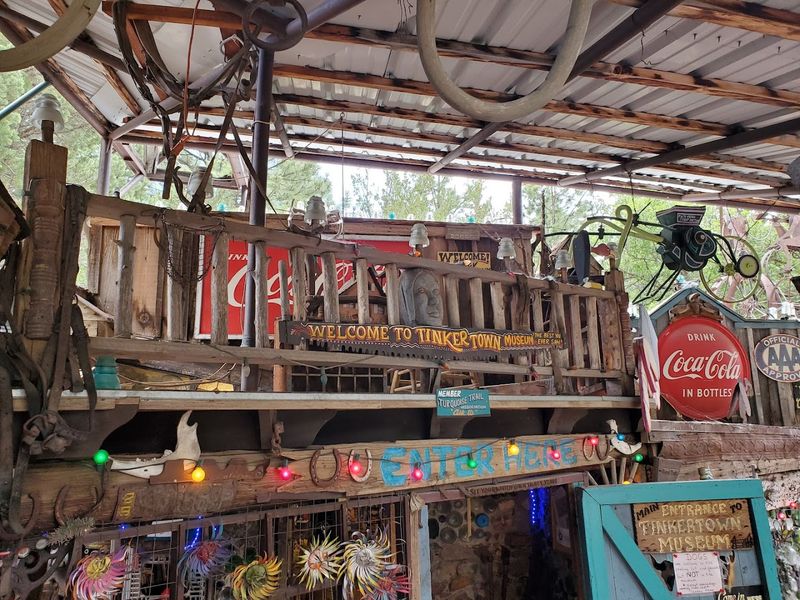
Ross Ward had a lot to say, and the walls of Tinkertown are where he said most of it. Throughout the museum, hand-painted signs, collected vintage advertisements, personal sayings, and quirky observations cover nearly every available surface.
Reading them is a separate experience layered on top of looking at the dioramas.
One of the most quoted is a simple instruction that the museum has kept front and center: “Go Slow, C More.” It is three words, but it captures something essential about how Tinkertown rewards patience. The people who rush through miss the small painted sign tucked behind a miniature figure, or the vintage advertisement repurposed as commentary, or the handwritten note that turns out to be genuinely funny.
Ward used text as part of his art in a way that feels ahead of its time now. The walls function as a kind of ongoing editorial, personal and public at the same time.
Spending time reading them adds a layer of connection to the person who built all of this that the dioramas alone cannot fully provide.
A Nonprofit Future for a Priceless Collection
Tinkertown Museum has been operating as a family-run attraction since Ross Ward built it, but the future of the collection is now being secured through a new nonprofit structure that the current stewards have been working to establish. The goal is to ensure that what Ward created over 30 years can be preserved and maintained for the next 30 and beyond.
The nonprofit effort means that visits to the museum now carry an added dimension of support. Admission fees, gift shop purchases, and donations all feed directly into the preservation of the building, the displays, and the mechanical systems that keep the interactive elements working.
For anyone who wants to go further than a single visit, the museum website at tinkertownmuseum.org has information about how to contribute to the ongoing effort. The collection represents not just the work of one remarkable artist but a piece of American folk art history that deserves to outlast any single generation.
Getting involved is as straightforward as showing up and spending an afternoon there.
Why This Place Stays With You Long After You Leave
There is a specific kind of place that keeps surfacing in your memory days after you have left it. Tinkertown is that kind of place.
The combination of scale, detail, personal history, and sheer accumulated effort produces something that does not reduce neatly to a few sentences or a handful of photos.
What Ross Ward built over three decades was not just a collection of objects. It was an argument, made in wood and glass and mortar, that a single person with enough dedication can create something genuinely lasting.
The 50,000 bottles in the walls are not just a construction material. They are a record of sustained commitment to a vision that most people would have abandoned long before reaching that number.
Tinkertown Museum earns its place on any New Mexico itinerary not because it is famous or heavily marketed but because it delivers on every level once you are standing inside it. That is the rarest quality a destination can have, and it is exactly what keeps people driving back up Sandia Crest Road year after year.
Where to Find This One-of-a-Kind Place
Tinkertown Museum sits at 121 Sandia Crest Rd, Sandia Park, NM 87047, right along the Turquoise Trail National Scenic Byway. The drive there is part of the appeal, winding through pine-covered hills east of Albuquerque with the Sandia Mountains rising sharply in the background.
The museum is open Thursday through Monday from 10 AM to 4 PM, and it closes for the winter season on November 1st, reopening on April 1st each year. That seasonal schedule is worth checking before making the trip, so a visit to tinkertownmuseum.org is a smart first move.
Parking is available on-site, though the lot is gravel and on the smaller side, so arriving early on busy weekend days is a good idea. The location itself, nestled between Cedar Crest and the base of Sandia Crest, makes it a natural stop for anyone already exploring the mountain corridor east of Albuquerque.
Share this story