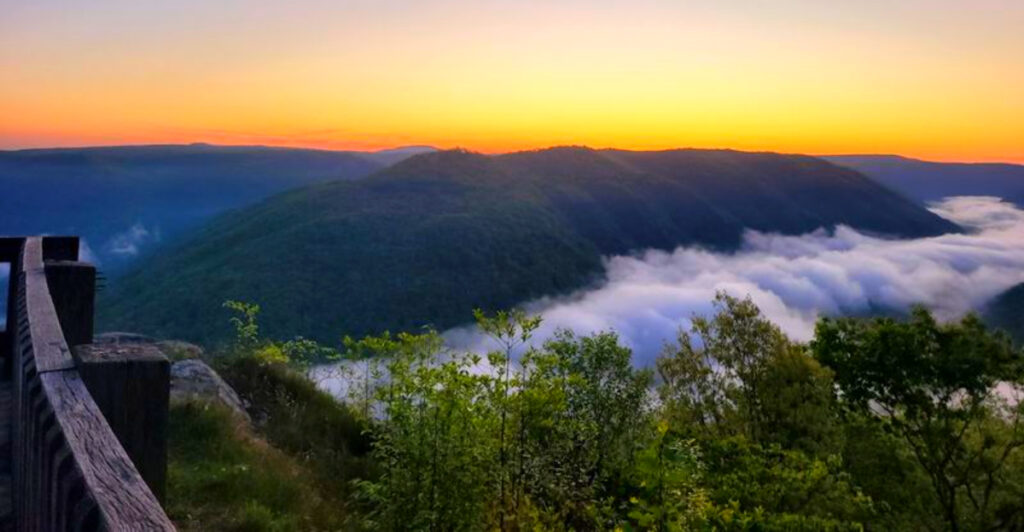
Deep in the mountains of southern West Virginia, an ancient river has carved towering sandstone cliffs, roaring whitewater rapids, and one of the most breathtaking landscapes in Appalachia. Visitors come for world-class rafting, dramatic hiking trails, spectacular overlooks, and the iconic steel arch bridge spanning the gorge, but many leave wondering why they waited so long to discover America’s newest national park. Every bend in the river reveals another reason this remarkable landscape has become one of the country’s fastest-growing outdoor destinations.
The adventure extends far beyond the famous bridge. Historic coal towns, nearly 100 miles of hiking trails, premier rock climbing, scenic drives, abundant wildlife, and some of the oldest exposed geology in North America make every visit feel different from the last. Whether you’re chasing adrenaline or simply looking for one of America’s most spectacular natural escapes, this is a destination that deserves a place on every travel bucket list.
Here’s why New River Gorge National Park and Preserve has quickly become one of America’s must-visit national parks and one of the greatest outdoor destinations in Appalachia.
Where the Gorge Begins: Location, Address, and First Impressions
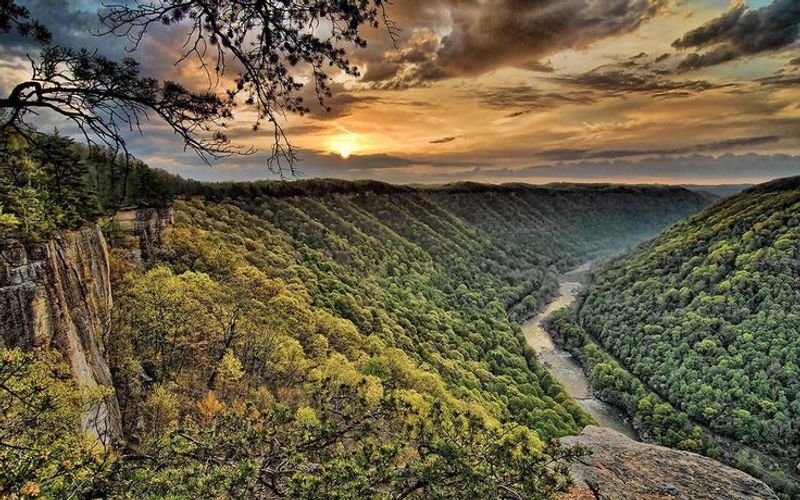
Most national parks greet you with a grand entrance gate, but New River Gorge National Park and Preserve skips that formality entirely. There is no fee booth, no long queue of cars, just the open road and a landscape that announces itself with quiet authority. The park’s headquarters is located at 104 Main Street in Glen Jean, West Virginia, and the surrounding protected area stretches across more than 70,000 acres in Fayette and Summers counties.
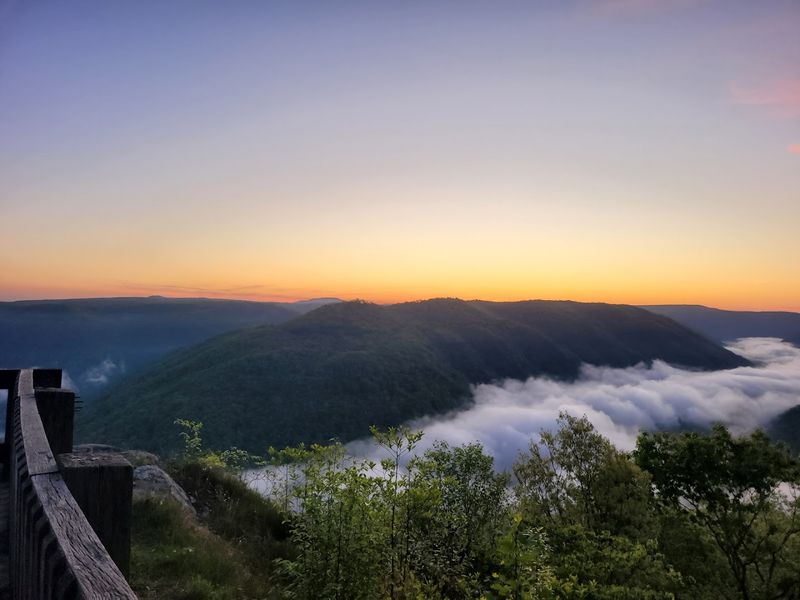
The gorge hugs over 50 miles of the New River, creating a sprawling natural corridor that rewards explorers who take their time. My first overlook stop left me genuinely speechless, which is not something that happens often. The canyon dropped away in layers of green and grey, with the river glinting far below like a silver thread pulled tight through the mountains.
This park officially earned its national designation on December 27, 2020, making it the 63rd national park in the United States and the newest outside of Alaska.
The Ancient River That Defies Its Own Name
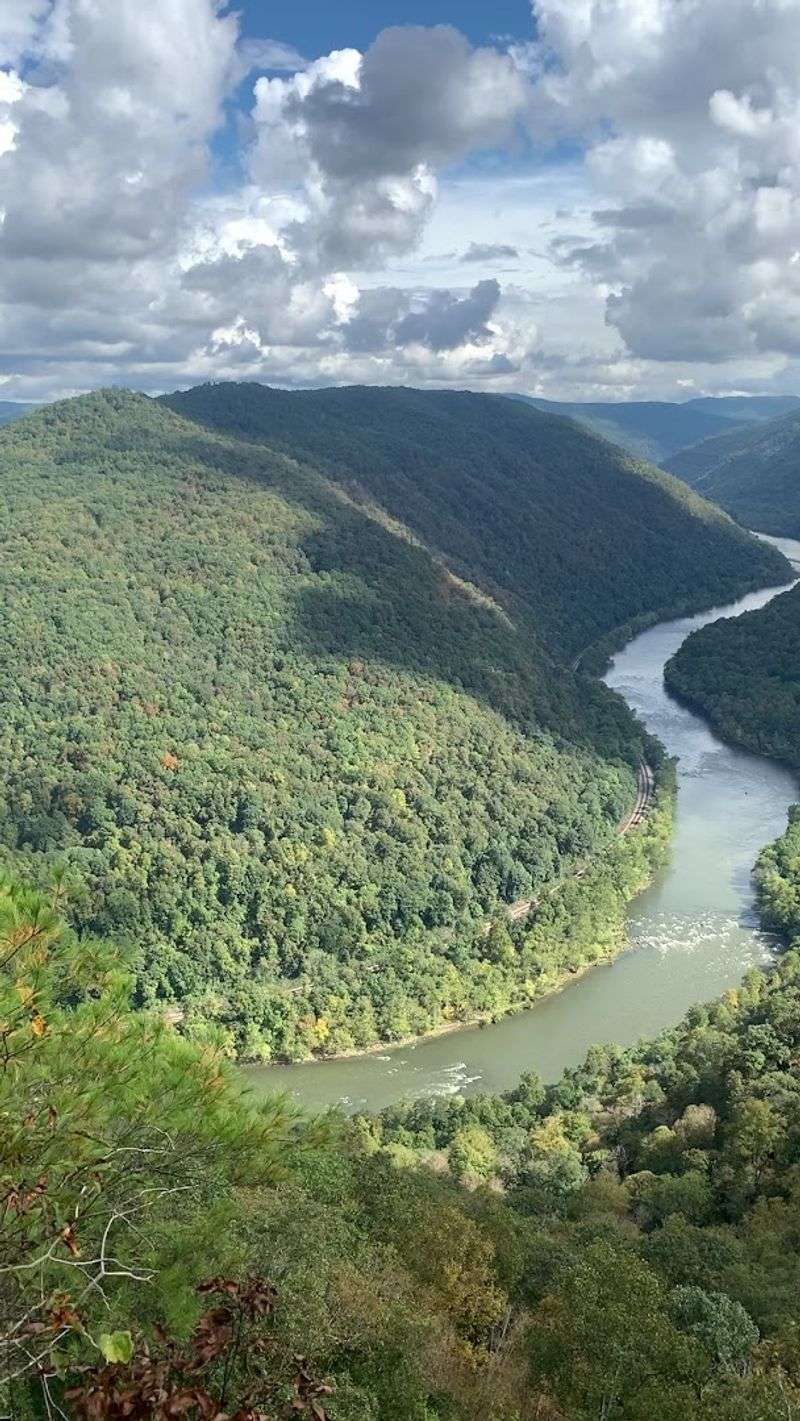
The name “New River” is one of the great geological jokes in North America. This waterway is actually considered one of the oldest rivers on the continent, with its current course dating back at least 65 million years, which means it predates the very mountains it now flows through. It also flows northward, a direction that sets it apart from most Appalachian rivers and hints at just how ancient and stubborn this waterway truly is.
Over millennia, the river carved what is now the longest and deepest river gorge in the entire Appalachian Mountain range. In some sections, the canyon plunges nearly 900 vertical feet, exposing rock layers that are roughly 330 million years old. Fossils of ancient plants and marine invertebrates occasionally appear among the boulders scattered along the riverbed, turning a casual hike into an unexpected geology lesson.
Four seams of high-quality bituminous coal were also unearthed by the river’s relentless cutting, a discovery that would eventually shape the entire human story of this region.
The Steel Giant: New River Gorge Bridge Up Close
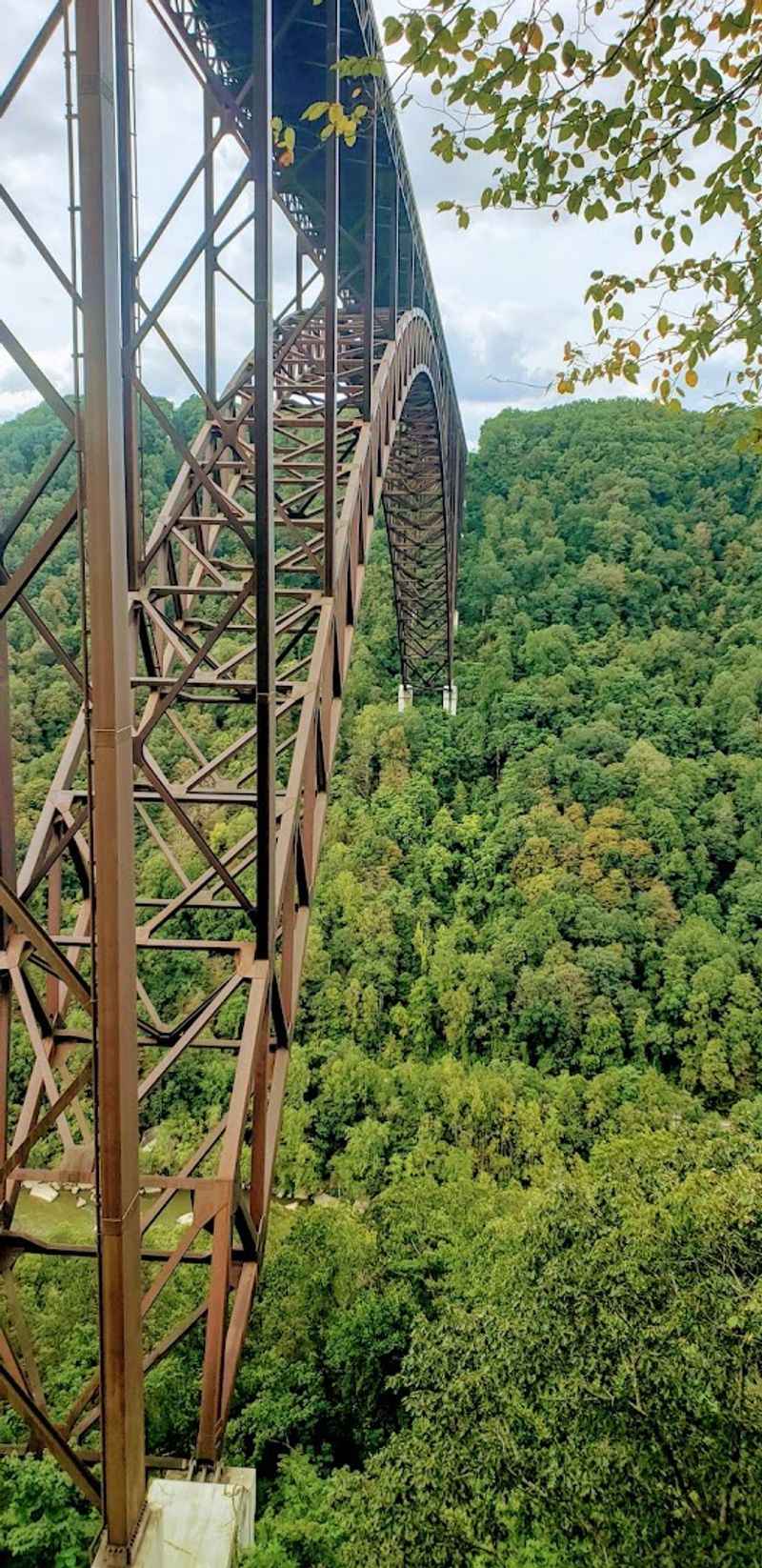
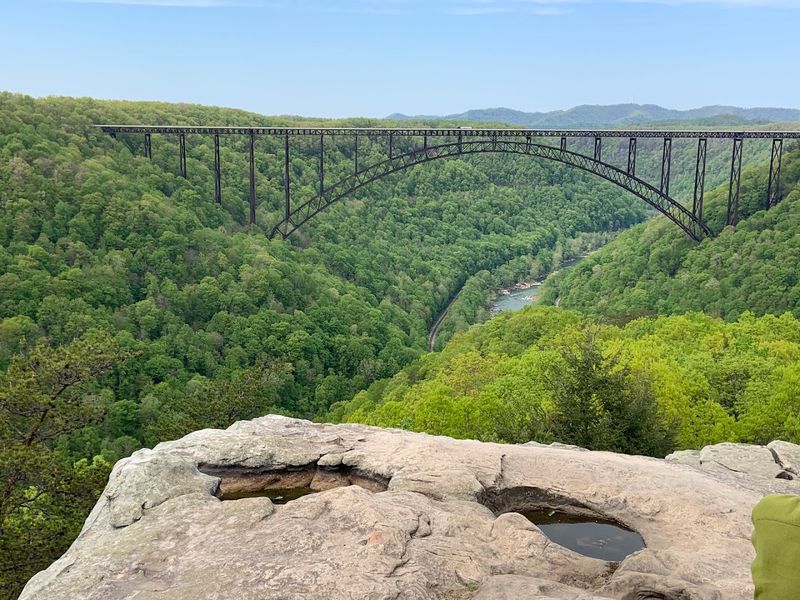
Few engineering structures in the United States carry the same visual punch as the New River Gorge Bridge. Completed on October 22, 1977, this rust-colored steel arch stretches 3,030 feet across the canyon, making it the longest steel span in the Western Hemisphere. It stands 876 feet above the river, earning it the rank of third highest bridge in the entire country.
Before the bridge existed, crossing the gorge meant a 40-minute crawl down winding mountain roads. The bridge reduced that journey to under a minute, which is a transformation that still feels almost miraculous when you drive it. The structure was built using Cor-ten weathering steel, a material that develops a protective rust-like surface layer, eliminating the need for ongoing painting while blending naturally with the canyon’s earthy tones.
In 2006, the U.S. Mint honored the bridge by featuring it on the West Virginia state commemorative quarter, and the guided Bridge Walk experience lets visitors cross a maintenance catwalk 25 feet beneath the deck for a perspective that is equal parts thrilling and unforgettable.
Whitewater That Means Business: Rafting the New River
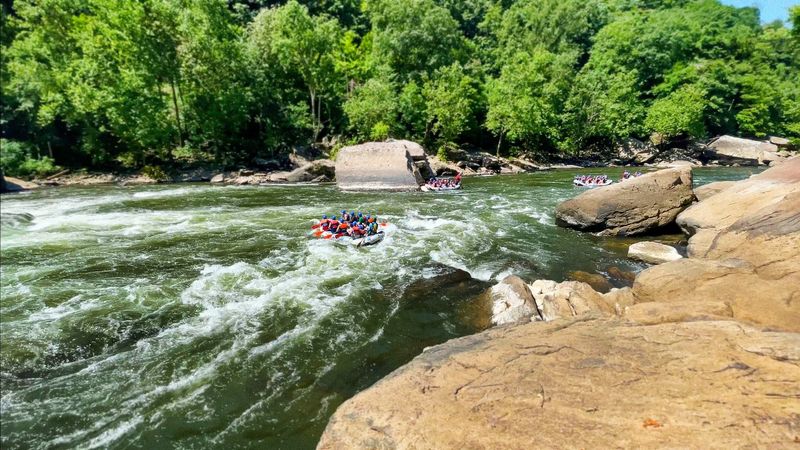
The New River does not ease you into its personality. On the Lower Gorge stretch, rapids escalate quickly through Class III territory and push well into Class V, where powerful currents, massive boulders, and hydraulic features demand both skill and respect. These are not carnival rides dressed up as rapids; they are serious whitewater that has earned the river a national reputation among paddling enthusiasts.
For families or first-timers, the Upper New River offers a gentler introduction, with Class I to III rapids that deliver plenty of splashes and scenery without the white-knuckle intensity of the lower section. The river runs year-round and stays navigable even in drier months, which is a practical bonus that most whitewater destinations cannot match.
Numerous licensed outfitters operate from April through October, providing guides, safety equipment, and shuttle services that make the experience accessible to almost anyone willing to get wet. And if that is not enough adrenaline, the nearby Gauley River unleashes its legendary Class V rapids each September and October during scheduled dam releases, drawing serious paddlers from across the country.
Trail by Trail: Hiking Views That Actually Deliver
Nearly 100 miles of trails thread through the park, ranging from paved boardwalks suitable for a quick afternoon stroll to rugged backcountry routes that demand proper boots and a full water bottle. The Endless Wall Trail consistently draws praise for offering some of the most dramatic views in the park. This roughly 2.4-mile loop winds through dense rhododendron tunnels and old-growth forest before arriving at Diamond Point Overlook, where the gorge opens up in a sweeping panorama that rewards every step of the approach.
The Long Point Trail, a 3.2-mile round trip, leads to a rocky outcropping that frames the New River Gorge Bridge in what might be the park’s most photographed composition. For those short on time, the Canyon Rim Boardwalk near the visitor center offers paved access to multiple overlook platforms, with staircases descending to lower vantage points for varied perspectives.
Grandview’s Turkey Spur Rock delivers equally commanding views from a different section of the park, proving that no matter which trail you choose, the gorge has a way of making the effort feel entirely worthwhile.
Vertical Ambitions: Rock Climbing on Nuttall Sandstone
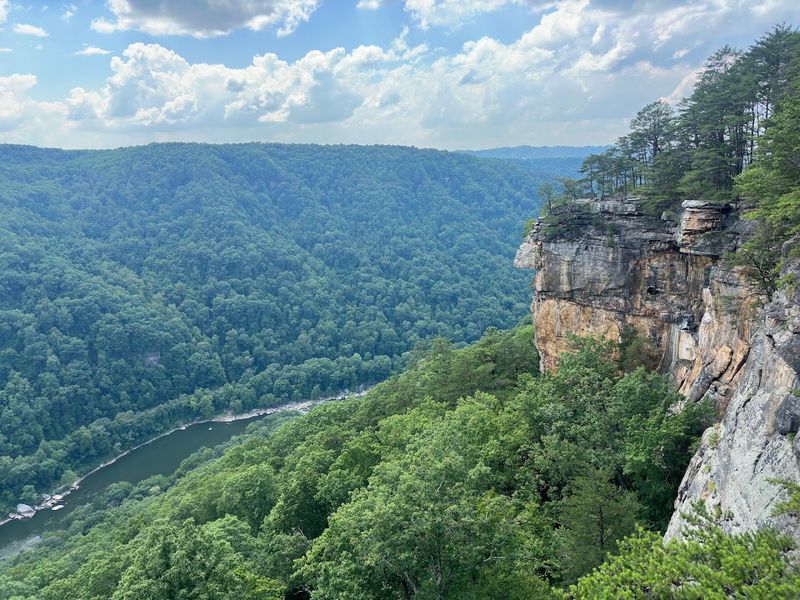
The Nuttall sandstone cliffs lining the gorge rim have quietly built a reputation as one of the premier climbing destinations on the entire East Coast. Over 1,400 established routes cover these walls, ranging from approachable beginner lines to technical multi-pitch challenges that attract experienced climbers from across the country and beyond. The rock is generously featured, offering cracks, face routes, and occasional roof sections that keep even veteran climbers engaged and problem-solving.
The Endless Wall area alone hosts the largest concentration of sport climbing routes within the park, making it a natural gathering point for the climbing community. The sandstone’s reliable friction and varied textures ensure that returning climbers rarely feel like they are repeating themselves, which is a quality that keeps people coming back season after season.
Local outfitters offer beginner instruction and gear rental, meaning you do not need to arrive as an expert to experience what these cliffs have to offer. The atmosphere at popular climbing areas tends to be warm and encouraging, with experienced climbers often sharing beta and cheering on newer visitors as they work through their first routes on these remarkable walls.
Coal, Rails, and Ghost Towns: The Industrial Past
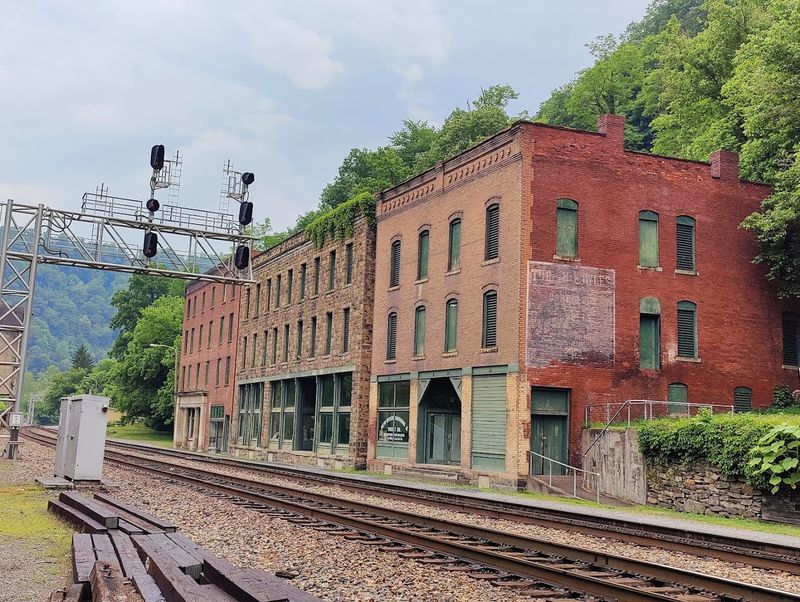
Long before the park existed, this gorge was a hive of industrial activity powered by coal and connected by rail. The arrival of the Chesapeake and Ohio Railway in 1873 cracked open this isolated canyon to the outside world, and more than 50 coal company towns quickly took root along the riverbanks. Each one had its own identity, its own rhythms, and its own cast of workers drawn from across the country and around the world.
Thurmond is the most evocative of these former boomtowns, a place that once rivaled nearby cities in commerce and notoriety. Today its historic depot functions as a seasonal visitor center, and the surrounding structures stand as an open-air record of a community that rose and fell with the fortunes of the coal industry. The Nuttallburg Coal Mining Complex, a National Historic Landmark, preserves an even more detailed industrial picture, including a 1,400-foot coal conveyor that once stretched from the riverbank to the gorge rim.
Walking through these sites feels less like a museum visit and more like a conversation with the past, one where the physical remnants do most of the talking.
Seasons and Timing: When the Park Shows Its Best Side
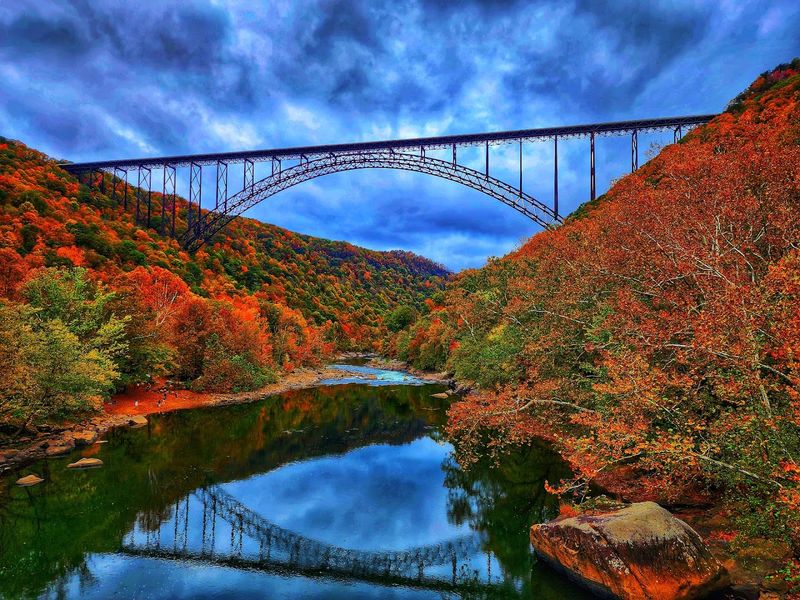
Fall is the season that consistently earns the most enthusiastic reactions from visitors, and it is not hard to understand why. From September through October, the hardwood canopy shifts into a full-color display of red, orange, and gold that transforms every overlook into something that feels almost theatrical. Late October brings Bridge Day, an annual event where BASE jumpers legally leap from the New River Gorge Bridge and parachute into the gorge below, drawing large crowds and creating one of the most unusual spectator experiences in the national park system.
Spring offers a quieter but equally rewarding alternative, with wildflowers carpeting the forest floor and higher water levels creating more powerful rafting conditions for experienced paddlers. Summer is peak season for water activities, though heat and humidity can make midday hiking less comfortable. Winter delivers a different kind of reward entirely; bare trees open up long sightlines through the forest, the canyon rim occasionally receives a dusting of snow, and the rock climbing community tends to find ideal dry conditions on the sandstone cliffs.
Each season presents a genuinely different park, which means a return visit rarely feels redundant.
Quiet Pleasures: Fishing, Birding, and Scenic Drives
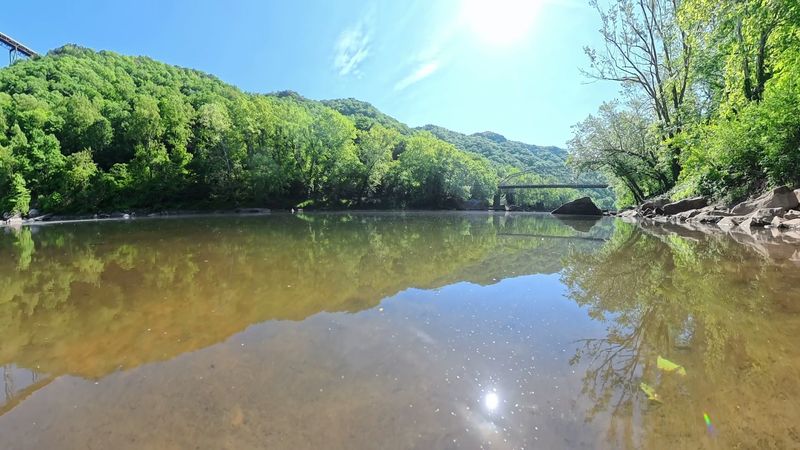
Not every memorable moment in this park involves a rapid or a cliff face. The New River holds a well-earned reputation among anglers, particularly for smallmouth bass, which thrive in its warm lower sections, and native brook trout, which inhabit the cold, clear headwater streams like Glade Creek. Fly fishing in these tributary streams feels genuinely removed from the outside world, with the surrounding forest providing a canopy of quiet that is hard to find anywhere near a major road.
Birding rewards patient visitors throughout the year. The park’s unfragmented forest acts as a critical breeding corridor for migratory species, and the cliff habitats support ongoing efforts to restore peregrine falcons to the gorge. Bald eagles also make appearances along the river corridor, particularly in the cooler months when fishing activity near the water is easier to observe.
For those who prefer to experience the landscape from behind a windshield, the Fayette Station Road descends to river level and offers a perspective of the gorge that overlook platforms simply cannot replicate. The self-guided driving tour remains one of the most accessible and visually satisfying ways to cover a lot of ground without lacing up a single boot.
Planning Your Visit: Practical Tips for a Smooth Trip
Entry to New River Gorge National Park and Preserve is free, which immediately sets it apart from many other national parks and makes it an accessible destination for visitors with varying budgets. The Canyon Rim Visitor Center, located just north of Fayetteville, serves as the most popular starting point and provides exhibits, maps, restrooms, and direct boardwalk access to the bridge overlooks. The Sandstone Visitor Center and the seasonal Grandview and Thurmond Depot locations each offer a different entry point into the park’s history and geography.
Cell service is limited throughout much of the gorge, so downloading offline maps before arriving is a practical step that saves real frustration on the ground. Primitive campgrounds operate on a first-come, first-served basis and fill quickly during peak fall weekends, making an early arrival essential. Fayetteville serves as an excellent base town, with lodging options, local restaurants, and outfitter services within a short drive of most trailheads.
Weather in the mountains shifts quickly, so layered clothing and a rain layer are worth packing regardless of the forecast. The park’s official website and visitor center staff are reliable sources for current trail conditions, seasonal closures, and upcoming guided programs throughout the year.
Share this story