 Unearth The Voyage
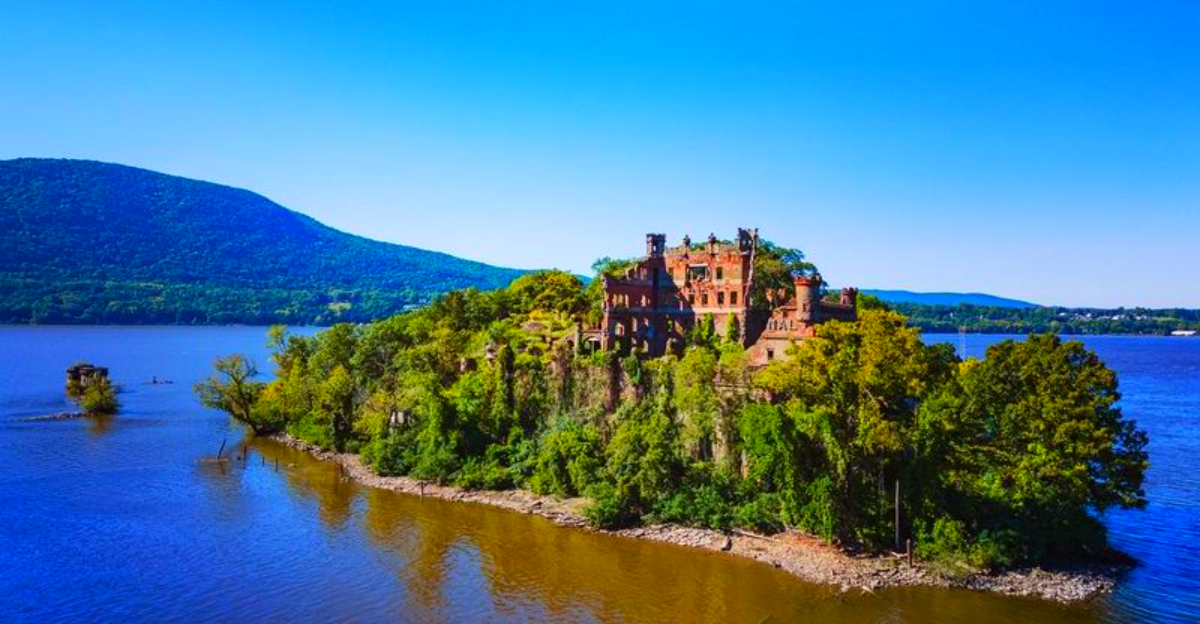
Halfway up the Hudson, a ghostly castle peeks through morning mist and makes train riders crane their necks. Bannerman Castle looks ancient, but its story is pure American hustle, catastrophe, and resilience.
You can tour it, photograph it, and feel the river wind funnel through roofless walls as history whispers back. Here is everything you need to know before you go, from wild origin tales to practical, on-the-water tips.
It Looks Like It Was Plucked From Medieval Europe
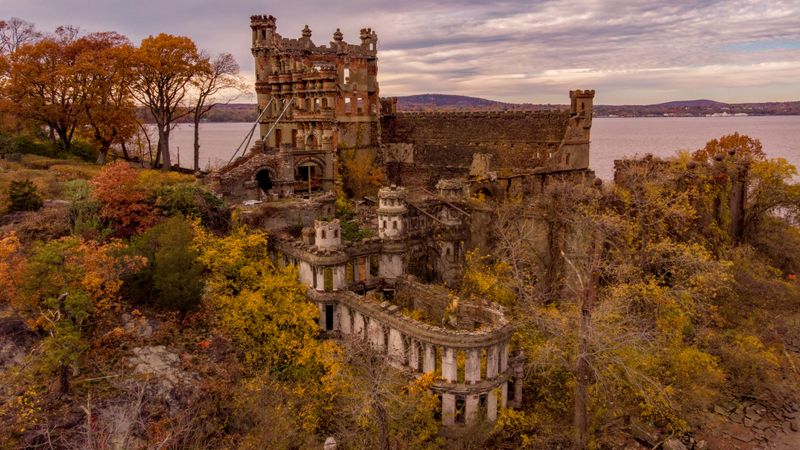
From a distance, Bannerman Castle reads like a Highland daydream. Turrets jut above the trees, crenellations bite into the sky, and weathered lettering clings to brick like half-faded heraldry.
The setting seals the illusion, with the Hudson Highlands rising like ramparts and the river widening into a natural moat.
Up close, the details become more theatrical than defensive. Window openings feel oversized, corners turn whimsically, and the silhouette shifts with every bend in the water.
Arrive at sunset if you can. The orange wash softens the broken edges, and the reflection doubles the drama.
Photographers love the contrast of ruin and river. Even a phone camera snags painterly frames when clouds hang low.
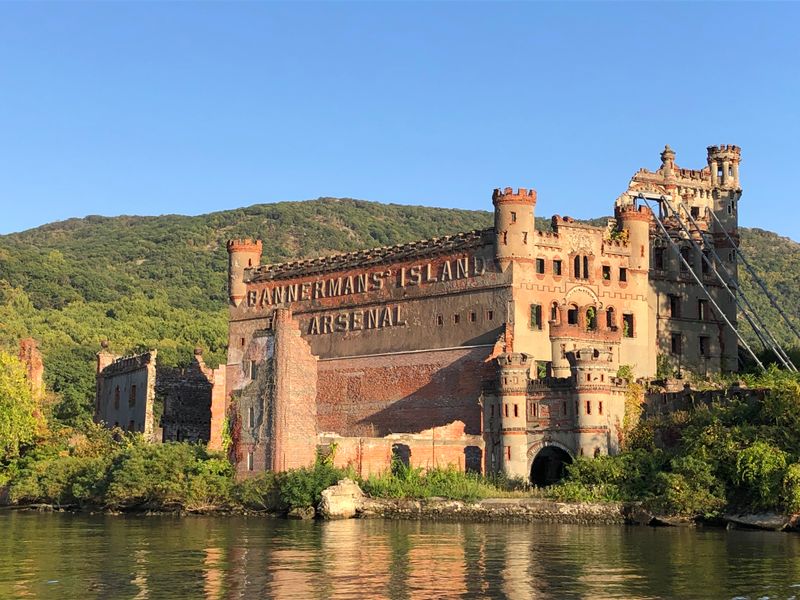
Look for the original “Bannerman’s Island Arsenal” letters, a Victorian billboard hiding in plain sight. It is European in mood, yet deeply Hudson Valley in bone and brick, a stage set anchored to bedrock.
It Was Built by One of America’s Most Unusual Millionaires
Francis Bannerman VI did not inherit a title. He inherited hustle from a Brooklyn shop, buying scrap rope and barrels before spotting a niche few dared touch.
After the Civil War, he snapped up surplus at government auctions, then more after the Spanish American War, building a mail order arsenal that shipped around the world.
His catalogs were legendary and oddly charming, stuffed with swords beside camping stoves and ceremonial helmets. With explosive inventory piling up, he sought a safer storage site than New York City.
A small, rocky island up the Hudson solved that problem and created a marketing dream.
Bannerman’s fortune was equal parts timing and nerve. He turned waste into want, then packaged danger as romance with a castle silhouette.
You can still imagine packages bound for collectors and militias, labels inked by hand. The millionaire behind it all was not blue blood, just blue collar turned visionary.
The “Castle” Was Actually an Arsenal
Despite the fairy tale outline, Bannerman Castle functioned as a warehouse for weapons. Crates of rifles stacked by the thousands, cannon carriages nestled beside ammunition boxes, and uniforms folded in ranks.
Think of it as a shipping hub with theatrical walls, closer to a catalog center than a keep.
The outsized facade lettering served as an advertisement visible from river traffic, equal parts branding and bravado. Materials moved by barge, then up to storerooms via winches.
Safety mattered, but so did spectacle. The result feels improbable, like a trade show booth grown into a skyline.
It worked. Collectors, militias, and museums bought from Bannerman’s catalogs for decades, and the island gave customers confidence that dangerous goods were stored at a remove.
A century later, the empty windows and collapsed floors still whisper inventory codes. Stand on the trail, read the wall, and you are basically looking at a billboard.
It Sits on Its Own Island
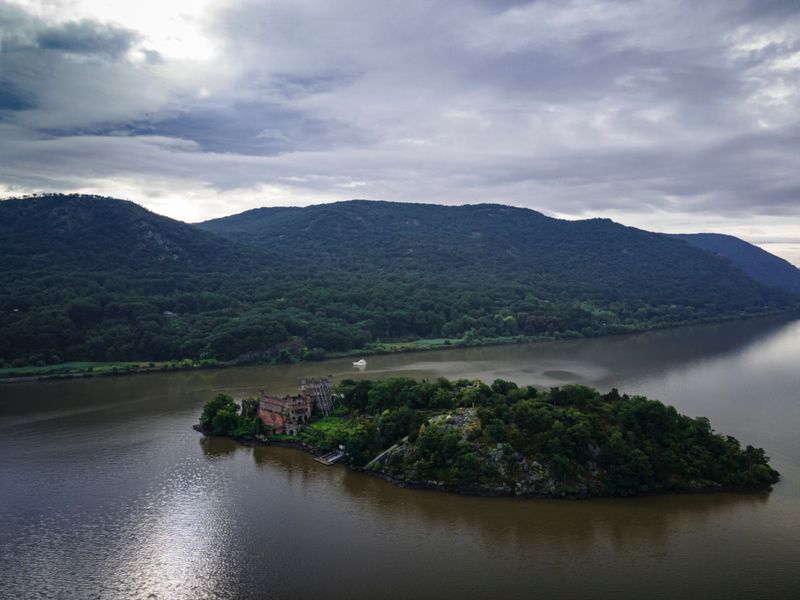
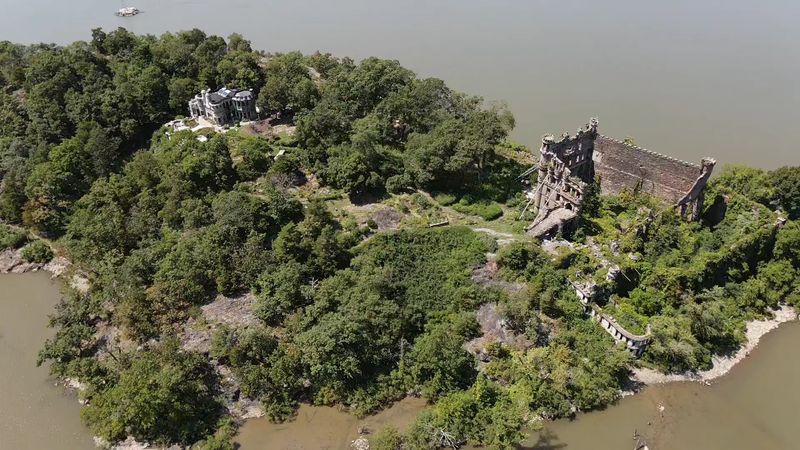
Pollepel Island feels like a stage lifted from the river. The shoreline rises quickly, forcing the castle to perch on terraces with commanding views up and down the Hudson.
Encircling water magnifies the drama, isolating the ruins from highways and houses even as trains ribbon the eastern bank.
From Beacon’s waterfront, the island sits temptingly close yet clearly off limits without a boat. That separation protects the fragile walls and turns every visit into a small expedition.
You step off the ferry and air shifts, cooler and brinier, with gulls wheeling over the dock.
Geology does some quiet heavy lifting here. Bedrock anchors the main facade and resists ice shove, while wind funnels between highlands to strip vines and scatter seeds.
The setting is scenic, yes, but it is also practical. On an island, risk could be managed, and inventory kept at a cautious distance.
A Massive Explosion Rocked the Island
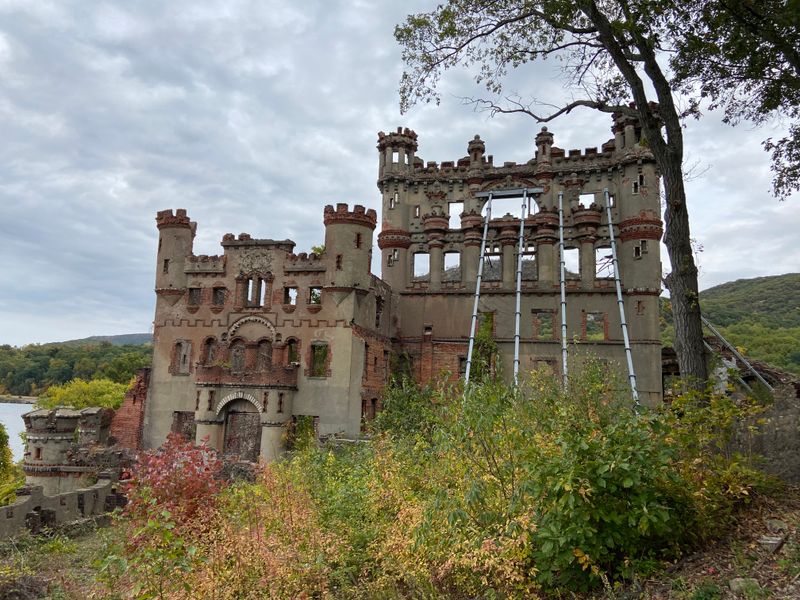
In 1920, stored munitions detonated and ripped through parts of the arsenal. Windows blew out, walls tore open, and shockwaves echoed off the highlands.
Newspapers reported the blast rattled river towns and sent debris into the water, an industrial accident written across the skyline.
The cause remains part misfortune, part inevitability when volatile stock sits for years. For Bannerman’s dream, the explosion marked a turning point.
Repairs never fully caught up, and the complex limped forward with scars that worsened each winter. The romantic facade became a cautionary tale.
Today, guides point to blown openings and collapsed corners that trace back to the blast. It explains the castle’s oddly theatrical wounds, like a stage set torn mid scene.
You feel it in the gaps, a timeline of heat and pressure. That single day reverberates in every photograph taken from the tour path.
Fires and Storms Finished What the Explosion Started
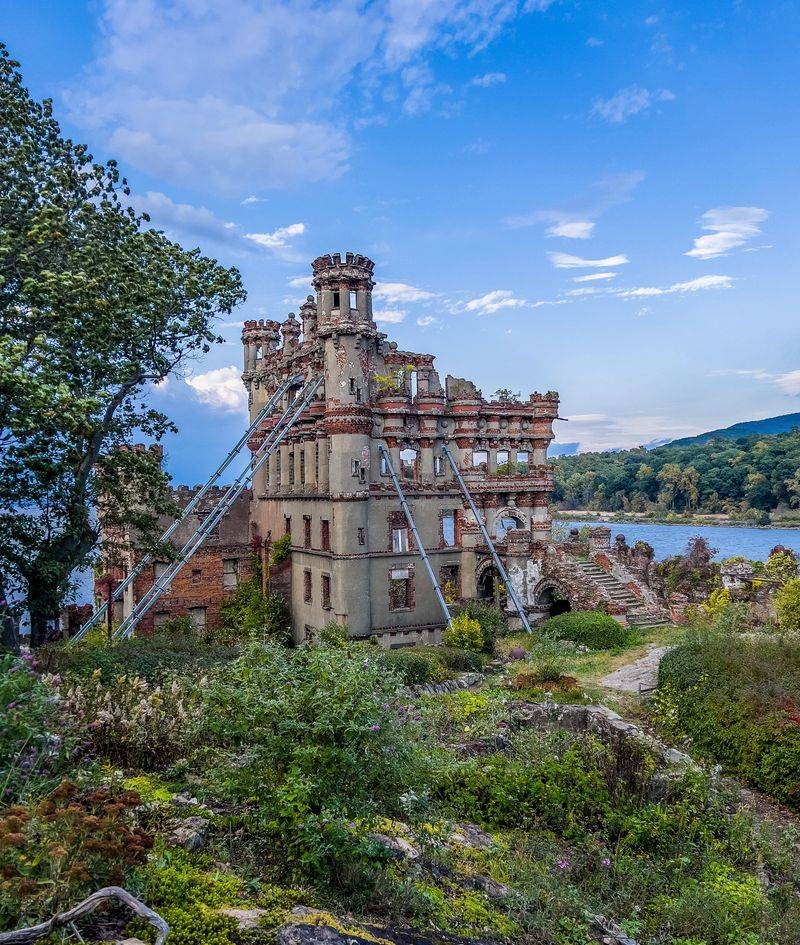
Decades after the blast, weather took over as the chief antagonist. Freeze thaw cycles pried open mortar.
Nor’easters shoved spray into cracks. Then in 1969, a fire ripped through the residence and accelerated collapse, leaving blackened timber ghosts and unsupported walls.
Wind loads are brutal on river islands, and storm surges bite at foundations. Engineers who later assessed the site found predictable patterns of failure.
Unsupported corners peeled, and parapets toppled like dominoes. By the 1990s, large sections faced imminent loss if nothing changed.
New York’s climate has only grown wetter in recent decades, a trend NOAA tracks at roughly an 8 percent increase in Northeast annual precipitation since the mid 20th century. More water means more freeze cycles and heavier vegetation loads.
Every storm that rolls up the Hudson writes a new line in the ruin. The miracle is that so much still stands.
It Was Once Used as a Family Summer Retreat
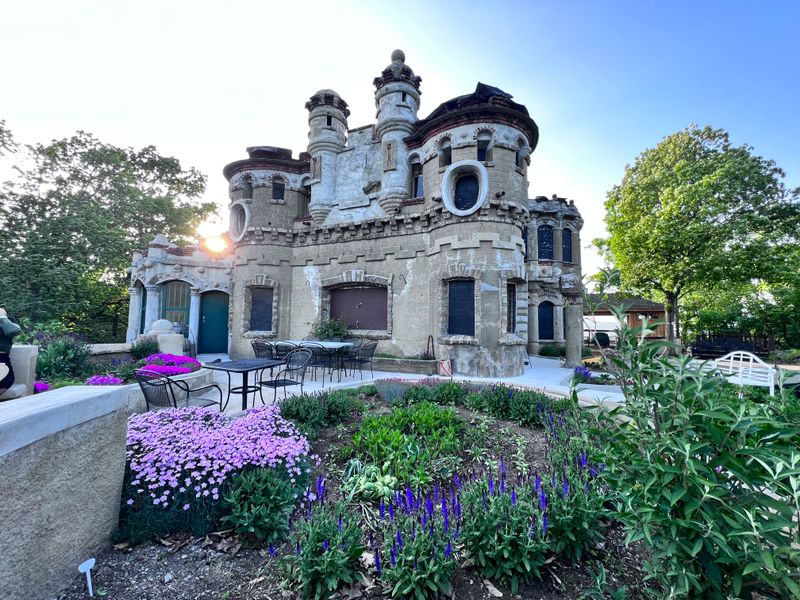
Beyond the arsenal walls, the Bannerman family built a cozy, castle like residence near the island’s high point. Summers meant gardens, shaded walks, and wide river views.
Photos show trellises and terraces, a softer counterpoint to the industrial muscle below.
Imagine quiet evenings with lantern light flickering across stone, the thrum of distant trains riding the valley. Guests climbed paths past flower beds and a small museum of curiosities.
It was a domestic bubble anchored to a business operation, equal parts retreat and vantage.
Disaster trimmed that idyll. The 1920 explosion rattled confidence, and the 1969 fire erased much of the residence’s fabric.
Today, outlines and foundations suggest rooms and porches you can map with your feet. Guides tell stories of family routines and elaborate picnics.
You end up picturing lemonade beside ledgers, the American blend of home life and hustle.
The Architecture Was Part Fantasy, Part Marketing
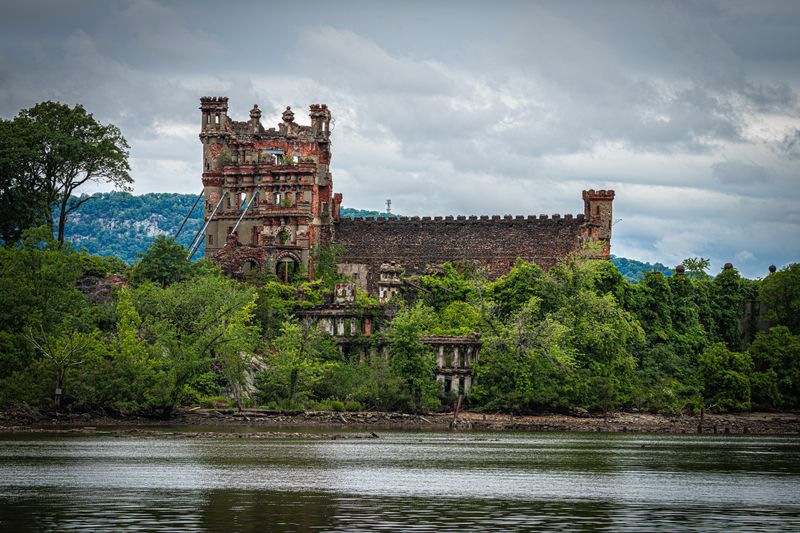
Nothing about Bannerman Castle follows military logic. Arrow slits are decorative.
Battlements exaggerate scale. The best defensive position on the island is actually the dock, but that is not the point.
This was storytelling in brick, a brand identity made three dimensional and visible to every passing barge.
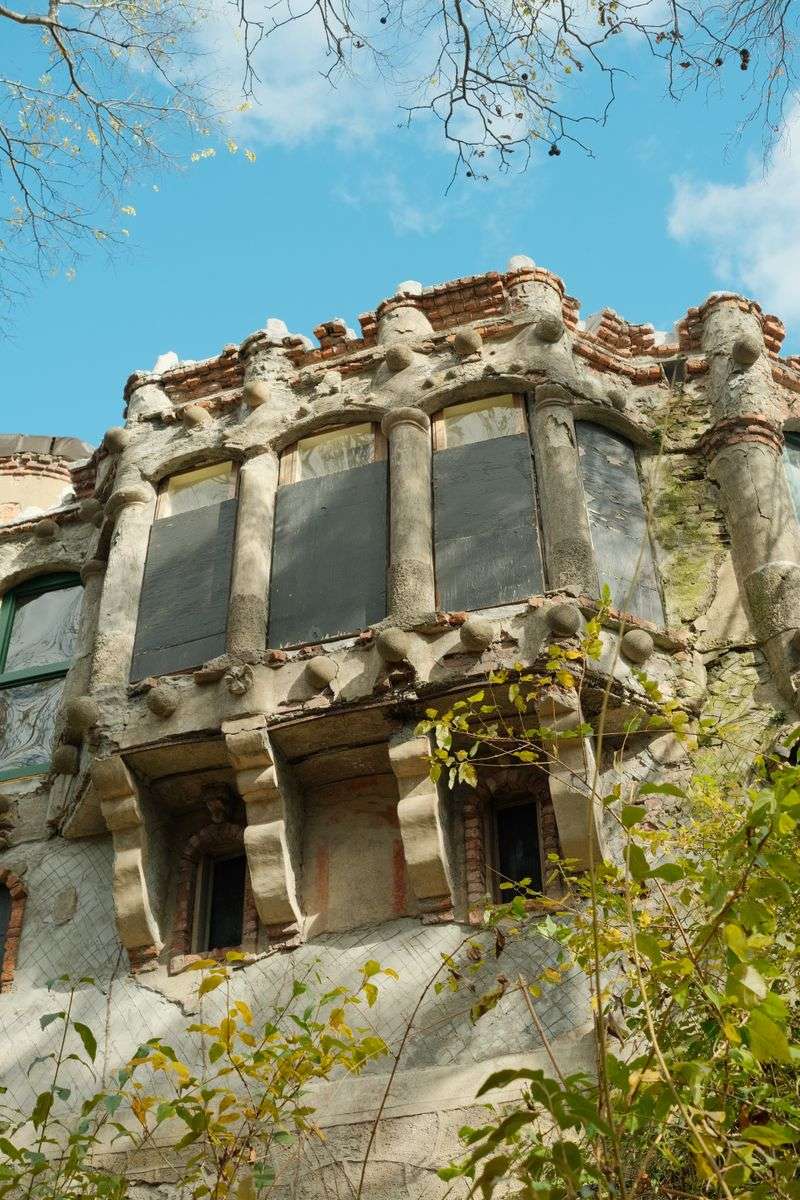
Victorian eclecticism and Scottish Baronial flourishes mingle with pure whim. Towers stretch taller than needed, and corners break rhythm to catch your eye from the river channel.
The facade lettering turns architecture into advertisement, a mail order catalog headline you cannot ignore.
Seen through a marketing lens, it is brilliant. The building promises reliability by evoking old world permanence.
It also confers romance on otherwise risky goods. You are not buying leftover cannons.
You are acquiring history. That pitch still works on visitors.
We read the ruins as legend first, logistics second, exactly as Bannerman intended.
Nature Has Slowly Taken It Back
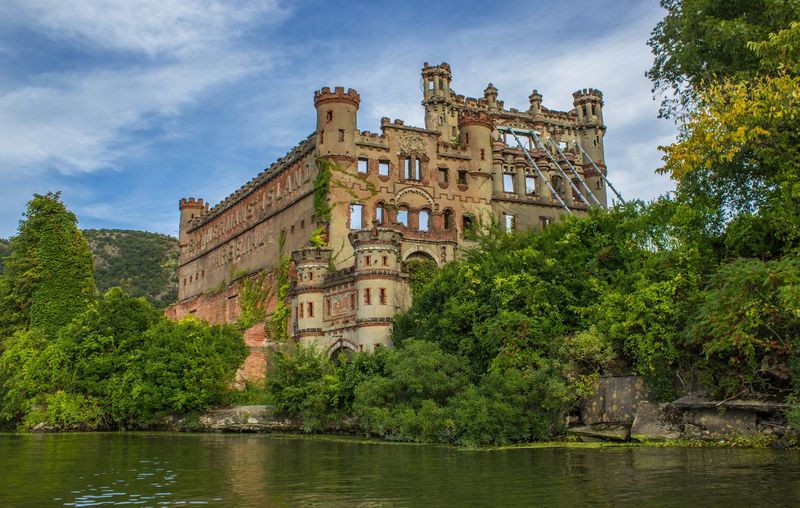
Walk the loop path and you will see vines threading mortar joints like green stitches. Ferns colonize shady corners.
Saplings root in pockets of fallen dust where roof beams once sat. After storms, the island smells like crushed leaves and river stone, a living system draped across ruin.
Ecologists call this succession, and it complicates preservation. Roots wedge bricks apart, yet foliage cools masonry from thermal shock.
The Bannerman Castle Trust trims, culls, and gardens to balance safety with biodiversity. Butterflies and bees prove the island hums with more than ghosts.
On foggy mornings, the plant life doubles the sense of Gothic theater. Tendrils outline windows where glass disappeared long ago.
Even the billboard letters soften under lichen. Nothing here is static.
Nature edits the architecture daily, and your photos will catch a slightly different story than last season’s tour brochure.
It’s One of the Hudson Valley’s Most Iconic Sights
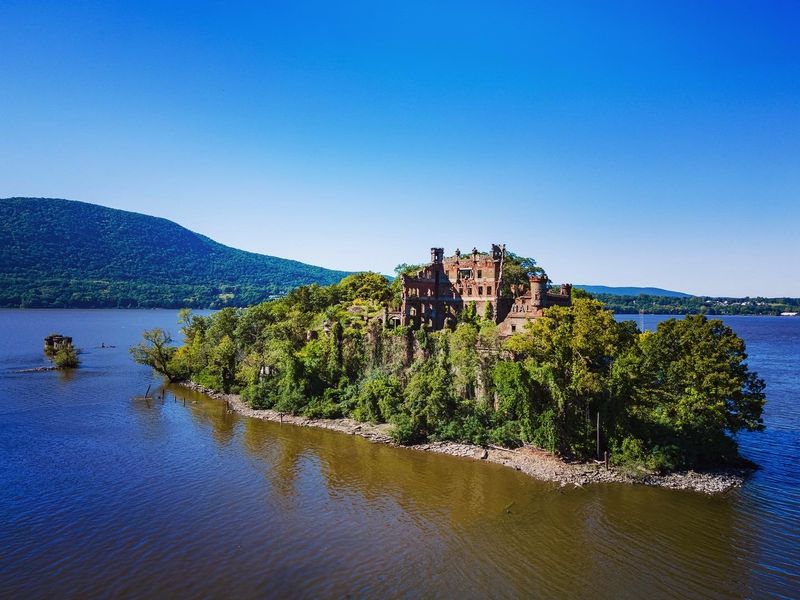
Ride Metro North northbound at dusk and watch the car go quiet as the castle suddenly appears beyond the glass. The outline is unmistakable.
Even commuters nudge neighbors to look. Photographers time rides around golden hour for that shot where water and brick share the same color palette.
Boaters treat it as a mile marker, and kayakers pause mid channel for panoramic frames. Local guides share the same refrain: the silhouette sells the valley as much as any postcard farm.
It condenses industry, nature, and myth into one tidy skyline.
At sunset, the place glows. Lettering flares, shadows carve into towers, and the island becomes a floating storybook.
You do not need a tour to appreciate that view from the train, but standing on the island rewrites the scale. The icon becomes texture, grit, and rivulets of rust.
It’s Closer to NYC Than You Think
From Manhattan, you can be on the island tour within a morning. The Hudson Line from Grand Central to Beacon runs about 80 to 90 minutes.
Add a short walk to the dock and a scenic boat ride, and you are worlds away by lunchtime. Drivers make it in roughly an hour and a half depending on traffic.
That proximity makes Bannerman a nimble day trip. Pair it with Dia Beacon, a hike at Mount Beacon, or dinner on Main Street.
If you are chasing light, book a late afternoon tour and stay for golden hour across the water.
For city dwellers used to long hauls for novelty, this is a gift. One ticket buys river breezes, ruins, gardens, and stories.
Time it right and you will be back in the city by evening, photos ready, shoes dusty, head full of 1900s intrigue.
What To Expect On The Tour
Tours start with a friendly boat briefing and a breezy ride upriver. Guides layer river history with Bannerman lore as eagles sometimes draft overhead.
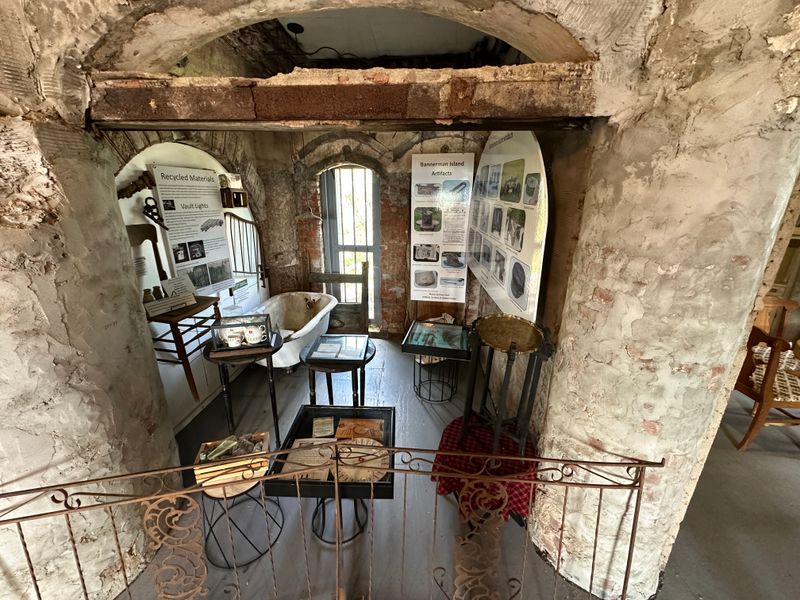
On the island, you will follow a marked loop with stops at the arsenal facade, residence remains, small museum, and gardens. Expect uneven terrain and short stair climbs.
After the guided portion, you get free time for photos and side paths. Restrooms and a small concession stand make it easy to linger.
Bring cash for a garden donation. Staff and volunteers are generous with backstory if you ask specific questions.
Safety shapes the route. You will not stand under fragile walls, and barriers protect no go zones.
It feels curated without killing spontaneity. Wear grippy shoes, pack water, and plan for sun.
If the river is calm, the return ride becomes a floating debrief with skyline views and satisfied chatter.
Events, Photography, and Best Times To Go
Beyond daytime tours, the island hosts concerts, outdoor theater, and movie nights that transform the ruins into a living set. Tickets go fast.
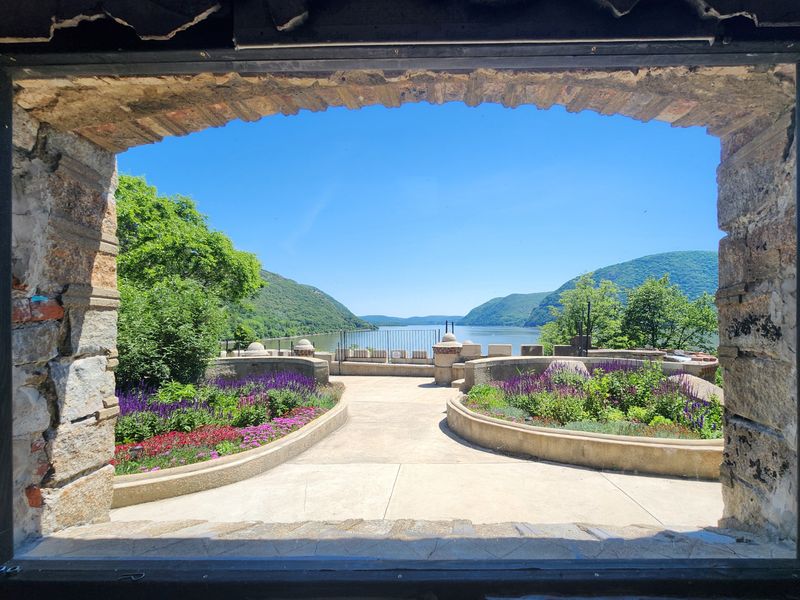
Sunset programs are especially photogenic, with warm light cutting through windows and the river turning to glass. Tripods are allowed in certain areas, so confirm rules before hauling gear.
For pure photography, spring bloom and late October color both sing. Midweek visits mean fewer people in your frames.
Golden hour is the obvious win, but morning fog can be spectacular, too, when the highlands hold mist like a bowl.
Check the Trust’s calendar early in the season. Weather cancellations happen, and rescheduling keeps the island from being over loved.
If you are celebrating something, small weddings and elopements are possible with permits. Pack layers.
Nights on the river run cooler than town, and wind sneaks around parapets.



