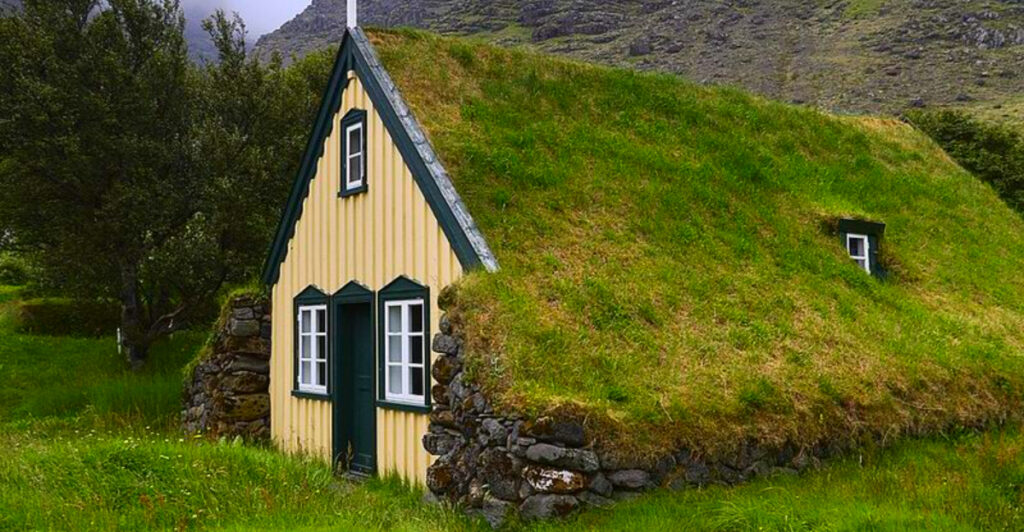
Long before architects started putting plants on top of buildings and calling it innovation, Nordic villagers had already figured it out centuries ago. Across the Faroe Islands, Iceland, and Norway, entire communities built their homes with thick layers of turf on the roof, and many of those homes are still standing today. What makes these villages special is not just the green rooftops but the fact that the whole settlement feels like it belongs to the hillside rather than sitting on top of it. You will find medieval farmhouses, ancient chapels, and tiny coastal communities where the grass roof is not a design trend but simply the way things have always been done.
This list takes you through 13 Nordic villages where that tradition is alive, well, and surprisingly photogenic. Keep reading, because a few of these places will genuinely surprise you.
1. Gásadalur, Vágar Island, Faroe Islands
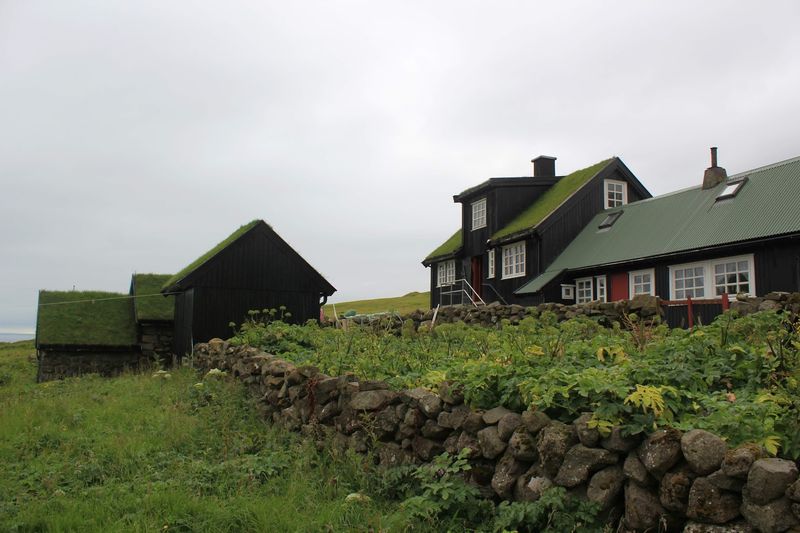
Before a road tunnel was blasted through the mountain in 2006, the only way to reach Gásadalur was on foot over a steep mountain path. That kind of isolation shaped everything about this village, including its tight cluster of turf-roofed cottages that sit as though they have been tucked into the hillside for safekeeping.
The houses here are compact and low, their grass roofs blending naturally with the surrounding slopes. Nearby Múlafossur Waterfall plunges directly into the ocean just below the village, making it one of the most photographed backdrops in the entire Faroe Islands.
Despite its growing popularity, Gásadalur has resisted the kind of commercialization that often follows fame. The permanent population remains very small, and the village retains a quiet, unhurried character. For anyone serious about seeing authentic Faroese architecture in a setting that feels completely untouched by modern development, this is the place to start.
2. Bøur, Vágar Island, Faroe Islands
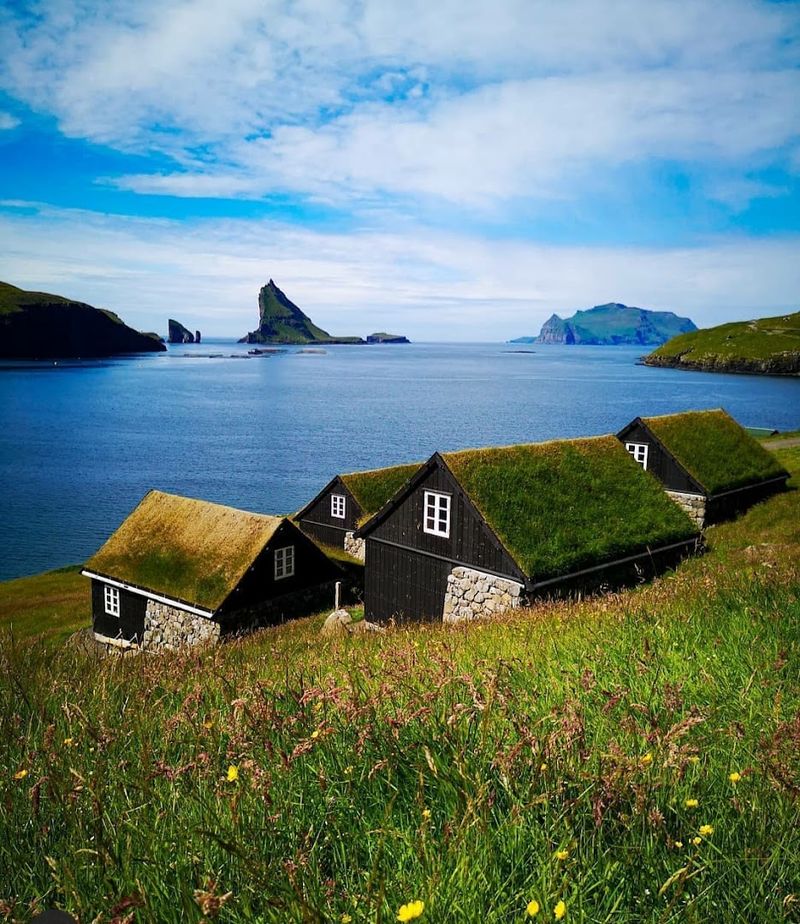
Bøur has a habit of stopping people in their tracks, and not just because of the sea stacks rising dramatically from the water just offshore. The village itself is a well-preserved collection of traditional Faroese homes, many of which still wear their original thick grass roofs over white-painted walls and dark timber frames.
That contrast between the bright walls and the earthy green rooftops is striking in person, and it explains why photographers regularly make the trip to Vágar Island just to shoot this one village. The turf roofs here are not decorative additions but genuine structural features that have been maintained from generation to generation.
Drangarnir and Tindhólmur, the sea stacks visible from the village, add a dramatic backdrop that makes every angle worth capturing. Bøur is small, easy to walk in under an hour, and entirely worth the detour from the nearby airport. Few places in the Faroe Islands pack this much character into such a compact space.
3. Saksun, Streymoy Island, Faroe Islands
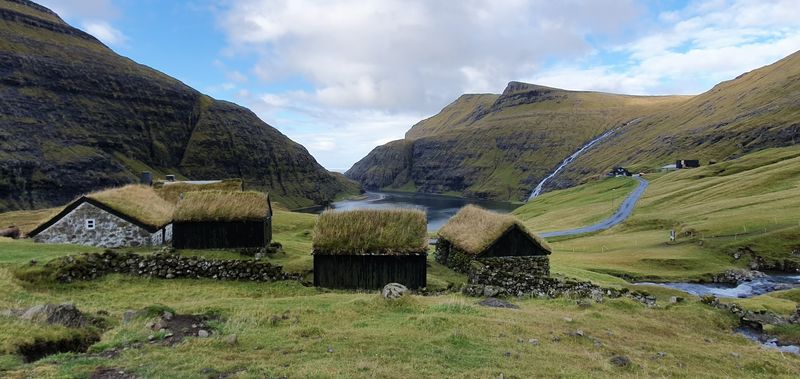
There is a tidal lagoon at the center of Saksun that fills and empties with the sea, and the village wrapped around it looks as though it has barely changed in two hundred years. The turf-roofed buildings here include not just farmhouses but the village church, which makes the entire settlement feel remarkably consistent in its visual character.
Saksun sits at the end of a long valley on Streymoy Island, which means the drive in is as impressive as the destination itself. Steep mountain walls rise on both sides of the road, and the village only reveals itself at the very last moment.
The Dúvugarðar farm, now open as a small museum, contains several original turf buildings with preserved interiors that show how families lived here in earlier centuries. The grass roofs at Saksun are not just decorative features but a genuine continuation of a building tradition that shaped life across these islands for generations.
4. Kirkjubøur, Streymoy Island, Faroe Islands
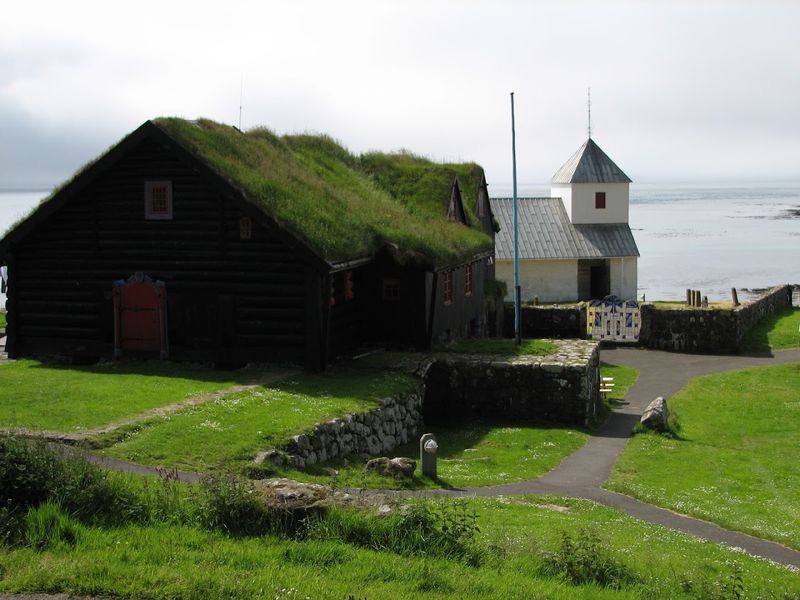
Roykstovan, the farmhouse at the heart of Kirkjubøur, is believed to be one of the oldest continuously inhabited wooden buildings anywhere in the world, and it still has its grass roof intact. That detail alone makes this village worth a visit, but the story does not stop with one building.
Kirkjubøur was the religious and cultural capital of the Faroe Islands throughout the Middle Ages. The ruins of Magnus Cathedral, which was never fully completed, stand alongside the functioning Saint Olav’s Church, creating a dense concentration of historic structures within a very small area.
The village has a higher density of turf-roofed homes than almost anywhere else in the Faroe Islands, and many of those homes are still occupied by the same families that have lived here for centuries. Kirkjubøur is the kind of place where history is not preserved behind glass but simply lived in, which makes the whole experience feel genuinely different from a typical museum visit.
5. Tjørnuvík, Streymoy Island, Faroe Islands
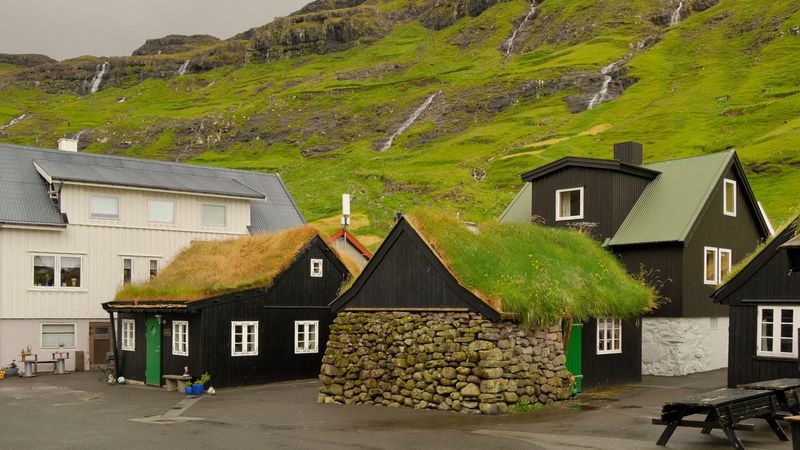
At the northern tip of Streymoy Island, Tjørnuvík sits at the bottom of a valley that narrows dramatically before opening onto a black sand beach. The sea stacks known as the Giant and the Witch stand just offshore, and the combination of those formations with the village’s turf-roofed homes creates one of the most distinctive views in the entire Faroe Islands.
The grass roofs here follow the same practical logic as elsewhere on the islands: thick turf provides insulation during cold winters and helps the buildings hold their shape against persistent wind. Many of the older homes still use this method, and a few newer ones have adopted it as well.
Tjørnuvík has grown in popularity among hikers who use it as a base for trails along the northern coast. The village itself remains quiet and residential, with no significant commercial development to speak of. That restraint is a big part of what keeps it on every serious traveler’s list.
6. Gjógv, Eysturoy Island, Faroe Islands
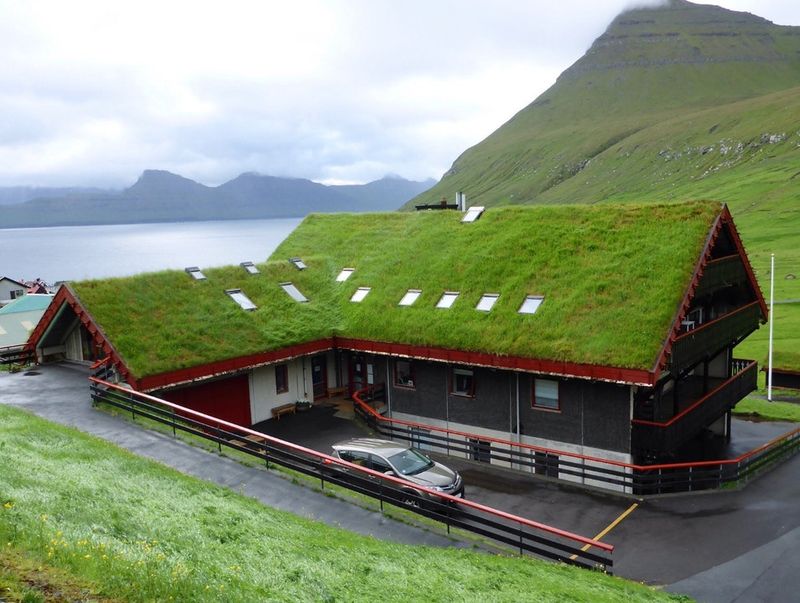
The name Gjógv literally means gorge in Faroese, and the village is built right around one. A deep sea-filled crack in the cliffs serves as the natural harbor, and the traditional turf-roofed homes that line the surrounding streets have been there long enough to feel like a permanent part of the geology.
Grass roofs in Gjógv follow the classic Faroese pattern: thick, low, and tightly fitted to the building below. They provide thermal insulation against cold Atlantic weather and give the village a visual consistency that newer construction materials simply cannot replicate.
A small stream runs through the village, and hiking trails from here lead along dramatic cliff edges with views that stretch far out to sea. Gjógv also has a guesthouse that has been operating for decades, making it one of the few villages in the Faroe Islands where you can actually stay overnight and experience the place after the day visitors have gone home.
7. Glaumbær, Skagafjörður, Iceland
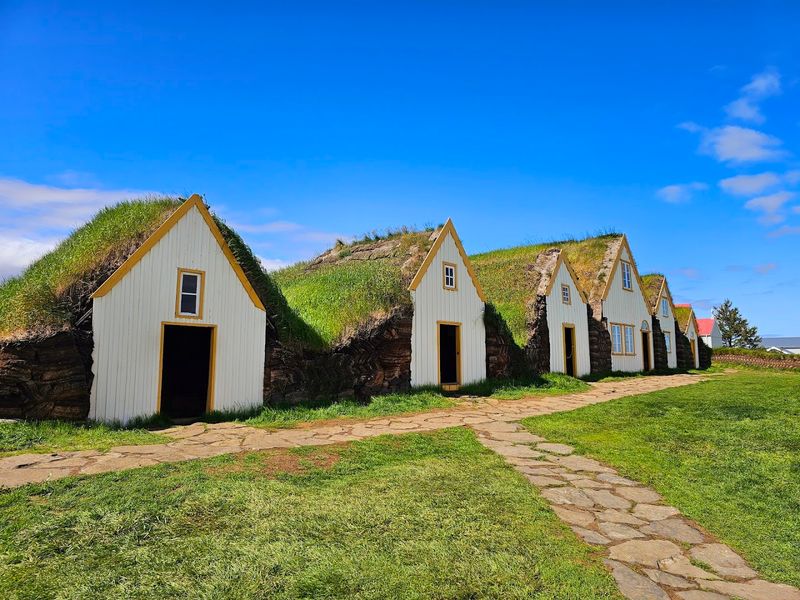
Most of what people picture when they imagine a traditional Icelandic turf farm can be found at Glaumbær, which functions today as the centerpiece of the Skagafjörður Folk Museum. The buildings here are not reconstructions but genuine historic structures, with the oldest sections dating to the 18th century and the farm remaining in use until 1947.
What makes Glaumbær architecturally interesting is the layout. Rather than separate buildings, the rooms are connected by a central corridor, creating a long, low structure that hugs the ground and minimizes heat loss. The grass roofs sit on top of thick turf walls that can exceed one meter in depth.
Visitors can walk through 13 interconnected rooms, including sleeping quarters, a kitchen, and various workspaces, all furnished with period objects. The site also includes a wooden house from the 19th century and a small cafe. Glaumbær is one of the most complete surviving examples of traditional Icelandic domestic architecture still accessible to the public.
8. Laufás, Eyjafjörður, Iceland
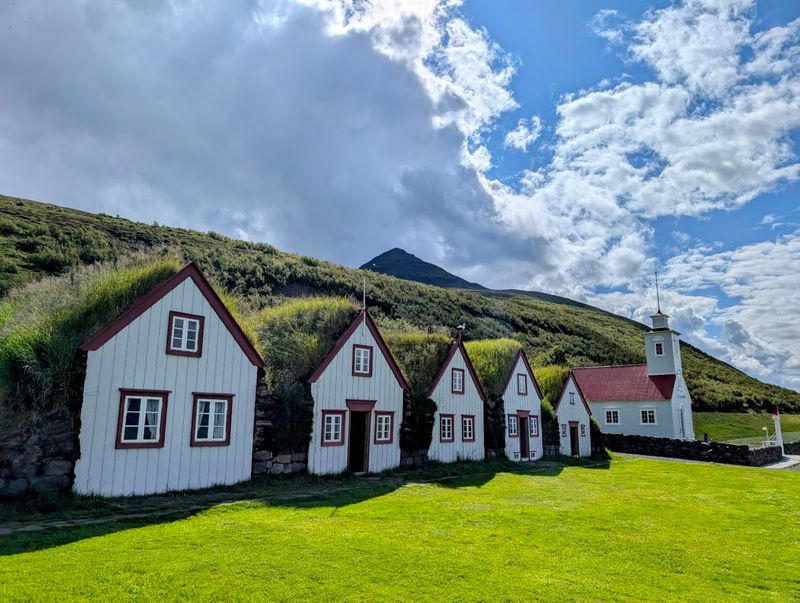
Built as a prosperous priest’s residence in the latter half of the 19th century, Laufás was designed to house a large household that could include up to thirty people at any given time. The building’s distinctive facade features a row of gables side by side, a design style that was once common across Iceland but is now rarely seen in such good condition.
The thick grass roof blends naturally into the slope behind the house, and the restored interior rooms display furniture and household objects from the era in careful detail. Records mentioning Laufás as a significant property go back to at least 1047 AD, which gives the site an extraordinary depth of history.
The farm sits above Eyjafjörður, one of Iceland’s longest fjords, and the views from the property across the water are genuinely impressive. A small historic church stands adjacent to the main building. Together, they form one of northern Iceland’s most rewarding heritage stops and one of the best-preserved examples of a traditional Icelandic clergy farm.
9. Keldur, Rangárvellir, Iceland
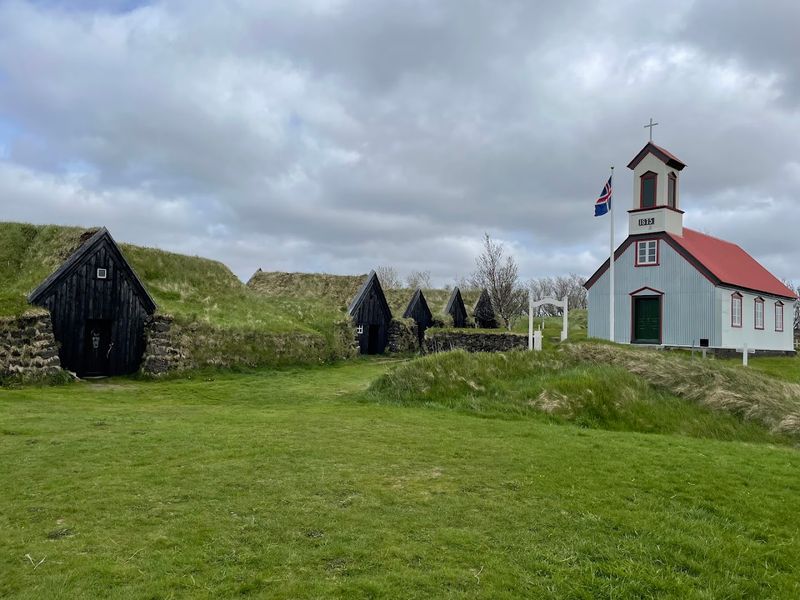
Keldur has a claim that very few historic properties anywhere can match: parts of this turf farm date back to the 12th century, making it one of the oldest surviving farm complexes in Iceland. The interconnected buildings demonstrate how Icelandic farmers used a combination of stone, timber, and turf to create structures capable of surviving centuries of demanding weather.
The farmstead is also referenced in Njal’s Saga, one of the most celebrated works of medieval Icelandic literature, which gives Keldur a cultural significance well beyond its architecture. Below the main buildings, an underground tunnel dating to the 12th or 13th century has been preserved and can still be seen today.
Most of the visible structures were rebuilt during the 19th century, but the site has been continuously occupied for far longer. The surrounding countryside in Rangárvellir is flat and open, with mountain views in the distance, giving the farm a sense of scale that reinforces just how exposed and self-reliant these communities had to be.
10. Grenjaðarstaður, Aðaldalur, Iceland
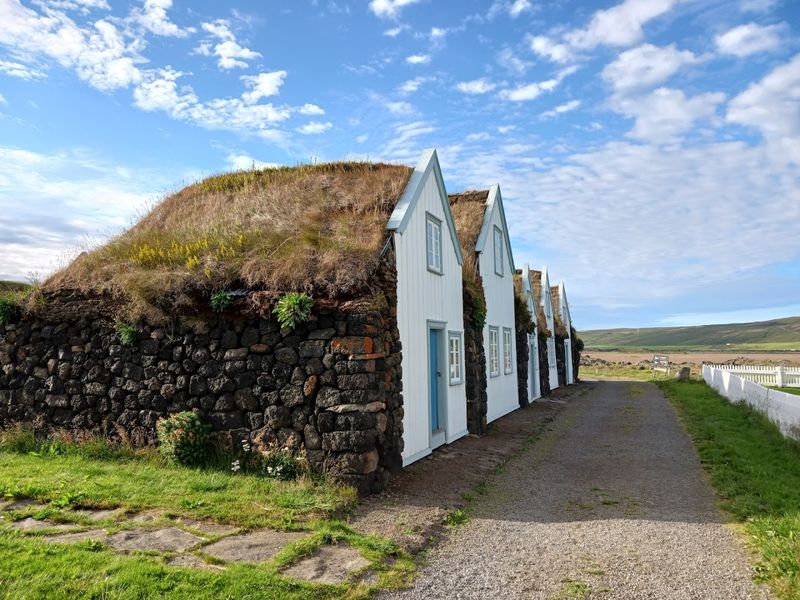
Few turf buildings in Iceland can match the sheer scale of Grenjaðarstaður, which ranks among the largest surviving examples of this construction style in the country. The main structure was built in 1865 and served as a functioning vicarage until 1949, with long internal passages connecting multiple rooms beneath a single continuous grass roof.
The walls were insulated using locally abundant lava rock, a practical adaptation to the materials available in the Aðaldalur valley. Since 1958, the site has operated as a folk museum, displaying approximately 2,000 artifacts that document rural Icelandic life across several generations.
Adjacent to the main building stands a Lutheran church, also constructed in 1865, and a cemetery that contains a runestone from the Middle Ages. That combination of a functioning religious site, a well-documented museum collection, and one of Iceland’s most impressive turf structures makes Grenjaðarstaður one of the most layered heritage experiences available anywhere in the country.
11. Núpsstaður, South Iceland
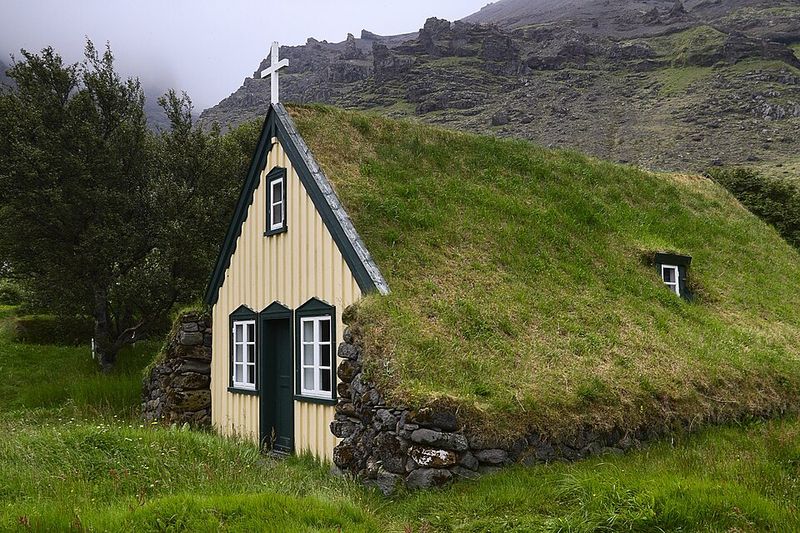
Tucked against the base of Lómagnúpur, a sheer cliff face that rises almost vertically from the flat plains of southern Iceland, Núpsstaður looks as though it was placed there deliberately to test the limits of what a small community could endure. The buildings are low, compact, and built directly into the terrain using turf and stone.
The chapel at Núpsstaður is one of the last remaining turf churches in Iceland, with the current structure rebuilt in the 19th century on a site with much earlier origins. It is a tiny building, capable of holding only a handful of people, but its proportions and materials make it one of the most photographed historic structures along the entire Ring Road.
The remote location of Núpsstaður, far from any town and surrounded by volcanic plains, adds to its appeal. Travelers passing through South Iceland often stop here not because it is on a formal tourist itinerary but because it is simply impossible to drive past without wanting a closer look.
12. Skjolden, Vestland, Norway
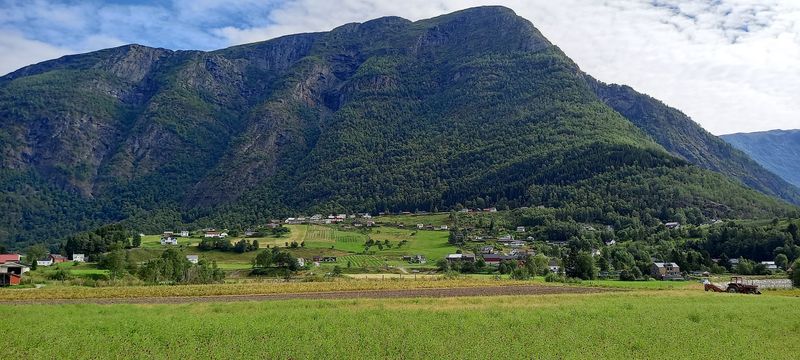
Skjolden sits at the innermost point of Lustrafjorden, where the water runs out and the mountains close in from every direction. The setting is dramatic by any standard, and the traditional Norwegian farm buildings scattered across the valley floor, many still wearing their classic sod roofs, fit the landscape in a way that modern construction simply does not.
Sod roofs, known locally as torvtak, were the standard roofing choice on rural Norwegian log houses well into the late 19th century. Layers of birch bark were placed under the sod for waterproofing, with the weight of the turf helping to compress the log walls and reduce drafts. That is a clever piece of engineering that required no imported materials and no specialized tools.
Skjolden also serves as a gateway to Jotunheimen National Park and the Sognefjord system, so it attracts travelers with a range of interests. The sod-roofed buildings here are not museum pieces but working farm structures that continue to define what this corner of Norway looks like.
13. Geilo, Buskerud, Norway
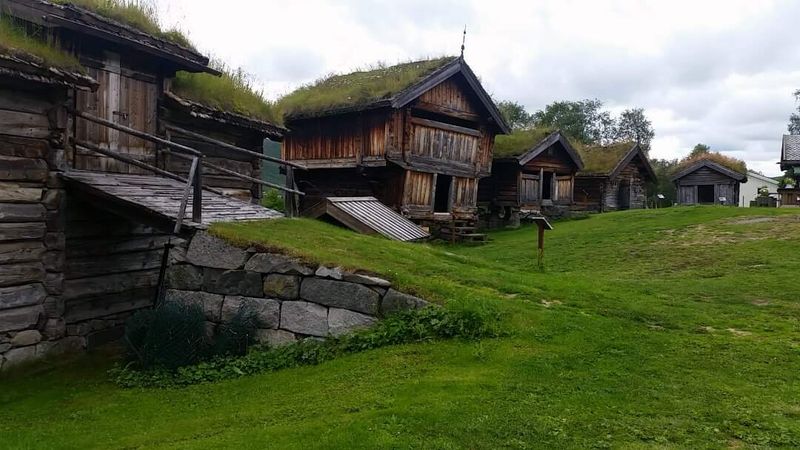
Most people know Geilo as a ski resort, which makes it easy to overlook the traditional sod-roofed cabins and farm buildings that have been part of this mountain plateau for far longer than any ski lift. The green roofs blend into the highland terrain so effectively that they can be easy to miss until you know what to look for.
Norwegian sod roofs are built with multiple layers of birch bark beneath the turf, which provides waterproofing while the weight of the sod compresses the log structure below. The result is a roof that insulates in winter, stays relatively cool in summer, and requires periodic maintenance rather than full replacement.
Geilo sits at around 800 meters above sea level on the Hardangervidda plateau, and the open landscape here gives the sod-roofed buildings a visibility they would not have in a forested valley. The tradition is experiencing renewed interest, with new mountain cabins increasingly adopting sod roofing as both a nod to heritage and a practical choice for the climate. Geilo proves that old ideas sometimes circle back for very good reasons.
Share this story