There is a waterfall in the North Carolina mountains that you can literally walk behind without breaking a sweat or lacing up a single hiking boot. It tumbles 45 feet down a rock face just a few steps from the road, and it has been stopping drivers in their tracks for generations.
The water fans out so wide and so thin at times that it genuinely looks like a flowing white veil draped over the hillside. This roadside wonder sits along US-64 west of Highlands, NC, and once you see it, you will completely understand why people keep adding it to their travel lists year after year.
Where to Find This Roadside Wonder
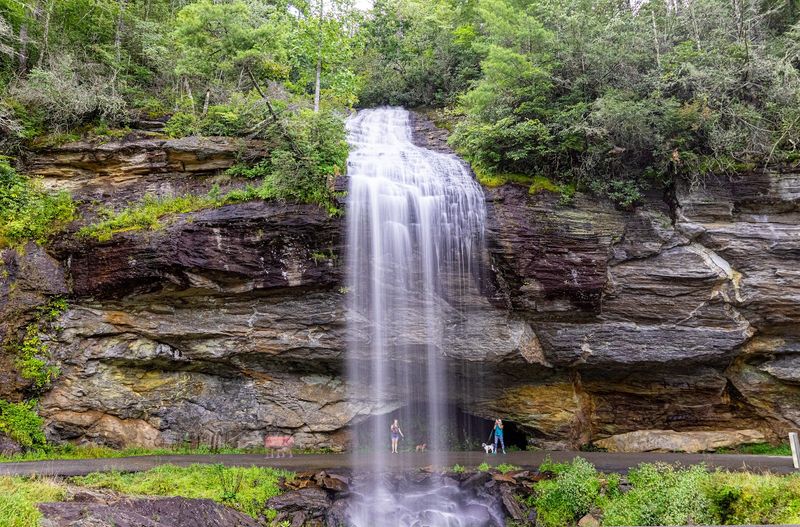
Bridal Veil Falls sits right along US-64 in Highlands, North Carolina 28741, making it one of the most accessible waterfalls in the entire state. The coordinates place it at roughly 35.0721813, -83.2289565, which puts it just west of the town of Highlands in the Blue Ridge Mountains of western NC.
You do not need a trail map or a GPS device to find it. The falls practically announce themselves as you drive along the highway, appearing suddenly on the side of the road with the kind of visual impact that makes you hit the brakes instinctively.
The road through this stretch of US-64 is narrow and winding, with some tight curves and steep drop-offs on the edges, so confident driving is a must. Once you arrive, there is a small pull-off area that fits roughly six or seven cars, and the waterfall is just a few steps away from wherever you park.
The Story Behind the Name
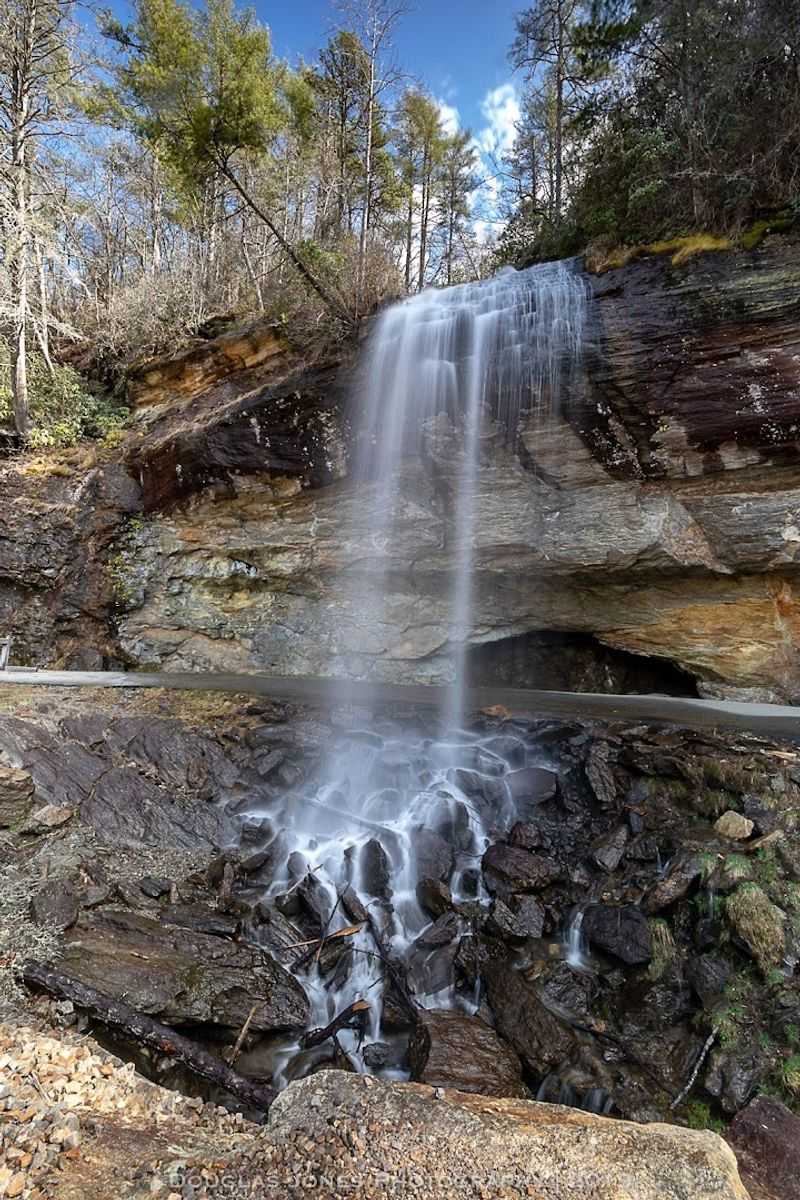
Few waterfalls earn their names as honestly as this one does. When the water flow runs lower, particularly during dry stretches of summer, the cascade spreads out into a wide, thin ribbon that fans across the rock face in a way that genuinely resembles a piece of sheer wedding fabric caught in a breeze.
That delicate, veil-like appearance is exactly what gave the falls its poetic name, and seeing it in person makes the connection feel obvious rather than forced. At full flow after heavy rain, the water thickens into a heavier curtain, but the graceful spread across the rock never fully disappears.
The falls drop approximately 45 feet, which is tall enough to create a dramatic visual presence without being so massive that it loses its elegance. Some visitors report noticing the ribbon-like quality most in late summer, while others catch it in a fuller, more powerful state after spring rains roll through the mountains.
Either version is worth the stop.
Walking Behind the Falls
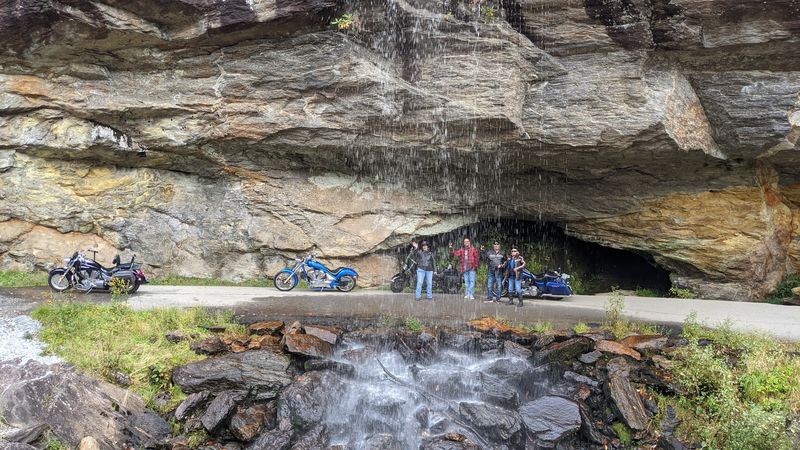
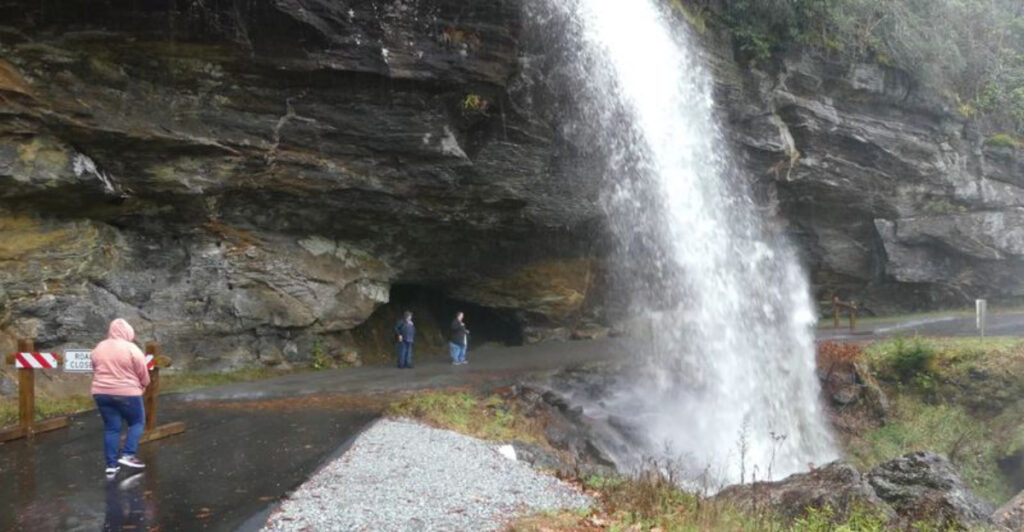
The feature that sets this waterfall apart from dozens of others in western North Carolina is the ability to walk directly behind the falling water. A short paved path curves around and behind the rock face, putting you in a spot where you look outward through the cascade rather than at it from the front.
That reverse perspective completely changes the experience. The sound shifts from a distant rush to a surrounding roar, the mist catches the light differently, and the whole scene feels more immersive than a standard viewpoint ever could.
The path is not long or strenuous at all. A short walk of about 20 to 30 feet from the parking area gets you there, which means even visitors who prefer a leisurely pace can enjoy the full behind-the-falls experience without any difficulty.
There are steps leading down to the path, so sturdy footwear with decent grip is a smart choice, especially after rain when the rocks and pavement can get slippery. The payoff for those few careful steps is genuinely worth it.
What Happened to the Drive-Through Lane
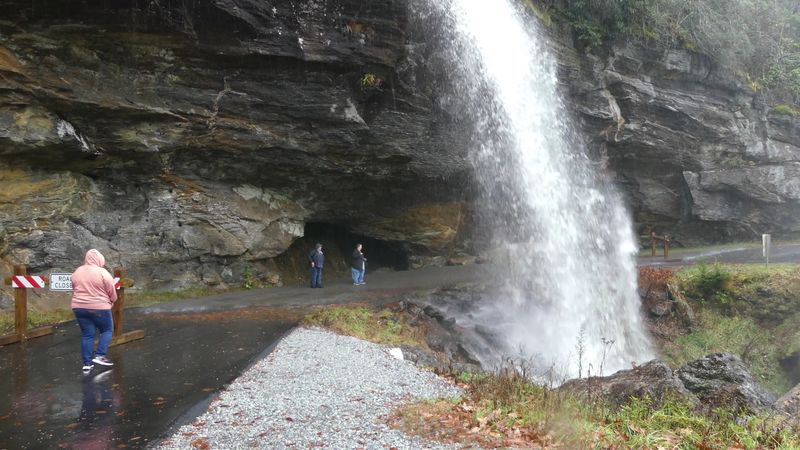
For many years, Bridal Veil Falls had a feature that made it genuinely one-of-a-kind in the Southeast: a paved lane that allowed drivers to steer their vehicles directly behind the waterfall. That quirky detail turned a roadside stop into a full-on interactive adventure, and plenty of travelers made the detour specifically to drive through a waterfall.
That drive-through lane is currently closed to vehicles. Barriers now block cars from entering, likely due to a combination of road maintenance concerns and safety considerations related to the wet, slippery surface under the falls.
The good news is that the lane itself is still physically there and still accessible on foot. Visitors can walk the short paved stretch behind the falls and get the same dramatic view that drivers used to get from behind a windshield, just at a slower and arguably more enjoyable pace.
The closure has not dimmed the enthusiasm of most visitors, and many agree that walking through actually lets you absorb the experience in a way that a quick drive-through never quite allowed.
No Fee, No Fuss
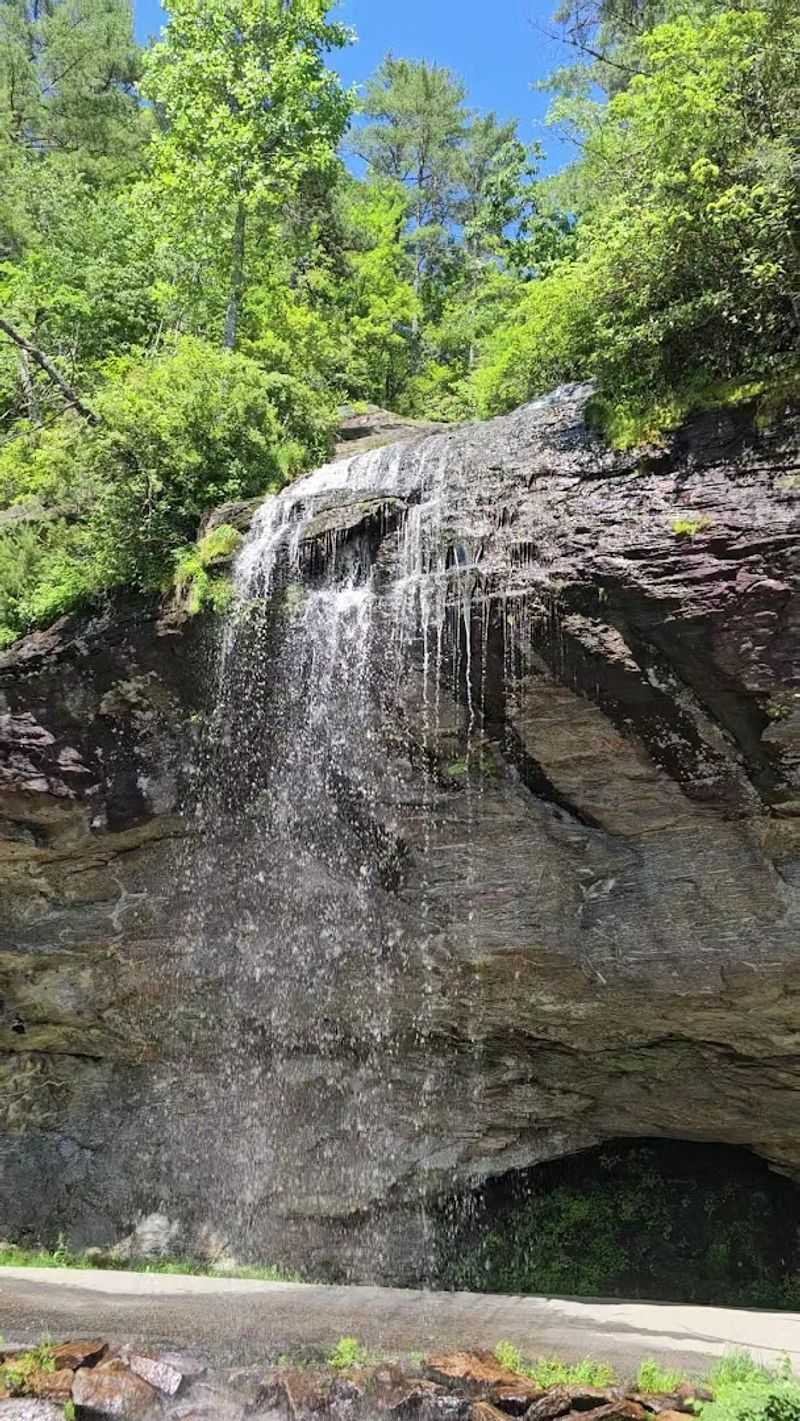
One of the most refreshing things about a visit here is the complete absence of admission fees, parking charges, or any kind of ticketing process. You pull off the road, park for free in the small lot next to the falls, and walk straight to one of the most photogenic spots in the North Carolina mountains without spending a single dollar to get in.
That zero-cost entry makes it a natural addition to any road trip itinerary through the area, especially since several other notable waterfalls sit within just a few miles along the same highway. Dry Falls and Sequoyah Falls are both nearby, so stringing together a half-day of waterfall hopping along US-64 requires nothing more than gas money and a charged camera battery.
The free access also means there is no pressure to rush. You can linger, take your time composing photos, walk behind the falls more than once, and simply enjoy the sound of moving water without watching a parking meter tick down.
That kind of unhurried, no-cost natural experience is increasingly rare and genuinely appreciated by everyone who stops.
Best Times to Visit Throughout the Year
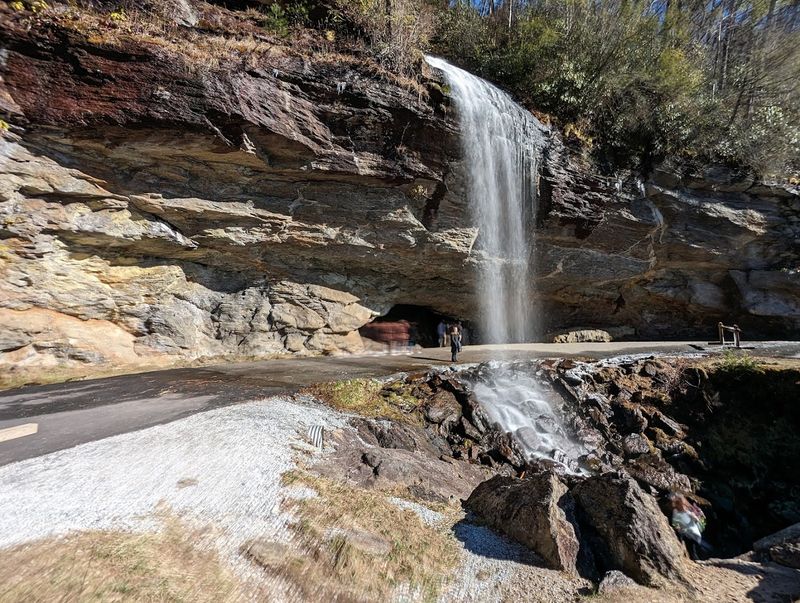
Spring tends to bring the heaviest water flow to Bridal Veil Falls, as snowmelt and frequent rain systems push more volume over the rock face. The cascade fills out to its widest and most powerful state during this season, and the surrounding forest is lush with fresh green growth that makes the whole scene feel alive.
Fall is equally popular, and for obvious reasons. The hardwood trees along US-64 turn brilliant shades of orange, red, and gold in October, framing the white water against a backdrop that photographers specifically plan trips around.
The crowds are manageable compared to peak summer weekends, and the cooler air makes the mist from the falls feel refreshing rather than chilly.
Winter visits carry their own quiet appeal. Ice sometimes forms on the surrounding rocks and along the edges of the cascade, creating a dramatically different look than any other season.
The road behind the falls is more likely to be slippery or temporarily closed in winter, so extra caution is warranted. Summer visits are pleasant but can mean a fuller parking area, so arriving early in the morning helps you enjoy the spot without too much company.
Photography Tips for Getting the Best Shot
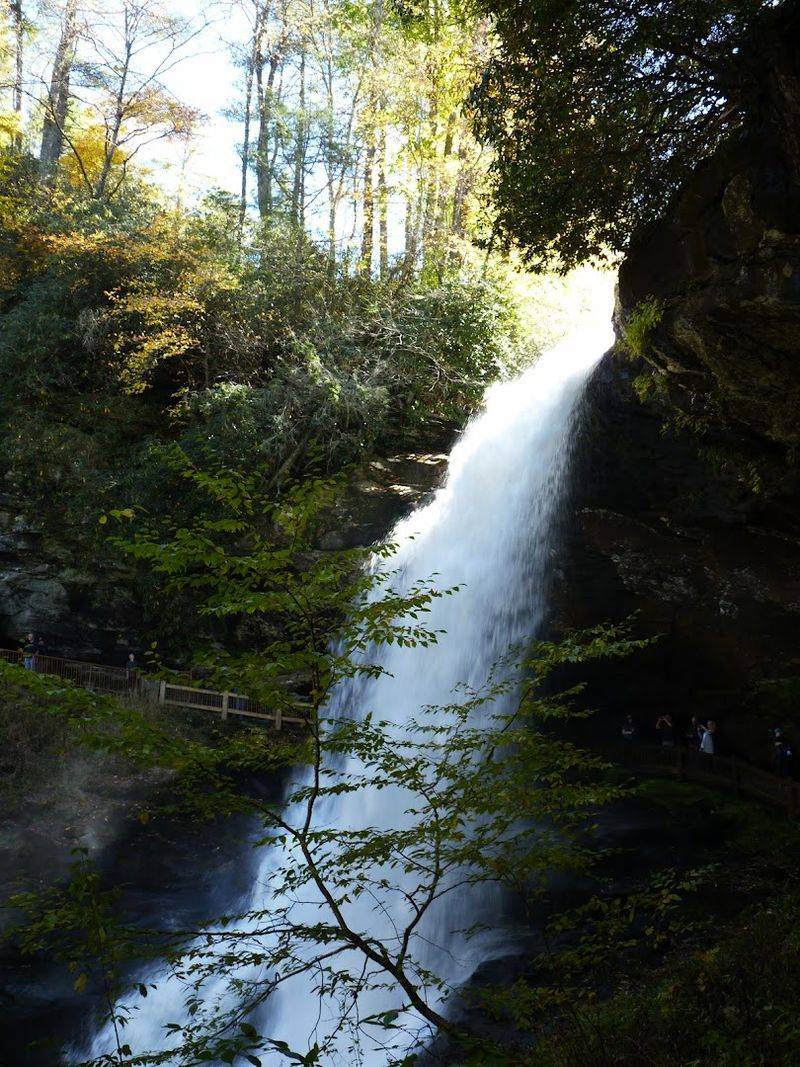
Bridal Veil Falls is a photographer’s natural playground, and the variety of angles available from such a small area is genuinely impressive. The front view from the parking area gives you the full 45-foot drop in one frame, while the path behind the falls opens up a completely different composition where the water becomes the foreground and the road or forest fills the background.
A wide-angle lens handles the full height of the falls well, especially when you want to include the surrounding rock face and tree canopy in the same shot. For a silky, smooth water effect, a slower shutter speed works beautifully here, and the overcast sky that frequently settles over the mountains acts as a natural diffuser that eliminates harsh shadows.
Golden hour light in the morning hits the falls at a flattering angle before the sun climbs too high above the ridgeline. The mist that hangs in the air near the base of the falls can create a soft, atmospheric look in photos if you position yourself slightly to the side rather than directly in front.
Waterproof your camera bag before you get close, because the spray reaches farther than it looks from a distance.
The Road to Get There and Driving Conditions
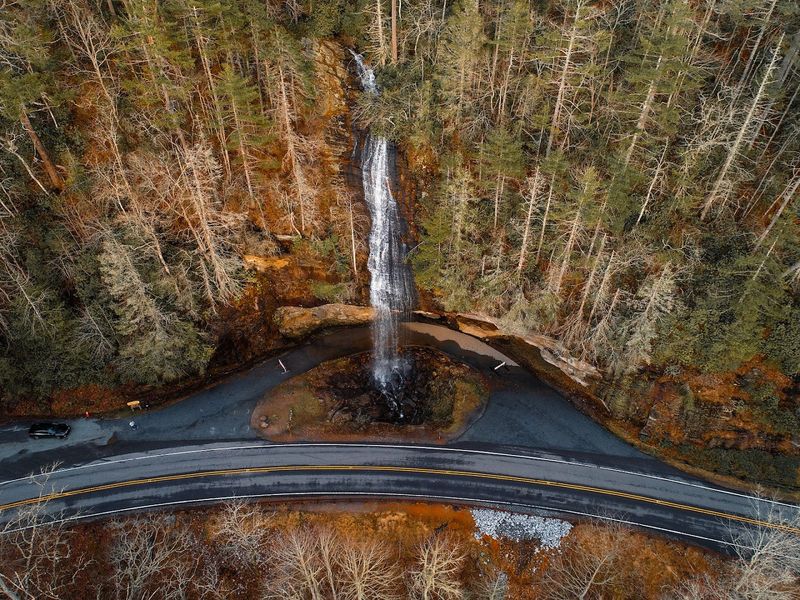
The stretch of US-64 that leads to the falls from either direction is not a road to underestimate. The highway narrows considerably as it winds through the mountains west of Highlands, with tight curves, limited guardrails in some spots, and elevation changes that can feel abrupt if you are not used to mountain driving.
Confident drivers who are comfortable with narrow two-lane roads will find the route manageable and honestly quite scenic. The views through the trees as you climb and descend are striking, and the road itself becomes part of the adventure rather than just a means to an end.
Motorcyclists frequent this route and generally enjoy the curves, but a tip worth passing along is to pull into the north or west side of the parking area rather than the south side, since that end of the lot slopes downhill toward a blind curve that can make backing out tricky on a heavy bike. RVs and large trailers should check road conditions and clearances before committing to this particular stretch, as the width and curve radius can create tight situations for longer vehicles.
Nearby Waterfalls Worth Adding to Your Route
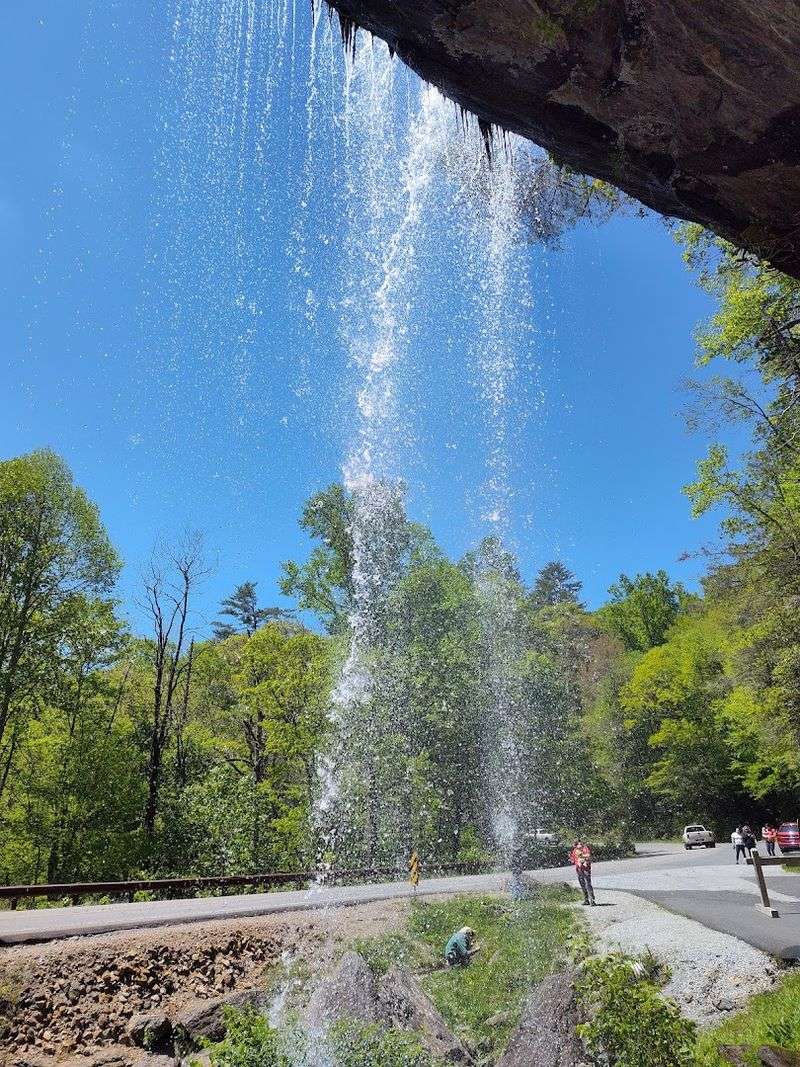
The stretch of US-64 near Highlands is sometimes called the Waterfall Highway, and the nickname is earned. Bridal Veil Falls anchors one end of a cluster of accessible cascades that sit within just a few miles of each other, making it easy to visit multiple waterfalls in a single afternoon without any serious hiking commitment.
Dry Falls is perhaps the most famous neighbor, located just a short drive down the road. Its name comes from the fact that you can walk behind it on a maintained trail and stay completely dry despite standing directly under the overhang.
The two falls make a natural pairing, and many visitors hit both on the same stop.
Sequoyah Falls is another nearby option that adds variety to the day without adding much distance to your route. The area around Highlands also puts you within reasonable range of additional cascades deeper in the Nantahala National Forest for those who want to extend their waterfall tour into a full day or even a weekend.
Having so many natural landmarks packed into one short corridor of highway is genuinely rare and makes this part of North Carolina a standout destination for nature lovers.
A Few Practical Tips Before You Go
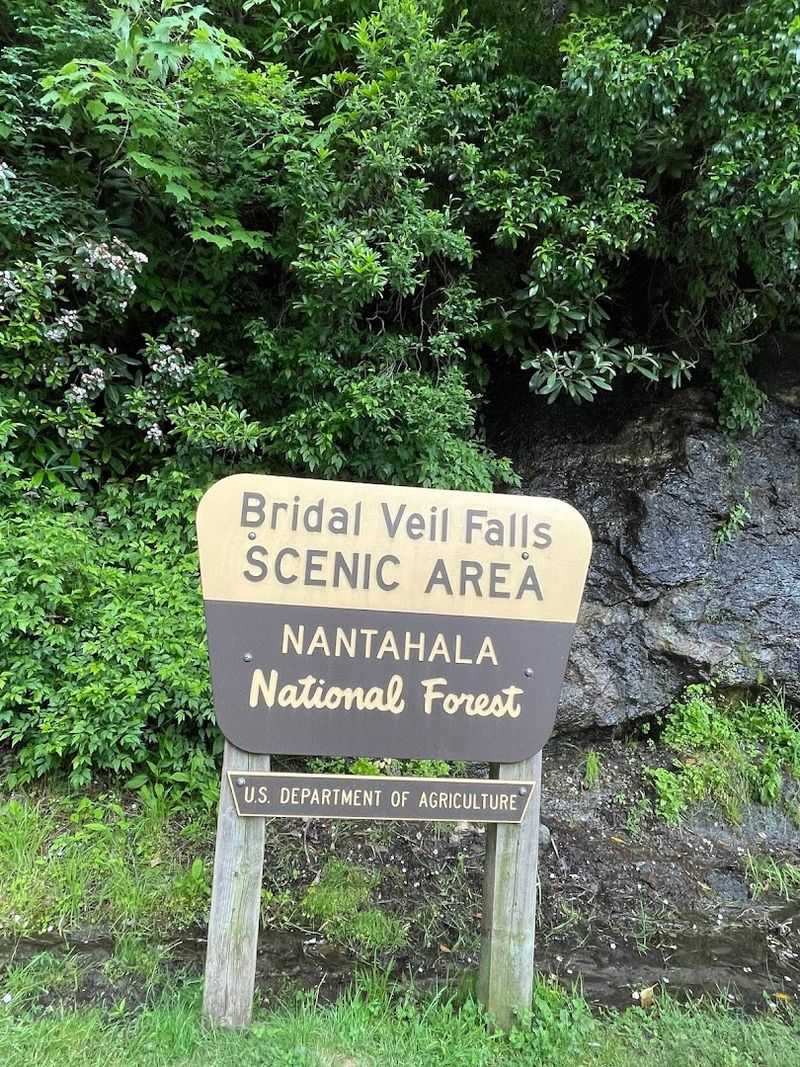
A handful of practical details can make the difference between a smooth visit and a frustrating one. The parking area holds only six or seven cars comfortably, so arriving during off-peak hours, such as early morning on a weekday, gives you the best chance of finding a spot without circling or waiting for someone to leave.
Wear shoes with grip. The pavement behind the falls stays wet essentially all the time, and the steps leading down to the path can be slick after rain.
Sandals and smooth-soled sneakers work fine on dry days at the front viewing area, but anything more adventurous requires footwear that can handle wet stone.
There are no restroom facilities at the falls itself, so plan accordingly before leaving Highlands or another nearby town. The visit itself is short, typically 15 to 30 minutes for most people, so it fits easily into a broader road trip without requiring a major schedule adjustment.
Cell service can be spotty along this stretch of US-64, which means downloading offline maps before heading out is a smart move rather than an optional one. A light rain jacket is worth tossing in the car as well, since mountain weather shifts quickly and the mist from the falls adds its own layer of dampness.
Share this story