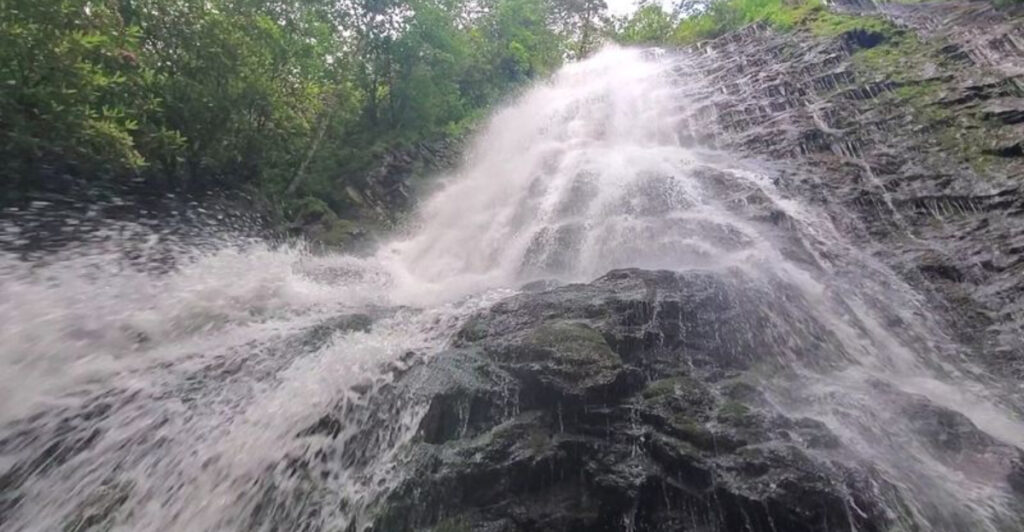
There is a waterfall tucked into the mountains of western North Carolina that stops people in their tracks the moment they see it. At 120 feet tall, it crashes down a rocky cliff face with a force that sends cool mist drifting across your face as you stand on the viewing bridge.
The stairway that gets you there is the kind of climb that makes your legs work but rewards every step with something worth seeing. By the time you reach the top, you will understand exactly why this place has earned a near-perfect rating from thousands of visitors who made the trip and could not stop talking about it afterward.
Where Mingo Falls Sits and How to Get There
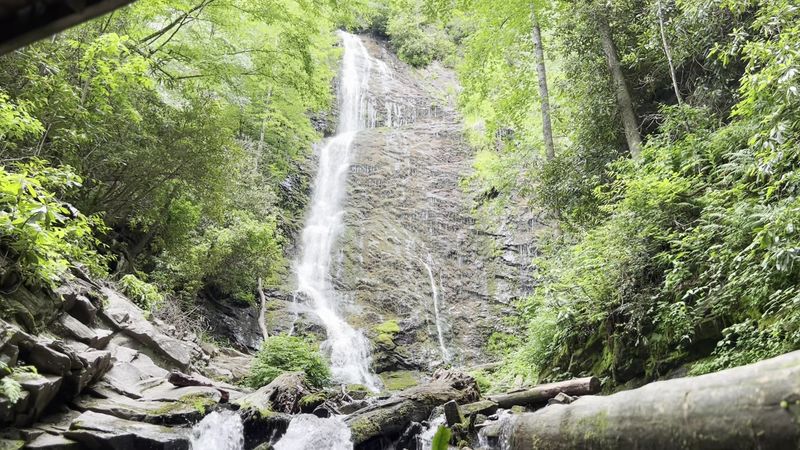
The address reads Eastern Cherokee Reservation, Cherokee, NC 28719, and that location alone tells you something special is waiting. Mingo Falls sits on land belonging to the Eastern Band of Cherokee Indians, nestled in the hills just outside the town of Cherokee in western North Carolina.
The Great Smoky Mountains rise up all around this area, and the waterfall fits right into that dramatic landscape.
Getting there is straightforward. A small gravel parking lot sits at the trailhead, and it is free to use.
There are portable restrooms available at the base of the stairs, along with an information board that gives you a quick overview of what you are about to see. The National Park Service maintains a helpful page at nps.gov/grsm for anyone who wants to check trail conditions before heading out.
Cherokee is easy to reach from Interstate 40, and the town itself has plenty of other spots worth exploring. Many visitors pair this stop with a drive through the nearby Smoky Mountains, making it a natural anchor for a full day outdoors in one of the most scenic corners of the entire eastern United States.
The Stairway That Everyone Remembers
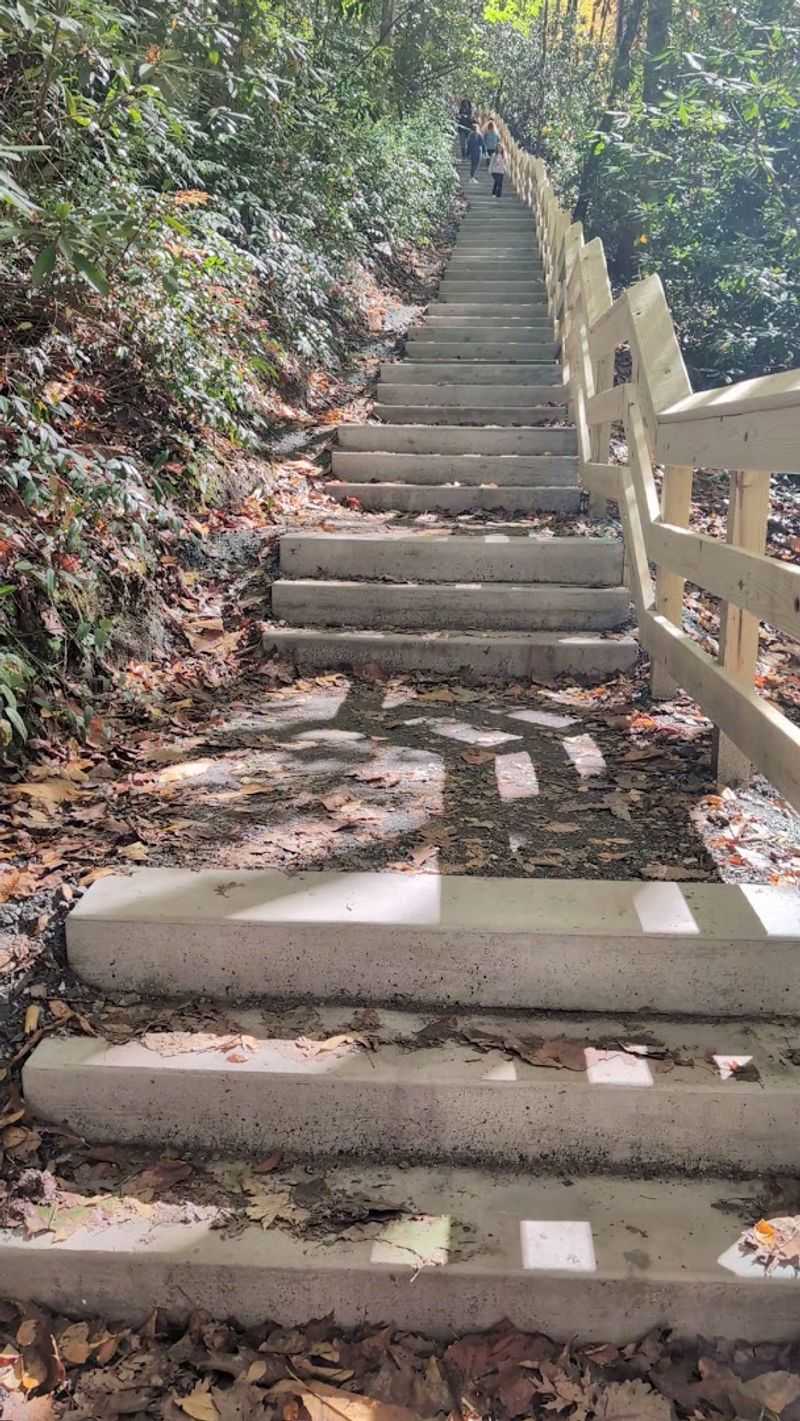
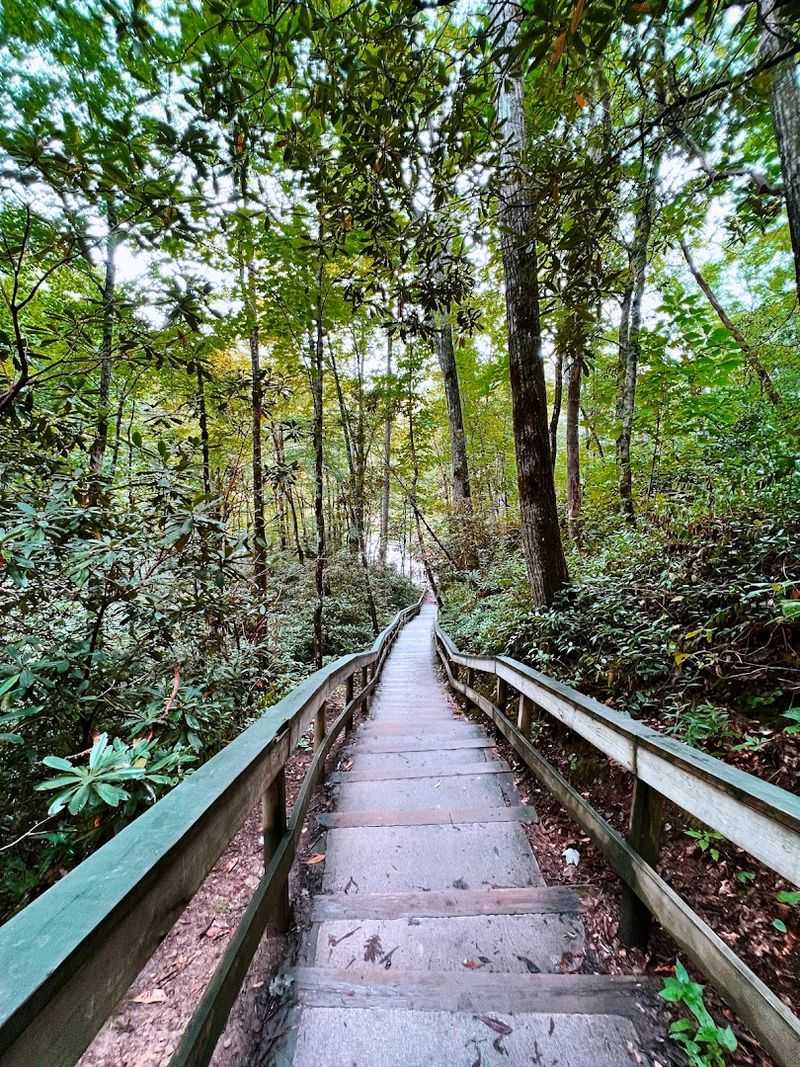
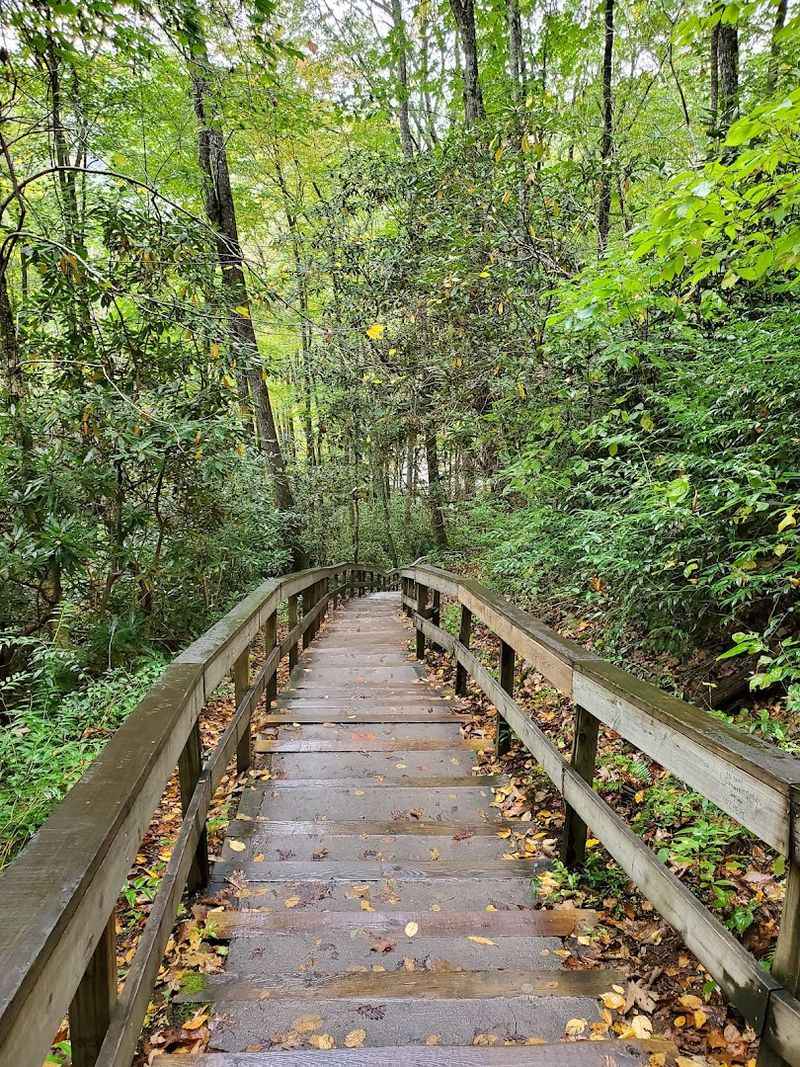
The stairs are the first thing most people mention when they come back from Mingo Falls, and for good reason. Right at the base of the trail, a wooden staircase begins climbing steeply through the forest.
Depending on which count you trust, there are somewhere between 150 and 166 steps in total, and they do not waste any time being gentle about the incline.
A solid handrail runs the length of the staircase, which makes a real difference if your legs start to complain halfway up. The stairs were recently rebuilt and upgraded, so the surface is level and the structure feels stable underfoot.
That renovation made the climb significantly more manageable than it used to be, and visitors with limited mobility have noted that the improvements helped them reach the top when they might not have been able to before.
Two benches sit at the top of the staircase for anyone who needs a moment to catch their breath before continuing to the viewing platform. The whole climb takes only a few minutes, but the combination of steep steps and mountain air means your heart will know it worked.
Wear comfortable shoes with good grip, especially after rain when the ground near the top gets muddy.
The Moment the Falls Come Into View
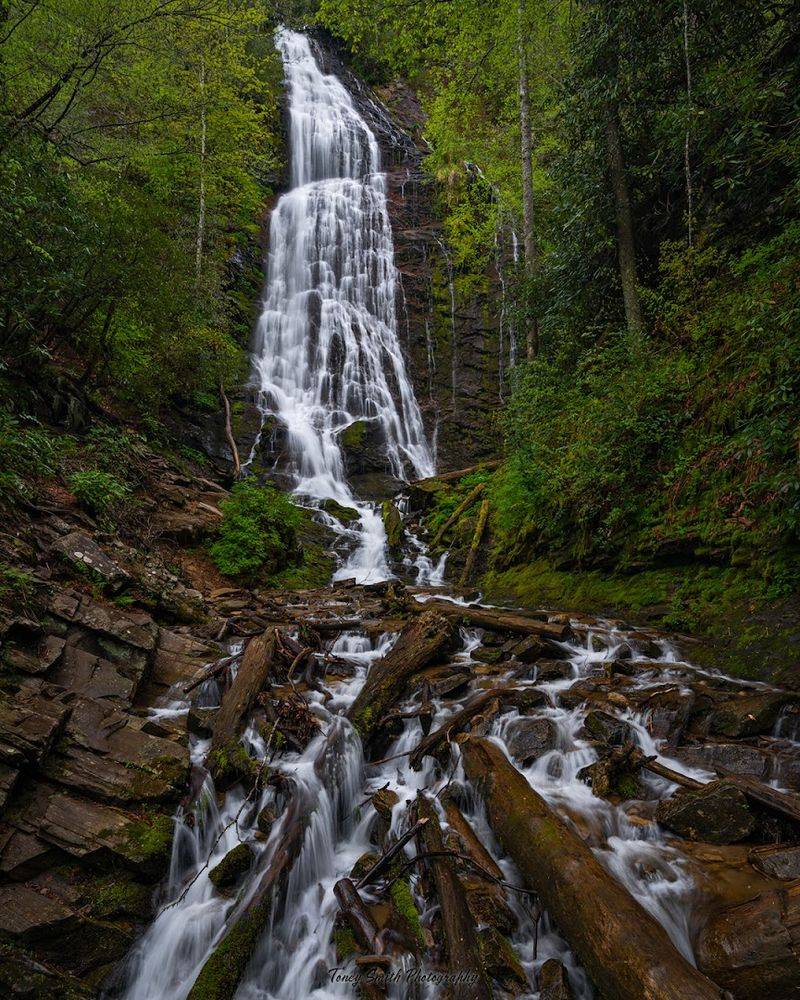
Nothing quite prepares you for the first look at the falls. You hear the roar of the water before you see it, a deep rushing sound that grows louder with every step.
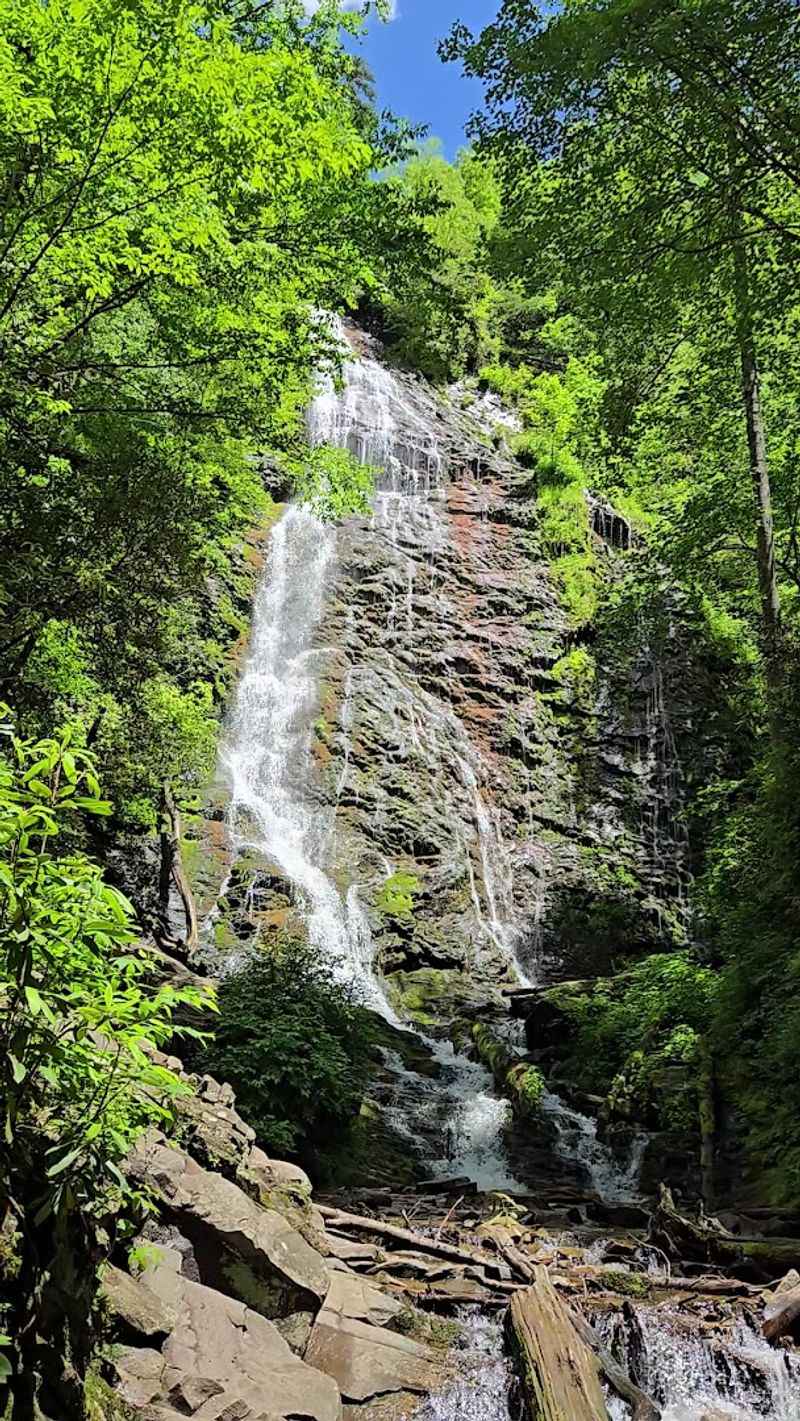
Then the trees open up just enough, and 120 feet of falling water fills your entire field of vision.
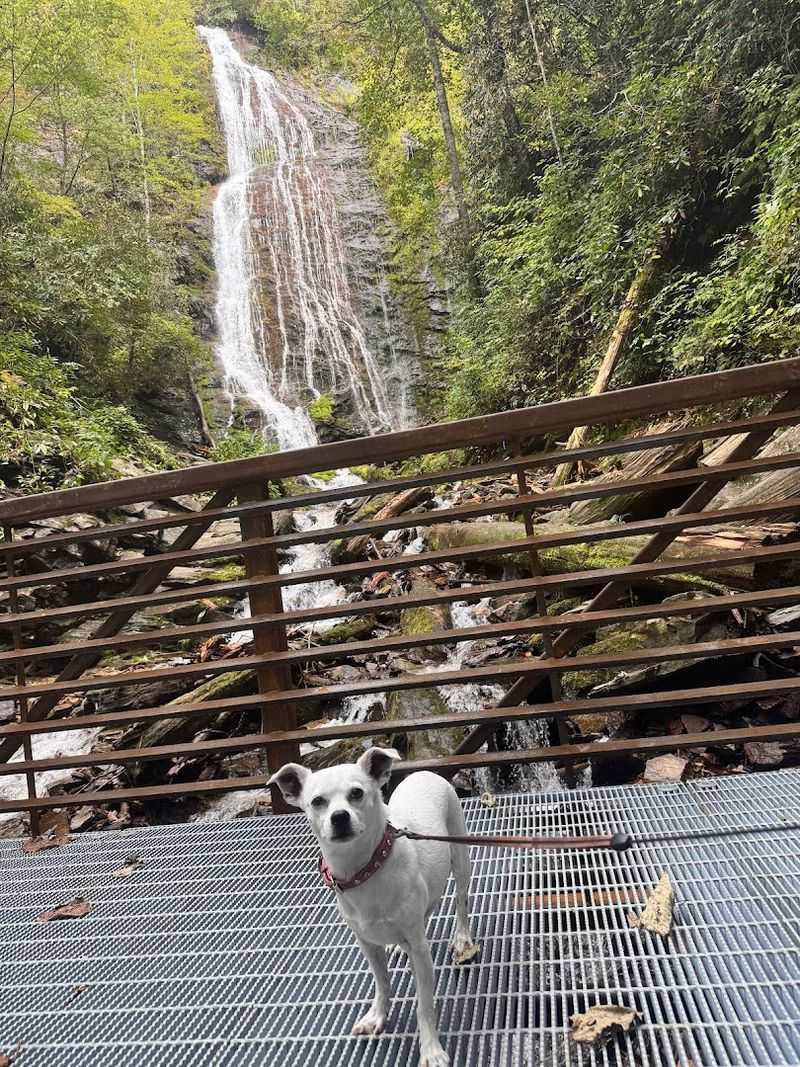
The waterfall drops down a sheer rock face in a wide, powerful sheet, splitting into smaller streams near the bottom before collecting in the creek below. The height is genuinely impressive, and many visitors admit they expected something smaller based on the short trail.
The surrounding forest frames the falls on both sides, and the green of the trees against the white water creates a scene that photographs extremely well in any season.
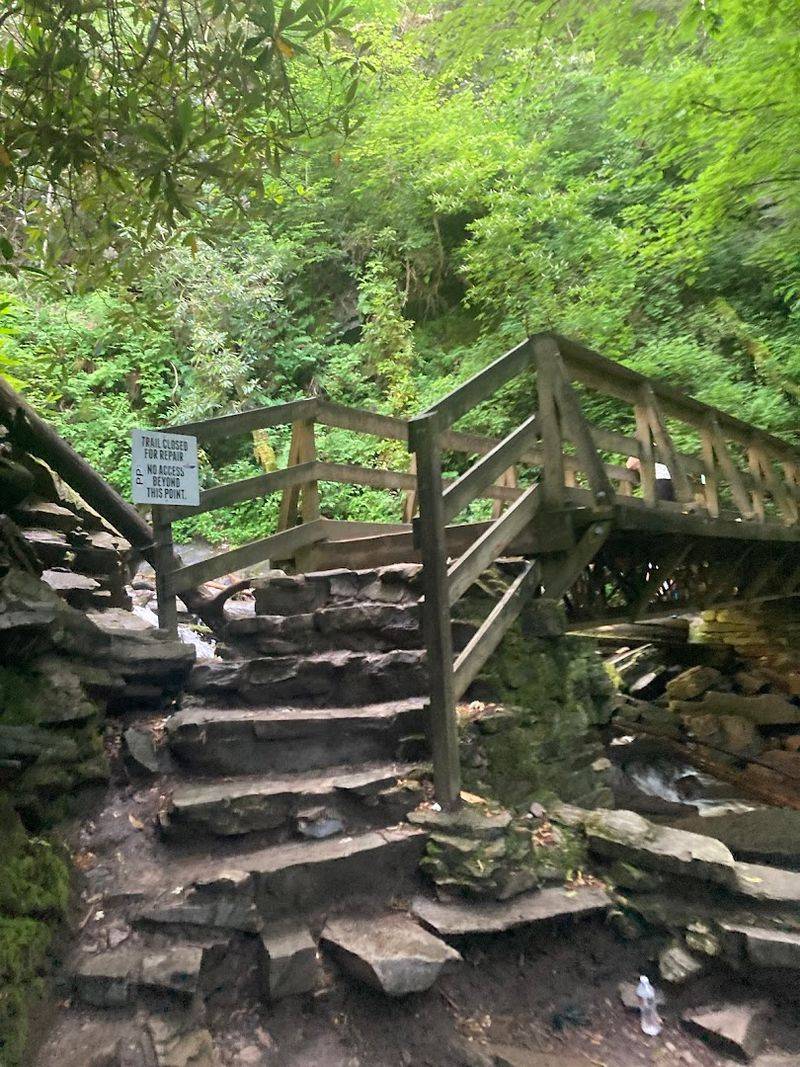
A wooden viewing bridge spans the creek at the base of the falls, giving you a front-row spot that is close enough to feel the mist on your skin. Benches on the bridge invite you to sit and absorb the view rather than rushing back down.
Most people spend ten to fifteen minutes here just taking it all in, and a few stay considerably longer because leaving feels harder than the climb up ever did.
How the Trail Measures Up for Different Hikers
At 0.4 miles round trip, the trail to Mingo Falls is one of the shorter hikes you will find anywhere in the Smoky Mountains region. The distance is not the challenge here.
The stairs are the challenge, and whether they feel easy or tough depends a lot on your current fitness level and how your knees are feeling that day.
Families with young children have completed this hike successfully, including parents who brought three-year-olds who walked the entire thing on their own. Older adults and visitors who described themselves as not being in peak physical condition have also made it to the top, particularly since the staircase renovation improved the accessibility of the route.
The key is simply taking your time and using the handrail when needed.
The trail is not a loop. You go up the stairs, cross the bridge to see the falls, and then come back down the same way.
The descent is actually the trickier part for some people, since steep stairs can be harder on the knees going down than going up. Trekking poles or a walking stick can help with that, and several visitors mentioned that having one made the whole experience more comfortable.
Plan for about thirty to forty-five minutes total for the visit.
What Makes This Waterfall Stand Out in the Smokies
The Great Smoky Mountains region has no shortage of waterfalls. Dozens of them are scattered across the national park and the surrounding areas, ranging from gentle trickles to roaring cascades.
Mingo Falls consistently earns recognition as one of the tallest waterfalls in the entire Smoky Mountains area, which gives it a status that few other falls in the region can match.
What sets it apart beyond sheer height is the combination of accessibility and visual impact. Many tall waterfalls require long, strenuous hikes to reach.
This one delivers a genuinely dramatic payoff after only a few minutes of climbing. That ratio of effort to reward is hard to beat anywhere in the Southeast, and it explains why the falls draws visitors who might not otherwise consider themselves hikers.
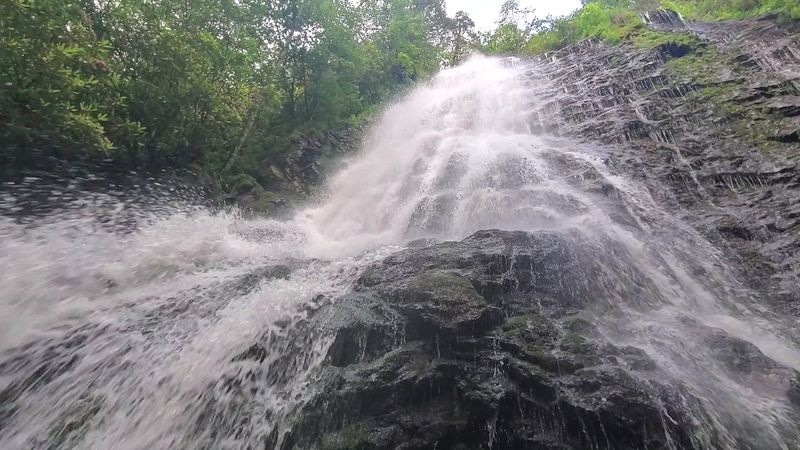
The rock face the water tumbles down has a dark, textured surface that contrasts beautifully with the white water. After a day of heavy rain, the volume of water increases noticeably, and the sound becomes even more intense.
Visiting right after rainfall is a popular tip among those who have been more than once. Whether you are based in Cherokee, Asheville, or even driving up from Oklahoma for a mountain getaway, this waterfall belongs on the itinerary.
The Cherokee Heritage Behind the Falls
The land that Mingo Falls sits on belongs to the Eastern Band of Cherokee Indians, and that context adds a layer of meaning to the visit that goes beyond the scenery. The Cherokee have lived in these mountains for centuries, and the reservation surrounding Cherokee, NC represents one of the most significant Indigenous communities in the eastern United States.
The town of Cherokee itself offers museums, cultural centers, and historical sites that tell the story of the Eastern Band in depth. The Museum of the Cherokee People is one of the most visited attractions in the area and provides important background on the history and traditions of the community.
A stop at the falls pairs naturally with a visit to these cultural spaces, turning a day trip into something genuinely educational.
Visitors are asked to respect the land and the rules in place at the falls. Signage at the site reminds guests to stay on the platform, avoid entering the water, and leave the natural environment undisturbed.
Some plant and animal species in this area are protected, and staying on the designated trail helps preserve the ecosystem for future visitors. Respecting those boundaries is a simple way to honor both the natural setting and the community whose land this is.
Visiting in Every Season
One of the more surprising things about Mingo Falls is how different it looks depending on when you visit. Each season brings its own version of the falls, and regular visitors often argue about which one is best.
The truth is that all four seasons have something compelling to offer.
Winter visits have a particular magic. When temperatures drop far enough, portions of the falls freeze into dramatic ice formations that cling to the rock face alongside the still-flowing water.
January and February visits have produced some of the most striking photos shared online from this location. The cold also means fewer people on the trail, so a quiet midweek winter visit can feel almost private.
Spring brings heavy water flow as snowmelt and rain pour through the watershed, making the falls louder and more powerful than at any other time of year. Summer is the busiest season, but even then the mist from the falls provides a welcome cool-down on hot days.
Fall turns the surrounding forest into a wall of orange and gold that frames the white water with color. Road-trippers coming from Oklahoma or other southern states often time a fall visit to catch the leaf color at its peak, and the combination rarely disappoints.
Practical Tips for the Parking Lot and Trail Start
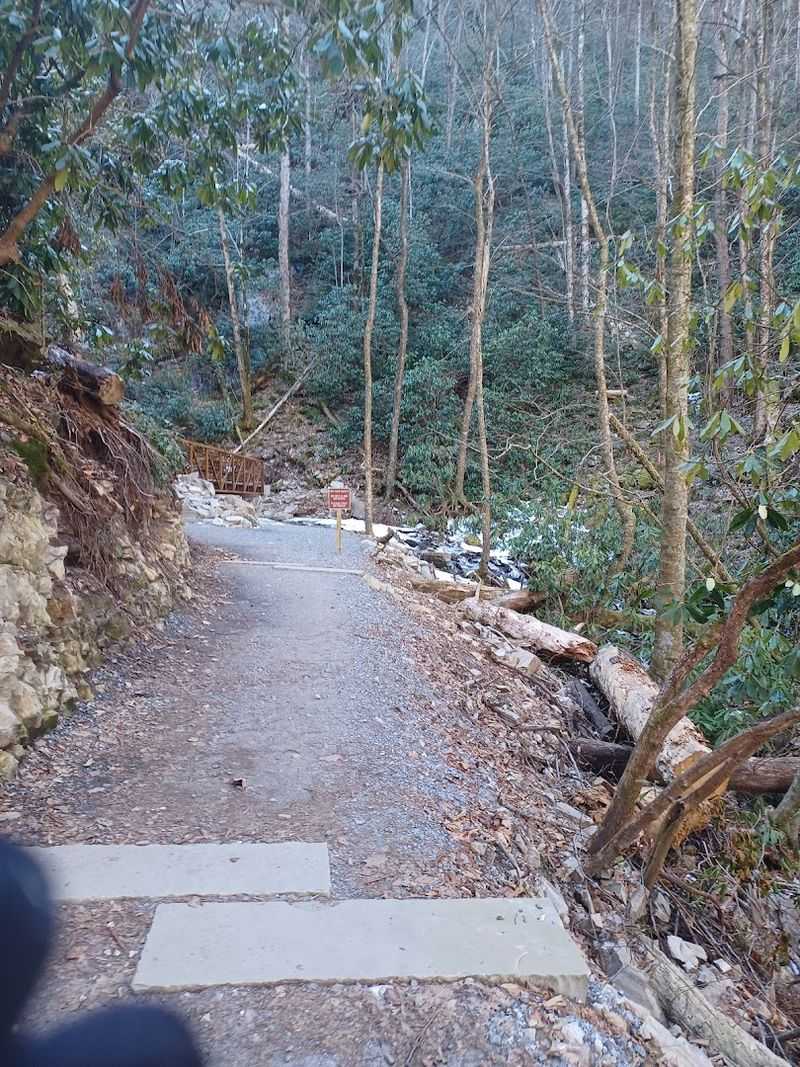
The parking situation at Mingo Falls is one of the more pleasant surprises for first-time visitors. There is no fee to park, and the gravel lot at the trailhead holds a modest but workable number of vehicles.
On busy summer weekends, the lot can fill up, but turnover tends to be quick since most visitors spend less than an hour total at the site.
Arriving early in the morning or on a weekday dramatically reduces the chance of dealing with a crowded lot. Late February and early March visits often mean having the trail nearly to yourself, and the same is true for weekday mornings in any season.
The lot fills fastest on weekend afternoons during summer and fall.
At the trailhead, you will find portable restrooms, a trash can, and an information board with details about the trail and the surrounding area. There is no food or water available at the site, so bring your own.
A small water bottle is plenty for a trail this short, but on hot days, having something cold to drink when you return to the car feels like a genuine reward. The whole setup is simple and functional, which fits the no-fuss spirit of the place perfectly.
Photography at the Falls
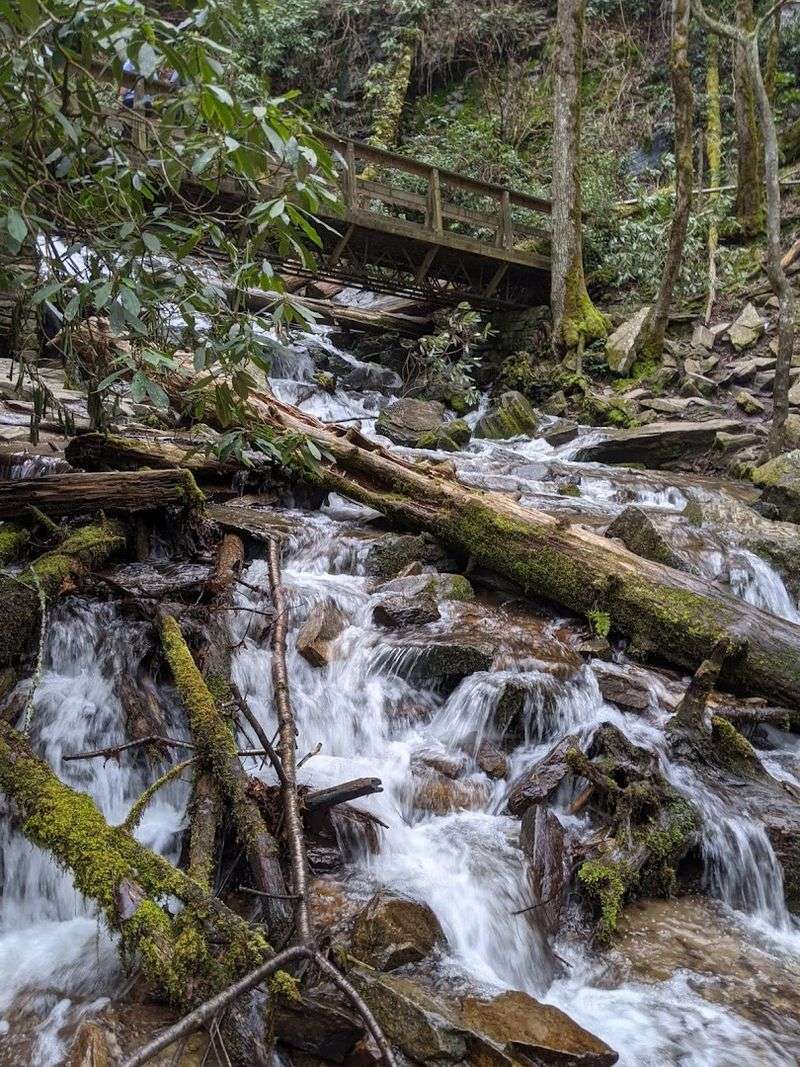
Mingo Falls is one of the better photography spots in the entire Smoky Mountains region, and that reputation is well deserved. The viewing bridge gives you a stable platform to shoot from, and the framing of the falls between the surrounding trees creates a natural composition that works without much effort.
For the cleanest shots of the water, overcast days are actually preferable to bright sunshine. Direct sunlight creates harsh shadows on the rock face and can wash out the detail in the white water.
A cloudy sky acts like a giant softbox, evening out the light and bringing out the texture of the falls. Early morning visits also tend to offer softer light before the sun climbs high enough to hit the falls directly.
A wide-angle lens captures the full height of the falls in a single frame, while a longer exposure softens the moving water into a silky blur that emphasizes the flow. Even smartphone cameras produce excellent results here because the subject is so visually strong.
Visitors from as far as Oklahoma have posted photos from this bridge that look like professional travel shots. The mist can occasionally land on a lens, so keeping a small cloth handy saves you from wiping water droplets out of your images at the last second.
After the Falls: Exploring Cherokee, NC
Cherokee is a town worth spending real time in, not just a quick stop on the way to somewhere else. The Eastern Band of Cherokee Indians have built a community here that blends natural beauty, cultural depth, and visitor-friendly amenities into a destination that surprises most people who assumed it was just a gateway to the national park.
The Museum of the Cherokee People is the most substantial cultural attraction in town and offers a thorough, moving account of Cherokee history from ancient times through the present day. The Oconaluftee Indian Village, a living history site, shows traditional Cherokee crafts and construction methods in a hands-on setting that both adults and children find engaging.
These stops add real substance to a day that starts with the waterfall.
Restaurants, shops, and small markets line the main streets of Cherokee, and the town has a relaxed pace that makes it easy to wander without a strict plan. Visitors who drove up from Oklahoma or other states often use Cherokee as a base for multiple days of exploring the region, and it earns that role comfortably.
The combination of the falls in the morning and a cultural afternoon in town makes for a full, satisfying day that covers both the natural and human history of this remarkable corner of North Carolina.
Recent Repairs and Trail Conditions After Hurricane Helene
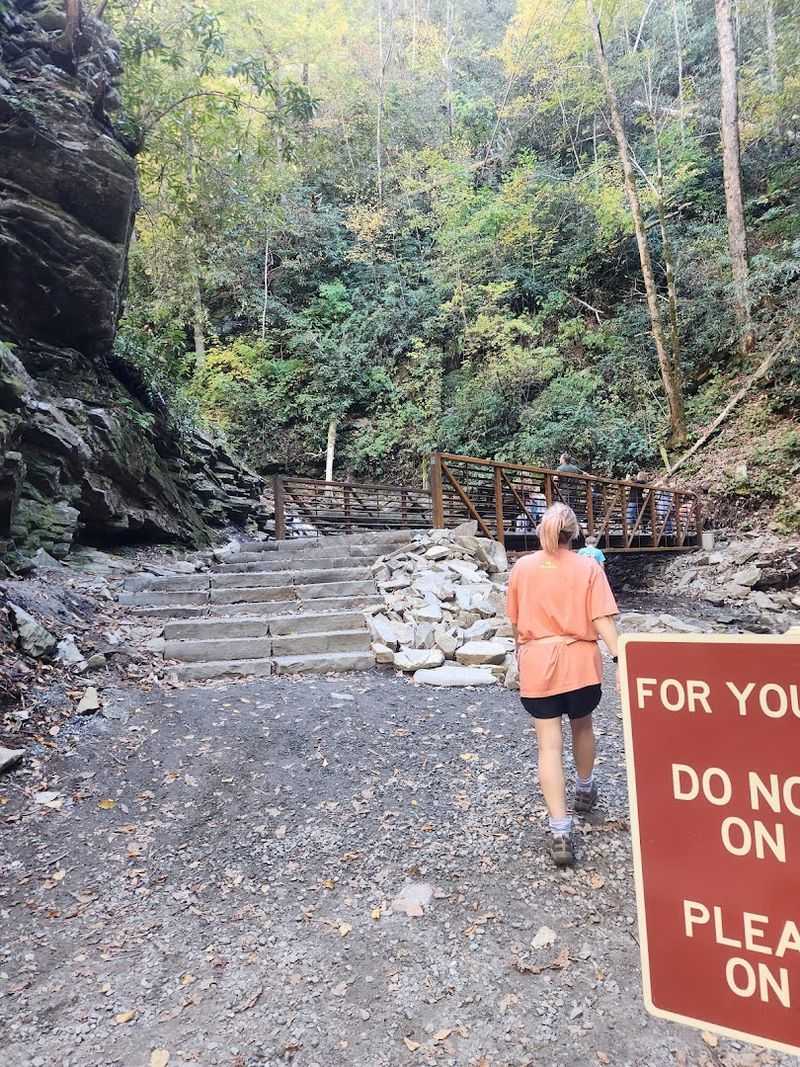
Hurricane Helene brought significant damage to western North Carolina in 2024, and the Cherokee area was among the places that felt the impact. The trail and staircase at Mingo Falls required repairs following the storm, and work on the site has been ongoing.
As of recent visitor accounts, the access trail has reopened and the staircase has been substantially rebuilt.
The new stairs are level, solid, and noticeably improved over the older structure that had developed a lean to one side over the years. Visitors who knew the trail before the repairs have commented that the rebuilt staircase makes the climb feel safer and more stable.
Some sections of the surrounding area are still undergoing work, so conditions can vary depending on when you visit.
Before making the trip, checking the National Park Service website at nps.gov/grsm for current trail status is a smart move. The page is updated when conditions change, and it can save you a drive if any portion of the access trail is temporarily closed.
The broader region around Cherokee is also still recovering in some areas, so supporting local businesses during your visit is a meaningful way to contribute to the community’s ongoing rebuilding effort. Small choices add up.
Why This Short Hike Leaves a Long Impression
Most hikes that people remember for years involve long distances, serious elevation gain, or some kind of physical ordeal that becomes a story worth telling. Mingo Falls breaks that pattern completely.
The trail is short, the staircase is steep but manageable, and the whole visit from car to viewpoint and back takes under an hour. Yet the falls consistently rank among the most memorable natural sights in the entire Smoky Mountains region.
The reason is simple: the scale of what you see does not match the effort required to see it. A 120-foot waterfall thundering down a sheer rock face, surrounded by old forest, accessible to nearly any visitor who can handle a staircase, and completely free to visit is a combination that is genuinely rare.
The mist, the sound, the height, and the setting all work together to create something that sticks in your memory long after you have driven home.
Visitors from Oklahoma, Georgia, Tennessee, and every corner of the Southeast return to this spot year after year, sometimes with new people they want to share it with. That kind of repeat loyalty says more about a place than any rating ever could.
Mingo Falls is the kind of waterfall that turns casual visitors into enthusiastic advocates, one staircase climb at a time.
Share this story