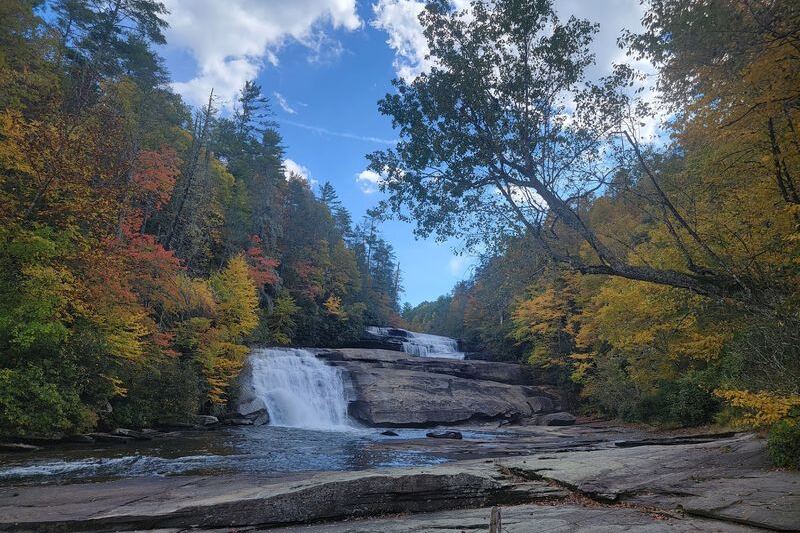
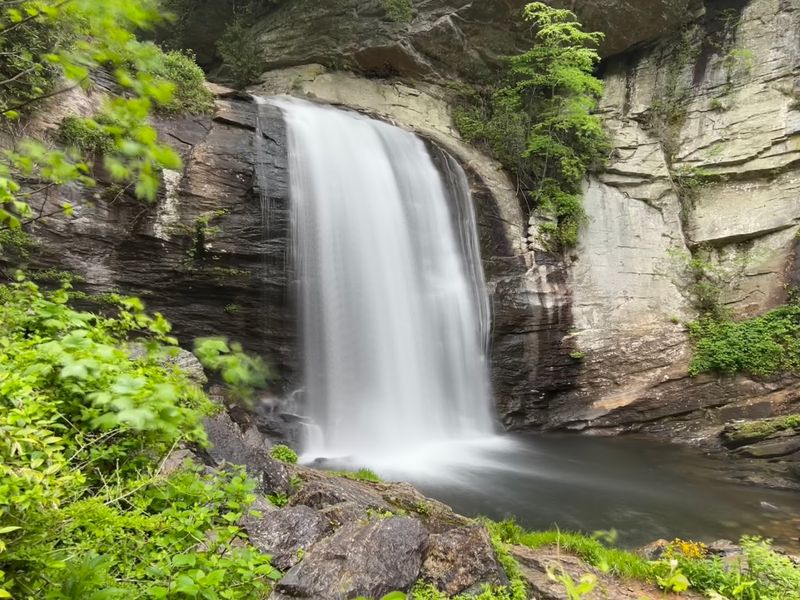
There is a waterfall in the mountains of western North Carolina that stops people mid-drive and pulls them right out of their cars. It crashes down 60 feet over a wide curtain of ancient rock, fills the air with cool mist, and roars loud enough to drown out whatever was on your mind five minutes ago.
The walk from the road to the base takes less time than brewing a cup of coffee, yet the payoff feels completely out of proportion to the effort. I have visited waterfalls from the Pacific Northwest to the Appalachians, and this one still managed to catch me off guard in the best possible way.
The Address, Location, and How to Find It
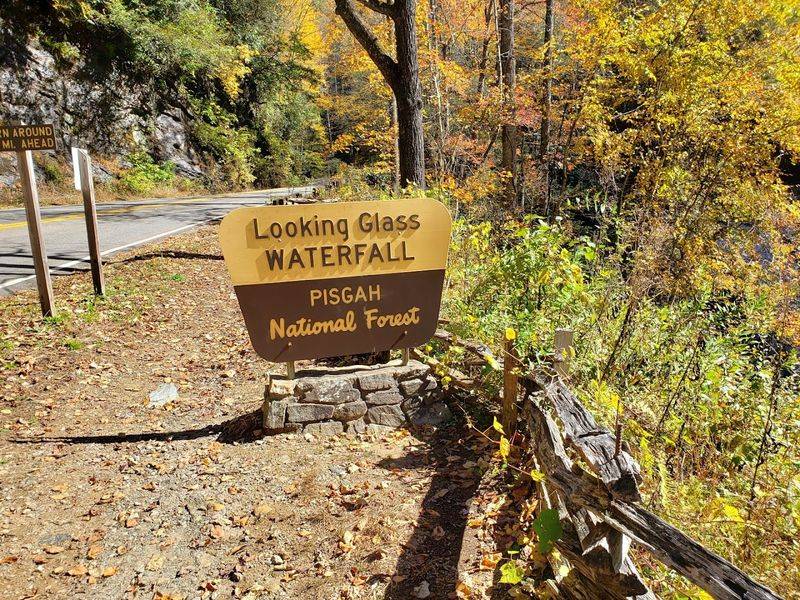
Right off US-276 in Brevard, North Carolina 28712, Looking Glass Falls sits inside the Pisgah National Forest, one of the oldest managed national forests in the eastern United States. The phone number on record is (828) 877-3265, and the U.S.
Forest Service manages the site. You do not need a reservation or a trail pass to visit, which makes it one of the most accessible waterfalls in the entire state.
Brevard is a small mountain town with a lot of personality, roughly 30 miles southwest of Asheville. The drive along US-276 through the forest is winding and green, with the road hugging ridgelines before dropping into cool, shaded hollows.
You will know you are close when you start seeing cars pulled over along the shoulder and hear the faint rumble of moving water.
Unlike places in states such as Oklahoma, where dramatic waterfalls require serious planning and long drives into remote terrain, this one practically announces itself from the road. The coordinates are 35.2960335, -82.7688443 if you want to plug them directly into your GPS and avoid any guesswork on the curves.
The Story Behind the Name
The name Looking Glass Falls does not come from any mirror-like quality of the water itself. The falls take their name from Looking Glass Rock, a massive granite dome nearby that freezes over in winter and reflects sunlight like a sheet of polished glass.
Early settlers in this part of North Carolina gave the rock its name, and the waterfall eventually borrowed it.
That kind of layered naming history is common in the southern Appalachians, where place names often carry stories that go back centuries. The Pisgah National Forest itself has deep roots in American conservation history, having been part of the Vanderbilt family’s Biltmore Estate lands before being transferred to federal management in the early 1900s.
Standing at the base of the falls, it is easy to forget you are in a place with that much backstory. The water does not care about history.
It just keeps moving, carving the same path it has carved for thousands of years, which is somehow more impressive than any name or legend attached to it. History here is written in stone, not in words.
What the Walk Down Actually Looks Like
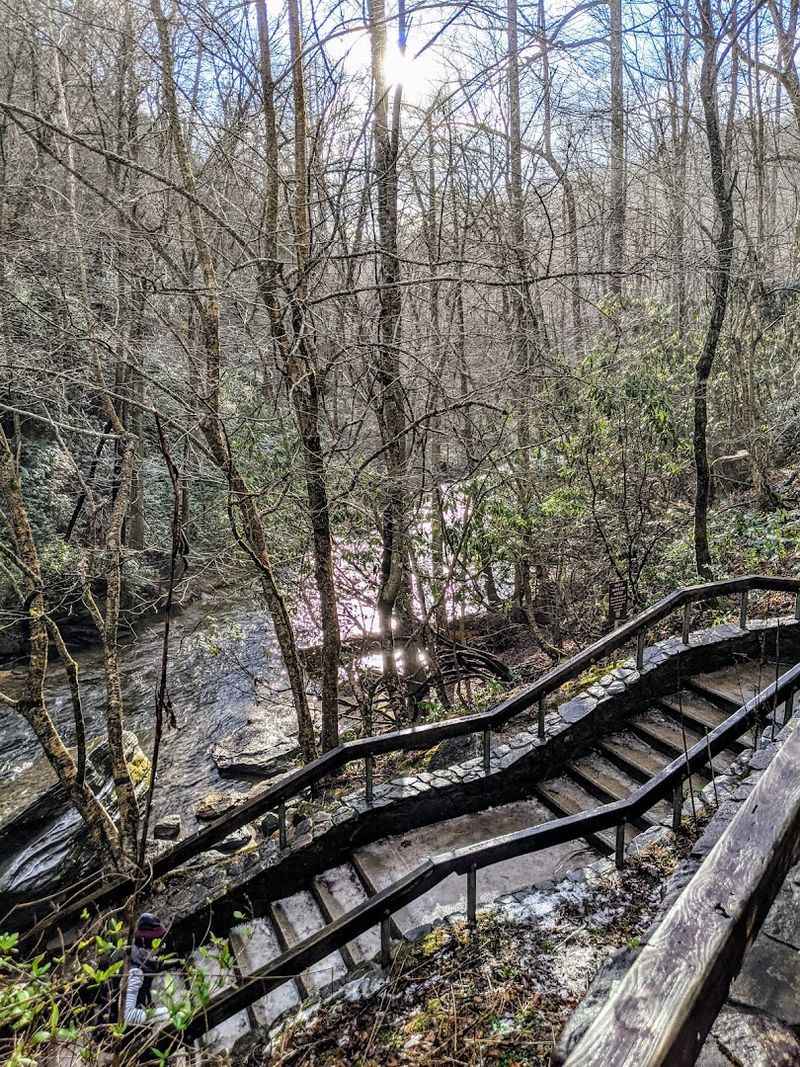
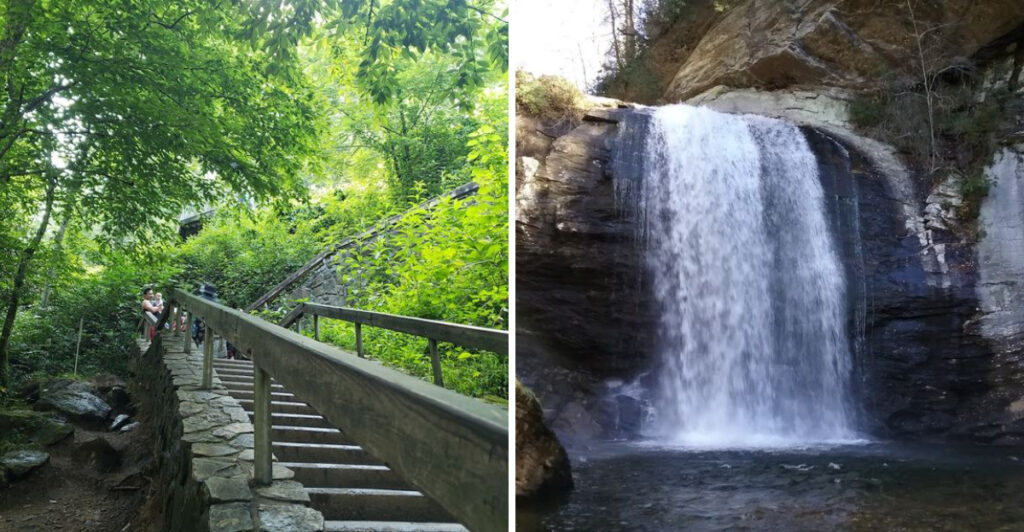
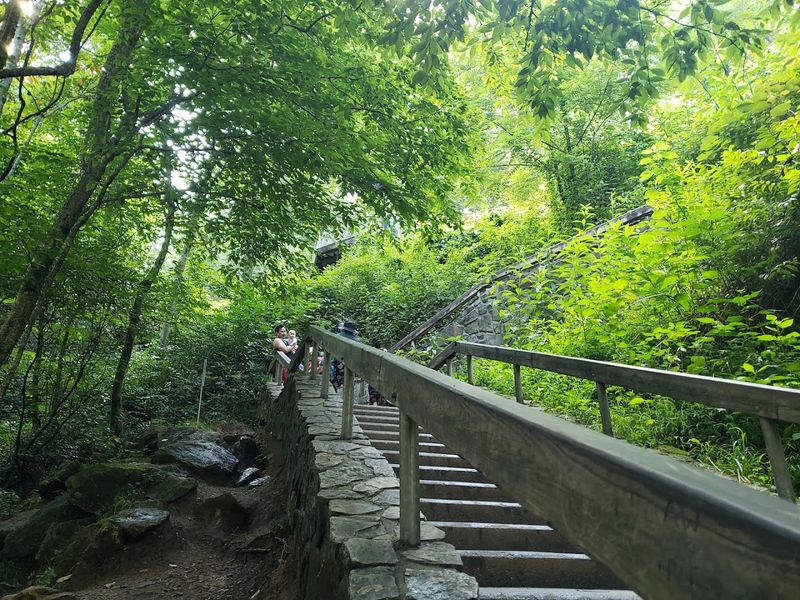
The staircase from the road to the base of the falls is paved, has handrails, and is well-maintained by the Forest Service. Most people make it down in two to three minutes without breaking a sweat.
There are several flights of steps, so people with knee issues or mobility challenges may want to take their time, but the path itself is not steep or treacherous.
A viewing platform near the top of the stairs offers a full frontal look at the falls without requiring a single step down. That platform is genuinely useful for visitors who cannot manage the stairs, and the view from up there is surprisingly complete.
You can see the full 60-foot drop, the wide curtain of white water, and the plunge pool below all at once.
At the bottom, the experience shifts entirely. The mist hits your face, the sound gets louder, and the scale of the rock face above you becomes much more apparent.
Children handle the stairs easily, and the whole round trip from car to base and back rarely takes more than 20 minutes. Short walk, long memory, as simple as that.
The Waterfall Up Close
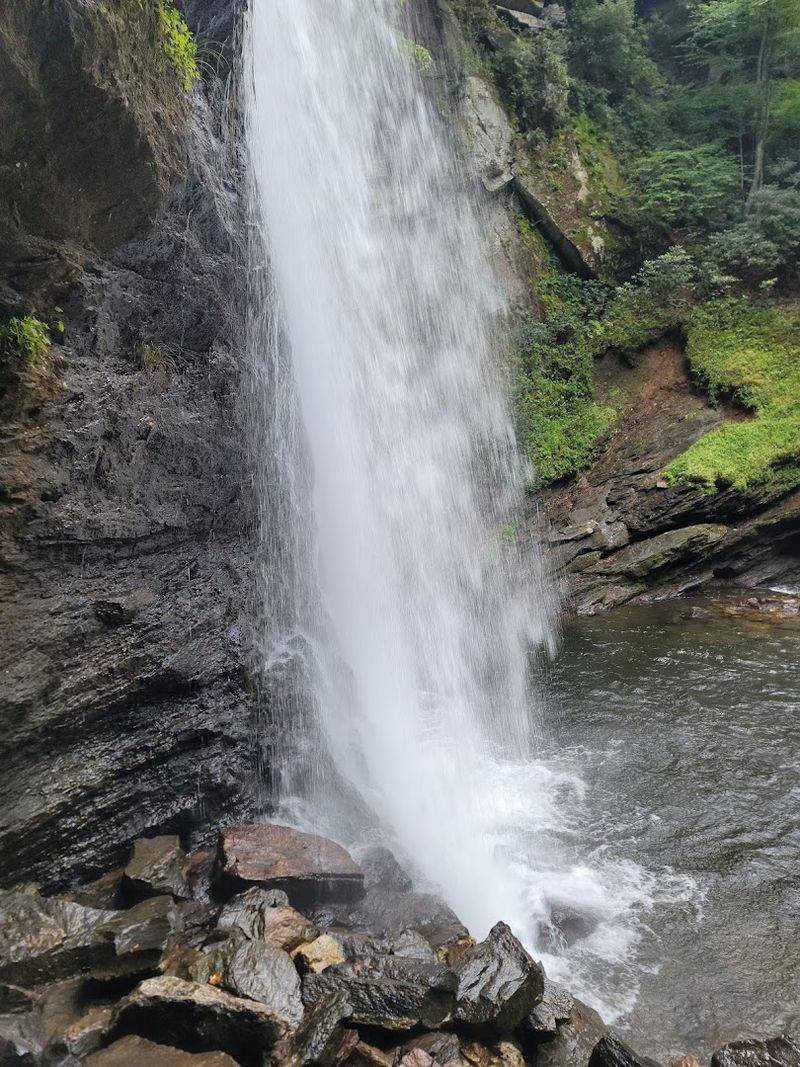
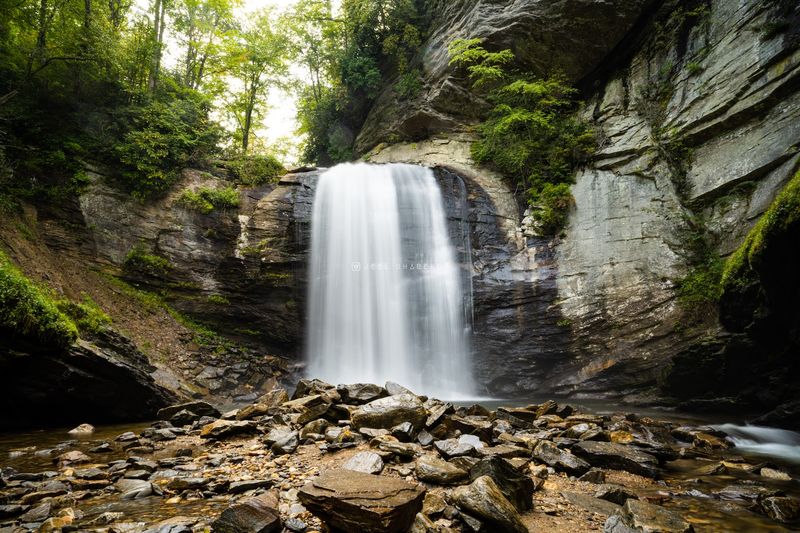
Up close, Looking Glass Falls is wider than most people expect. The water spreads across a broad ledge of exposed rock before tumbling in a full, unbroken sheet into the pool below.
On high-flow days after rain, the curtain of water is thick and powerful, sending spray several feet outward in every direction. On calmer days, the fall takes on a more delicate, layered texture.
The plunge pool at the base is deep enough that a few steps in, your feet no longer touch the bottom. The water runs cold even in summer, fed by mountain streams that stay chilled year-round.
There is no lifeguard on duty, so swimming is entirely a personal decision made at your own risk.
During low water levels, flat rocks near the pool edge become accessible, and some visitors walk right up to the base of the falls, close enough to feel the full force of the spray on their skin. That proximity to something so powerful and natural is the kind of thing that is difficult to describe accurately.
You really do need to stand there yourself to understand what all the fuss is about.
Best Times to Visit and What to Expect
Weekdays are noticeably quieter than weekends, and early mornings offer the best light for photography as well as the lowest crowd density. Arriving before 11 a.m. on any day of the week gives you a better shot at roadside parking and a more relaxed experience at the base.
Weekend afternoons, especially in summer and during fall foliage season, can get genuinely packed.
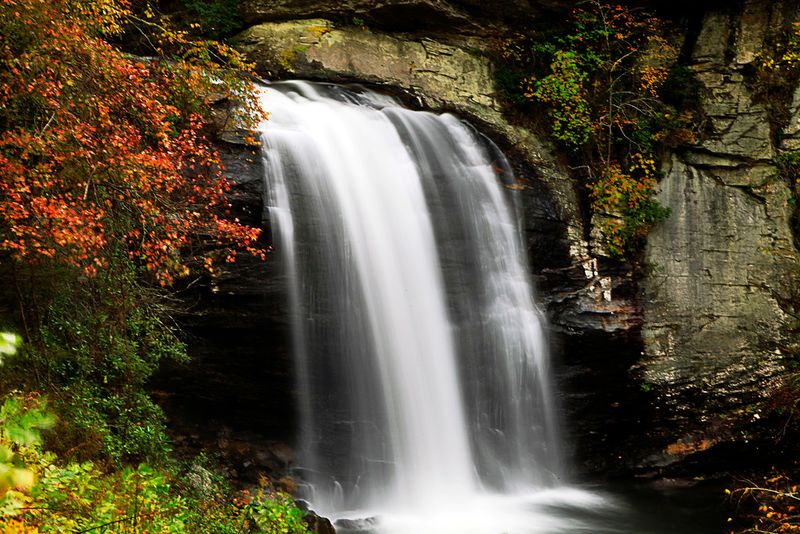
Fall is one of the most popular times to visit this part of North Carolina, and for good reason. The hardwood trees that line the gorge turn gold, orange, and red, framing the white water in colors that feel almost theatrical.
Spring brings heavy snowmelt flow, which makes the falls louder and more dramatic than at any other time of year.
Summer visits are popular because the cold plunge pool offers relief from the heat, and the surrounding forest stays green and shaded. Winter visits are quieter and can be spectacular when ice forms on the surrounding rocks.
Unlike waterfall destinations in drier states like Oklahoma, this one runs with strong flow nearly year-round, which means there is no truly bad season to show up.
Parking, Access, and Practical Details
Parking at Looking Glass Falls is free and located directly along the shoulder of US-276. The spaces fill up fast on busy days, but the road is wide enough that cars can line up for a decent stretch in both directions.
Arriving early or on a weekday dramatically improves your odds of finding a spot close to the stairs.
There are no bathrooms at the falls themselves, so plan accordingly before you arrive. The pack-in, pack-out rule applies here, meaning whatever you bring with you leaves with you.
The site stays remarkably clean given the volume of visitors it receives, which says something good about the people who come here.
Strollers and wheelchairs cannot access the base via the stairs, but the road-level overlook is paved and fully accessible. Dogs are welcome on leash, and the rocks at the base are manageable for most well-trained pets.
Cell service along this stretch of US-276 can be spotty, so downloading an offline map before heading into the Pisgah National Forest is a practical move worth making before you leave your last town.
The Surrounding Pisgah National Forest
The Pisgah National Forest wraps around Looking Glass Falls like a living frame, covering over 500,000 acres of western North Carolina. The forest is named after the biblical Mount Pisgah, and the peak of the same name is visible from several points along the Blue Ridge Parkway nearby.
This is old-growth Appalachian terrain, with a mix of hardwoods, hemlocks, and rhododendrons that make every season look different.
The drive along US-276 through the forest is worth taking slowly. The road passes other waterfalls, trout streams, and pull-offs with mountain views that reward patient drivers.
Sliding Rock, another popular natural attraction, is just a few miles up the road and draws its own crowd of visitors each summer.
Compared to the wide-open red-dirt landscapes you might find in parts of Oklahoma, this forest feels dense and enclosed in the most comforting way. The canopy closes overhead, the light goes green and dappled, and the temperature drops noticeably.
The forest is the context that makes the waterfall meaningful, and spending even a little extra time in it before or after your visit adds a lot to the overall experience.
Photography Tips for Getting the Best Shot
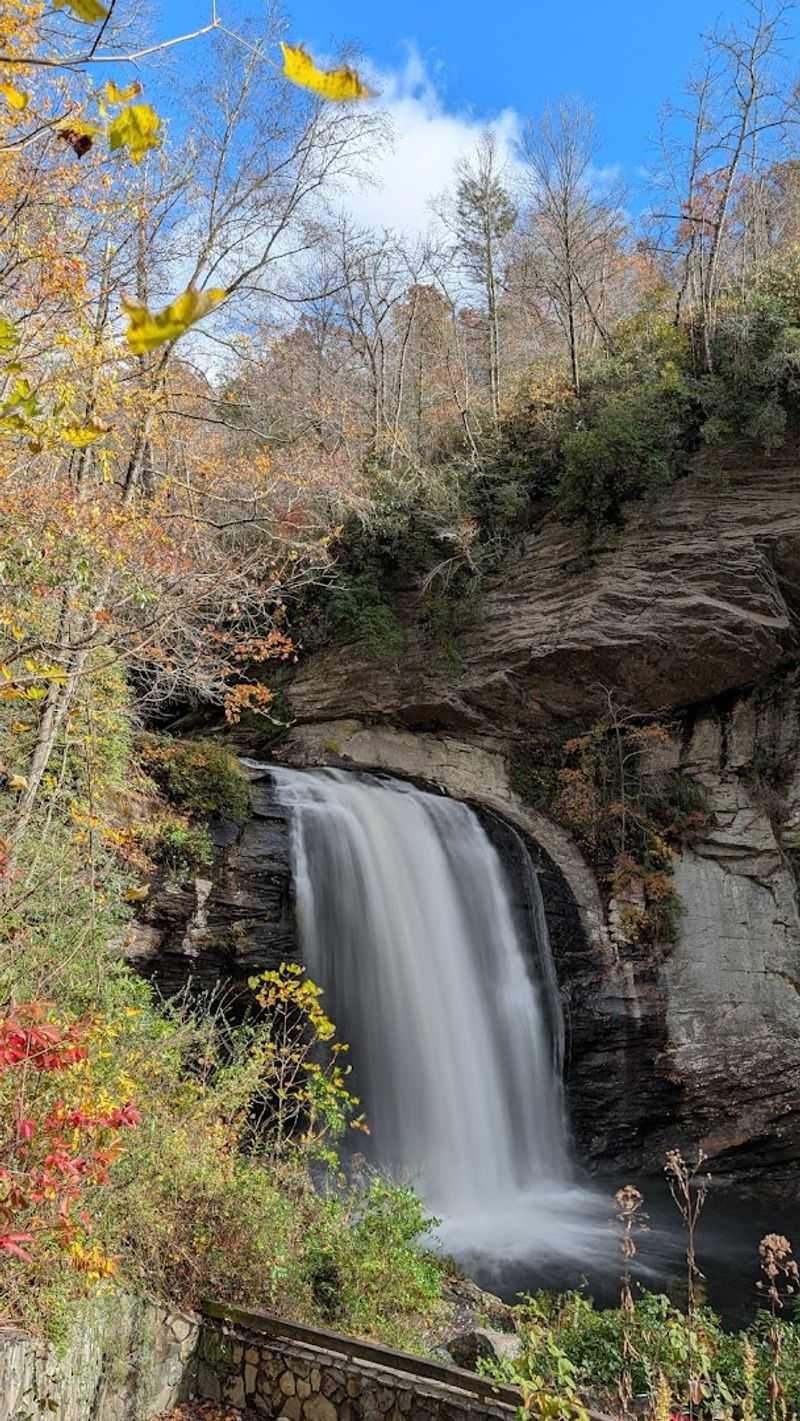
Looking Glass Falls is one of the most photographed waterfalls in North Carolina, and it earns that reputation honestly. The wide, symmetrical drop and the open rock face give photographers a clean composition without a lot of visual clutter.
The falls face roughly west, which means morning light hits the surrounding trees while the falls themselves stay in soft, even shadow, a condition that works well for long exposures.
A tripod and a neutral density filter will help you achieve that smooth, silky water effect that makes waterfall photos look so dramatic. Without a tripod, shooting in bright midday light with a fast shutter speed still produces sharp, detailed images of the water texture.
Both approaches work, depending on the mood you want to capture.
Getting down to the base level puts you at eye height with the plunge pool and gives the falls a towering, dramatic scale in the frame. From the road-level platform, a wide-angle lens captures the full drop plus the surrounding forest canopy.
Either angle produces strong results, and many visitors end up shooting from both spots before they leave, which honestly is the right call.
Swimming and Playing in the Water
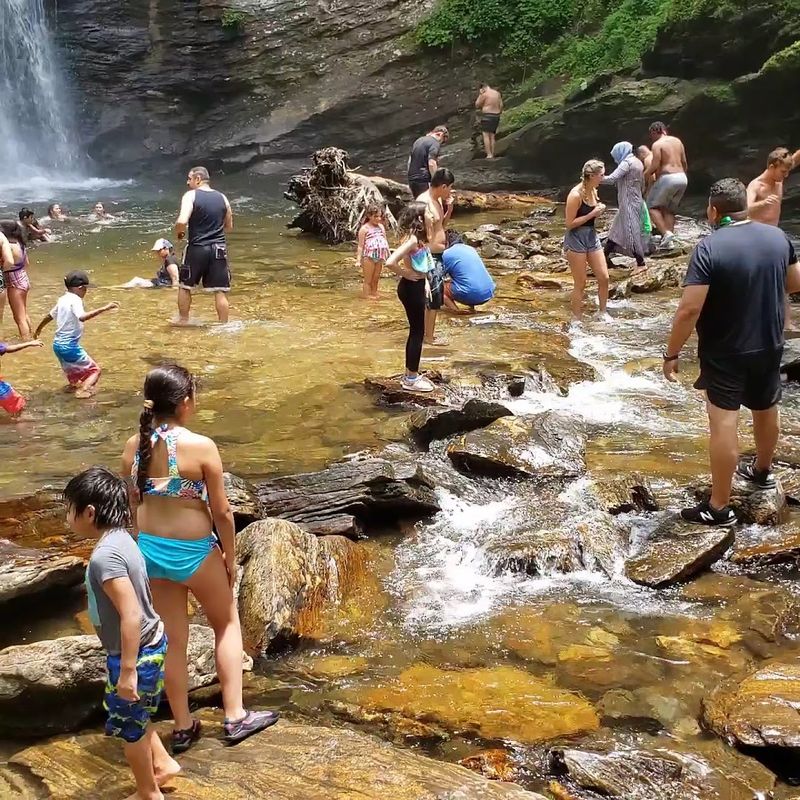
Swimming at Looking Glass Falls is one of those experiences that sounds refreshing in theory and is absolutely bracing in practice. The water temperature stays cold even on the hottest summer days, fed by mountain streams that have not had much time to warm up on their way down.
Most people gasp on contact and grin immediately afterward, which is a pretty reliable sign of a good time.
The plunge pool drops off quickly from the rocky shore, so non-swimmers and young children should stay in the shallow edges near the rocks. The current near the base of the falls is strong on high-flow days, and the depth in the center of the pool is significant.
Personal judgment matters here more than any posted rule.
On warm weekends, the rocks surrounding the pool become informal picnic spots, with families spreading out towels and snacks while kids scramble over the boulders. It has the easy, unstructured energy of a place where people have been gathering for generations without needing much organization.
That kind of natural social space is harder to find than it used to be, and this one feels genuinely worth protecting.
Why This Waterfall Stays With You
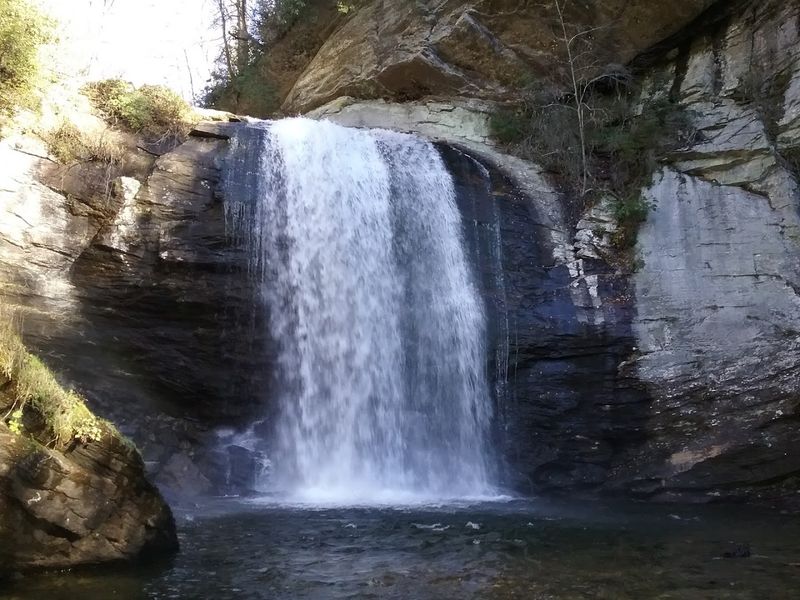
Most waterfalls require a trade-off between effort and reward. Either you hike for hours and earn a spectacular view, or you pull off a highway and get something modest.
Looking Glass Falls breaks that rule completely. The effort is minimal and the reward is full-scale, which creates a slightly disorienting feeling of having gotten away with something.
Part of what makes it memorable is the sound. The roar of 60 feet of falling water in an enclosed rocky gorge is physical, not just auditory.
You feel it in your chest before you see the falls clearly. That sensory combination of sound, mist, cold air, and visual scale hits all at once when you reach the bottom of the stairs.
Visitors come here from across the country and from places as different as coastal California and landlocked Oklahoma, and the reaction tends to be the same quiet awe followed by the urge to stand there longer than originally planned. North Carolina has hundreds of waterfalls, and Oklahoma has its own rugged beauty, but few places anywhere deliver this kind of payoff for this little investment of time and energy.
That is the real reason people keep coming back.
Share this story