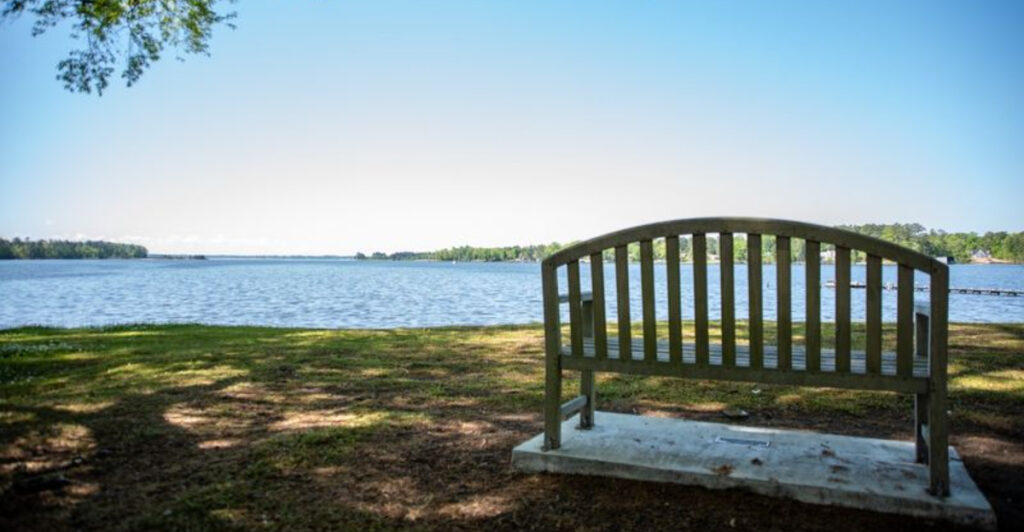
There is a town in North Carolina where the streets are quiet, the houses look like they belong to another century, and the total population barely fills a single city block. Founded in 1705, it holds the title of the oldest incorporated town in the entire state, and yet most people have never heard of it.
History here is not behind glass in a museum. It is right outside, on the unpaved paths, beside the water, and in the walls of buildings that have stood for over three hundred years.
Bath, NC is the kind of place that makes you slow down without even trying, and once you know what is here, you will want to visit right away.
Where History Has a Street Address
Bath sits at 35.4771094 latitude and -76.8116045 longitude in Beaufort County, North Carolina, right along the southern bank of the Pamlico River. The official mailing address is Bath, NC 27808, and it is one of the most surprisingly easy places to reach for a town with this much history packed into it.
Most people drive in from Washington, NC, which is only about fifteen miles to the west. The roads leading into town wind through flat coastal farmland, and then suddenly, the landscape opens up to a small cluster of colonial-era structures that feel completely out of place in the best way possible.
Bath was chartered on March 8, 1705, making it North Carolina’s first official town and first port of entry. It once served as a hub for trading naval stores, furs, and tobacco.
Today, fewer than 300 people call it home, according to the 2020 census count of 245 residents. The combination of deep historical roots and an almost impossibly small population gives Bath a character that no other town in the state can match.
The Story Behind the State’s Oldest Town
Long before Raleigh or Charlotte were even a thought, Bath was already a functioning town with political power, trade routes, and a growing population. The colonial legislature of North Carolina met here in the early 1700s, and the town served as the seat of government for a significant stretch of the colony’s early history.
Bath’s founding was driven by practical need. European settlers needed a port to export goods, and the Pamlico River offered direct access to Pamlico Sound and the Atlantic coast.
Tobacco, furs, and naval stores like tar and pitch flowed out of this town and onto ships headed for England.
By the mid-1700s, Bath began to lose influence as other towns like New Bern grew larger and more politically connected. The town never really expanded after that, which is part of why it looks the way it does today.
That lack of growth actually preserved everything. There were no waves of new construction to tear down the old buildings.
What was here simply stayed, and that is the real reason Bath feels like a step back in time rather than a recreation of one.
The Palmer-Marsh House Up Close
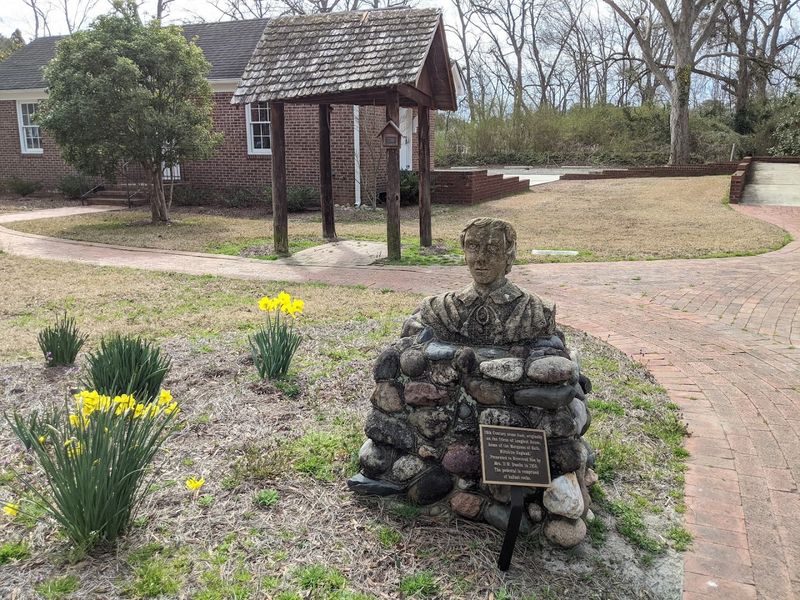
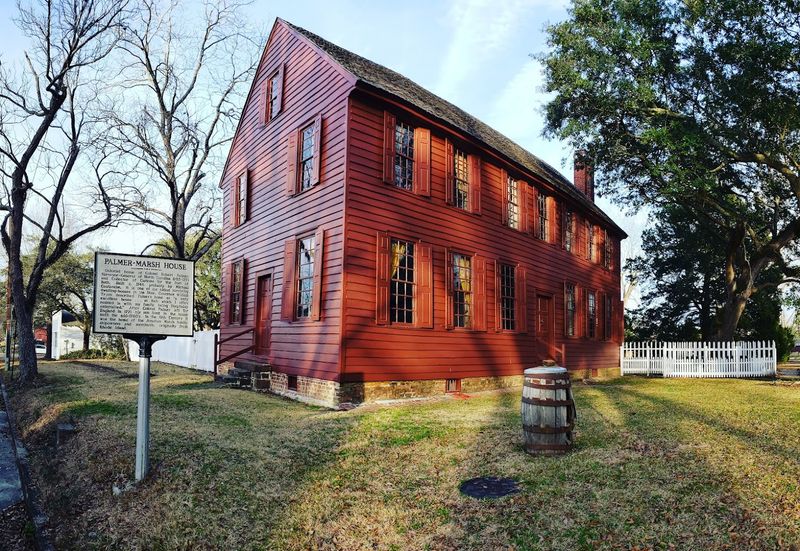
The Palmer-Marsh House is one of the oldest surviving structures in North Carolina, and standing in front of it feels genuinely surreal. Built around 1744, this two-story colonial home has thick brick walls, a steep roof, and small windows that were designed for a time when glass was expensive and heat had to be conserved.
The house belonged to Robert Palmer, a prominent colonial official, and later to the Marsh family, which is how it got its dual name. Inside, the rooms are furnished with period-appropriate pieces that give a real sense of how wealthy colonists lived in the mid-eighteenth century.
The wide-plank floors and exposed wood beams are original, which is remarkable given how old the structure is.
Tours of the Palmer-Marsh House are available through the Historic Bath State Historic Site, and guides do a thorough job of explaining both the architecture and the social history of the people who lived there. The house is not a replica or a reconstruction.
Every brick was laid by hand more than 280 years ago, and that fact alone makes the visit worth the short drive to Beaufort County.
Blackbeard’s Connection to This Tiny Town
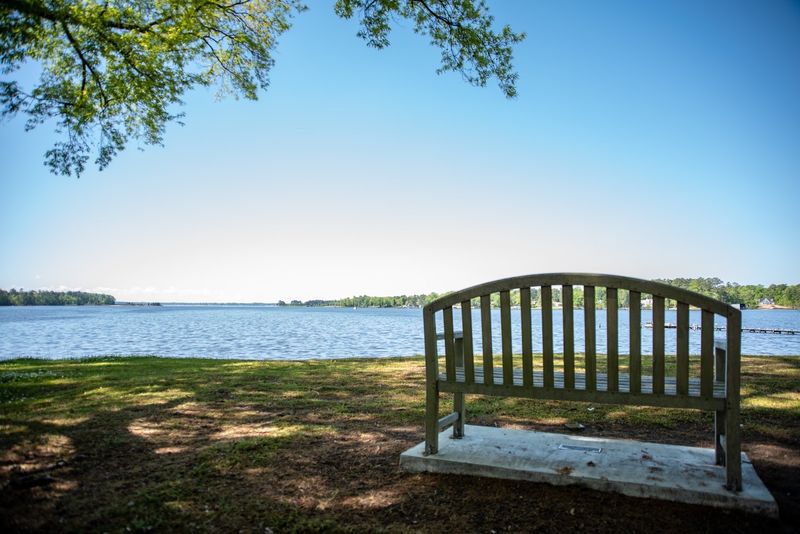
Bath’s most famous former resident never held public office, never farmed tobacco, and definitely never played by the rules. Edward Teach, better known as Blackbeard, actually lived in Bath for a period around 1718 and reportedly owned a home here.
North Carolina’s governor at the time, Charles Eden, granted Blackbeard a pardon, which allowed the pirate to settle in Bath and operate with a surprising degree of freedom. Some historians believe Eden and Blackbeard had a profitable, if unofficial, arrangement involving seized goods.
Whether or not that is true, Blackbeard’s presence here was very real and very documented.
The pirate’s connection to Bath adds a layer of swashbuckling drama to an already rich historical record. Local guides love telling this part of the story, and it tends to be the detail that surprises first-time visitors the most.
Blackbeard met his end later in 1718 in a naval battle near Ocracoke Inlet, but his time in Bath is a genuine chapter in both pirate history and North Carolina history. Few towns this small can claim a pirate legend this well-documented.
The Historic Bath State Historic Site
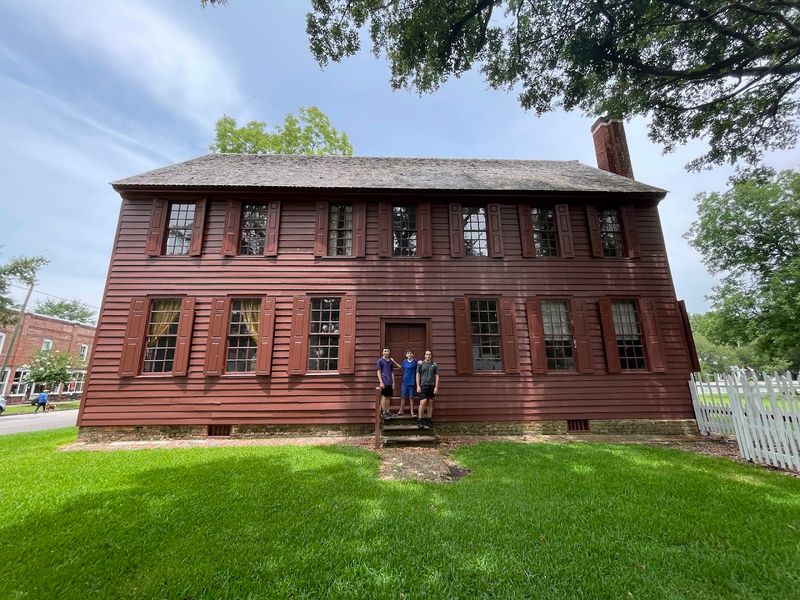
The Historic Bath State Historic Site is the official entry point for exploring what this town has preserved. Managed by the North Carolina Department of Natural and Cultural Resources, the site includes the visitor center, guided tours, and access to several of the most significant historic structures in town.
The visitor center is a solid first stop. Staff members are knowledgeable and genuinely enthusiastic about the town’s history, and the exhibits inside give a clear timeline of Bath’s rise from a colonial trade hub to the quiet, preserved community it is today.
There are maps, artifacts, and interactive displays that work well for both adults and younger visitors.
Admission is reasonably priced, and the guided tours are worth every cent. The guides walk visitors through the Palmer-Marsh House, the Bonner House, and other key structures while weaving together stories about colonial life, politics, piracy, and trade.
The site is open Tuesday through Saturday, so planning your visit around that schedule is essential. A few hours here is enough to cover the main highlights, but many people find themselves lingering longer than expected.
The Bonner House and What It Reveals
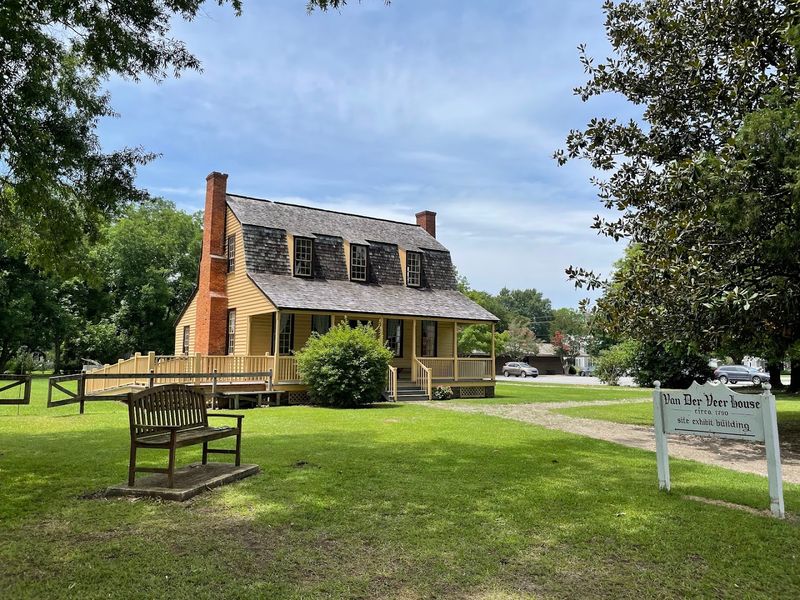
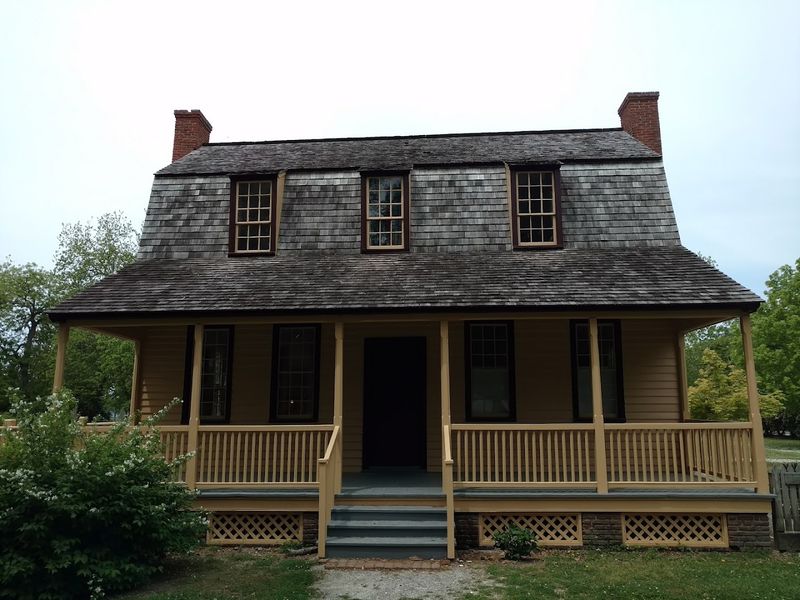
The Bonner House is another standout structure within the Historic Bath State Historic Site, and it tells a different story than the Palmer-Marsh House. Built around 1830, it represents a slightly later period of colonial and early American architecture, with a wide front porch and a more open, airy layout than the earlier brick homes in town.
The house was home to the Bonner family for several generations, and the furnishings inside reflect life in North Carolina during the nineteenth century. Unlike the heavy, dark interiors of earlier colonial homes, the Bonner House has a lighter feel, with larger windows and more decorative woodwork that shows how design sensibilities shifted over time.
What makes the Bonner House particularly interesting is how it demonstrates that Bath was still a functioning community well into the 1800s, even as it had faded from political prominence. Families still built homes here, raised children here, and kept the town going through quiet decades of change.
The house is a reminder that history is not just about famous events. Sometimes it is about the ordinary lives that kept a place alive between those moments.
Life Along the Pamlico River
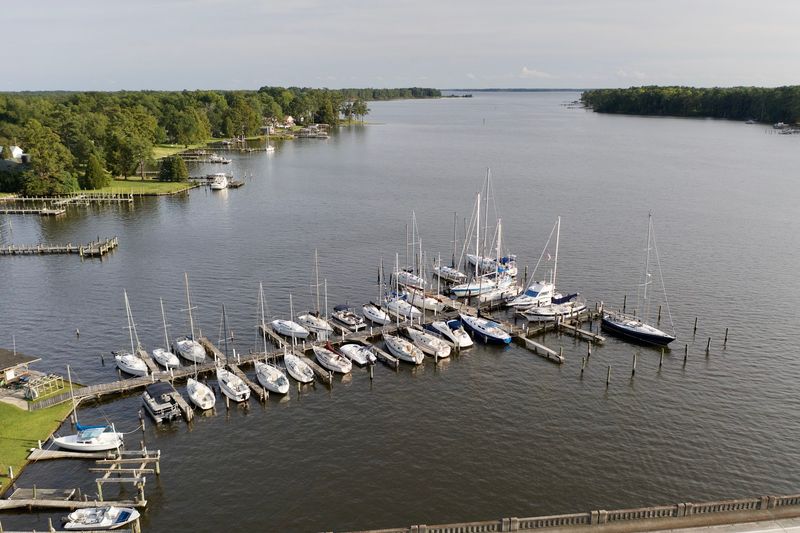
The Pamlico River is not just a scenic backdrop for Bath. It is the reason the town exists at all.
Colonial traders needed water access to move goods efficiently, and the Pamlico River connected Bath to the broader Atlantic trading network through Pamlico Sound.
Today, the river is a quieter place, used mostly for fishing, kayaking, and casual boating. The water is calm and wide at this stretch, with a flat horizon that gives the whole area a spacious, unhurried feeling.
On a clear morning, the reflections on the surface are almost perfectly still.
Fishing along the Pamlico River is a genuine draw for outdoor enthusiasts. Striped bass, flounder, and various other species are common catches in these waters.
Several small docks in and around Bath provide easy access to the river, and kayakers often put in near town to explore the quieter creeks and inlets along the shoreline. The river has a way of making the whole visit feel more complete, adding a natural layer to the historical one that makes Bath more than just a museum town.
St. Thomas Episcopal Church, a Living Landmark
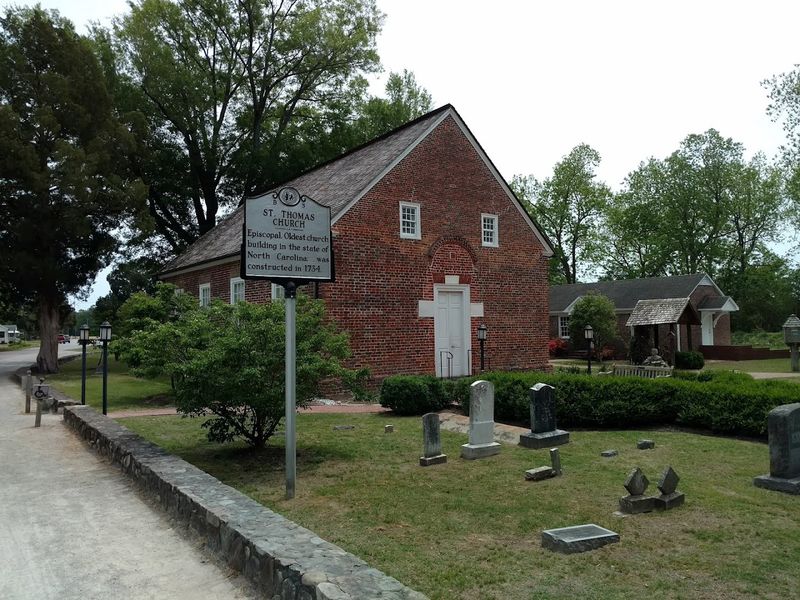
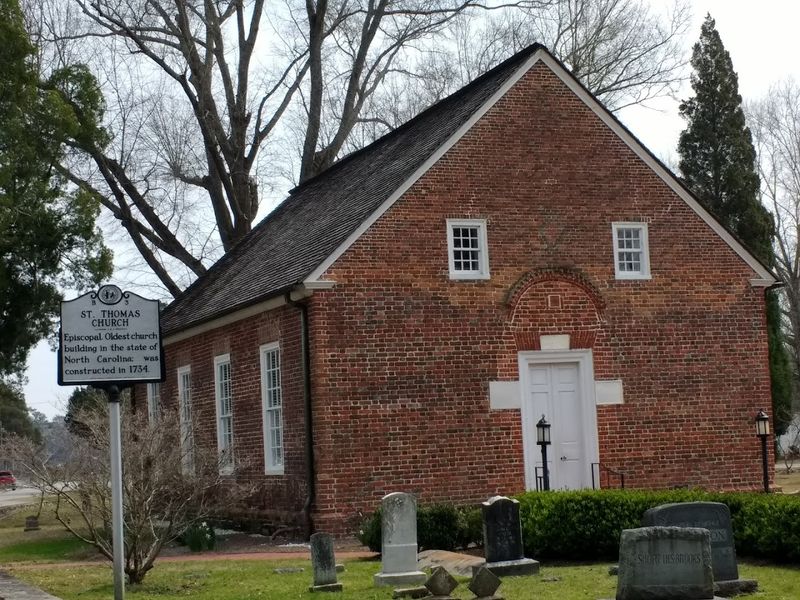
St. Thomas Episcopal Church is the oldest surviving church in North Carolina, and it is still an active congregation. Built between 1734 and 1760, the small brick building has a simple, unadorned exterior that reflects the practical nature of colonial religious architecture in the American South.
The churchyard surrounding St. Thomas is one of the most atmospheric spots in all of Bath. Old gravestones lean at various angles, their inscriptions worn by centuries of coastal weather.
Some of the names carved into those stones belonged to some of the most influential families in colonial North Carolina, and reading them feels like a quiet conversation with the past.
Services are still held at St. Thomas, which means this is not just a preserved relic. It is a working church that has been in continuous use for nearly three centuries.
Visitors are welcome to view the exterior and the grounds during daylight hours, and the interior can sometimes be viewed during scheduled tours through the Historic Bath State Historic Site. The combination of age, simplicity, and ongoing purpose makes St. Thomas one of the most quietly powerful stops in the entire town.
The Atmosphere That Sets Bath Apart
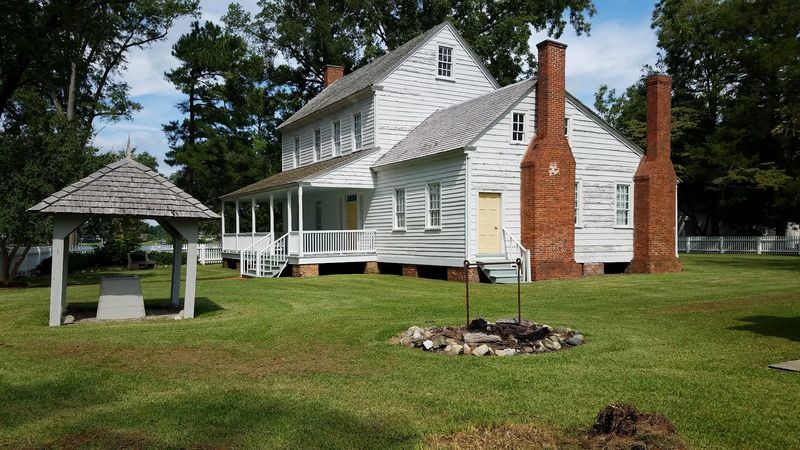
Bath does not try to be anything other than what it is, and that honesty is refreshing. There are no souvenir shops crowding the streets, no loud attractions competing for attention, and no lines to wait in.
The town simply exists, calm and self-assured, letting its age do the talking.
The streets are narrow and mostly quiet, shaded by mature trees that have been growing here for generations. The houses are modest and well-kept, and the few people you encounter tend to be locals going about their day or fellow visitors who discovered the town the same way you did, by looking past the more obvious destinations on the map.
That atmosphere is genuinely rare. So many historic sites in the United States feel staged or over-managed, with every detail controlled to create an impression.
Bath feels unscripted. The creek running nearby, the old church at the end of the road, the houses that look exactly as they did two centuries ago, all of it exists without performance.
That realness is the town’s greatest quality, and it is something that no renovation project or tourism campaign could manufacture.
Best Time to Visit and What to Expect
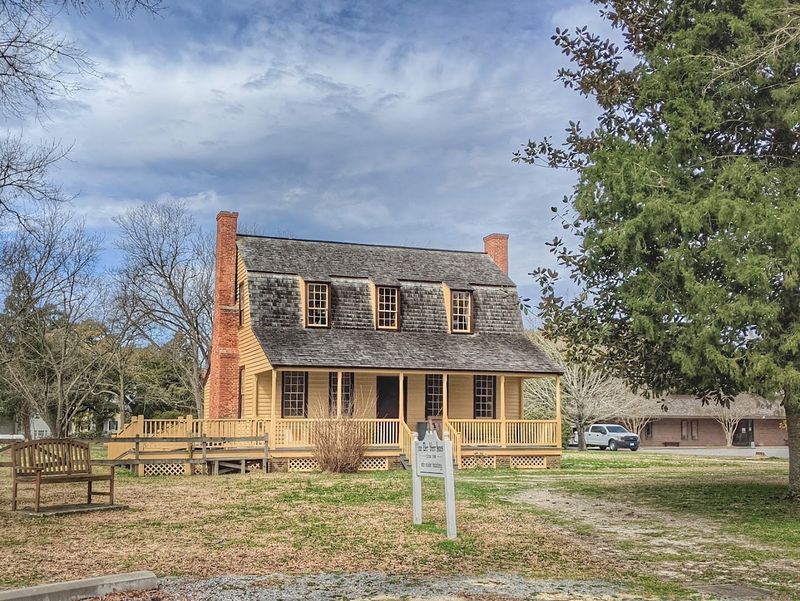
Spring and fall are the best times to visit Bath. April through early June brings mild temperatures, blooming trees, and the kind of soft coastal light that makes every photograph look effortless.
October and November offer cooler air, fewer visitors, and the golden tones of autumn foliage against the old wooden and brick structures.
Summer visits are entirely possible, but the coastal humidity in eastern North Carolina can be intense in July and August. If you do visit in summer, mornings are far more comfortable than afternoons, and the river breeze helps once you get close to the water.
The Historic Bath State Historic Site is open Tuesday through Saturday, so plan accordingly if you want guided tours of the indoor spaces. Most of the outdoor areas, including the church grounds and the riverfront, can be explored any day of the week.
There are no large hotels in Bath itself, but Washington, NC, just fifteen miles away, has comfortable accommodations. A day trip is realistic, but staying overnight in the region gives you more time to appreciate the pace of things here without rushing.
Why Bath Deserves More Attention Than It Gets
Bath holds a collection of firsts that would make any town proud. It was North Carolina’s first incorporated town, its first port of entry, and home to the state’s oldest surviving church.
It hosted the colonial legislature. It sheltered a pirate.
It watched three centuries pass without losing its essential character.
And yet, ask most North Carolinians about Bath, and you will get a blank stare. The town simply does not get the attention it deserves, possibly because it refuses to shout.
There are no billboards, no big marketing campaigns, and no manufactured attractions designed to pull in crowds.
That restraint is actually what makes Bath worth seeking out. The visitors who find their way here tend to be the kind of people who appreciate authenticity over spectacle, and they leave with a sense of having discovered something real.
The town is not trying to compete with the beaches to the east or the mountains to the west. Bath is simply itself, three hundred years deep and entirely content with that.
For the curious traveler willing to take a small detour off the main road, that is more than enough reason to make the trip.
Share this story