There is a mountain in western North Carolina hiding a secret, and you can walk right into it. Deep beneath the surface, ancient rock formations have been quietly growing for thousands of years, shaped by nothing more than water and time.
North Carolina’s only show cavern has been welcoming curious visitors since the 1800s, and the experience of stepping underground into total darkness is something that stays with you long after you leave. From glittering stalactites to a stream that once sheltered blind trout, this place delivers the kind of wonder that no screen can replicate.
Whether you are planning a family road trip or just passing through the Blue Ridge Mountains, this underground adventure deserves a spot on your itinerary.
Finding the Caverns: Address, Location, and How to Get There
Tucked into the base of Humpback Mountain along US-221, Linville Caverns sits at 19929 US-221, Marion, NC 28752, right in the heart of the Blue Ridge Mountains. The drive alone is worth the trip, with winding roads cutting through dense hardwood forests and ridgelines that stretch endlessly in every direction.
The caverns are easy to find from Linville Falls, just about four miles away, making them a natural pairing with a hike on the Blue Ridge Parkway. Marion is the nearest town of any size, and the roads leading to the caverns are well-maintained and clearly marked.
GPS works reliably in the area, though cell service can be spotty in spots, so downloading an offline map beforehand is a smart move.
Visitors traveling from Asheville will find the drive takes roughly an hour, while those coming from Charlotte should budget about two hours. Parking at the site is free and accommodates cars, vans, and small buses without any trouble.
The setting feels genuinely remote without being hard to reach, which is a rare combination in any travel destination.
A History Written in Stone: How the Caverns Were Discovered
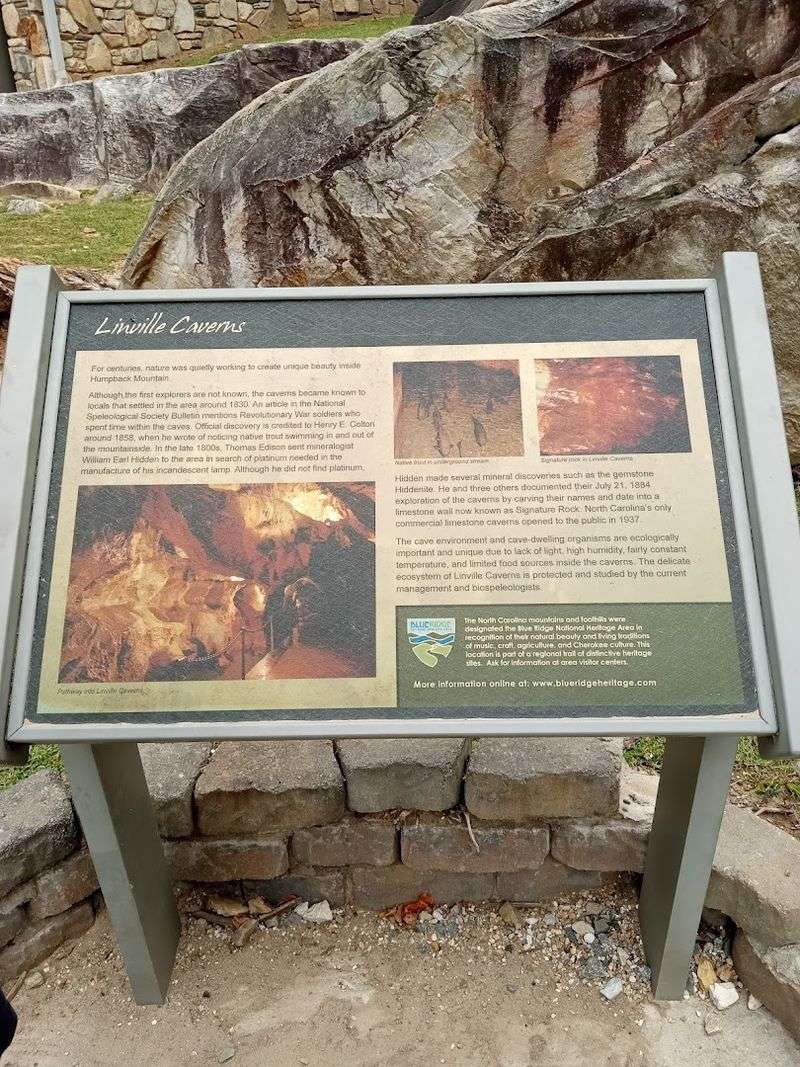
Long before the caverns became a tourist attraction, local fishermen in the early 1800s noticed trout swimming out from the base of the mountain, which led them to discover the cave entrance hidden behind a flowing stream. That simple observation opened the door to one of the most fascinating natural sites in the entire southeastern United States.
The caverns were opened to the public in 1939, making them one of the oldest continuously operating show caverns on the East Coast. Unlike cave systems in states such as Oklahoma, where many underground attractions focus on dry formations, Linville Caverns is considered an active cave, meaning water still flows through it and formations are still slowly growing today.
During the Civil War, the caverns reportedly served as a hiding place for locals seeking shelter, adding a layer of human history to the already remarkable geological story. The cave has survived floods, including significant damage from Hurricane Helene, and continues to welcome guests with the same quiet grandeur it has offered for generations.
Every corner of this place carries the weight of deep time, and the guides make sure you feel every bit of it.
The Formations That Stop You in Your Tracks
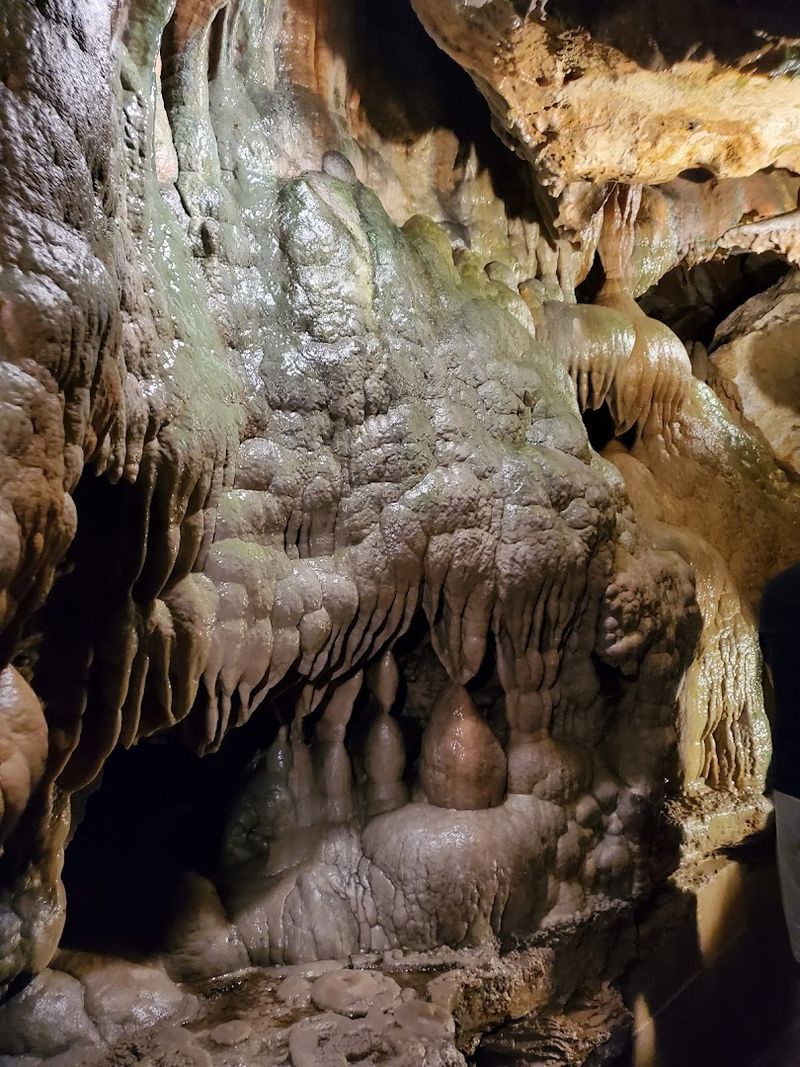
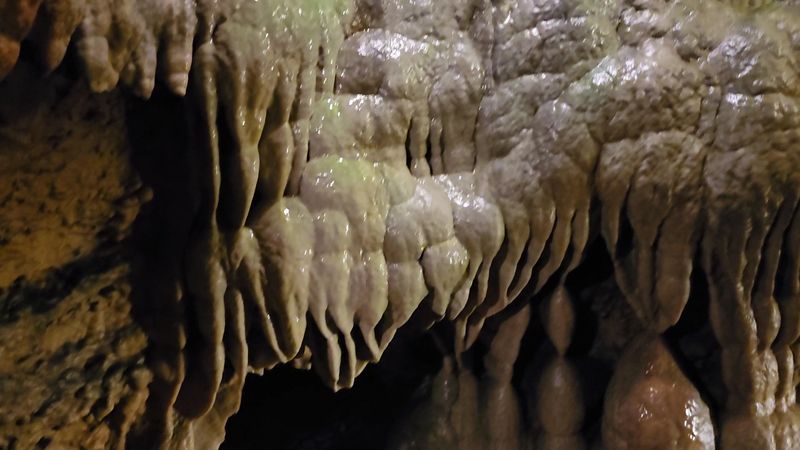
The first time you spot a stalactite hanging overhead inside Linville Caverns, it is hard not to just stop and stare. These formations have been building themselves one mineral-rich water drop at a time, some of them growing for tens of thousands of years, and the results are genuinely breathtaking.
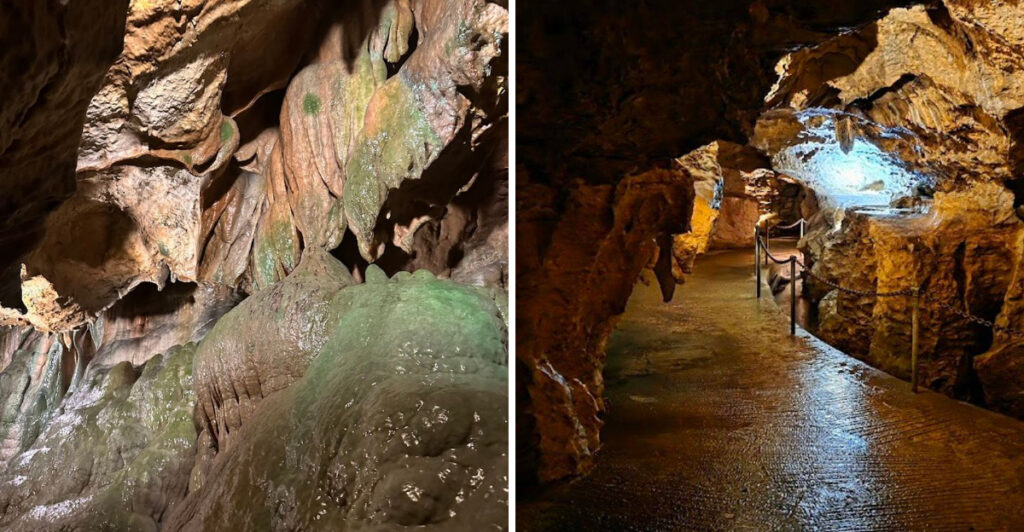
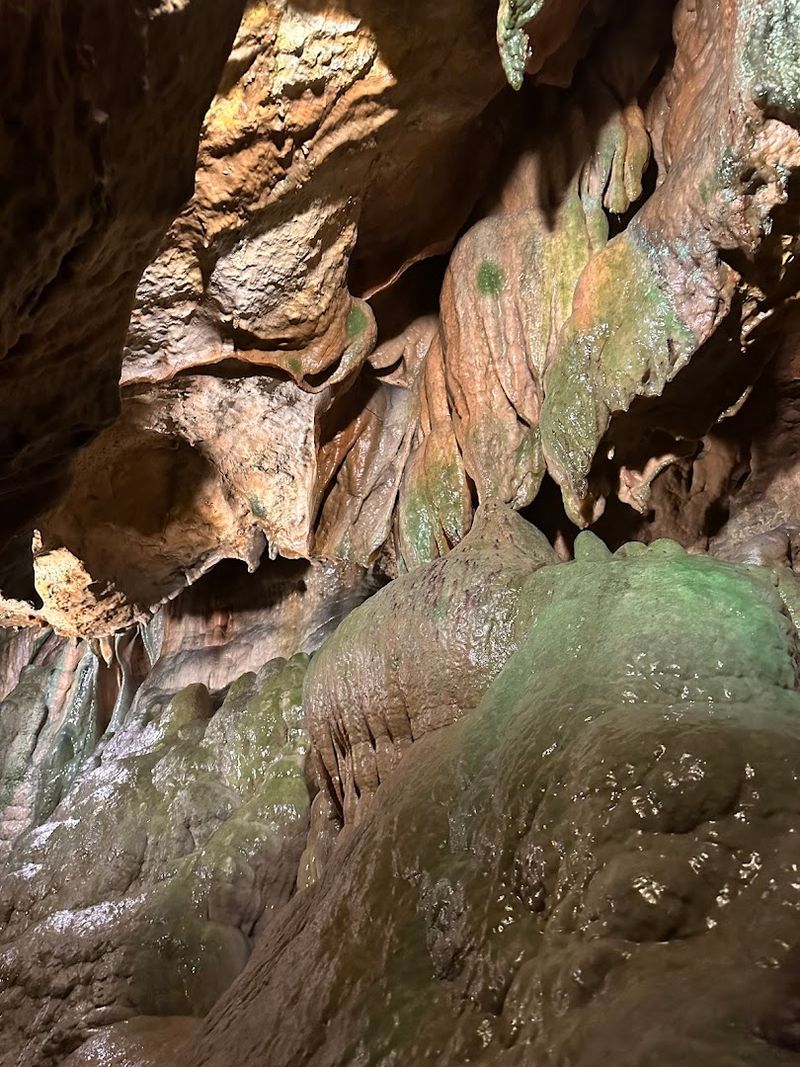
Stalactites hang from the ceiling like stone icicles, while stalagmites rise from the cave floor in rounded columns. In some spots, the two have met in the middle to form full pillars, and the lighting installed throughout the cave gives the wet limestone a warm, almost golden glow that makes the whole scene feel surreal.
The shapes and colors vary widely as you move through the caverns. Some formations are bone white, others carry streaks of orange and brown from iron minerals, and a few have taken on forms that fire the imagination.
Algae has grown on some of the smoother wet surfaces near the lights, adding soft green tones to the palette. The cave is alive in the most literal sense, constantly being reshaped by water and minerals in a process that has no deadline and no hurry.
Each visit reveals something slightly different from the last.
What the Guided Tour Actually Looks Like
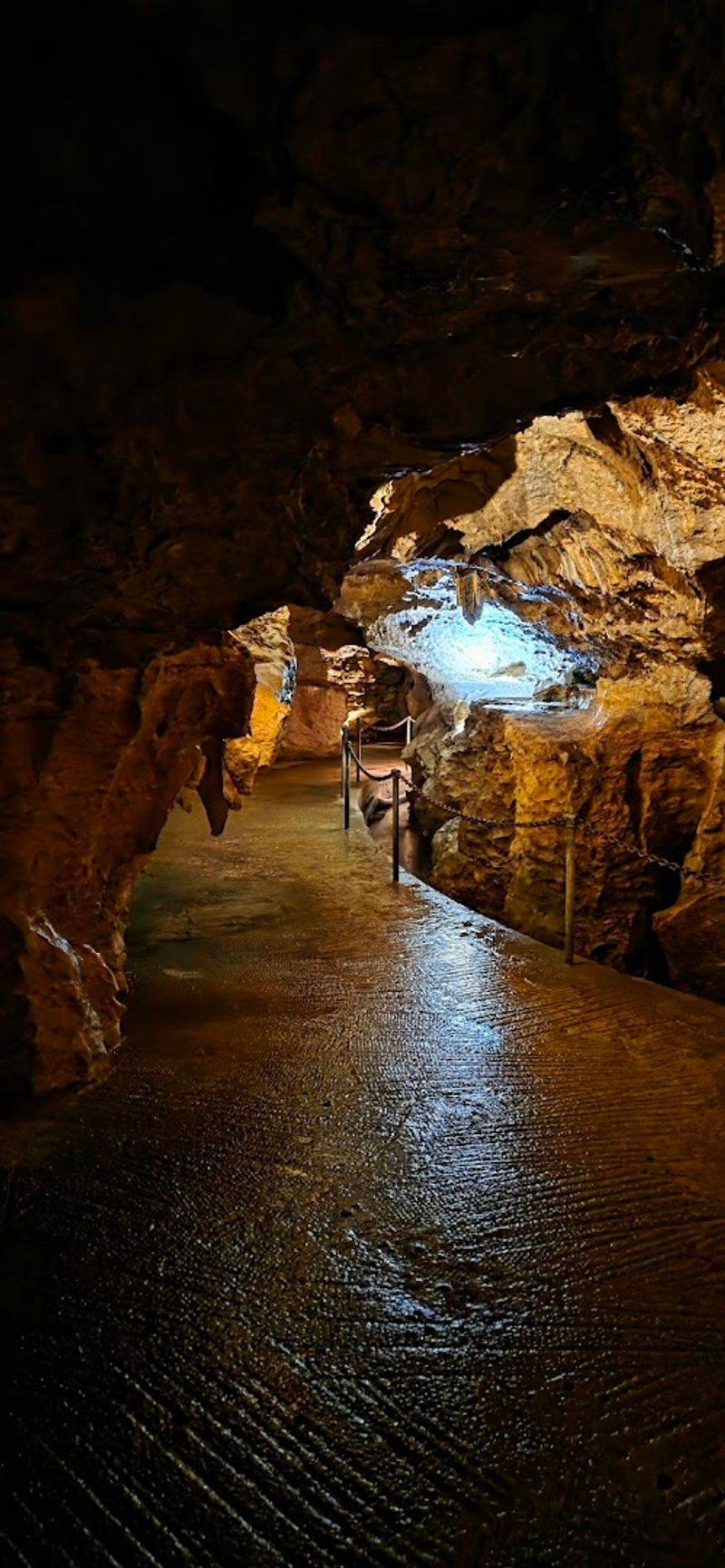
Tours at Linville Caverns run in small groups, which keeps the experience personal and makes it easy to hear the guide without straining. Groups depart roughly every ten minutes on busy days, so the wait is rarely long after purchasing tickets at the entrance booth.
The tour itself runs between 35 and 45 minutes, covering the most impressive sections of the cave network at a relaxed pace. The path is mostly flat with a few steps scattered here and there, and the ceiling is high enough in most areas for adults to walk upright, though taller visitors should watch their heads in a couple of lower passages.
One narrow dead-end section is optional, and guides make it clear that anyone uncomfortable with tight spaces can simply skip it.
Guides are knowledgeable and genuinely enthusiastic, sharing the geological history of the formations alongside stories about the cave’s past. Questions are welcomed throughout, and the guides handle them with patience and real depth.
The highlight for many visitors comes midway through, when the guide turns off all the lights to demonstrate what true, complete darkness feels like. That moment of absolute blackness, silent except for dripping water, is something that sticks with you well after you resurface into daylight.
The Blind Trout and the Underground Stream
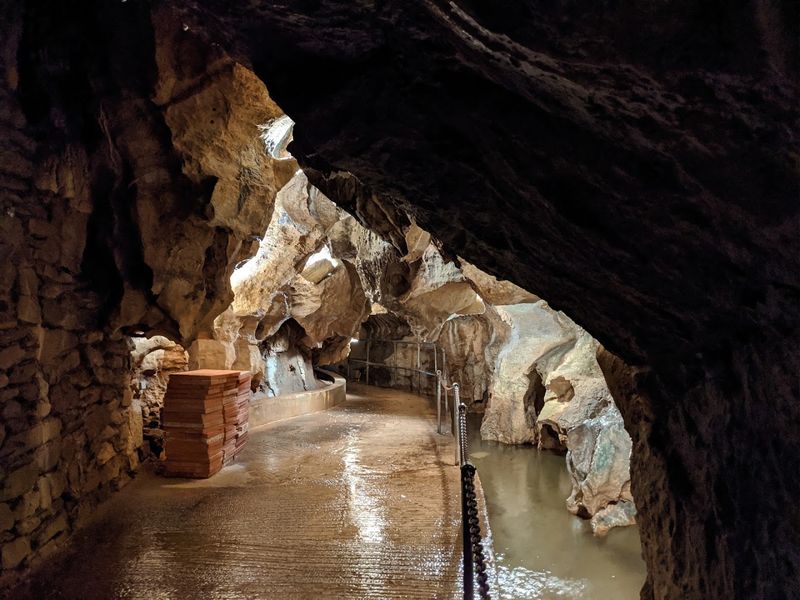
One of the most unusual features that made Linville Caverns famous for generations was the presence of blind trout living in the underground stream that runs through the cave. These fish adapted over time to life without light, gradually losing their eyesight as it became unnecessary in the total darkness of the cave environment.
Sadly, Hurricane Helene’s floodwaters washed the trout out of the cave in 2024, and they have not yet returned. The staff mentions this loss openly during tours, and there is a genuine hope that the fish may find their way back as conditions stabilize.
The stream itself is still present and still beautiful, its clear water babbling over smooth rocks in a way that feels oddly peaceful given the mountain of rock above your head.
The story of the blind trout is a reminder of how isolated ecosystems develop their own rules over long stretches of time. It is the kind of detail that turns a cave tour into something more like a biology lesson wrapped inside a geology lesson wrapped inside a history lesson.
Even without the trout currently present, the stream remains one of the most memorable parts of the whole underground experience.
Bats in the Cave: What to Know Before You Visit
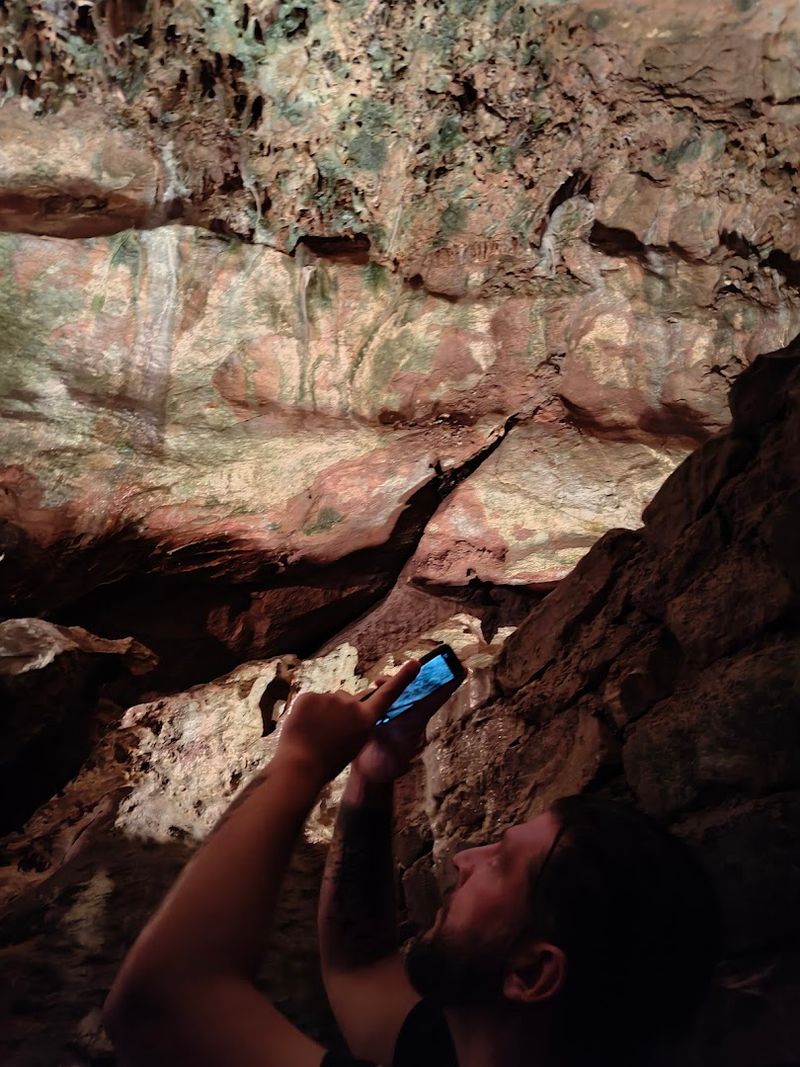
Bats are a genuine part of the Linville Caverns experience, though whether you see them depends entirely on when you visit. The best time to spot bats is between October and April, when they hibernate in the cave and can sometimes be seen roosting on the walls and ceiling during tours.
During the warmer months, the bats leave the cave to feed outside, so summer visitors typically will not encounter them. The guides are upfront about this, and knowing the seasonal pattern helps set the right expectations before you book your trip.
The bats that use the cave are small brown species common to the Appalachian region, and they play an important role in the local ecosystem by controlling insect populations.
After Hurricane Helene, there was some concern about whether the bats would return to the cave, but recent tours have confirmed that they are still using the space, which is genuinely reassuring news for the long-term health of the cavern ecosystem. Seeing a cluster of small bats tucked into a rock crevice overhead is one of those unexpected moments that turns a good tour into a great one.
Bring a light jacket and some patience, and the cave rewards you in ways you did not plan for.
What to Wear and Bring for the Underground Experience
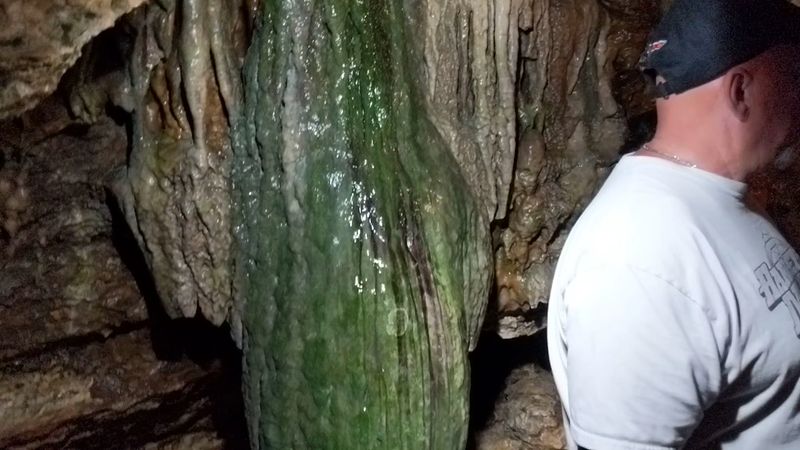
The temperature inside Linville Caverns stays around 52 degrees Fahrenheit year-round, which feels refreshing in summer but genuinely cold if you walk in wearing shorts and a t-shirt. A light jacket or hoodie is the single most useful thing you can bring, and a hooded one is even better since water drips from the cave ceiling throughout the tour.
The cave is active, meaning water is always moving through it, and that moisture ends up on the ceiling, the walls, and occasionally on your head. A rain jacket does double duty here, keeping you both warm and dry.
Closed-toe shoes with decent grip are strongly recommended since some surfaces can be slick, and sandals or flip-flops are a poor choice for the uneven cave floor.
Younger children tend to do well on the tour, but parents should keep in mind that the narrow optional passage and the total darkness demonstration can feel intense for kids who are sensitive to tight spaces or the dark. The guides handle these moments thoughtfully, giving everyone a heads-up before the lights go out.
Bringing a small flashlight is not necessary but can add to the fun for curious kids who want to see every corner of the cave up close.
Ticket Prices and Practical Visitor Information
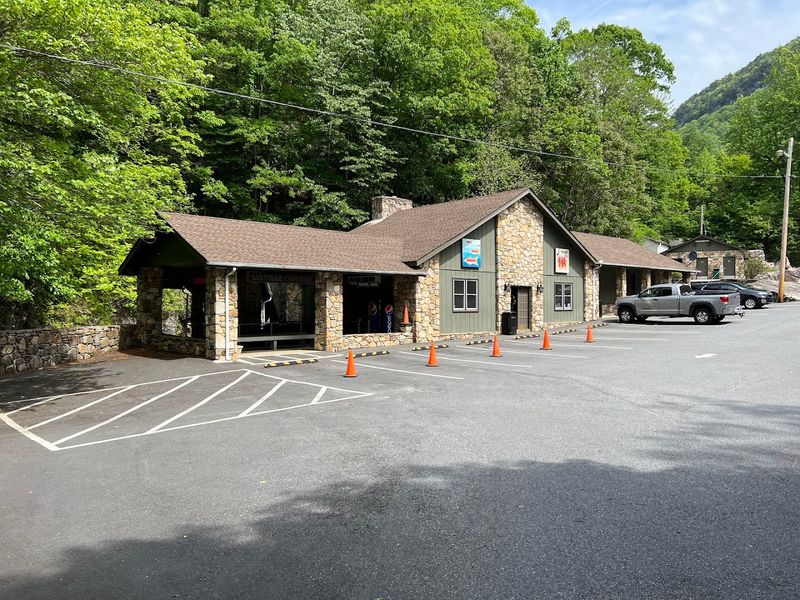
Adult tickets at Linville Caverns run around $14 per person, which puts it firmly in the affordable category for a guided attraction of this quality. Children’s pricing is lower, and the overall cost for a family outing is quite reasonable compared to larger cave systems in the region or even similar underground attractions found in states like Oklahoma.
The caverns are open Thursday through Monday, with hours running from 9 AM to 6 PM most days and 1 PM to 6 PM on Sundays. Tuesday and Wednesday are currently closed, so checking the schedule before making the drive is worth a quick look at their website at linvillecaverns.com or a call to 828-756-4171.
No advance ticket booking was observed during recent visits, but a time-selection option is available, which helps spread out group sizes and keeps the tours from becoming overcrowded. The caverns do not require reservations, and walk-ins are typically accommodated quickly, with tours departing every ten minutes or so on busy days.
Clean restrooms are available on-site, which is a small but genuinely appreciated detail when you are traveling with kids or spending a full day exploring the mountains.
The Gift Shop and What You Will Find There
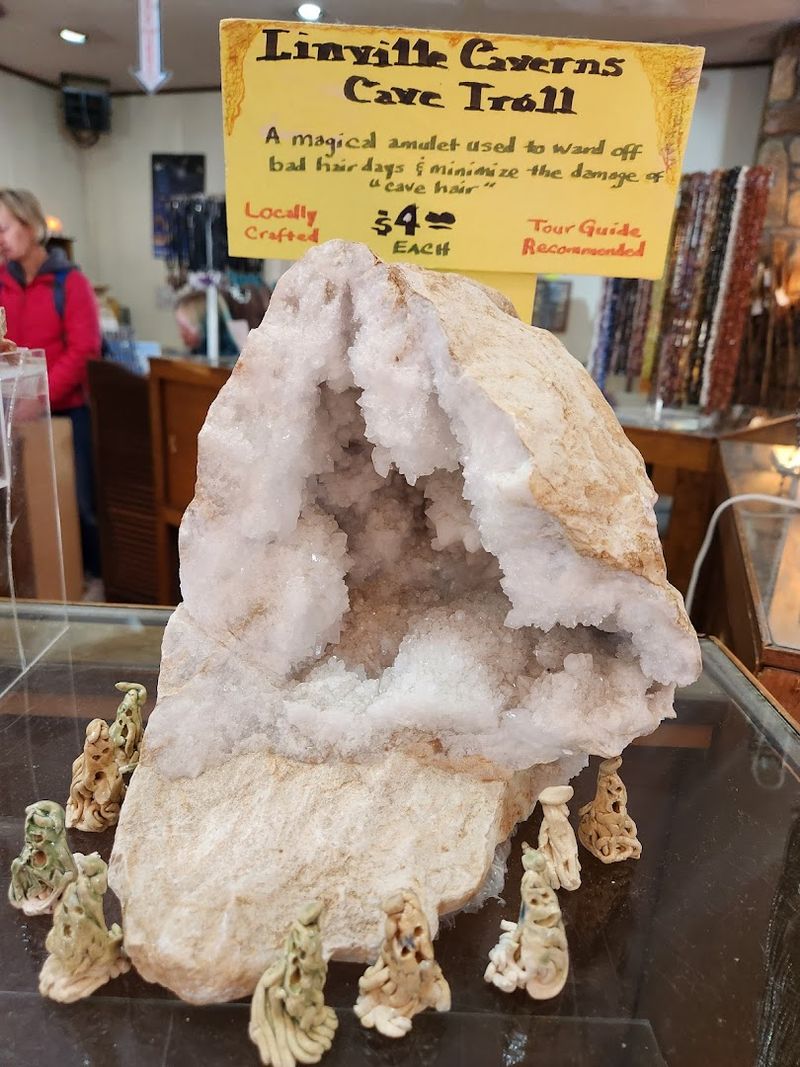
The gift shop at Linville Caverns is compact but worth a browse before you leave. It carries the usual mix of t-shirts, postcards, and cave-themed novelty items, and while it leans toward the classic roadside souvenir aesthetic, that is part of its charm.
There is something genuinely nostalgic about a gift shop that has been selling the same style of keepsakes for decades.
Hurricane Helene flooded the gift shop in September 2024, causing significant damage and disrupting the inventory. The team has been working to rebuild and expand the selection, with plans to add more locally sourced items that reflect the specific character of the western North Carolina region.
That shift toward local goods is a welcome development for visitors who want to take home something with a real sense of place.
Rock and mineral specimens are popular picks, especially with younger visitors who have just spent 40 minutes learning about how geological formations develop over time. The staff running the shop are friendly and helpful, and the whole experience has the kind of unhurried, welcoming energy that small family-run attractions do better than anyone else.
Even if you do not buy anything, the shop is a pleasant way to decompress after the cool darkness of the cave.
How Hurricane Helene Affected the Caverns and the Recovery Effort
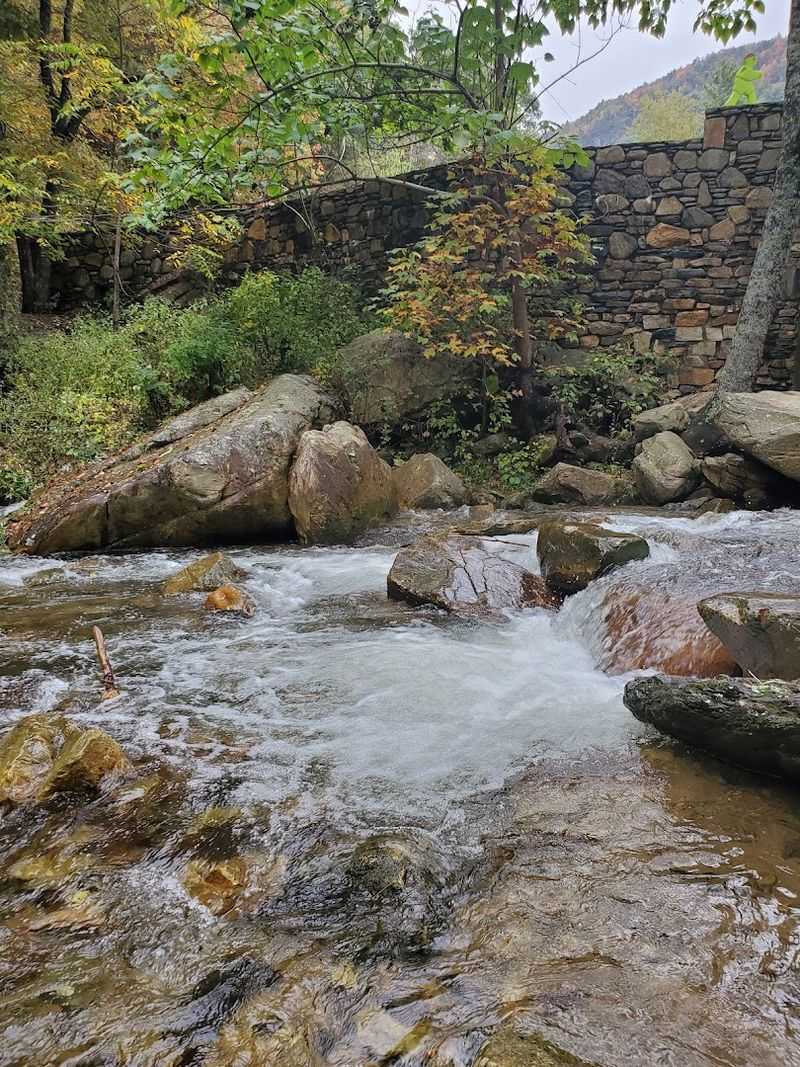
Hurricane Helene hit western North Carolina hard in September 2024, and Linville Caverns was not spared. The floodwaters caused damage to the gift shop, washed away the famous blind trout, and disrupted operations that had been running continuously for decades.
The recovery effort required significant work to get the cave back into a condition safe and welcoming enough for visitors.
The staff and ownership handled the aftermath with remarkable resilience. Tours resumed relatively quickly after the storm, and the team has been transparent with visitors about what changed and what is still being restored.
The blind trout remain absent, and there is cautious hope that they may return naturally over time as the water systems stabilize.
The fact that the caverns bounced back as quickly as they did says a lot about the people running the place. Visitors who come now are supporting a small, family-run business that genuinely needed the foot traffic after a difficult stretch.
The cave itself, formed over millions of years, shrugged off the storm with the patience of something that has already outlasted everything else around it. The mountain is still standing, the formations are still growing, and the tours are running again, which is all the reassurance most visitors need.
Pairing the Caverns With Other Nearby Attractions
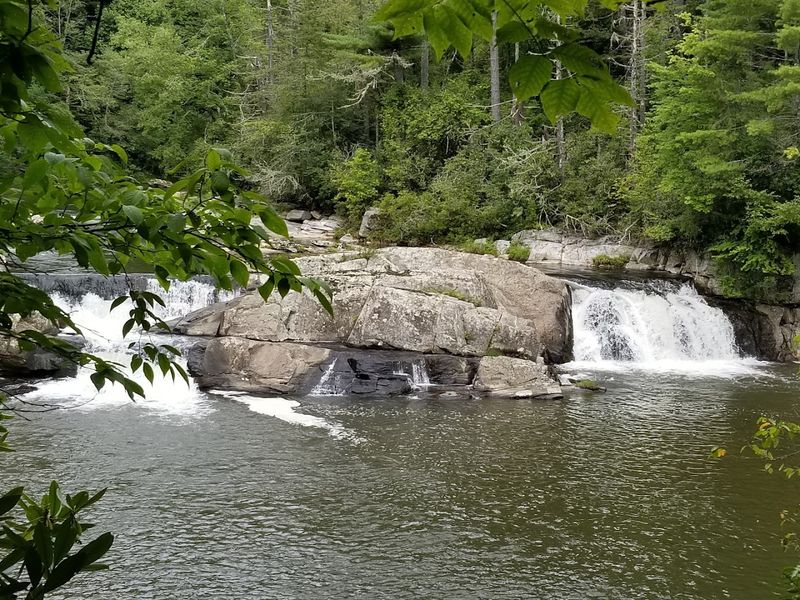
Linville Caverns sits in one of the most activity-rich corners of western North Carolina, and combining the cave tour with other nearby stops turns a half-day outing into a full and deeply satisfying adventure. Linville Falls is just four miles away, and the hike to the falls through the gorge is one of the most dramatic short trails in the entire Appalachian region.
Grandfather Mountain, a beloved state park known for its mile-high swinging bridge and wildlife habitats, is also within easy driving distance and pairs naturally with a cave tour for a full day of mountain exploration. The Blue Ridge Parkway runs through the area, offering scenic drives with overlooks that stretch across multiple states on clear days.
For those who want a structured day plan, starting with the cave tour in the morning when the air outside is still cool, then heading to Linville Falls for a midday hike, and finishing with a drive along the Parkway to catch the afternoon light on the ridges is a sequence that works beautifully. The region draws visitors from across the Southeast, and unlike the flat landscapes of states such as Oklahoma, this corner of North Carolina stacks its wonders vertically, one elevation at a time.
Why Linville Caverns Is Worth the Trip for Families and Solo Travelers Alike
After spending time underground at Linville Caverns, it becomes clear why visitors keep returning across decades and generations. The combination of genuine geological wonder, accessible trails, knowledgeable guides, and an affordable price point creates an experience that holds up whether you are eight years old or eighty.
Families with young children find that the tour strikes a good balance between educational and exciting, with just enough dramatic moments, the darkness demonstration, the narrow passage option, and the dripping water to keep kids fully engaged without overwhelming them. Solo travelers and couples who appreciate natural history will find plenty to think about long after the tour ends.
Compared to massive commercial cave systems in places like Oklahoma or Virginia, Linville Caverns operates on a smaller, more intimate scale, and that intimacy is genuinely one of its strengths. The guides know the cave deeply, the groups stay small, and the whole experience feels personal rather than processed.
North Carolina’s only show cavern has been quietly doing its thing inside that mountain for millions of years, and the humans who discovered it have been sharing it with curious visitors for nearly two centuries. That track record speaks for itself, and the mountain is not going anywhere anytime soon.
Share this story