 Unearth The Voyage
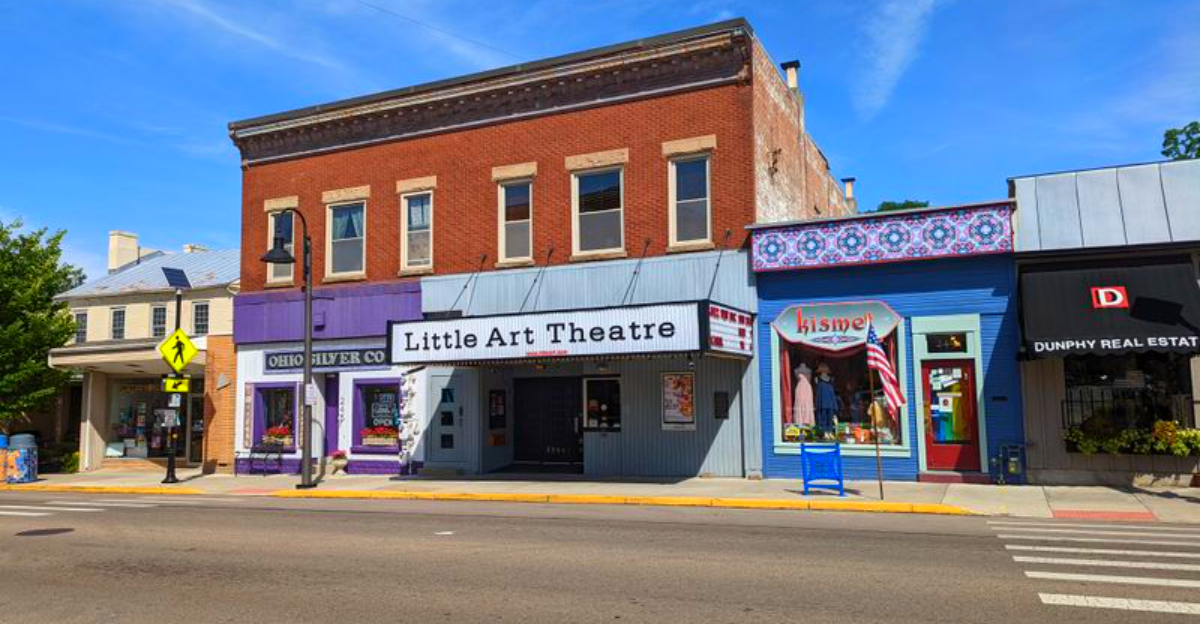
Yellow Springs sneaks up on you the way a great song does, with a melody you cannot shake. Streets hum with porch conversations, chalk art, and the soft clink of bike bells sliding past brick storefronts.
You smell coffee, woodsmoke, and creek moss before you even see the falls. Keep walking and the college green, the trails, and the murals start telling you exactly why this small Ohio village lodges in memory long after you leave.
Strolling Xenia Avenue at Golden Hour
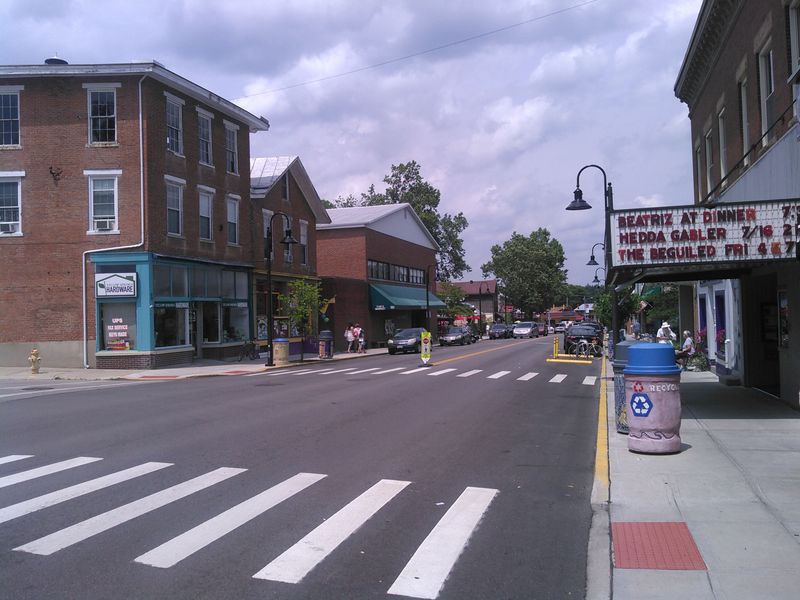
Xenia Avenue does not try to impress you. It just opens its hands.
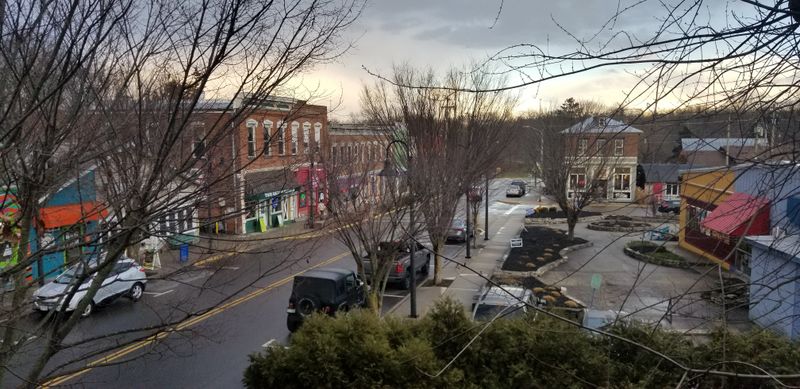
Around five, sunlight hits the brick like a match, and the window glass turns syrupy. You can smell espresso from the corner cafe and the faint mineral note of wet pavement if a quick shower rolled through.
Cyclists coast using more brake than pedal, shoes scuffing dust. Someone laughs hard outside the bookshop and the sound carries like a bell.
Stalls fold, then reopen, as evening shoppers drift in for a last loaf or a jar of local honey. The crosswalk button clicks.
A shaggy dog pauses under a mural, then flops, bored with human browsing. Antioch students thread the flow in thrifted denim, shoulders relaxed, phones pocketed.
If you want a simple test of Yellow Springs, look at faces here. They look unhurried, like people who know where their bread comes from and which farmer grew it.
Glen Helen’s Whispering Trails
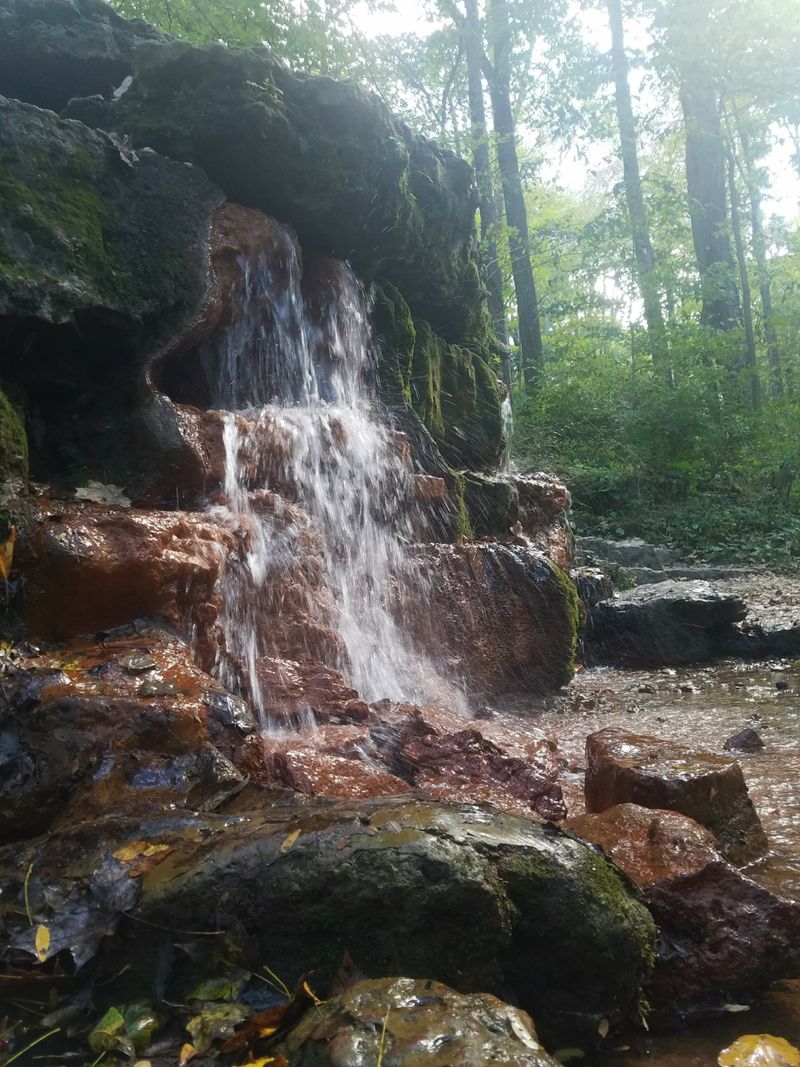
The first thing you notice in Glen Helen is water language. It mutters under footbridges and flicks at stones, crisp as cold glass.
The trail falls quiet fast, even on weekends, and the temperature drops a few careful degrees. Air smells like iron and leaf tannin.
At the Inman Trail bend, a barred owl sometimes posts up high, statuesque, accepting the role of surprise.
Spring brings bluebells like scattered sky, then summer trades them for a strict green hush. You pass interpretive signs not as lectures but as breadcrumb notes from naturalists who cared.
The preserve sprawls across 1,000 acres linked to Antioch College stewardship, and the task feels tenderly ongoing. On wet days, the boardwalk sings underfoot with a hollow, reassuring thrum.
Leave with mud on your calves and you will walk different in town, balanced, a bit quieter. It is not a grand canyon.
It is a daily medicine cabinet hidden in plain sight.
The Little Miami Scenic Trail By Bike
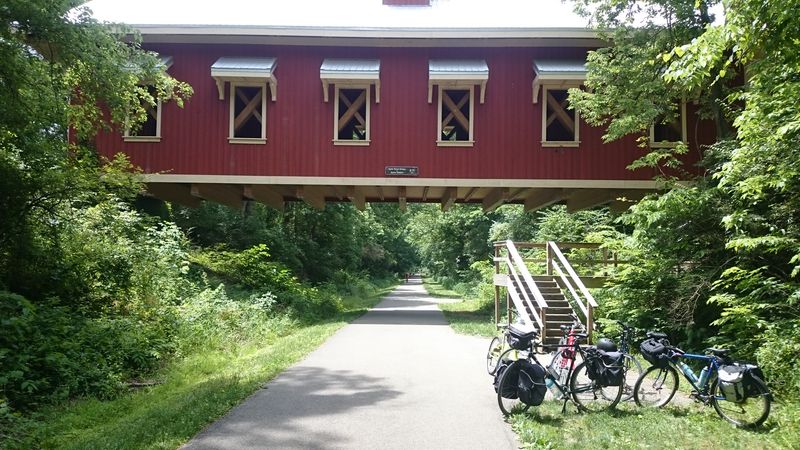
The Little Miami Trail slides past town like a friendly river of asphalt. You enter near the old station and suddenly the world becomes cadence, breeze, and birdsong.
The grade is gentle, the canopy arching, the miles strangely generous. A kid on a neon scooter keeps pace for a minute, then peels away toward ice cream and victory.
Gravel driveways flash between trees. Cornfields breathe.
Long steady spins get you to Clifton or Xenia without much negotiation with traffic. Bring a bell.
It feels oddly celebratory to ding it when passing. The trail is part of a larger 78 mile corridor, one of the state’s most used multiuse routes, and on a sunny Saturday you can feel why.
There is a democracy to it. Carbon frames alongside garage sale Schwinns.
Nobody cares. You get to arrive sweaty at dinner and nobody blinks because here, the bike is not accessory.
It is how you measure a day.
Antioch College Green and Community Rhythm
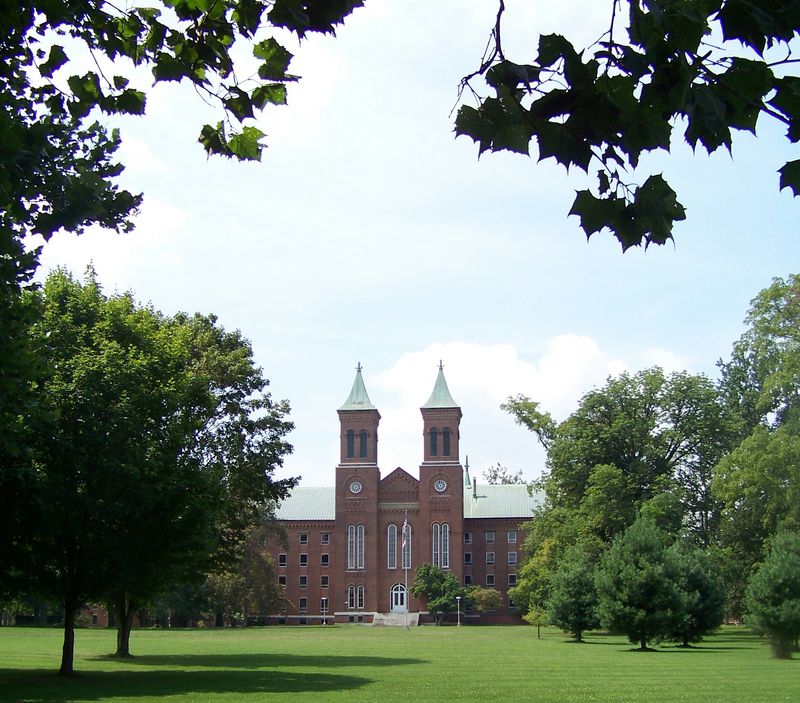
Stand on the Antioch College green and the word experiment stops sounding scary. The lawn pitches gently, framed by earnest brick, bulletin boards fluttering with flyers for mutual aid, pottery sales, and readings.
Conversations do not vanish at class time. They spill, braid, restart on benches under trees that look like they have heard everything twice.
You feel a permission here, a small license to try.
Antioch’s cooperative education legacy shows up in town as a thousand quiet seams. Shop clerks know professors, the barista knows your campsite plan by Thursday.
Enrollment is small, but the cultural imprint is huge, especially for a village of 3,697 per the 2020 census. Two steps across the green and you catch snippets about films, compost, city council, then an earnest debate about a mushroom foraging map.
It is not performance. It is practice.
The campus is the metronome that keeps Yellow Springs from drifting off beat.
Clifton Gorge and the Sound of Stone
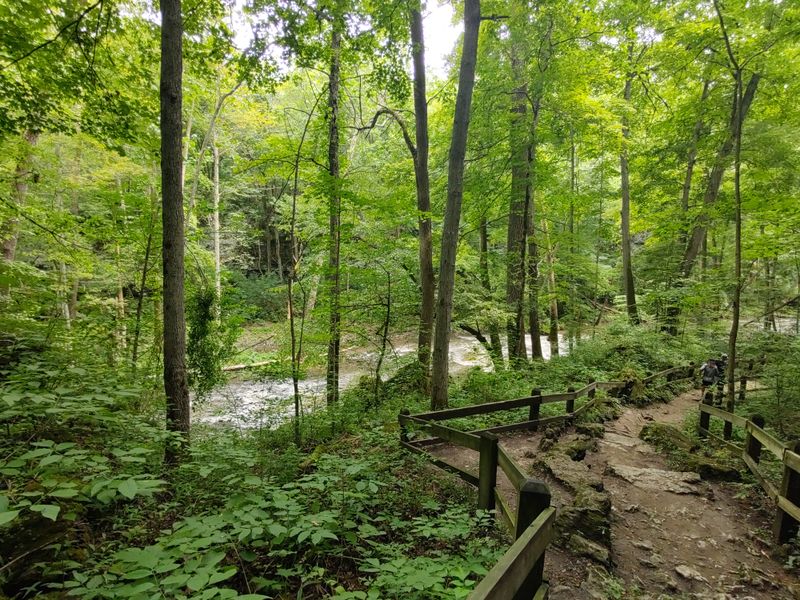
Clifton Gorge does not whisper. It tightens the river until it hisses, then throws the sound back at you off limestone ribs.
The path hugs the edge just close enough to make you respectful. Wet days paint the rock a slick dark green, and the air turns almost refrigerated.
A kingfisher strafes the water, blue as a knock on your vision.
Geology class becomes sensory instead of chalkboard. Here are Ordovician layers, here is time pressed into a cliff you can smell.
The gorge is a short drive or a determined pedal from town, and the shift from storefronts to stone corridor is jarring in the best way. Pack a small snack but no heavy bag.
You will want hands free for railing and photos. Sun pencils through in late afternoon and the whole place feels like a cathedral that refuses to sit still.
Come back in winter for ice ribs and a tighter echo.
Morning at the Yellow Springs Farmers’ Market
By eight, the market hums like a beehive tuned to people. Peaches lean into tomatoes, bread thumps hollow under a vendor’s knuckle, and someone sells mushrooms that look like props from a gentle sci fi.
There is a cruelty free soap booth. There is a dog who believes all bags contain treats.
Cash and square readers share table space with hand drawn signs. It is practical, not curated.
Ask where the greens were grown and you might be invited to visit the hoop house. A busker loops guitar with a clever delay pedal and kids start dancing because they can.
According to the USDA, direct farm sales grew nationally the past few years, and you feel that momentum here, grounded in names you learn by week two. Breakfast becomes a paper cup of berries and a still warm biscuit.
Leave with too many herbs. They will forgive you when the kitchen smells like July.
Arts, Murals, and Porch Galleries
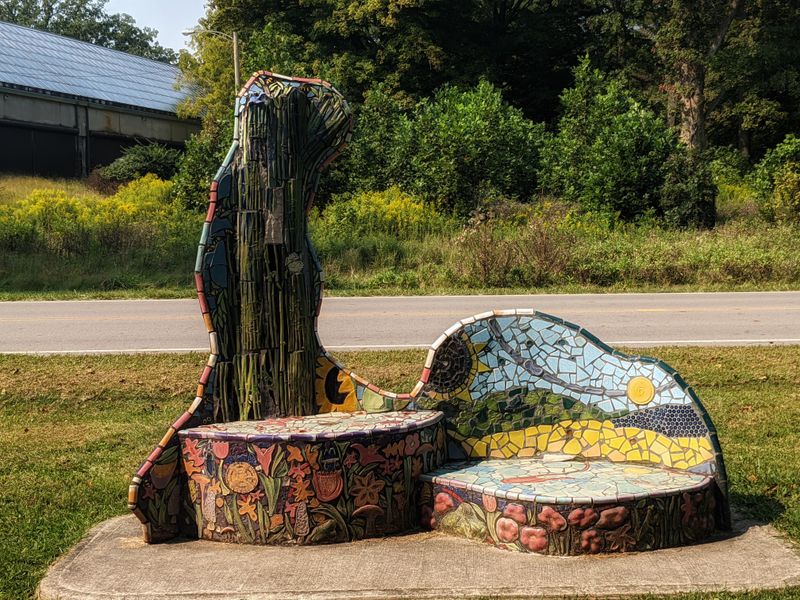
Art in Yellow Springs is not precious. It hangs on porches, sprawls across utility boxes, and slips into shop windows between jars of pickles and hand poured candles.
Murals climb brick with the confident gait of native plants. You pause, then back up three steps to catch the whole swallow of color.
A neighbor waves from a porch gallery where bowls sit like moons cooling after orbit.
Open studios happen on a cadence that feels like weather patterns more than scheduling. You learn the map by accident, the way a cat learns every warm square of sunlight.
Galleries here sell work that looks hand touched because it is. Prices are mortal.
You can leave with something small wrapped in brown paper that smells like fresh tape and turpentine. Back on Xenia Avenue, the paint seems to have deepened since morning, though you know that is just your eyes waking up.
Coffee, Books, and the Long Conversation
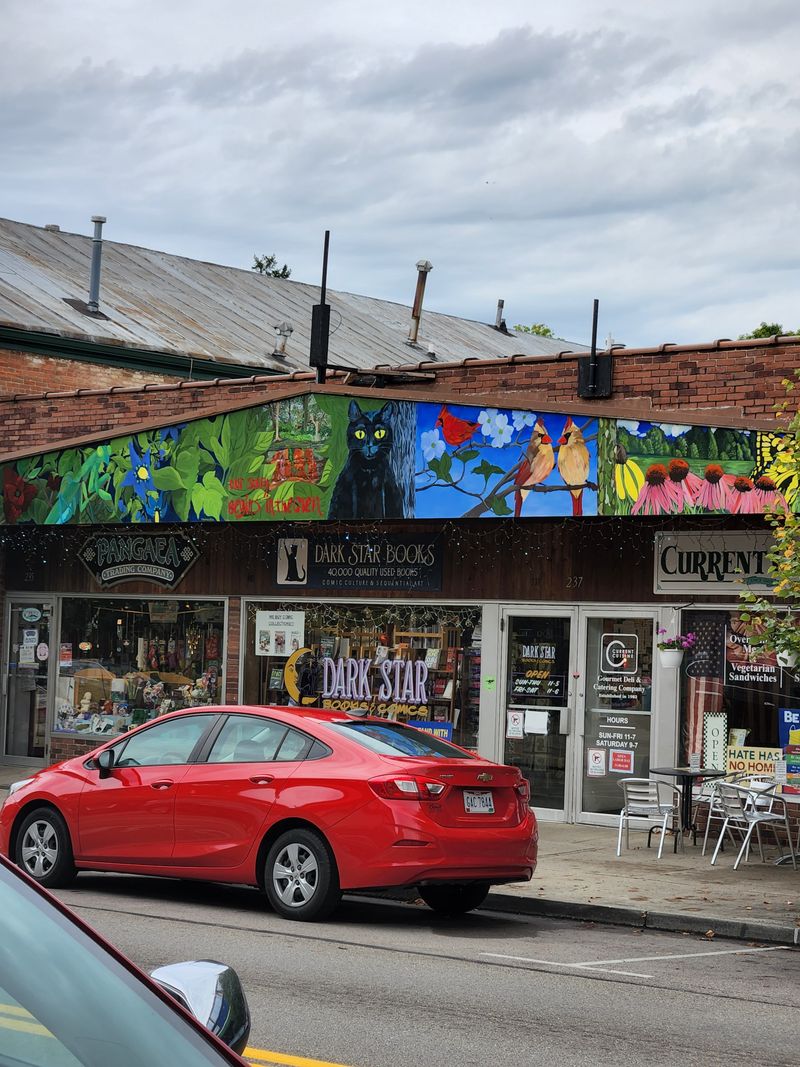
There is a cafe bookshop combo downtown where time expands like steam from a mug. Tables wobble a little.
Chairs do not match. The barista remembers your last drink and warns that the new roast leans bright.
Pages turn like soft shutters. Someone at the next table types three sentences, stares out the window, smiles, erases them, then starts again.
Nobody rushes.
Conversations here go long and gentle, rarely escalating beyond earnest. The noticeboard blooms with yoga, housing, lost mittens, and a ukulele circle.
The American Booksellers Association reported indie bookstores growing in number, and this spot plays like a small proof, an argument for places where people practice attention. Buy a pamphlet by a local poet folded on a stapler.
Add a zine. Walk out blinking and caffeinated, convinced you learned more from that hour than from a stack of tabs.
If you only have twenty minutes, double it.
The Springs Themselves
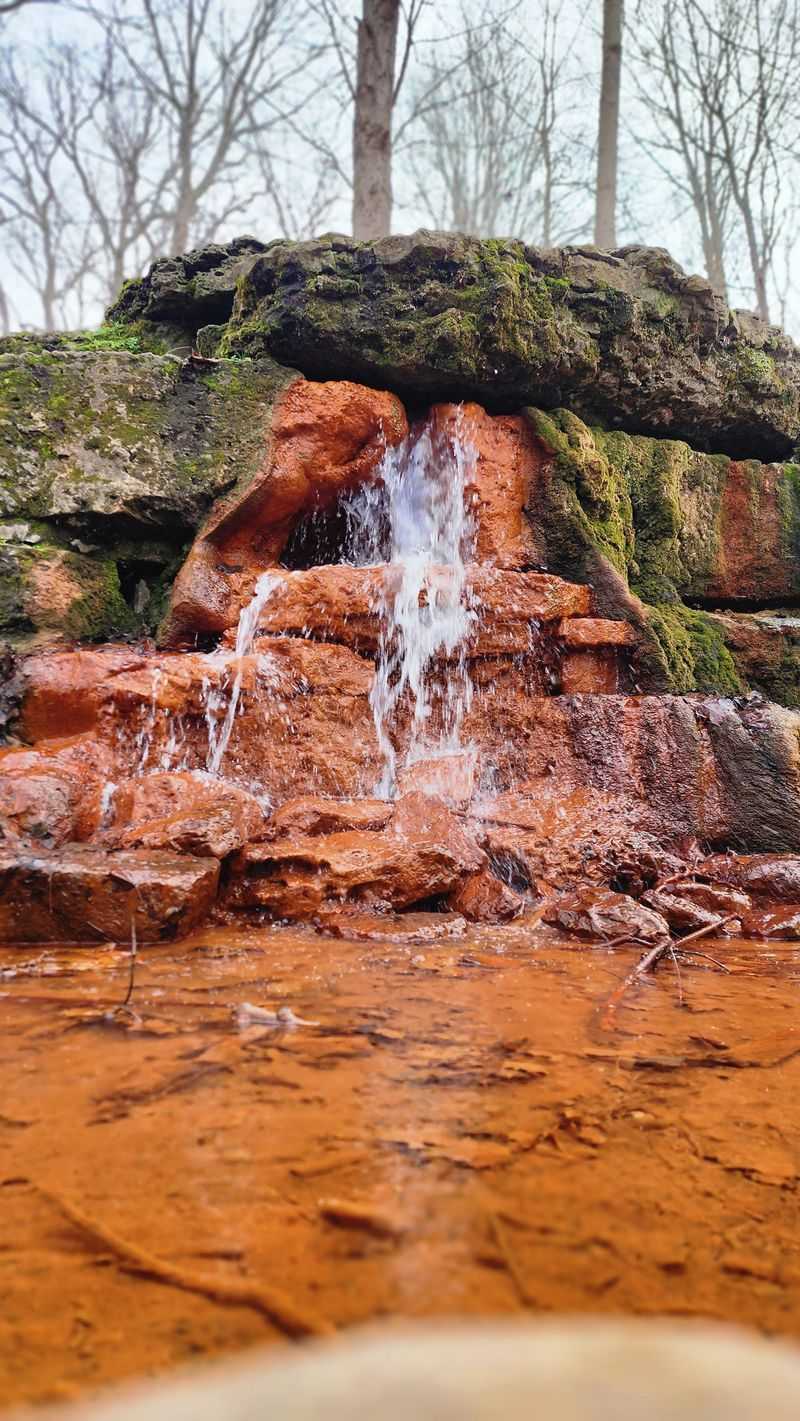
The water that named the town is not theatrical. It trickles.
It stains stone a stubborn yellow orange, iron doing its quiet chemistry. You reach the springhouse and stand there longer than expected, watching drops accumulate into a persistent run.
Put your palm under it and feel the cool steady grip. The air around is mineral, metallic, almost like a coin warmed in your hand.
Photographs flatten it. In person, the color has body, shifting with every cloud.
Kids lean in with the reverence usually reserved for fireworks, then giggle at the taste. A simple plaque keeps the story short.
The source is modest, the implication wide. Towns grow strange around reliable water.
You leave with the faintest gold smear on your fingertips and the sense that charm here is not decoration. It is process, elemental and ongoing, the same today as yesterday.
Dinner That Feels Like a House Party
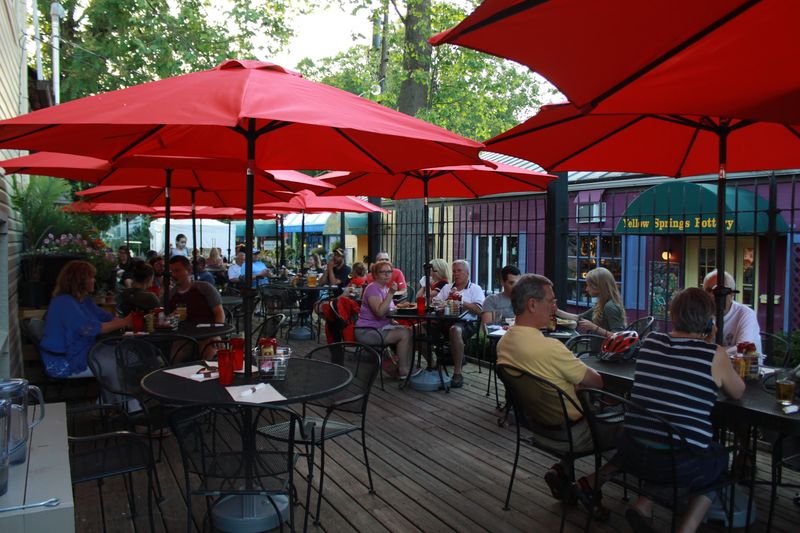
Dinner in Yellow Springs often feels like being invited into a kitchen with really good knives. Menus shift with what farmers brought in vans ten hours earlier.
A chalkboard lists a trout with herb butter, sweet corn, and a tomato that tastes like July sung into a vowel. Servers talk like neighbors and mean it.
When the door opens, night air spills in carrying basil and bicycle chain oil.
Expect to share plates. Expect to be asked about your day and to actually answer.
This is not small talk. It is social glue.
The Ohio Restaurant Association has noted steady interest in local sourcing, and here you can taste the statistic in every impatiently ripe blackberry. If there is a pie, order it.
If there is a seat on the patio, claim it. When you leave, you will count the steps to the trail in bites, satisfied and lightly sun salted.
Festivals, Street Music, and That Busker With the Fiddle
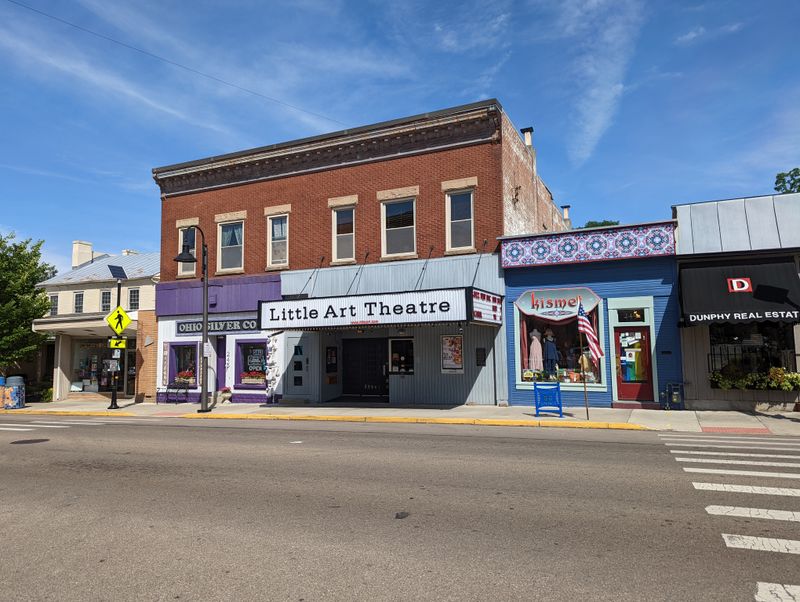
On festival days, Yellow Springs lifts like a kite. Banners snap.
A fiddle saws a tune so fast you can hear the bow hairs surrender. Craft booths build a temporary village where earrings glint like candy and soap looks edible.
A kid claps on two and four and the entire block tightens its groove to match. The air smells like kettle corn and grilled peaches.
Music is not backdrop here. It is the device that tunes strangers to the same station.
A recent Ohio tourism report clocked strong attendance rebounds for outdoor events, which tracks with the packed sidewalks and the full tip jars. Bring cash.
Thank the drummer. If the busker asks for a request, do not freeze.
Name something you can hum. Watch the solo coil, then explode like a sparkler when it is darkest blue.
Walk away lighter, pockets ringing with quarters and rhythm.
Where to Stay and How to Slow Down
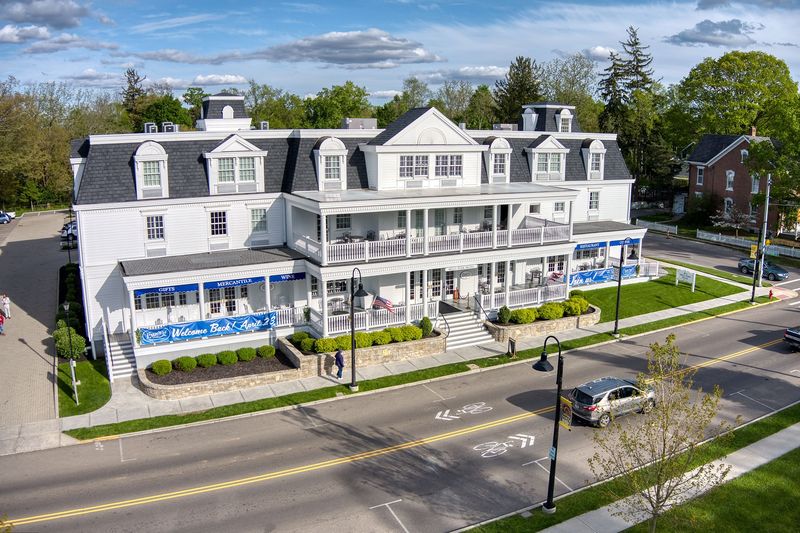
Lodging in Yellow Springs tends small, thoughtful, and porch forward. You wake to screen door sounds and the skritch of a rake on gravel.
Rooms carry quilts that look sewn in town and a gentle insistence to put your phone on the dresser, face down. Breakfast might be yogurt with backyard berries and a perfect hard boiled egg.
Coffee arrives from the same roaster you met on Xenia Avenue.
Use your stay to edit your speed. Walk to everything.
Borrow a bike. Ask hosts for their unadvertised favorite bench and go sit there at dusk.
You will learn the neighborhood by footfall and porch light color. Check availability early on peak weekends.
Small places fill because they are small on purpose. When you leave, you will check the closet twice, not for socks, but to make sure you are not forgetting a slower version of yourself.



