 Unearth The Voyage
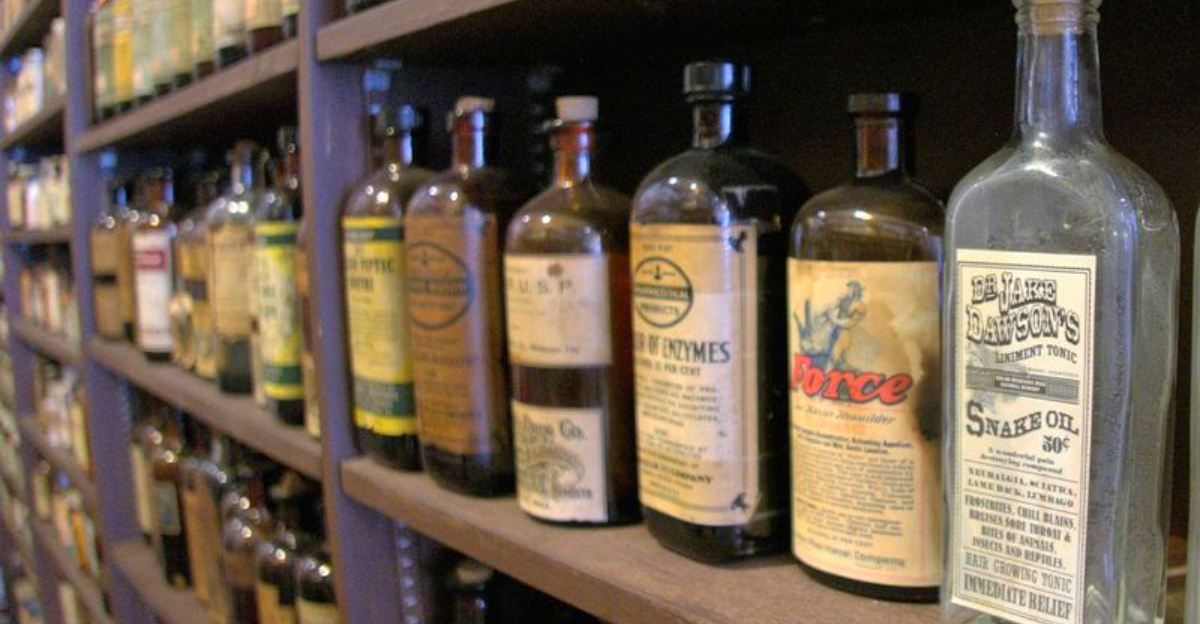
There is a small building in Guthrie, Oklahoma, that holds more medical oddities than most people could ever expect to find in one place. Old bottles line the shelves, dusty ledger books record long-forgotten prescriptions, and the air carries the quiet weight of a century’s worth of remedies, cures, and curiosities.
This is not your typical museum stop. The Oklahoma Frontier Drug Store Museum takes you straight into the world of early American pharmacy, where arsenic was sold over the counter and a soda fountain stood right next to the medicine cabinet.
Trust me, once you start reading those old labels, you will not want to leave.
The Historic Building and Its Address
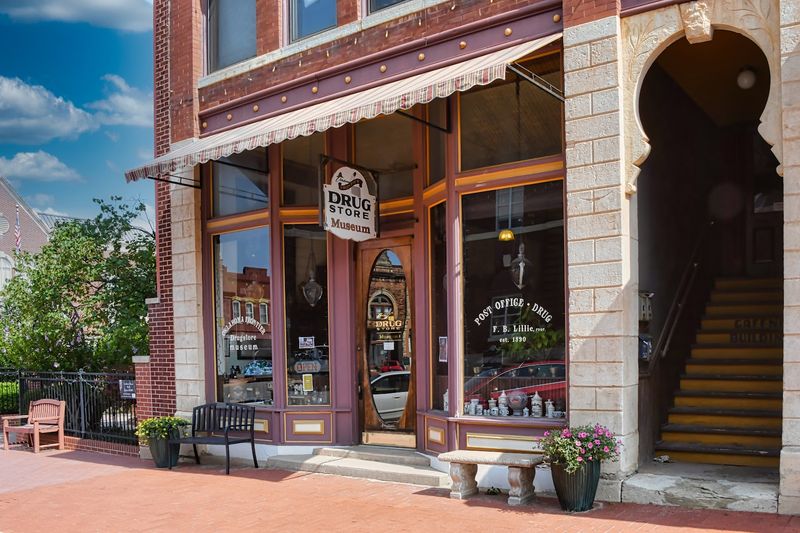
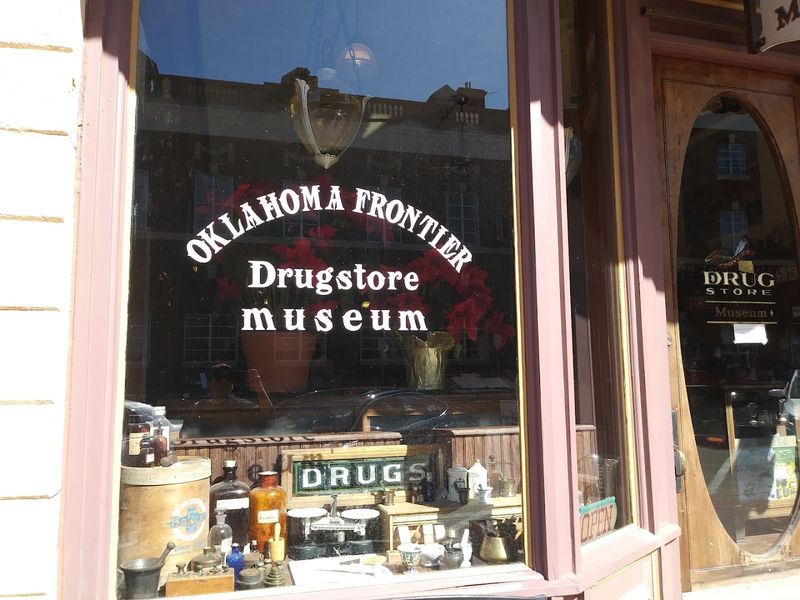
Few museums get to claim that their building is part of the exhibit, but this one earns that title honestly. The Oklahoma Frontier Drug Store Museum sits at 214 W Oklahoma Ave, Guthrie, OK 73044, right in the heart of Guthrie’s beautifully preserved historic downtown.
The structure itself is believed to be the home of Oklahoma’s first drug store, which gives every step you take inside an extra layer of meaning. Guthrie was the original capital of Oklahoma Territory, so this building witnessed the very earliest days of a brand-new state finding its footing.
The exterior fits perfectly into the surrounding streetscape of 19th-century architecture, with brick facades and tall windows that hint at what waits inside. You almost feel like you have traveled back in time before you even open the door.
The museum is open Tuesday through Friday from 10 AM to 5 PM, and on Saturdays from 10 AM to 5 PM. It is closed on Sundays and Mondays, so plan your visit accordingly.
Entry is just five dollars per person, and cash is the preferred payment method.
The Jaw-Dropping Collection of Old Remedies
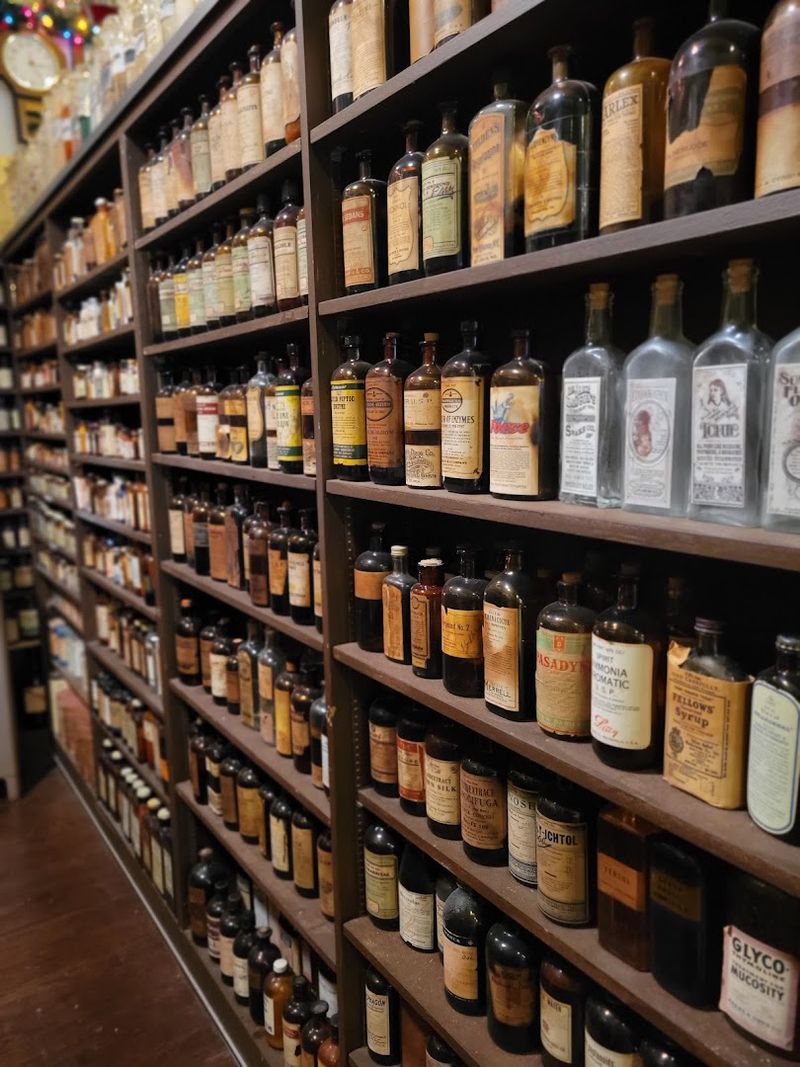
Nothing prepares you for the sheer volume of old medicines crammed into this space. Shelf after shelf holds glass bottles, tin boxes, paper packets, and cardboard containers, each one representing a treatment that someone, somewhere, genuinely believed would make them feel better.
Some of the remedies are surprisingly recognizable. Castor oil, herbal tonics, and camphor-based salves all appear throughout the collection.
Others are far stranger, including treatments for ailments that modern medicine would handle very differently today.
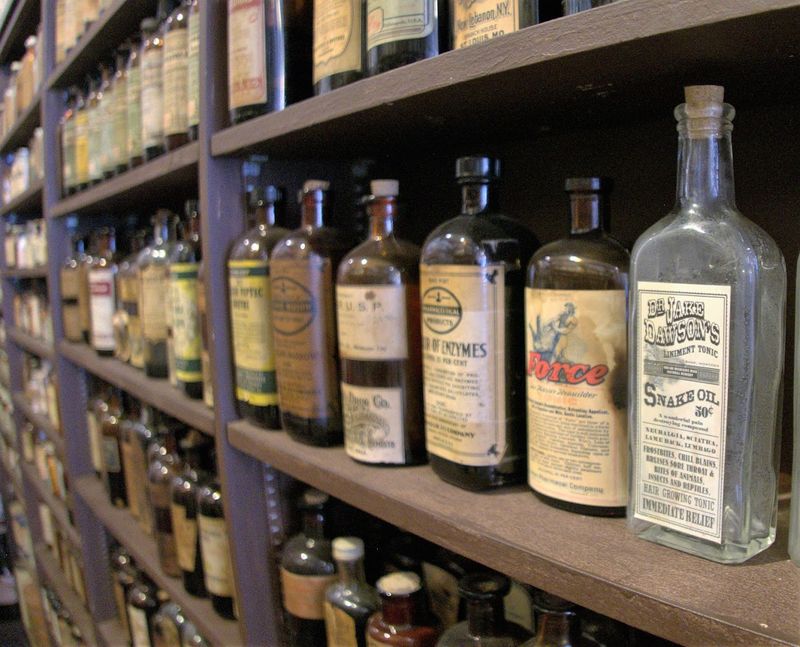
What makes this collection so compelling is that every item has a story attached to it. The labels are often still readable, and the instructions printed on them range from oddly sensible to completely baffling by today’s standards.
The museum draws heavily from Oklahoma and Southern Kansas pharmacies, so the collection has a strong regional character. Many of the items were donated by local families who found them tucked away in attics and old storefronts.
Flipping through the original prescription books, where a pharmacist’s careful handwriting records exactly what was dispensed and to whom, makes the whole experience feel remarkably personal and immediate.
The Poison Section That Will Stop You Cold
Of all the corners of this museum, the poison section is the one that tends to make jaws drop the fastest. Empty bottles that once held arsenic, strychnine, and cyanide sit alongside pharmacy ledger books that document exactly how often these substances were sold to ordinary customers.
The ledgers are the real revelation. Page after page records purchases of what we now consider extremely dangerous substances, listed matter-of-factly alongside common household goods.
Arsenic, for instance, was widely used as a beauty product and a pest control agent, and the sales records reflect that casual attitude toward its use.
Reading through those entries puts the entire history of consumer safety into sharp focus. There were no warning labels as we know them today, no strict regulations, and no pharmacist requirement to ask questions about intended use.
The section is presented thoughtfully, with context that helps visitors understand the historical norms without sensationalizing anything. It is one of those rare museum experiences that genuinely changes how you think about everyday life in the past.
The knowledgeable docents on staff are happy to share additional details about this section, and their stories add real depth to what you are seeing on the shelves.
The Soda Fountain That Once Served the Community
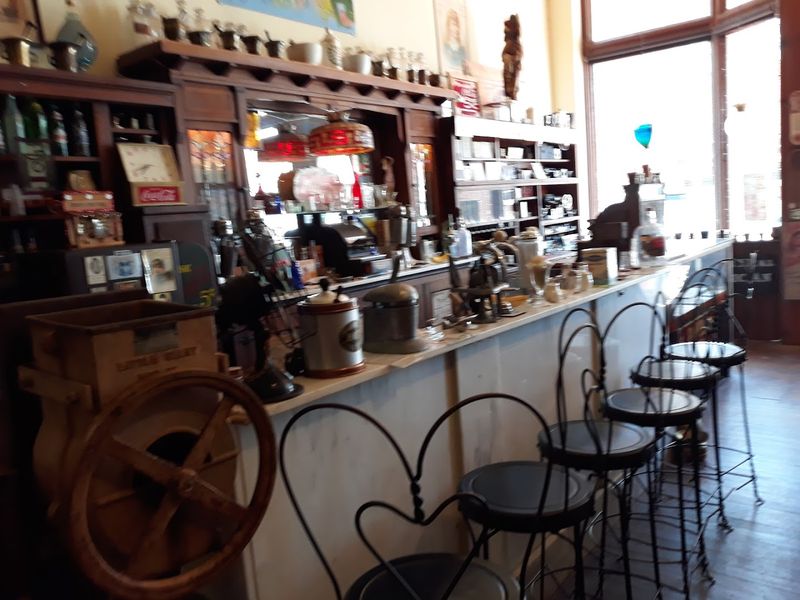
Right in the middle of all those medicines and remedies, there is an old-style soda fountain that serves as a charming reminder of what drugstores used to mean to their communities. Before fast food chains and coffee shops dominated every corner, the local drugstore soda fountain was the social hub of the neighborhood.
The fountain on display here gives you a real sense of what that experience looked like. Cherry cokes, root beer floats, and nectar sodas were the kinds of treats that brought people in from the street and kept them lingering long after their prescriptions were filled.
The counter and its accompanying fixtures are period-accurate, and standing next to them, you can almost hear the chatter of customers perched on stools, swapping local news over a cold drink.
Drugstore soda fountains were also places where pharmacists built trust with their communities. The same person who mixed your headache remedy might also hand you a cool drink on a hot Oklahoma afternoon, making the drugstore a genuinely central part of daily life.
This exhibit is one of the most visually striking in the museum, and it photographs beautifully for anyone looking to capture a piece of that old-world charm.
The Apothecary Garden Next Door
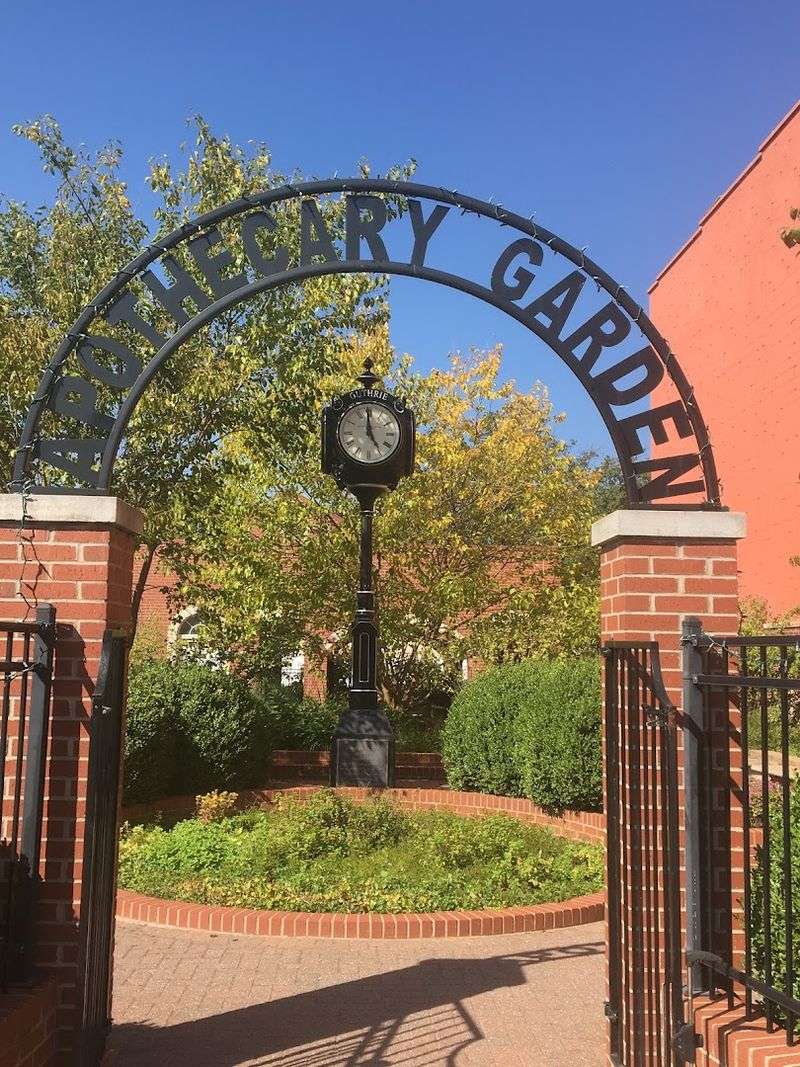
Just when you think the museum has shown you everything, you step outside and find the Apothecary Garden waiting right next door. It is a genuinely lovely surprise, and it adds a whole different dimension to the visit.
The garden features plants that were historically used in medicine and pharmacy, each one labeled so you can understand its traditional purpose. Seeing the raw ingredients that pharmacists once worked with, growing right there in the ground, makes the whole story of early medicine feel much more tangible.
A small pond sits within the garden, and the water is clear and peaceful, reflecting the surrounding greenery in a way that makes the whole space feel calm and unhurried. Families with young children especially appreciate having a bit of open space to explore after spending time indoors.
The garden is well maintained and clearly cared for with real attention to detail. It is the kind of quiet outdoor space that invites you to slow down and take a few deep breaths before heading back to your car.
Many visitors say they discovered the museum only because they stopped to look at the garden first, which makes it a wonderful accidental ambassador for the whole experience.
The Knowledgeable and Friendly Docents
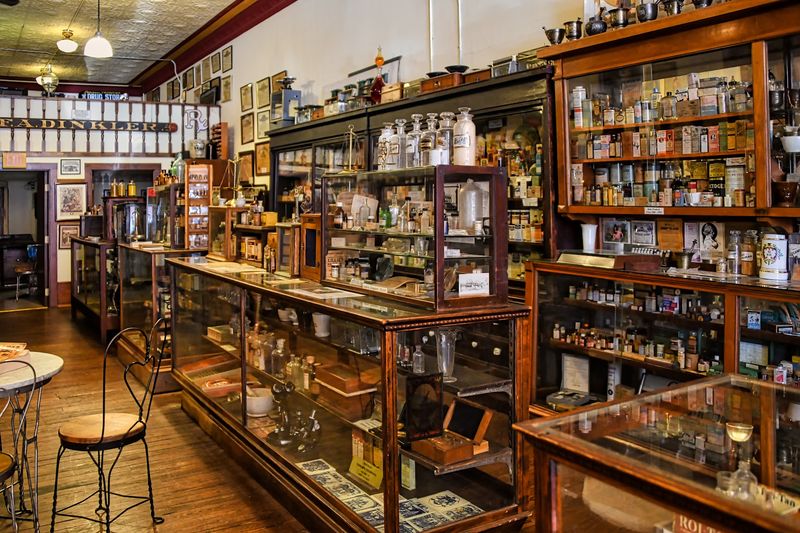
A great collection is one thing, but the people who bring it to life are what make a museum truly memorable. The docents at this museum are consistently praised for their depth of knowledge and their genuine enthusiasm for sharing it.
They do not just point you toward the exhibits and step back. They walk with you, pull out details you would never notice on your own, and tell stories that connect the objects on the shelves to real human experiences from Oklahoma’s past.
The staff can speak knowledgeably about life in Oklahoma before statehood, about the role of the frontier pharmacist in early communities, and about the surprisingly complex history of substances that were once considered perfectly ordinary medicines.
Their conversational style makes the whole visit feel more like a guided tour with a friend than a formal museum experience. You leave knowing things you genuinely did not know before, which is exactly what a good museum should accomplish.
Even visitors who did not expect to spend much time inside often find themselves staying far longer than planned, drawn in by a story or a detail that a docent casually mentions while walking past a shelf of old patent medicine tins.
Hands-On Access to the Artifacts
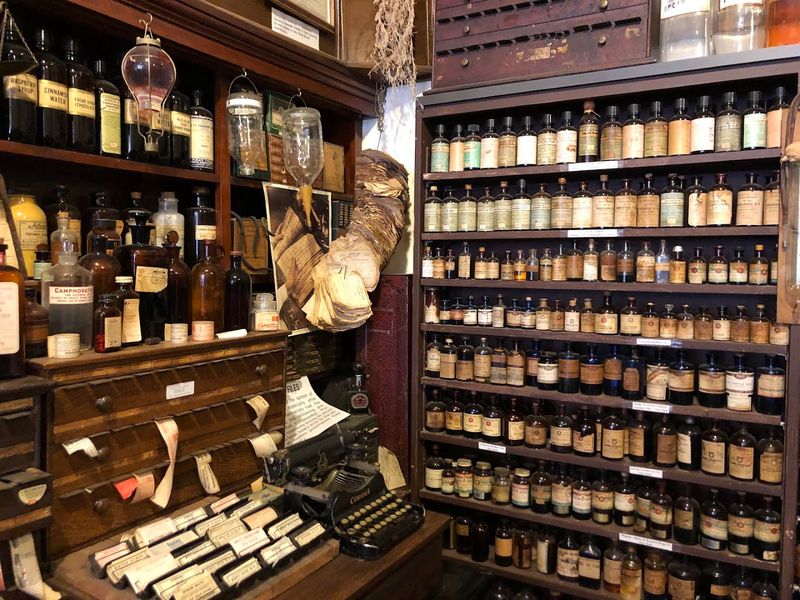
Most museums put up a firm barrier between you and their collections, but this one takes a refreshingly different approach. Visitors are actually allowed to walk behind the counters, flip through old prescription books, and open drawers to see what is inside.
That kind of hands-on access is rare, and it transforms the experience from passive observation into genuine exploration. There is something deeply satisfying about holding an old ledger book and reading the handwritten entries for yourself, rather than reading a printed description of what such a book might contain.
The freedom to touch and interact with the collection means that every visit is slightly different. You might spend twenty minutes on a single shelf, working through the labels on each bottle, and then realize you have barely covered a fraction of the room.
This is also why many visitors recommend allowing at least an hour, and some say they could easily spend a full day without seeing everything. The museum rewards curiosity, and the more questions you ask, the more you tend to find.
Children tend to respond especially well to this format, since the ability to open drawers and handle books keeps them engaged in a way that traditional display cases simply cannot match.
The Dental and Physician Artifacts
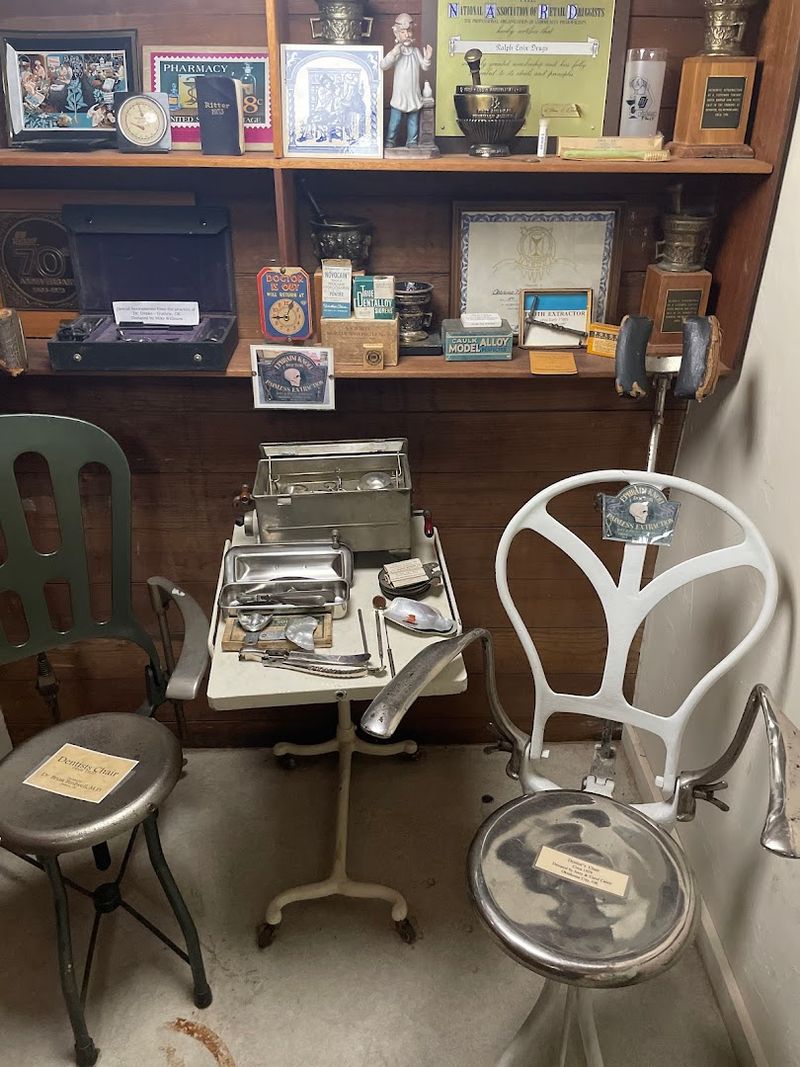
The Oklahoma Frontier Drug Store Museum does not limit itself to pharmacy history alone. Scattered throughout the collection are artifacts from early dentist offices and physician practices, which rounds out the picture of what frontier healthcare actually looked like.
Early dental tools, in particular, have a way of making modern dentistry feel like an absolute luxury. The instruments on display are simple, unforgiving, and clearly designed for a world without the pain management options we take for granted today.
Physician office items tell a similarly fascinating story. Medical bags, examination tools, and early diagnostic equipment reflect a period when doctors relied heavily on observation and personal judgment, without the benefit of laboratory tests or modern imaging technology.
Seeing these objects alongside the pharmacy collection reinforces just how interconnected the roles of pharmacist, physician, and dentist were in small frontier communities. Often, one person had to serve multiple functions simply because trained specialists were not available.
The museum presents these items with enough context to make them understandable to visitors without any medical background, so you do not need to be a history enthusiast to find them genuinely interesting.
Practical Tips for Planning Your Visit
A little preparation goes a long way when visiting this museum, and the good news is that it is one of the most straightforward and affordable outings you can plan in central Oklahoma. The entry fee is five dollars per person, and the museum strongly prefers cash, so make sure you have some on hand before you arrive.
The museum is open Tuesday through Saturday from 10 AM to 5 PM, and it is closed on Sundays and Mondays. If you are planning a weekend trip, Saturday is your window, so build your itinerary around that.
A phone call to confirm hours before you go is never a bad idea. The number is 405-282-1895, and the museum’s website at drugmuseum.org also has current information.
The museum is located at 214 W Oklahoma Ave in Guthrie, which is easy to find within the historic downtown area.
Guthrie itself has plenty to offer beyond the museum, so consider building a longer day trip around the area. The historic downtown is walkable and full of well-preserved architecture that tells its own story about Oklahoma’s early days.
Bring your curiosity, wear comfortable shoes, and give yourself more time than you think you will need. You are almost certainly going to want it.



