 Unearth The Voyage
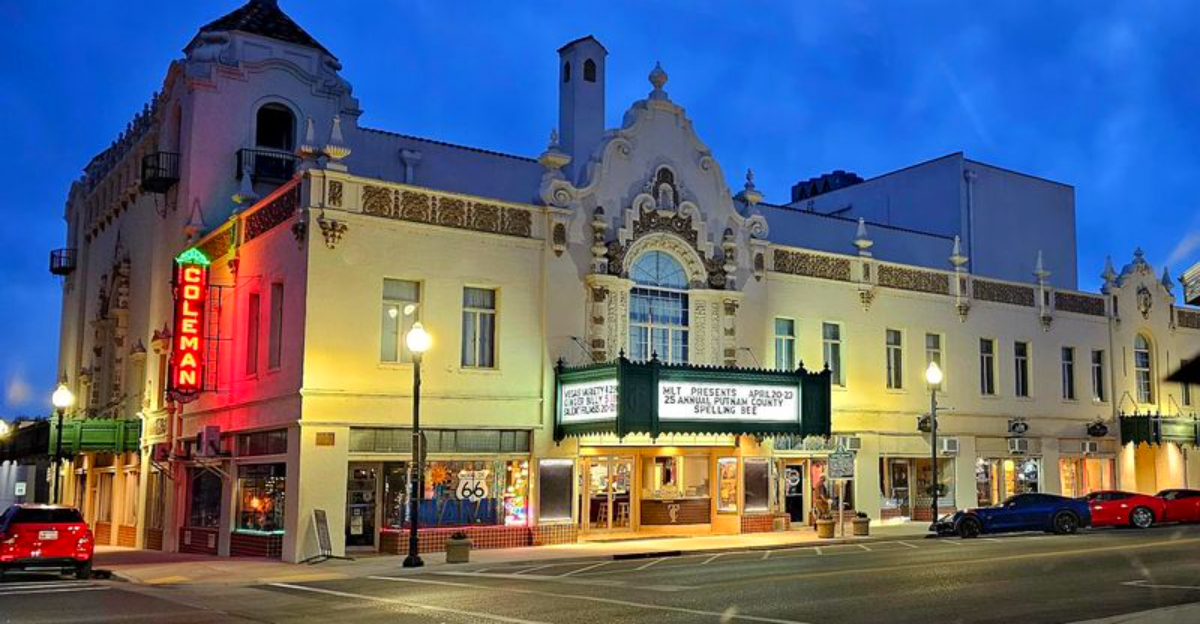
There is a building in northeastern Oklahoma that makes you forget what year it is the moment you walk through its doors. Gold leaf accents catch the light, a massive chandelier hangs overhead, and somewhere beneath the stage, a pipe organ waits to fill the room with sound.
The Coleman Theater in Miami, Oklahoma, opened in 1929 and has been turning heads ever since, drawing Route 66 travelers, history lovers, and performing arts fans from across the country. Every corner of this place tells a story, and once you start listening, it is very hard to stop.
A Grand Address on Main Street
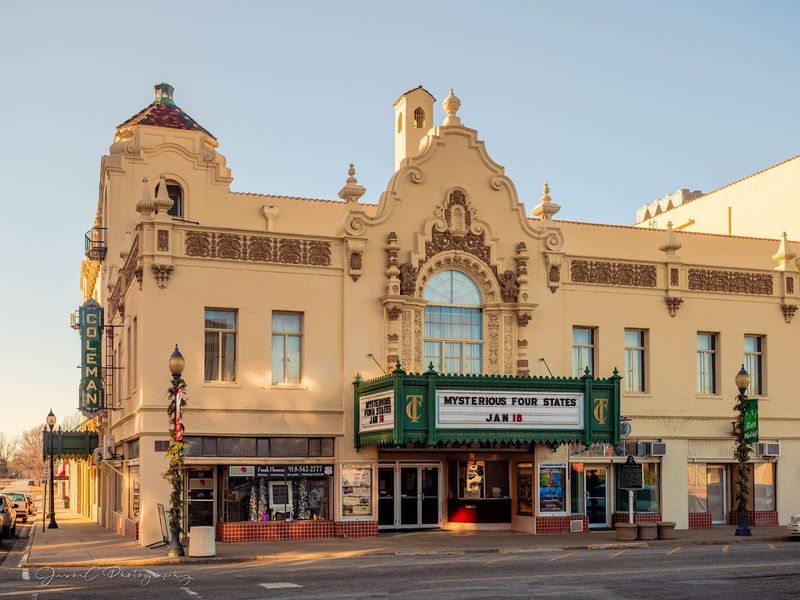
Right at 103 N Main St in Miami, Oklahoma, the Coleman Theater announces itself with an architectural confidence that most buildings can only dream about. The Spanish Colonial Revival facade rises above the sidewalk with intricate terra cotta detailing, arched windows, and decorative flourishes that make it look more like a European palace than a small-town theater on Route 66.
Miami sits in Ottawa County in the far northeastern corner of Oklahoma, about 90 miles northeast of Tulsa and right along the historic Route 66 corridor. The building occupies a prominent spot on the main commercial strip, so it is genuinely impossible to miss as you drive through town.
The theater was built in 1929 by George L. Coleman Sr., a lead and zinc mining magnate who wanted to give his community something truly spectacular.
He reportedly spared no expense, importing materials from around the world and commissioning custom details that were rare even by big-city standards at the time. That original ambition is still visible in every carved surface and gilded trim piece today.
The 1929 Origin Story
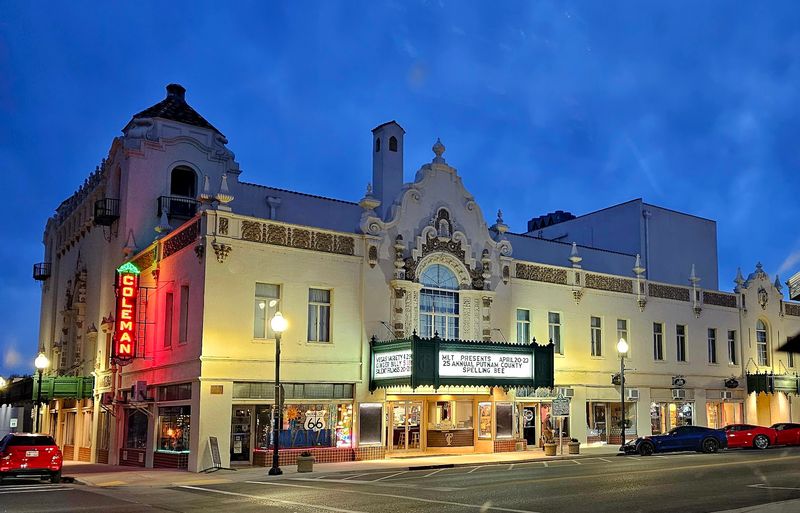
George L. Coleman Sr. had made a fortune in the lead and zinc mining industry, and when he decided to build a theater, he approached the project the way he approached everything else: with serious financial firepower and a refusal to cut corners.
The Coleman Theater opened on April 18, 1929, with a full-scale celebration that the town of Miami still talks about.
Construction costs reportedly reached around 590,000 dollars, which was an extraordinary sum for a small Oklahoma city in the late 1920s. The original architect was Emil Weil of New Orleans, who designed the building in the Spanish Colonial Revival style with a level of ornamental detail that was typically reserved for theaters in major metropolitan areas.
The timing of the opening was bittersweet in hindsight. Just months after the grand debut, the stock market crashed and the Great Depression began reshaping the American economy.
Yet the Coleman Theater kept its doors open, serving as a place of entertainment and community gathering through some of the hardest years in modern history. That resilience became part of the building’s character, woven into its walls as surely as any decorative plaster.
Architecture That Earns Every Compliment
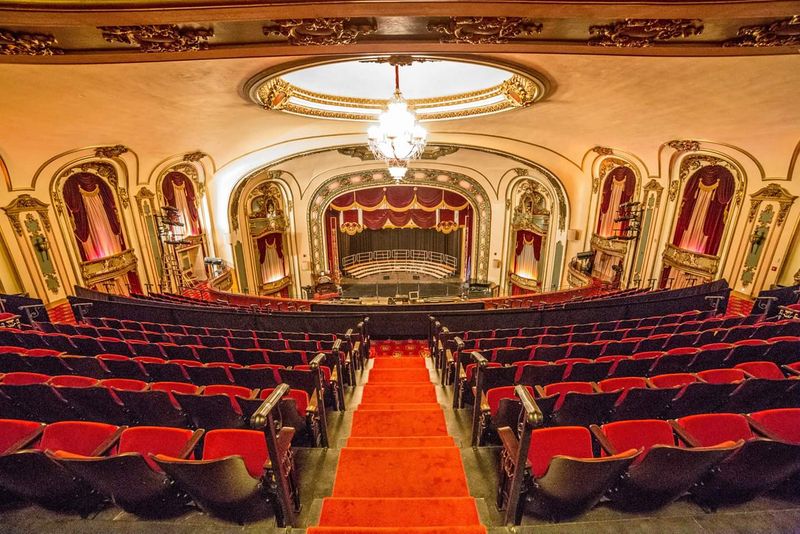
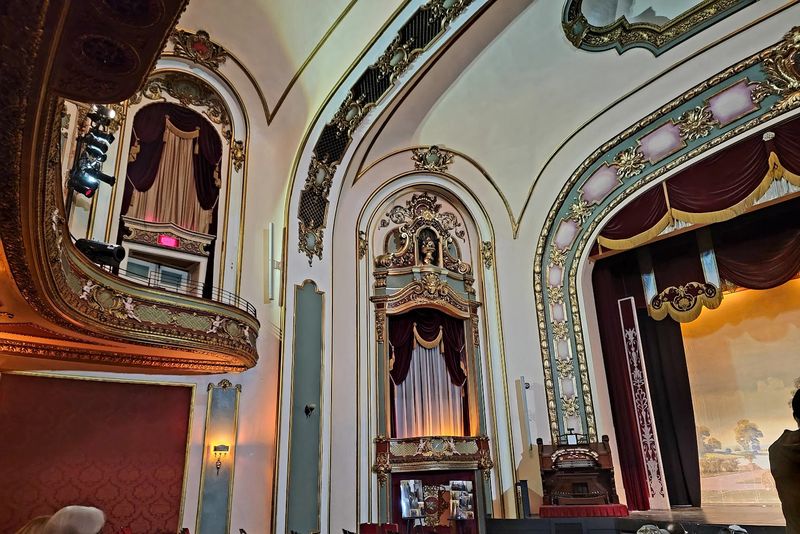
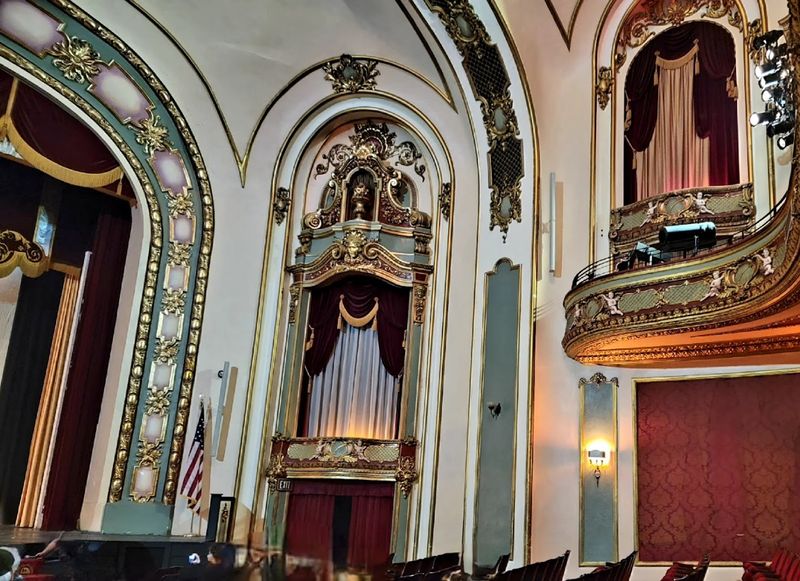
The architecture inside the Coleman Theater is the kind that makes you slow down and actually look at things. Gold-leaf accents line the walls, carved wooden panels frame the doorways, and imported silks add texture and warmth to surfaces that lesser venues would have left plain.
The ceiling above the main auditorium features elaborate plasterwork that was crafted with a precision that modern construction rarely attempts. Every decorative element was chosen deliberately, and many of the materials were brought in from other countries specifically for this project, which was not a common practice for theaters outside of New York or Los Angeles at the time.
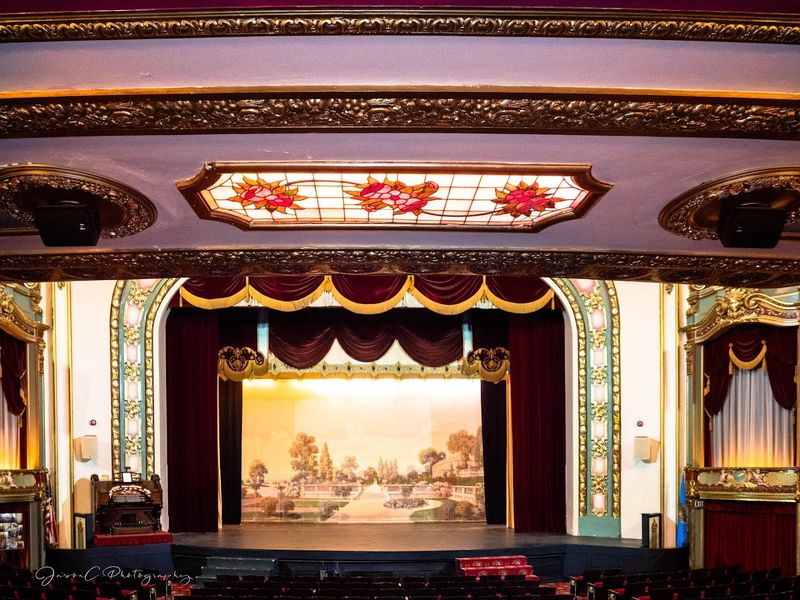
One detail that surprises most visitors is the stained glass panels beneath the balcony. They are backlit to show off their colors, and the effect is genuinely striking in a room that already has a lot competing for your attention.
The overall impression is of a space that was designed to make every person who entered feel like the evening was already special before the curtain even went up. That feeling has not faded in nearly a century of use.
The Mighty Wurlitzer Organ
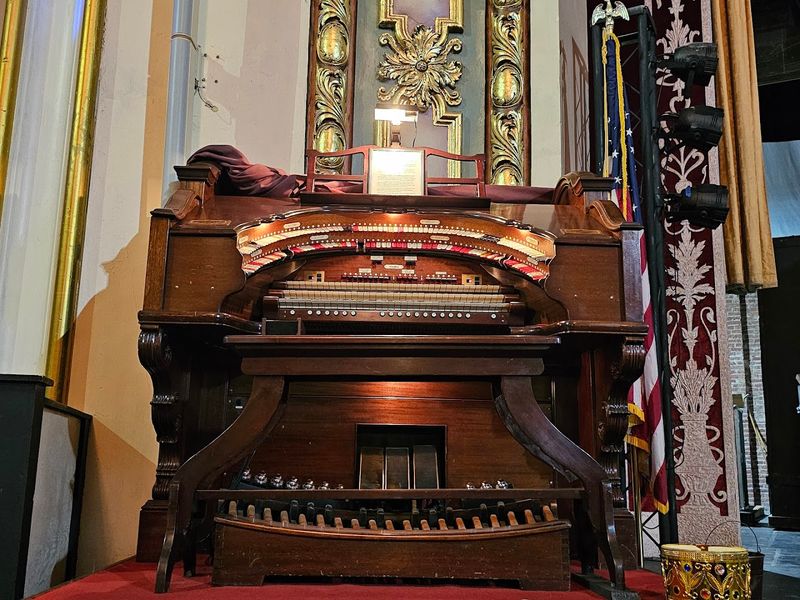
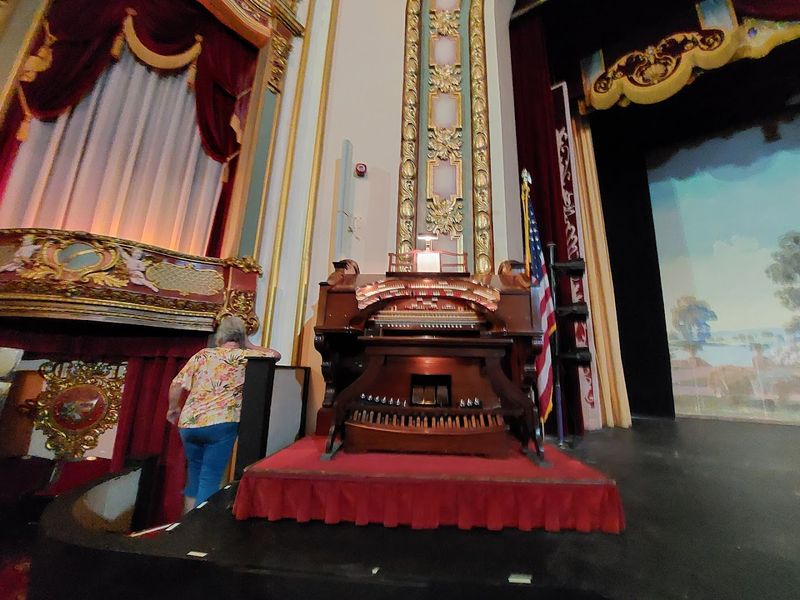
The Mighty Wurlitzer is the Coleman Theater’s most talked-about feature, and it earns that reputation every single time it plays. The organ was installed when the theater first opened, designed to accompany silent films and live performances with a range of sounds that could mimic a full orchestra.
What makes this instrument particularly special is where its pipes are hidden. Most visitors assume the decorative boxes flanking the stage are ornamental or perhaps old-fashioned box seating areas.
They are actually housing for the organ pipes, concealed behind grillwork in a design that was both practical and visually clever. The sound fills the entire auditorium with an evenness that modern speaker systems often struggle to replicate.
During guided tours, the organ is typically played for visitors, and that demonstration tends to be the moment people realize they are standing somewhere genuinely extraordinary. Silent film screenings with live organ accompaniment are also part of the theater’s programming, which gives modern audiences a direct connection to the experience of going to the movies nearly a century ago.
The Wurlitzer does not just play music; it transports the room.
Free Tours That Are Worth Every Minute
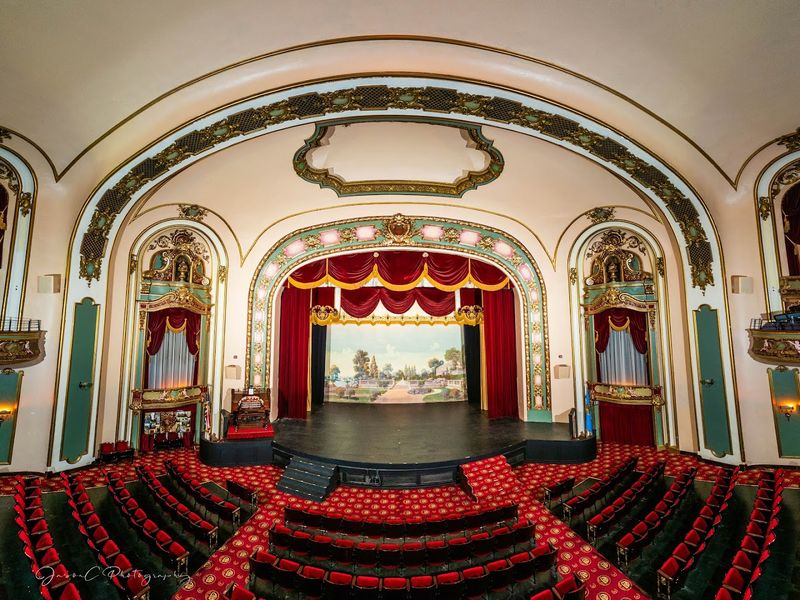
One of the best things about visiting the Coleman Theater is that the guided tours are free, though donations are warmly welcomed and genuinely helpful for a venue that runs on community support. The tours cover the full building, from the main floor to the balcony, and they include a lot of historical context that you would not pick up just by wandering around on your own.
The guides here are known for being knowledgeable, enthusiastic, and genuinely good at making history feel interesting rather than like a lecture. One tour guide named Larry has earned particular praise from travelers who said his tour ranked among the best they had ever taken anywhere, not just in Oklahoma but anywhere in the world.
The tour also includes a look at George Coleman’s personal safe, which is still on the premises and still locked. Visitors are invited to try guessing the combination, and the standing joke is that whoever cracks it will be famous.
Nobody has managed it yet, which somehow makes the safe even more appealing as a curiosity. The whole tour runs at a relaxed pace and suits visitors of all ages without feeling rushed or overly scripted.
A Route 66 Landmark Worth the Detour
The Coleman Theater holds an official spot on the Oklahoma Route 66 passport, which means road-trippers who are collecting stamps along the historic highway have a very good reason to stop in Miami. But the theater is worth a visit even for travelers who are not chasing passport stamps and just want to see something genuinely impressive.
Route 66 runs directly through downtown Miami, and the theater sits right along the corridor, making it a natural stop rather than a side trip. The surrounding area has other historic attractions as well, but the Coleman tends to be the one that people remember most vividly once they are back on the road.
Travelers coming from both coasts have noted that the theater holds its own against far more famous landmarks on the route, largely because it is still actively used and maintained rather than preserved as a static museum piece. There is something energizing about a historic building that still hosts concerts, plays, and film screenings on a regular basis.
The Coleman does not feel like a relic; it feels like a place that has simply kept its standards high for a very long time.
Live Performances That Pack the House

The Coleman Theater is not a museum that happens to have a stage. The performance calendar is active and varied, featuring musicals, theatrical plays, concerts, operas, and even silent film screenings with live organ accompaniment.
The programming reflects a genuine commitment to bringing high-quality entertainment to northeastern Oklahoma on a consistent basis.
The intimate size of the auditorium is one of its biggest performance advantages. With roughly 1,600 seats, the venue is large enough to feel grand but small enough that even seats toward the back of the balcony put you close to the action.
Performers have noted that the acoustic qualities of the space make it particularly well-suited to live music, and the sound quality during concerts has drawn consistent praise from attendees.
Past events have included classical concerts, Jim Brickman performances, and Buster Keaton silent film nights that paired perfectly with live Wurlitzer organ music. The mix of programming means there is usually something on the calendar that appeals to different tastes, and the ticket prices tend to reflect the theater’s community-first mission rather than a profit-driven model.
A night at the Coleman feels like good value from the moment the lights go down.
Community Roots Run Deep
The Coleman Theater is not just a performing arts venue; it is a community institution that has been woven into the fabric of Miami, Oklahoma for nearly a century. Locals have celebrated milestones here, attended school concerts, gone on first dates, and brought their children to see the same stage their parents once visited.
The theater has hosted high school proms, Halloween trick-or-treating events, and countless family outings that have stacked up into a deep reservoir of shared memory for longtime residents. That kind of communal attachment is rare, and it gives the Coleman a warmth that purely commercial venues rarely achieve no matter how much money goes into their renovation.
The restoration of the theater was itself a community achievement, driven by local volunteers, donors, and organizations who refused to let the building deteriorate beyond saving. That collective effort is part of what visitors feel when they walk through the doors, even if they cannot quite name it.
The Coleman belongs to the people of Miami in a way that feels genuine rather than promotional, and that sense of ownership shows up in how carefully every corner of the building is maintained and how proudly the staff talks about its history.
The Restoration Story
By the late 20th century, the Coleman Theater had fallen into a state of serious disrepair. Years of deferred maintenance, changing entertainment habits, and financial hardship had taken a toll on a building that was always expensive to operate.
The question facing Miami at that point was whether the theater could be saved or whether it would quietly disappear.
The community chose to save it. A restoration effort that spanned years and required significant funding brought the building back to a standard that rivals its original condition in many respects.
Original materials were preserved wherever possible, and craftspeople were brought in to replicate details that had been lost or damaged beyond repair.
The pipe organ, which could have easily been removed or replaced during the renovation, was instead carefully restored to working condition, which required specialized expertise that is increasingly rare. The custom carpets, the gilded trim, the imported silks, and the decorative plasterwork were all addressed with a seriousness of purpose that reflects how much the building meant to the people doing the work.
The result is a theater that feels restored rather than reconstructed, which is a meaningful distinction when you are standing inside it and trying to connect with its original spirit.
Special Details That Reward the Curious
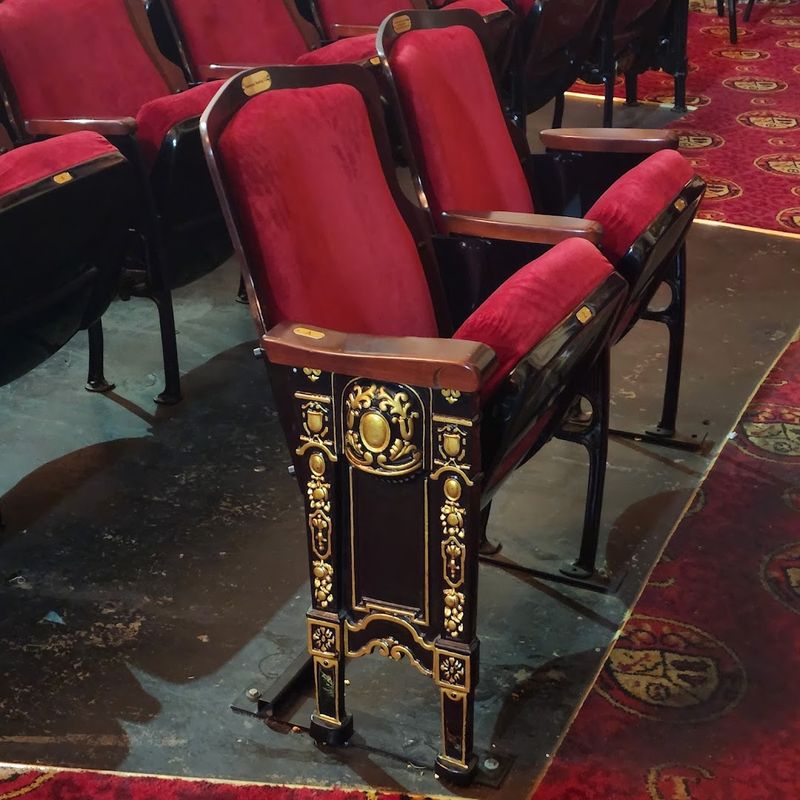
The Coleman Theater rewards visitors who pay attention to small details. Among the most quietly powerful features in the auditorium are the chairs bearing the names of delegates representing American Indian nations of the past.
The Ottawa County region has deep Native American history, and those named seats serve as a respectful acknowledgment of that heritage within a space dedicated to community and culture.
The chandelier hanging above the main floor is another detail that stops people mid-sentence. It is large enough to be dramatic but positioned in a way that feels balanced rather than overwhelming, and it contributes to the warm glow that makes the auditorium feel like a genuinely special place to spend an evening.
Then there are the smaller touches: the custom-designed carpets that echo the building’s decorative motifs, the carved woodwork around the doorways, and the way the stained glass panels beneath the balcony shift in color depending on the angle of your view. None of these elements were accidental.
The original design team thought carefully about how every surface would affect the experience of being inside the theater, and the restoration team honored those intentions with equal care. The details are the story here.
Practical Tips for Your Visit
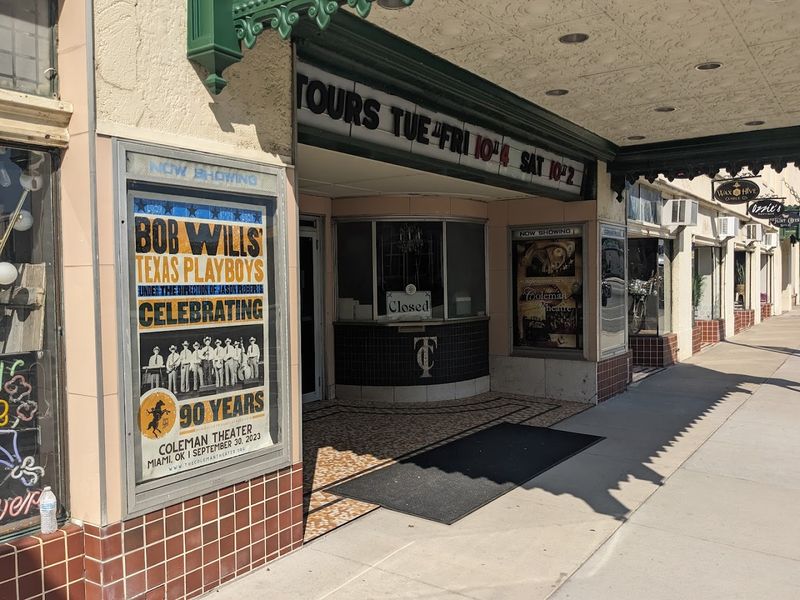
The Coleman Theater is located at 103 N Main St in Miami, Oklahoma, and can be reached by phone at 918-540-2425. The website at thecolemantheatre.org keeps an updated calendar of events and tour information, so checking it before you go is a smart move, especially if you are planning around a specific performance.
Tours are offered regularly and are free of charge, though the theater genuinely appreciates donations from visitors who want to support the ongoing maintenance and programming. The tours cover a lot of ground and typically include a live demonstration of the Wurlitzer organ, which alone makes the visit worthwhile.
A few practical notes from people who have visited: the upstairs restrooms are small and the water fixtures can be a little tricky to navigate, so keep that in mind if you are visiting with older family members. Parking in downtown Miami is generally easy to find, and the theater is accessible by foot from most spots along the main commercial strip.
The staff has a well-earned reputation for being friendly and accommodating, and the building itself is welcoming to visitors of all ages, whether you are there for a tour, a concert, or simply to see one of Oklahoma’s most beautiful historic spaces in person.
Why This Theater Stays With You
Most historic buildings earn their reputation from what they used to be. The Coleman Theater earns its reputation from what it still is, which is a fully operational, beautifully maintained performing arts venue that takes its role in the community seriously and delivers on that commitment night after night.
Visitors who stop in expecting a quick photo opportunity often end up staying for a full tour, then buying tickets to a future show before they leave the parking lot. That pattern says something real about the place.
The Coleman has a way of exceeding expectations without trying to be something it is not, and that authenticity is increasingly hard to find in any kind of public space.
The building carries nearly a century of shared experience within its walls, from the mining-boom optimism of 1929 to the community-driven restoration of recent decades, and every layer of that history is still present in some form. Whether you are a first-time visitor from out of state or a lifelong Miami resident returning for the hundredth time, the Coleman Theater has a habit of making the evening feel like it mattered.
That is a rare quality, and it is exactly why this place deserves a spot on any Oklahoma travel list worth taking seriously.



