 Unearth The Voyage
There is a small town in the far western corner of Oklahoma where you can stand next to a life-sized dinosaur, then walk inside and learn about one of the most heartbreaking environmental events in American history, and then trace the footsteps of frontier traders along a legendary trail, all in the same afternoon. Boise City is not the kind of place most road-trippers put at the top of their list, but the Cimarron Heritage Center has a way of surprising people who wander in.
The building looks modest from the outside, but the stories packed inside span millions of years. Plan to stay longer than you think you need to, because this place earns every minute.
Finding the Place: Address, Hours, and First Impressions
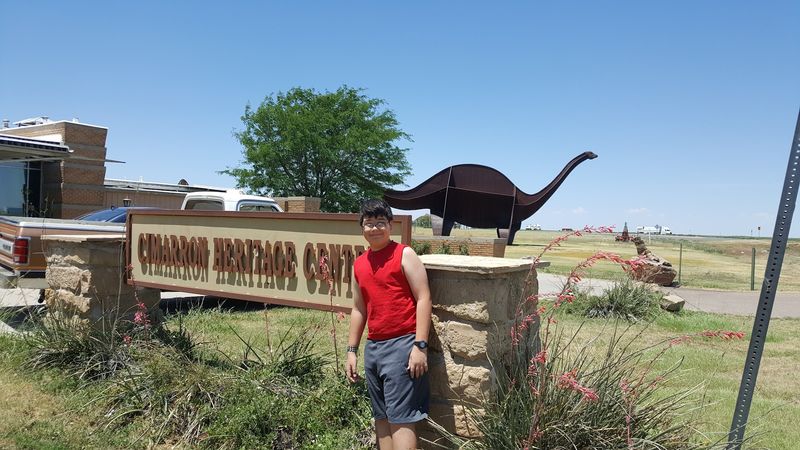
The Cimarron Heritage Center sits at 1300 N Cimarron Ave, Boise City, OK 73933, right in the heart of Cimarron County, the westernmost tip of the Oklahoma Panhandle. The drive in already tells you something about this region: flat, wide-open land stretching to the horizon in every direction, with the kind of sky that makes you feel very small in the best possible way.
From the road, you might spot the large dinosaur sculpture out front before you even read the sign, and that first glimpse sets the tone perfectly. The museum is open Monday through Saturday from 10 AM to 4 PM and is closed on Sundays, so plan your visit accordingly.
Admission is free, though donations are warmly welcomed and genuinely appreciated by the staff who keep this place running. The phone number is +1 580-544-3479 if you want to call ahead, and the website at chcmuseumok.com has additional details.
Arriving early gives you enough time to explore both the indoor exhibits and the sprawling outdoor grounds without feeling rushed at closing time.
The Architecture: A Frank Lloyd Wright Student Built This
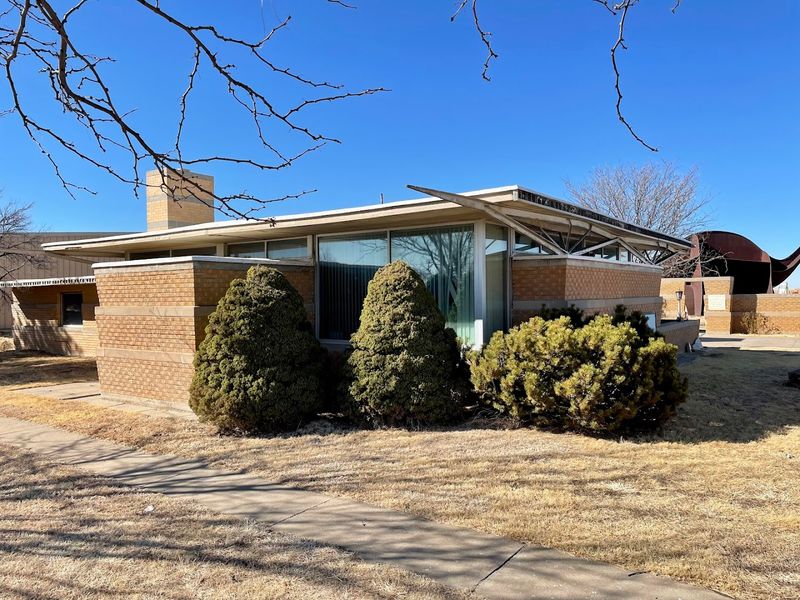
Before a single exhibit catches your eye, the building itself deserves a moment of appreciation. The Cox House, the original structure that anchors the Cimarron Heritage Center, was designed by a student of the legendary architect Frank Lloyd Wright, and the influence shows in every horizontal line and natural material choice throughout the space.
Wright’s philosophy centered on blending buildings with their surroundings rather than imposing on them, and the Cox House carries that spirit quietly but clearly. The low roofline, the way light moves through the windows, and the organic feel of the interior all reflect a design tradition that most people associate with far larger, more famous buildings.
Finding architecture with that kind of pedigree in a small panhandle town is the kind of discovery that makes regional travel so rewarding. The house feels personal and lived-in rather than sterile, which makes it an ideal setting for a museum focused on the human stories of this corner of Oklahoma.
It is a detail that most visitors mention with genuine surprise, and rightfully so.
Dinosaurs on the Panhandle: The Cimarronasaurus and Fossil Displays
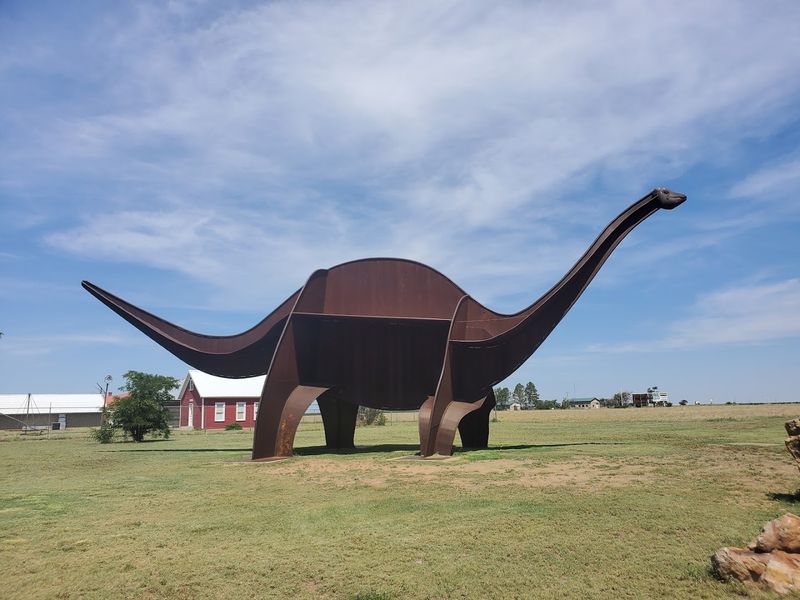
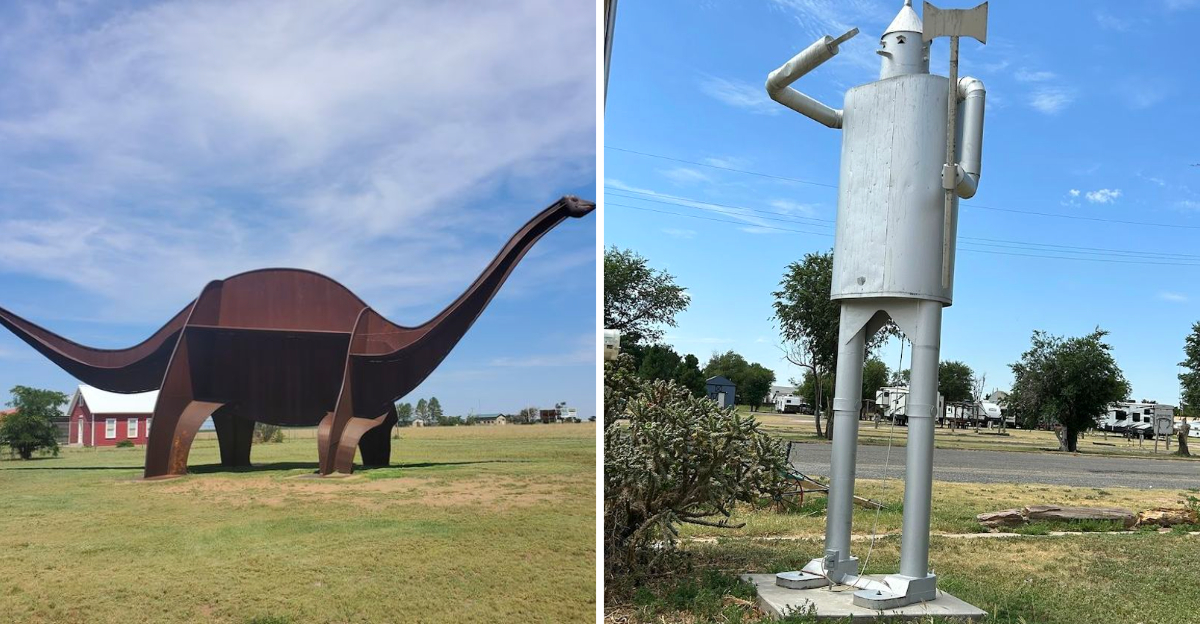
Out front, a creature called the Cimarronasaurus greets every visitor before they even reach the door, and it is impossible to walk past without stopping for a look. This is not a generic plastic dinosaur slapped in a parking lot for decoration; it is a nod to the genuine prehistoric history of the Cimarron County region, where fossils and ancient geological features tell a story that goes back long before any human ever set foot on the panhandle.
Inside, the dinosaur and fossil displays give context to that outdoor sculpture, walking visitors through what life looked like in this part of North America millions of years ago. The exhibits are presented in a way that works for kids and curious adults equally, with clear explanations that do not talk down to anyone.
Families traveling with younger children tend to light up at this section, and the interactive areas designed specifically for kids make it easy for little ones to engage rather than just observe. The Cimarronasaurus outside has become something of an unofficial mascot for the museum, and honestly, it earns that title every single day.
Dust Bowl Exhibits: When the Sky Turned Black
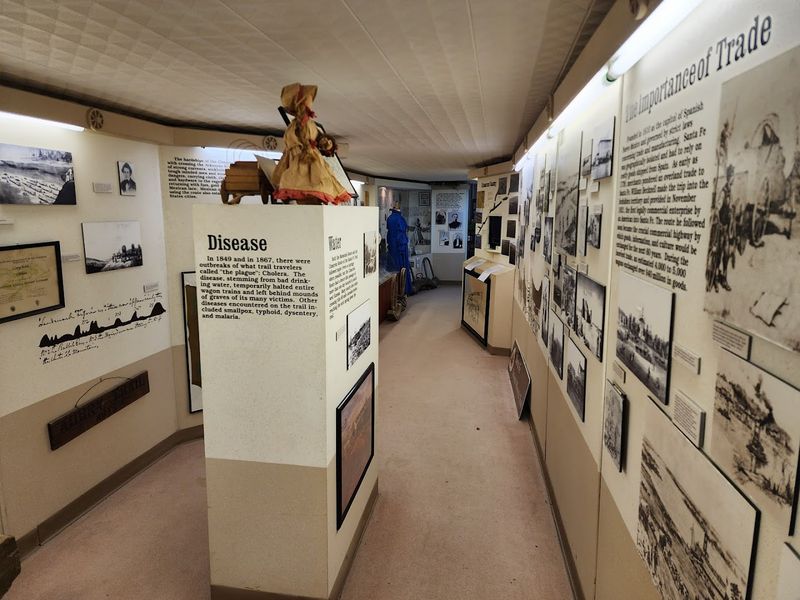
Few chapters in American history hit as hard as the Dust Bowl, and Boise City was ground zero for some of the worst of it. Cimarron County sat squarely in the region that journalists eventually called the Dirty Thirties, and the Cimarron Heritage Center treats that history with the seriousness and sensitivity it deserves.
The Dust Bowl displays include vintage photographs that show what the massive dust storms, known as black blizzards, actually looked like bearing down on farms and towns. Seeing those images in the very region where they were taken adds a weight that no textbook can fully replicate.
Period artifacts, personal stories, and detailed panels explain how years of drought combined with poor farming practices stripped the land bare and forced thousands of families to abandon everything they had built. The exhibits do not sensationalize the suffering; instead, they document it carefully and honestly, giving visitors a real sense of what resilience looked like during one of the hardest eras in Oklahoma history.
You leave this section quieter than you entered it, and that feels exactly right.
The Santa Fe Trail and the Cimarron Cutoff
Long before paved roads and GPS, traders and explorers crossed this part of the country on the Santa Fe Trail, and the Cimarron Cutoff ran directly through what is now Cimarron County. This alternate route was shorter but far more dangerous than the main trail, crossing dry stretches of land where water was scarce and the terrain was unforgiving.
The Santa Fe Trail exhibit at the Cimarron Heritage Center is one of the strongest sections in the entire museum. Historical maps, wagon artifacts, and detailed panels trace the route and explain how the Cimarron Cutoff functioned as both a lifeline and a gamble for the traders who chose it.
There is something grounding about standing in a museum that sits almost on top of the very trail it is describing. The exhibit captures the ambition and danger of westward trade in a way that feels immediate rather than distant.
For history enthusiasts, this section alone is worth the detour to Boise City, and the depth of research behind the displays reflects a genuine curatorial commitment to getting the story right. The trail shaped this region profoundly, and the museum honors that legacy well.
Military Memorabilia: Honoring Local Service
Tucked among the other exhibits is a military display that has drawn consistent praise from visitors, and it is easy to understand why. The collection covers multiple eras of American military history, with a particular focus on the men and women from Cimarron County who served their country during times of conflict.
Uniforms, medals, personal letters, photographs, and equipment are arranged with clear labels and thoughtful context. The display does not glorify conflict; instead, it honors the individuals behind the service records, giving faces and stories to names that might otherwise remain abstract.
For veterans or families with military backgrounds, this section tends to carry a strong personal resonance. The artifacts feel carefully preserved rather than casually collected, and the overall presentation reflects genuine respect for the subjects.
Small regional museums like this one often house military collections that larger institutions overlook, and the Cimarron Heritage Center is a good example of that pattern done right. The detail and care invested in this exhibit make it one of the more emotionally engaging stops in the entire building, and visitors consistently mention it as a highlight worth extra time.
Ranching, Quilting, and Everyday Life on the Panhandle
Not every story worth telling involves battles or natural disasters. Some of the most compelling exhibits at the Cimarron Heritage Center focus on the texture of ordinary daily life in the Oklahoma Panhandle across the past century and a half.
The ranching displays show the tools, gear, and practices that defined the cattle industry in this region, from branding irons to saddle equipment, presented with enough context that even visitors with no ranching background can follow the story easily. The quilting collection is equally impressive, featuring handmade textiles that represent both practical craft and genuine artistry.
These everyday objects carry a quiet power that is hard to articulate but easy to feel. A quilt made by a homesteader during the 1920s tells you something about patience, creativity, and determination that no paragraph of text can fully capture.
The domestic and agricultural displays together paint a picture of a community that built something real and lasting out of very difficult circumstances, and that story deserves to be told just as much as the dramatic chapters that tend to get more attention in history books.
The Back Building: Where the Collection Really Expands
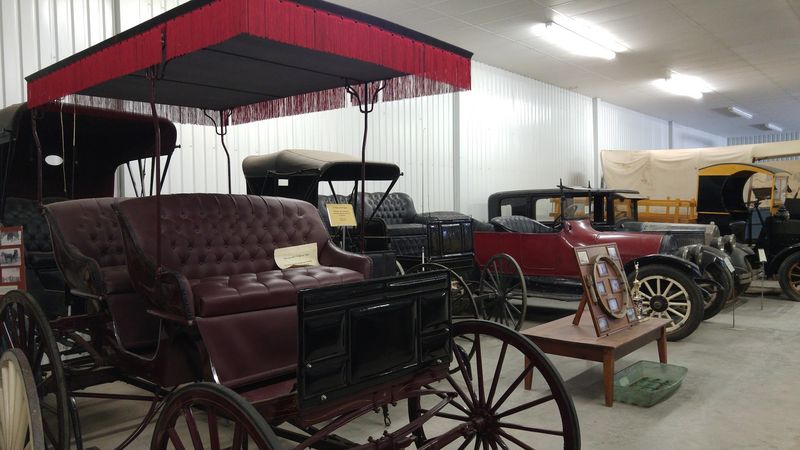
First-time visitors almost always underestimate the size of the Cimarron Heritage Center, and the back metal building is the main reason for that pleasant surprise. What looks like a modest historic home from the parking lot is actually the front door to a much larger complex, and the rear exhibition space is where the collection really opens up.
The building holds an extensive range of artifacts spanning roughly the last hundred years, with sections dedicated to farming equipment, home goods, textiles, tools, and a variety of other objects that document how life changed in Cimarron County across different generations.
The layout is spacious enough to move through comfortably without feeling crowded, and the sheer volume of items on display means that repeat visitors often notice things they missed the first time around. Several visitors have reported spending ninety minutes to three hours inside and still not seeing everything thoroughly.
That kind of depth is genuinely rare for a museum in a town of this size, and it reflects decades of dedicated collecting and curation by people who clearly care deeply about preserving this corner of Oklahoma’s history. Give yourself the time the place deserves.
The Outdoor Grounds: More to Explore Beyond the Walls
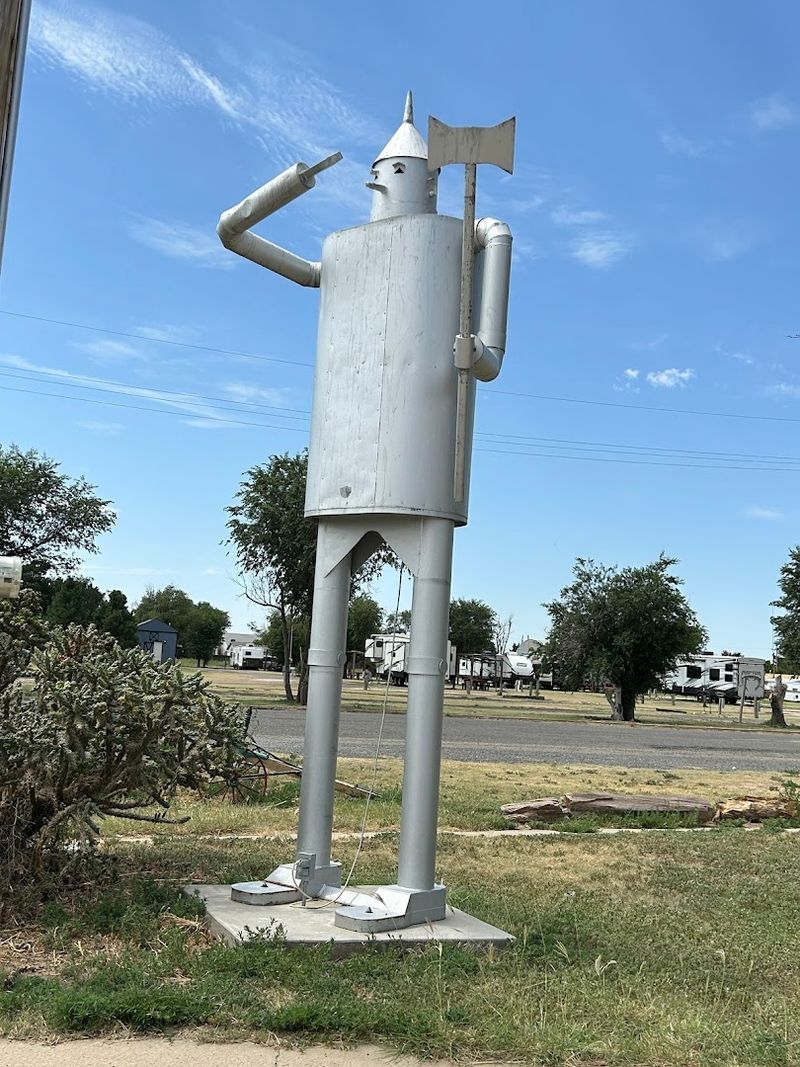
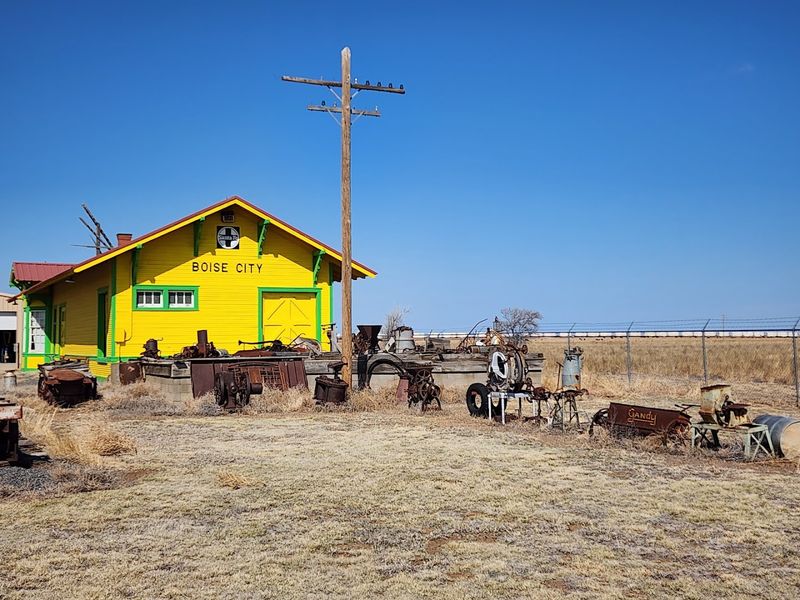
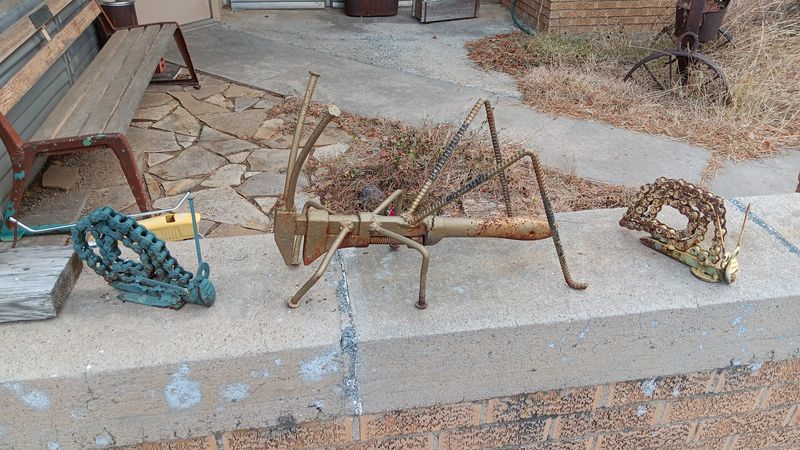
The indoor exhibits are only part of what the Cimarron Heritage Center has to offer. The outdoor grounds stretch across approximately four to five acres and are filled with large-scale objects that simply would not fit inside any building, including vintage farm equipment, sculptures, and various artifacts arranged throughout the yard.
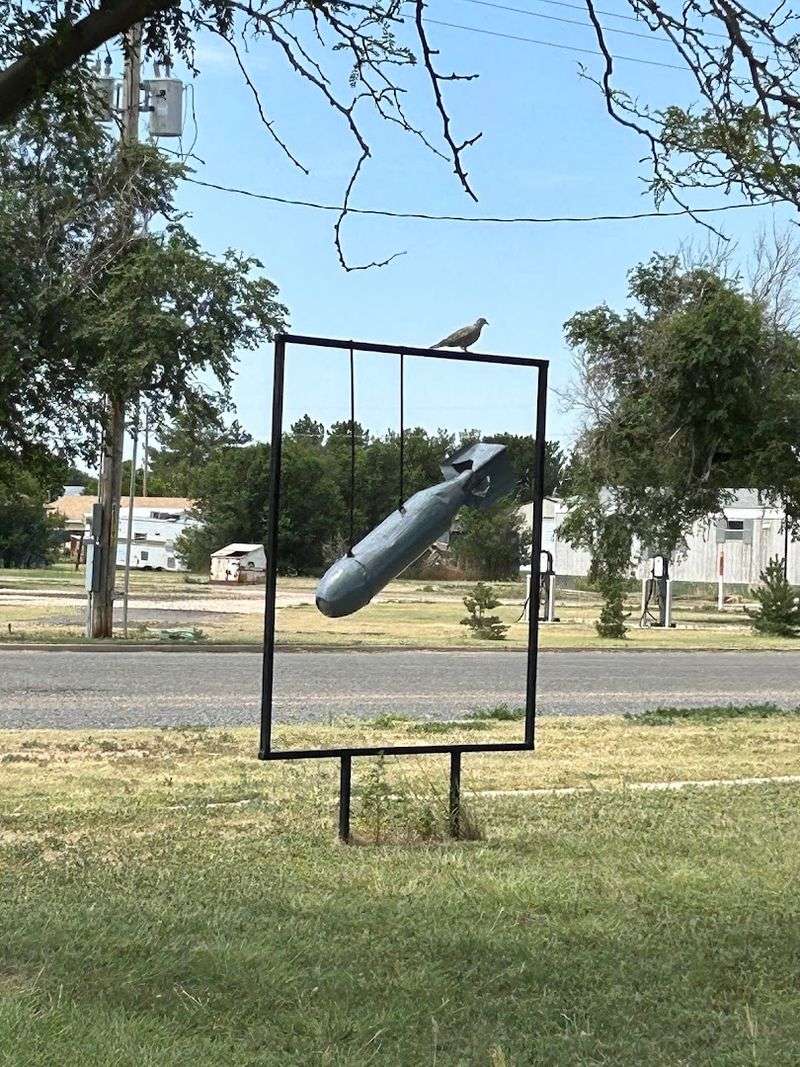
The tin man sculpture near the entrance area has become a recognizable landmark for road-trippers passing through on the highway, and the combination of the dinosaur, the tin man, and a vintage bomb display gives the exterior a genuinely eclectic personality that makes for memorable photographs.
Even on days when the museum is closed, the grounds are worth a walk-through for anyone passing by on a road trip. The outdoor space has a relaxed, exploratory quality that encourages wandering rather than following a set path.
There is also a park across the street where kids can run around after the museum visit, which makes the whole stop work well for families. The outdoor component alone adds significant value to a visit that already delivers a lot for free.
Vintage Medical and Professional Displays: Dentists, Doctors, and More
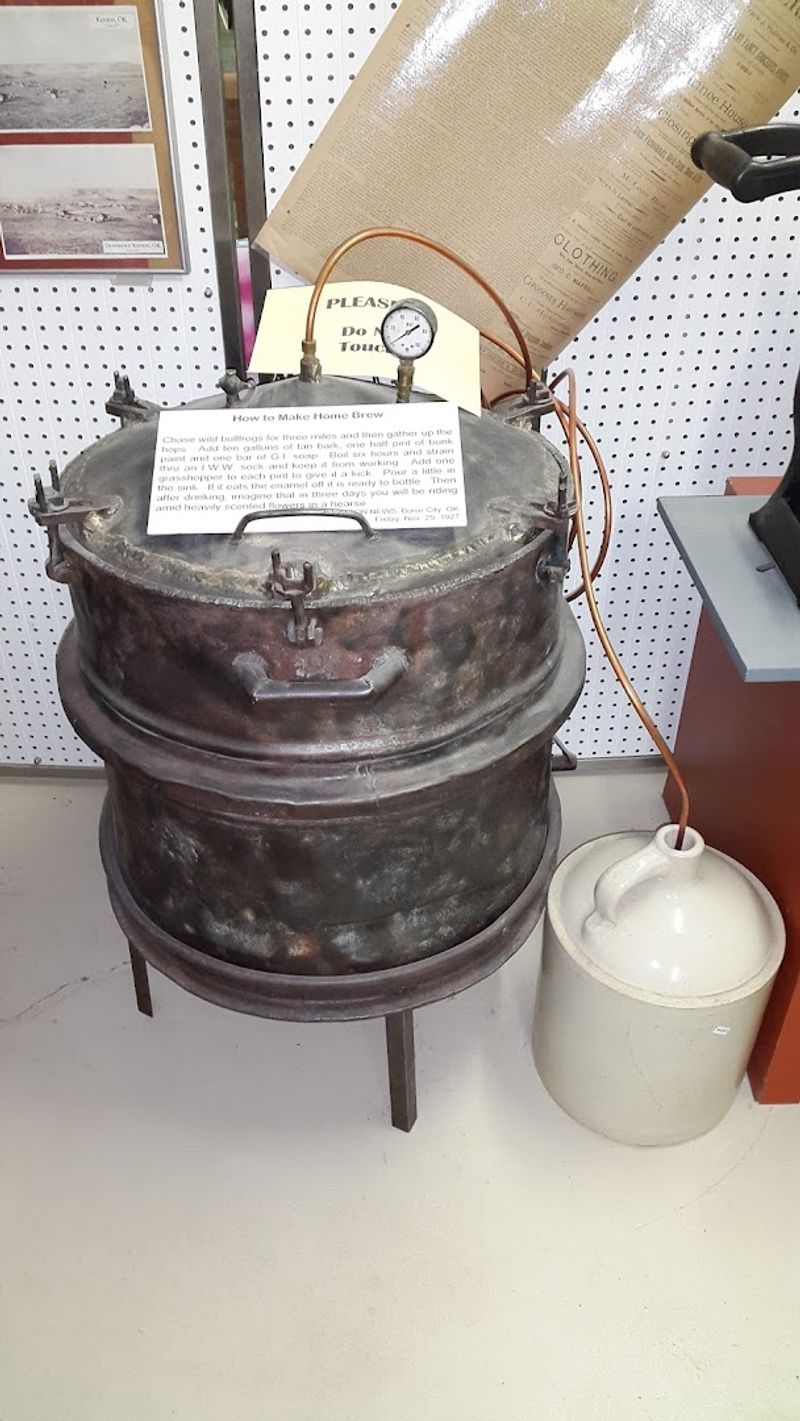
One of the more unexpected delights tucked inside the Cimarron Heritage Center is a collection of vintage professional displays, including re-created dentist and doctor office settings that pull you straight back into the early decades of the twentieth century. The equipment alone is enough to make modern visitors genuinely grateful for contemporary medicine.
Antique dental chairs, medical instruments, apothecary bottles, and period furnishings fill these sections with an atmosphere that is equal parts fascinating and slightly unsettling in the most educational way possible. The displays are detailed enough to give a real sense of what a professional visit would have looked and felt like for a Panhandle resident a hundred years ago.
This kind of exhibit works particularly well in a regional museum context because it grounds the history in personal experience rather than broad policy or large-scale events. Most people can relate to a trip to the dentist, which makes the historical distance feel much smaller.
The collection reflects a wide curatorial vision that goes beyond the obvious topics and rewards visitors who take the time to wander through every corner of the building rather than rushing past the displays that seem less immediately dramatic.
Staff and Community Spirit: The Heart Behind the Museum
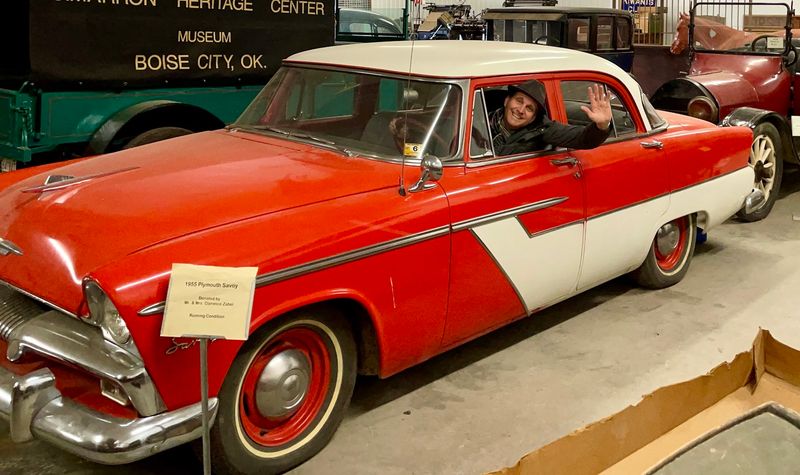
A museum is only as good as the people who bring it to life, and the Cimarron Heritage Center has a reputation for staff who genuinely enjoy sharing what they know. The team, often a small group of dedicated local individuals, brings real personal connection to the history on display, and that enthusiasm is contagious in the best possible way.
Visitors have noted that the staff are happy to share local stories, answer questions, and point out exhibits that might otherwise be overlooked. There is no scripted tour-guide energy here; conversations feel natural and unforced, more like talking to a knowledgeable neighbor than attending a lecture.
One staff member was even known to bring her dog to work on occasion, which adds a layer of warmth that no exhibit design can manufacture. The gift shop carries locally made items, including handcrafted goods like crocheted dinosaurs made by the staff themselves, which are the kind of souvenir you actually want to keep.
The community spirit woven through every aspect of the Cimarron Heritage Center is ultimately what transforms a collection of objects into a living, breathing institution worth going out of your way to visit.
Planning Your Visit: Tips for Getting the Most Out of the Stop
A few practical notes can make the difference between a rushed glance and a genuinely satisfying visit. The museum is open Monday through Saturday from 10 AM to 4 PM and is closed on Sundays, so checking the day of the week before you arrive is worth the thirty seconds it takes.
Most visitors who felt satisfied with their experience spent at least ninety minutes to two hours inside, and those who wanted to see everything, including the outdoor grounds, needed closer to three hours. Arriving at least two hours before closing gives a reasonable buffer without feeling frantic.
Admission is free, which makes this one of the best value stops on any Oklahoma Panhandle road trip by a significant margin. Donations are accepted and go directly toward maintaining the collection and keeping the doors open, so leaving something in the donation box is a genuinely good use of a few dollars.
The museum sits right off the highway in Boise City, making it an easy and logical stop for anyone driving through the western Oklahoma Panhandle. A visit here rewards curiosity, punishes rushing, and leaves most people wishing they had arrived even earlier in the day.



