 Unearth The Voyage
There is a spot in southwestern Oklahoma where the water stretches out wide, longhorn cattle graze nearby, and you might have the whole overlook to yourself. No crowds, no noise, just the kind of quiet that actually makes you stop and breathe.
The Lake Jed Johnson Dam Observation area sits inside the Wichita Mountains Wildlife Refuge, and it rewards anyone willing to make the short trip. Whether you come for the views, the wildlife, or simply a place to reset, this overlook delivers something that feels genuinely rare in today’s busy world.
Read on, because every section of this article reveals a different reason why this place keeps earning five-star reviews from people who stumble upon it.
Where Exactly You Will Find This Overlook
The Lake Jed Johnson Dam Observation area is tucked inside the Wichita Mountains Wildlife Refuge, near Lawton, Oklahoma 73507, a city in Comanche County in the southwestern part of the state. The refuge itself is managed by the U.S.
Fish and Wildlife Service, and the dam observation point sits along one of its scenic interior roads.
Getting there does not require any special gear or a long drive on unmarked roads. The refuge entrance is well-signed from nearby highways, and once you are inside, the route to the dam observation area is straightforward enough that most visitors find it on their first try.
The coordinates place it at approximately 34.7266834 latitude and -98.5986686 longitude, which puts it comfortably within the heart of the refuge. Parking near the overlook is simple, and the area is open 24 hours a day, every day of the week.
That around-the-clock access means sunrise chasers and sunset lovers both get an equal shot at the best light the lake has to offer.
The Story Behind Lake Jed Johnson
Lake Jed Johnson carries a name with real historical weight. Jed Johnson Sr. was a U.S.
Congressman from Oklahoma who served during the early and mid-twentieth century and was a strong supporter of conservation efforts in the region. The lake was named in his honor as a tribute to his work in helping preserve the Wichita Mountains area for future generations.
The Wichita Mountains Wildlife Refuge itself was established in 1901, making it one of the oldest managed wildlife refuges in the entire United States. The dam that created Lake Jed Johnson was built as part of water management efforts within the refuge, and over time the area around it grew into one of the most visited natural spots in Oklahoma.
Knowing that history adds a quiet layer of meaning to the visit. You are not just looking at a pretty lake.
You are standing on ground that people fought to protect more than a century ago, and the fact that it remains this peaceful today is proof that those efforts paid off in a lasting way.
What the View Actually Looks Like From the Top
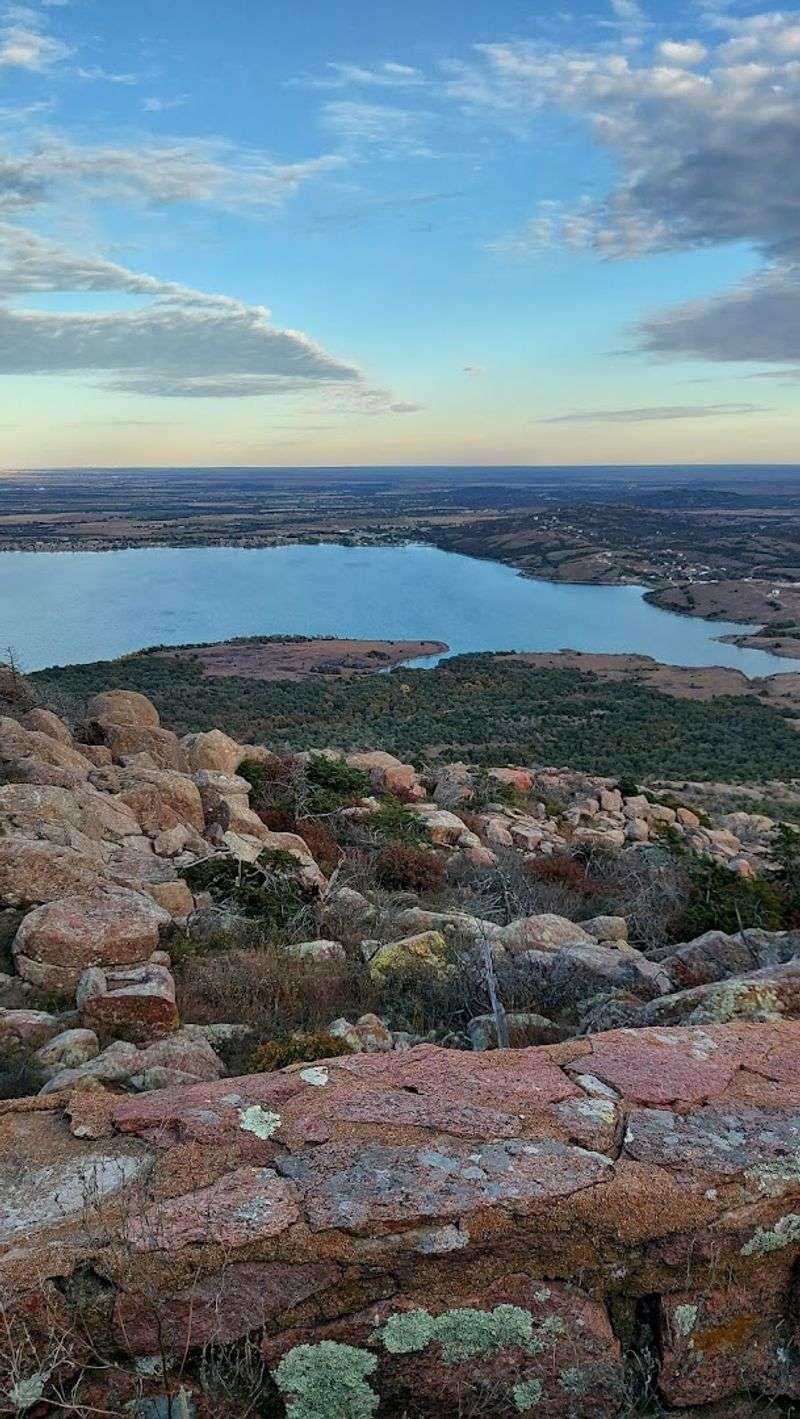
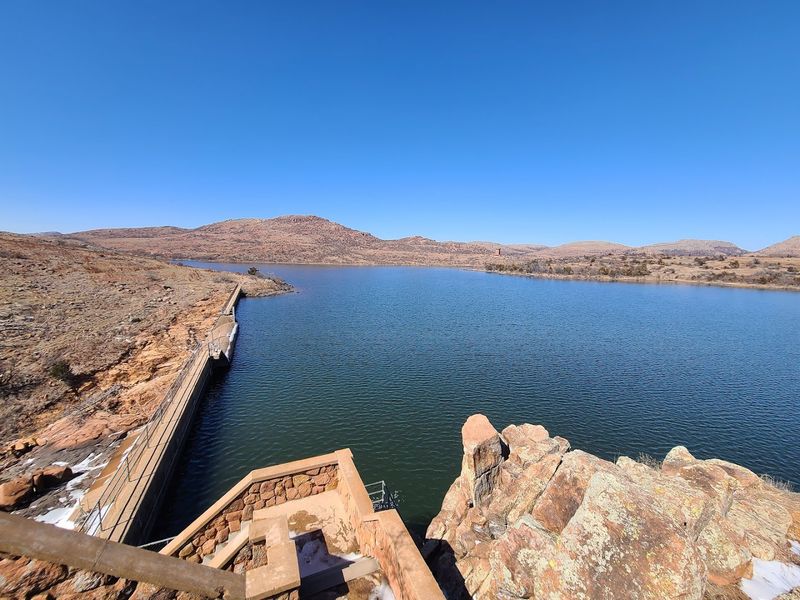
The view from the dam observation area is the kind that stops you mid-sentence. The lake spreads out below in a wide, calm sheet of water, and the Wichita Mountains frame the background with their rounded granite peaks and rust-colored ridgelines.
The combination of water and rock gives the landscape a texture that feels almost cinematic without trying.
From the upper vantage point, you can see across the entire surface of Lake Jed Johnson, and on a calm day the reflections on the water are sharp enough to make you look twice. The stairs leading down toward the spillway give you a closer angle, and both levels offer completely different photo compositions.
The overlook does not require any hiking fitness level to enjoy. A short walk from the parking area brings you to the main viewing spot, and the stairs down to the lower level are manageable for most people.
The whole experience of standing there and taking it all in lasts about as long as you want it to, which is exactly how it should be.
Wildlife That Shows Up Without Warning
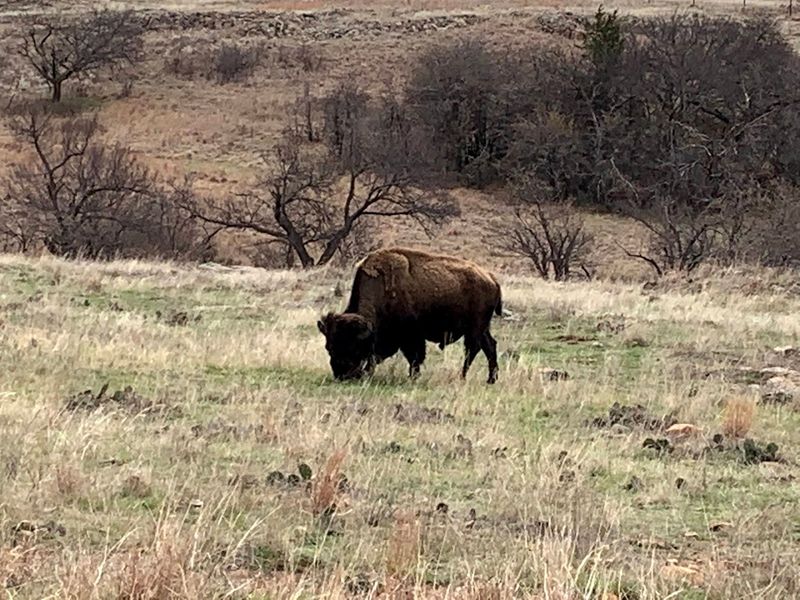
The wildlife at this spot is not something you have to go searching for. On my visit, longhorn cattle were grazing casually along the road before I even reached the dam, completely unbothered by passing cars.
White-tailed deer appeared near the tree line close to the water, and the whole scene felt more like a nature documentary than a roadside stop.
The Wichita Mountains Wildlife Refuge is home to one of the oldest publicly owned bison herds in North America. Spotting bison near the lake area is entirely possible, especially in the early morning or late afternoon when they tend to move toward water.
The refuge also supports populations of elk, prairie dogs, wild turkey, and various bird species that birders genuinely travel long distances to see.
The animals move freely throughout the refuge, so encounters happen organically rather than at designated viewing stations. That unpredictability is part of what makes the visit feel real.
You are not watching wildlife through a fence. You are sharing the same open landscape with creatures that have called this Oklahoma land home for generations.
The Dam Itself and the Famous Rock Nearby
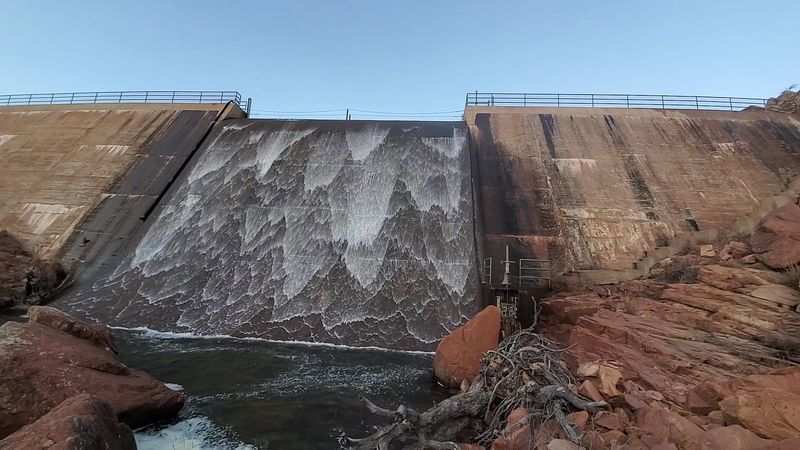
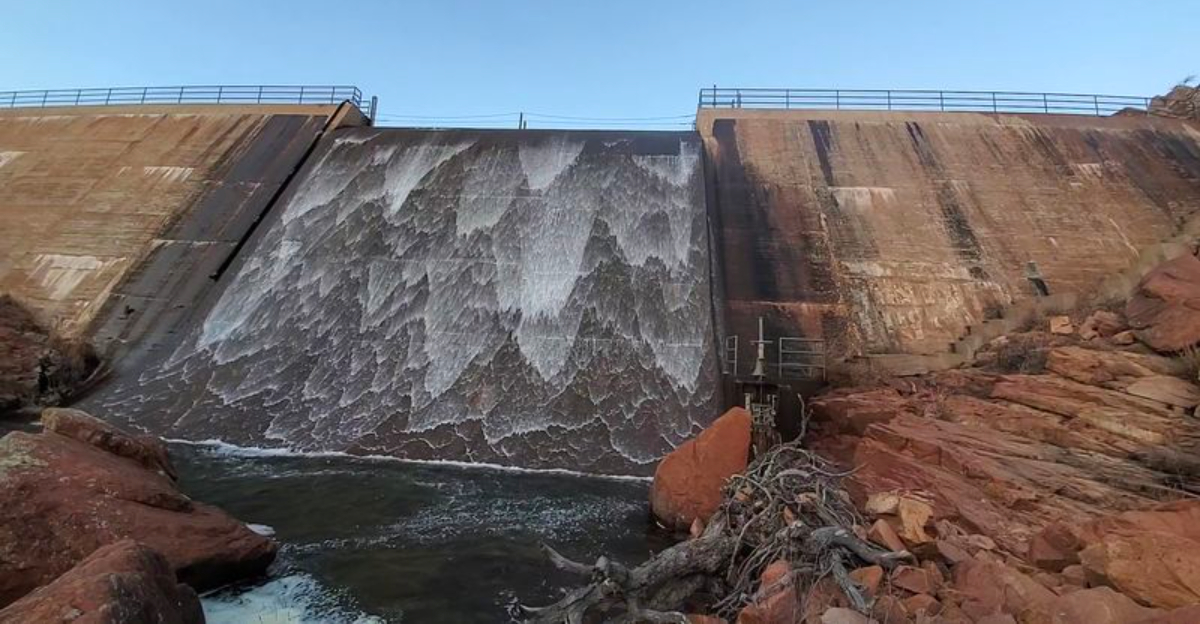
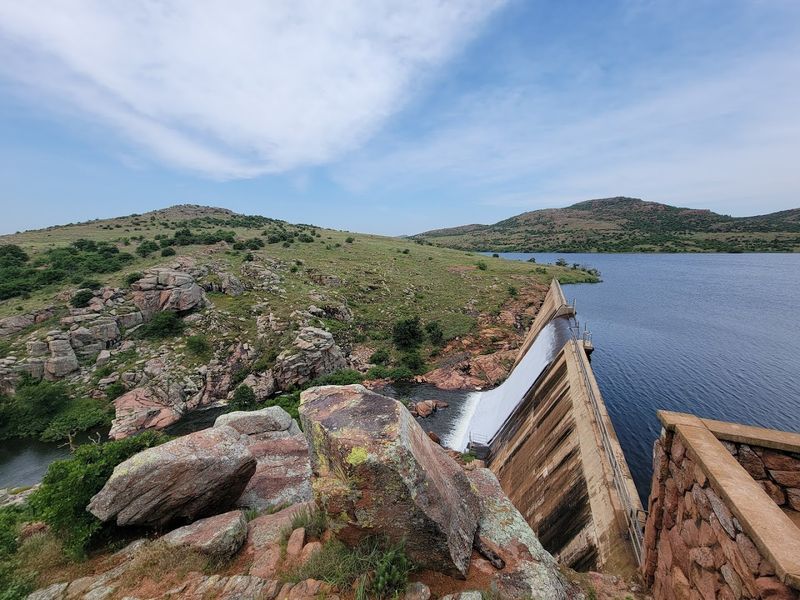
The dam structure at Lake Jed Johnson is worth more than a glance from above. A walkable path takes you across the top of the dam, giving you a direct view of the spillway and the rocky terrain below.
The engineering is not flashy, but it sits naturally within the landscape in a way that feels intentional rather than industrial.
One detail that gets mentioned with genuine amusement among visitors is a specific boulder near the dam that has earned the nickname the “butt cheek” rock due to its unmistakable natural shape. Families with kids find it particularly entertaining, and it has become an unofficial landmark that makes the dam walk feel a little more playful than your average infrastructure tour.
Beyond the humor, the geology around the spillway is genuinely interesting. The exposed granite formations are ancient, and the way water has carved channels through the rock over decades creates natural patterns that photographers love.
The lower viewing area near the spillway puts you close enough to hear the water moving, which adds a whole sensory layer to what is already a strong visual experience.
Why This Place Stays So Uncrowded
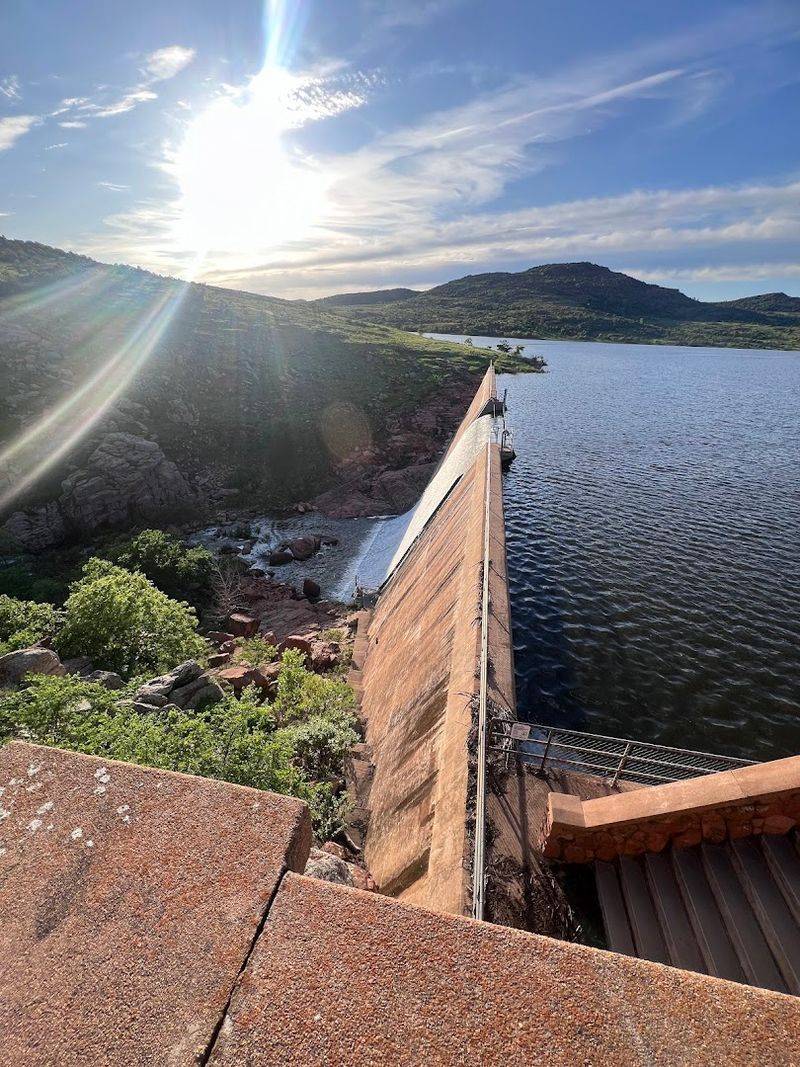
One of the most consistent things visitors mention about this overlook is how few other people are ever there. For a spot with views this strong and access this easy, the low foot traffic is almost puzzling at first.
The answer likely comes down to location awareness. Most people driving through southwestern Oklahoma focus on the more publicized stops within the Wichita Mountains, like Mount Scott or the prairie dog town near the visitor center.
Lake Jed Johnson Dam Observation sits a little off the main tourist circuit, which works entirely in its favor. The people who find it tend to be locals, refuge regulars, or curious travelers who looked at the map a little more carefully than most.
That self-selecting crowd tends to be respectful and quiet, which keeps the atmosphere calm even on weekends.
The 24-hour access also spreads visitors across more hours of the day rather than concentrating them all at peak times. Early morning visits in particular feel almost private.
The light is softer, the animals are more active, and the silence is the kind that actually registers in your body as relaxation rather than just an absence of sound.
Fishing, Paddling, and Water Activities on the Lake
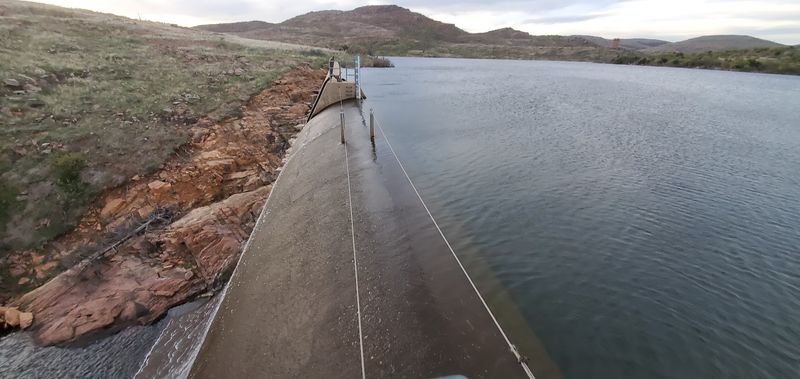
The lake itself is not just a backdrop. Fishing from the dam and the shoreline is a real activity here, and the water holds enough vegetation to make it interesting for anglers willing to work around the natural growth.
Early morning fishing sessions on this lake have a particular quality to them, with the mist still sitting on the water and the hills just beginning to catch the first light.
Stand-up paddleboarding has also become a popular way to experience the lake. The calm surface on most mornings makes it ideal for anyone who wants to move quietly across the water without a motor.
The surrounding landscape looks completely different from water level, and the granite formations along the shoreline take on a new scale when you are floating next to them rather than looking down from above.
Boating is another option, with a launch area available for those who bring their own watercraft. The lake is not enormous, but its size is actually part of the appeal.
You can cover it comfortably in a few hours and feel like you have genuinely explored the whole thing rather than just scratched the surface of a much larger body of water.
Sunrise and Sunset at the Overlook
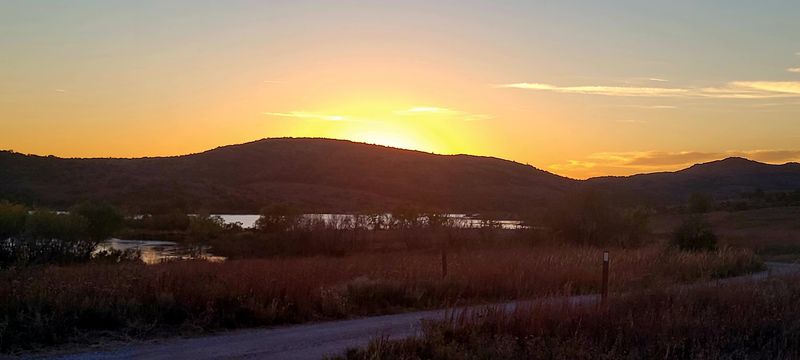
The overlook earns its best reviews during the golden hours, and that reputation is well deserved. Sunset at Lake Jed Johnson turns the water into a mirror of orange and pink, and the Wichita Mountains in the background absorb the warm light in a way that makes every photograph look like it had a filter applied.
It did not.
Sunrise is equally compelling but draws even fewer visitors, which means you often have the entire overlook to yourself as the sky shifts from deep blue to pale gold. The stillness at that hour is extraordinary, and the wildlife tends to be more active, with deer moving near the water and birds calling from the tree line across the lake.
The 24-hour access policy makes both experiences fully available without any scheduling stress. You do not need a permit or a reservation to show up at dawn.
You just show up, find a spot along the railing or on the dam walkway, and let the light do what it does. Sunsets here have a way of making people linger far longer than they originally planned, which feels like a perfectly reasonable outcome.
Tips for Making the Most of Your Visit
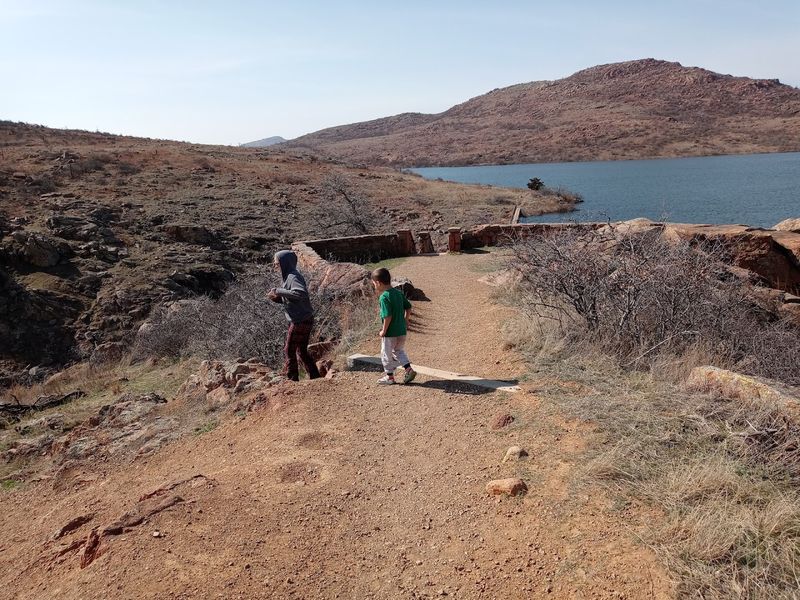
A few practical notes can make the difference between a good visit and a great one. The stairs leading down to the lower viewing platform near the spillway are worth taking, even if you are only planning a short stop.
The lower angle completely changes the perspective and gives you access to some of the best photography spots on the whole dam structure.
Comfortable walking shoes are enough for this stop. The terrain near the overlook is not rugged, and the paved or packed-surface paths are manageable for most ages and fitness levels.
Families with young children and older visitors both navigate this area without trouble, which makes it genuinely accessible rather than just described that way.
Bringing water, snacks, and a camera with extra battery life are the three things most people wish they had more of after visiting. Cell service can be inconsistent inside the refuge, so downloading an offline map before you arrive is a smart move.
The refuge website at fws.gov/refuge/Wichita_Mountains has current information on road conditions and any seasonal closures that might affect your route to the dam observation area.
A Final Word on Why This Spot Stays With You
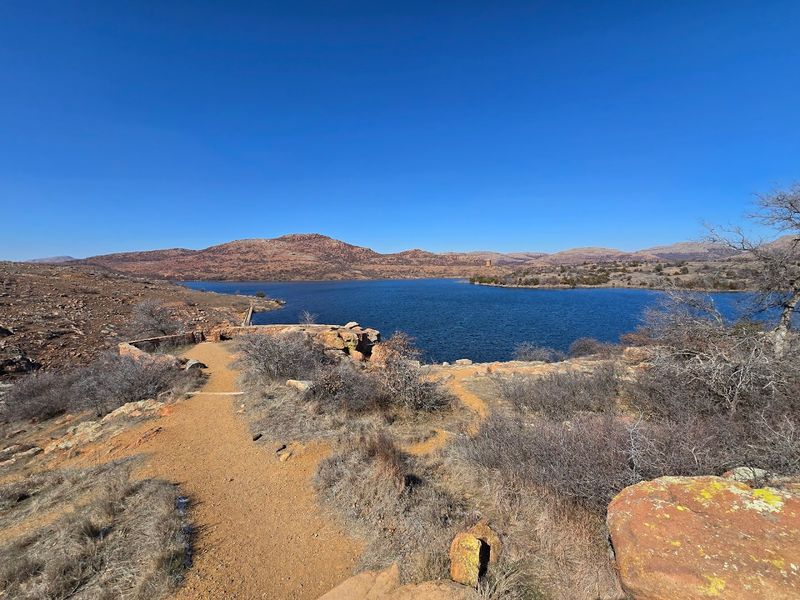
Some places are beautiful and forgettable. Lake Jed Johnson Dam Observation is not that kind of place.
The combination of open water, ancient granite, free-roaming wildlife, and genuine solitude creates an experience that sits in your memory differently than a typical tourist stop. It does not try to impress you with infrastructure or amenities.
It just exists, quietly and confidently, and lets the landscape do the work.
Oklahoma has no shortage of natural beauty, but this overlook represents something specific. It is the kind of discovery that makes you feel like you found something most people drove right past, and that feeling of being in on a quiet secret is part of what makes the visit so satisfying.
The reviews from visitors consistently reflect the same sentiment, that this is a place worth returning to across different seasons and different times of day. Whether you are a first-time visitor to the Wichita Mountains or someone who has been coming to this part of Oklahoma for years, the dam observation area at Lake Jed Johnson has a way of reminding you that the best outdoor experiences rarely require a long checklist to pull off right.



