 Unearth The Voyage
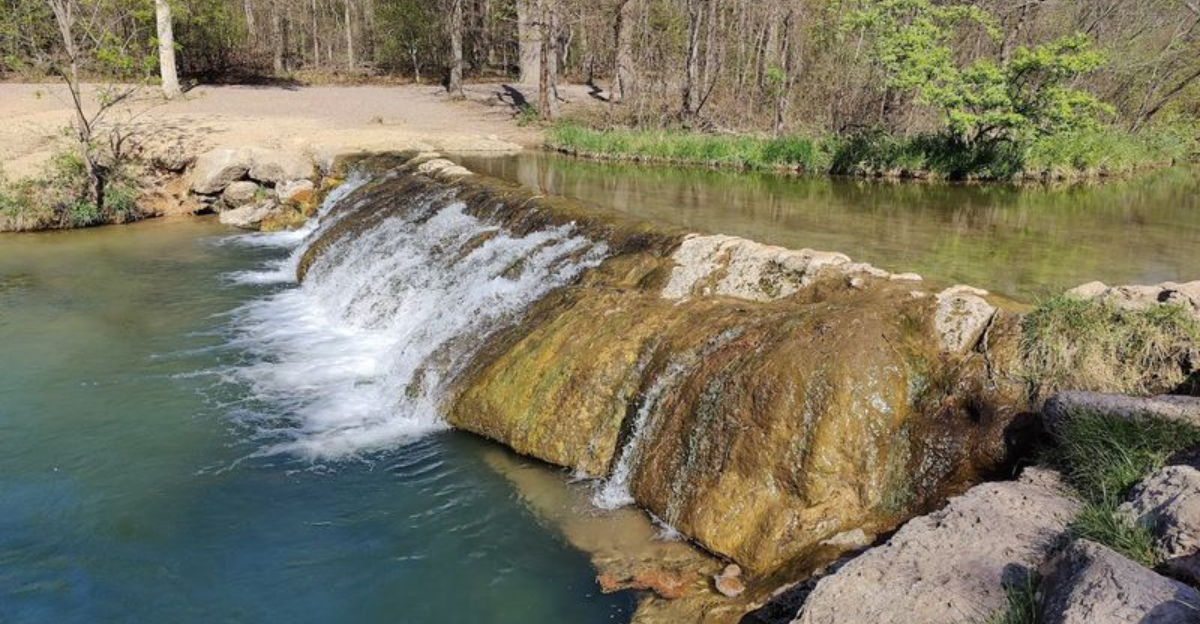
Somewhere in south-central Oklahoma, a waterfall tumbles over smooth travertine rock into a crystal-clear pool fed by natural springs, and most people have no idea it even exists. The water stays around 68 degrees year-round, the trees overhead create a canopy that blocks out the summer heat, and the whole thing is completely free to visit.
This is not a rumor or a well-kept secret shared only among locals anymore. Little Niagara Falls sits inside the Chickasaw National Recreation Area near Sulphur, Oklahoma, and once you see it, you will wonder how it stayed off your radar for so long.
Where Exactly You Will Find This Hidden Waterfall
The full address for this spot is within the Chickasaw National Recreation Area, Sulphur, Oklahoma 73086, and it sits at coordinates 34.5052 latitude and -96.9517 longitude in south-central Oklahoma. The town of Sulphur is the gateway community, and the drive in takes you through rolling hills and dense woodland that already starts to feel like a world apart from city life.
From Dallas, Texas, the trip is roughly two hours, which makes it a very realistic day trip for people in that region. The falls are not hidden deep in the backcountry either.
The parking area sits very close to the water, so you do not need to hike a long distance just to get your first look at the falls.
The Chickasaw National Recreation Area covers thousands of acres, and Little Niagara is one of its most popular attractions. Road signs inside the park guide you toward it, but downloading a park map before you arrive saves time and confusion, since several side roads branch off in different directions along the way.
The Story Behind the Name and the Water
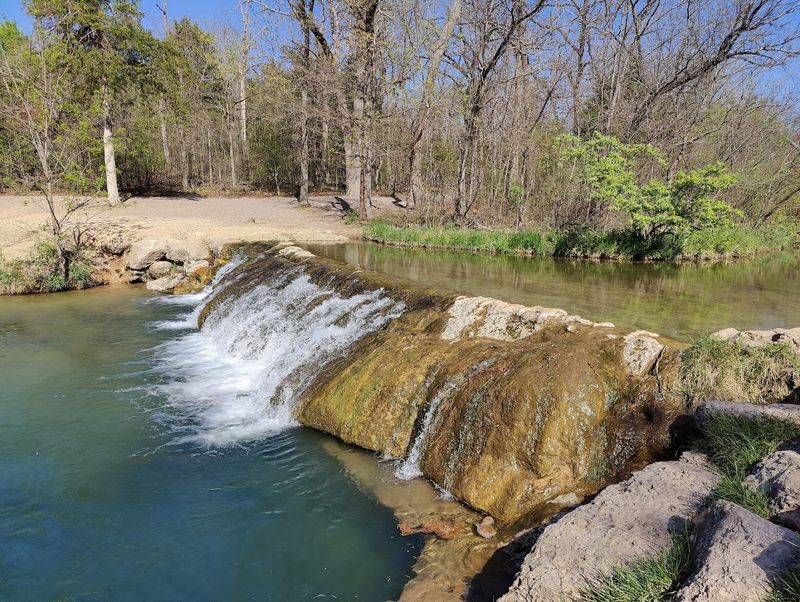
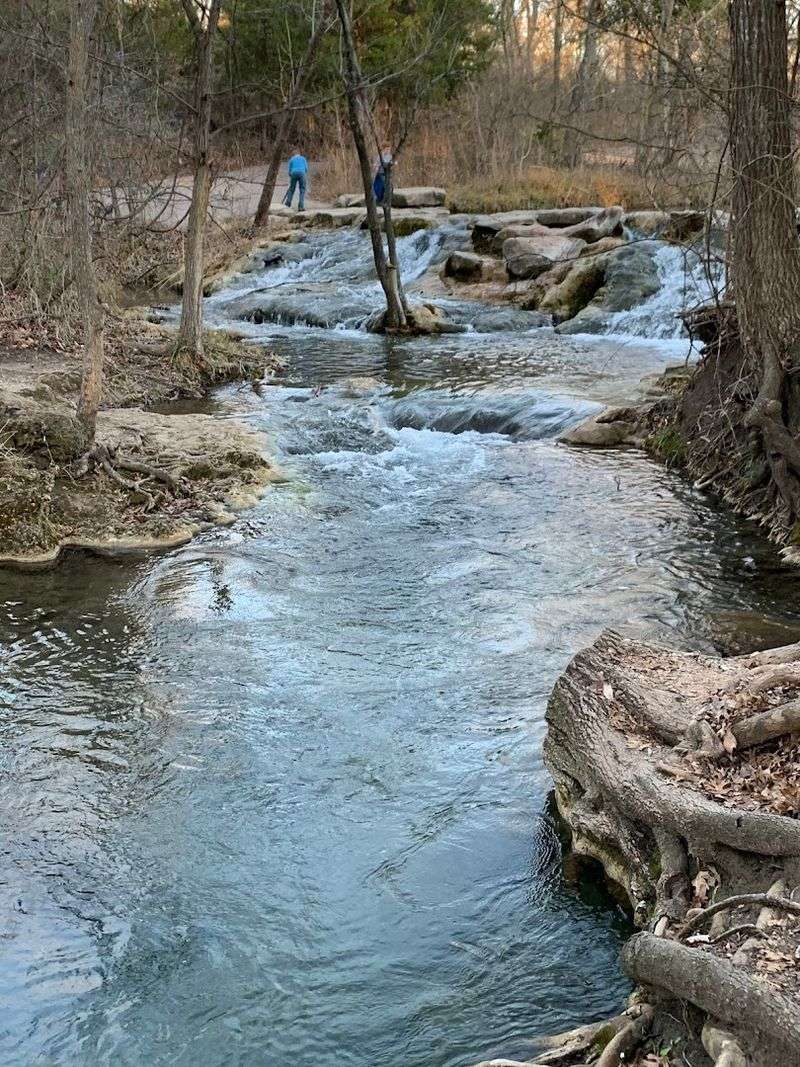
Travertine Creek is the star of the show here, and the water that flows through Little Niagara comes from two natural springs located upstream. These springs push out water that stays consistently cold regardless of the season, sitting right around 68 degrees Fahrenheit throughout the year.
The name Little Niagara is a playful nod to the famous falls on the US-Canada border, and while the scale is obviously much smaller, the clarity and beauty of the water give it a legitimacy that the nickname honestly earns. The travertine rock formations that line the creek are the same type of mineral-rich limestone found in much larger natural water features around the world.
What makes this spot scientifically interesting is that the spring water has traveled through underground rock layers that naturally filter it, which is why visitors can often spot small fish darting around beneath the surface with perfect visibility. The water’s mineral content also gives it that slightly blue-green tint that photographs so well and looks almost too perfect to be real when you see it in person for the first time.
What the Falls Actually Look Like Up Close
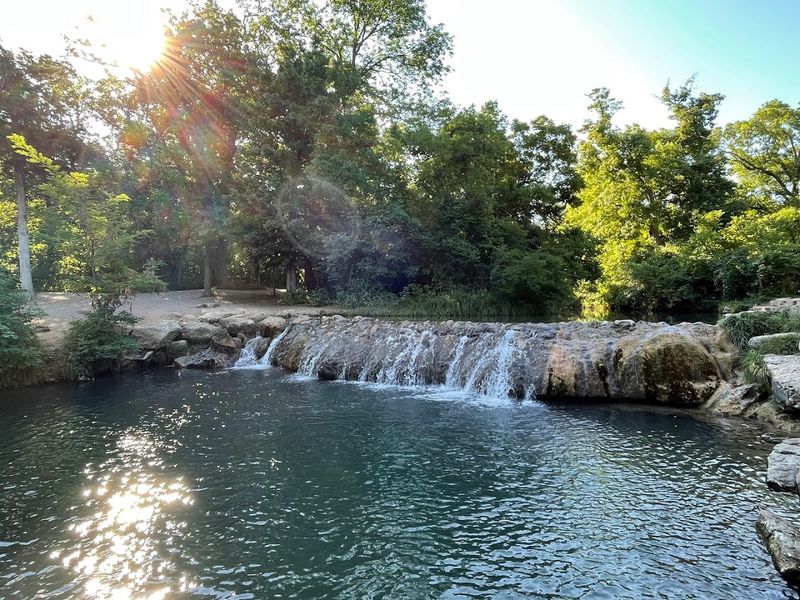
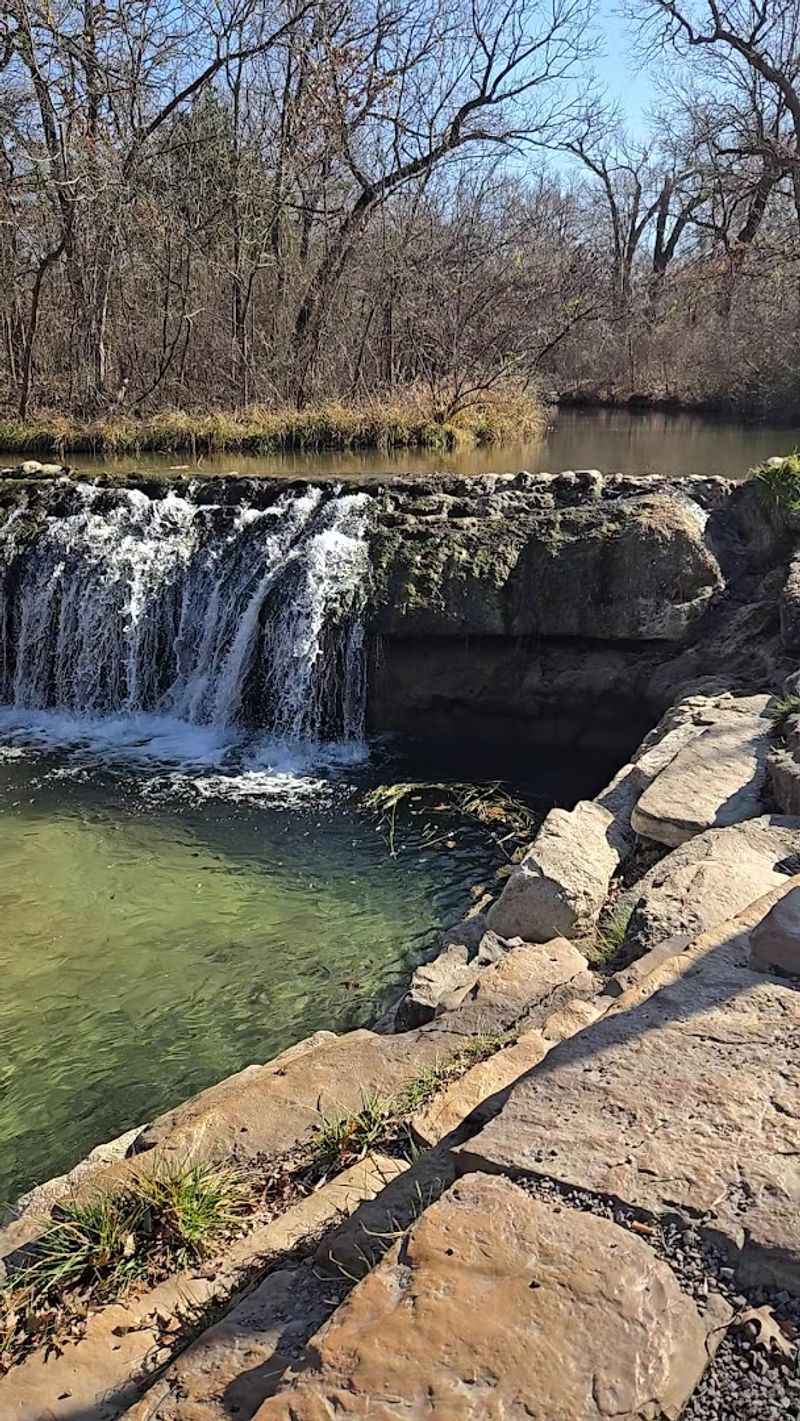
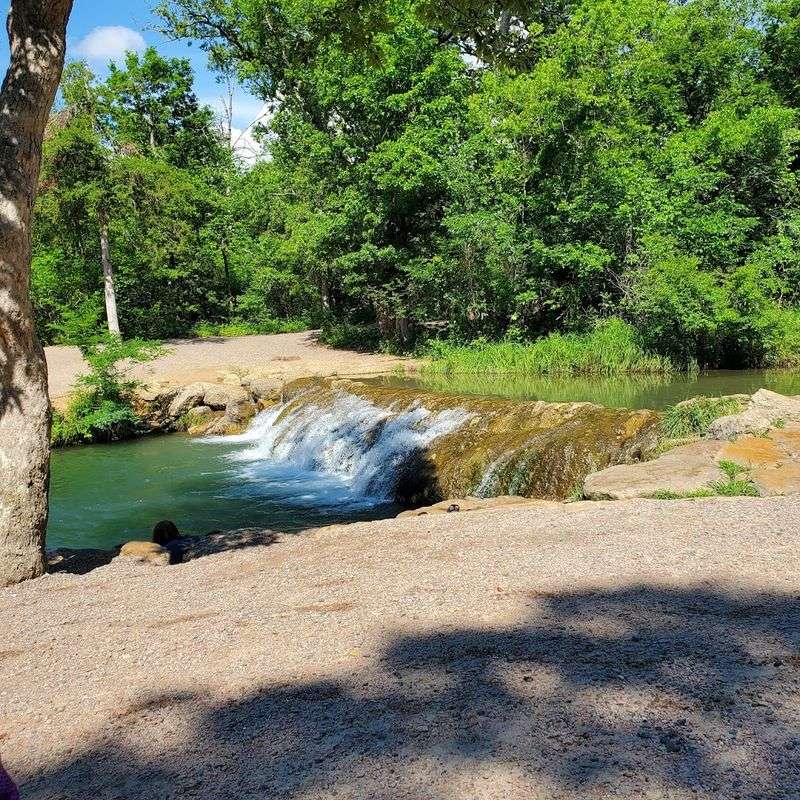
The drop at Little Niagara is not dramatic in the way that a towering cliff waterfall would be, but that is actually part of its charm. The water flows in a wide curtain over a shallow ledge of travertine rock, spreading out horizontally before it spills into the pool below with a satisfying rush of white water and mist.
The pool at the base is large enough for a good number of swimmers at once, and the depth varies depending on where you stand. Just above the falls, the water is shallow enough for small children to splash around safely, while the area directly below the drop has a deeper pocket that adults use for swimming and jumping.
The surrounding woodland presses in close on both sides of the creek, and the combination of green trees, white water, and that impossibly clear pool creates a scene that genuinely stops people mid-step the first time they round the trail bend and see it. The sound of the water carries through the trees before you even arrive, which builds anticipation nicely as you walk the short path from the parking area toward the falls.
Swimming and Cooling Off in the Springs
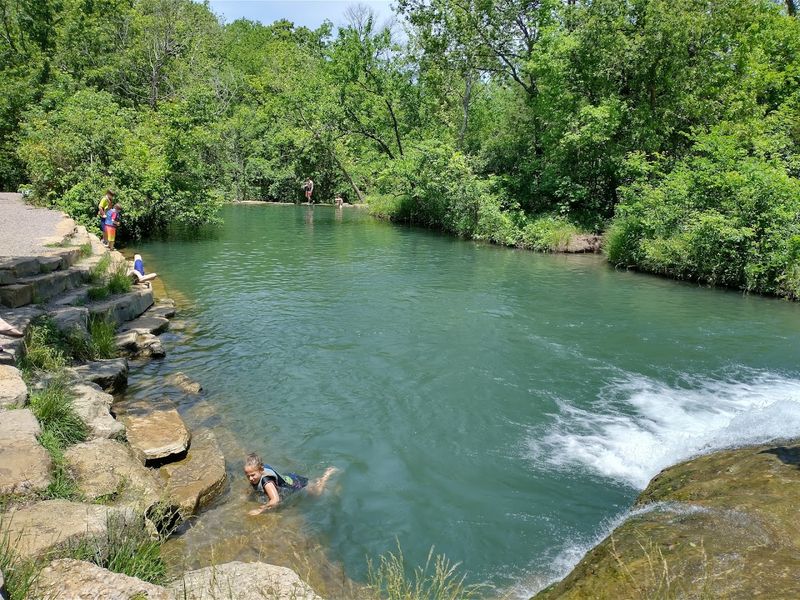
The cold shock of the water is real, and first-timers often gasp audibly the moment they step in. At 68 degrees, the spring water feels refreshingly brutal on a hot Oklahoma summer afternoon, and that contrast between the heat of the sun and the cold of the creek is exactly what keeps people coming back year after year.
Water socks or sandals with good grip are strongly recommended because the travertine rock underfoot can be slippery, and the creek bottom has varying textures that bare feet do not always appreciate. Bringing a tube is a popular move, as the gentle current and the small cascade of the falls make for a low-key float that kids and adults both enjoy thoroughly.
The park authorities regularly monitor water quality and post updates online, so checking the Chickasaw National Recreation Area website before your visit is a smart habit. On the rare occasion that bacteria levels rise in one section of the creek, the other swimming areas in the park typically remain open and safe.
Most visits, especially on weekdays, are completely trouble-free and the water quality lives up to its sparkling reputation.
The Trails That Wind Through the Woodland
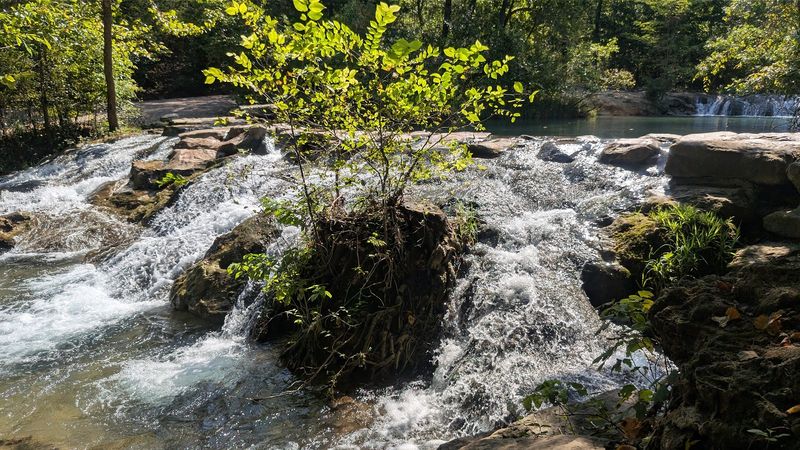
The walking trails around Little Niagara are genuinely enjoyable even if you never set foot in the water. Most of the paths run along Travertine Creek, and the terrain stays relatively flat and even, which makes the hike accessible to a wide range of fitness levels and ages.
Gravel and paved sections alternate as you move through the 22-acre woodland.
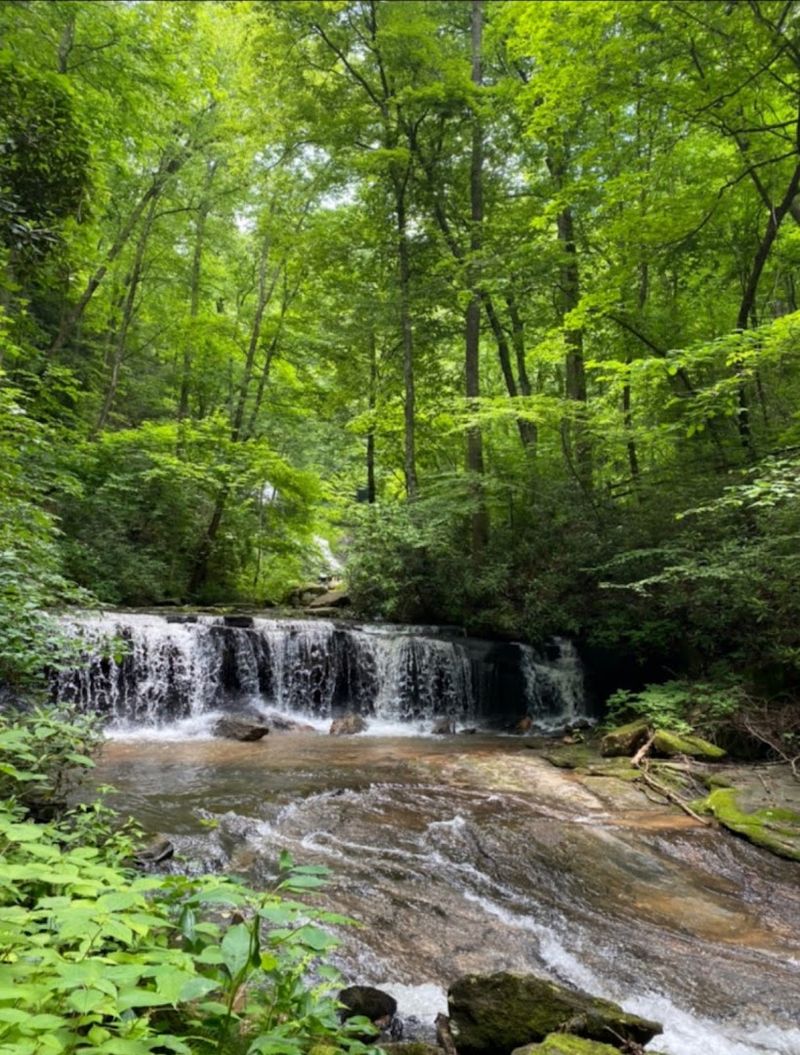
Along the trail, smaller cascades and mini falls appear at various points where the creek narrows and speeds up over rocky outcroppings. These little surprises keep the walk interesting, and several of them are shallow enough to wade through or sit beside for a rest.
The shade from the tree canopy is dense enough that even a midsummer hike feels manageable in the cooler morning hours.
The broader Chickasaw National Recreation Area also offers more ambitious hiking options beyond the immediate Little Niagara area, including a trail that climbs to one of the higher vantage points in the park where you can see the surrounding landscape spread out below. Mountain biking trails exist in the park as well, so bringing bikes opens up an entirely different way to spend a full day exploring the area at your own pace.
A Family Day Out That Does Not Cost a Dime
Free admission is not something you expect from a place this well-maintained and genuinely beautiful, but Little Niagara delivers exactly that. The Chickasaw National Recreation Services manages the area, and the result is a facility that punches well above its weight class in terms of cleanliness and upkeep, all without charging a single entry fee.
Picnic tables are scattered throughout the grassy and graveled areas near the falls, and BBQ grills are available for groups who want to make a full afternoon of it. The restrooms are clean and regularly maintained by rangers who do a visible and consistent job of keeping the grounds tidy.
Parking spaces are plentiful and include accessible spots for visitors who need them.
One practical note worth repeating: there are no restaurants or food vendors anywhere near the falls, so arriving with a packed cooler is not optional if you plan to spend several hours there. The gravel surface of most picnic areas means wheelchair access is possible but requires some effort on uneven ground.
Leashed pets are welcome, and the trail sees a steady parade of well-behaved dogs on any given weekend, adding a cheerful and sociable energy to the whole outing.
When to Visit for the Best Experience
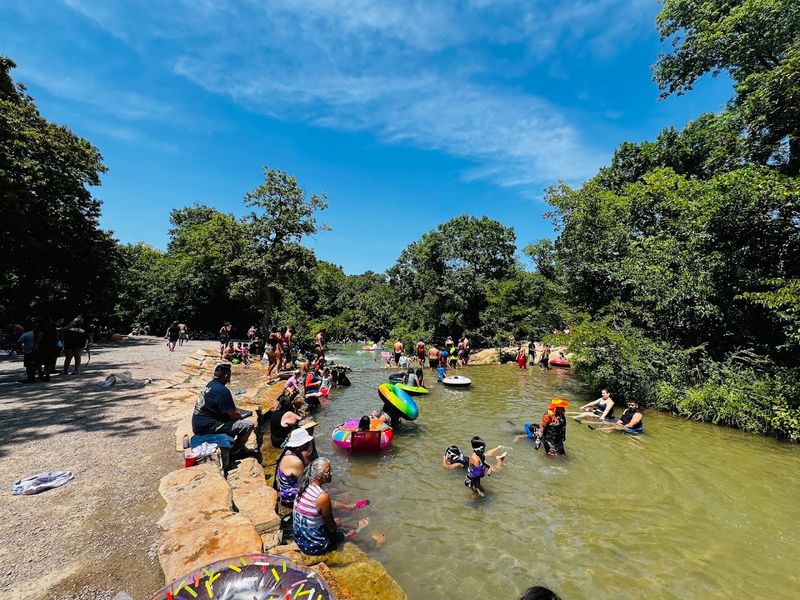
Timing your visit makes a significant difference in how crowded the experience feels. Weekends in summer bring the largest crowds, and the parking lot can fill up quickly by mid-morning on a Saturday in July.
Arriving early, ideally before 9 a.m., gives you a window of relative quiet before the day-trippers arrive in full force.
Weekday visits are noticeably more relaxed, and the falls feel like a private discovery when you have only a handful of other visitors sharing the space. Fall is another strong choice, when the surrounding woodland shifts into warm amber and red tones and the air temperature drops enough to make the hiking trails more comfortable, even if the water is no longer as inviting for swimming.
Spring brings higher water flow after winter rains, which can make the falls look more dramatic and full. Summer is peak season for swimming and tubing, and the combination of school holidays and heat drives the highest attendance.
Winter visits are quiet and peaceful, and the evergreen sections of the woodland stay attractive year-round, though the facilities may have reduced hours during the coldest months of the year.
The History Woven Into the Park’s Landscape
The Chickasaw National Recreation Area has a layered history that stretches back long before it became a federal recreation destination. The land holds deep significance for the Chickasaw Nation, and the area around Sulphur was originally set aside as the Sulphur Springs Reservation in the early 1900s before being reorganized and expanded into what visitors explore today.
One of the most charming historical details visible throughout the park is the stonework built by the Civilian Conservation Corps during the 1930s. The CCC constructed bridges, shelters, and other infrastructure using local stone, and these structures have a rustic, handcrafted quality that blends into the natural landscape in a way that modern construction rarely achieves.
Several of these historic shelters still stand near the waterfall area and add a sense of timelessness to the setting.
The springs in this part of Oklahoma were considered to have medicinal properties by early settlers, which is part of why the area attracted visitors and development in the first place. That reputation for restorative waters has a certain poetic continuity with the way people use the springs today, cooling off in the same water that travelers sought out over a century ago for entirely different reasons.
Wildlife and Nature Beyond the Waterfall
The 22 acres of protected woodland around Little Niagara are home to more than just the waterfall and creek. White-tailed deer are a common sight in the early morning and late afternoon hours, and the bird life throughout the park is rich enough to keep casual birders entertained for hours without needing a checklist.
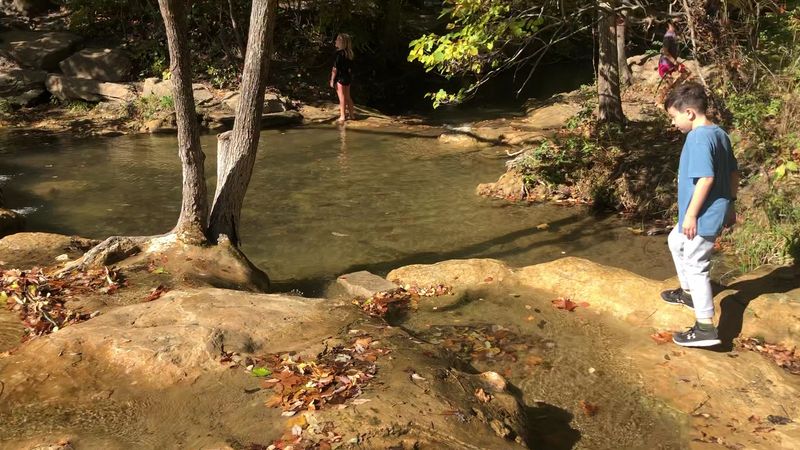
Small fish are visible in the clear water of Travertine Creek at multiple points along the trail, and their presence is a reassuring sign of the water’s overall health and cleanliness. The underwater visibility is good enough that you can watch them navigate the current without needing any special equipment beyond a pair of sunglasses to cut the surface glare.
The broader Chickasaw National Recreation Area also has a bison enclosure, though sightings are not guaranteed and the animals keep to their own schedule regardless of visitor hopes. Camping within the park opens up the night sky in a way that day visitors miss entirely.
The stars above this part of Oklahoma are strikingly clear on dark nights, far removed from urban light pollution, and the silence of the woodland after dark has its own particular quality that is hard to replicate anywhere closer to a city.
How to Make the Most of Your Trip
A little preparation turns a good visit into a great one. Packing a cooler with food and cold drinks is the single most impactful thing you can do, since the nearest food options require driving back toward Sulphur and that eats into time you could spend at the falls.
A dry bag or waterproof case for your phone is worth the small investment, especially if you plan to get into the water near the cascade.
Water socks or neoprene shoes protect your feet on the slippery travertine and make wading and swimming significantly more comfortable and safer. Sunscreen is essential in the open areas near the water, even on days when the sky looks partly cloudy, since the reflective surface of the creek amplifies sun exposure more than most people expect.
The park has no on-site shops or rental equipment, so everything you need should come with you from home or from a stop in Sulphur on the way in. Checking the Chickasaw National Recreation Area website or social media pages before you leave gives you current updates on water quality, trail conditions, and any temporary closures.
A visit to this corner of Oklahoma rewards the people who show up prepared and ready to slow down for a few hours.



