 Unearth The Voyage
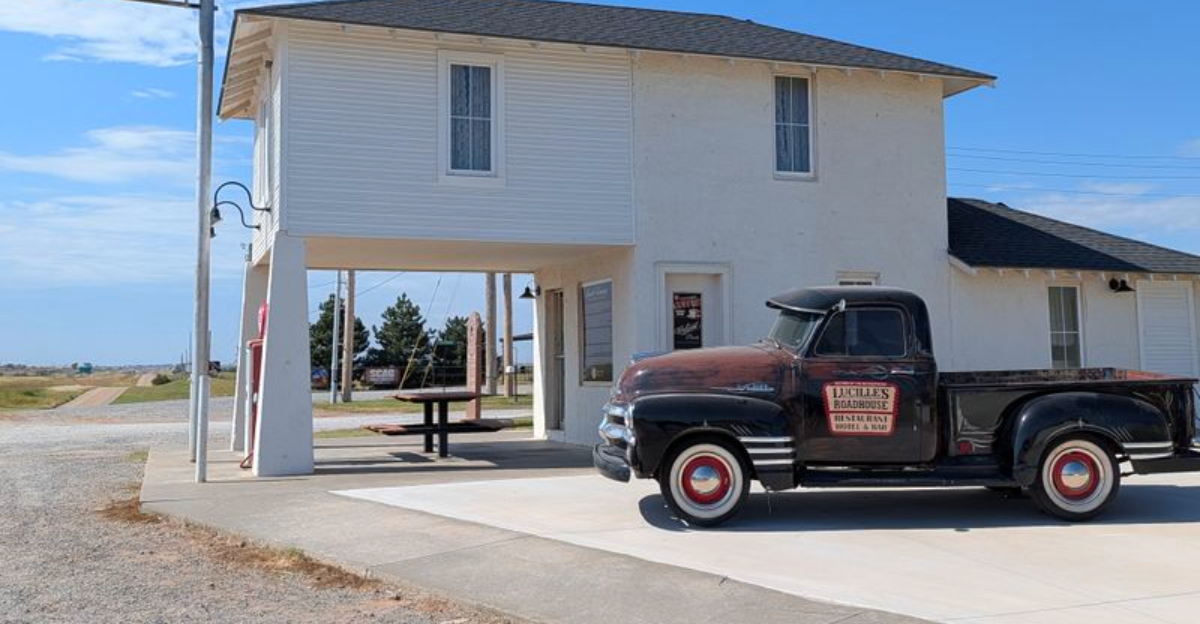
There’s something magical about finding a place that refuses to let history fade away. Along a quiet stretch of the Mother Road in western Oklahoma sits a perfectly preserved reminder of what made Route 66 legendary.
The white-painted buildings, vintage fuel pumps, and classic truck parked outside look like they could spring back to life at any moment. This isn’t just another roadside attraction with a fresh coat of paint.
It’s a tribute to one remarkable woman who served travelers for decades and became known as the Mother of the Mother Road herself.
The Woman Behind the Legend
Lucille Hamons ran this service station for over 60 years, greeting travelers with cold refreshments and a warm smile. She opened for business in 1941 and quickly became a fixture along the highway, helping stranded motorists and sharing stories with visitors from around the world.
Her reputation grew so large that people started calling her the Mother of the Mother Road. She earned that title through countless acts of kindness, often helping families who had run out of money during hard times.
Lucille would give them fuel, food, or whatever they needed to continue their journey westward.
The station became more than just a place to fill up your tank. It transformed into a community gathering spot where locals and travelers mixed freely.
Lucille collected memorabilia over the decades, turning her small building into an unofficial Route 66 museum.
Even after the interstate bypassed her station in the 1970s, she kept the doors open. Lucille continued serving the faithful Route 66 enthusiasts who sought out the original road.
Her dedication to preserving this slice of Americana lasted until her passing, leaving behind a legacy that still draws thousands of visitors each year.
A Perfect Example of Mid-Century Architecture
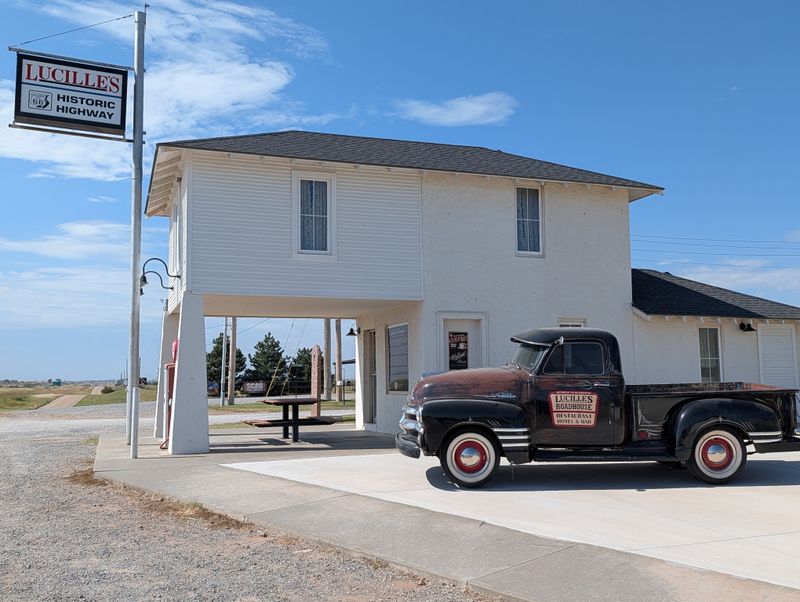
The buildings at U.S. Route 66 in Hydro, Oklahoma showcase the simple, functional design that defined American roadside commerce in the 1940s.
Two white structures stand side by side, their paint gleaming in the sunlight. The main building served as both office and store, while the smaller one housed additional supplies and equipment.
These structures represent a time when gas stations were neighborhood landmarks rather than corporate franchises. The architecture reflects practicality over flash, with clean lines and modest proportions.
Large windows allowed Lucille to keep an eye on the pumps while chatting with customers inside.
The restoration work has been meticulous, maintaining the authentic character while ensuring the buildings withstand Oklahoma weather. Every detail matters, from the placement of the door to the style of the windows.
The result feels genuine rather than recreated.
What makes this site special is how little has changed from its working days. The buildings occupy the same footprint, and the layout remains identical to when travelers actually pulled in for service.
This authenticity helps visitors understand what Route 66 travel was really like during its heyday.
Vintage Fuel Pumps That Tell Their Own Story
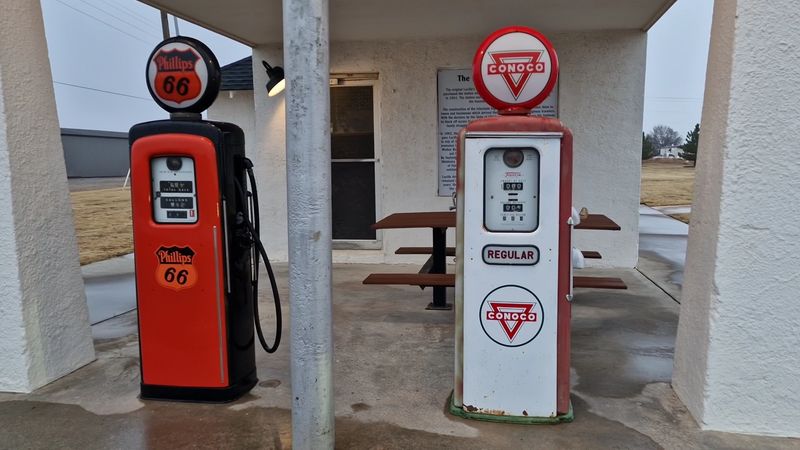
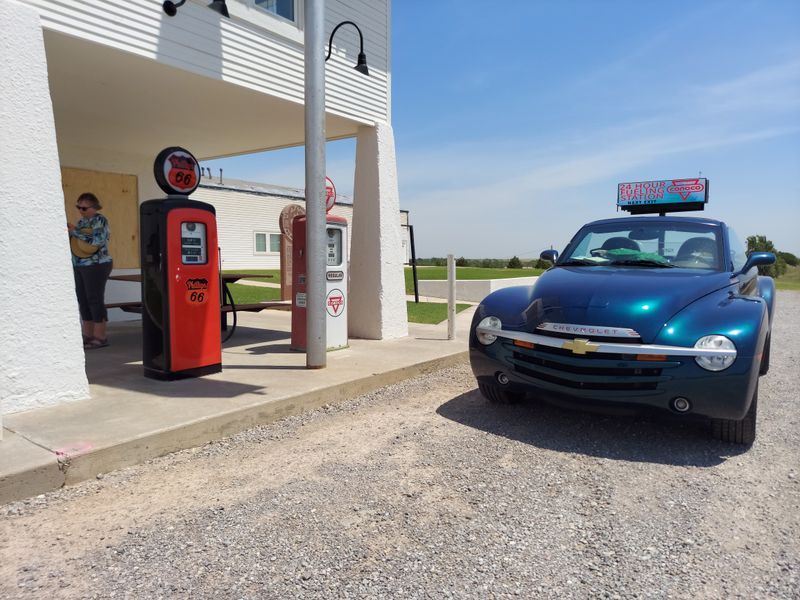
Two beautifully restored fuel pumps stand sentinel outside the main building, frozen in time like mechanical sculptures. One bears the Conoco brand, the other displays the distinctive Phillips 66 shield.
These aren’t replicas but actual period pumps that once dispensed fuel to countless travelers heading west.
The pumps feature the classic design elements that made them instantly recognizable from the road. Glass globes sit atop tall metal bodies, and the price wheels are set to show fuel at just 25 cents per gallon.
That detail alone sparks conversations among visitors about how much has changed since Lucille’s heyday.
Each pump represents a different era of American automotive culture. The mechanical workings inside these machines are marvels of mid-century engineering, designed to be repaired rather than replaced.
They served reliably for decades before electronic pumps took over.
Photographers love these pumps because they capture the essence of Route 66 nostalgia in a single frame. The way they catch the light, their weathered-yet-maintained appearance, and their placement against the white buildings create perfect compositions.
They’re among the most photographed vintage pumps along the entire Mother Road.
The Classic Chevy Pickup That Completes the Scene
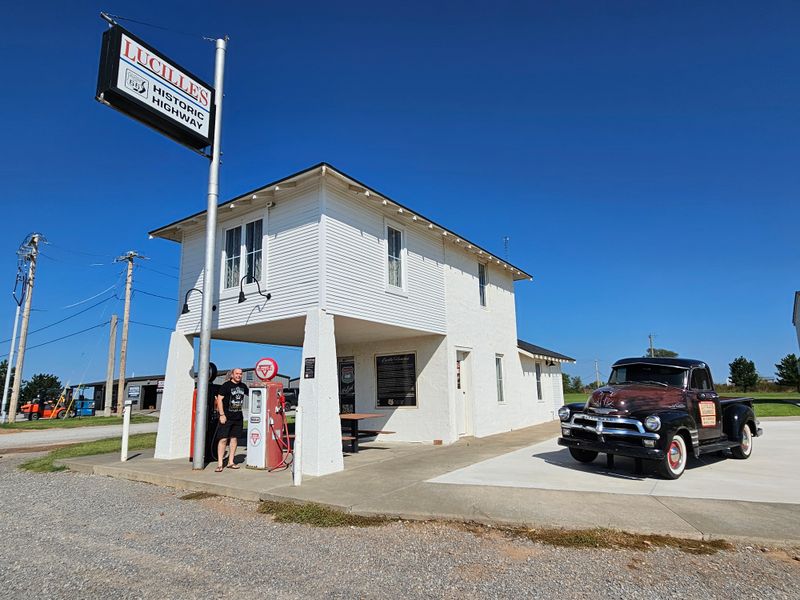
An old Chevrolet pickup truck sits permanently parked outside, adding another layer of authenticity to the scene. The truck’s weathered paint and vintage styling transport visitors straight back to the 1950s.
It’s the kind of vehicle that would have been a common sight when Lucille was pumping gas.
The truck isn’t just decoration. It represents the working vehicles that traveled Route 66 during its peak years.
Farmers, delivery drivers, and families all relied on sturdy pickups like this one to haul goods and navigate long distances across the country.
Its placement near the pumps creates countless photo opportunities for visitors. People pose beside it, peek through the windows, and marvel at the craftsmanship that went into these old workhorses.
The truck’s presence helps visitors imagine what the station looked like during a busy afternoon in 1955.
Someone maintains this vehicle carefully, ensuring it doesn’t deteriorate despite sitting outdoors year-round. The attention to preservation extends to every element of the property, creating a cohesive historical experience.
Together with the buildings and pumps, the truck forms a complete tableau of Route 66 life.
Historical Markers That Educate Visitors
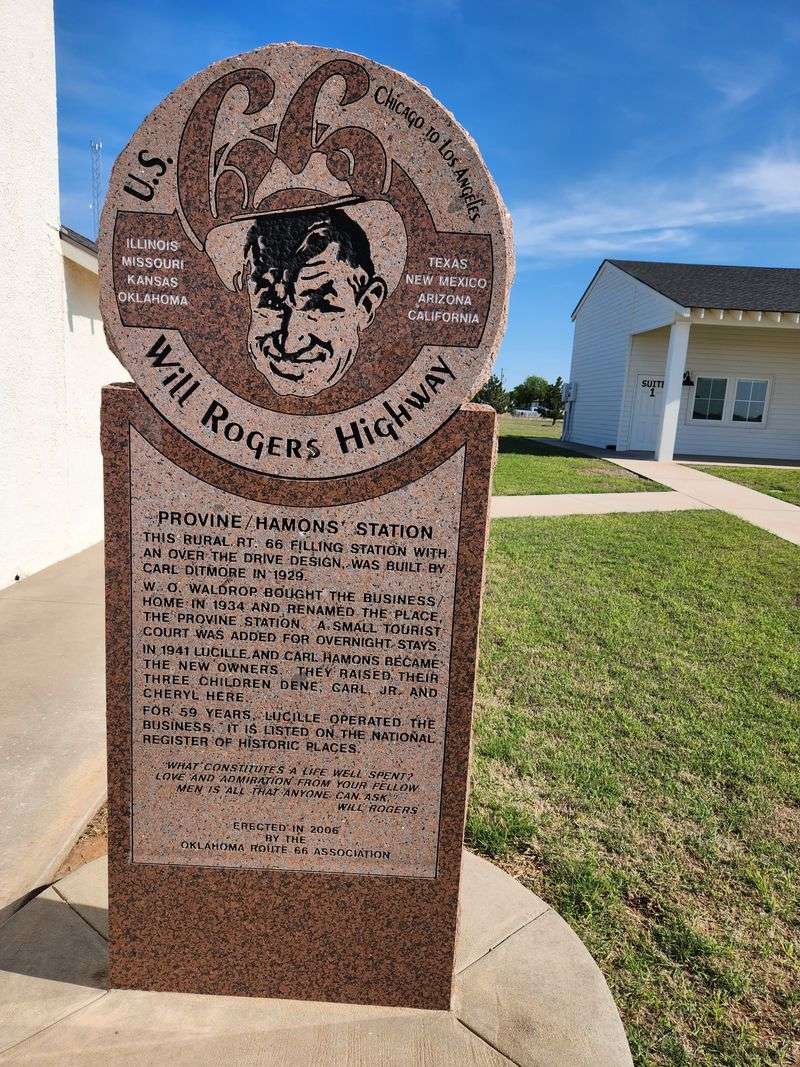
A detailed historical marker stands near the entrance, offering visitors the full story of Lucille and her station. The sign explains her role in Route 66 history and why this location matters to American cultural heritage.
Reading it takes just a few minutes but provides context that makes the visit more meaningful.
The marker describes how Lucille helped stranded travelers during the Great Depression and Dust Bowl years. She became famous for her generosity, often giving away supplies to families who couldn’t pay.
These stories of compassion define her legacy as much as the physical station itself.
Additional signage includes a Will Rogers Highway marker, connecting this site to the broader story of Route 66’s creation and naming. These official historical designations validate the station’s importance and help protect it for future generations.
They transform a simple photo stop into an educational experience.
The combination of original structures and interpretive signage creates a self-guided tour experience. Visitors can explore at their own pace, reading about different aspects of the station’s history while examining the physical evidence around them.
This approach respects both serious history buffs and casual tourists.
A Photo Opportunity Unlike Any Other
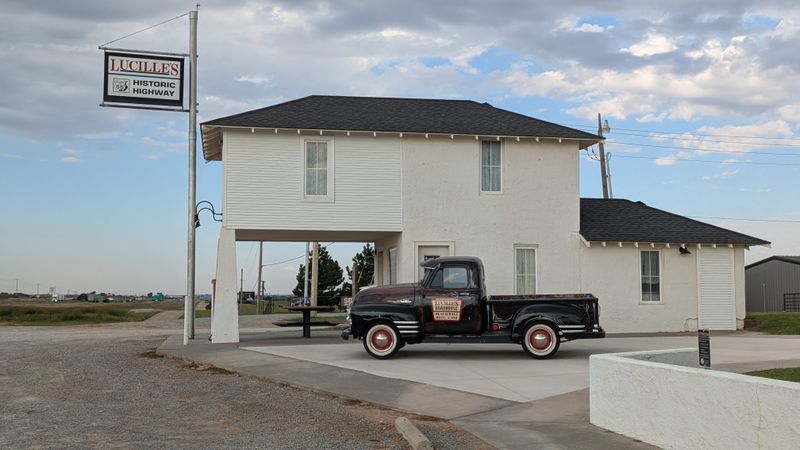
This location ranks among the most photographed spots along Route 66, and for good reason. Every angle offers something worth capturing, from wide shots showing the entire property to close-ups of architectural details.
The clean, uncluttered setting makes it easy to frame great images.
Social media has amplified the station’s popularity as a photo destination. Visitors share their pictures online, inspiring others to add Lucille’s to their Route 66 itineraries.
The consistent quality of these images speaks to how well the site is maintained and how photogenic it naturally is.
Early morning and late afternoon provide the best lighting conditions, when shadows add depth and the Oklahoma sky glows with color. However, the station looks appealing at any time of day.
The bright white buildings reflect light beautifully, preventing harsh shadows even at noon.
Many visitors spend 20 to 30 minutes taking pictures from different angles and with various family members posed throughout the scene. The property offers plenty of parking and space to move around, so groups don’t feel rushed or crowded.
This relaxed atmosphere encourages creativity and experimentation with photography.
Easy Access from Modern Highways
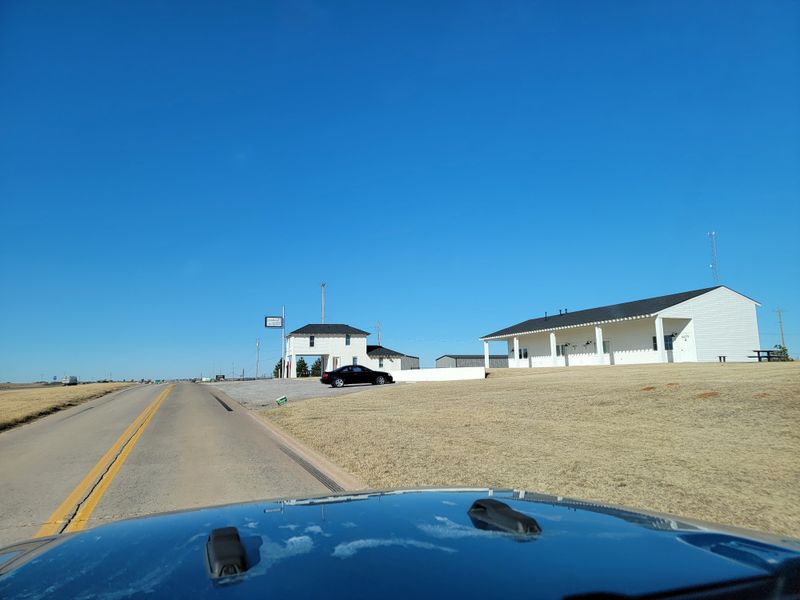
Finding this treasure is simpler than you might expect for a historic Route 66 site. The station sits right along the old highway alignment, visible from Interstate 40.
Clear signage helps direct travelers to the exit, making it accessible even for first-time visitors to the area.
The location in Hydro, Oklahoma places it perfectly for road trippers exploring the Mother Road. It’s far enough from major cities to feel authentic but close enough to services that visitors don’t need to worry about fuel or facilities.
This balance makes it an ideal stopping point during longer journeys.
Ample parking space accommodates everything from motorcycles to RVs. The lot can handle multiple vehicles simultaneously, which is essential during peak tourist seasons when Route 66 enthusiasts converge on the road.
Nobody needs to wait for others to finish before pulling in.
The station’s visibility from the interstate has actually helped preserve it by keeping visitor numbers steady. People spot the white buildings from the highway and decide to exit for a closer look.
This spontaneous traffic supplements the dedicated Route 66 travelers who planned their stop in advance.
Pristine Maintenance and Ongoing Restoration
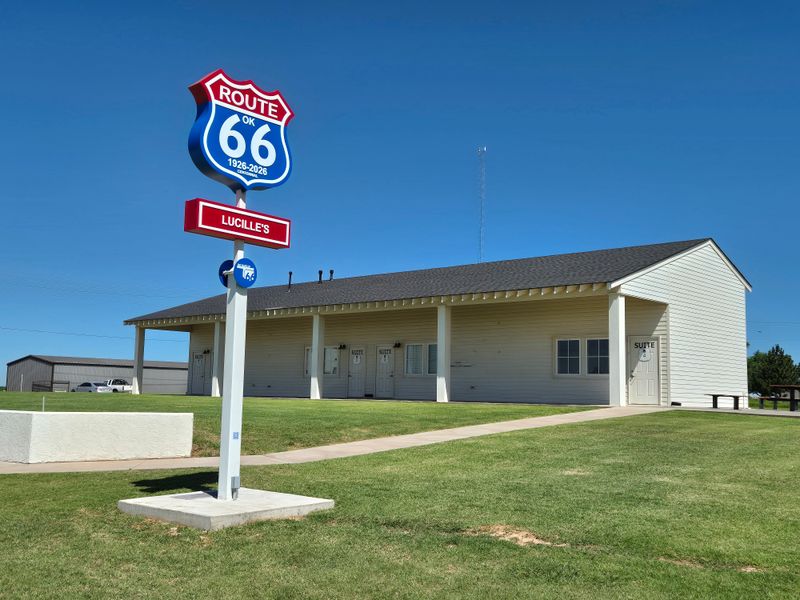
The level of care invested in this property is immediately apparent. Fresh paint keeps the buildings gleaming white, and the grounds are immaculately maintained.
Someone clearly takes pride in preserving this piece of history for current and future visitors.
Recent restoration work has included preparing for Route 66’s upcoming 100th anniversary celebration. New Route 66 poles and updated signage have been installed without compromising the site’s authentic character.
These improvements enhance the visitor experience while respecting the historical integrity.
The buildings’ exteriors look better now than they probably did during their working years. This isn’t about creating a false history but rather presenting these structures in their ideal state.
The goal is showing what they represented in their prime, not documenting every year of wear and tear.
Maintaining a property like this in Oklahoma’s variable climate requires constant attention. Extreme heat, cold, wind, and occasional severe weather all take their toll on historic structures.
The ongoing preservation effort ensures that future generations can experience this tangible connection to Route 66’s golden era, just as today’s visitors do.
Closed But Still Captivating
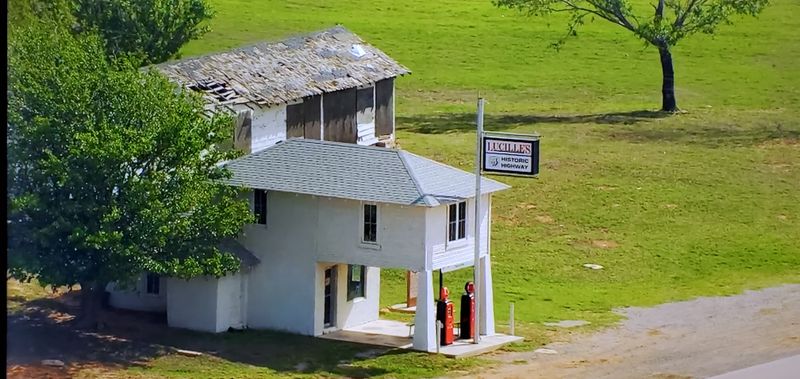
The buildings aren’t open for interior tours, which initially disappoints some visitors. However, the windows allow glimpses inside, revealing spaces that haven’t been modernized or converted to gift shops.
This approach preserves the interior’s authenticity even if it means limiting access.
Peering through the glass, you can see original fixtures and the layout that Lucille worked within for decades. The interior shows its age more than the exterior, with wear and patina that tell their own stories.
Some find this peek behind the curtain more intriguing than a fully restored interior might be.
The decision to keep the buildings closed likely helps protect both the structures and the artifacts inside. Constant foot traffic would accelerate deterioration, and climate control would be difficult to maintain.
This preservation strategy prioritizes long-term survival over immediate access.
Most visitors find that the exterior experience provides plenty to appreciate. The combination of buildings, pumps, truck, and signage creates a complete picture of what the station represented.
You don’t need to go inside to understand its significance or capture its essence in photographs and memories.
A Testament to Route 66 Community Spirit
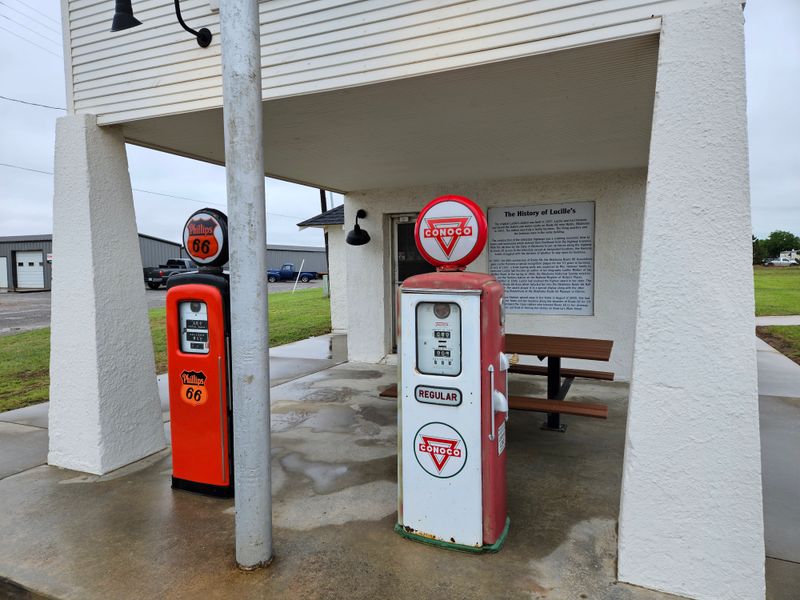
This station embodies the community spirit that made Route 66 special. Lucille didn’t just sell gas and supplies; she created a welcoming space where strangers became friends.
That tradition continues today as visitors from around the world gather to appreciate what she built.
The stories of Lucille’s generosity during hard times reflect values that defined the Route 66 experience. The highway wasn’t just pavement connecting cities but a ribbon of humanity where people looked out for each other.
Service station owners like Lucille were the glue holding that community together.
Modern visitors often leave their own marks on the experience by sharing stories in online reviews and social media posts. They describe feeling connected to the past and to fellow travelers who’ve made the same stop.
This digital community extends Lucille’s legacy in ways she never could have imagined.
The property’s preservation depends on continued public interest and support. Each visitor who stops, takes photos, and shares the experience helps ensure this landmark survives.
In that sense, everyone who visits becomes part of the ongoing story, contributing to the station’s next chapter along the Mother Road.
Best Times to Visit This Route 66 Landmark
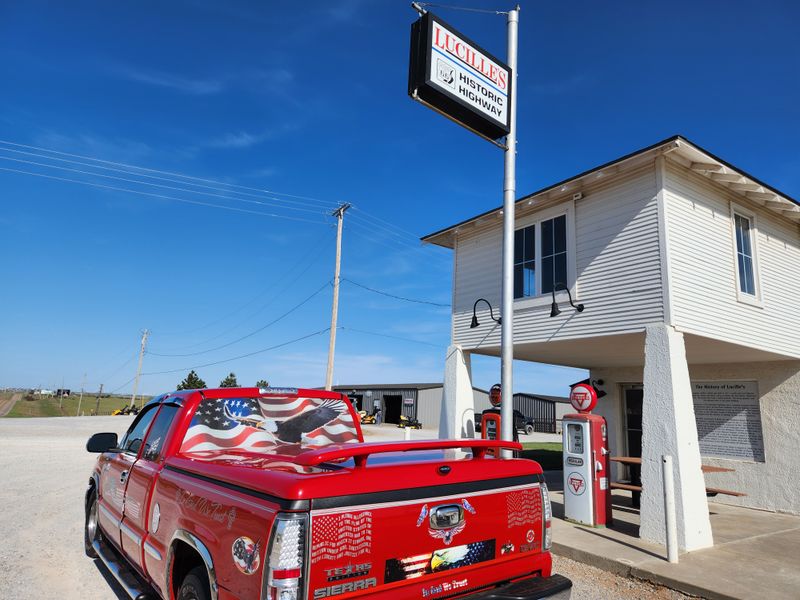
The station is accessible year-round, making it convenient for travelers on any schedule. However, certain times offer advantages for those who can plan their visits.
Spring and fall provide the most comfortable temperatures for exploring the grounds and taking photos without Oklahoma’s summer heat or winter chill.
Weekday visits tend to be quieter than weekends, when Route 66 enthusiasts and local tourists converge on the site. If you prefer a more contemplative experience with fewer people in your photos, aim for mid-morning on a Tuesday or Wednesday.
The peaceful atmosphere lets you imagine the station as it was during quieter moments.
Summer brings the most visitors but also the longest daylight hours for photography. The extended evening light means you can stop by later in the day and still capture excellent images.
Just be prepared for heat that can exceed 95 degrees during July and August afternoons.
Route 66 festivals and anniversary events draw huge crowds to sites like this one. These gatherings create a festive atmosphere with fellow enthusiasts who share your passion for the Mother Road.
Check the Route 66 event calendar if you’d like to experience the station during one of these special celebrations.
Why This Stop Matters for Route 66 Preservation
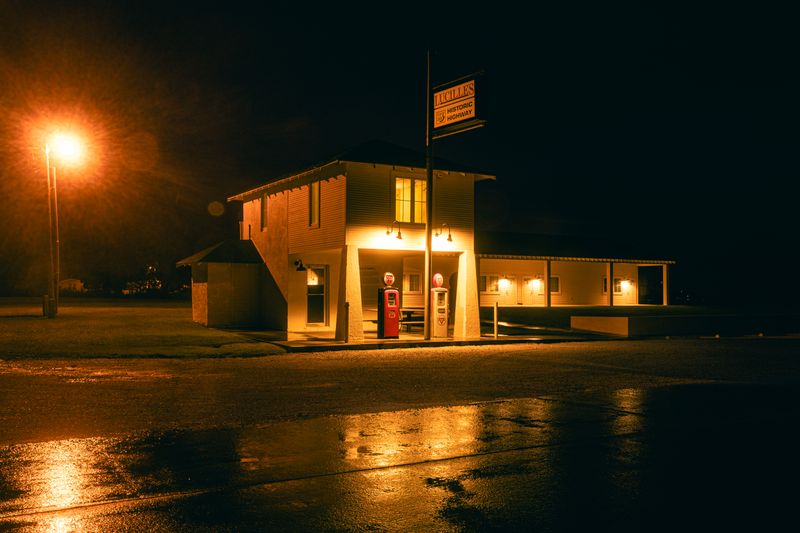
Lucille’s station represents successful historic preservation in action. While many Route 66 landmarks have vanished or fallen into disrepair, this one stands as proof that these places can be saved.
The restoration work demonstrates what’s possible when people value cultural heritage enough to invest in its protection.
The site serves as an educational tool, teaching visitors about mid-century American life and travel. Younger generations who never experienced the pre-interstate highway era can see firsthand what that world looked like.
This tangible connection to the past is more powerful than any textbook description.
Economic benefits flow from heritage tourism, supporting local communities along Route 66. Visitors who stop at Lucille’s often spend money in nearby towns for food, lodging, and other services.
This creates incentives for preserving additional historic sites along the route.
The station’s survival also honors Lucille’s memory and her contributions to Route 66 culture. She devoted her life to serving travelers and maintaining this business.
Keeping her station intact ensures that her story and spirit continue inspiring new generations who discover the Mother Road and its remarkable characters.



