 Unearth The Voyage
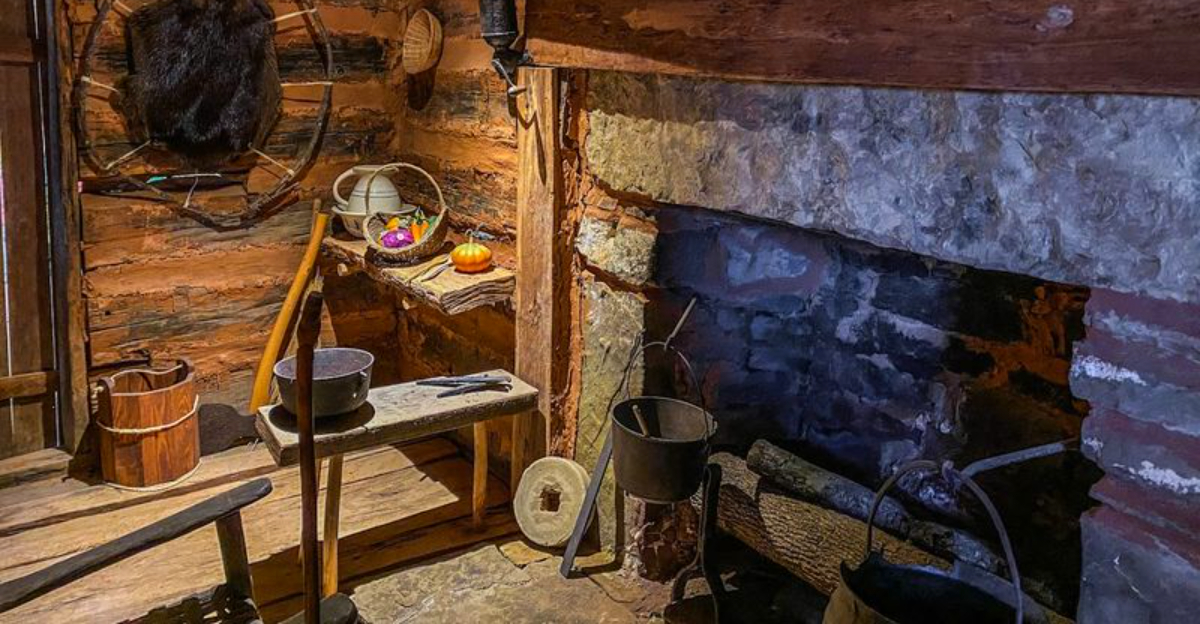
There is a small log cabin tucked into the wooded hills of eastern Oklahoma that holds one of the most remarkable stories in American history. A man who could not read or write in any language sat down and, entirely on his own, created a complete writing system for his people.
That man was Sequoyah, and his cabin still stands today as a testament to what one determined mind can accomplish. The place draws curious travelers, history buffs, and Cherokee descendants who all leave with the same feeling: they just witnessed something extraordinary.
Where the Cabin Stands: Address and Location
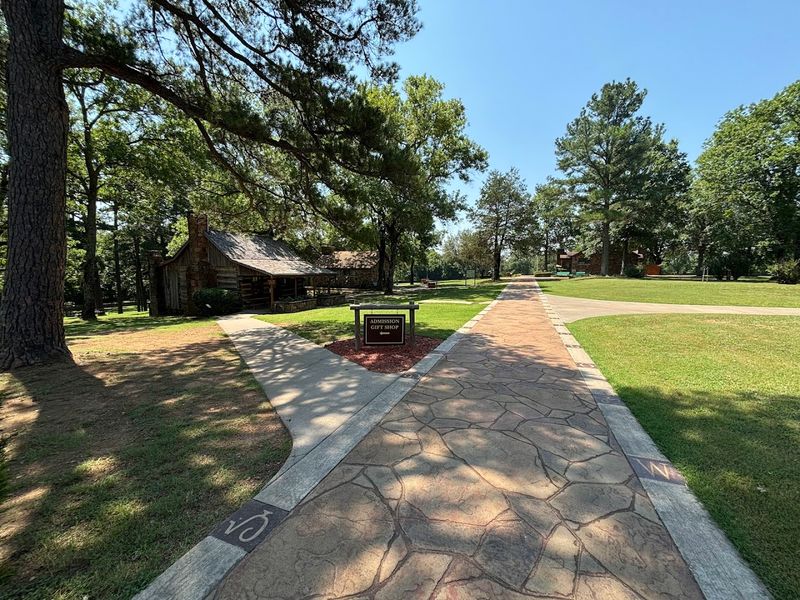
The cabin sits at 470288 OK-101, Sallisaw, OK 74955, in the quiet hills of Sequoyah County in eastern Oklahoma, just a short drive off Interstate 40. The surrounding landscape is exactly what you would hope for when visiting a historic site like this: tall trees, rolling terrain, and a stillness that makes the place feel set apart from the rest of the world.
Getting there takes you along two-lane roads that wind through some genuinely beautiful countryside. It is technically a bit off the beaten path, but every mile of that drive feels intentional, like the land itself is preparing you for something meaningful.
The museum is managed by the Cherokee Nation and maintained to an impressive standard. The grounds are clean, the signage is clear, and the whole property carries a quiet dignity that matches the story it tells.
A visit here pairs well with a stop at other Cherokee Nation sites nearby, making it a natural anchor for a full day of cultural exploration in the region.
Who Was Sequoyah: The Man Behind the Mission
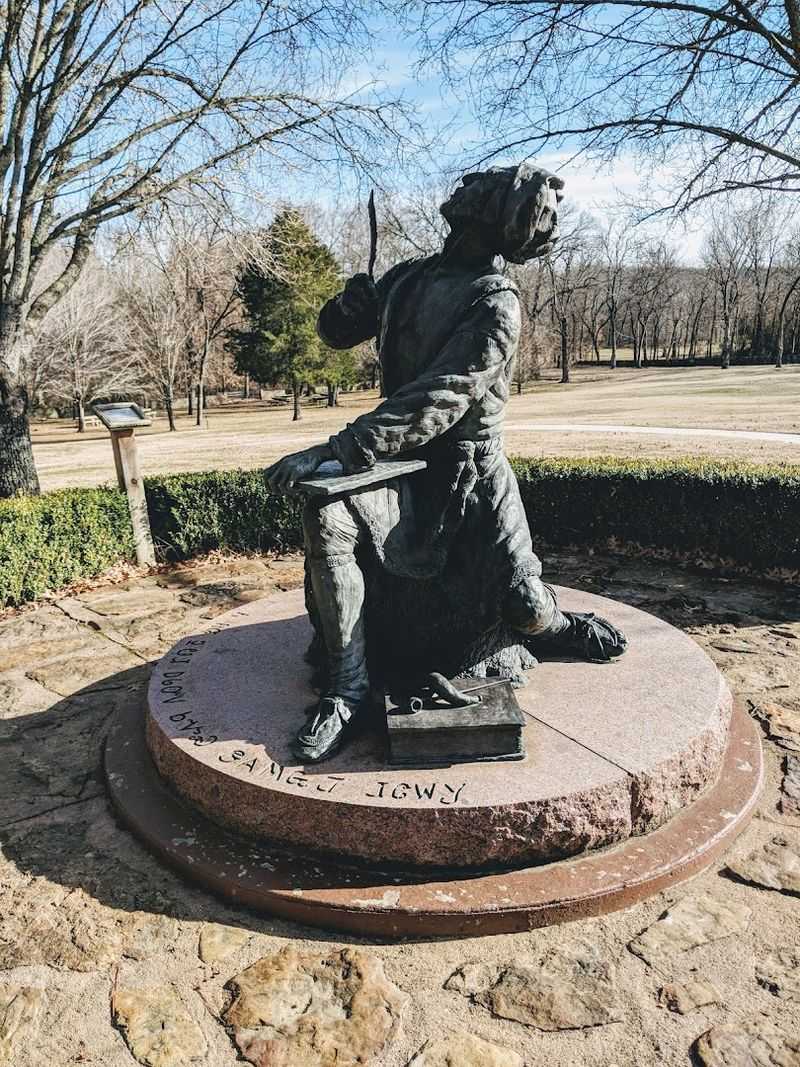
Sequoyah was born around 1770 and grew up in the Cherokee Nation without ever learning to read or write in English or any other language. That detail makes what he accomplished almost hard to believe.
Somewhere around 1809, he became fascinated by what he called “talking leaves,” the written pages used by white settlers, and he set out to create something similar for the Cherokee people.
He worked on his syllabary for over a decade, facing doubt and even suspicion from members of his own community who thought he had lost his mind. His daughter Ayoka helped him demonstrate the system by exchanging written messages with him while they were kept in separate rooms, proving to skeptical Cherokee leaders that the system genuinely worked.
By 1821, the Cherokee syllabary was officially recognized by the Cherokee Nation. Within just a few years, thousands of Cherokee people became literate, and a Cherokee-language newspaper called the Cherokee Phoenix began publishing.
No other person in recorded history is known to have single-handedly created a complete writing system that was then adopted by an entire community. That fact alone makes Sequoyah one of history’s most underrated figures.
The Cabin Itself: A Log Home Built in 1829
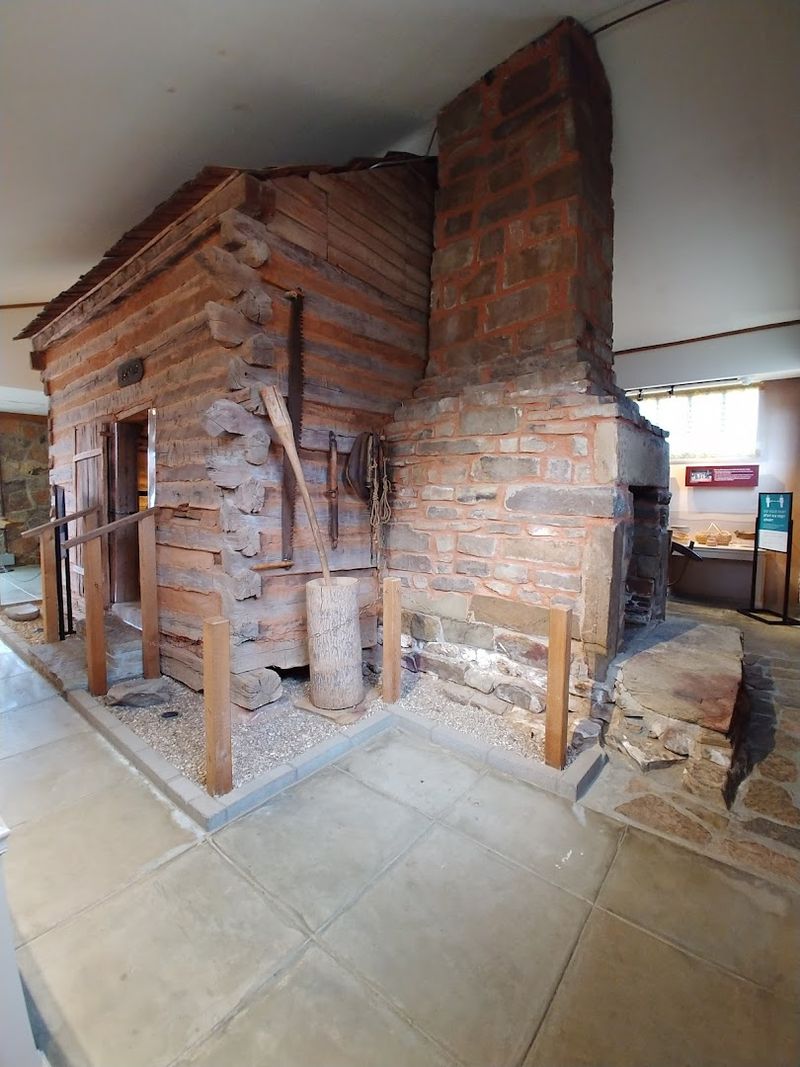
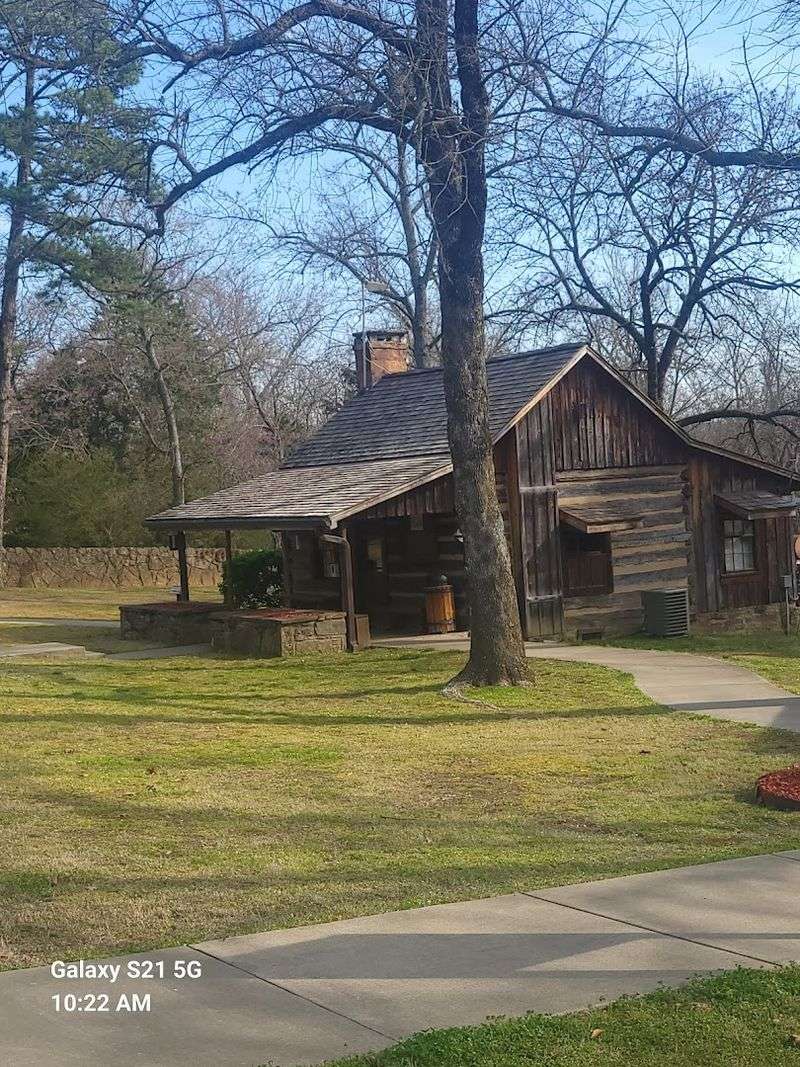
The cabin Sequoyah built with his own hands in 1829 is the undisputed centerpiece of the entire site. Hand-hewn logs, notched corners, and a single-room layout tell you everything about the simplicity and self-sufficiency of life on the frontier.
The cabin is small by any modern standard, but standing in front of it, you get a very real sense of the person who lived and worked inside those walls.
To protect the original structure, the Cherokee Nation built a larger enclosure around it. This means you see the cabin in a sheltered, indoor environment rather than fully exposed to the elements, which has helped preserve it remarkably well.
The logs still look solid, and the construction details are clearly visible.
What strikes most visitors is the contrast: this modest, rough-hewn space was where one of history’s most significant intellectual achievements took shape. Sequoyah reportedly worked on his syllabary right here, carving and refining symbols over years of focused effort.
The cabin does not just represent where he lived. It represents where an entire people gained a written voice, and that weight is very much present when you stand inside.
The Cherokee Syllabary: A Writing System Unlike Any Other
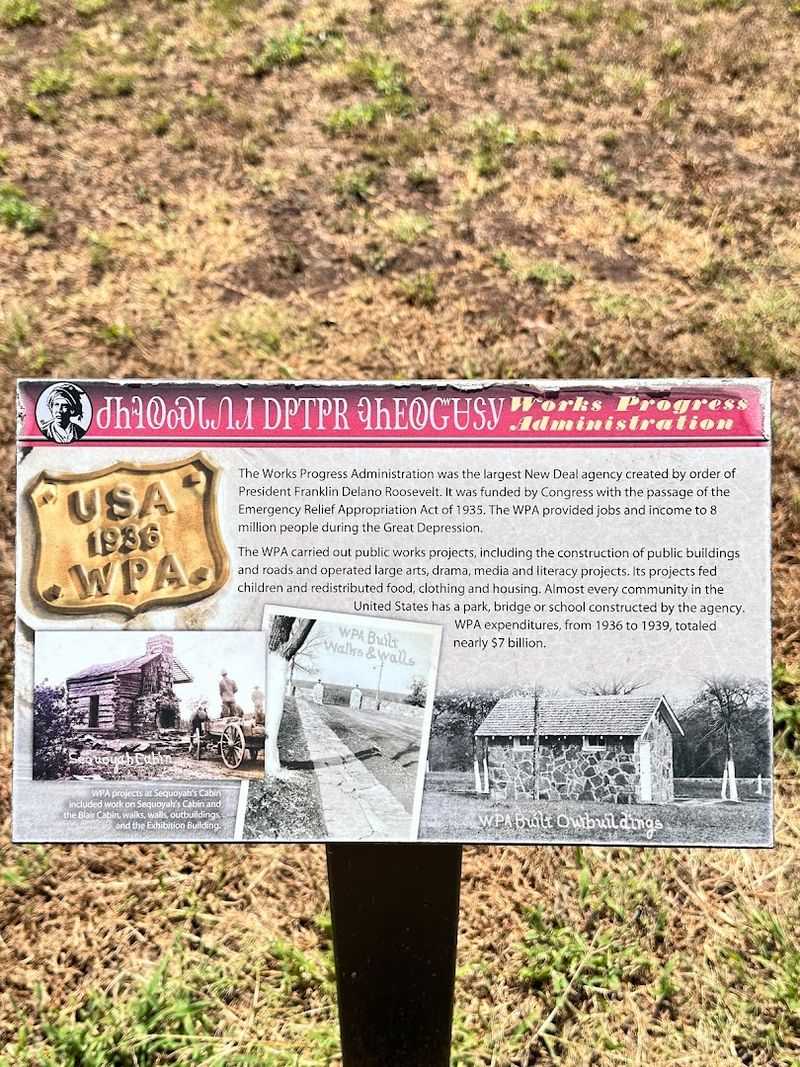
The Cherokee syllabary consists of 86 characters, each one representing a distinct syllable sound in the Cherokee language. Sequoyah developed this system without any formal training in linguistics, phonetics, or writing system design.
He simply listened carefully to the sounds of his language and created a symbol for each one, refining his approach over many years until the system was both complete and learnable.
What makes this achievement so remarkable is its efficiency. Because Cherokee is a syllabic language, meaning words are built from repeating sound units, the syllabary maps onto it almost perfectly.
A Cherokee speaker could learn to read and write their own language in a matter of days or weeks, compared to the years it typically takes to master alphabetic systems like English.
The museum displays the syllabary prominently, and staff members are genuinely enthusiastic about explaining how it works. You can see the characters up close, learn a few of the sounds, and understand how the system was structured.
It is the kind of exhibit that makes abstract history feel immediate and real. Visitors often leave with a new appreciation for just how much linguistic intelligence went into those 86 carefully chosen symbols.
The Museum Exhibits: History Brought to Life
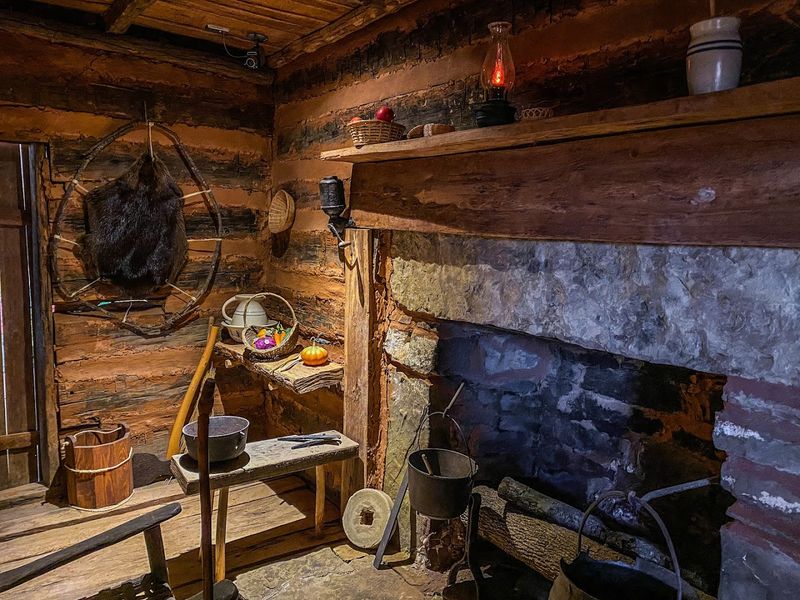
Beyond the cabin itself, the museum building houses a thoughtfully arranged collection of exhibits that trace Sequoyah’s life from his early years through the creation of the syllabary and his later travels. The displays are well-designed and genuinely informative, striking a balance between detailed historical content and accessibility for visitors of all ages.
Historical photographs, maps, and artifacts fill the exhibit space, and each panel is written in a way that builds the story progressively. You are not just reading isolated facts.
You are following a narrative arc that makes Sequoyah’s accomplishment feel earned and deeply human.
One of the more moving aspects of the exhibit is the attention paid to how the syllabary changed daily life for Cherokee people. Letters between family members, community announcements, and religious texts all began circulating in the Cherokee language almost immediately after the syllabary was adopted.
The museum captures that ripple effect beautifully. Staff members are also quick to supplement the displays with additional context, personal stories, and answers to questions, which turns a standard museum visit into something much closer to a real conversation about Cherokee history and culture.
The Staff Experience: Knowledge You Can Feel
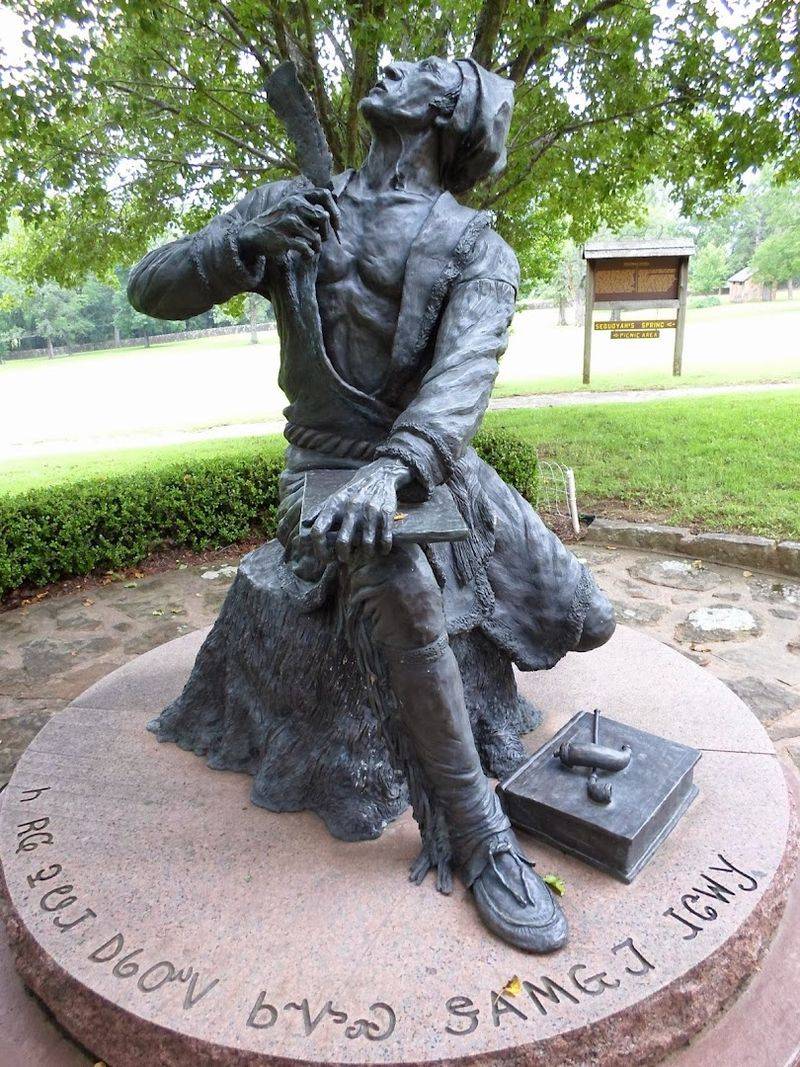
Few museums can match the quality of the personal experience that the staff here provide. The people working at this site carry genuine pride in the history they are sharing, and that comes through in every interaction.
One staff member, described by multiple visitors as an artist, reportedly gave extended tours that covered not just Sequoyah’s story but the broader sweep of Cherokee history and culture.
The gift shop attendants are equally engaged. They are knowledgeable, patient with questions, and happy to point visitors toward other Cherokee Nation sites in the area, including resources for people researching their genealogy or family heritage.
That kind of personalized guidance is rare and genuinely valuable.
The staff also seem to enjoy the place themselves, which is infectious. Their enthusiasm does not feel rehearsed or performative.
It feels like the natural result of people who are proud of where they come from and what this site represents. Visitors consistently note that the staff interactions were among the highlights of their trip, which says a lot given that the cabin itself is already extraordinary.
Good information delivered with warmth has a way of making history stick in ways that plaques and pamphlets simply cannot.
The Grounds: Beauty That Sets the Scene
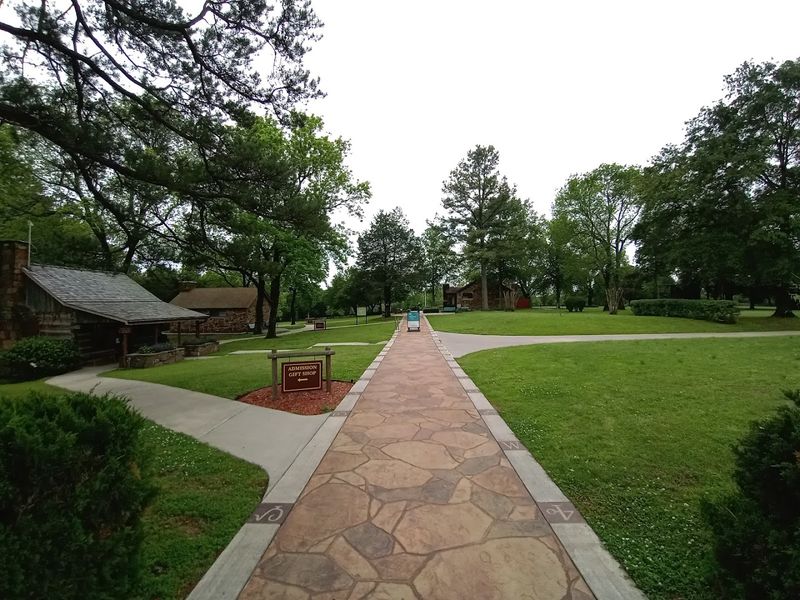
The property surrounding the museum is one of the first things that catches your attention on arrival. The landscaping is immaculate, with wide green lawns, mature shade trees, and a natural wooded backdrop that gives the site a serene, almost sanctuary-like quality.
It does not feel like a state-run historic property that is just going through the motions of upkeep.
A shaded picnic area sits on the grounds and is large enough to accommodate groups comfortably. Families with children tend to appreciate this especially, since it turns the visit into a full outing rather than just a quick stop.
The space is peaceful enough that lingering feels natural rather than forced.
The Cherokee Nation clearly invests care and resources into maintaining this property, and the result is a site that feels honored rather than just preserved. There is a difference between a place that is kept clean and a place that is genuinely tended with intention, and this falls firmly into the second category.
Even the drive in, along winding back roads through eastern Oklahoma’s green hills, contributes to the overall atmosphere in a way that a roadside attraction simply cannot replicate.
Free Admission: History Without a Price Tag
One of the most pleasant surprises about this site is that admission is completely free. The Cherokee Nation maintains and operates the museum at no cost to visitors, which makes it accessible to everyone regardless of budget.
In an era when many historic sites charge entry fees that add up quickly for families, that generosity stands out.
Free admission does not mean a lesser experience here. The quality of the exhibits, the condition of the grounds, and the engagement of the staff are all on par with paid attractions that charge considerably more.
The value-to-cost ratio is essentially off the charts, which is part of why the site earns such consistent praise from visitors.
Clean restrooms, ample parking for vehicles of all sizes including trailers and motor homes, and a well-stocked gift shop round out the practical side of the visit. The gift shop offers Cherokee-themed items, educational materials, and locally inspired keepsakes that make for meaningful souvenirs.
Spending a few dollars there feels like a natural way to give something back to a site that has given you quite a bit. A free visit that leaves you feeling genuinely enriched is the kind of travel experience that is worth going out of your way to find.
Activities on Site: More Than Just Looking
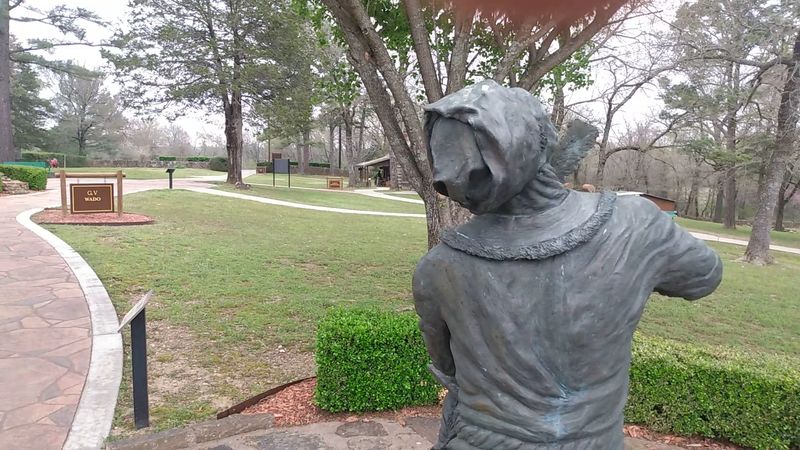
The visit goes beyond reading panels and admiring the cabin. Depending on who is working that day, visitors have reported getting to try blow darts, a traditional activity that adds a hands-on dimension to the cultural experience.
It is the kind of unexpected detail that turns a history lesson into a memory.
The grounds themselves invite exploration. Buckeye trees grow on the property, and staff sometimes encourage visitors to look for buckeye seeds, which has become a small but charming tradition among return visitors.
It is a minor thing, but it gives the visit a treasure-hunt quality that children especially seem to love.
For groups, the site works beautifully as a field trip destination or a co-op learning day. The combination of indoor exhibits, outdoor space, and knowledgeable staff creates a multi-layered educational experience that holds attention across different age groups.
History-focused travelers will find enough depth to keep them engaged for a couple of hours, while families with young children will appreciate the open space and the approachable way the story is presented. The site rewards curiosity, and the more questions you bring with you, the more satisfying the visit tends to be.
Planning Your Visit: What to Know Before You Go
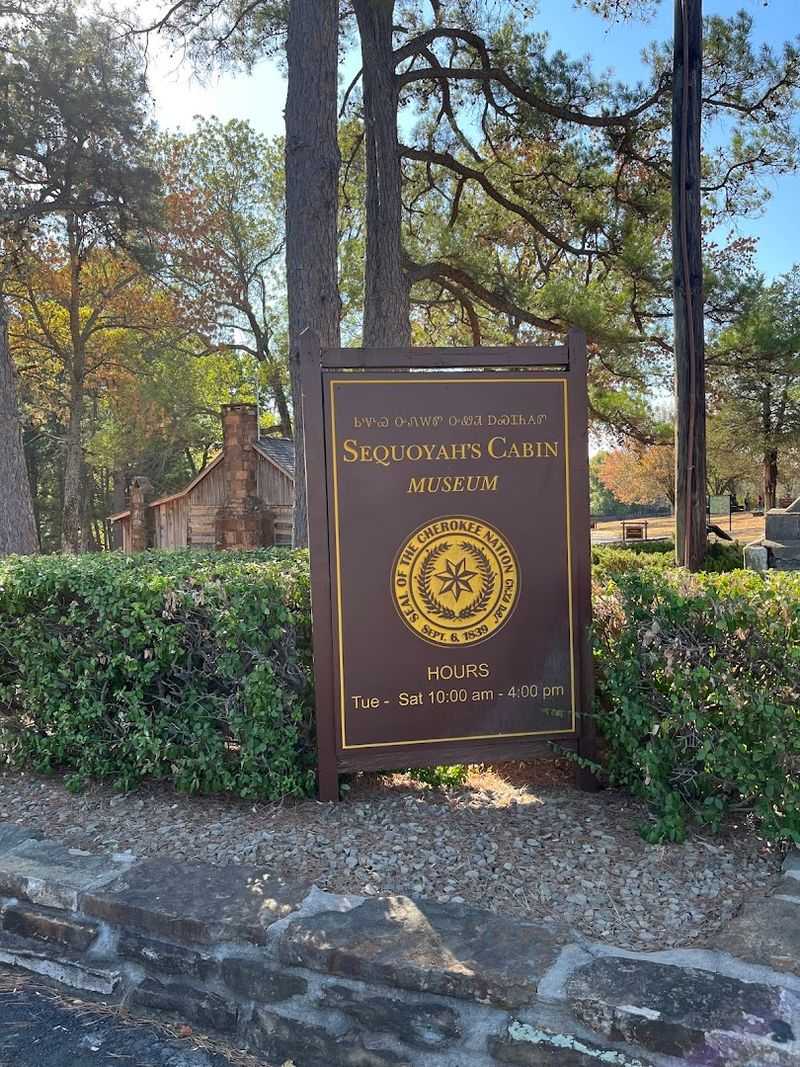
The museum is open Tuesday through Saturday from 10 AM to 4 PM and is closed on Sundays and Mondays. That schedule is worth double-checking before you make the drive, especially if you are passing through on a road trip and working around a tight itinerary.
The phone number is +1 918-775-2413, and the website at visitcherokeenation.com has current hours and additional information.
The site is located just off Interstate 40 near Sallisaw in eastern Oklahoma, making it a very manageable detour for anyone traveling between Oklahoma City and Fort Smith, Arkansas. Google Maps navigates reliably to the address, though some visitors note that road signage in the area can be sparse, so keeping your phone handy is a good idea.
The best time to visit is during the week when the site is less crowded and staff have more time for extended conversations and guided explanations. Arriving early in the day gives you the best chance of an unhurried experience.
Whether you are a history enthusiast, a Cherokee descendant tracing your roots, or simply a traveler who appreciates a genuinely meaningful stop, this cabin and the story it holds will stay with you long after you leave Oklahoma.



