 Unearth The Voyage
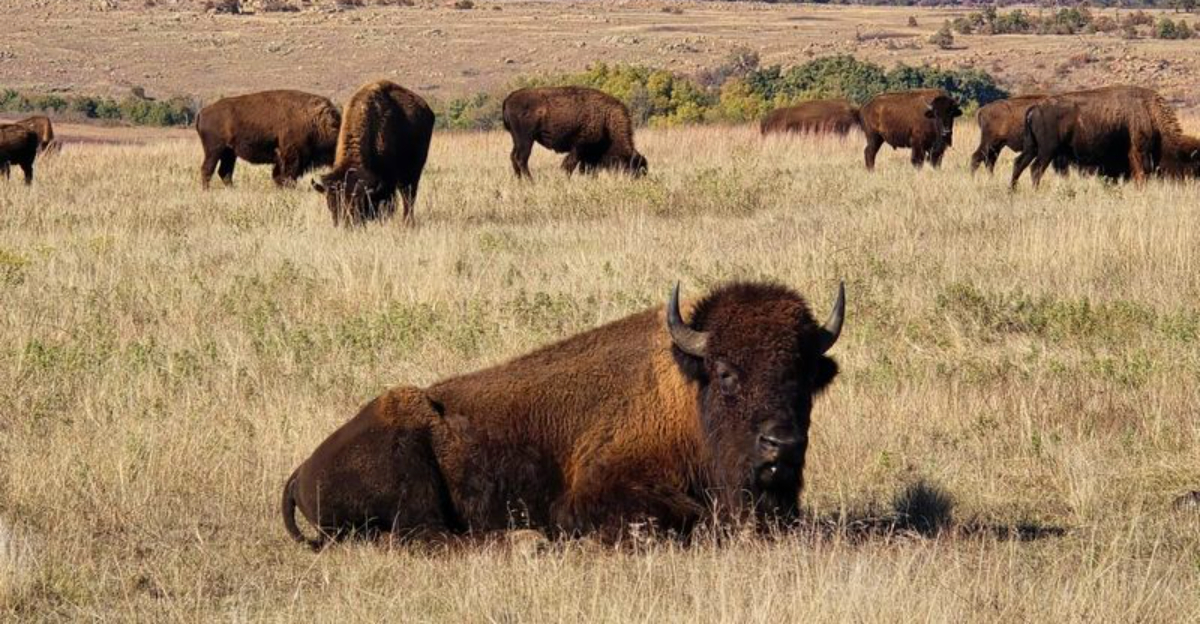
There is a place in southwest Oklahoma where bison roam across open plains, elk graze near rocky hillsides, and the sky stretches so wide it almost feels unreal. This wildlife refuge has a story that goes far beyond pretty scenery.
More than a century ago, it played a direct role in saving the American bison from disappearing forever. From its rugged granite peaks to its calm prairie lakes, this spot offers something rare: a chance to watch wild animals living freely in a landscape that has barely changed in thousands of years.
Whether you are a hiker, a history lover, or just someone who needs a break from city noise, this place will leave a mark on you.
The Refuge Address and Setting
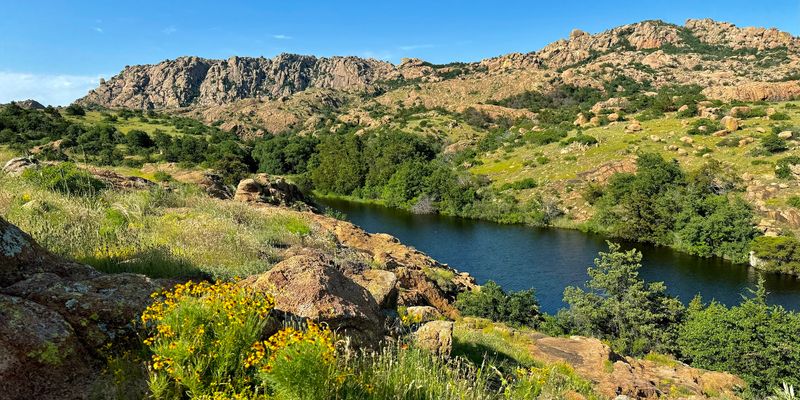
Right at the edge of the Wichita Mountains in southwest Oklahoma sits one of the most rewarding wildlife destinations in the entire country. The official address is 32 Refuge Headquarters Road, Indiahoma, OK 73552, and the refuge is open daily from 9 AM to 5 PM, with the visitor center reachable by phone at (580) 429-3222.
The refuge covers nearly 59,000 acres of mixed-grass prairie, rocky granite formations, and clear freshwater lakes. That combination creates a habitat that supports an extraordinary range of wildlife, from bison and elk to white-tailed deer, wild turkey, and dozens of bird species.
The landscape here does not look like most of Oklahoma. Ancient granite boulders rise sharply from flat plains, giving the area a dramatic, almost otherworldly character.
The Wichita Mountains themselves are among the oldest exposed rock formations in North America, estimated to be around 500 million years old.
First-time visitors are often caught off guard by how vast and quiet the refuge feels. Cell service disappears quickly once you pass the entrance, which honestly makes the experience even better.
Nature takes over completely, and that is exactly the point.
The Bison Comeback Story
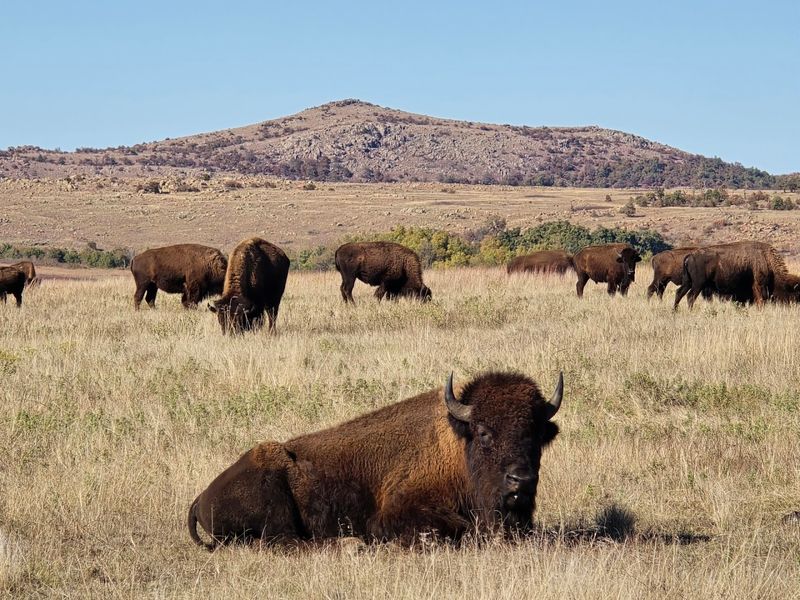
Few conservation stories in American history hit as hard as the near-disappearance of the bison. At their peak, an estimated 30 to 60 million bison roamed North America.
By the early 1900s, commercial hunting had reduced that number to fewer than 1,000 animals total.
The Wichita Mountains Wildlife Refuge became a turning point in that story. In 1907, the American Bison Society partnered with the New York Zoological Society to transport 15 bison by rail from the Bronx Zoo to this Oklahoma refuge.
That small group became the foundation of a wild herd that now numbers around 650 animals.
The success of this reintroduction helped prove that coordinated conservation efforts could actually work. Other refuges and parks across the country followed the same model, and today the total bison population in North America has grown to around 500,000 animals, a recovery that would not have happened without this refuge leading the way.
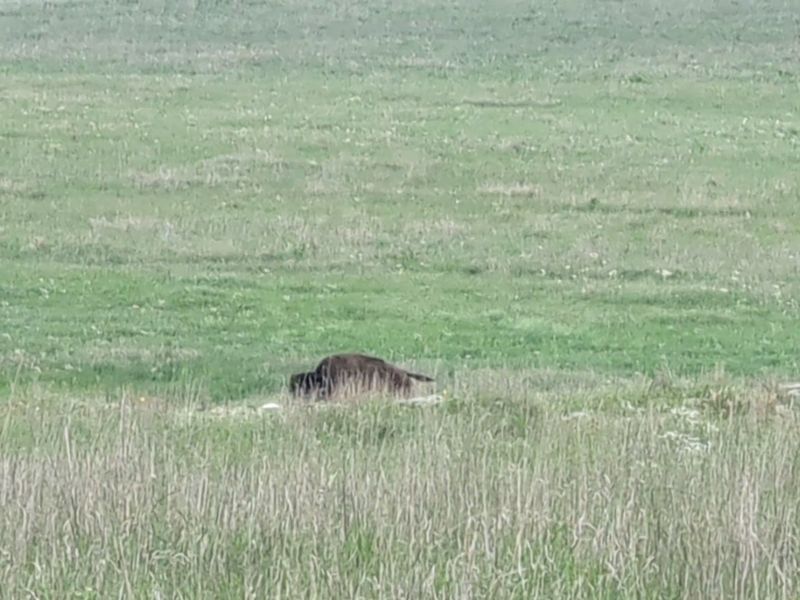
Seeing those animals graze freely across the prairie today, with no fence in sight from the road, makes the history feel very real. The bison here are not tame, and they carry that wildness visibly in the way they move.
Wildlife Beyond the Bison
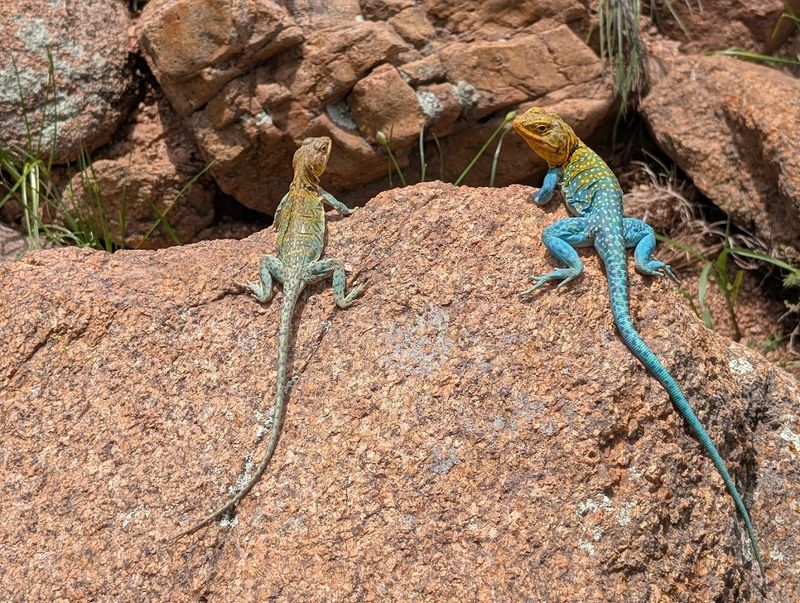
Bison get most of the headlines here, but the refuge supports a surprisingly wide cast of wild characters. Longhorn cattle roam the same open land as the bison, and watching a longhorn casually cross the road in front of your car is a moment that never really gets old.
Elk are another major draw, especially in the early morning and late evening when they move through meadows and along lake edges. White-tailed deer are practically everywhere, and some visitors have reported deer wandering directly into their campsites at night.
Prairie dog towns are scattered across the refuge and are genuinely entertaining to watch. These small, social animals pop in and out of their burrows constantly, chirping at each other and occasionally standing upright to survey their surroundings like tiny, fuzzy security guards.
Wild turkey, great blue herons, scissor-tailed flycatchers, and numerous hawk species round out the wildlife list for bird watchers. Fireflies appear in warmer months, turning the evenings into something that feels almost magical.
The refuge functions as a working ecosystem, and the diversity of animals here reflects how healthy that ecosystem has become over more than a century of careful management.
Hiking the Granite Trails
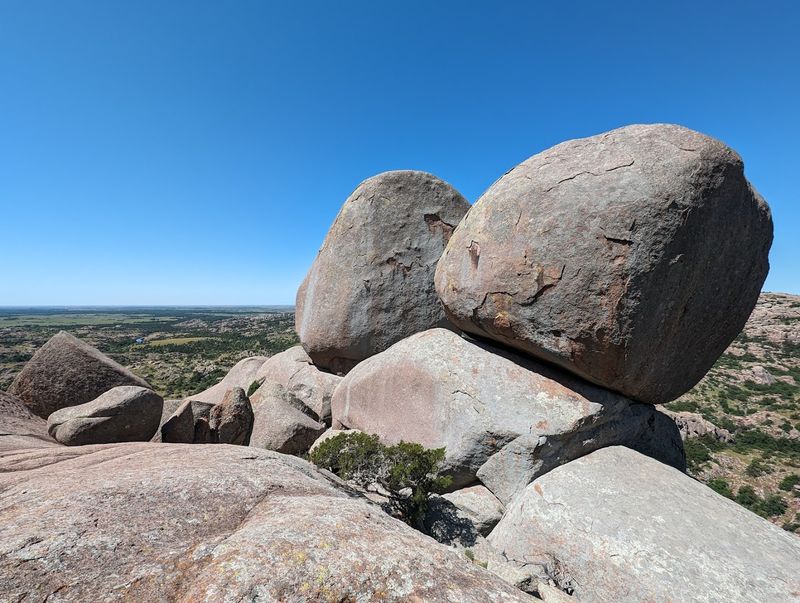
The hiking at this refuge is genuinely unlike anything most people expect from Oklahoma. The trails wind through ancient granite boulder fields, cross shallow creek beds, and climb to ridgelines with sweeping views of the surrounding plains.
Trail options range from short, relatively flat walks to more demanding scrambles that require using your hands to navigate rocky sections. The Narrows Trail and Elk Mountain Trail are two favorites among repeat visitors, both offering solid elevation gain and rewarding views at the top.
Even trails labeled as easy involve some rock stepping and uneven terrain, so sturdy footwear is a genuine requirement rather than just a suggestion. The rocks can be slippery when wet, and the sun exposure on open granite faces makes hydration critical, especially from late spring through early fall.
Cell service is largely nonexistent inside the refuge, so stopping at the visitor center before hitting the trails is a smart move. Staff there can recommend routes based on fitness level and current trail conditions.
Late afternoon light on the granite creates a warm reddish glow that photographers absolutely love. The contrast between the red rock, green vegetation, and open blue sky is something that no filter can fully replicate.
Mount Scott and the Scenic Drive
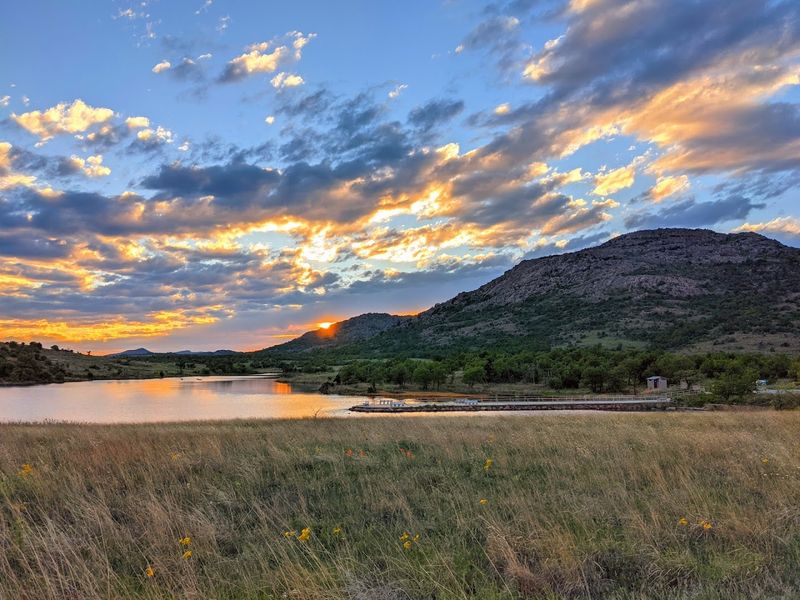
Mount Scott is the most accessible peak in the refuge, with a paved road that winds to the summit at 2,464 feet above sea level. The drive itself is scenic enough to justify the trip, but the view from the top is what people remember.
From the summit, the prairie stretches out in every direction, interrupted only by the other granite peaks of the Wichita range and the glittering surfaces of the refuge lakes below. On clear days, the visibility extends for many miles, giving the whole scene an enormous, open-sky quality that feels rare in this part of the country.
The road to the summit does not open until noon on most days, which surprises first-time visitors who arrive early expecting immediate access. That wait is worth building into your schedule rather than fighting against.
Sunsets from Mount Scott are particularly striking. The low angle of the evening sun turns the granite orange and pink, and the shadows across the plains below create a depth that makes the whole landscape look almost three-dimensional.
A short walking path at the summit lets you move around the rocky peak and find your preferred viewpoint. It is one of those spots where most people end up staying longer than they planned.
The Holy City of the Wichitas
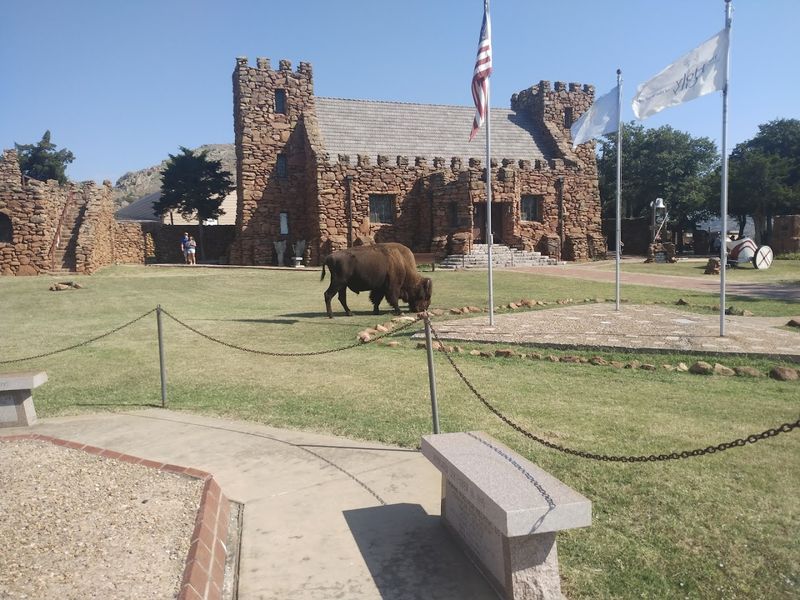
Tucked into the base of the granite hills is one of the more unusual sites inside the refuge: the Holy City of the Wichitas. This outdoor amphitheater and collection of stone structures has hosted an annual Easter pageant since 1926, making it one of the longest-running outdoor religious dramas in the United States.
The stone buildings and open-air stage were constructed during the 1930s as a Works Progress Administration project, and the craftsmanship reflects the care that went into the work. The structures blend into the surrounding granite landscape in a way that feels natural rather than imposed.
Even outside of pageant season, the Holy City is worth a visit. The setting is dramatic, with large granite boulders surrounding the open grounds and a quiet, contemplative atmosphere that feels distinct from the rest of the refuge.
Heart Rock, a nearby granite formation popular with climbers, is a short scramble from the Holy City area. The view from Heart Rock looks back across the amphitheater grounds and out over the open plains, giving a perspective that connects the human history of the site to the wider natural landscape.
It is one of those places inside the refuge that most visitors do not expect, and it adds a genuinely interesting layer to the overall experience.
Camping and Overnight Stays
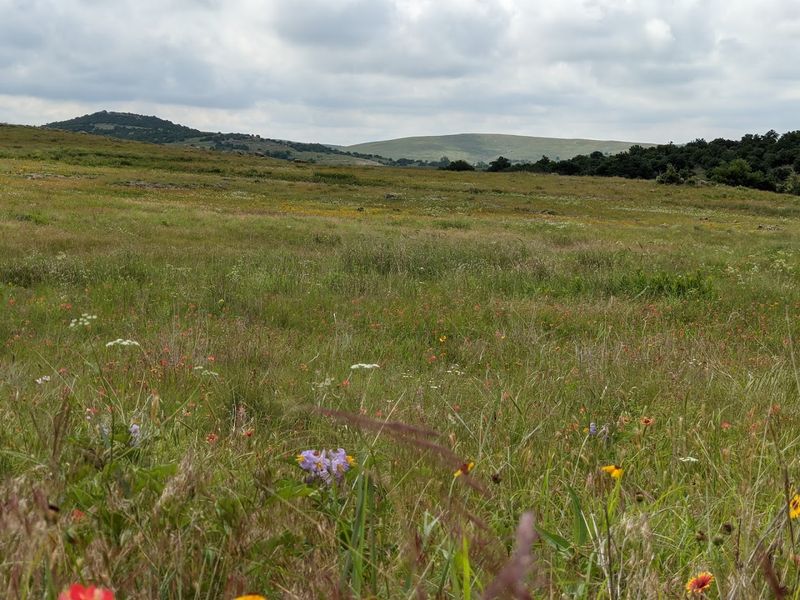
Spending a night at the refuge changes the experience entirely. The campgrounds here sit in settings that most people only dream about: lakeside sites with trails running directly from the campsite, surrounded by the sounds of birds, crickets, and the occasional distant bugle of an elk.
Site 51-B near the lake is one that campers mention frequently for its location and direct trail access. Deer wander through campsites with casual confidence, and mornings at the refuge are especially rich with wildlife activity before the heat of the day sets in.
The campgrounds have basic facilities, and reservations are recommended for weekends and peak seasons. The refuge attracts visitors from Texas, Kansas, and across Oklahoma, so popular sites can fill up quickly.
Waking up to bison grazing within sight of your campsite is the kind of thing that sounds like an exaggeration until it actually happens to you. The animals move freely throughout the refuge and do not follow a schedule that accommodates human expectations.
Fireflies in the warmer months turn the campgrounds into a natural light show after dark. The absence of city light pollution means the stars are also genuinely impressive, and on rare occasions, visitors have even spotted the northern lights from the refuge grounds.
The Visitor Center Experience
The visitor center at the refuge is the kind of place that earns its own recommendation rather than just serving as a starting point. The small museum inside gives a thorough introduction to the history of the refuge, the bison reintroduction program, and the ecology of the surrounding landscape.
Rangers and staff at the center are consistently described as friendly and genuinely helpful. They can point you toward trails that match your fitness level, warn you about current trail conditions, and share information about where wildlife has been spotted recently.
The bathrooms at the visitor center are reliably clean, which sounds like a minor detail until you have spent time at outdoor destinations where that is emphatically not the case. The gift shop carries a solid selection of nature guides, maps, and refuge-themed items.
Because cell service is essentially unavailable inside the refuge, the visitor center is also your best opportunity to download offline maps or pick up a printed trail map before heading out. Skipping this step is the most common mistake first-time visitors make.
The center is open during regular refuge hours, though government shutdowns have occasionally affected access. Checking the refuge website at fws.gov/refuge/Wichita_Mountains before your visit ensures you have the most current information.
Fishing and Water Activities
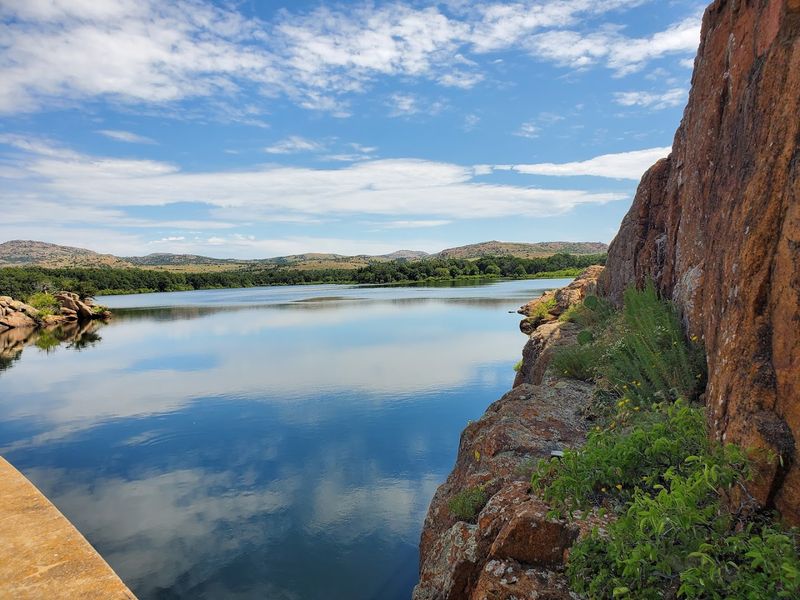
The refuge contains several lakes that offer solid fishing opportunities alongside their scenic value. Jed Johnson Lake, Lake Lawtonka, and Lake Elmer Thomas are among the water bodies within or adjacent to the refuge that attract anglers looking for bass, catfish, and other freshwater species.
Jed Johnson Lake in particular has become a gathering spot for photographers and stargazers in addition to anglers. The lake’s calm surface reflects the surrounding granite hills beautifully, especially in early morning light when the water is still and the wildlife activity along the shoreline is at its peak.
Kayaking and canoeing are popular on the calmer lakes, offering a water-level perspective on the landscape that hiking trails cannot match. Watching a great blue heron take flight from just a few feet away while you are sitting in a kayak is an experience that stays with you.
Fishing within the refuge requires a valid Oklahoma fishing license, and certain areas have specific regulations about catch limits and methods. The visitor center can provide current fishing guidelines to keep your trip within the rules.
One visitor captured photographs of the northern lights reflecting off Jed Johnson Lake, a reminder that this refuge has a way of delivering unexpected moments of beauty even to people who think they know what to expect.
Planning Your Visit: Practical Tips
A few practical details can make a significant difference in how much you get out of a visit to this refuge. Arriving early on weekdays gives you the best chance of seeing wildlife actively moving before the midday heat sends animals into shade and rest.
Water is non-negotiable, especially between May and September when temperatures regularly climb above 90 degrees Fahrenheit on exposed granite surfaces. Most experienced visitors bring more water than they think they will need and still wish they had brought more.
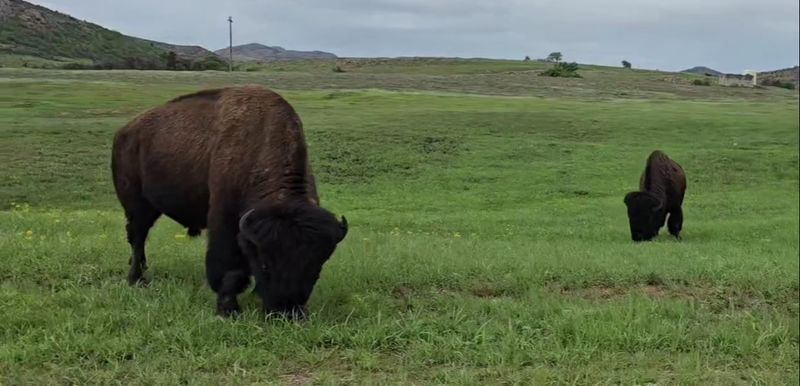
Bison and longhorn cattle roam freely throughout the refuge and will occasionally block roads or wander near vehicles. Keeping a safe distance of at least 100 yards from bison is the standard recommendation, and getting out of your car to approach them is genuinely dangerous.
These are wild animals with unpredictable behavior.
The refuge is free to enter, which makes it one of the best value outdoor destinations in the entire state. No entry fee, no parking fee, just open land and wild animals.
Nearby Meers, Oklahoma, is home to a well-known local restaurant famous for its burgers, making it a natural stopping point before or after your refuge visit. The combination of wild landscape and good food makes for a very satisfying Oklahoma day trip.



