 Unearth The Voyage
There is a stretch of quiet Oklahoma prairie where the wind moves through the tall grass without hurry, and the Washita River bends gently through the landscape as if it has all the time in the world. Nothing about the scene suggests that this ground once held one of the most sobering moments in American history.
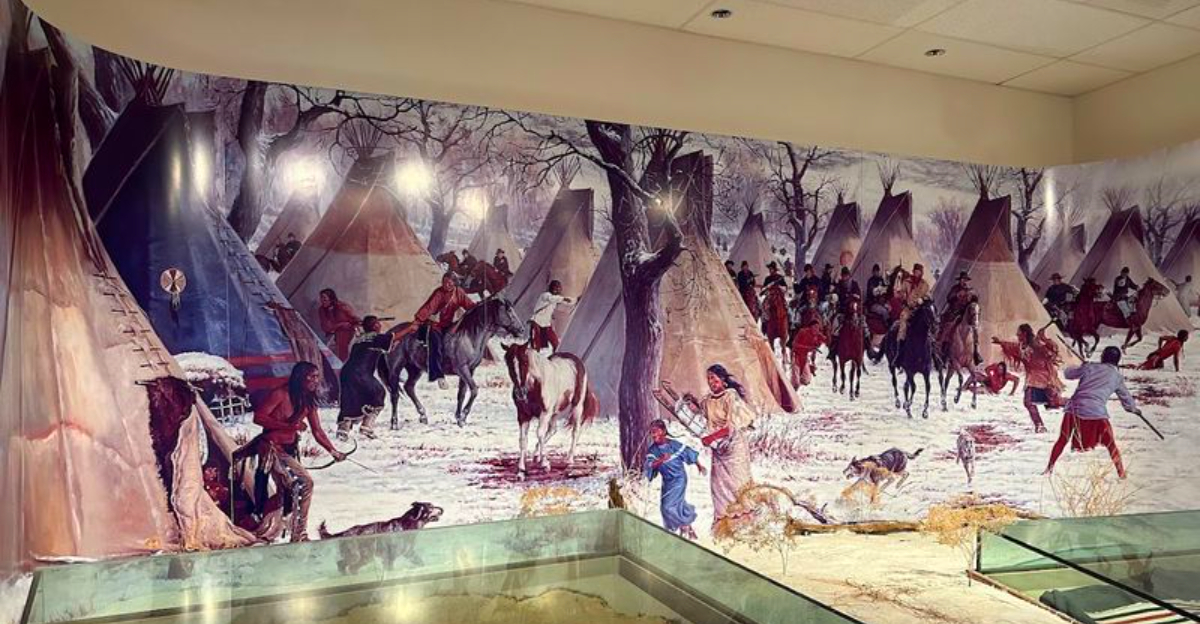
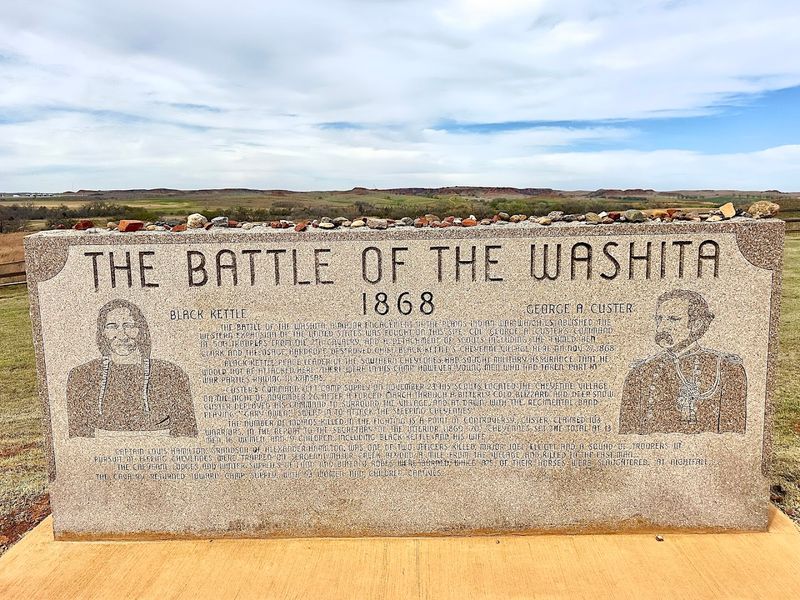
On November 27, 1868, Lt. Colonel George Armstrong Custer led the 7th Cavalry in a surprise attack on the sleeping Cheyenne village of Chief Black Kettle, a man who had spent years pursuing peace.
What happened here changed lives, shaped policy, and left a mark on the American story that deserves to be understood, not forgotten.
Finding the Site: Address, Location, and First Impressions
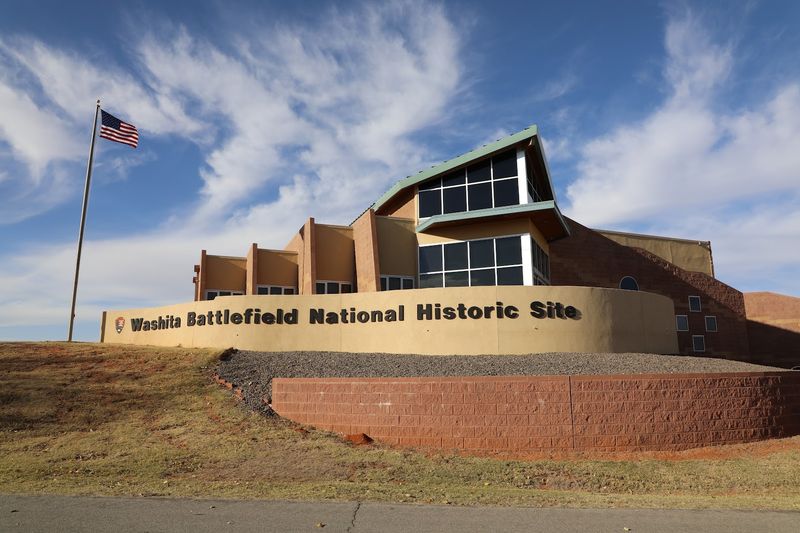
The address is 18555 OK-47 Alt, Cheyenne, Oklahoma 73628, and the drive out here is itself a kind of preparation. The landscape opens up as you head west through Roger Mills County, with rolling grasslands stretching in every direction and very little to interrupt the horizon.
The visitor center sits right off the highway and is easy to spot. There is no admission fee to enter, which makes this one of the most accessible National Historic Sites in the country.
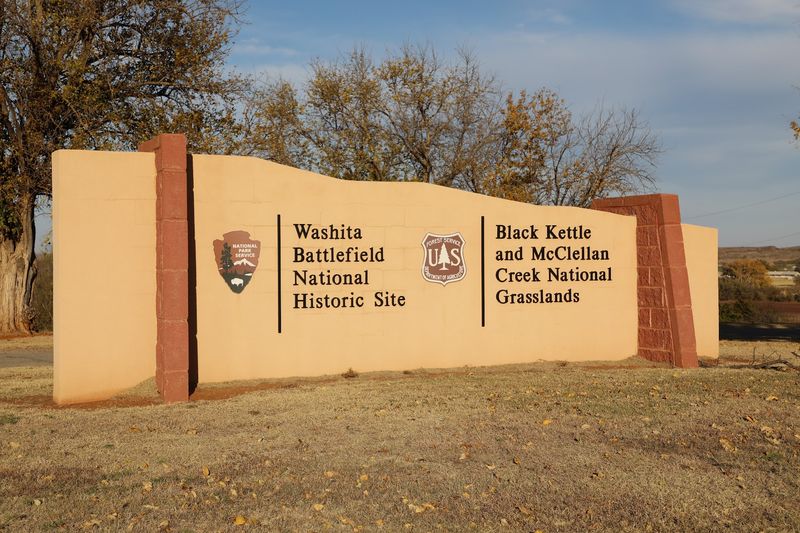
The site is managed by the National Park Service, and rangers are on hand to greet visitors and answer questions with genuine enthusiasm.
Operating hours run from 8 AM to 4:30 PM every day of the week, so planning a morning arrival gives you plenty of time to explore both the visitor center and the trail. The phone number for the site is 580-497-2742, and you can find additional resources at the official NPS website.
The remoteness of this corner of Oklahoma is part of what makes the visit feel so meaningful.
The Story Behind the Silence: What Happened on November 27, 1868
Chief Black Kettle was a man of peace. He had signed treaties, attended councils, and repeatedly sought a path forward that would protect his people from conflict.
By the winter of 1868, he had led his band of Southern Cheyenne to camp along the Washita River in present-day Oklahoma, believing they were in a safe location for the season.
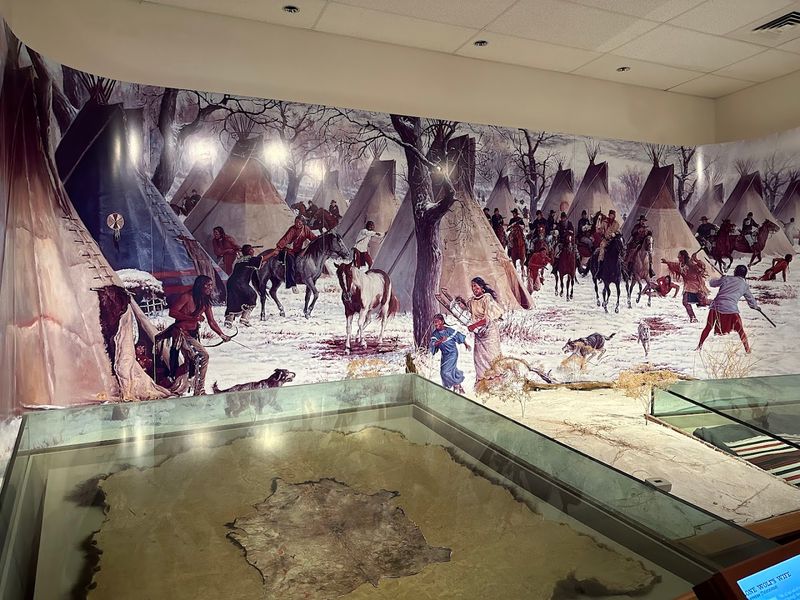
Before sunrise on November 27, Custer’s 7th Cavalry surrounded the village and attacked. The assault was swift and devastating.
Women, children, and elders were among those caught in the chaos. Black Kettle and his wife were among those who did not survive.
Hundreds of horses belonging to the Cheyenne were also shot, stripping the community of its ability to travel or sustain itself.
The event has been described by historians as both a military engagement and a massacre, and that debate continues today. What is not debated is the human cost.
The visitor center presents multiple perspectives on these events honestly and respectfully, making sure no single version of the story goes unchallenged. The weight of what happened here settles over you quietly, the way the prairie itself does.
Inside the Visitor Center: Exhibits, Artifacts, and the Must-See Film
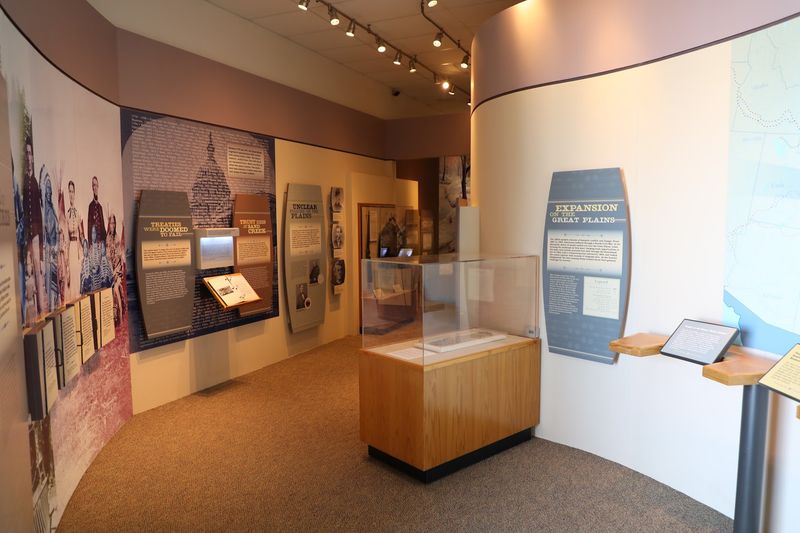
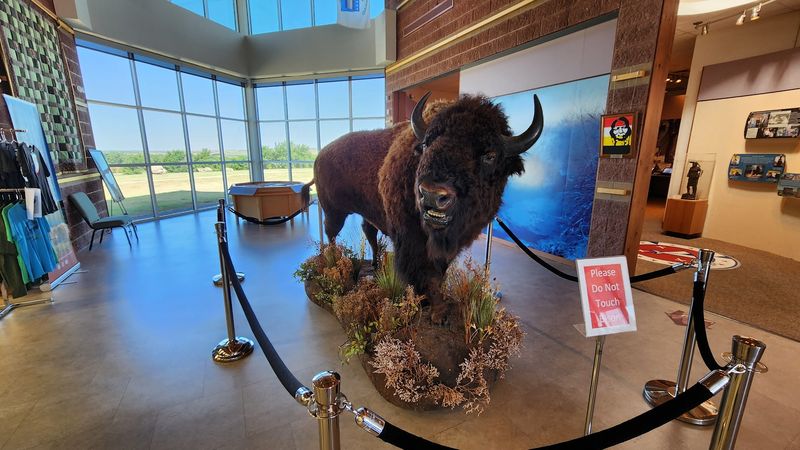
The visitor center is the right place to start your visit, and not just because the rangers will tell you so. The exhibits inside are thoughtfully arranged, with artifacts from the 1868 period that include items recovered from the site as well as pieces that help tell the broader story of the Southern Cheyenne people and their way of life before and after the attack.
The centerpiece of the visitor center experience is a 20-minute film that gives a detailed and balanced account of the events of November 27, 1868. The film draws on historical records and Native perspectives to present a layered view of what happened and why.
Watching it before heading out to the trail makes every signpost and overlook more meaningful.
There is also a gift shop with books, postcards, T-shirts, toys, and artwork by Native artists, including pieces by George Levi that visitors have found genuinely moving. A small but well-curated bookshelf includes Jerome Greene’s book “Washita,” which offers one of the most balanced historical analyses of the event available.
The rangers are knowledgeable and clearly passionate about sharing this history accurately.
The Interpretive Trail: Walking the Ground Where History Happened
A short drive west of the visitor center brings you to the trailhead for the battlefield loop, and the moment you step out of your car, the landscape does something to you. The open prairie stretches in every direction, and there is genuinely nowhere to hide.
That fact hits harder than any exhibit panel.
The trail is a double loop that is mostly flat and runs along the Washita River. Much of it is paved, making it accessible to a wide range of visitors.
The unpaved section of the loop is well-maintained, though visitors are advised to wear sturdy footwear if they plan to complete the full route. The entire walk is roughly half a mile from the visitor center, though the loop itself adds more distance.
Numbered stations along the route correspond to an audio tour available on your phone through the NPS website, turning the walk into a richly layered experience. At each stop, you learn something new about the layout of the village, the movement of the cavalry, or the lives of the Cheyenne people.
Standing at the river’s edge and listening to meadowlarks sing overhead is one of those travel moments you carry with you long after you leave.
The 650 Tile Horses: A Memorial That Stops You in Your Tracks
Near the trailhead, there is an installation that catches visitors off guard in the best possible way. Six hundred and fifty tile horses are arranged as a memorial to the Cheyenne ponies that were shot by Custer’s soldiers after the attack, a deliberate act meant to prevent the surviving Cheyenne from regrouping or traveling.
Each tile represents one horse. The visual impact of seeing all 650 together is genuinely striking, and for younger visitors especially, it provides a concrete, countable way to grasp the scale of what was taken.
One family reported that their son, who earned his Junior Ranger badge during the visit, was particularly moved by this installation and talked about it for days afterward.
The memorial is respectful in its simplicity. There is no dramatic lighting or elaborate framing, just the tiles, the prairie, and the sky.
That restraint is exactly right for a place like this, where the history speaks loudly enough on its own. The installation serves as both an artistic tribute and an educational tool, and it accomplishes both goals without overreaching.
It is one of the most quietly powerful memorials I have encountered at any national park site.
Black Kettle’s Legacy: Understanding the Man Behind the History
Chief Black Kettle was not simply a victim of history. He was a diplomat, a strategist, and a leader who understood the changing world around him and tried to protect his people by navigating it with wisdom rather than aggression.
He survived the Sand Creek Massacre in 1864 only to face another attack four years later at the Washita.
His story is central to the interpretation at the site, and the visitor center gives it the attention it deserves. Black Kettle had met with U.S. military leaders just days before the November attack and believed his band was camped in a protected location.
The betrayal embedded in that timeline is something visitors consistently find deeply affecting.
His wife, Medicine Woman Later, was also a figure of resilience. She had survived multiple wounds at Sand Creek and was by his side at the Washita.
Their story together is a reminder that history is made of individuals, not just events. The site honors Black Kettle not as a passive figure but as a man of genuine conviction who believed that peace was worth pursuing even when the evidence made that belief difficult to sustain.
That is a legacy worth understanding.
The Prairie Setting: What the Landscape Tells You
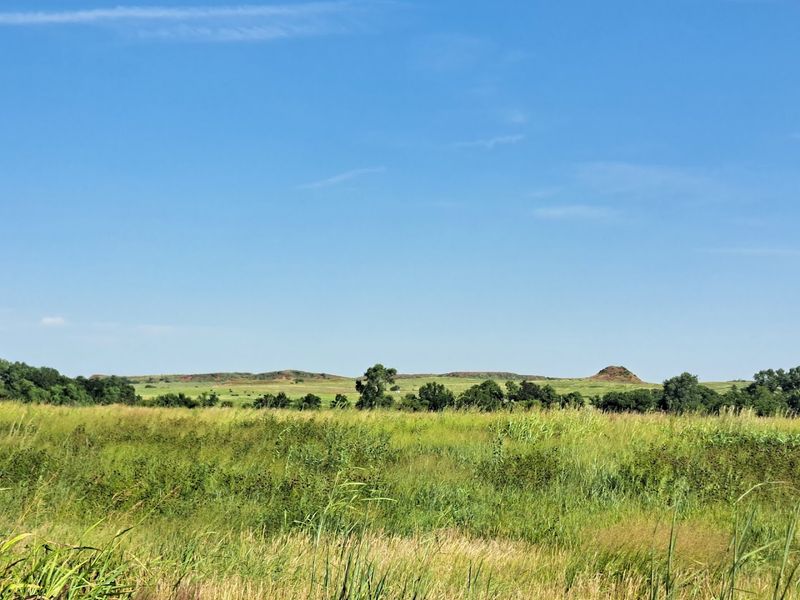
The landscape at Washita does not look like a place where dramatic history unfolded, and that contrast is part of what makes visiting so affecting. The prairie rolls gently, the river bends quietly, and wildflowers push up through the grass in spring, including prairie irises, Indian blankets, and wild daisies that seem almost too cheerful for the ground they grow on.
In winter, the site takes on a different character entirely. The grass turns amber and the wind moves across the open ground without obstacle, giving you a physical sense of how exposed the Cheyenne camp would have been on that November morning in 1868.
There are no ridgelines or dense forests to muffle sound or provide cover. Custer’s soldiers reportedly used the sound of a regimental band to mask their approach.
The vegetation display near the museum shows how the land changes across seasons, which adds an ecological dimension to the visit that many expect from a battlefield site. The site also sits near the Black Kettle National Grasslands, managed by the U.S.
Forest Service, which extends the natural landscape considerably. The whole area feels like a living document, part history, part ecology, and entirely worth your time.
Accessibility and Practical Visitor Information
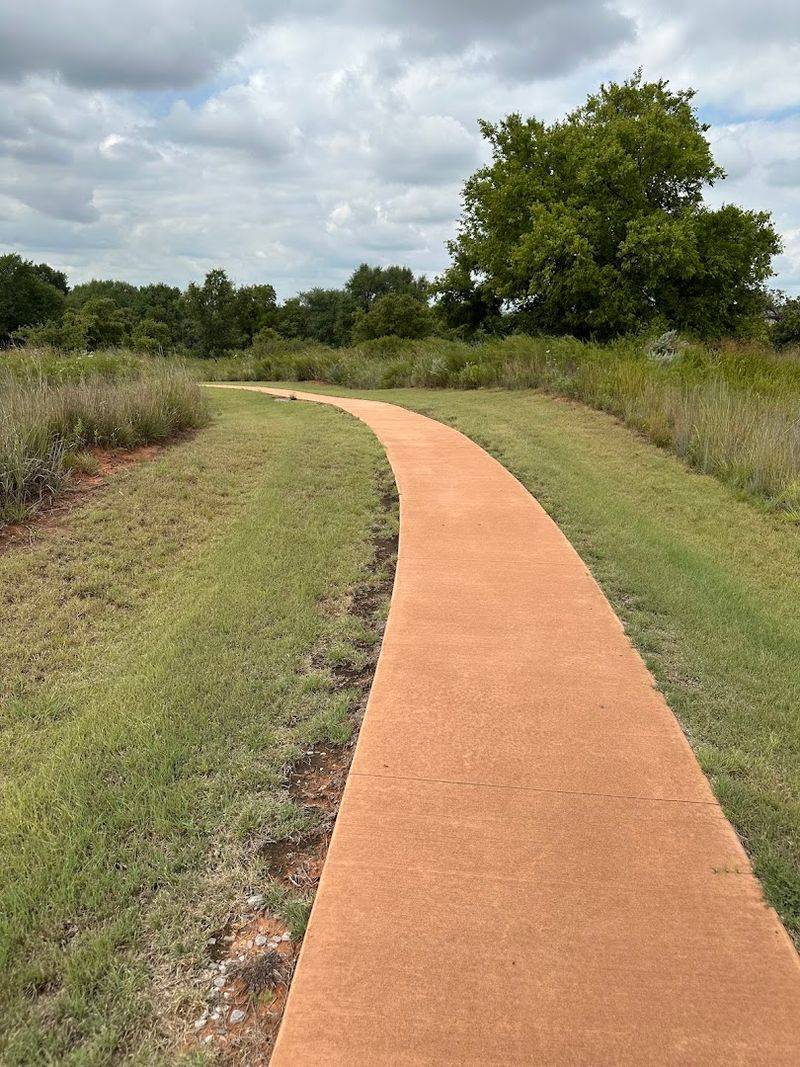
One of the things that stands out about Washita Battlefield National Historic Site is how well it accommodates a wide range of visitors. The trail from the visitor center is paved and flat, and the parking area at the battlefield trailhead includes disabled-accessible spaces along with vault toilets, water, a trash can, and a shaded picnic area.
There is no fee to enter the park, which makes it genuinely open to everyone. The site is entirely free, and the audio tour accessible through your phone adds a layer of depth without requiring any additional equipment or cost.
Visiting in the early morning, around 8 AM when the site opens, means you are likely to have the trail almost entirely to yourself, which adds to the reflective quality of the experience.
Summer visitors should bring water, as the prairie heat can be significant and there is limited shade on the trail itself. For those visiting during cooler months, a warm jacket is a good idea since the wind across the open grassland can be brisk.
The site is open seven days a week, so fitting it into a road trip through western Oklahoma is straightforward. Groups can also inquire about guided ranger programs and volunteer opportunities by calling 580-497-2742.
The Junior Ranger Program: A Meaningful Stop for Families
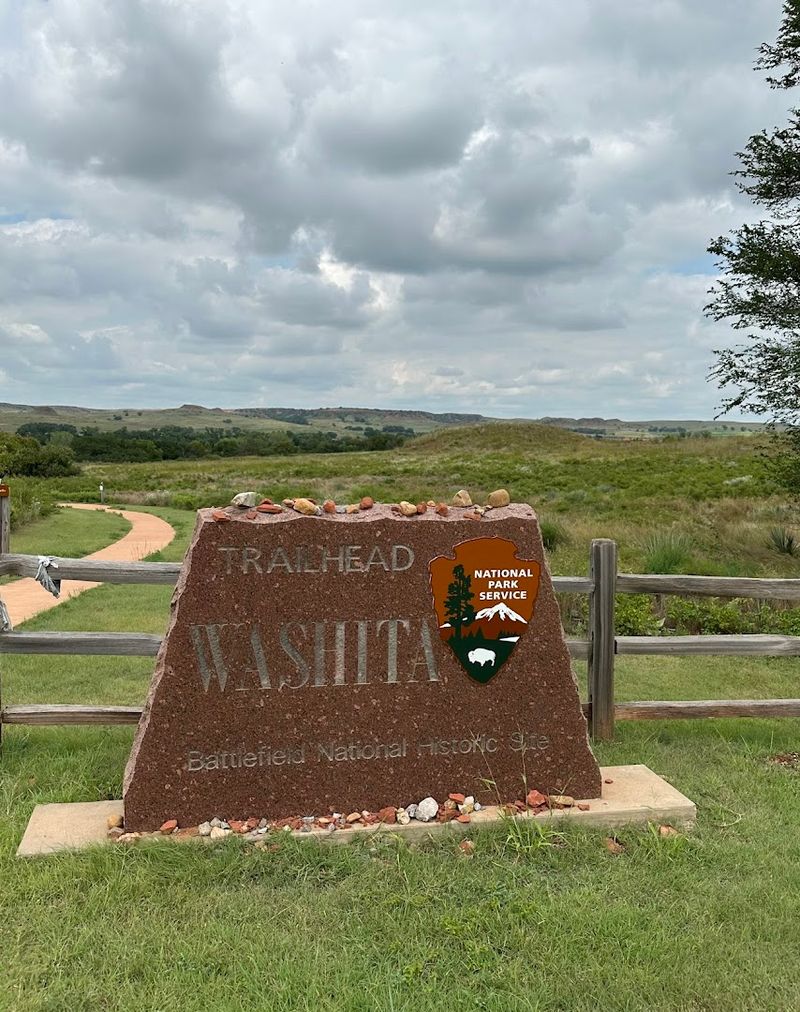
Bringing kids to a site like this one takes some thought, but the National Park Service has done the work of making Washita accessible and meaningful for younger visitors. The Junior Ranger program gives children a structured way to engage with the history, complete activities, and earn an official badge from the rangers on duty.
The rangers here are known for being genuinely welcoming, the kind of people who light up when a family walks through the door. They take time with kids, explain complex history in age-appropriate terms, and make the experience feel personal rather than scripted.
Children leave with not just a badge but a real sense of what the site commemorates and why it matters.
The 650-tile horse installation near the trailhead tends to resonate especially with younger visitors, giving them a countable, visual way to process the scale of what happened. The short film at the visitor center is suitable for older kids and provides a solid foundation before hitting the trail.
Families report that the visit sparks conversations that continue long after the drive home, which is exactly what a well-run historic site should do. Washita earns high marks as a family-friendly destination that takes its subject seriously.
Multiple Perspectives: How the Site Handles a Complicated History
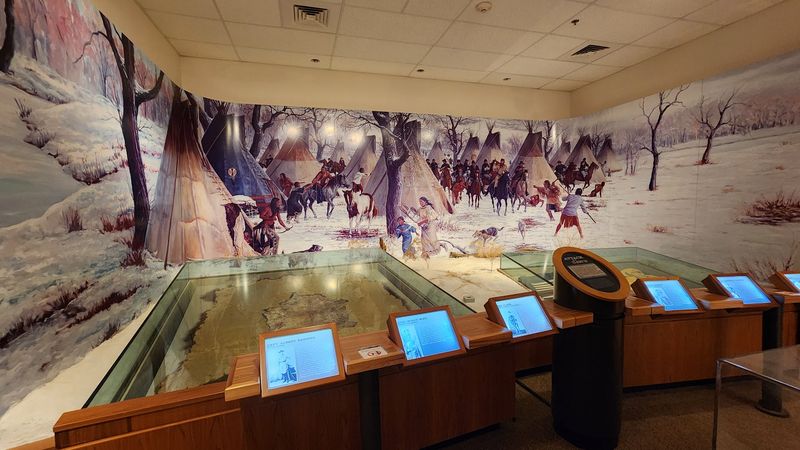
One of the most commendable things about this site is how honestly it confronts the complexity of what happened here. The National Park Service does not present a single, tidy narrative.
The exhibits, the film, and the ranger talks all acknowledge the ongoing debate about whether the events of November 27, 1868, constitute a battle or a massacre, and they let visitors sit with that tension rather than resolving it artificially.
The perspectives of the Southern Cheyenne people are centered in the interpretation, not treated as a footnote to military history. That choice reflects a broader shift in how the NPS approaches sites involving Native American history, and it is handled here with care and respect.
Visitors who arrive expecting a conventional battlefield experience often leave with a much more nuanced understanding of westward expansion and its human cost.
Some visitors have found the experience emotionally intense, and that reaction is entirely understandable. The site does not soften the story to make it easier to digest.
It trusts visitors to handle the truth, and that trust feels like a form of respect. For anyone with an interest in American history beyond the textbook version, this site offers something genuinely rare: a space where difficult history is treated with the seriousness it deserves.
Road Trip Ready: Washita as Part of a Broader Oklahoma Journey
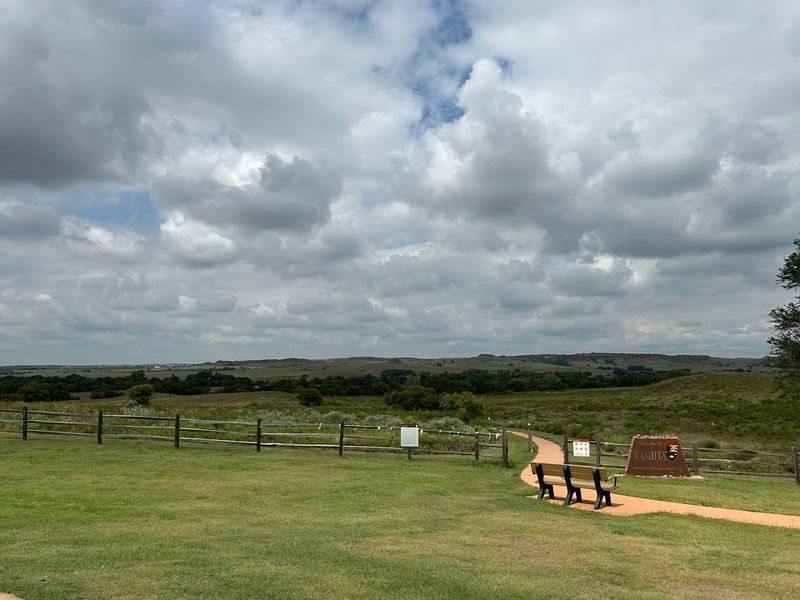
Washita Battlefield sits in the western reaches of Oklahoma, roughly equidistant between Oklahoma City and the Texas panhandle, which makes it a natural stop on a longer road trip through the region. The town of Cheyenne is small and quiet, but the surrounding landscape rewards travelers who are willing to slow down and look around.
The Black Kettle National Grasslands, which surrounds much of the area, offers additional outdoor exploration for those who want to extend their time in the region. Birding is particularly good in this part of Oklahoma, and the meadowlarks, cardinals, and mockingbirds that visitors hear along the Washita trail are just a preview of what the broader grasslands support.
Several visitors have mentioned stopping here spontaneously while driving between Oklahoma and Texas, and almost all of them say it was one of the best unplanned decisions of the trip. The combination of free admission, a well-run visitor center, a moving outdoor trail, and a story that genuinely matters makes Washita the kind of stop that earns a permanent place on any thoughtful traveler’s itinerary.
Plan for at least two to three hours if you want to do it properly, and you will not regret a single minute of that time.
Why This Place Stays With You Long After You Leave
There are travel destinations you enjoy and then forget, and there are places that quietly rearrange something in how you think about the world. Washita Battlefield falls firmly in the second category.
The combination of stunning natural beauty, rigorous historical honesty, and genuine human tragedy creates an experience that does not fade quickly.
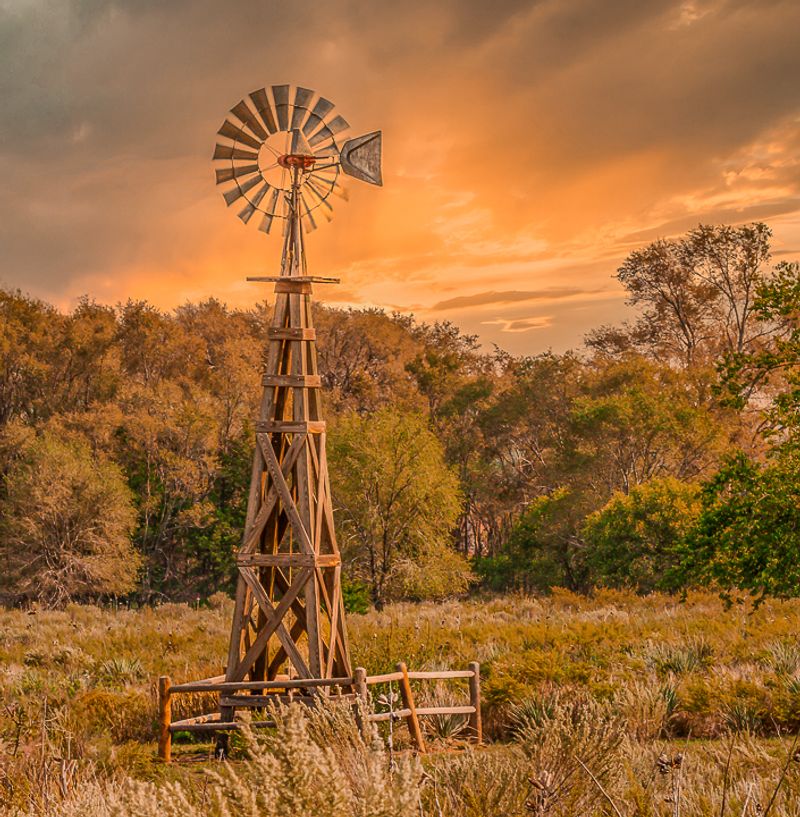
Standing at the edge of the Washita River, listening to the birds and feeling the prairie wind, it is not hard to understand why the Cheyenne chose this spot to winter. It is sheltered, beautiful, and alive with the sounds of the natural world.
That beauty makes the history more painful, not less, and the site leans into that contrast rather than avoiding it.
The 4.9-star rating from 79 reviews reflects something real about what visitors take away from this place. People come curious and leave changed, which is a rare achievement for any public attraction.
Whether you are a history enthusiast, a casual traveler passing through western Oklahoma, or a parent looking for a meaningful experience to share with your children, Washita delivers something that a screen or a textbook simply cannot. The prairie holds its history quietly, but it holds it completely, and it is waiting for you to come and listen.



