 Unearth The Voyage
There is a place in northeastern Oklahoma where you can drive through open land and watch a massive bison herd cross the road right in front of your car. Add in roaming elk, Texas Longhorns, and a world-class museum filled with Native American artifacts and Western art, and you have one of the most surprising day trips in the entire state.
Frank Phillips, the founder of Phillips 66, built this retreat in the 1920s, and it has been welcoming visitors ever since. Whether you are a history buff, a wildlife lover, or just looking for something genuinely different to do on a weekend, this place delivers far more than you would ever expect.
Where It All Begins: Address, Location, and First Impressions
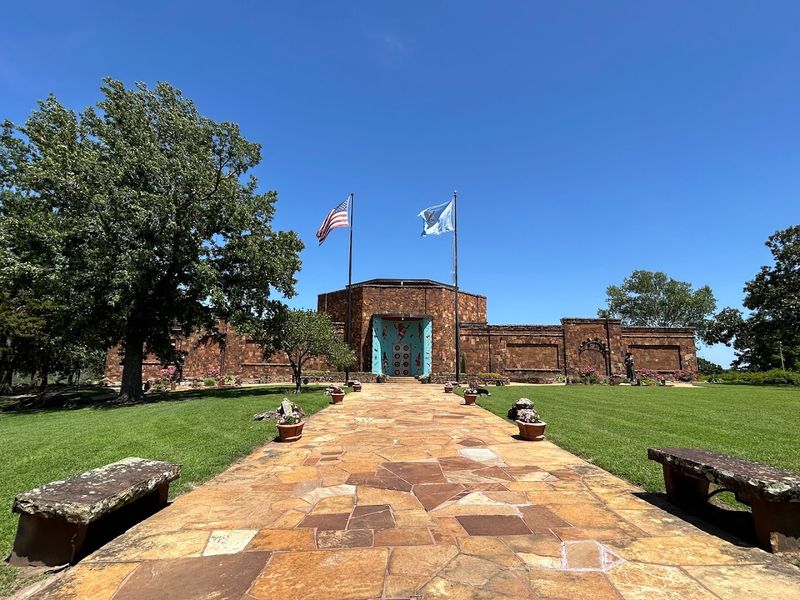
The moment you turn off the highway and pass through the front gate, something shifts. Woolaroc Museum and Wildlife Preserve sits at 1925 Woolaroc Ranch Rd, Bartlesville, Oklahoma 74003, tucked into the Osage Hills about 14 miles southwest of downtown Bartlesville.
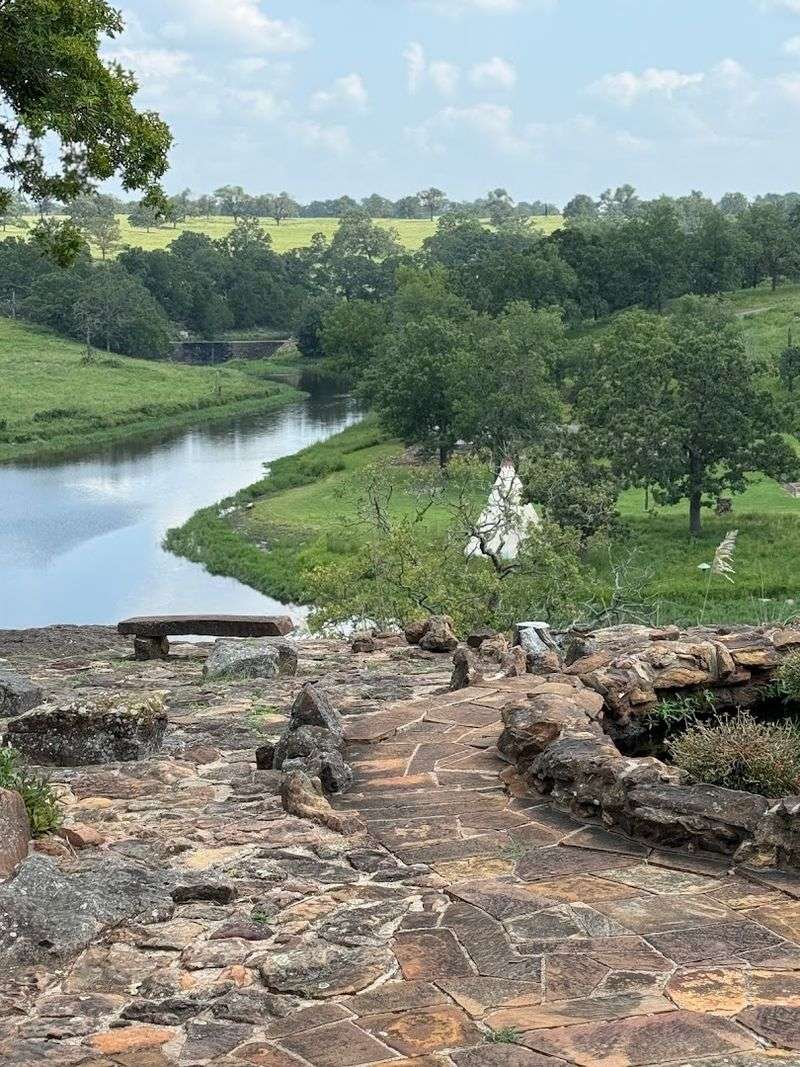
The name itself comes from a combination of three words: woods, lakes, and rocks, and that description fits the land perfectly. Rolling green hills stretch out in every direction, crystal-clear ponds catch the light, and limestone outcroppings jut up between clusters of blackjack oak trees.
From the moment you roll through the gate, the preserve feels like a different world entirely. The road winds through open grassland where wildlife roams freely, and you quickly realize this is not your average museum parking lot situation.
There is no rush here. The grounds cover roughly 3,700 acres, and the scenic drive alone takes a solid 10 to 15 minutes at a slow, animal-watching pace.
You can reach the preserve by calling ahead at (918) 336-0307 or visiting woolaroc.org to check hours before your trip.
The Bison Herd: Oklahoma’s Most Photogenic Traffic Jam
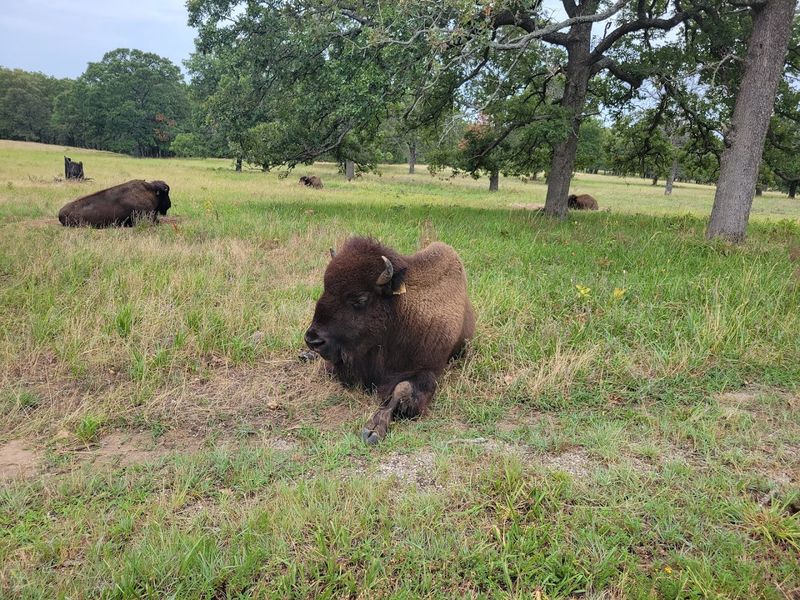
Nothing quite prepares you for the first time a 1,500-pound bison decides to stand in the middle of the road and stare directly at your car. The bison herd at Woolaroc is one of the preserve’s most celebrated features, and for good reason.
These animals are massive, shaggy, and completely unbothered by slow-moving vehicles. You stay in your car during the wildlife drive, which is both the safest and honestly the most exciting way to experience them up close.
The herd has been part of the preserve for decades, and watching them graze across the open hills gives you a real sense of what the Oklahoma prairie looked like centuries ago. Early morning visits tend to offer the most active sightings, as the animals move around more before the midday heat settles in.
Keep your camera ready and your windows cracked just enough to hear the low rumble of the herd moving through the grass. Getting stuck in a bison traffic jam is one of those rare travel moments that actually lives up to the hype.
Elk and Longhorns: The Other Stars of the Scenic Drive
Bison get most of the attention, but the elk and Texas Longhorns at Woolaroc are just as impressive in their own right. The elk tend to gather near the tree lines and shaded areas, their antlers rising above the brush in a way that makes you do a genuine double-take.
Texas Longhorns, with their famously wide horn spans, roam the open fields with a calm, almost regal energy. Seeing them up close from the comfort of your car is a completely different experience from seeing them in a photo or behind a fence at a state fair.
Beyond these headliners, the preserve is also home to zebras, deer, and the occasional wild bobcat spotted darting across the road. The variety of wildlife packed into one scenic drive genuinely surprises most first-time visitors.
The key is to drive slowly and keep your eyes scanning the hillsides rather than just watching the road directly ahead. Animals tend to appear suddenly and disappear just as fast, so patience and a good zoom lens on your phone or camera will serve you well throughout the drive.
Frank Phillips and the Story Behind Woolaroc
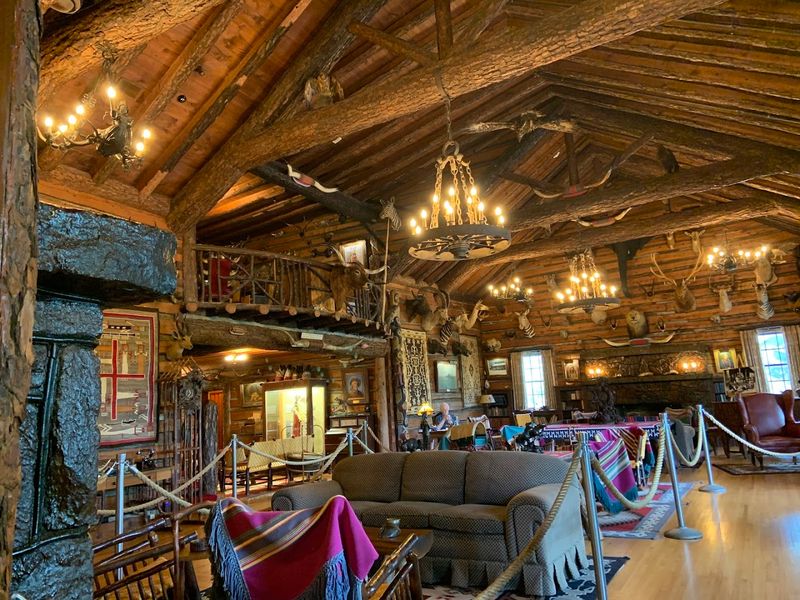
Frank Phillips was not a man who did things halfway. The founder of Phillips 66, one of the most successful oil companies in American history, built Woolaroc in 1925 as a private retreat where he could entertain business partners, politicians, and celebrities in a setting that felt both rugged and grand.
He named the property by blending the words woods, lakes, and rocks, which perfectly describes the Osage Hills landscape surrounding the lodge. What started as a personal escape eventually became a gift to the public, and today the entire property operates as a nonprofit dedicated to preserving its collections and wildlife.
Phillips had a genuine passion for collecting, and he filled his lodge and museum with thousands of artifacts, artworks, and historical objects gathered over several decades. His personal story is woven throughout every exhibit and building on the property.
Learning about his rise from a small-town Iowa barber to one of the most powerful figures in the American oil industry adds a fascinating layer to every room you walk through. The history here is not just displayed on walls but felt in the very structure of the buildings themselves.
The Great Lodge: A Rustic Masterpiece Worth Every Step
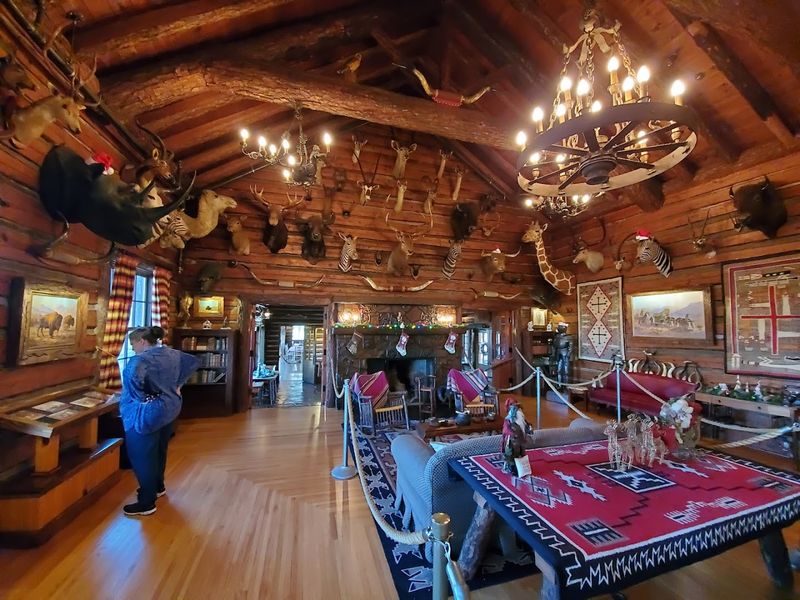
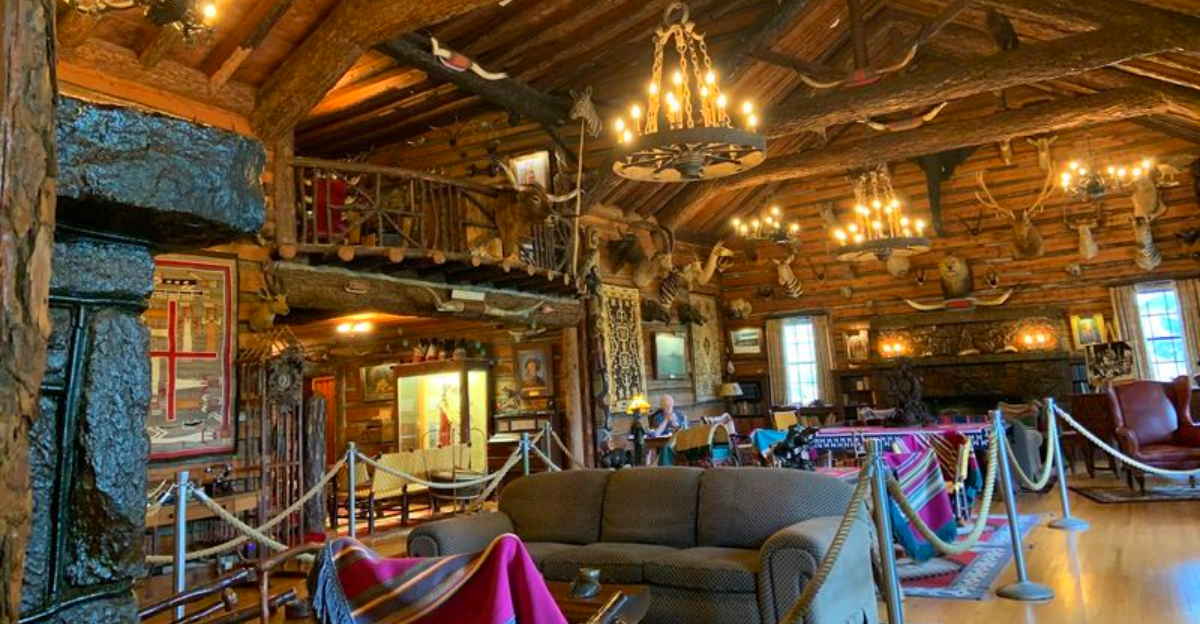
Frank Phillips built his lodge to impress, and nearly a century later, it still does exactly that. The Great Lodge at Woolaroc is a sprawling log and stone structure that feels like it belongs in the pages of a classic American adventure novel.
The front porch alone is worth the visit, with sweeping views across the crystal-clear lake and rolling hills that stretch out toward the horizon. Inside, the rooms are filled with mounted trophies, original furnishings, Navajo rugs, and pieces of art that Phillips collected during his lifetime.
Knowledgeable volunteers stationed throughout the lodge share stories about the Phillips family and the famous guests who once gathered here, from Will Rogers to President Calvin Coolidge. The conversations feel unhurried and genuinely interesting rather than scripted.
The lodge is open during regular preserve hours and is included with general admission, so there is no reason to skip it. Take your time in each room, because the details reward slow looking, and the view from the front porch at any hour of the day is the kind of thing that stays with you long after you drive home.
The Museum Collection: Western Art and Native American History
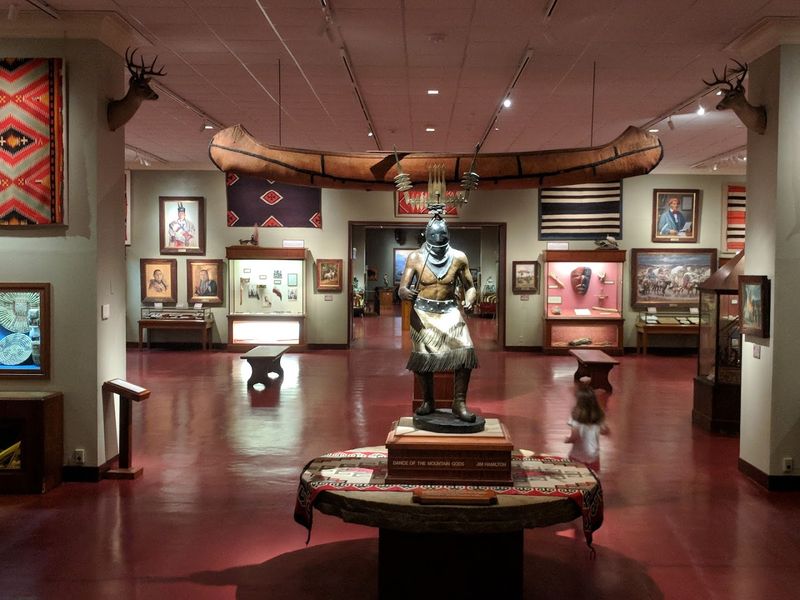
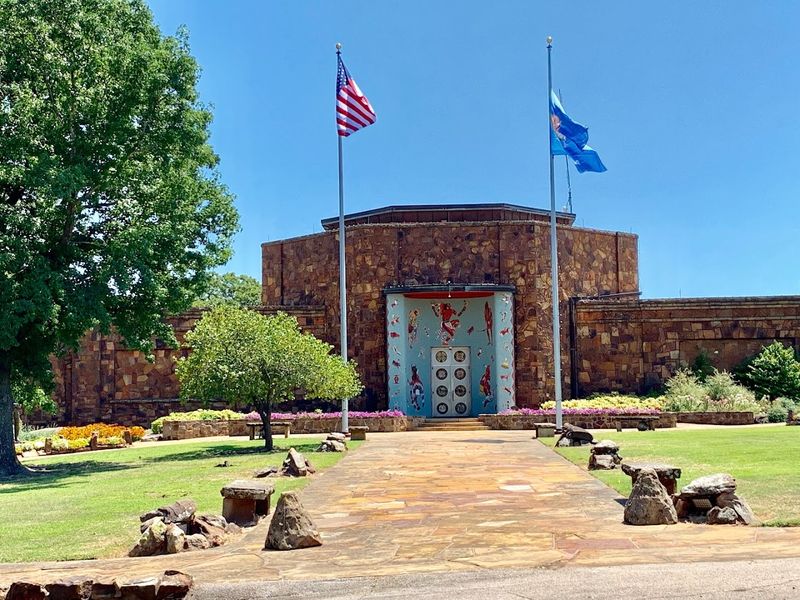
The museum building at Woolaroc holds one of the most impressive collections of Western American art and Native American history you will find anywhere in the country. That is not an overstatement.
The galleries contain thousands of objects, from bronze sculptures and oil paintings to ceremonial regalia, pottery, and beadwork gathered across multiple centuries.
Artists like Frederic Remington and Charles Russell are represented here, alongside works by lesser-known painters whose talent shines just as brightly. The Native American exhibits are particularly thoughtful, presenting history and culture with depth and respect rather than reducing them to simple displays.
One section that consistently draws extended attention is the firearms collection, which includes what is considered one of the most extensive assemblages of Colt handguns ever gathered in one place. History enthusiasts will want to budget extra time here.
The museum also houses the Woolaroc plane, a monoplane that won the 1927 Dole Air Race from California to Hawaii, which is a genuinely surprising piece of aviation history sitting right in the middle of Oklahoma. Each exhibit connects to a larger story about the American West, and the overall experience feels cohesive rather than cluttered.
The Woolaroc Plane: An Aviation Trophy You Never Expected
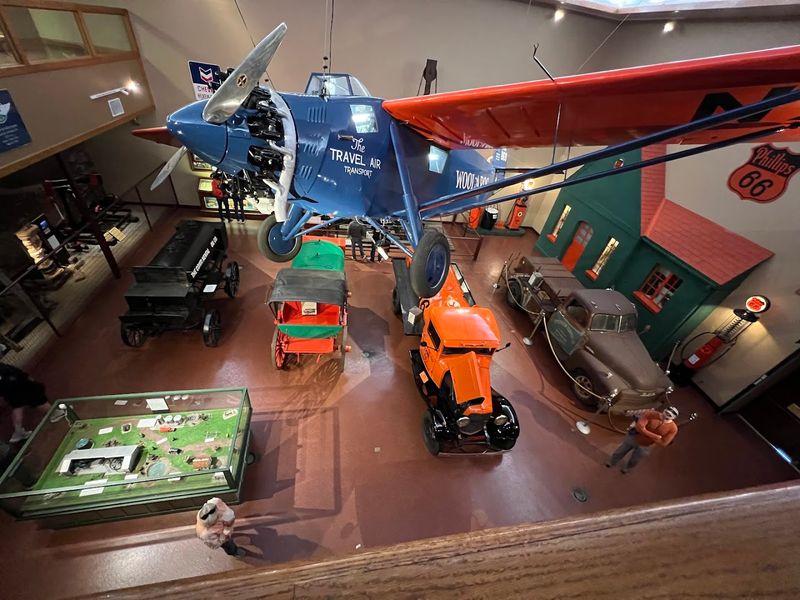
Most visitors come to Woolaroc expecting bison and art, but the Woolaroc plane tends to stop people mid-stride. The aircraft, a Travel Air 5000 monoplane named after the preserve itself, won the 1927 Dole Air Race, a grueling transpacific flight from Oakland, California to Honolulu, Hawaii.
Frank Phillips sponsored the plane and allowed it to carry the Woolaroc name, and when it landed victorious in Hawaii, it became an instant piece of American aviation legend. The plane is displayed inside the museum in remarkably good condition given its age and the journey it completed.
Standing beside it and reading the details of the race brings a real sense of how daring and genuinely dangerous that era of aviation was. Pilots were navigating vast stretches of open ocean with technology that would seem primitive by any modern standard.
The exhibit surrounding the plane includes photographs, newspaper clippings, and detailed accounts of the race that make the whole story come alive. It is one of those unexpected museum moments where you walk in knowing nothing and walk out genuinely fascinated, already planning to tell someone about it on the drive home.
The Prairie Dome Cafe: Fuel Up Before the Drive Back
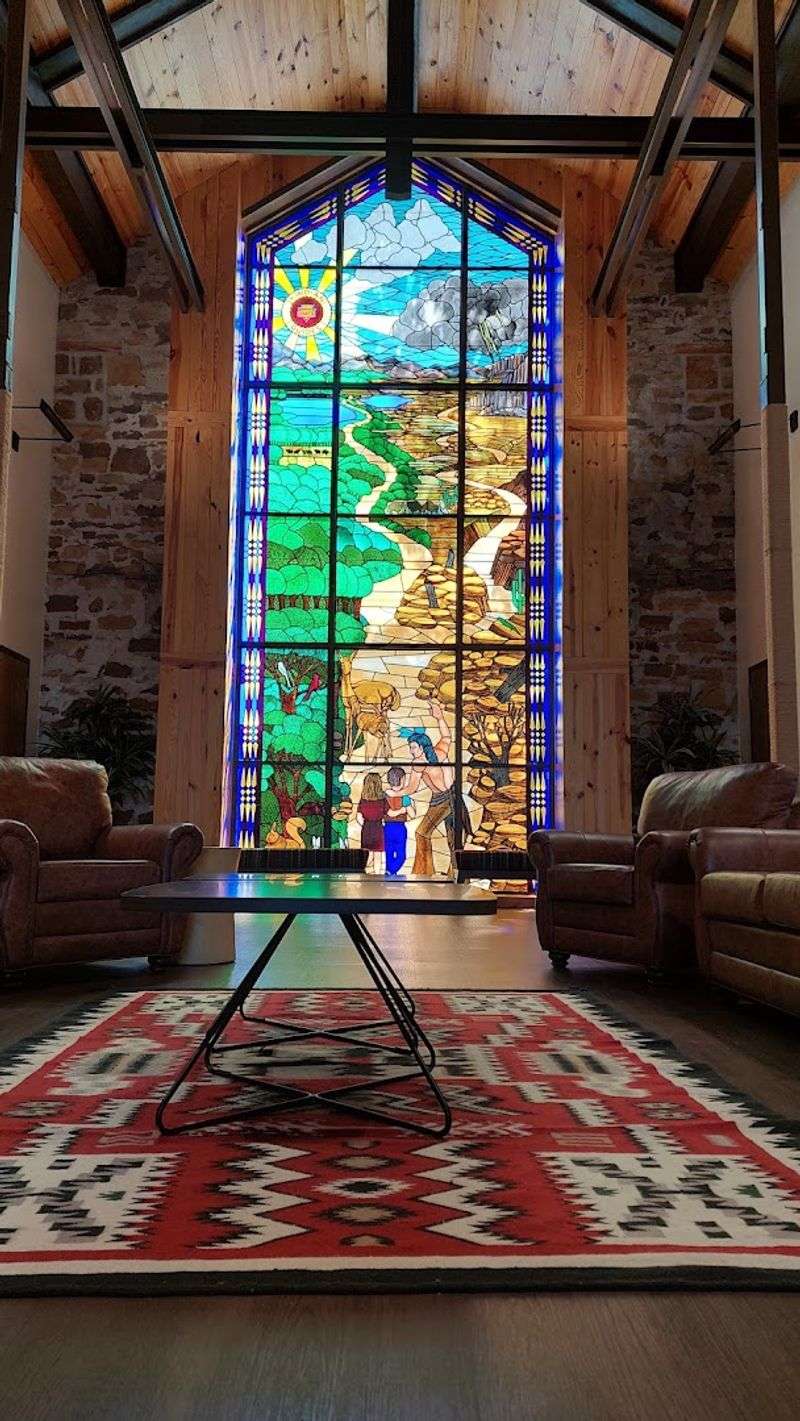
After a few hours of wildlife spotting and museum wandering, hunger arrives fast. The Prairie Dome Cafe at Woolaroc handles that problem with a menu that leans into the local character of the place rather than offering generic visitor center food.
The bison chili is the dish that gets mentioned most often, and it earns every bit of that reputation. It arrives thick, hearty, and deeply flavored, the kind of bowl that makes sense after a morning spent watching a bison herd move across Oklahoma grassland.
The ham and boursin croissant is another standout, light and buttery with a filling that feels a step above standard cafe fare. Service moves quickly even on busy weekends, and the staff keeps things friendly without being rushed.
The cafe sits inside the welcome center near the main museum building, so it is easy to fold into your visit without backtracking across the property. Seating near the windows offers pleasant views of the grounds, and the overall atmosphere stays relaxed and unhurried.
Grabbing lunch here rounds out the experience in a way that a drive-through stop on the highway simply cannot match.
The Petting Zoo and Playground: Built for the Younger Crowd
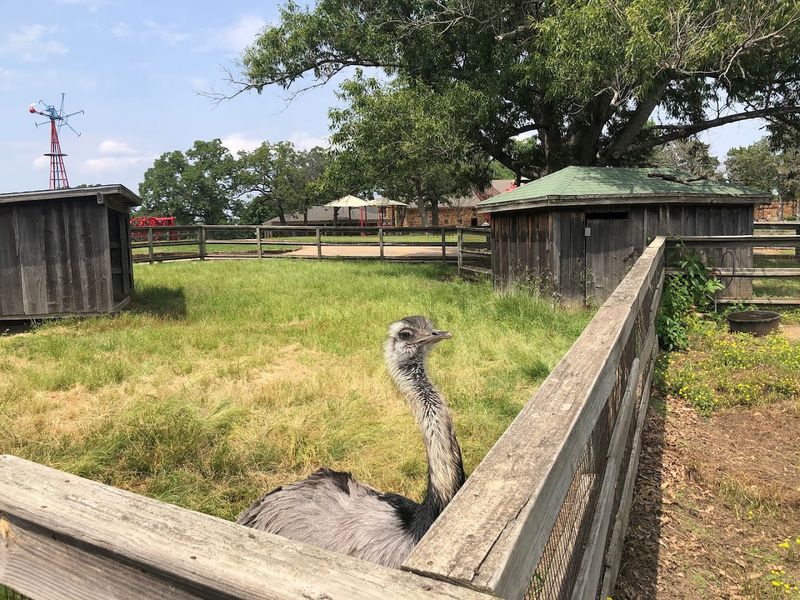
Families with younger kids have their own corner of the Woolaroc experience, and it is well thought out. The petting zoo gives children a chance to get hands-on with animals in a safe, supervised setting after spending time watching the larger wildlife from inside the car.
Goats, sheep, and other friendly animals are happy to accept attention from small visitors, and the energy in that area tends to be cheerful and a little chaotic in the best possible way. Parents appreciate how contained and manageable the space is.
Right nearby, a well-maintained playground gives kids a chance to burn off energy between the museum and the wildlife drive. It is a small but smart addition that makes the overall visit more comfortable for families who might otherwise struggle to keep young children engaged through an entire museum tour.
The combination of the petting zoo, playground, scenic drive, and museum means that a family visit to Woolaroc rarely runs out of things to do. Kids who might not naturally gravitate toward art exhibits tend to find their enthusiasm renewed after a round at the petting zoo, which makes the museum portion that much easier to enjoy together.
Hiking Trails and Outdoor Exploration
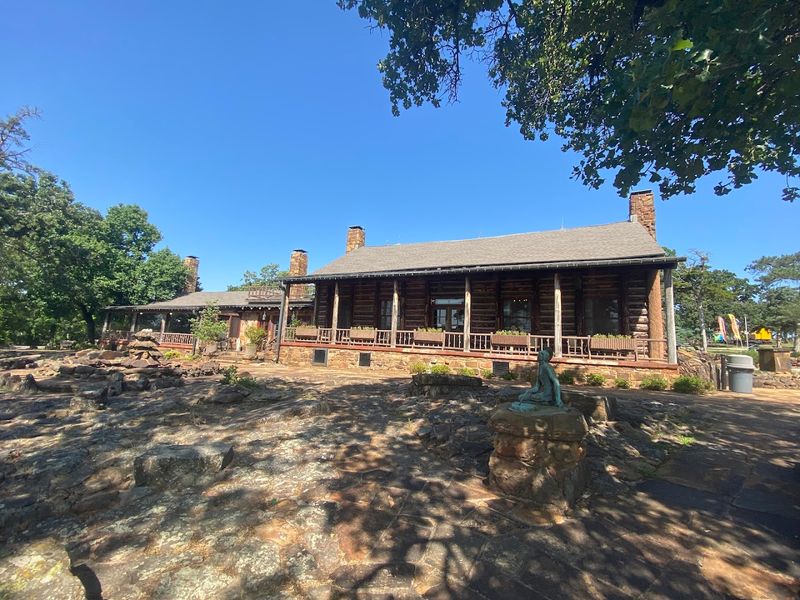
Not everyone wants to stay in their car or inside a museum, and Woolaroc accommodates that instinct well. The preserve offers hiking trails that wind through the Osage Hills landscape, passing limestone outcroppings, crystal-clear ponds, and patches of blackjack oak forest that feel genuinely wild.
The trails vary in length and difficulty, making them accessible to casual walkers as well as those looking for a more active outing. Birdwatchers find the wooded sections particularly rewarding, as the variety of habitat supports a diverse range of species throughout the year.
One of the most memorable moments that trail visitors report is spotting a bobcat crossing the path ahead of them, a reminder that this is a real working wildlife preserve rather than a manicured park. That sense of genuine wildness is rare and worth protecting.
Comfortable walking shoes are a must, and bringing water is always a smart call during warmer months. The trails connect naturally with the broader preserve experience, so you can move between the wildlife drive, the museum, and the outdoor paths without feeling like you are jumping between completely separate activities.
The whole property has a cohesive, unhurried rhythm that rewards those who take their time.
Wonderland of Lights: The Holiday Season Experience
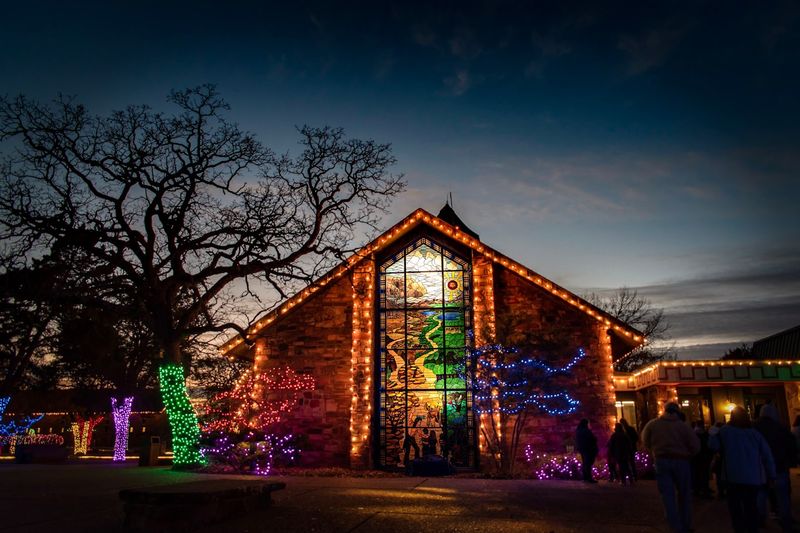
Woolaroc transforms completely during the holiday season with its annual Wonderland of Lights event, which runs on select evenings from late November through December. Cars line up along the entry road well before the gates open, which tells you everything you need to know about how popular this event has become.
The grounds come alive with thousands of lights strung through the trees, along the buildings, and across the lake edges, creating a scene that feels genuinely magical rather than commercially overdone. The museum stays open during the event and hosts photo opportunities with Santa and Mrs. Claus in the lobby.
A hayride departs from near the petting zoo barn and winds through the decorated grounds, offering a slower and more atmospheric way to take in the lights. Experienced visitors strongly recommend doing the hayride first before heading to the museum, as this approach tends to mean shorter waits at both stops.
The petting zoo also operates during the event, adding one more layer of activity for families. The Wonderland of Lights is genuinely one of the most charming holiday events in northeastern Oklahoma, the kind of tradition that families return to year after year without ever feeling like it has gotten old.
Planning Your Visit: Hours, Tips, and What to Know Before You Go
Woolaroc is open Wednesday through Sunday from 10 AM to 5 PM, and it is closed on Mondays and Tuesdays. That schedule catches some visitors off guard, so double-checking before you make the drive is always worth the 30 seconds it takes.
The preserve is dog-friendly, which is a detail that genuinely matters to a surprising number of visitors and sets Woolaroc apart from many other museum experiences. Keep pets leashed and be mindful around the wildlife areas, but the staff is welcoming toward well-behaved dogs.
Fridays tend to attract school field trips during the academic year, so if a quieter visit is your preference, arriving after lunch on a Friday or opting for a weekend morning gives you more breathing room. The admission price is considered very reasonable given how much the property offers across the museum, wildlife drive, lodge, trails, and cafe.
Woolaroc sits about 45 minutes from Tulsa, making it an easy day trip from the city. The phone number for the preserve is (918) 336-0307, and the website at woolaroc.org has current pricing and event listings.
There are very few places in Oklahoma that pack this much genuine variety into a single afternoon.



