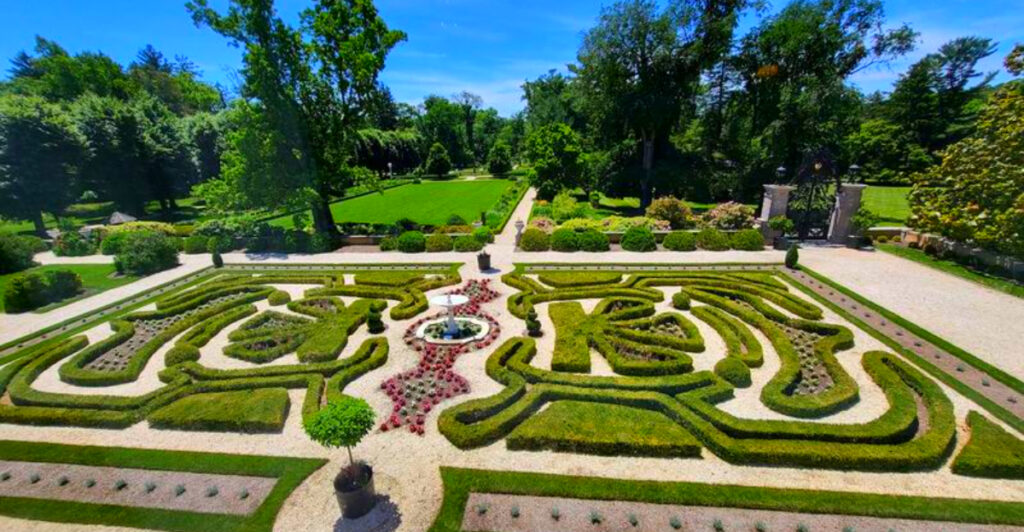
Nemours Estate is one of Delaware’s most impressive historic properties, with a 77-room mansion, rare family-owned antiques, and the largest formal French gardens in North America. It is the kind of place many travelers overlook, even though it has the scale and detail of a major destination.
What makes it stand out is how much of the estate still feels tied to the family that built it. Most of the furnishings, art, and decorative pieces inside are original, giving visitors a rare look at how the home was actually lived in.
Between the mansion, gardens, fountains, and preserved details, this Wilmington estate has far more to explore than a typical house tour.
A Gilded-Age Dream at 1600 Rockland Road
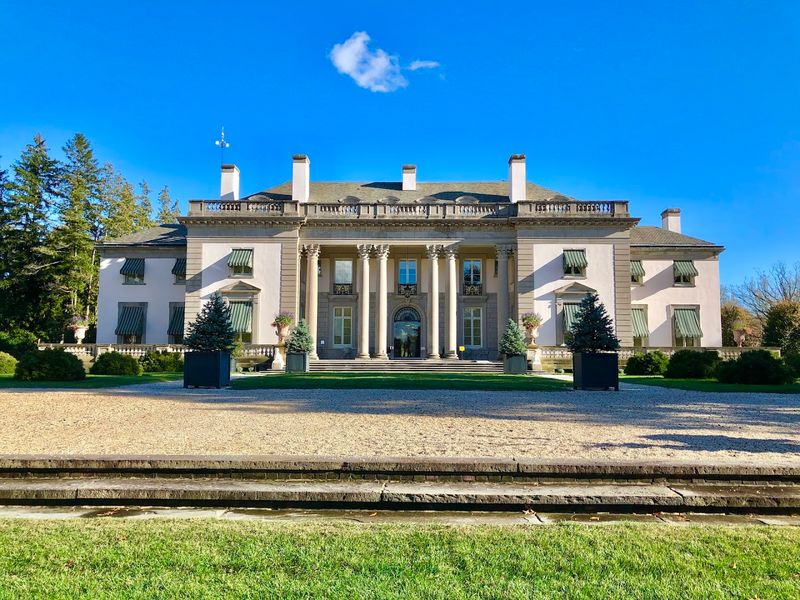
The address is 1600 Rockland Rd, Wilmington, DE 19803, and the moment you turn onto the property, the scale of what Alfred I. du Pont built here between 1909 and 1910 becomes impossible to ignore. The mansion rises in creamy stone, its Louis XVI neoclassical design instantly conjuring images of 18th-century French aristocracy rather than early 20th-century America.
Alfred commissioned the celebrated Beaux-Arts firm Carrère and Hastings to design the building as a gift for his second wife, Alicia Heyward Bradford. The result was loosely modeled on the Petit Trianon at Versailles, and the resemblance is striking enough to make you double-check your geography.
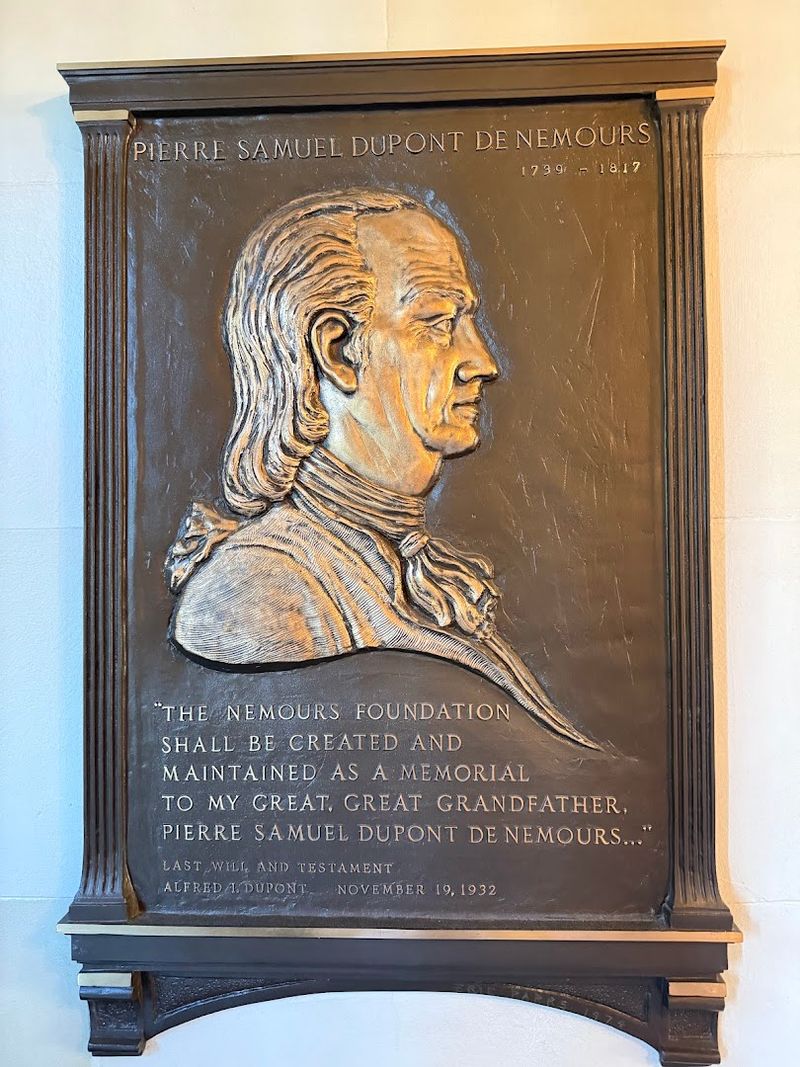
At 47,000 square feet spread across five floors, the mansion holds 77 rooms filled almost entirely with original furnishings. The estate takes its name from the town of Nemours in France, ancestral home of Pierre Samuel du Pont de Nemours, Alfred’s great-great-grandfather.
That family legacy is woven into every corner of this remarkable place.
The Man Behind the Mansion and the Family Legacy
Alfred I. du Pont was not the kind of man who did anything halfway. Born in 1864, he became one of the driving forces behind the du Pont industrial empire and brought the same intensity to his personal passions that he did to business.
That passion is evident throughout Nemours, a grand estate he created as a private sanctuary where he could surround himself with the finest art, furniture, and architecture money could buy. Drawn to French classicism, Alfred pursued the style with the enthusiasm of a true admirer rather than someone merely seeking to impress visitors.
His appreciation for French heritage extended beyond the mansion itself. In 1926, architect Thomas Hastings – one half of the Carrère and Hastings firm that designed Nemours – created the estate’s elegant Colonnade as a memorial to Pierre Samuel du Pont de Nemours and his son Eleuthère Irénée du Pont, the founding figures of the American du Pont dynasty.
The graceful arc of stone columns serves both as a striking architectural feature and as a tribute to the family’s origins. Pierre Samuel, a French economist and political figure, emigrated to America following the French Revolution, and his name lives on through the estate itself.
Walking through the Colonnade offers a reminder that Nemours was designed to honor family history as much as aesthetic beauty. The shaded walkway frames sweeping garden views while connecting visitors to a story that stretches from 18th-century France to modern-day Delaware.
After Alfred’s death in 1935, that story took another significant turn when he left the estate to the Nemours Foundation, which he had established to support children with disabilities. He directed that the property become a museum open to the public, a remarkably generous decision that continues to shape every visit today.
Thanks to that vision, Nemours remains both a magnificent architectural treasure and a living monument to the du Pont family’s enduring legacy.
Room After Room of Jaw-Dropping Interiors
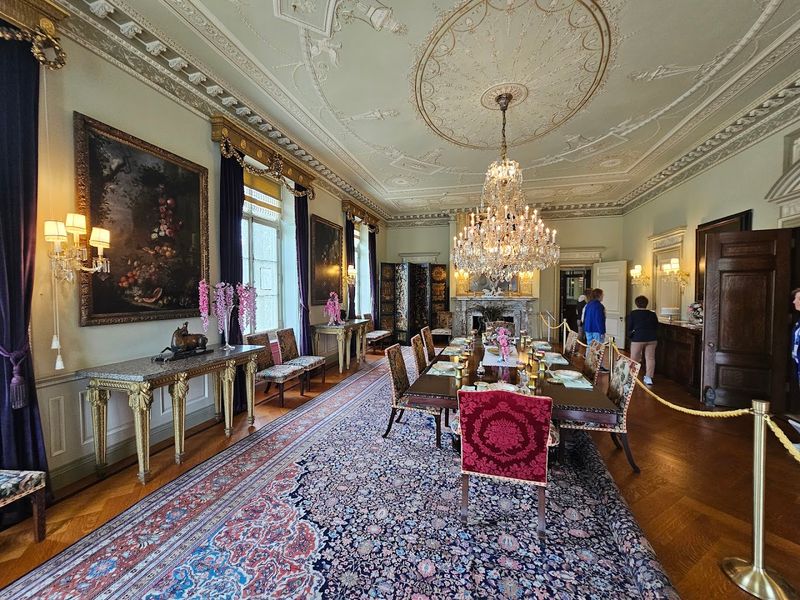
Most historic house museums rope off entire floors and let you peer at empty rooms through velvet barriers. Nemours is different.
The mansion opens up three full levels of lavishly decorated interiors, and nearly every object you see belonged to Alfred and Alicia du Pont themselves.
Crystal chandeliers hang above rooms furnished with rare 18th-century French pieces. Tapestries line the walls alongside paintings by French and British masters, including family portraits that watch you from gilded frames as you move from room to room.
The conservatory alone is worth the ticket price, flooded with natural light and filled with botanical elegance.
Two details that consistently stop visitors in their tracks are a Louis XVI musical clock and a clock that was originally built for Marie Antoinette. The wood-paneled bowling alley tucked into the lower floors adds a surprisingly human touch to all the grandeur, a reminder that even people who live in palaces still want to knock down some pins on a rainy afternoon.
The Largest French Formal Gardens in North America
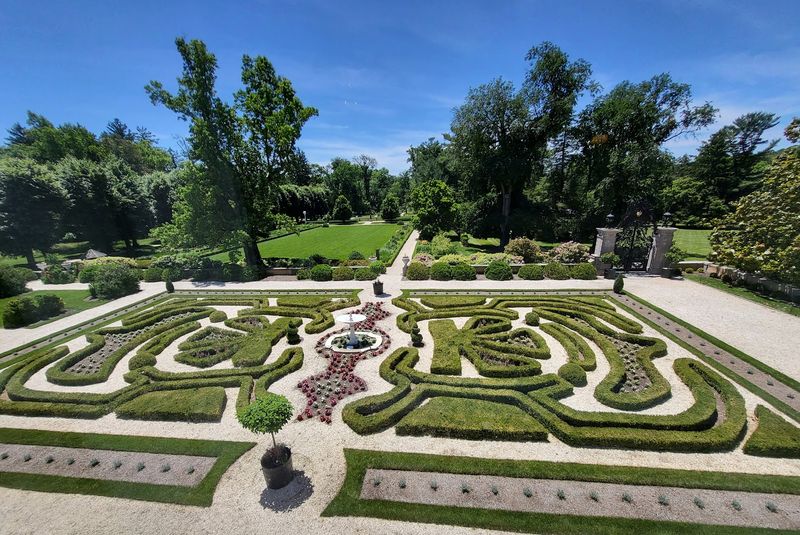
The gardens at Nemours are not just beautiful. They hold a genuine record: these are the largest and most fully developed French formal gardens on the entire North American continent, covering 200 acres of grounds and woodlands patterned directly after the gardens at Versailles.
The central feature is the Long Walk, a grand axis stretching one-third of a mile from the mansion and flanked by perfectly trimmed trees. A pair of bronze elk sculptures by French artist Prosper Lecourtier stands sentinel along this path, their weathered patina blending into the green landscape as if they have always been there.
Every element of the garden design follows the French formal tradition of strict symmetry, geometric precision, and theatrical scale. The effect is one of controlled grandeur, where nature is shaped into architecture without losing its essential beauty.
First-time visitors often underestimate how much ground there is to cover, which is exactly why the estate offers a narrated shuttle tour to help you take it all in without exhausting yourself before reaching the best parts.
The Reflecting Pool and Its Spectacular Fountain
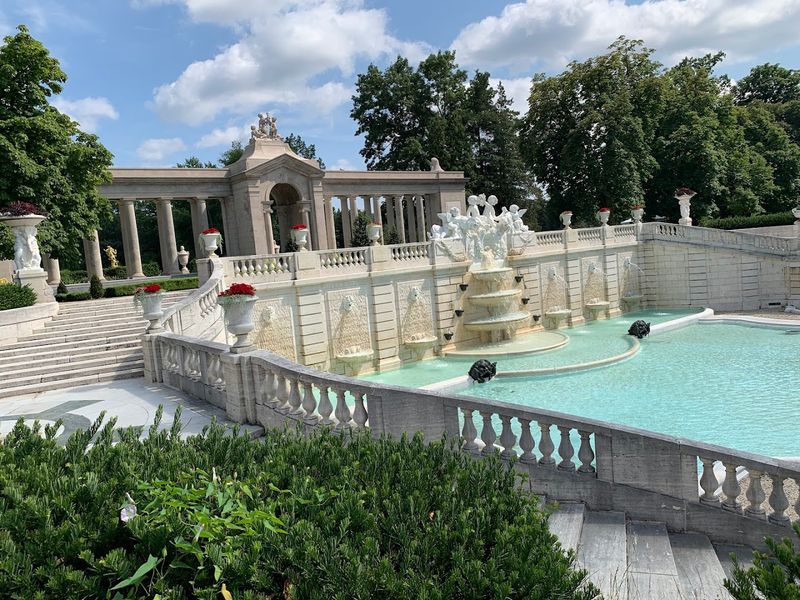
One of the most theatrical moments in the entire garden experience comes when you reach the reflecting pool, a one-acre expanse of water measuring 40 feet in diameter with 157 jets that send water arcing into the air in synchronized patterns. Henri Crenier, a French-born American sculptor, designed the pool itself.
Surrounding the pool are the Four Seasons Fountain statues, Art Nouveau-inspired marble figures that represent spring, summer, autumn, and winter. Each one has its own personality and pose, and together they create a scene that feels more like an outdoor gallery than a garden feature.
On a clear day, the reflections in the still water between jet cycles are genuinely mirror-perfect, capturing the surrounding trees and sky in a way that makes the whole composition look almost unreal. I spent more time here than I had planned, just watching the light shift across the marble and the water.
The Temple of Love, visible from this spot, pulls you forward to discover what waits inside it.
The Temple of Love and Diana’s Quiet Presence
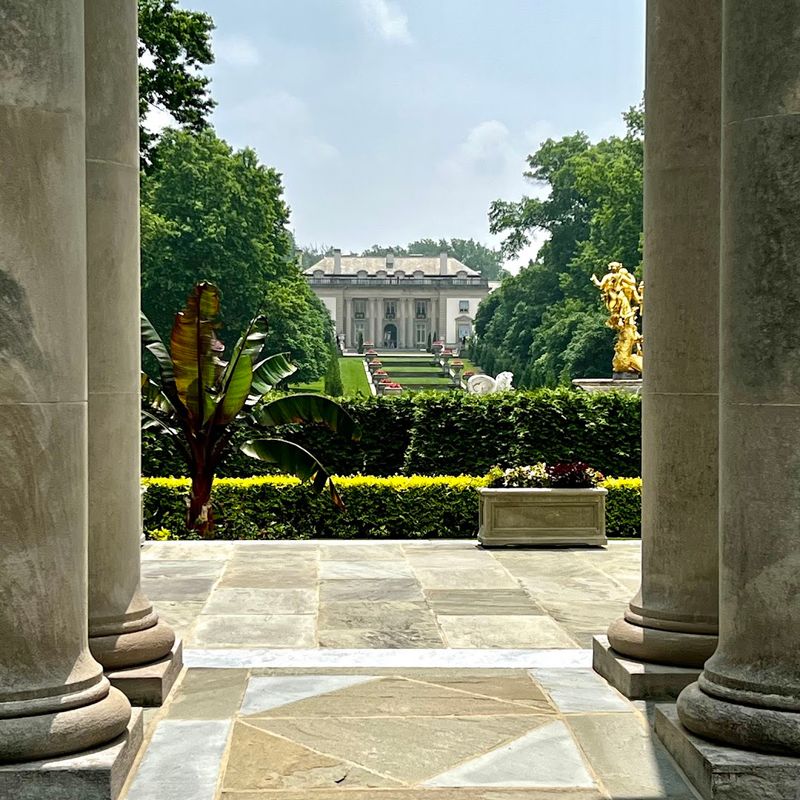
Tucked into the garden landscape with the kind of quiet authority that only great sculpture possesses, the Temple of Love is a neoclassical open-air structure housing one of the estate’s most significant art pieces: a life-sized marble statue of Diana carved in 1780 by the legendary French sculptor Jean-Antoine Houdon.
Houdon was one of the most celebrated sculptors of the 18th century, known for his extraordinary ability to capture lifelike texture and movement in marble. His Diana here is poised and graceful, the goddess frozen mid-stride in a way that makes the stone feel almost alive.
The temple’s columned frame focuses your attention entirely on her.
The surrounding garden paths lead you naturally to this spot, so the reveal feels intentional and rewarding rather than stumbled upon. It is the kind of detail that separates Nemours from other historic properties: the art here is not decorative filler but carefully chosen work by masters whose names belong in major museum catalogs.
The Russian Gates nearby add another layer of intrigue.
The Mysterious Russian Gates at the Garden’s Edge
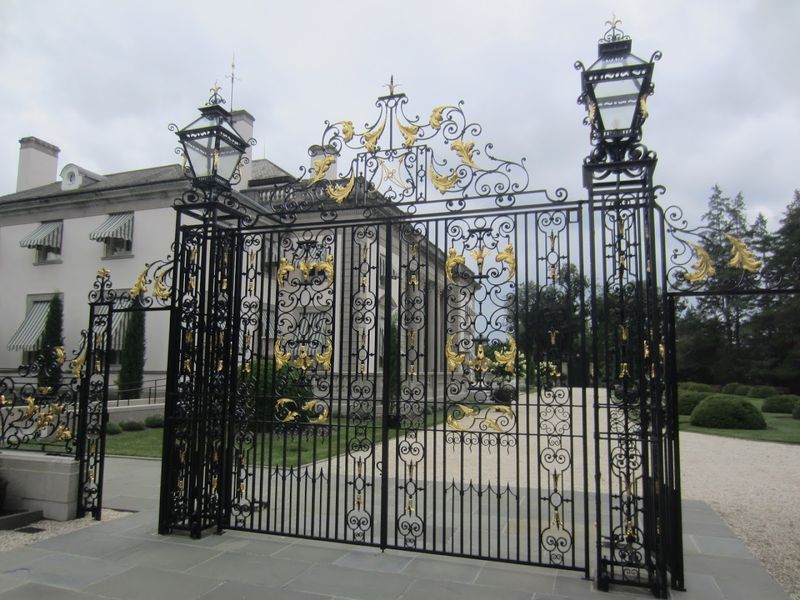
Few features at Nemours spark more curiosity than the Russian Gates. These 20-foot wrought iron gates were forged in the 1700s, originally created to honor Catherine the Great of Russia.
How they ended up at a du Pont family estate in Delaware is exactly the kind of story that makes history feel like a treasure hunt.
Alfred I. du Pont acquired the gates and installed them at an upper corner of the formal gardens, where they now stand as a grand, slightly mysterious threshold between garden sections. Their intricate ironwork is extraordinary up close, full of decorative detail that rewards slow, careful observation.
The sheer age of the gates, more than two centuries old and originally forged for a Russian empress, gives them a weight and significance that goes well beyond their decorative function. They are a reminder that Alfred was not simply buying nice things.
He was assembling a collection of objects with genuine historical provenance from across the world, and those objects now belong to all of us who visit. The Colonnade nearby continues that theme of layered family history.
The Sunken Gardens and Their Ongoing Transformation
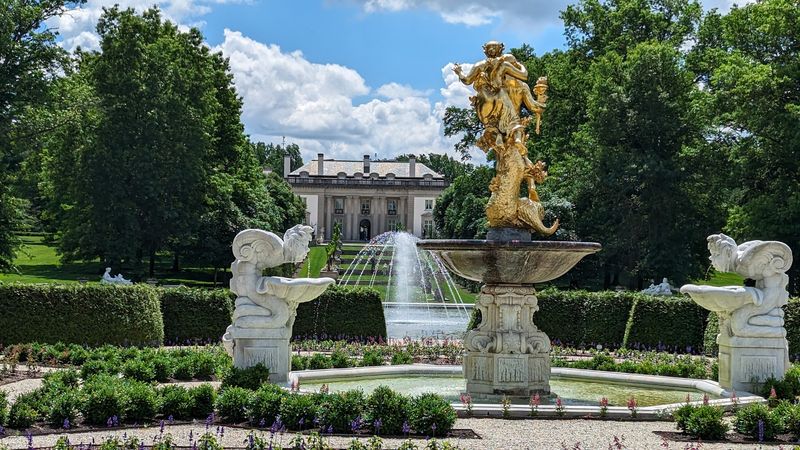
Alfred I. du Pont’s son, Alfred Victor du Pont, collaborated with landscape designer Gabriel Masséna to create the Sunken Gardens, one of the most dramatic sections of the entire estate. The design incorporates a large lake, grottoes, multiple fountains, and a waterfall, all working together to create a landscape that feels both wild and carefully planned at the same time.
When I visited, the Sunken Gardens were undergoing restoration work, which actually made the visit more interesting rather than less. Seeing the scope of what is being preserved and improved gives you a real appreciation for the ongoing commitment the Nemours Foundation makes to maintaining this property at the highest possible standard.
The $39 million renovation completed between 2005 and 2008 brought the mansion and formal gardens back to their original splendor, and the Sunken Gardens are now receiving similar attention. Once fully restored, this section promises to be one of the most spectacular garden landscapes in the entire Mid-Atlantic region, well worth a return visit when the work is complete.
The Chauffeur’s Garage and Its Rolls-Royce Surprises
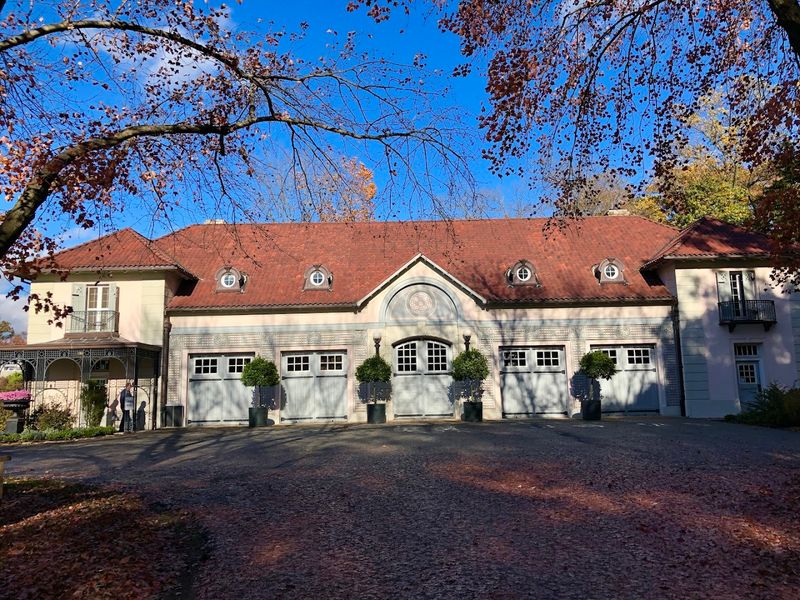
Tucked away from the main mansion, the Chauffeur’s Garage is one of those bonus attractions that turns a great visit into an unforgettable one. The collection of vintage automobiles on display here is genuinely impressive, and one car in particular tends to cause visitors to do a double take.
Among the vehicles is a Rolls-Royce that is one of only ten ever manufactured, and it is the second one off the production line. The first was purchased by the British royal family.
Knowing that this particular car shares its production sequence with royalty adds a layer of provenance that makes it feel less like a museum piece and more like a character from history.
The garage also displays Cadillacs and other period vehicles that reflect the transportation style of a wealthy American family in the early 20th century. The craftsmanship on these cars, from the woodwork inside the cabins to the chrome fittings outside, mirrors the same obsessive attention to quality that Alfred I. du Pont brought to every corner of his estate.
Practical Tips for Planning Your Visit
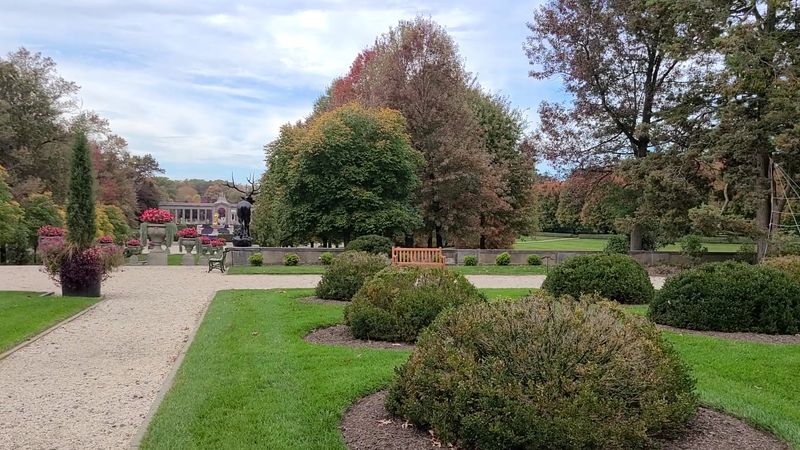
The estate is open Tuesday through Sunday from 10 AM to 5 PM, and it is closed on Mondays. Tickets for adults run around $24, which covers unlimited time on the property, including the mansion tour, the shuttle garden tour, and access to the Chauffeur’s Garage.
That is genuinely good value for what you get.
The bus tour of the grounds is narrated by knowledgeable drivers who share stories about the garden features, the statuary, and the du Pont family history. Reserving your shuttle tour slot before entering is strongly recommended, as spots fill up quickly on busy weekends.
The estate is wheelchair accessible, and golf carts are available to transport visitors who need assistance getting between the mansion and other areas of the property. On hot days, the staff has been known to hand out free water and umbrellas, a small but genuinely thoughtful touch.
The estate also hosts a spectacular holiday event called Noël at Nemours each December, when the mansion transforms into an elaborate seasonal display worth planning a special trip around.
Why This Estate Deserves a Spot on Your Travel List
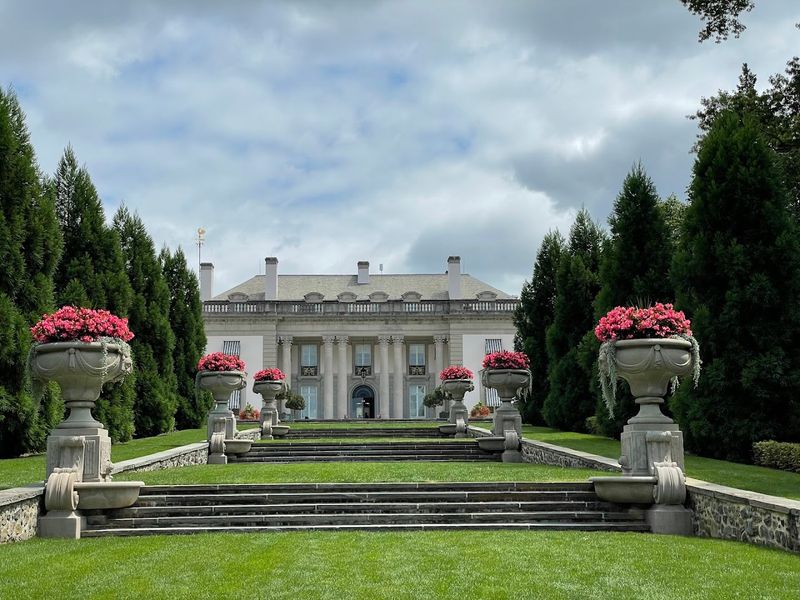
The fact that 95 percent of the items inside the mansion are original to the du Pont family sets this property apart from nearly every other historic house in America. Most estates of this kind have been partially furnished with period-appropriate pieces from various sources.
Here, you are looking at the actual objects that Alfred and Alicia du Pont touched, used, and loved.
Longwood Gardens, another spectacular property, is located nearby in Pennsylvania, making a combined trip entirely feasible for visitors coming from Philadelphia or the surrounding region. But Nemours holds its own with complete confidence.
The gardens, the mansion, the garage, the art, and the layered family history combine into an experience that rewards every hour you give it, and quietly insists that you come back for more.
Share this story