There is a place in central Massachusetts where the ground simply splits open, revealing a quarter-mile crack in ancient granite that has puzzled geologists and delighted hikers for generations. Tucked away in the town of Sutton, this geological oddity looks less like a New England state park and more like something dropped in from another landscape entirely.
Boulders the size of small houses lean against each other at odd angles, narrow passages demand hands-on navigation, and the whole experience feels like a natural obstacle course built by forces far older than anything human. The reservation draws families, outdoor enthusiasts, and curious day-trippers from across the region, and once you see what waits inside that rocky chasm, it is easy to understand why people keep coming back year after year.
The Ancient Geology Behind the Chasm
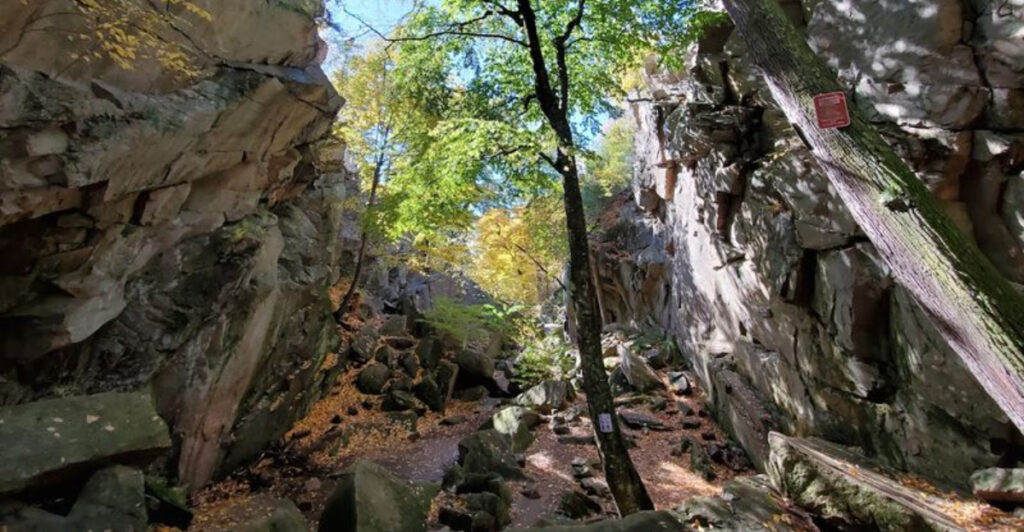
Few geological features in New England stop people in their tracks quite like this one. The chasm itself is a roughly quarter-mile long rift carved into bedrock that is estimated to be over 300 million years old, formed from a type of granite called Millstone Hill Granite.
The leading scientific explanation suggests that the chasm formed during or after the last Ice Age, when massive glaciers retreated and left behind enormous stresses in the rock. Those stresses eventually caused the granite to fracture and split, creating the dramatic opening visible today.
The walls of the chasm rise as high as 70 feet in some sections, and the floor is covered with boulders of every size that tumbled down from the sides over thousands of years. Minerals including mica and quartz can be spotted throughout the rock surfaces along the trails, adding a subtle geological detail that makes the landscape even more interesting to explore up close.
Walking Through the Chasm Itself
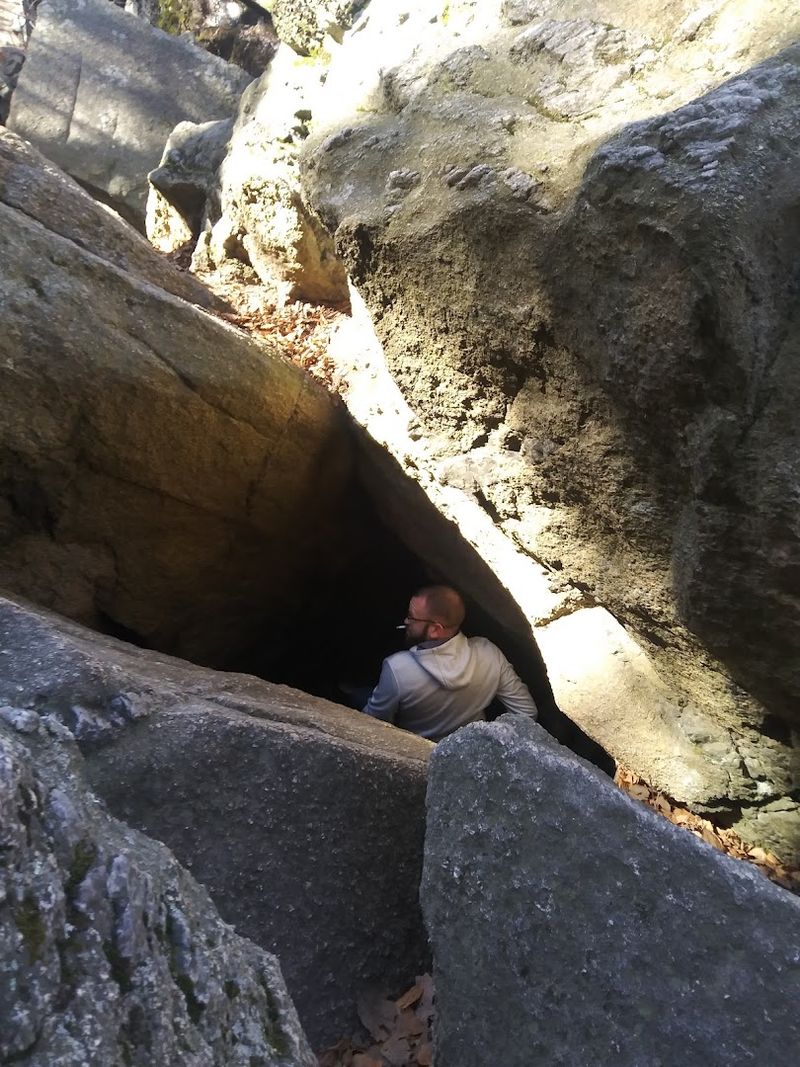
The main attraction here is not a traditional walking path. To move through the chasm, hikers must climb over, squeeze between, and sometimes crawl under boulders that have settled into the rift over thousands of years.
The experience is hands-on in the most literal way. Certain passages have names that hint at their character, including tight squeezes with colorful local nicknames that have been passed down through generations of hikers.
The trail through the chasm is roughly a quarter mile long but takes considerably more time than that distance would suggest on a flat path.
Good footwear with solid grip is strongly recommended, and the chasm trail is not suitable for children under about five years old or for anyone who has difficulty with uneven terrain. When wet, the rocks become slippery and rangers may close the chasm trail for safety.
Planning a visit on a dry day gives the best experience by far.
What the Surrounding Trail Network Offers
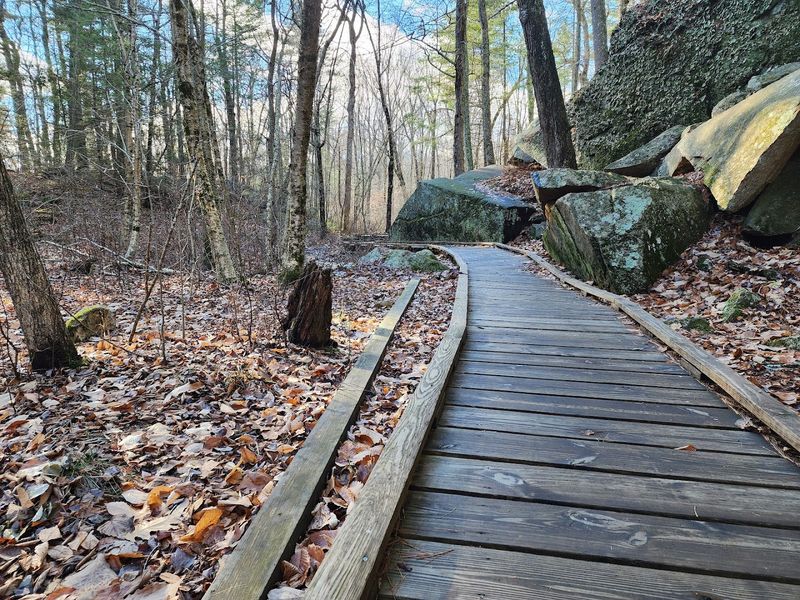
Beyond the chasm itself, the reservation has a solid network of trails that cater to a wide range of fitness levels and hiking preferences. The most popular loop is Charley’s Loop Trail, a roughly two-mile path of light to moderate difficulty that winds through forested terrain with towering boulders as a backdrop.
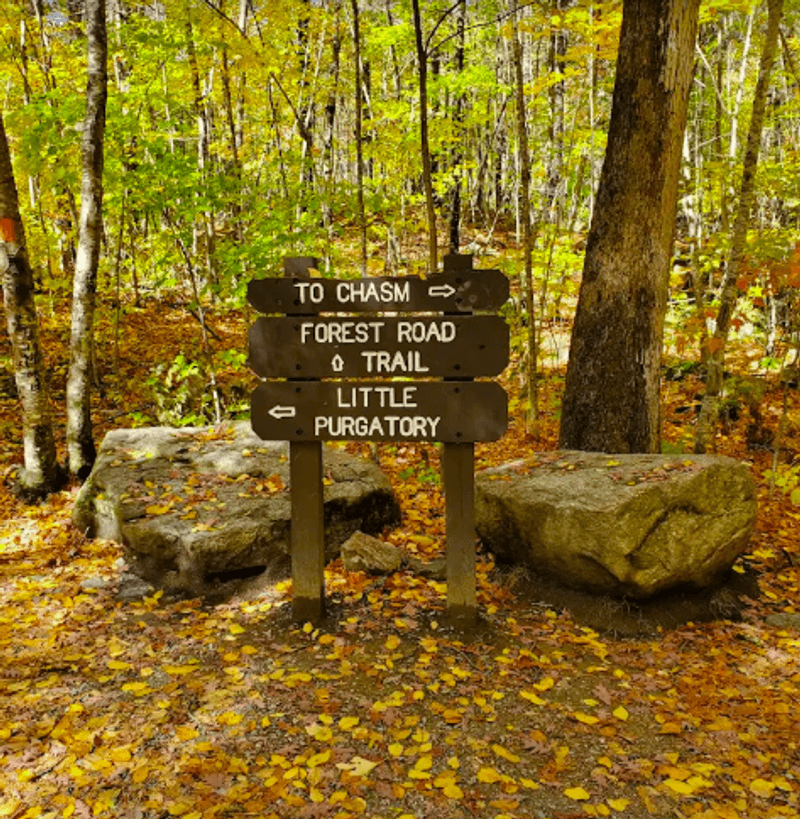
The trail system is well-marked with clear arrows and directional signs, making it genuinely difficult to get lost even for first-time visitors. Several side trails branch off the main loop and offer more challenging terrain for those who want additional mileage or elevation.
Wildlife sightings along the trails are common. Woodpeckers, squirrels, deer, and various bird species have all been spotted by hikers moving quietly through the woods.
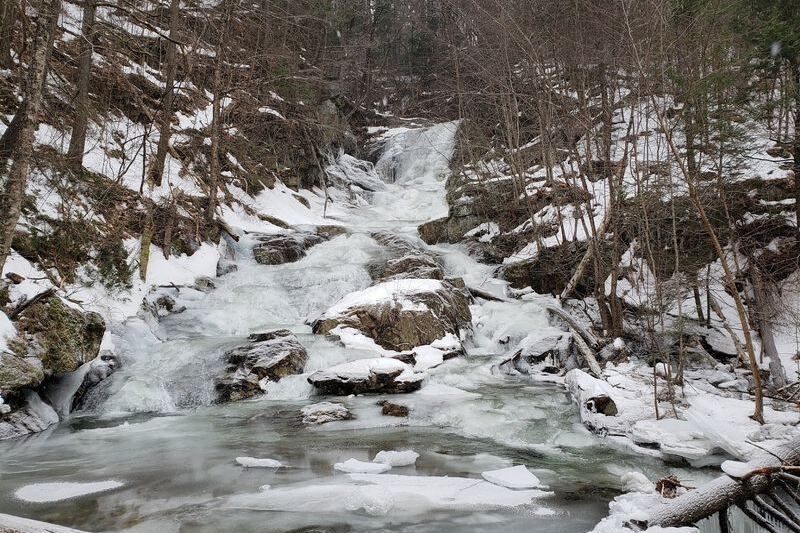
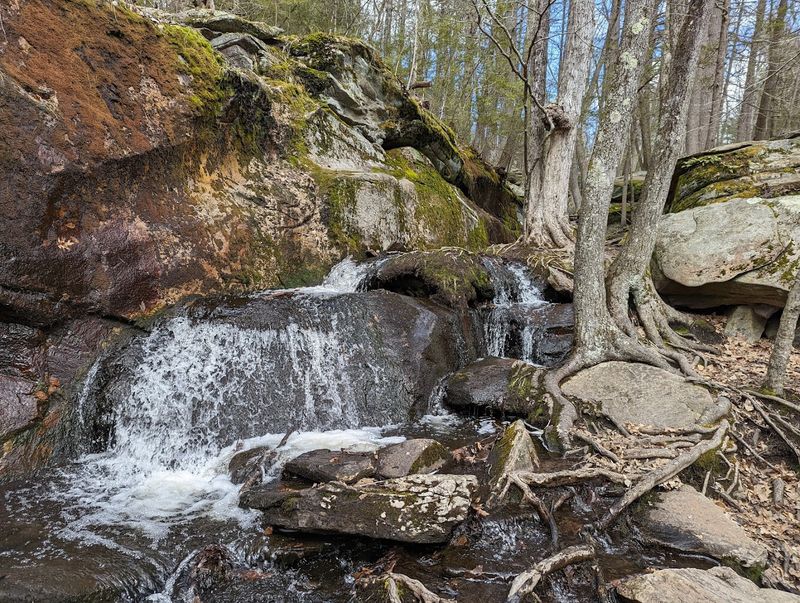
A small waterfall appears along one section of the trail, particularly active in spring when snowmelt adds volume to the flow. The whole network can comfortably be explored in about an hour and a half.
A Park That Works for the Whole Family
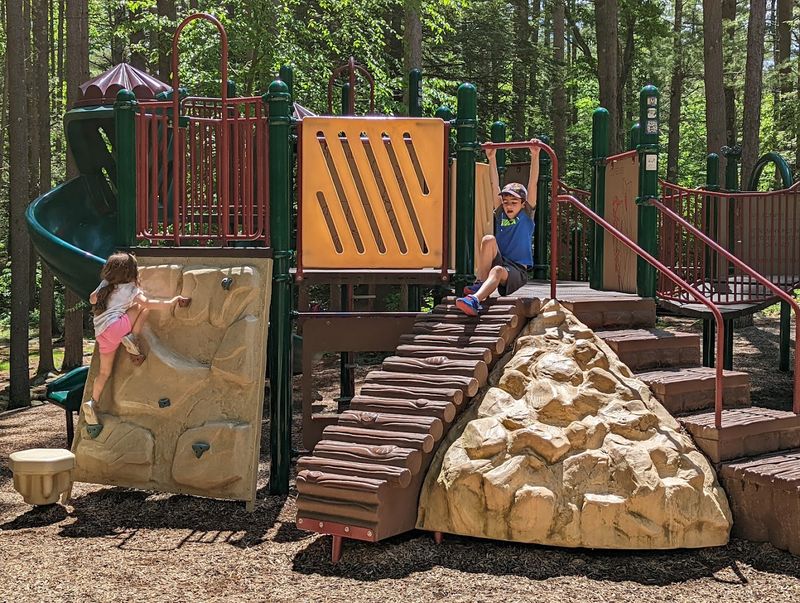
One of the more notable things about this reservation is how well it works for mixed-age groups. The combination of a manageable trail length, genuine physical challenge in the chasm, and additional amenities makes it a practical destination for families with kids of varying ages.
A playground area near the parking lot gives younger children something to do while older siblings tackle the rockier sections of the trail. Picnic tables are spread throughout the park, offering plenty of spots to sit down and eat after a hike.
The overall layout encourages families to spend a relaxed morning or afternoon without feeling rushed.
Children around six years old and up generally handle the chasm trail well, though parental supervision and a steady hand are helpful on the bigger boulder sections. The reservation is also dog-friendly, provided dogs remain on a leash and owners clean up after them.
It is the kind of outdoor destination that creates the sort of memories kids bring up for years.
The Visitor Center and On-Site Facilities
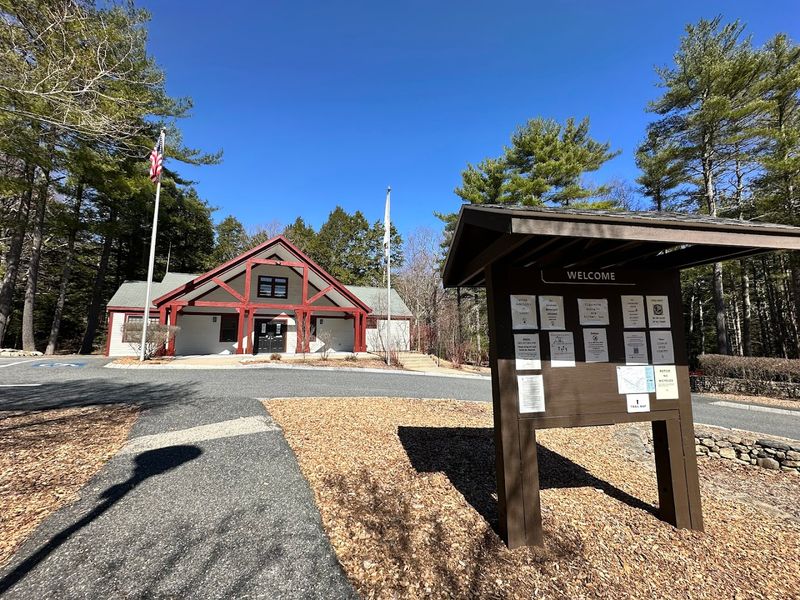
State parks sometimes offer bare-bones facilities, but this reservation makes a point of being genuinely welcoming to visitors. The on-site visitor center provides clean restrooms, a water fountain, and historical background on the chasm and the surrounding landscape.
The building is handicap accessible, which is a meaningful detail for visitors with mobility considerations, even if the trails themselves require physical ability. Staff at the visitor center can answer questions about trail conditions, closures, and the best routes for different skill levels.
One unexpectedly charming detail: the reservation reportedly still has a working payphone on the grounds, a rarity that catches many visitors off guard. Barbecue areas are also available within the park, making it easy to extend a hiking trip into a full outdoor gathering with family or friends.
The facilities are well-maintained and regularly cleaned, which adds to the overall quality of the experience without requiring any extra planning on the visitor’s part.
Parking, Fees, and Getting the Timing Right
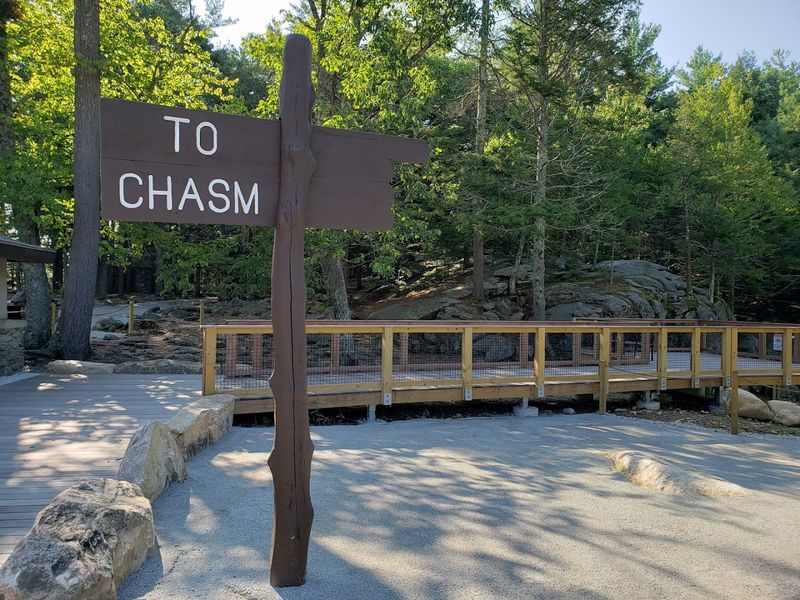
Planning a visit here is simple, but knowing a few practical details ahead of time helps avoid surprises. The parking lot is large and generally handles busy weekend crowds without major issues, though arriving earlier in the day is always a good strategy during peak season.
Parking fees kick in around mid-May each year. Massachusetts residents pay five dollars per vehicle, while out-of-state vehicles are charged twenty dollars.
Payment can be made at a meter on-site or through the Yodel app, which is a convenient option for those who prefer not to carry cash.
The park is open year-round, but the chasm trail may be closed during wet or icy conditions when the rocks become hazardous. Checking trail status before making the trip is worthwhile, especially in early spring or after rain.
Fall tends to be a particularly popular time to visit, when the surrounding forest changes color and the whole landscape takes on a different character entirely.
Rock Climbing and the More Adventurous Side of the Park
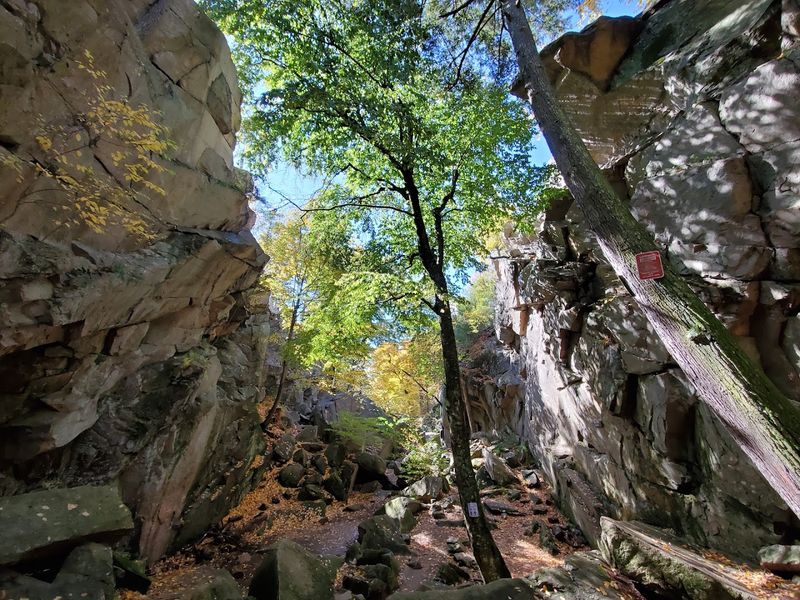
For those who want more than a casual walk in the woods, the chasm delivers a genuinely physical challenge. Navigating the boulder-filled floor of the rift requires real effort, including using both hands and feet to scramble up and over rocks that range from knee-height to well above head height.
The chasm trail essentially functions as a natural climbing course, and it attracts people who enjoy that kind of active, problem-solving style of outdoor recreation. Each boulder presents a slightly different challenge, and finding the right route through the tighter passages requires patience and attention.
Beyond the chasm itself, the reservation has larger rock faces that experienced climbers have used for more technical climbing. The granite walls that rise along the sides of the chasm provide vertical terrain that serious climbers find worth the trip.
Whether the goal is a casual scramble or something more demanding, the reservation offers a level of physical engagement that most flat hiking trails simply cannot replicate.
Wildlife and Natural Details Worth Noticing

The reservation is not just about rocks. The forested land surrounding the chasm supports a healthy mix of wildlife that hikers regularly encounter on the trails.
Deer are spotted with enough regularity that they no longer surprise most repeat visitors, though they still bring a moment of quiet appreciation when they appear.
Woodpeckers are a consistent presence in the trees along Charley’s Loop, and squirrels are everywhere, including younger ones in the warmer months. Bird diversity in the area is solid, making the reservation a worthwhile stop for anyone who enjoys casual birdwatching alongside their hike.
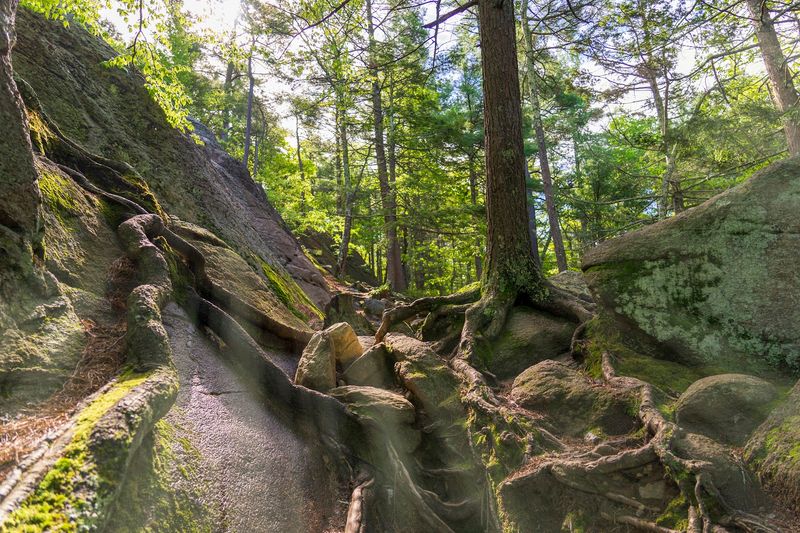
The plant life along the trails also rewards attention. The granite boulders support patches of lichen and moss in colors that shift with the seasons, and the canopy above the trails changes dramatically from spring through fall.
A small stream runs through part of the reservation, adding another natural element to the landscape that makes the area feel more layered and alive than a simple rock formation alone would suggest.
Accessibility Considerations and Trail Difficulty
Not every trail at this reservation requires the same level of physical ability, which is worth knowing before planning a visit. Charley’s Loop Trail is rated as light to moderate and is accessible to a wide range of hikers, including older adults who take their time and move carefully on the rockier sections.
The chasm trail itself is a different story. It demands real physical capability, including the ability to climb over large boulders, maintain balance on uneven surfaces, and navigate tight spaces.
The trail is not recommended for toddlers or for anyone with significant mobility limitations.
Trail markers throughout the reservation are clear and consistent, reducing the chance of taking a wrong turn even on the less-traveled side paths. Rangers actively monitor conditions and close sections when safety is a concern, particularly after rain.
The combination of well-marked paths and attentive management makes the reservation a place where visitors can push their limits while still operating within a reasonably safe and organized environment.
Why This Reservation Keeps Drawing People Back
Some outdoor destinations are worth visiting once. This one earns repeat visits for reasons that are easy to understand once you have been there.
The combination of geological strangeness, physical challenge, accessible trails, and well-maintained facilities creates an experience that covers a lot of ground without requiring a full day or significant travel.
The reservation sits close enough to Worcester and the surrounding region to function as a quick day trip, yet it delivers an experience that feels genuinely remote and wild once you are inside the chasm. That contrast between accessibility and raw natural character is a balance that few parks manage as well as this one does.
Families return because the kids grow into new challenges each visit. Hikers return because the trails reward attention and repeat exploration.
The geology alone gives curious minds plenty to think about long after the drive home. Whatever draws a person there the first time, Purgatory Chasm State Reservation in Sutton has a way of making sure it will not be the last.
Where Exactly This Geological Wonder Is Located
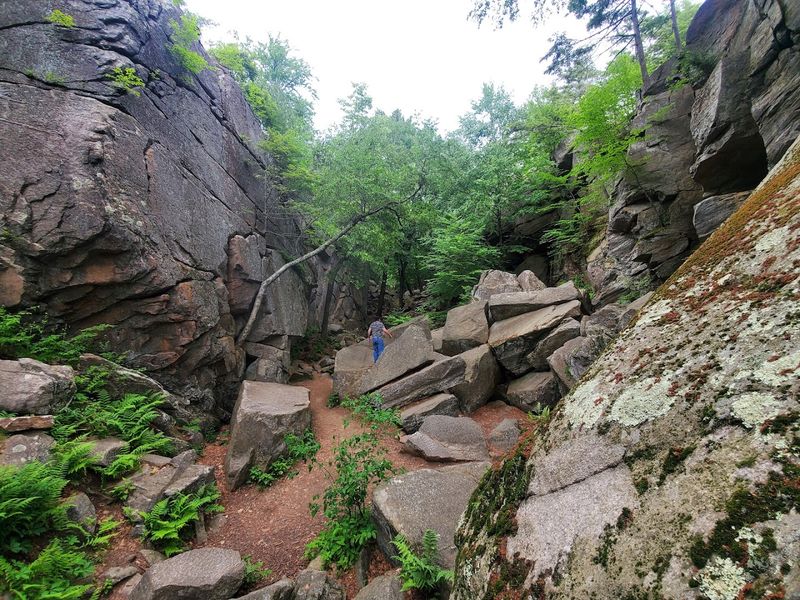
Right in the heart of central Massachusetts, about ten miles south of Worcester, sits one of the state’s most geologically dramatic public lands. Purgatory Chasm State Reservation is found at 198 Purgatory Rd, Sutton, MA 01590, a surprisingly accessible address for such a wild-looking place.
The reservation is managed by the Massachusetts Department of Conservation and Recreation and sits within a largely forested section of Sutton. The drive in follows a quiet road that gives little hint of what waits at the trailhead.
Getting there is straightforward from most parts of the region, with clear signage pointing the way once you are in town. The parking area is spacious and well-maintained, with a visitor center nearby.
Parking costs five dollars for Massachusetts vehicles and twenty dollars for out-of-state vehicles, with fees typically beginning in mid-May each year.
Share this story