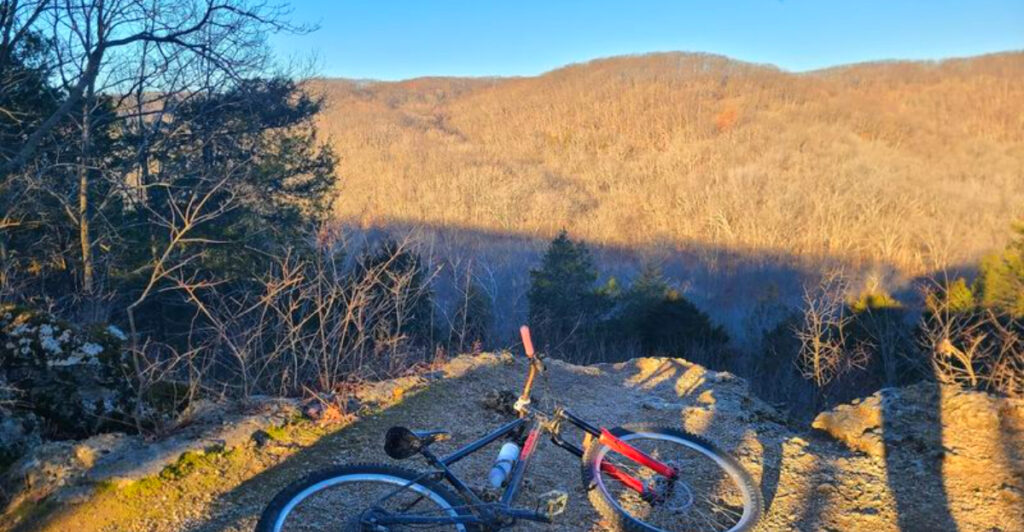
Just west of St. Louis, this 1,700-acre state park offers one of Missouri’s most extensive trail systems and one of its most overlooked outdoor escapes. While many travelers focus on nearby attractions, those who venture into the park discover miles of wooded trails, rocky terrain, open meadows, and scenic overlooks that feel far removed from the city.
The park attracts hikers, mountain bikers, horseback riders, and anyone looking for a full day outdoors. With so much ground to cover, no two visits feel quite the same.
Whether you’re exploring a new trail or seeking out one of the area’s best viewpoints, it’s the kind of destination that rewards curiosity and keeps visitors coming back for more.
Where Exactly You Will Find This Place
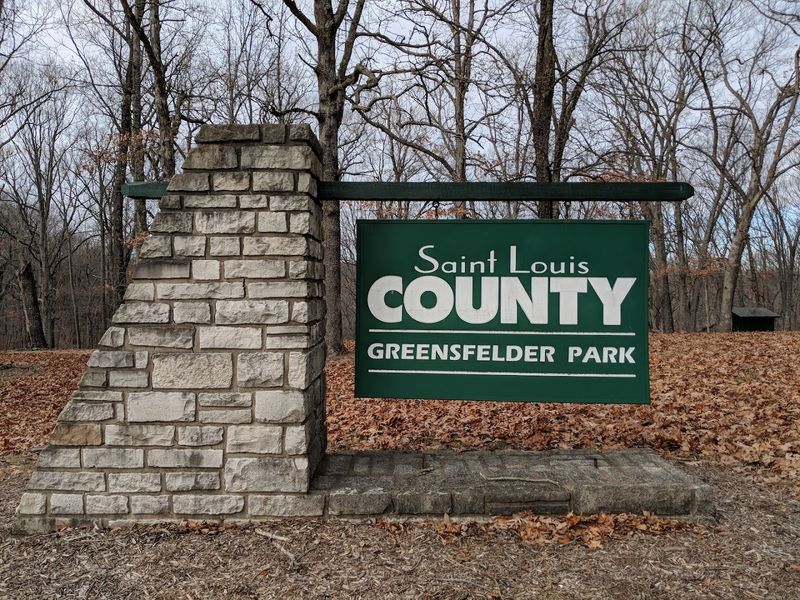
Most people are surprised to learn that one of St. Louis County’s largest natural parks sits right at 4515 Hencken Rd, Pacific, MO 63069, just a short drive from the city but feeling like a completely different world.
The park covers 1,734 acres in western St. Louis County, positioned at the foothills of the Ozark mountain range. That geography matters, because it is what gives the trails their satisfying elevation and the forests their dramatic, layered character.
The park is open daily from 8 AM to 5 PM, and you can reach the park office at 636-458-3801. Getting here is straightforward from the St. Louis metro area, and the drive through the surrounding countryside already starts to feel like the trip is worth it before you even park the car.
It is part of the Henry Shaw Ozark Corridor, which connects it to a broader network of protected land that makes this corner of Missouri genuinely special.
The Surprising Scale of the Trail Network
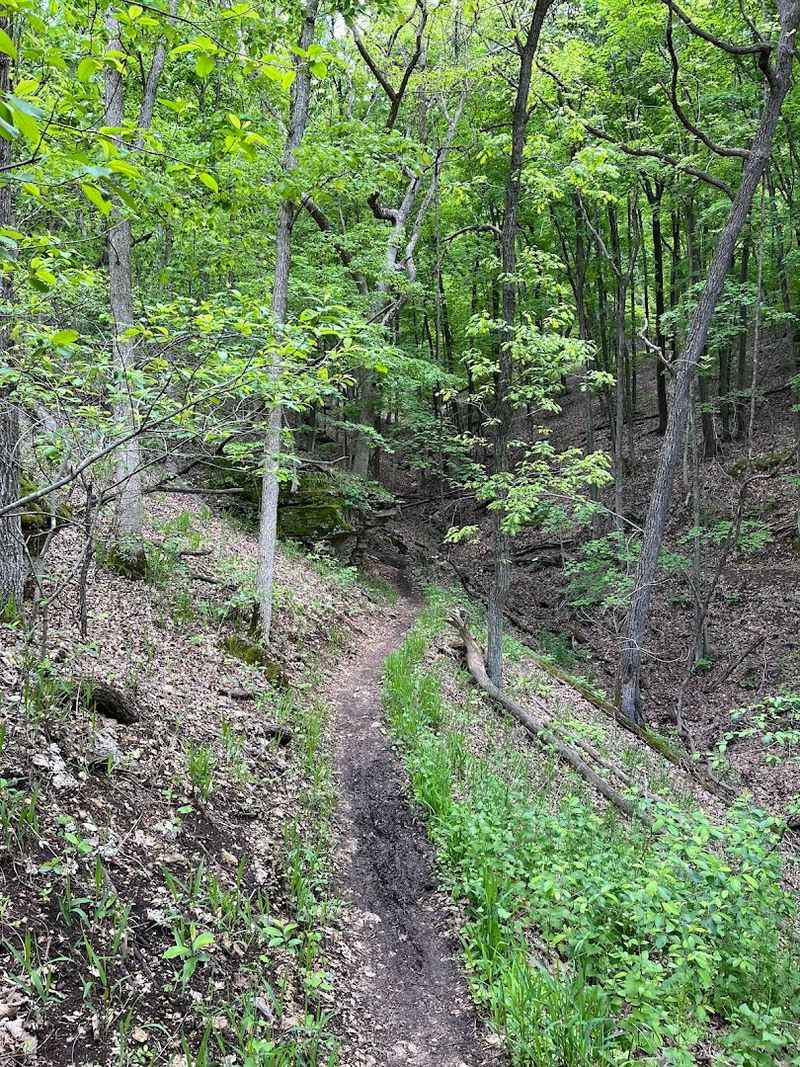
Thirty miles of interconnected trails sounds like a lot until you are actually standing at the trailhead map and realizing that the network branches out in every direction with options for every skill level.
The trails are earthen and hilly, meaning there are very few flat stretches. The terrain rolls constantly, which is exactly what makes a hike here feel genuinely rewarding rather than just a casual stroll.
Greensfelder connects directly to Rockwoods Reservation and Rockwoods Range Conservation Area, expanding the accessible trail system to roughly 25 miles of linked paths. That means experienced hikers and mountain bikers can plan much longer routes without doubling back.
One practical tip: download a trail app before you arrive. The trail system is complex, and some signs on the ground have historically used names that differ slightly from printed maps.
A digital map on your phone saves a lot of guesswork out on the ridge.
The Dogwood Trail and Why Fast Hikers Love It
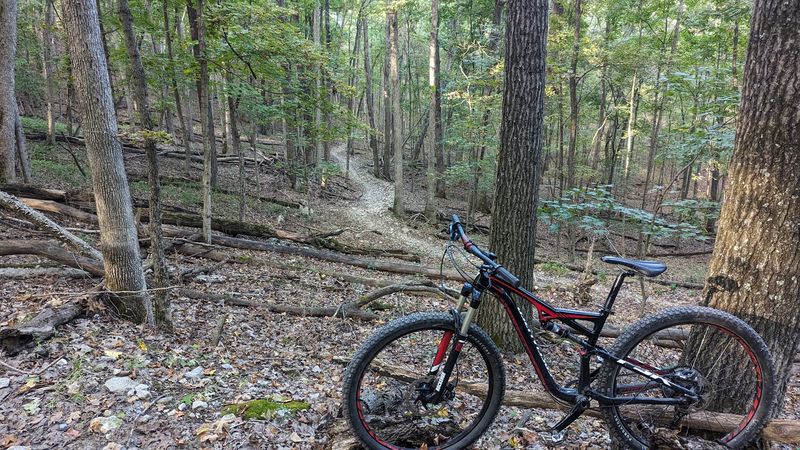
The 2.6-mile Dogwood Trail has built a reputation among mountain bikers and trail runners for being fast and flowy, which in trail language means the path curves and rolls in a way that feels almost rhythmic when you hit a good pace.
There are no brutal technical obstacles here, making it an excellent entry point if you are newer to trail riding or just want a route where you can actually enjoy the scenery without constantly watching your feet.
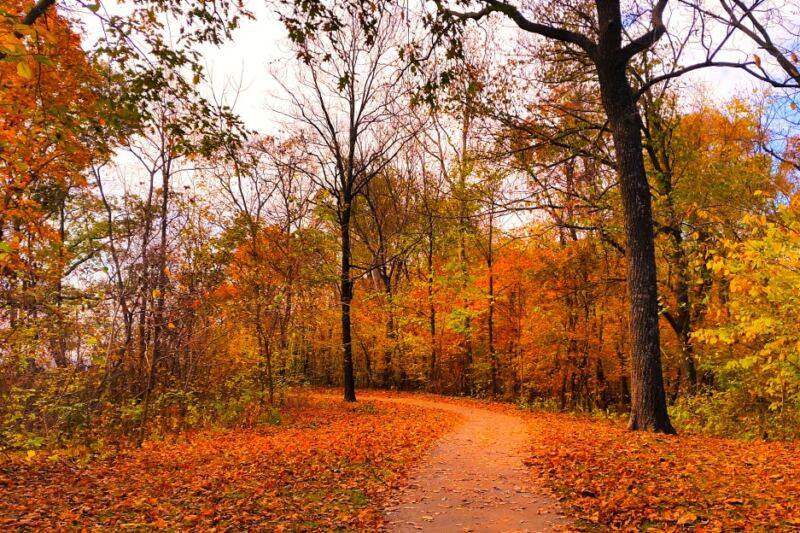
The surrounding woodland along this trail shifts with the seasons in a way that feels almost theatrical. In late spring, the namesake dogwoods add bursts of white blooms against the darker tree trunks, and in fall the whole corridor lights up with color.
Even at a relaxed hiking pace, the Dogwood Trail covers enough varied terrain to feel like a proper outdoor workout rather than a park loop. It is the kind of trail that quietly earns a spot on your regular rotation.
Taking On the DeClue Trail’s Rocky Challenge
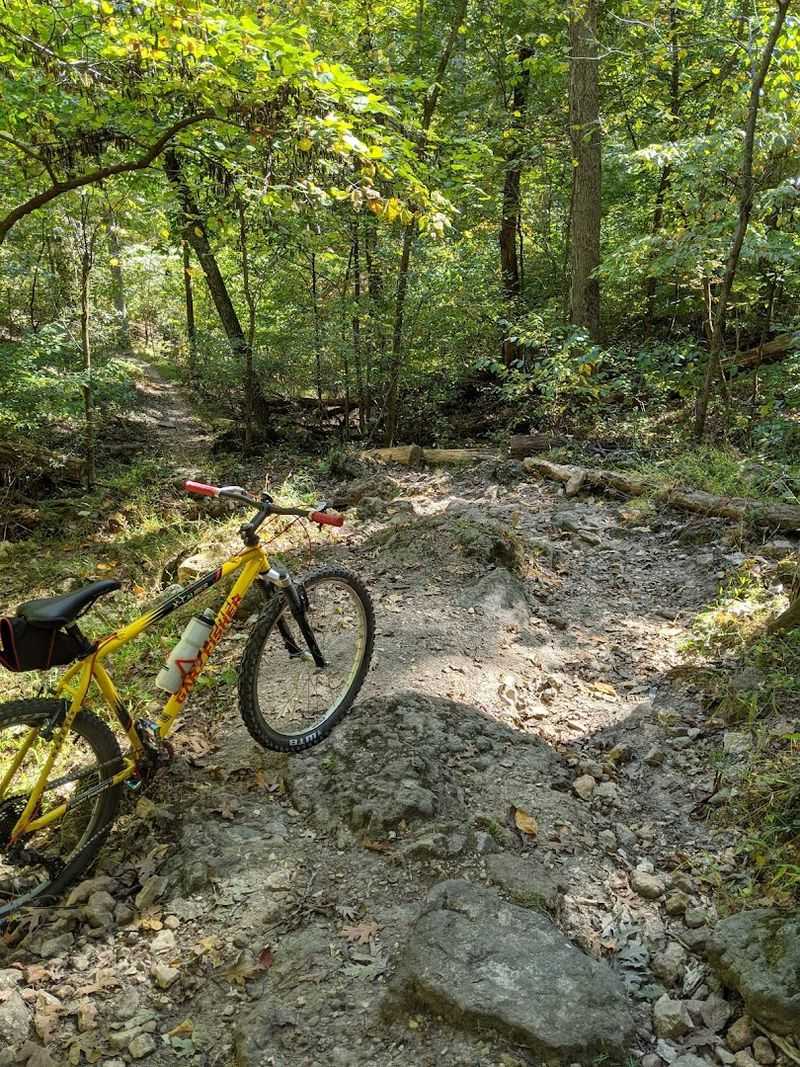
Not every trail here is forgiving, and the DeClue Trail makes no apologies for that. Stretching between 6.7 and 8 miles depending on the route variation you choose, this one is classified as technical, and the rocky surfaces make that classification feel very honest.
The exposed rock sections require real attention, whether you are on foot or on a mountain bike. Loose chat, embedded limestone, and uneven ground keep you engaged the entire time, and that constant engagement is exactly what draws people back to it.
The elevation changes along DeClue are more pronounced than on some of the shorter loops, and there are ridge sections where the views open up enough to make you pause and actually look around. Those moments feel genuinely earned after the climb it takes to get there.
If you are planning to tackle DeClue for the first time, start early and bring more water than you think you need. The trail has a way of taking longer than expected, and that is not a complaint.
Eagle Valley Trail and the Chat-Covered Doubletrack
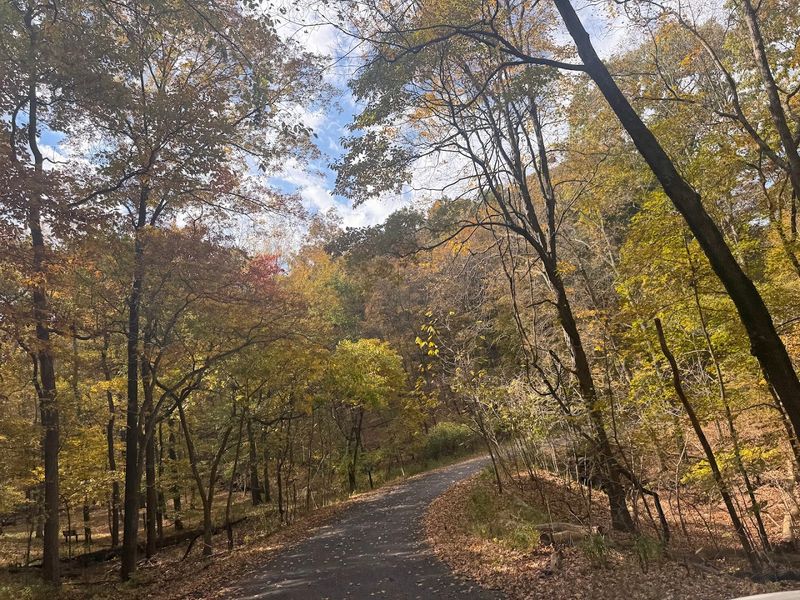
The Eagle Valley Trail runs about 3.4 miles and stands out from the other routes here because much of it follows chat-covered doubletrack, which is essentially a wide, crushed-gravel path that feels different underfoot compared to the narrow earthen singletrack elsewhere in the park.
That surface makes Eagle Valley one of the more accessible trails in the system. It drains reasonably well after rain, and the wider path means you are less likely to feel crowded when sharing with other users.
The valley setting gives this trail a calmer, more open character compared to the ridge trails. You get a better sense of the meadow and grassland sections that have been added to the park through recent land acquisitions, and the views down the valley floor are genuinely pleasant.
Many visitors use Eagle Valley as a recovery trail after tackling something more demanding like DeClue. It rounds out a longer day beautifully, and the relatively gentle grade on most sections means your legs get a proper rest before the drive home.
The Mustang Trail and Its Ridge Climbs
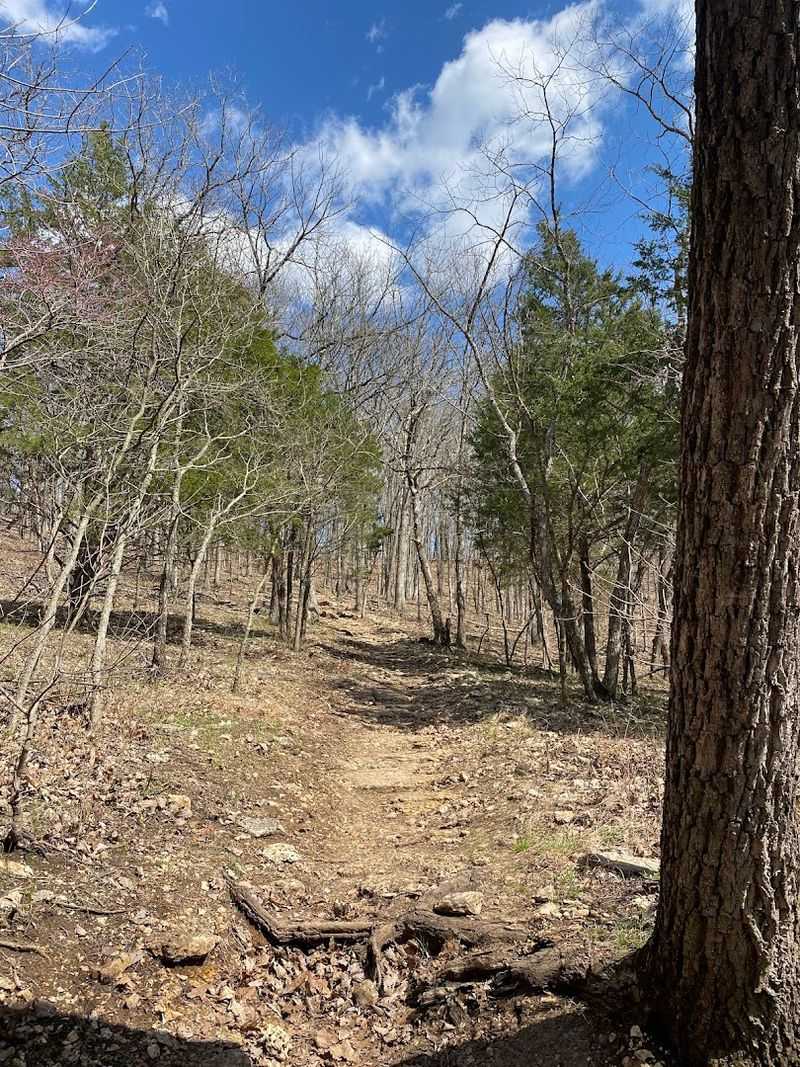
At just 1.9 miles, the Mustang Trail sounds manageable until you check the difficulty rating and see it listed as difficult. The ridge climbs and uneven terrain are the reason, and the trail earns that label within the first quarter mile.
The ascents on Mustang are short but steep, the kind that get your heart rate up quickly and make the flat stretches feel like a reward. The footing is irregular in places, so poles are worth considering if you tend to feel uncertain on loose or rocky ground.
What makes Mustang worth the effort is the ridge itself. Once you are up there, the forest canopy opens slightly and you get a sense of the broader topography of the park, the deep valleys dropping away on either side and the tree cover stretching as far as you can see.
The Mustang Trail connects into the wider network, so ambitious hikers often string it together with other routes for a longer day. That connector quality makes it more useful than its short length suggests.
The Green Rock Trail’s Extended Adventure
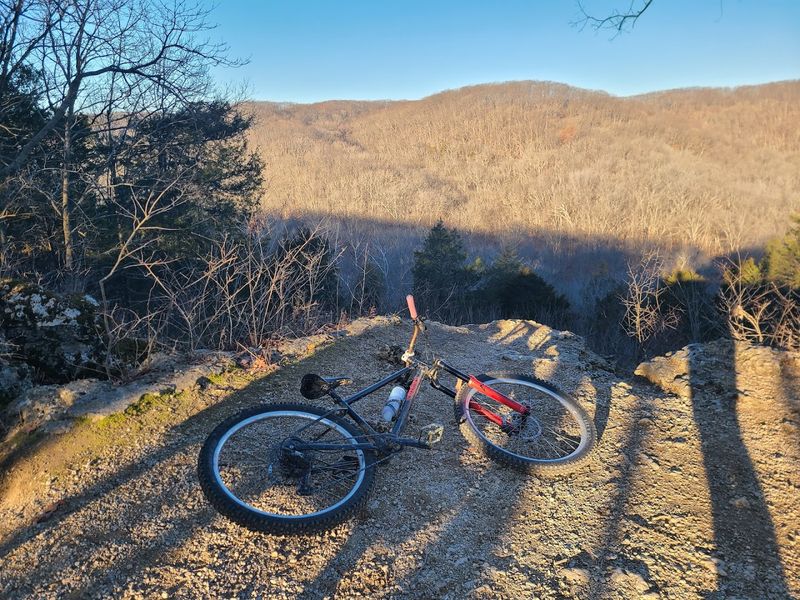
The Green Rock Trail is the kind of route that serious hikers and mountain bikers bookmark and plan entire days around. Within Greensfelder Park alone, it covers 7.8 to 8 miles, but the full trail extends to a total length of 14.5 miles when you follow it beyond the park boundaries.
That extended length means Green Rock is genuinely an all-day commitment if you tackle the full out-and-back or arrange a shuttle. The trail crosses varied terrain, moving between dense forest, rocky sections, and occasional open areas that give you a break from the tree canopy.
The connection to neighboring conservation areas is what makes Green Rock feel like more than just a park trail. It links into a broader landscape of protected Ozark land, and there are stretches where the surrounding wilderness feels genuinely remote despite being less than an hour from downtown St. Louis.
Bring a fully charged phone and a downloaded map, because navigation requires attention on Green Rock, and the reward for paying that attention is one of the most complete trail experiences in the region.
Horseback Riding and the Equestrian Culture Here
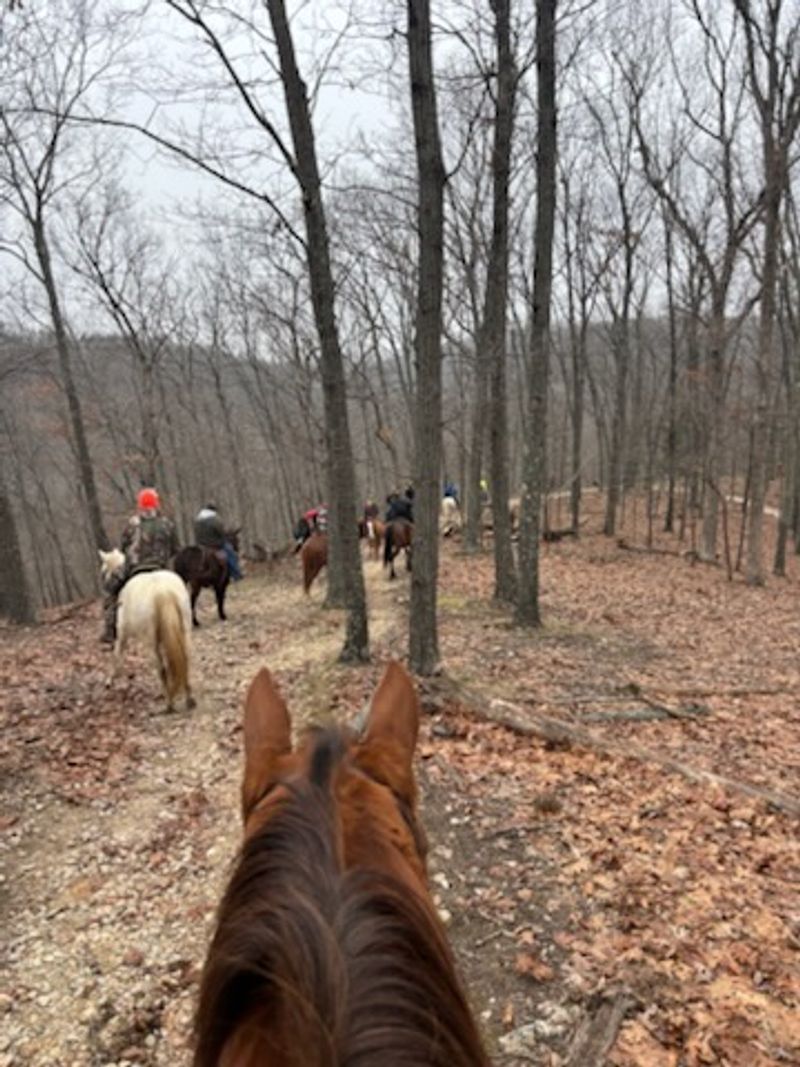
There is something genuinely charming about arriving at a trailhead and finding horses already there, tacked up and ready to go. Greensfelder Park has a strong equestrian culture that feels like a core part of its identity rather than an afterthought.
The park offers horse boarding, stabling facilities, and dedicated trails designed specifically for horseback riding. Riders share some of the wider trails with hikers and bikers, which means trail etiquette matters here and most visitors seem to understand that horses have the right of way.
Weekend mornings are the best time to see the equestrian community in full swing. Trailers line the parking areas, riders exchange trail tips at the trailhead, and the sound of hooves on packed earth becomes a regular part of the park’s ambient soundtrack.
For anyone who has ever wanted to experience the Ozark foothills from the back of a horse, this park provides the facilities and the trail variety to make that happen properly, and the dedicated equestrian camping adds a whole extra dimension to an overnight trip.
Camping Under the Ozark Canopy
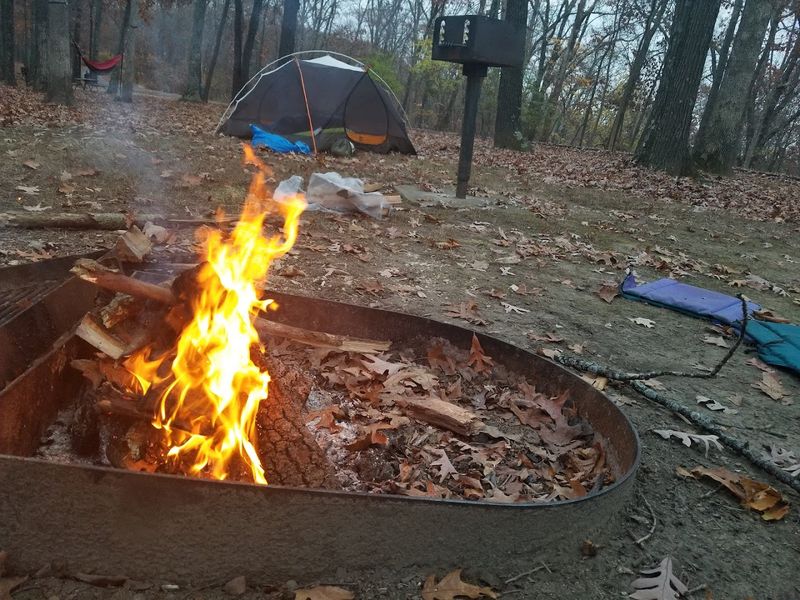
Spending a night at Greensfelder transforms the experience from a day trip into something more immersive. The park offers both equestrian and group camping options, with some sites featuring electrical connections and others keeping things genuinely primitive.
A basic no-electric campsite comes with a fire pit that includes a flip-over cooking grate and a separate grill, which is a small detail that makes a big practical difference when you are trying to cook a proper meal after a long day on the trails.
Year-round restroom and shower facilities are available, which puts Greensfelder a step above many comparable parks where overnight comfort is more of a gamble. The facilities are functional and well-maintained, and rangers are present and attentive throughout the day.
Waking up inside the park before the day-use visitors arrive is its own reward. The forest is quieter, the light through the oak canopy is softer, and you get the trails mostly to yourself for that first golden hour of the morning.
The Scenic Overlook That Makes the Climb Worth It
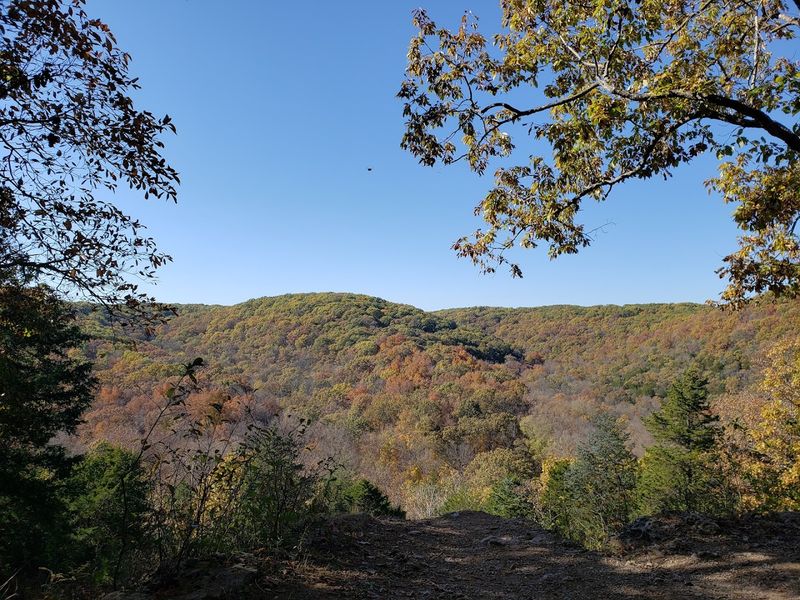
There is a point somewhere on the upper trails where the tree line steps back and the view opens up across the rolling Ozark foothills, and that moment is the one that tends to stop people mid-stride and make them reach for their phones.
The park features a one-way drive-through scenic loop that gives visitors a chance to see the upland deciduous hardwood forest, glades, and creek crossings from the road before committing to a trail. It is a useful orientation tool and genuinely pretty on its own.
The Beulah Trail intersects with a scenic overlook trail at a particularly rewarding spot, where the topography of the park becomes suddenly clear and the effort of the climb makes complete sense. That intersection feels like the park’s quiet signature moment.
Fall is the obvious time to target the overlook, when the hardwood canopy shifts from green to amber and rust across the entire ridgeline. But even in midsummer, the layered depth of the forest from that height is worth every uphill step it takes to get there.
Picnic Shelters, Pavilions, and Gathering Spaces
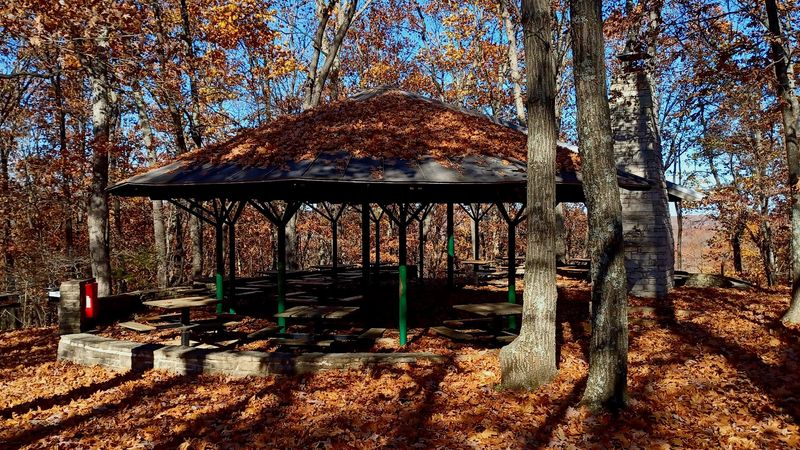
Not every visit to Greensfelder needs to revolve around miles of trail. The park has a solid set of picnic sites and shelters that make it a practical destination for group gatherings, family outings, and events that want a natural backdrop without the logistics of a full camping setup.
The Muckerman Pavilion is one of the larger covered spaces, comfortably holding around 40 people and featuring a fireplace that adds real character to cooler weather events. The surrounding woodland setting makes even a simple cookout feel like something more than an ordinary afternoon.
Grills and fire pits are available at multiple sites, and the park’s layout means different shelter areas offer different levels of privacy and shade depending on what your group needs.
Parking is plentiful near the picnic areas, which matters more than people expect when you are coordinating a larger group. The combination of natural scenery, functional infrastructure, and enough space to spread out makes Greensfelder a genuinely strong option for outdoor events near St. Louis.
Share this story