 Unearth The Voyage
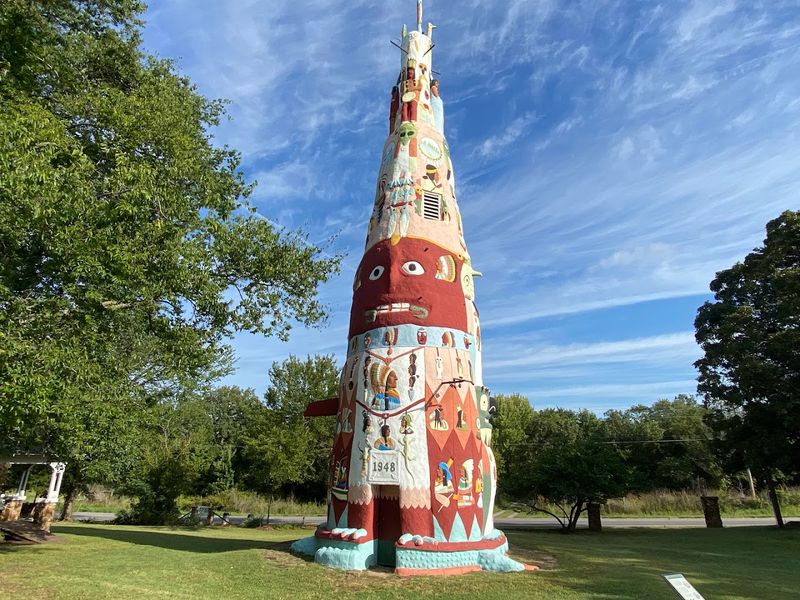
There is a stretch of rural northeast Oklahoma where the roadside suddenly becomes extraordinary. A retired woodworking teacher spent years hauling sand and rock from a nearby creek with a wheelbarrow, slowly building something that would one day be recognized as the world’s largest concrete totem pole.
The structure stands 90 feet tall, covered in carved figures and painted symbols, and it did not come from a government grant or a famous artist’s studio. It came from one man’s quiet, stubborn dedication to honoring Native American culture, and the result is one of the most jaw-dropping folk-art sites anywhere in the United States.
Where to Find This Remarkable Place
The address is 21300 OK-28A, Chelsea, OK 74016, and finding this park takes a short detour off the more-traveled roads of northeast Oklahoma. The park sits on Highway 28A, roughly a couple of miles from Route 66, in Rogers County between the small towns of Chelsea to the north and Foyil to the west.
The nearest major highways are Route 66 to the west and I-44 to the east, and from either one the drive takes under 20 minutes. The road leading in passes through quiet Oklahoma countryside, and the first glimpse of the tall concrete structure rising above the tree line is genuinely startling.
Plenty of gravel parking sits behind the park, making arrival easy even for families with larger vehicles. The park is open Monday through Saturday from 10 AM to 5 PM and Sunday from 1 to 5 PM.
Admission is free, though donations are warmly encouraged to help keep this remarkable place accessible to everyone who makes the trip.
The Man Behind the Masterpiece
Ed Galloway was a manual arts teacher who spent more than 20 years at the Sand Springs Home, a facility for children, where he taught woodworking and tool use. After retiring, he and his wife Villie moved to this parcel of land in Foyil, Oklahoma, and he built their home in 1937.
Rather than slow down in retirement, Galloway turned his creative energy toward something massive. He wanted to honor Native American culture and began construction on the large totem pole shortly after completing the house.
The main structure was finished in 1948 after years of steady, solitary work.
He mixed concrete using sand and rock hauled from the bottom of a nearby creek, making trip after trip with a wheelbarrow. Neighbors would drop off leftover house paint, and Galloway used whatever colors were available, repainting and adding new details as the paint weathered over time.
The level of commitment required to build something this large with so few resources makes his story one of the most compelling in American folk-art history, and it deserves far more recognition than it typically receives.
The 90-Foot Totem Pole Up Close
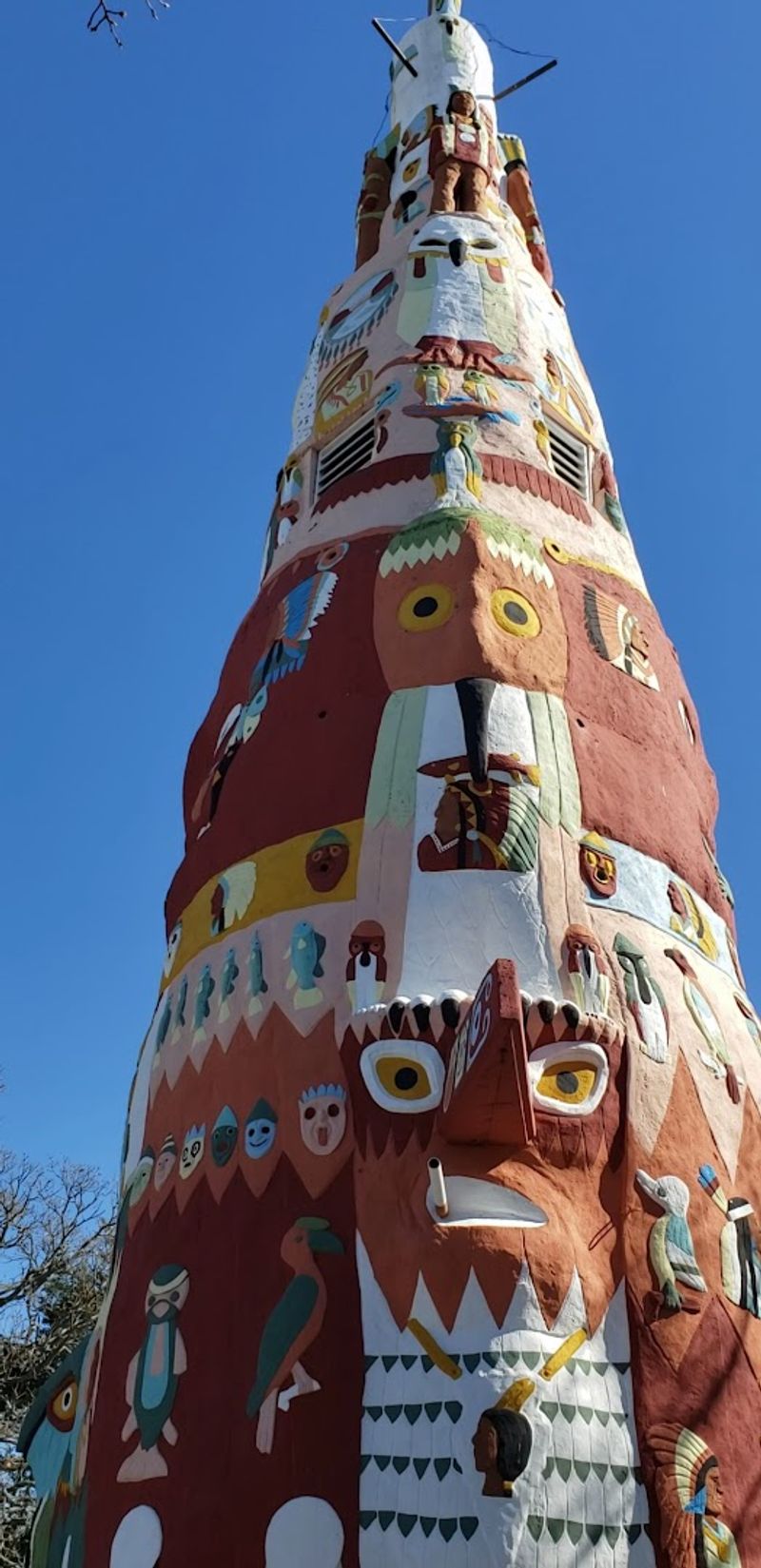
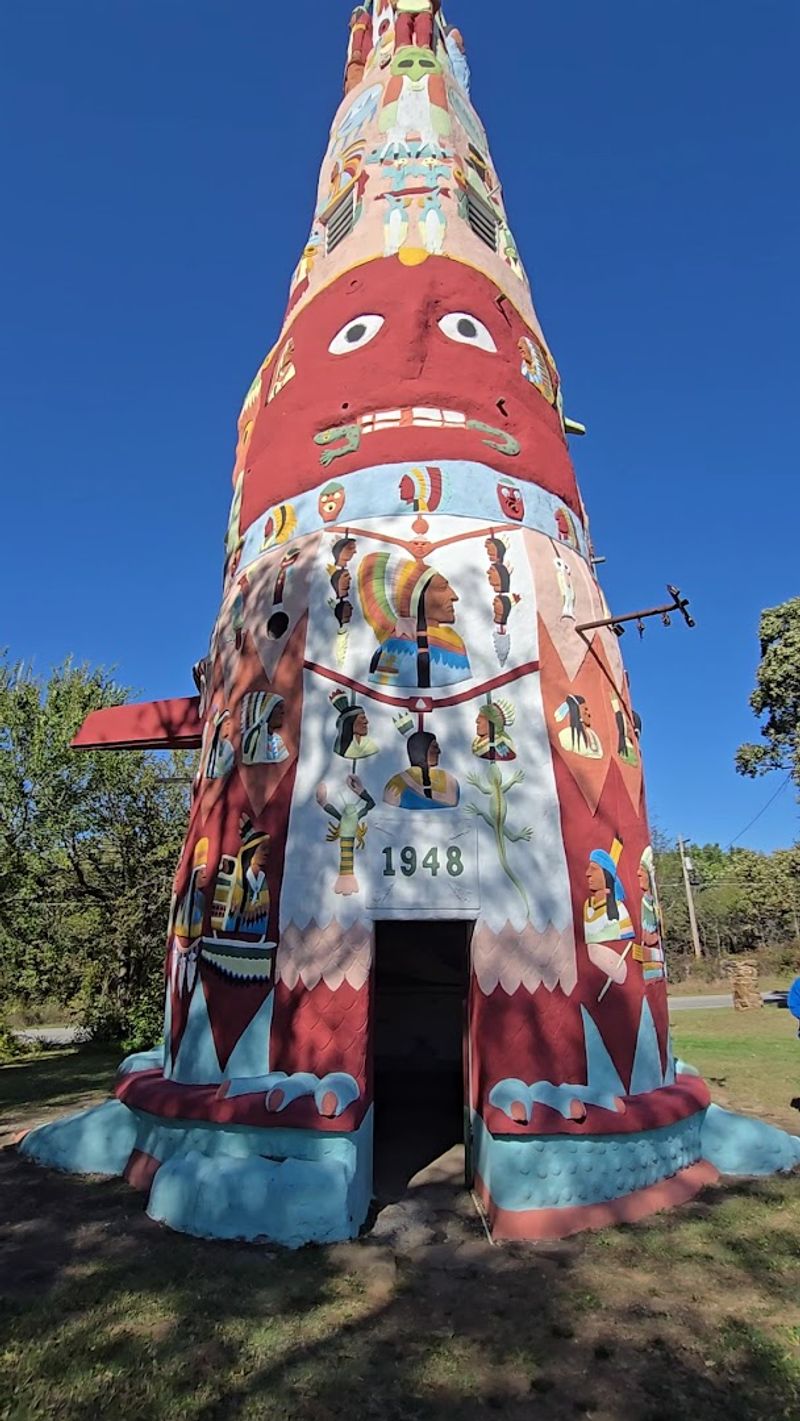
Standing at the base of the main totem pole and looking straight up is one of those experiences that genuinely stops you mid-sentence. The structure is 90 feet tall, 18 feet in diameter at its widest point, and sits on a 54-foot base.
It contains 100 tons of sand and rock, 28 tons of cement, and 6 tons of steel reinforcement.
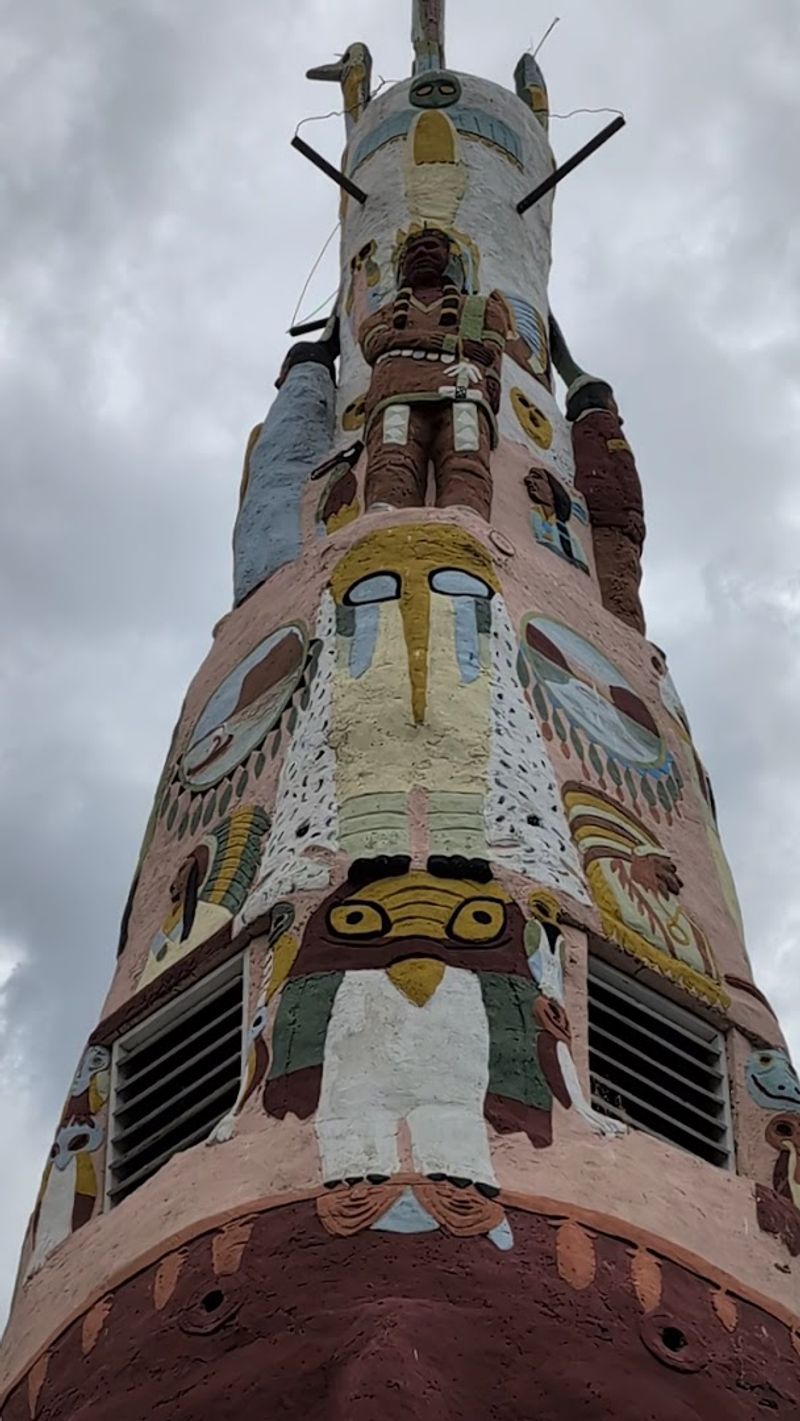
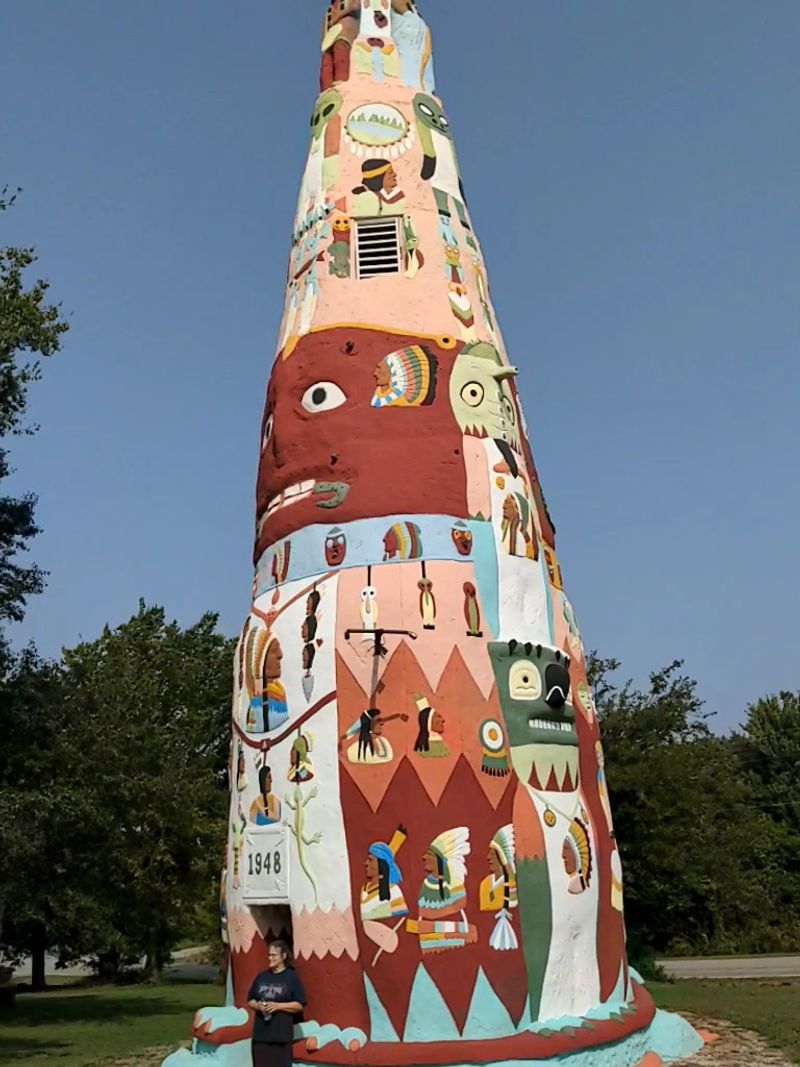
The surface is covered with 200 different carved and painted pictures, including four nine-foot-tall Native American chiefs positioned around the structure. Every figure is distinct, and the level of detail carved into concrete by one person is almost hard to process.
During most operating days, visitors can step inside the base of the totem pole and look up at the old wooden staircase that once allowed people to climb toward the top. The interior view alone is worth the detour.
The combination of sheer scale, handcrafted detail, and the knowledge that one retired teacher built this largely on his own makes standing at its base feel like a very specific kind of wonder.
A Park Full of Smaller Totem Poles
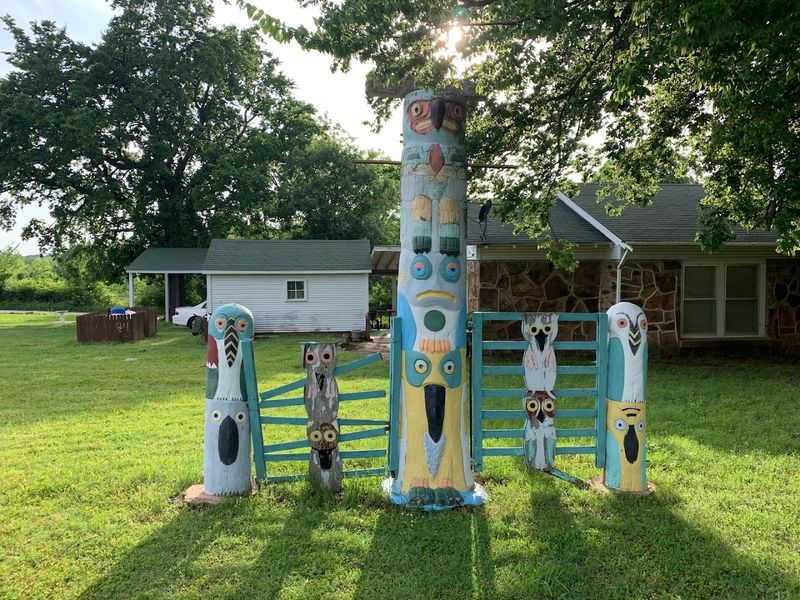
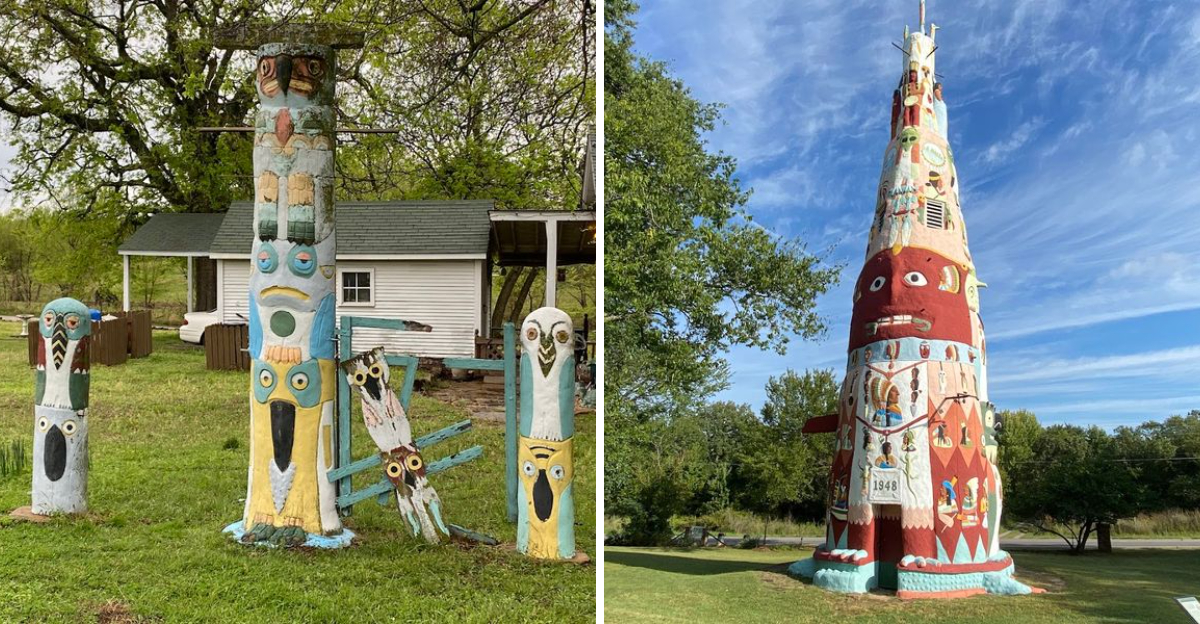
The 90-foot centerpiece gets most of the attention, but the park grounds hold a whole collection of smaller totem poles that deserve just as much time. Each one is unique in design, painted in vivid colors, and carved with figures that reflect Galloway’s deep respect for Native American imagery and storytelling.
Walking the grounds and comparing the different poles is genuinely enjoyable. Some are squat and wide, others are slender and tall, and the variety keeps the eye moving from one detail to the next.
The craftsmanship on the smaller pieces is just as meticulous as the work on the main structure.
The park is open-air and easy to explore at your own pace, which gives the visit a relaxed, unhurried quality that suits the folk-art setting perfectly. Children tend to gravitate toward the figures they recognize, like animals and faces, while adults often get absorbed in reading the informational placards placed around the grounds.
Those placards tell the full story of how the park came to be, and reading them in sequence gives the whole visit a satisfying narrative arc that connects each pole to Galloway’s larger vision.
The Fiddle House and Its Surprising Treasures
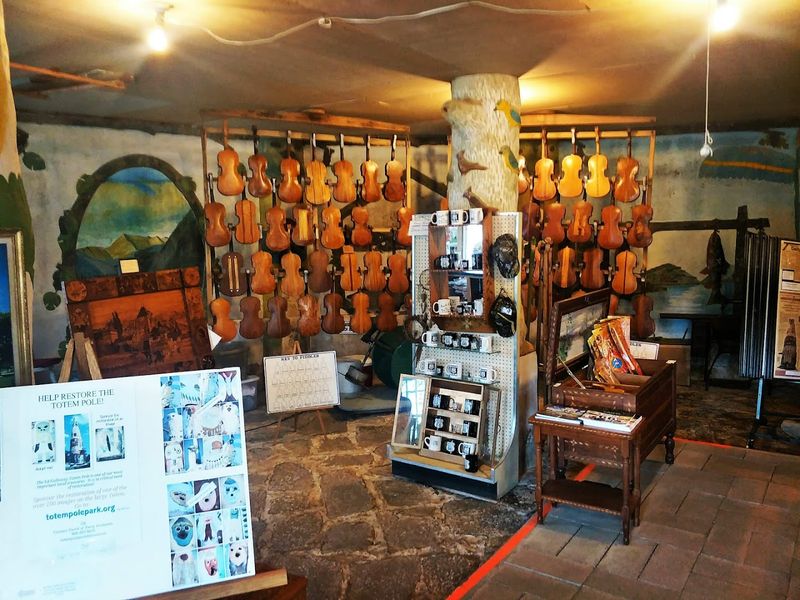
The building known as the Fiddle House is the original home that Ed Galloway built in 1937, and it now serves as a visitor center, gift shop, and small museum. The name comes from the remarkable collection inside, where more than 50 handmade fiddles and violins line the walls, each one crafted from a different type of wood.
Galloway was not just a concrete sculptor. He was a skilled woodworker whose talent extended to fine instrument-making, and the fiddles on display are beautifully preserved examples of that craft.
Seeing so many unique instruments in one small room is unexpected in the best possible way.
The museum section contains historical photographs, artifacts, and written accounts that fill in the details of Galloway’s life and creative process. The staff member running the gift shop tends to be a fountain of personal knowledge about the property, sometimes sharing memories and stories that go well beyond what the placards say.
Souvenirs available for purchase include totem pole magnets, arrowheads, and other locally relevant items, and buying something here is one of the most direct ways to support the ongoing maintenance of this free public attraction.
The Route 66 Connection
Route 66 travelers who skip this detour are missing one of the most original stops on the entire historic highway corridor. The park sits just a couple of miles off Route 66 in northeast Oklahoma, making it an easy addition to any road trip itinerary without adding much time to the drive.
The Route 66 community has embraced the park enthusiastically, and it appears in several Route 66 travel guides and passport programs. Families working through Route 66 stamp collections often count this as one of the highlights of the whole journey, not just a checkbox but a genuine standout.
The surrounding Oklahoma landscape adds to the road-trip atmosphere. The drive from Route 66 to the park passes through rolling countryside with wide skies and very little commercial development, which makes the sudden appearance of a 90-foot painted concrete tower feel even more dramatic.
For anyone who loves the quirky, handmade, and deeply American character that defines the best Route 66 stops, this park delivers that feeling more completely than almost anywhere else along the route, and it does so entirely for free.
Folk Art on a Scale You Have to See in Person
Folk art tends to be small-scale and intimate, made by individuals working with modest materials in personal spaces. Galloway flipped that script entirely.
His work is monumental in every sense, and the sheer physical scale of what he created with basic concrete and hand tools puts it in a category that has very few comparisons anywhere in the country.
The 200 carved and painted images on the main totem pole alone represent a staggering amount of individual creative decisions. Every animal, face, and symbol was planned, carved, and painted by hand, often repainted as colors faded and new paint became available.
The result is a surface that rewards close inspection from every angle.
Art historians and folk-art enthusiasts have recognized the park as a significant example of what is sometimes called outsider art or visionary art, meaning work created outside formal artistic institutions by self-taught individuals driven by personal vision. Whether or not those labels matter to you, the experience of standing in front of something this large and this carefully made by one person tends to shift your sense of what a single human being can accomplish with enough time, patience, and purpose.
Visiting With Kids: What to Expect
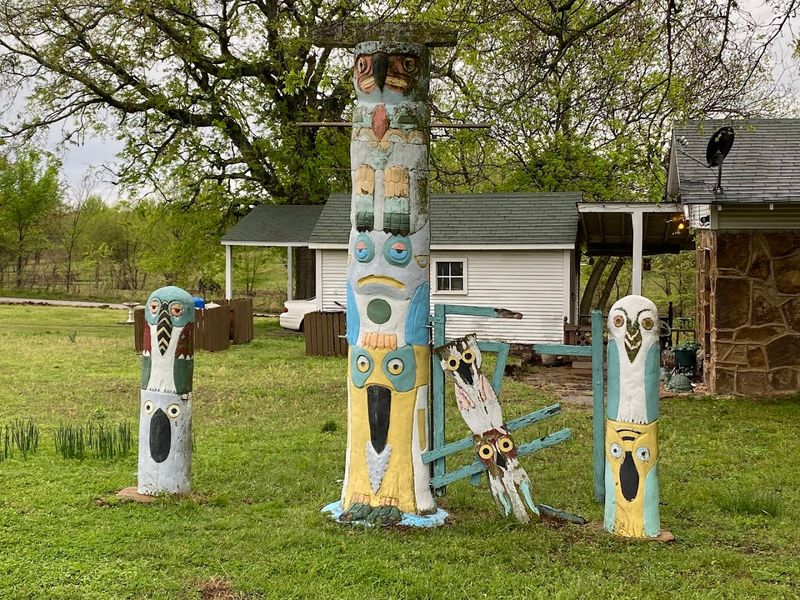
The park works surprisingly well as a family destination, and children tend to respond to it with genuine excitement rather than polite tolerance. The open grounds give kids room to move around freely, and the carved animal figures on the totem poles give them plenty of specific things to spot and identify.
A preschool group visiting for a Native American history unit reportedly had a fantastic time climbing around the 18-foot base of the main totem pole and learning what the different animal carvings represent. The pavilion across the road from the main park has picnic tables and benches, making it a practical spot for a lunch break during a longer visit.
Public restroom facilities are available on site, which is always a practical consideration when traveling with young children. The gift shop carries small souvenirs in an affordable price range, including arrowheads that tend to be popular with younger visitors.
The combination of outdoor exploration, visual storytelling through the carvings, and hands-on history makes this stop genuinely educational without feeling like a school field trip, which is exactly the right balance for keeping everyone in the family happy during a long road journey.
Restoration Efforts and Ongoing Care
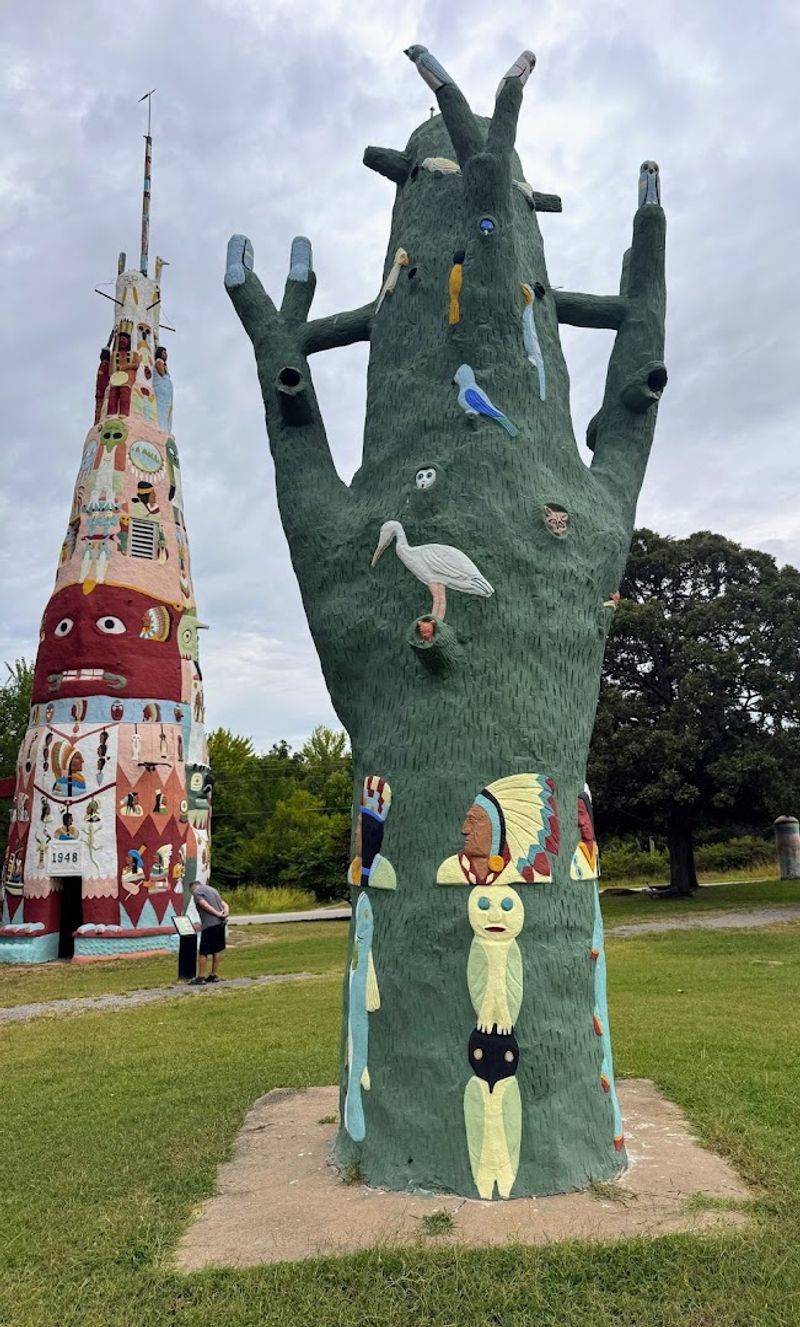
Maintaining a park full of outdoor concrete sculptures that were originally painted with leftover house paint is not a simple task, and the Rogers County Historical Society, which now manages the property, has been actively working on restoration. Recent visitors have noted that many of the totem poles and artwork pieces have been freshly repainted, and the results look vivid and impressive.
The restoration process honors Galloway’s original approach of repainting surfaces as they weather, adding new colors and details as materials allow. This means the park is always evolving slightly, and repeat visitors sometimes notice changes from one season to the next.
Funding for the restoration and general upkeep comes largely from donations and gift shop sales, which is why the staff encourages visitors to make a purchase or leave a contribution. The park remains free to enter, a deliberate choice that keeps it accessible to everyone regardless of budget.
Supporting the restoration financially is one of the most meaningful things a visitor can do, because it directly ensures that Galloway’s concrete legacy continues to stand tall against the Oklahoma weather for future generations to discover and appreciate.
Practical Tips for Making the Most of Your Visit
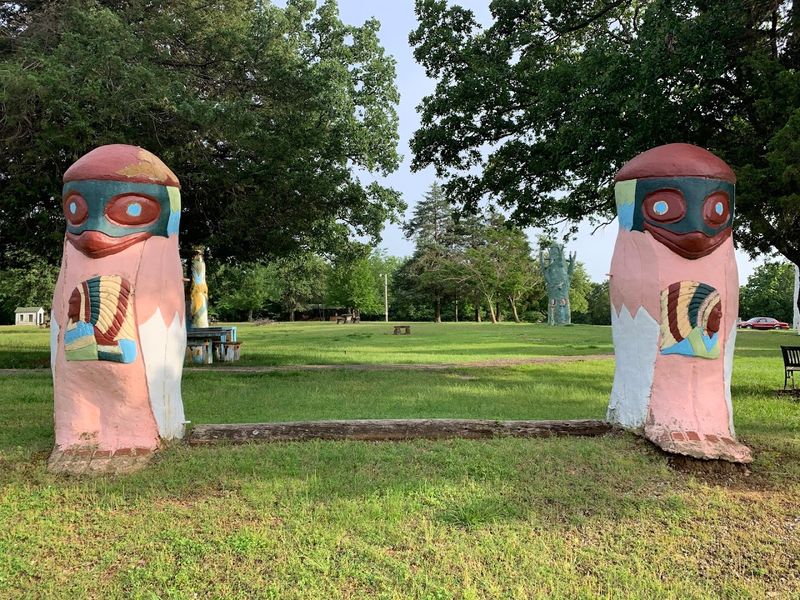
A few practical notes can make the difference between a smooth visit and a frustrating one. The park is open Monday through Saturday from 10 AM to 5 PM and Sunday from 1 to 5 PM, and the phone number is 918-283-8035 if you want to confirm hours before making the trip.
Arriving at least an hour before closing gives enough time to explore the grounds, visit the Fiddle House, and browse the gift shop without feeling rushed.
Dogs are welcome in the area across the gravel road from the main park, though not on the park grounds themselves. The gravel parking area behind the park accommodates cars and larger vehicles without difficulty.
Reading up on Galloway’s story before arriving adds a lot to the experience, since knowing the context behind what you are looking at makes the carvings and figures much more meaningful.
The park sits in a rural part of northeast Oklahoma where cell service can be inconsistent, so downloading a map or saving the address offline before leaving the highway is a smart move. The whole visit, including the Fiddle House, typically takes between 45 minutes and 90 minutes, making it an ideal stop rather than a full-day commitment.



