Most people driving along Oregon’s Highway 101 keep their eyes fixed on the ocean and never notice the quiet cedar forest hiding just a few feet from the road. That is exactly how this trail has stayed so peaceful for so long.
Tucked near the small coastal town of Rockaway Beach, this boardwalk hike leads through a lush wetland preserve to one of the most impressive old-growth cedar trees you will ever stand next to. The tree is estimated to be between 800 and 1,200 years old, the boardwalk is wheelchair accessible, dogs are welcome on a leash, and the whole loop takes less than two hours.
Whether you are a seasoned hiker or just looking for a short walk with the family, this place has a way of stopping you in your tracks and reminding you why Oregon’s coast is so special.
Where the Trail Begins: Location and Access
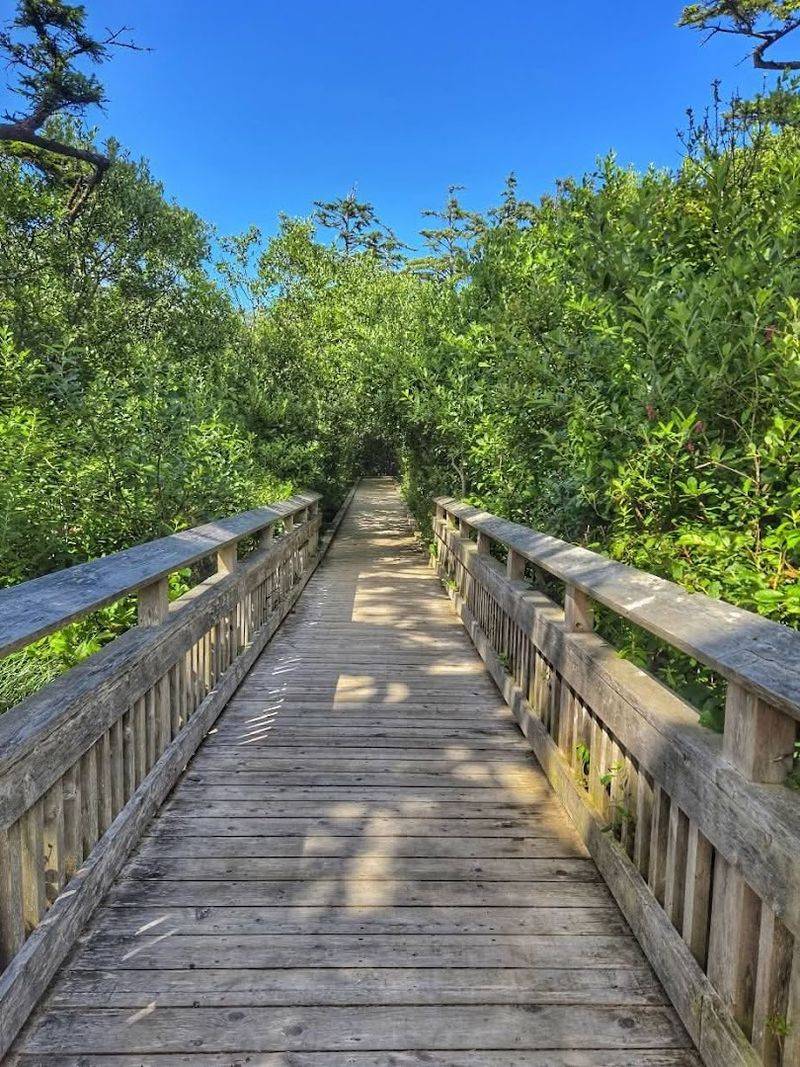
The trailhead sits right off Highway 101 near East Washington Street in Rockaway Beach, Oregon 97136, making it surprisingly easy to find once you know it is there. Most drivers pass it without a second glance, which is honestly part of its charm.
The parking lot is small, with around ten spots available. On busy summer weekends, those fill up fast, so arriving early in the morning is a smart move.
If the lot is full, there is room to park along the side of the road nearby.
The trail is open daily from 7 AM to 10 PM, which gives you plenty of daylight to explore without rushing. A portable toilet, a drinking fountain, and a trash can are all available at the trailhead, so the basics are covered before you even set foot on the boards.
Getting here from the main strip of Rockaway Beach takes only a couple of minutes by car. The location makes it a natural add-on to any Oregon coast road trip, especially for those already traveling the scenic Highway 101 corridor.
The Boardwalk Itself: What to Expect Underfoot
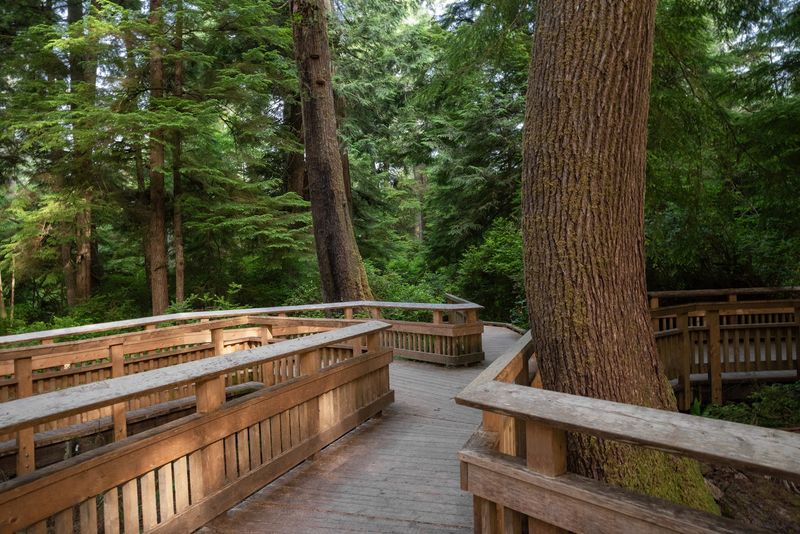
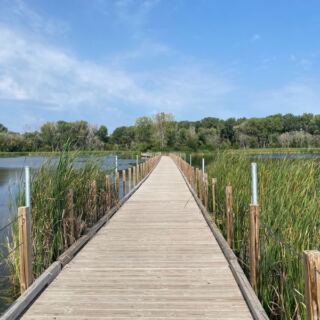
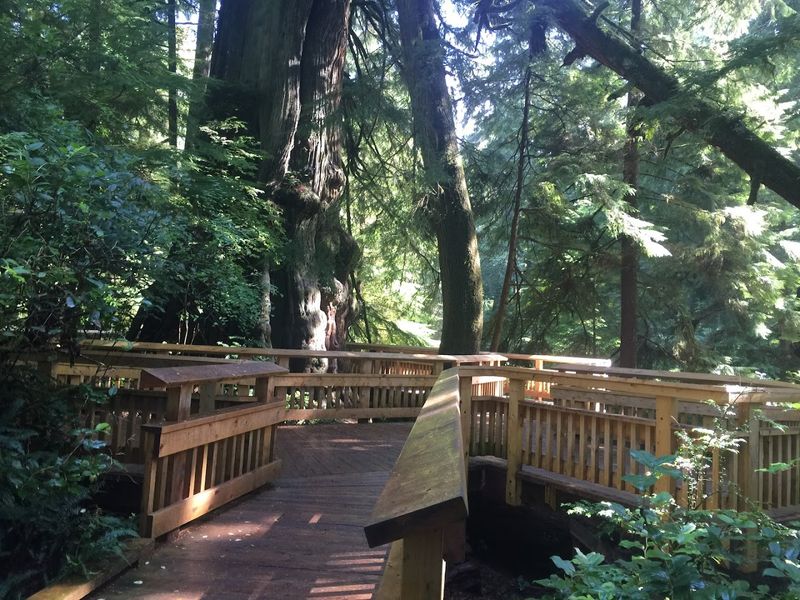
The moment you step onto the boardwalk, the sound of traffic from Highway 101 fades almost immediately. The path is made entirely of wooden planks and stretches roughly 1.1 to 1.5 miles round trip, depending on which reviews you trust most.
Two people can walk side by side with ease for most of the route, and the surface is level and wide enough for strollers and wheelchairs along the majority of the trail. That kind of accessibility is rare on trails this beautiful.
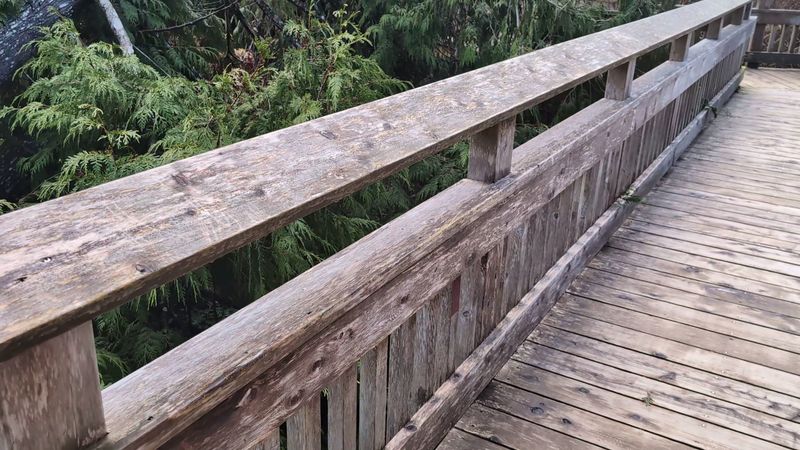
One thing worth knowing before you go: the boards can get slippery after rain, and the Oregon coast sees plenty of it. Wearing shoes with decent grip is a genuinely good idea, especially near the end of the loop where the trail gains a little elevation and the wood tends to stay damp longer under the tree cover.
The boardwalk has been repaired and maintained well in recent years, though a small non-boardwalk section near the viewing area remained closed after storm damage in 2023. Check current conditions before visiting if you plan to see every corner of the trail.
The Star of the Show: The Ancient Cedar Tree
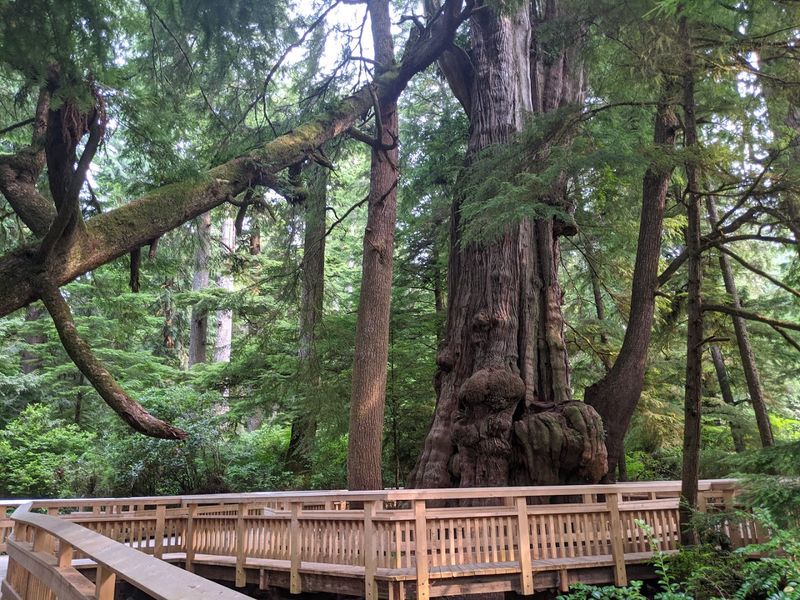
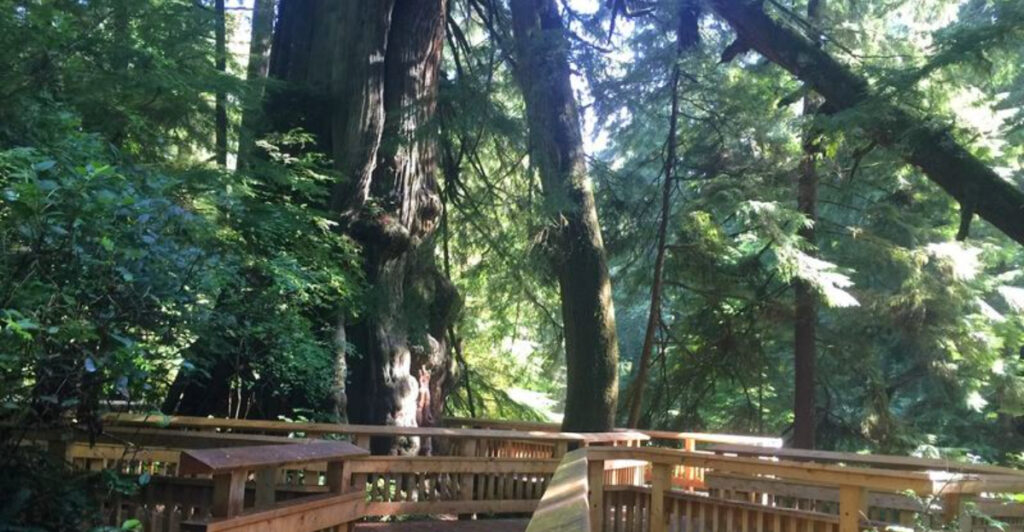
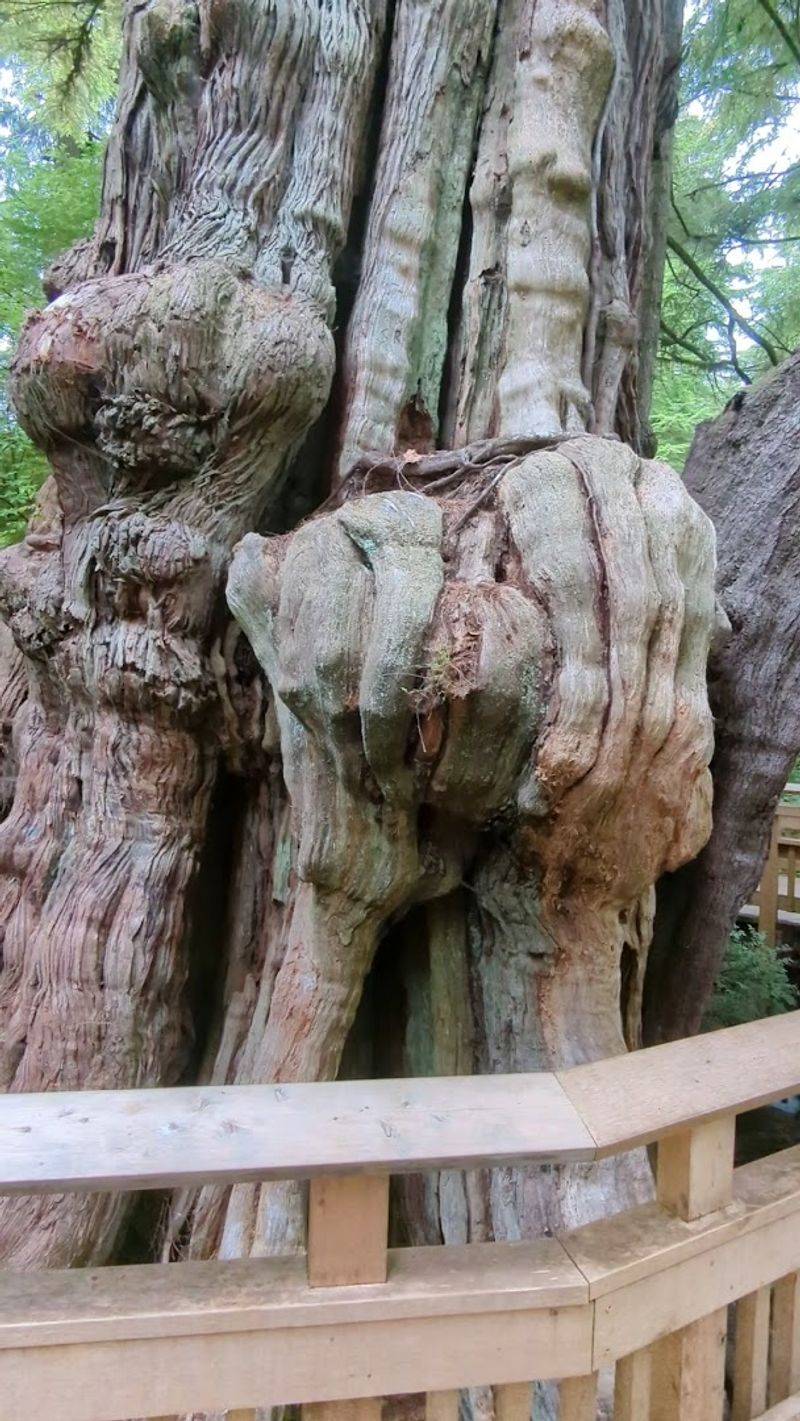
At the end of the boardwalk stands a western red cedar that has been growing in this spot for somewhere between 800 and 1,200 years. That means this tree was already a sapling when medieval castles were being built in Europe, which is a thought that tends to stop people mid-step.
The trunk is enormous, with deeply ridged bark that feels almost sculptural up close. There are designated viewing areas near the tree where visitors are encouraged to take photos without stepping off the boardwalk, which helps protect the root system that keeps this giant standing.
Three resting benches and a picnic table are set up near the tree, making it a genuinely pleasant spot to sit, eat a snack, and just absorb the scale of what you are looking at. Most visitors spend a good chunk of their time right here.
The tree has become a quiet local landmark along the Oregon coast, attracting nature lovers, photographers, and families who want to show their kids something that no screen can replicate. Standing next to it, even briefly, tends to leave a lasting impression.
Wildlife Along the Trail: More Than Just Trees
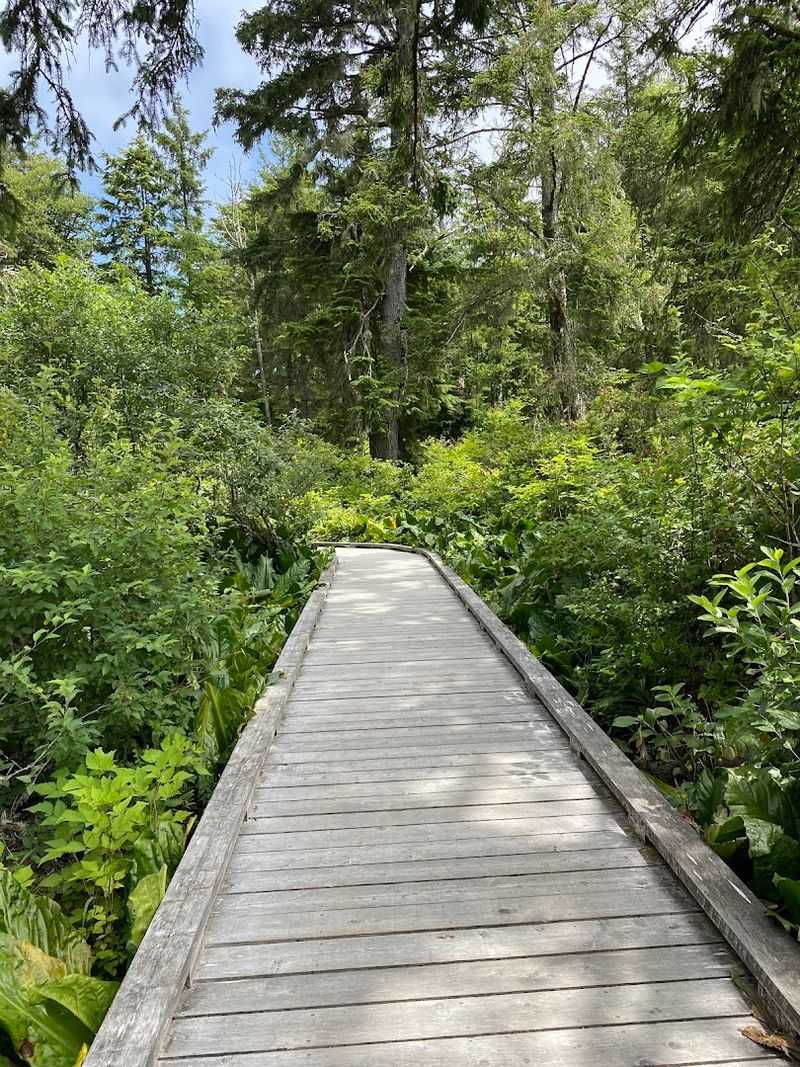
The Cedar Wetland Preserve that surrounds this trail is teeming with life, and paying attention while you walk pays off in small, wonderful ways. Garter snakes are a common sight, often found sunning themselves on logs near the viewing platforms along the path.
Bird activity here is genuinely impressive. Ospreys have been spotted nesting at the top of a dead snag near the boardwalk, and the forest echoes with calls from species that are harder to identify but easy to enjoy.
Hawks, songbirds, and the occasional chipmunk round out the cast of regulars.
Frogs, squirrels, and various insects also call this wetland home, and the dense understory provides the kind of layered habitat that supports a wide range of creatures. The ecological richness of the preserve is one of the reasons visitors are asked to stay on the boardwalk at all times.
This is not Oklahoma prairie country with wide open skies and flat grasslands. This is a dense, dripping, moss-covered coastal forest where the wildlife operates on its own quiet schedule, and the boardwalk puts you right in the middle of it without disturbing a thing.
Plant Life and the Lush Wetland Atmosphere
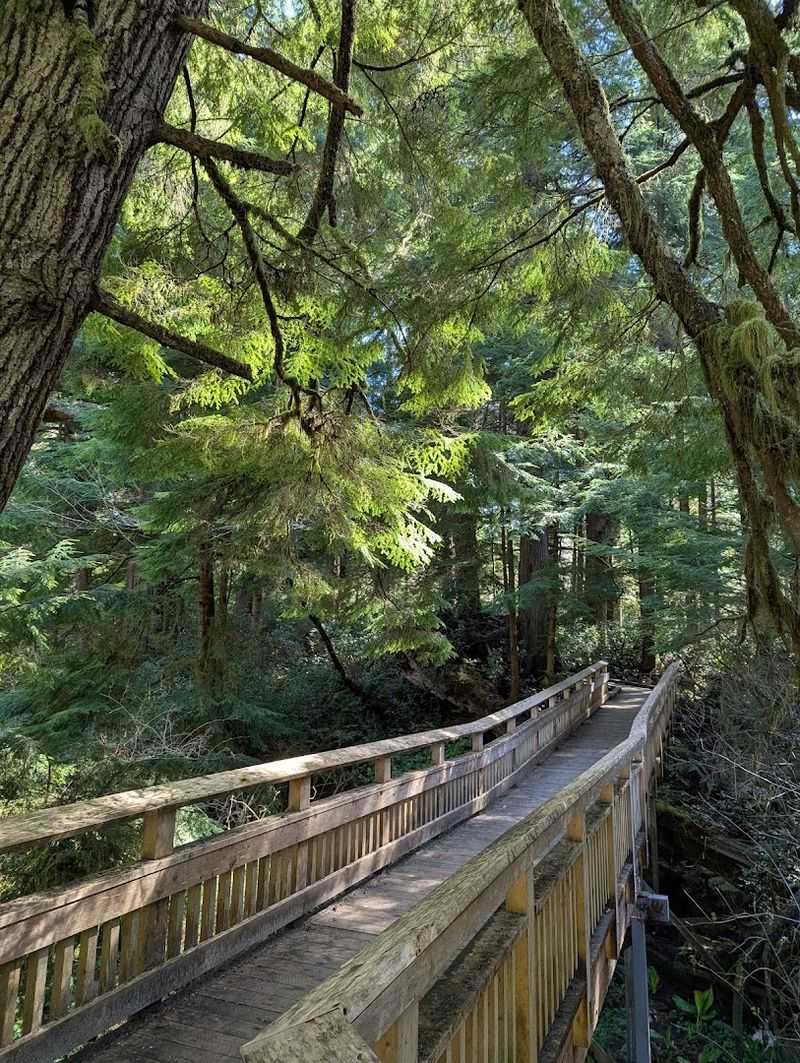
The greenery along this trail is the kind that makes you reach for your camera every thirty seconds. Ferns spill over both sides of the boardwalk, mossy logs line the path, and during spring and early summer, berries and wildflowers appear in clusters that add color to all that deep green.
The wetland environment keeps everything saturated and vibrant, even during drier stretches of the year. The cedar trees overhead create a natural canopy that filters light in a way that makes the whole forest feel softly lit, almost like the setting has been designed for photography.
The aroma of the forest is something that descriptions struggle to capture accurately. Cedar, damp earth, and flowering plants combine into something that genuinely feels restorative after hours spent in a car on Highway 101.
Visitors often mention how surprised they are by the sheer density of plant life packed into such a small area. The preserve functions as a self-sustaining ecosystem, and the old-growth trees at its center have been feeding and sheltering the surrounding flora for centuries, creating a richness that younger forests simply cannot match.
Accessibility and Family-Friendly Features
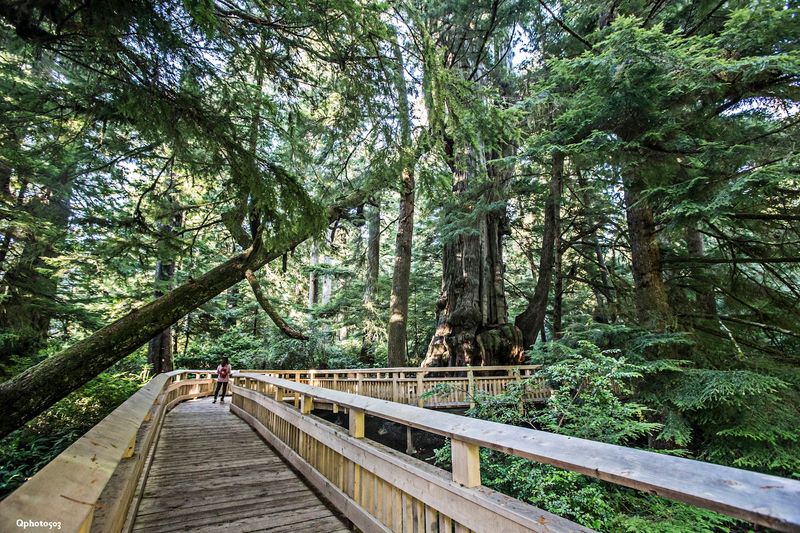
One of the most genuinely impressive things about this trail is how well it accommodates visitors of all ages and abilities. The boardwalk is wide enough for wheelchairs and strollers, and the surface is mostly flat for the majority of the route, with only a modest incline appearing near the final stretch toward the big cedar.
Families with young children tend to do very well here. The 1.1 to 1.5 mile round trip is short enough to keep younger kids engaged without wearing them out, and the wildlife sightings along the way give them plenty to talk about.
Dogs are welcome on the trail as long as they are kept on a leash, which makes this a popular stop for pet owners traveling the Oregon coast. The trail sees a good mix of solo walkers, couples, families, and dog owners on any given weekend morning.
The resting benches placed along the route and near the big cedar are a thoughtful touch, giving anyone who needs a break a comfortable place to sit without feeling like they are holding up the group. Small details like that make a real difference on a trail that welcomes such a wide range of visitors.
Best Times to Visit and Crowd Patterns
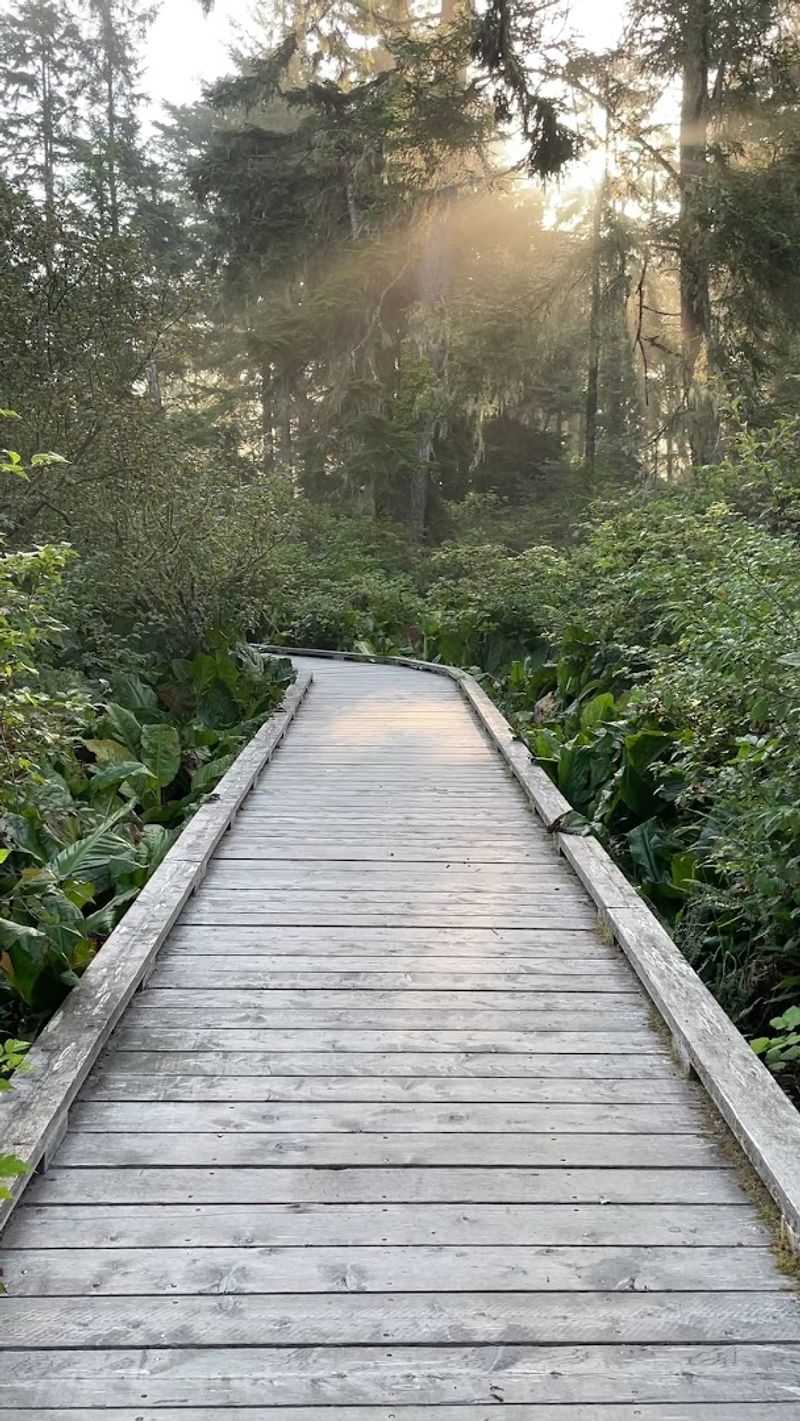
Early mornings on weekdays are the sweet spot for this trail. The small parking lot fills quickly on summer weekends, and the boardwalk, while comfortably wide, can feel cramped when multiple groups are moving through at once.
Getting there right at 7 AM on a weekday gives you the forest almost entirely to yourself.
The trail is open year-round, and each season brings something different. Spring delivers wildflowers and active bird nesting.
Summer keeps the canopy thick and the light filtered. Fall turns the understory golden, and winter rains make the moss glow an almost unnatural shade of green.
Rain is the one variable worth planning around. The boards stay slippery for a long time after a wet spell, and the Oregon coast gets plenty of those.
Checking the forecast and wearing proper footwear can turn a potentially frustrating visit into a comfortable one.
Unlike busier destinations along the coast, this trail does not require advance reservations or fees. That low barrier to entry is part of why it remains a favorite among locals and a pleasant surprise for road-trippers who stumble upon it while passing through Rockaway Beach.
The History and Conservation Behind the Preserve
The Cedar Wetland Preserve that houses this trail is not just a pretty walk. It is a protected natural area designed to keep old-growth cedar habitat intact along a stretch of the Oregon coast that has seen significant development over the decades.
The big western red cedar at the end of the trail is the preserve’s most visible symbol, but the ecosystem around it is just as important. Old-growth forests like this one support biodiversity that younger, replanted forests cannot replicate, and the wetland itself filters water and provides habitat for a wide range of species.
A major winter storm in 2023 caused extensive damage to parts of the trail, closing the non-boardwalk section near the viewing area. The boardwalk itself has since been repaired and restored, which reflects the ongoing commitment to keeping this space accessible and protected for future visitors.
Conservation efforts here stand in contrast to destinations elsewhere in the country where natural landmarks have been loved to the point of degradation. The rule to stay on the boardwalk at all times is simple, but it is the kind of small behavioral guideline that makes a genuine long-term difference for the health of the forest.
How This Trail Compares to Other Oregon Coast Hikes
Oregon is not short on beautiful hikes. The coast alone offers dramatic headlands, sea stacks, and forest trails that draw visitors from across the country.
But most of those hikes require a decent fitness level, sturdy boots, and a willingness to deal with elevation gain and uneven terrain.
This trail occupies a different category entirely. The boardwalk format, the flat surface, and the short distance make it genuinely accessible to people who would not describe themselves as hikers at all.
That is a rare quality on the Oregon coast, where much of the best scenery requires real effort to reach.
The proximity to Highway 101 also sets it apart. Most old-growth forest experiences in Oregon require a dedicated drive into the mountains or deep into a national forest.
Here, you can pull off the highway, walk through ancient cedar forest, and be back on the road within ninety minutes.
Visitors who have explored trails from the Columbia River Gorge to the southern Oregon coast consistently mention being surprised by how much this short walk delivers. It punches well above its weight class, which is exactly the kind of trail that earns a 4.8-star rating from nearly 540 reviewers without ever needing a marketing campaign.
A Few Practical Tips Before You Go
A few straightforward tips can make the difference between a smooth visit and a frustrating one. Arrive early, especially on weekends, because the ten-spot parking lot fills up fast and there is no overflow facility on site.
Weekday mornings between 7 and 9 AM are consistently the quietest window.
Wear shoes with grip. This is not a trail where flip-flops or smooth-soled sneakers serve you well, particularly after rain.
The wood stays damp under the cedar canopy, and a few sections near the end of the trail have no handrails despite having a noticeable incline.
Bring water and a snack, but pack out everything you bring in. The trailhead has a trash can, but the trail itself should be left exactly as you found it.
Dogs must stay on leash the entire time, and visitors are asked to stay on the boardwalk to protect the root systems of the trees.
Oregon may not be Oklahoma in terms of climate or landscape, but both states share a culture of outdoor respect that visitors are expected to honor. This trail has stayed beautiful because people treat it well, and keeping that streak going is every visitor’s small responsibility.
Share this story